

Preecer
1.7K posts
Preecer
@Preecer
Photographer of architecture, churches, ancient trees and other things.
UK Katılım Aralık 2008
1.7K Takip Edilen279 Takipçiler
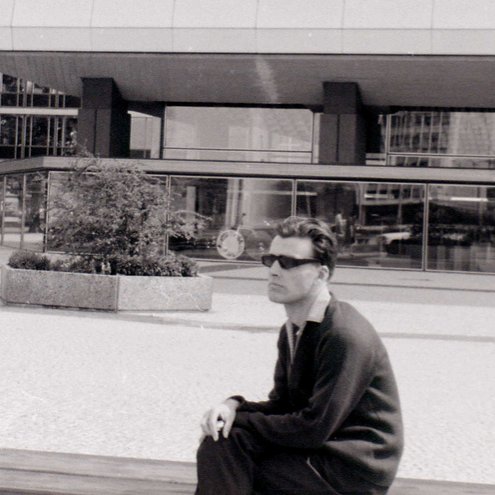
Friends, that is all for now. I am entering hospital for an operation. If I emerge from this and am able to continue, I will resume posting. Thank you to all. Allan #Berlin
English

Once Again Thanks for the Tremendous support for this little Club in the Back of Nowhere deeply Appreciated, quick Question if a I may ask Please, what was Your first car?
English

Rotherham Central Library & Arts Centre in 2012. Demolished and replaced with Tesco.

English



Preecer retweetledi

Holy shit! Bruce Springsteen, with one of the most eloquent endorsements for Kamala Harris and Tim Walz you'll hear. The Boss also delivered one of the strongest repudiations of the loathsome piece of shit I've heard from anyone. Let's fucking go‼️🙌🌊🇺🇸
English

Bruno Creamer as Maigret is coming back to Talking Pictures TV in Freeview in September. Can't wait to watch the early episodes.
Talking Pictures TV@TalkingPicsTV
By overwhelming public demand! #BrunoCremer is MAIGRET, in a regular Wednesday night screening at 9:05pm beginning Wednesday 18th September. Original French adaptation with English #TPTVsubtitles
English
@TalkingPicsTV Great news, I have been watching the later films shown in the early hours, but would like to watch the earlier stuff. Bruno's take on Maigret is fabulously French/Belgian!
English

By overwhelming public demand! #BrunoCremer is MAIGRET, in a regular Wednesday night screening at 9:05pm beginning Wednesday 18th September. Original French adaptation with English #TPTVsubtitles
English

@natchjourneyman Thanks for posting this Andrew, I now have yet another church to visit!
English

Jeepers, I post a nice film of an old church with some text and my timeline fills with, nit-pickers and hair-splitters who quibble, amongst other things, the distance of the church from a tube station, tree cover in Essex, timber dating, the size of paragraphs and their appropriateness for the Twitter platform. Time for a rest from this sillyness - see you in a couple of weeks.
English
You might expect the oldest wooden church in the world to be hidden in some remote place with a strong tradition of timber-framed buildings – perhaps in some European woodland or mountain pass. It is, however, in a somewhat unlikely location: close to the northern end of the London Underground Circle Line, in the village of Greensted-juxta-Ongar in the Essex countryside. Dedicated to St Andrew, this is the only Anglo-Saxon timber church that still exists, and was established by St Cedd in the 650s during his mission to convert the East Saxons. Having avoided fire, war, neglect and insect attack, it is a miracle that the church has survived. The building is constructed from a satisfying mix of materials: the trees that were felled in the woods that still enclose the church, together with the clay that was dug from the surrounding fields before being kiln-fired into the red bricks of the later chancel and the roof tiles that are punctuated here by dormer windows.
Ignoring the dinky seventeenth-century tower with its white clapboarding and shingle-clad steeple, the rest of the church might be mistaken for a farm building. The fifty-one vertically split logs that form the walls of the nave were felled when the trees were about a hundred years old; they were green and unseasoned, which made it easier to work than dry, hard, seasoned oak. Most of the squaring up, shaping and cutting of the joints that connected it all together would have been done with axes, while the flat inner face of the wall was achieved with an adze – a type of axe with a curved blade at a right angle to the handle. Today the logs are black with tar, but they were originally protected from the elements by the large overhang of the thatched eaves that would have dis- persed rainwater clear of the walls. The logs are held together with ‘tree-nails’ (another term for wooden pegs).
This ancient palisading technique, by which vertical stand- ing tree trunks were positioned in a row, would also have been used to wall in Iron Age hill forts. The Venerable Bede recorded that the church at Lindisfarne, built in ad 651–61, was similarly made of split tree trunks and roofed with reeds. This method of construction can also be seen in the burial chamber that housed the king interred in the ninth-century Gokstad, the largest Viking ship ever found, which is on display in Norway’s Viking Ship Museum in Oslo. The oak wrights cut grooves into each side of all the logs and slipped tongues of lath – thin strips of wood – to keep out draughts. The only corner log that survived the unnecessarily intrusive Victorian restoration has had a quarter-section axed out.
Visitors to St Andrew’s are greeted inside by the smell of ancient wood and polish. When I visited, a table was laden with local jams and chutneys, and the interior was much warmer than the stone churches I was used to. Scorch marks on the walls suggest that it was once lit by oil lamps. Windows are absent, but a set of pegged peepholes would have enabled those outside to observe church services. Sitting in the church on a winter’s afternoon is darkly atmospheric, and it is possible to experience something of how the building must have felt when the body of St Edmund was laid within these walls for the night in 1013 on the way back from London to the abbey at Bury St Edmunds, where it had been taken for safekeeping during a time of Viking raids.
Excerpt from #churchgoing out October.
English
Preecer retweetledi


Preecer retweetledi




I'm back.
I am feeling healthy.
Still work to do. Need time to get stronger, but confident I'm on the right path.
Solo shows in September - I look forward to them.
Yes, I cut my own hair. I will get professional help before venturing on stage.
Thanks for all the kind words.

English
Preecer retweetledi

Very pleased and excited to tell you Carmarthen Cameras will be a sponsor at this years theeyefestival.com A weekend of truly amazing speakers and events. Early bird tickets available until the end of the month so take advantage and save a few quid 18-20th October

English
Preecer retweetledi

BLADE RUNNER was released 42 years ago today. Acclaimed as one of the greatest science fiction movies ever made, and among director Ridley Scott’s most popular films, the story behind the scenes might have you taking the Voight-Kampf test…
1/40



English
Preecer retweetledi
Excited to announce Phillip Hatcher-Moore as 3rd speaker at The Eye Photography Festival Oct 18-20th 24. Working globally for international publications. Now working for BBC News Labs interested in increasing trust in photojournalism with rapid advances in generative AI.

English