ProShopGuyMF (Mike McMahon)

9K posts

ProShopGuyMF (Mike McMahon) banner
ProShopGuyMF (Mike McMahon)

ProShopGuyMF (Mike McMahon)

@ProShopGuyMF1

@themotleyfool behind the video scenes guy. Follow me at ProShopGuy on MF. I use this platform as an electronic sharing space with things I find interesting.


Alameda CA Katılım Mayıs 2020
395 Takip Edilen2.3K Takipçiler
ProShopGuyMF (Mike McMahon)
ProShopGuyMF (Mike McMahon)@ProShopGuyMF1·
@TravisHoium Coming up on two years. The tariff catalyst tried to start dominoes for a market crash. Now a middle east incursion could be the straw that breaks the camel's back. S&P was 5127 in May 2024. A 15% drawdown would work.
English
0
0
0
16
Travis Hoium
Travis Hoium@TravisHoium·
Keep in mind: Bear Stearns failed in March 2008 when unemployment was 5.1% Lehman Brothers Failed in September 2008 when unemployment was 6.1% The stock market bottomed in March 2009 Unemployment peaked in October 2009 There's a lag between the catalyst and the outcome.
English
6
6
43
11.7K
ProShopGuyMF (Mike McMahon)
ProShopGuyMF (Mike McMahon)@ProShopGuyMF1·
@JRogrow @shaunmmaguire A sneaky hardware play - Nvidia. No longer a gaming chip provider. Nvidia Vera Rubin rack (NVL72-class system) have over 80 suppliers and 1.3M components. Nvidia is producing the hardware for the future AI factories.
English
0
0
1
38
John Rotonti Jr
John Rotonti Jr@JRogrow·
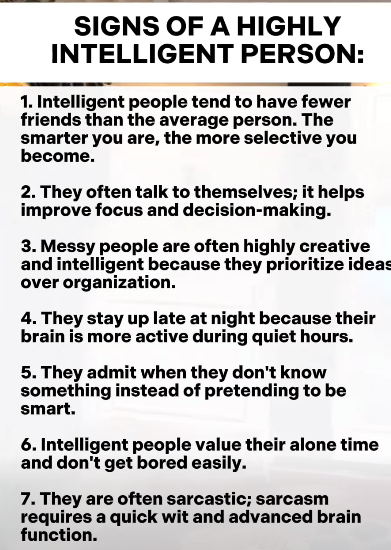
I love this clip from an investing legend. I was not fortunate enough to get @shaunmmaguire’s hardware memo 3 years ago, but I had the same thesis 3 years ago, and even 5 years ago🙏💙…
John Rotonti Jr tweet mediaJohn Rotonti Jr tweet mediaJohn Rotonti Jr tweet mediaJohn Rotonti Jr tweet media
TBPN@tbpn

Sequoia’s @shaunmmaguire wrote a private hardware manifesto arguing that over the next 25 years, most of the money will be made in hardware: "Every software revolution is preceded by a hardware revolution." "To have the iOS App Store that enabled Uber, DoorDash, and all of these great companies - you needed to have the iPhone." "This AI revolution - we're seeing what it can do from the software layer, but it's still limited by hardware." "The hardware we were doing for a long time was all following Moore's Law. It was all branching out of this decision in the mid-1950s to go all in on the silicon supply chain." "That has created magic, and there's still a couple orders of magnitude of juice to squeeze, but we’re hitting fundamental physics limits - Dennard scaling, things like that." "I think this tech tree is branching into humanoid robots, into silicon photonics, into orbital data centers - all of these new hardware areas where there's going to be 20+ years of progress." "There's going to be incredible businesses built on the back of this. And a lot of dumpster fires."

English
2
3
13
2.6K
ProShopGuyMF (Mike McMahon)
ProShopGuyMF (Mike McMahon)@ProShopGuyMF1·
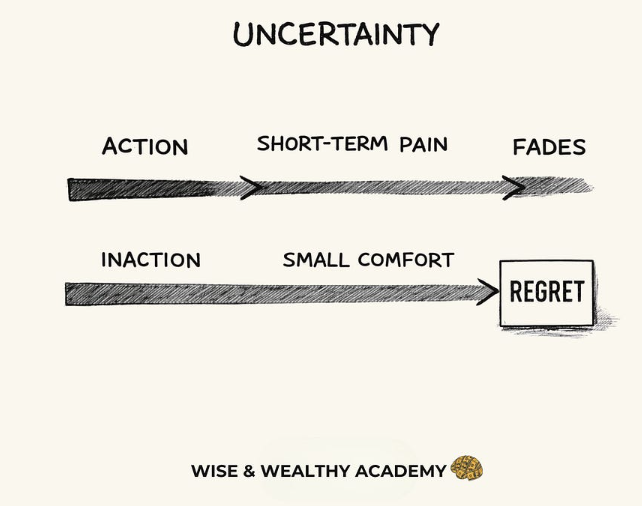
When you hit the buy button during periods of high uncertainty and high volatility, and there is a knot in your stomach, you are doing it right.
ProShopGuyMF (Mike McMahon) tweet media
English
0
0
2
49
ProShopGuyMF (Mike McMahon)
ProShopGuyMF (Mike McMahon)@ProShopGuyMF1·
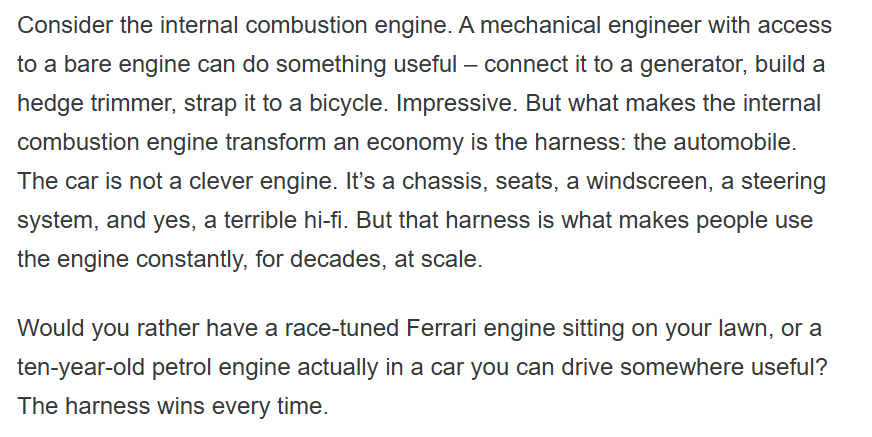
Openclaw is the inflection point that takes LLMs and harnesses the power of produced intelligence and transforms it into usable output by refining the intelligence through iterative reasoning and predetermined goals.
ProShopGuyMF (Mike McMahon) tweet media
English
0
0
0
74
Matthias Schmidt
Matthias Schmidt@eurofounder·
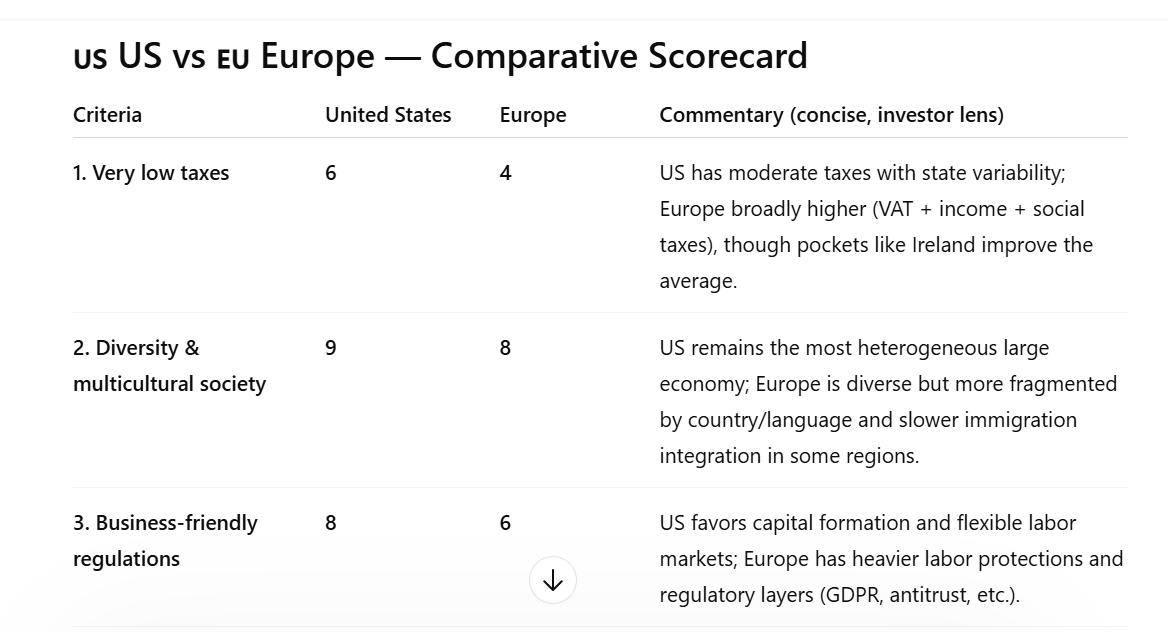
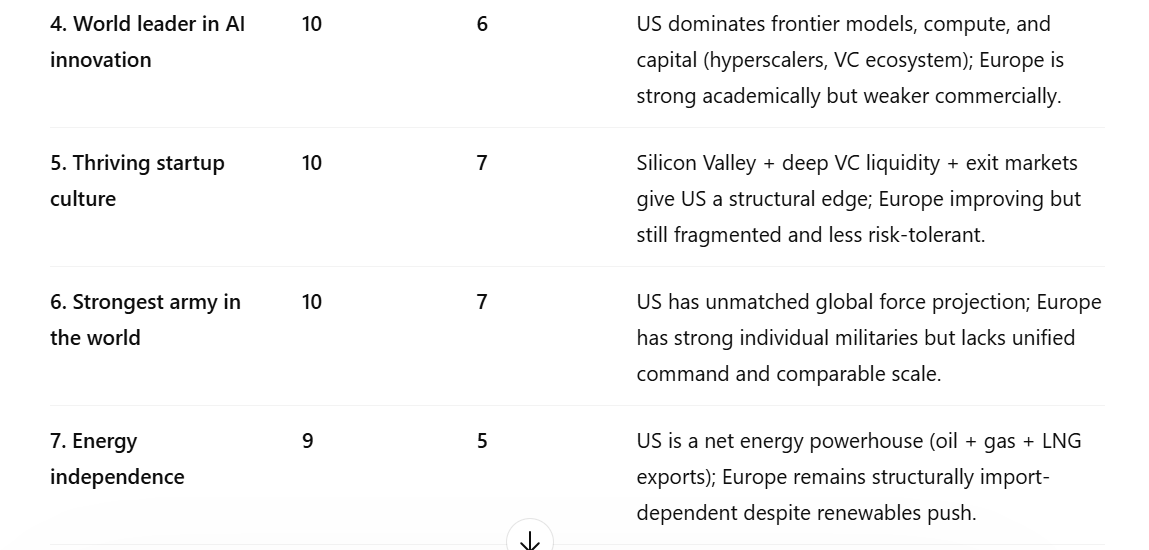
Main reasons to be bullish Europe: 1. Very low taxes 2. Diversity and multicultural society 3. Business-friendly regulations 4. World leader in AI innovation 5. Thriving startup culture 6. Strongest army in the world 7. Energy independence 8. True freedom of speech But sure, tell me again how America is better
English
132
27
411
39K
ProShopGuyMF (Mike McMahon)
ProShopGuyMF (Mike McMahon)@ProShopGuyMF1·
AI is starting to look a lot like the oil business. Models produce raw intelligence. They generate tokens. But tokens by themselves are not the end product. They pay for refined output.
ProShopGuyMF (Mike McMahon) tweet media
English
0
0
0
48
Bill Mann
Bill Mann@TMFOtter·
As we prepare for March Madness to start tomorrow, a quick reminder that literally no one wants to hear about your bracket.
English
3
0
4
794
ProShopGuyMF (Mike McMahon)
ProShopGuyMF (Mike McMahon)@ProShopGuyMF1·
Yes the first order impact of AI could reduce customer service costs. But successful companies will take AI and level up the customer service experience to retain and grow the customer relationship.
ProShopGuyMF (Mike McMahon) tweet media
English
0
0
0
45
J.C. Parets
J.C. Parets@JC_ParetsX·
I'm giving a talk to college students tonight. What should I tell them?
English
120
2
60
16.8K
ProShopGuyMF (Mike McMahon)
ProShopGuyMF (Mike McMahon)@ProShopGuyMF1·
Once he changed his wardrobe to a leather jacket, it was off to the races.
Anish Moonka@AnishA_Moonka

September 2009. Jensen Huang walks onto a small stage at the Fairmont hotel in San Jose. About 1,500 people are in the room. He runs a company that makes chips for video games. He spends the next 8 minutes doing math on a whiteboard, explaining why the future of computing won't come from making CPUs faster. He calls it "CEO math" and apologizes in advance to every computer science professor in the audience. Then he lays out an argument that almost nobody took seriously at the time: the way to make computers dramatically faster is to pair a regular CPU with hundreds of tiny parallel processors, the kind that already exist inside graphics cards. One CPU for the sequential stuff. Hundreds of GPU cores for everything else. He calls it "heterogeneous computing." He shows the math. A workload that can be split into many pieces at once gets up to 200x faster on this combined system. A workload that has to run one step at a time loses nothing. "The most important thing in creating a new architecture," he says, "is to make sure it does no harm." This was the first GPU Technology Conference. NVIDIA had launched a software platform called CUDA three years earlier, in 2006, to let developers write programs that run on graphics cards instead of just regular processors. Almost nobody cared. GPUs were for rendering Call of Duty, not for scientific computing. The academic world was polite but skeptical. The enterprise world ignored it entirely. By this point, Huang had been making this argument for years. NVIDIA was a $7 billion company. It competed with AMD and Intel for market share in the graphics market. That was the whole business. Jensen kept saying the GPU wasn't just a gaming chip; it was a computing platform. He kept saying parallel processing would reshape every industry from medicine to finance to physics simulations. People kept nodding, then doing nothing. Then deep learning happened. Around 2012, AI researchers discovered that training a neural network, which means teaching a computer to recognize patterns by running the same calculation millions of times across huge datasets, was exactly the kind of workload Jensen had been describing. GPUs can train AI models 10 to 50 times faster than CPUs. The architecture he outlined in this 2009 talk, with one CPU handling step-by-step tasks while hundreds of GPU cores crunch through massive amounts of parallel data, is now the literal blueprint for every AI data center on earth. ChatGPT runs on NVIDIA GPUs. Claude runs on NVIDIA GPUs. Gemini, Llama, Midjourney, nearly every major AI model you've heard of was trained on NVIDIA hardware using CUDA, the software platform Jensen built for a market that didn't exist yet. NVIDIA was worth about $7 billion when Jensen gave this talk. It is worth over $4.4 trillion today. That's a 600x increase. Jensen Huang, who founded the company at a Denny's in 1993 with two friends, now has a net worth of over $160 billion. He made Forbes' list of the 10 richest people for the first time this year. GTC 2026 is currently ongoing. 17,000 people are packing a hockey arena to watch the same guy explain what comes next. In 2009, 1,500 people showed up at a hotel ballroom, most of them for gaming graphics.

English
0
0
1
143
ProShopGuyMF (Mike McMahon)
ProShopGuyMF (Mike McMahon)@ProShopGuyMF1·
@compound248 @chamath Chamath Palihapitiya, via Social Capital, was an early investor in Groq. He reportedly invested tens of millions early on and held a meaningful stake, meaning the deal produced billions in potential gains. Chamath has an interesting POV. So does Elon Musk. Get beyond your bias
English
0
0
0
87
Compound248 💰
Compound248 💰@compound248·
Sounds like Chamath’s “software factory” - 8090 ai - is not doing great… Brad: “Are these AI companies simply selling tokens at a loss?” @Chamath: “No no no. They’re selling at a profit. I’m buying them and losing money.” 1/2 (more below)
English
20
9
160
81.7K