Katherine Mims Crocker

1.9K posts

Katherine Mims Crocker banner
Katherine Mims Crocker

Katherine Mims Crocker

@ProfKMCrocker

Prof of Law @TAMULawSchool; Director, Center on the Structural Constitution; alleged Bluebook Jedi, actual swim mom; into courts & con law; opinions my own, duh

Katılım Ocak 2021
960 Takip Edilen1.8K Takipçiler
Sabitlenmiş Tweet
Katherine Mims Crocker
Katherine Mims Crocker@ProfKMCrocker·
⚖️ Glad to have this draft article, Ex Parte Young Redux (forthcoming @WashULRev) on @SSRN! I argue that constitutional plaintiffs should be able to sue states themselves for declaratory and injunctive relief in some private-enforcent "bounty" contexts. Abstract here, 🔗 below!
Katherine Mims Crocker tweet media
English
1
4
17
2.4K
Katherine Mims Crocker retweetledi
Alex Nunn
Alex Nunn@AlexNunn·
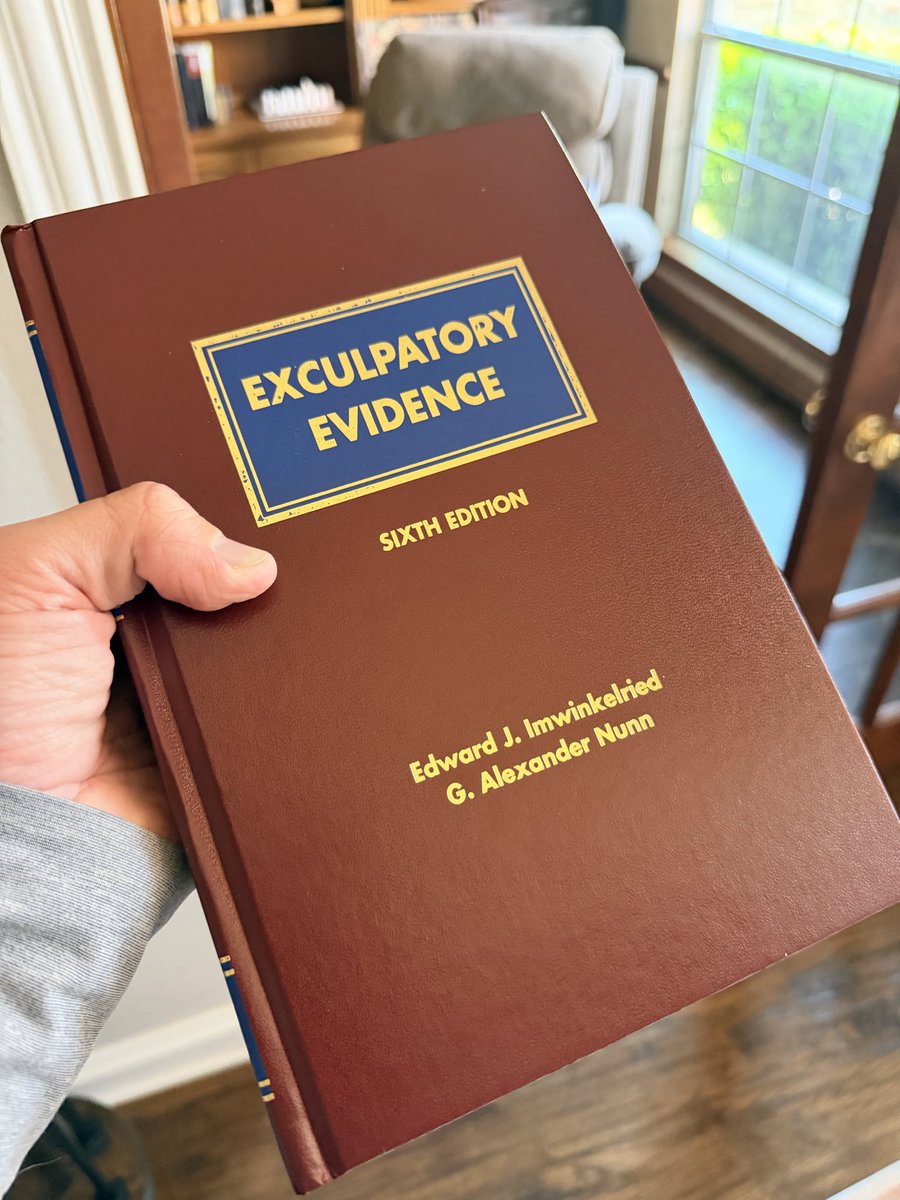
Very excited to see the sixth edition of the “Exculpatory Evidence” treatise now in print! Getting to work with Ed Imwinkelried on the project has been such a joy.
Alex Nunn tweet media
English
3
2
27
724
Katherine Mims Crocker
Katherine Mims Crocker@ProfKMCrocker·
⬇️ "As originalism has gained in importance on the Supreme Court & across the judiciary, Professor Solum’s work has placed him at the top of an indispensable line of inquiry,” Crocker said. “The law school is very fortunate to welcome him to the faculty.”
Texas A&M School of Law@TAMULawSchool

Texas A&M Law proudly welcomes Lawrence B. Solum, a renowned legal theorist and scholar. Solum will serve as co-director of the Center on the Structural Constitution at Texas A&M Law, alongside Profs. Katherine Mims Crocker and Neil Siegel. 🔗hubs.li/Q0479flJ0

English
2
7
53
7K
Katherine Mims Crocker retweetledi
Jeffrey Bellin
Jeffrey Bellin@BellinJ·
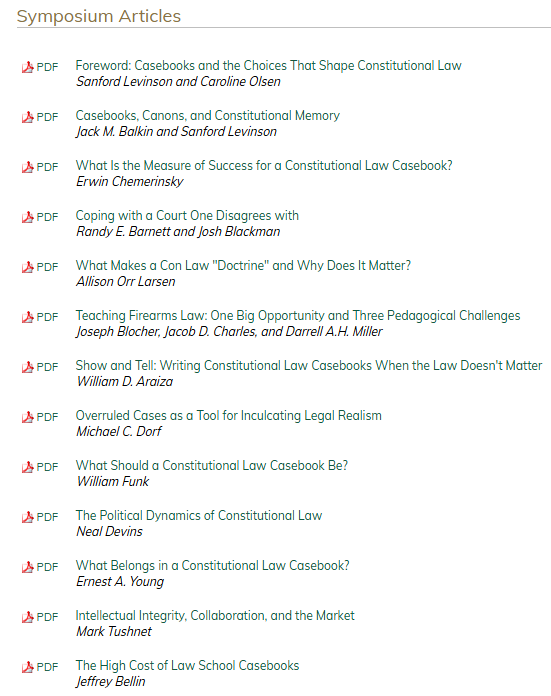
The W&M Bill of Rights Journal has published the contributions to the Constitutional Law Casebooks Symposium. Lots of interesting stuff here - and thanks again to the editors for letting me crash the symposium to talk about casebook costs. scholarship.law.wm.edu/wmborj/
Jeffrey Bellin tweet media
English
0
5
19
1.9K
Katherine Mims Crocker retweetledi
Neil Renic
Neil Renic@NC_Renic·
I’ll be in the cold earth before I give up the em dash to AI
English
7
63
507
16.2K
Katherine Mims Crocker retweetledi
Adam Crews
Adam Crews@adamgcrews·
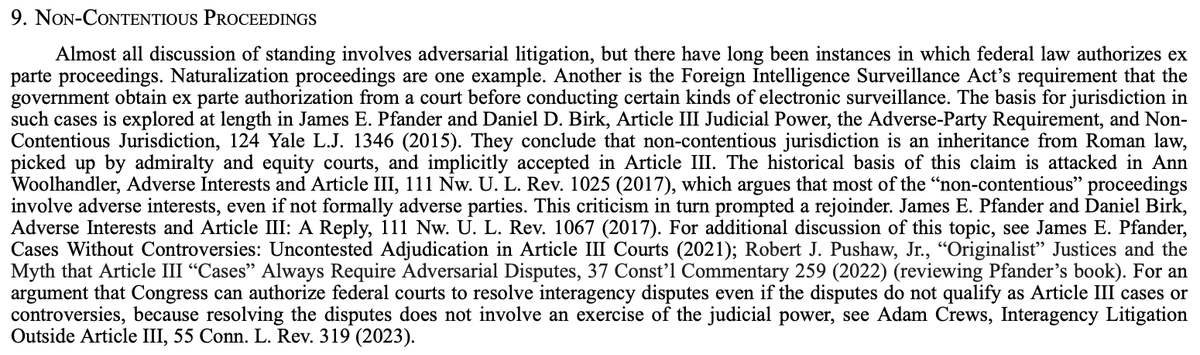
A very cool junior law prof moment for me today was seeing my work cited in the newest edition of the Federal Courts casebook from which I was taught (and that I now use), as part of a note discussing a debate involving the brilliant woman who first taught me Admin Law.
Adam Crews tweet media
English
1
2
24
2K
Katherine Mims Crocker retweetledi
Joel Johnson
Joel Johnson@joeljohnson13·
Yale Law Journal (@YaleLJournal) will be publishing my latest, “The New Criminal Docket and the Clemency Court.” It explores how SCOTUS is no longer using its criminal merits docket for broad constitutional reform, opting instead for targeted relief for the fortunate few.
Joel Johnson tweet media
English
8
11
81
8.6K
Katherine Mims Crocker retweetledi
Divided Argument
Divided Argument@DividedArgument·
Big news for the show: We're now a @SCOTUSblog partner podcast. We'll remain unscheduled and unpredictable, but we're excited to expand our audience and be in conversation with the @SCOTUSblog extended universe.
SCOTUSblog@SCOTUSblog

SCOTUSblog is expanding its podcast lineup. We’re proud to welcome @amaricas_const and @DividedArgument as new editorial partners, joining Advisory Opinions in a growing Supreme Court and constitutional law media ecosystem. Listen to a special Advisory Opinions episode featuring hosts from all three podcasts here: thedispatch.com/podcast/adviso…

English
1
5
33
4.8K
Matthew B. Lawrence
Matthew B. Lawrence@mjblawrence·
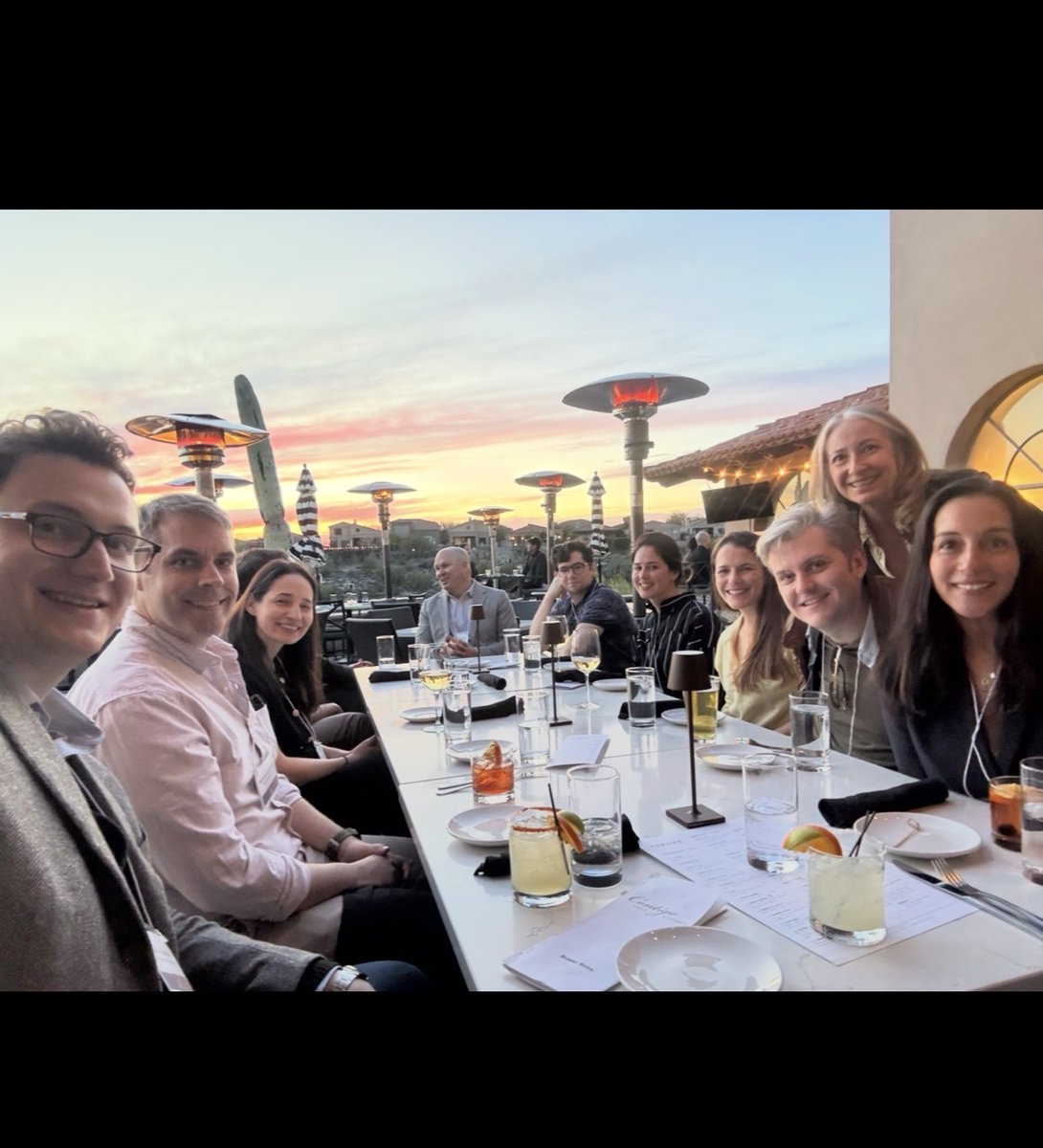
At the 2026 National Conference of Constitutional Law Scholars. The Rehnquist Center at Arizona Law puts together a great program. Neat to see tomorrow’s debates bubbling up…and the sunsets aren’t bad.
Matthew B. Lawrence tweet media
English
3
1
16
2.1K
Katherine Mims Crocker retweetledi
Alex Nunn
Alex Nunn@AlexNunn·
My new paper, The Article III Factfinding Power (forthcoming @MinnesotaLawRev), is now up on SSRN. I welcome your thoughts and comments as I continue to improve the piece! papers.ssrn.com/sol3/papers.cf…
Alex Nunn@AlexNunn

Excited to share two forthcoming projects in the @MinnesotaLawRev and the @NotreDameLRev about federal courts’ increasing reliance on “external” factfinding of epistemically dubious provenance. The first, “Factfinding Revolutions” (forthcoming @NotreDameLRev), traces the rise and fall of previous Anglo-American factfinding regimes--from the ordeal to the self-informing jury to oath-centric proceedings to the adversarial trial--to identify a recurring structure of regime collapse. When that framework is turned toward the present, the Article suggests that the era of the adversarial trial is in a state of terminal decline, with adjudication transitioning to a new age defined by decentralized “external” factfinding. The second, “The Article III Factfinding Power” (forthcoming @MinnesotaLawRev), considers the constitutional dimensions of that shift. It argues that, as factfinding moves outside the courtroom, federal courts nonetheless retain the authority and duty to preserve an essential baseline of epistemic legitimacy in the factfinding that grounds their judgments. Put simply, Article III does not require federal judges to oversee factfinding themselves, but it does require that they ensure external factfinding is epistemically legitimate if it is to serve as the basis for an Article III judgment. I’ll post both papers once SSRN actually approves them (ugh), but feel free to reach out in the interim to get a copy. I welcome your comments!

English
2
5
22
3K
Katherine Mims Crocker
Katherine Mims Crocker@ProfKMCrocker·
👨‍🏫📝📝 Check out my overachieving @TAMULawSchool colleague @AlexNunn's TWO forthcoming articles! Including one on Art. III for all you fed courts people!
Alex Nunn@AlexNunn

Excited to share two forthcoming projects in the @MinnesotaLawRev and the @NotreDameLRev about federal courts’ increasing reliance on “external” factfinding of epistemically dubious provenance. The first, “Factfinding Revolutions” (forthcoming @NotreDameLRev), traces the rise and fall of previous Anglo-American factfinding regimes--from the ordeal to the self-informing jury to oath-centric proceedings to the adversarial trial--to identify a recurring structure of regime collapse. When that framework is turned toward the present, the Article suggests that the era of the adversarial trial is in a state of terminal decline, with adjudication transitioning to a new age defined by decentralized “external” factfinding. The second, “The Article III Factfinding Power” (forthcoming @MinnesotaLawRev), considers the constitutional dimensions of that shift. It argues that, as factfinding moves outside the courtroom, federal courts nonetheless retain the authority and duty to preserve an essential baseline of epistemic legitimacy in the factfinding that grounds their judgments. Put simply, Article III does not require federal judges to oversee factfinding themselves, but it does require that they ensure external factfinding is epistemically legitimate if it is to serve as the basis for an Article III judgment. I’ll post both papers once SSRN actually approves them (ugh), but feel free to reach out in the interim to get a copy. I welcome your comments!

English
1
1
5
820
Katherine Mims Crocker retweetledi
David Schleicher
David Schleicher@ProfSchleich·
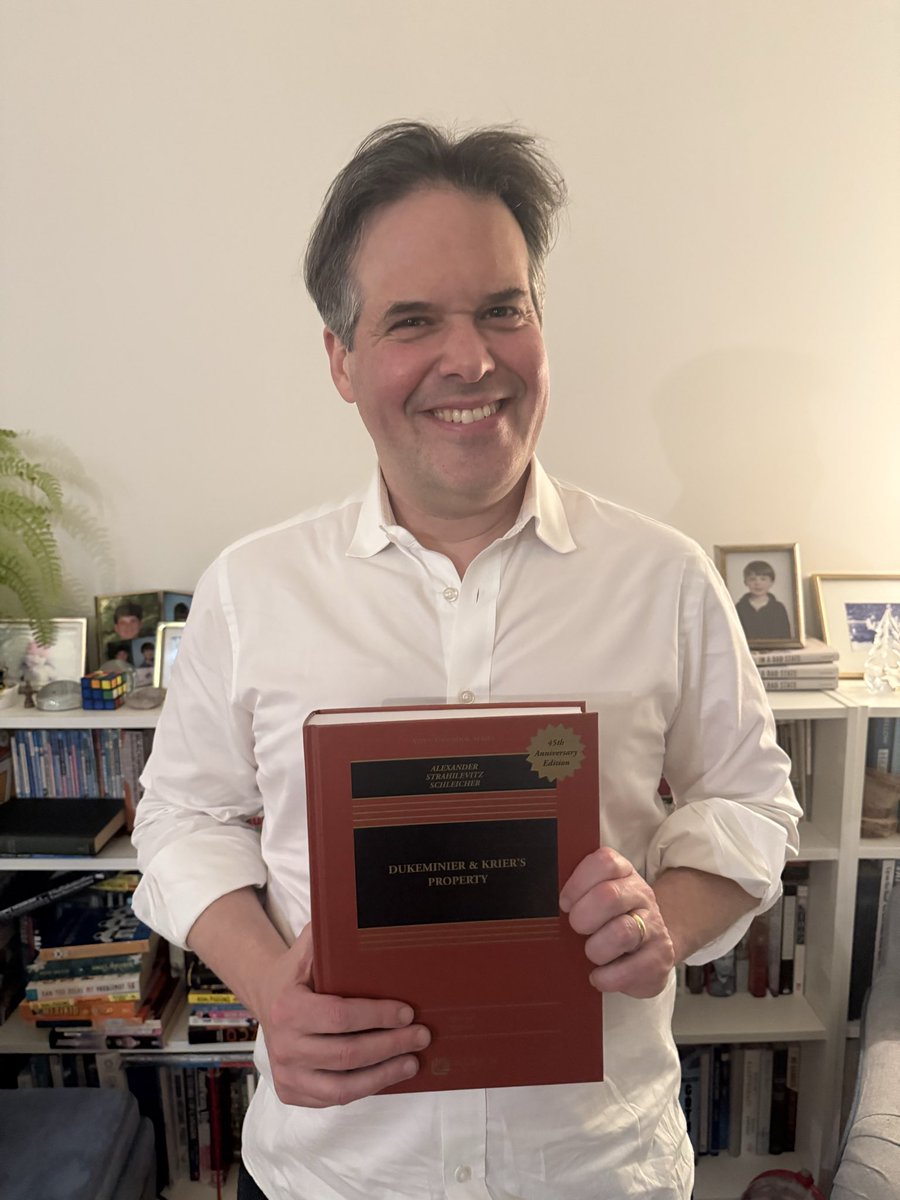
Look what arrived in the mail - the new edition of Dukeminier & Krier’s Property, by Alexander, @liorjs and, now, yours truly
David Schleicher tweet media
English
4
2
50
2.5K
Katherine Mims Crocker
Katherine Mims Crocker@ProfKMCrocker·
The @TAMULawSchool Center on the Structural Constitution is excited to host Prof. Thomas W. Merrill (@ColumbiaLaw) for the 2nd Annual Century Tree Lecture on March 19. This is the Center's highest honor for a senior scholar. Details below!
Katherine Mims Crocker tweet media
English
1
7
24
2.3K
Brian Lipshutz
Brian Lipshutz@BrianLipshutz·
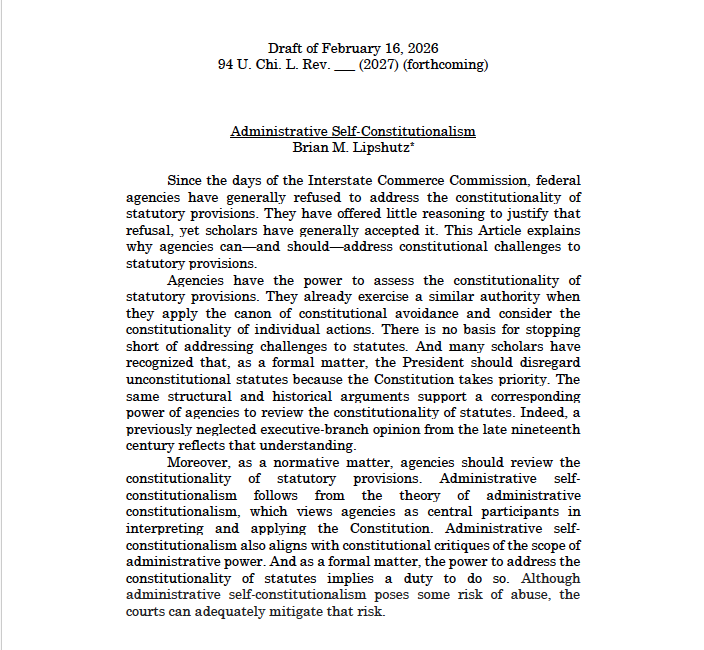
Federal agencies generally don’t consider constitutional challenges to statutory provisions in rulemakings and adjudications. In a new paper (on SSRN and forthcoming in @UChiLRev), I explain why agencies can—and should—consider those challenges. Link below, and comments welcome!
Brian Lipshutz tweet media
English
8
9
46
6.1K