Marcus Beal 🌬

10.3K posts

Marcus Beal 🌬 banner
Marcus Beal 🌬

Marcus Beal 🌬

@Professorecover

Healer / Extreme Athlete / Adventurer / People over Profit "At the depths of dismay is where I began to lay the foundation for my inner cathedral"

Katılım Nisan 2018
1.5K Takip Edilen2K Takipçiler
Sabitlenmiş Tweet
Marcus Beal 🌬
Marcus Beal 🌬@Professorecover·
Your attention is how you dispose your consciousness onto the world, therefore ones own creation is their observation. Zero attention = no ability to observe thus creating future health issues. So, let's discuss the 20 years of top secret military studies done on bio peptides.
English
1
3
12
1.9K
Marcus Beal 🌬 retweetledi
Dr Rudolf Steiner
Dr Rudolf Steiner@RudolfStein2026·
Why can music move us without words, images, or concepts? Painting shows us forms. Poetry gives us symbols. But music is different. Music is the only art that does not truly imitate the physical world. There is no “object” in nature that corresponds to a melody the way a mountain corresponds to a painting or a body to a sculpture. A symphony cannot be reduced to shapes or images. And yet music reaches deeper into the human being than almost any other experience. Why? Because as Dr Steiner explains, Music does not originate in the sensory world. It descends from a realm humanity once knew instinctively — a spiritual world where tone, rhythm, and harmony are more fundamental than physical form. When we listen to music, we are not hearing something "invented". We are hearing echoes of the world the soul enters every night during sleep, and fully after death. A world where beings do not communicate through language or appearances, but through living movement and tone. Ancient humanity still sensed this. Music was not originally treated as entertainment. It was ritual, invocation, cosmic participation. Song and speech were one stream. Instruments were created as extensions of the human voice. Tone itself was experienced as a creative force; something capable of shaping consciousness and open the human being to higher realities. This is why nearly every ancient civilization linked music with the divine. The Greeks spoke of the “music of the spheres.” Sacred chants existed in temples long before concerts existed in theaters. Mystics, and initiates understood that sound could transform the inner state of the soul. Schopenhauer intuited part of this mystery when he wrote that music does not imitate appearances, but expresses the “will” directly. Steiner goes further: what Schopenhauer called the “will,” is a real spiritual world - Devachan, where tone is not symbolic, but substantial. In that world, music is not art. It is reality itself. Every physical thing first exists there as movement, vibration, and harmony before condensing into material form. The visible world is, in a sense, frozen music. This is why music affects us so differently from other arts. A melody can suddenly awaken grief from years ago. A chord progression can feel more intimate than language. A rhythm can strengthen the body before thought even begins. Music bypasses the intellect because it speaks to a layer of the human being older than intellect. Something in us recognizes it. The astral body hears what it once lived within. The etheric body resonates with rhythms older than earthly life. The “I” feels, for a moment, the warmth of its spiritual origin. Music speaks the language consciousness knew before birth and will know again after death. Music is spiritual memory; a reminder that reality is deeper than matter, that consciousness is woven from rhythm, and that harmony lies beneath the chaos of the visible world. Perhaps this is why every civilization, no matter how different, has always created music. Because even after forgetting almost everything else, the soul still remembers tone.
Dr Rudolf Steiner tweet media
English
7
32
115
3K
Marcus Beal 🌬 retweetledi
Massimo
Massimo@Rainmaker1973·
Your brain undergoes a literal cleaning process every time you move your body. Far from a metaphor, this mechanism involves physical forces that help remove cellular waste through enhanced circulation of cerebrospinal fluid (CSF). A recent study published in Nature Neuroscience reveals that simple activities — such as walking, stretching, or even engaging your core muscles — can act like a pump for the brain’s waste-clearance system. Researchers at Pennsylvania State University found that contractions of the abdominal muscles generate pressure changes in connected veins. These changes propagate upward, causing the brain to shift slightly within the skull. This subtle motion drives the flow of CSF, the clear fluid that surrounds and cushions the brain, carrying away proteins, metabolic debris, and other harmful waste products. The process works through mechanical coupling between the abdomen and the brain. Using advanced imaging on mice during movement and sophisticated computer simulations, the team demonstrated that abdominal contractions produce a sponge-like squeezing effect. This pushes old fluid outward while facilitating the entry of fresh fluid, effectively rinsing brain tissue. The findings help explain differences in CSF dynamics between sleep and wakefulness: during rest, fluid flows deeper into the brain for thorough cleaning, while movement assists in expelling waste outward. Impaired waste clearance has been strongly linked to neurodegenerative conditions such as Alzheimer’s disease. By showing how everyday physical activity supports this system, the study highlights a potential physiological benefit of movement for long-term brain health. However, the authors emphasize that the research is still in its early stages and does not yet prove that exercise directly prevents disease in humans. [Garborg, C. S., et al. (2026). Brain motion is driven by mechanical coupling with the abdomen. Nature Neuroscience. DOI: 0.1038/s41593-026-02279-z]
Massimo tweet media
English
23
95
350
35.8K
Marcus Beal 🌬 retweetledi
TheNewPhysics
TheNewPhysics@CharlesMullins2·
🚨 BIOLOGY UPDATE Scientists are discovering that mitochondria — the tiny powerhouses inside your cells — may communicate using ultraweak flashes of light. Not metaphorically. Actual light. Which means inside you right now… trillions of microscopic structures may be exchanging information through glowing biological signals invisible to the human eye. The strange part? Your body may be far less “mechanical” than we once believed. You are not just chemistry. You are electrical. You are energetic. You are alive in ways science is only beginning to understand. Maybe consciousness itself emerges from an orchestra of light deep inside living cells. The closer we look at life… the less dead matter it seems to become.
English
42
213
662
15.8K
Marcus Beal 🌬 retweetledi
Massimo
Massimo@Rainmaker1973·
Researchers have identified a consistent chemical difference in the brains of people with anxiety disorders: significantly lower levels of choline-containing compounds. A groundbreaking 2025 meta-analysis by UC Davis Health scientists revealed this biological marker through proton magnetic resonance spectroscopy (1H-MRS) data. The study found an average 8% reduction in total choline (tCho) in the prefrontal cortex, a key region for emotional regulation, decision-making, and cognitive control, as well as across broader cortical areas. Analyzing 25 datasets involving 370 individuals with anxiety disorders (including generalized anxiety disorder, panic disorder, and social anxiety disorder) and 342 healthy controls, the researchers documented this reduction as a transdiagnostic feature consistent across different anxiety conditions. This represents the first meta-analysis to identify a reliable chemical pattern in the brains of people with anxiety, pointing to measurable neurochemical alterations rather than purely psychological factors. Choline, an essential nutrient obtained from foods such as eggs, salmon, and soybeans, plays a vital role in brain cell membrane integrity and neurotransmitter synthesis. The authors suggest that heightened arousal and chronic stress in anxiety disorders may increase choline demand, depleting levels faster than dietary intake can replenish them and potentially impairing the brain’s ability to regulate the fight-or-flight response. While the findings open promising avenues for nutritional interventions, experts stress that dietary or supplemental approaches should complement, not replace, established treatments. [Maddock RJ, Smucny J. Transdiagnostic reduction in cortical choline-containing compounds in anxiety disorders: a 1H-magnetic resonance spectroscopy meta-analysis. Molecular Psychiatry. 2025. DOI: 10.1038/s41380-025-03206-7]
Massimo tweet media
English
41
204
952
330.8K
Marcus Beal 🌬 retweetledi
Massimo
Massimo@Rainmaker1973·
Cognitive neuroscientist Julia Mossbridge, Ph.D, says these memories from the future could mean the notion of time might not be as linear as we imagine.
Massimo tweet media
English
107
260
1.7K
88.3K
Marcus Beal 🌬 retweetledi
All day Astronomy
All day Astronomy@forallcurious·
🚨: Neuroscience considers metacognition the highest form of intelligence..... "the ability to think about your own thinking."
English
639
5.6K
48.1K
4.8M
Marcus Beal 🌬 retweetledi
Massimo
Massimo@Rainmaker1973·
Fun fact. The human brain generates more electrical impulses per day than all the phones in the world combined.
GIF
English
107
575
2.1K
176.2K
Michael Morelli
Michael Morelli@morellifit·
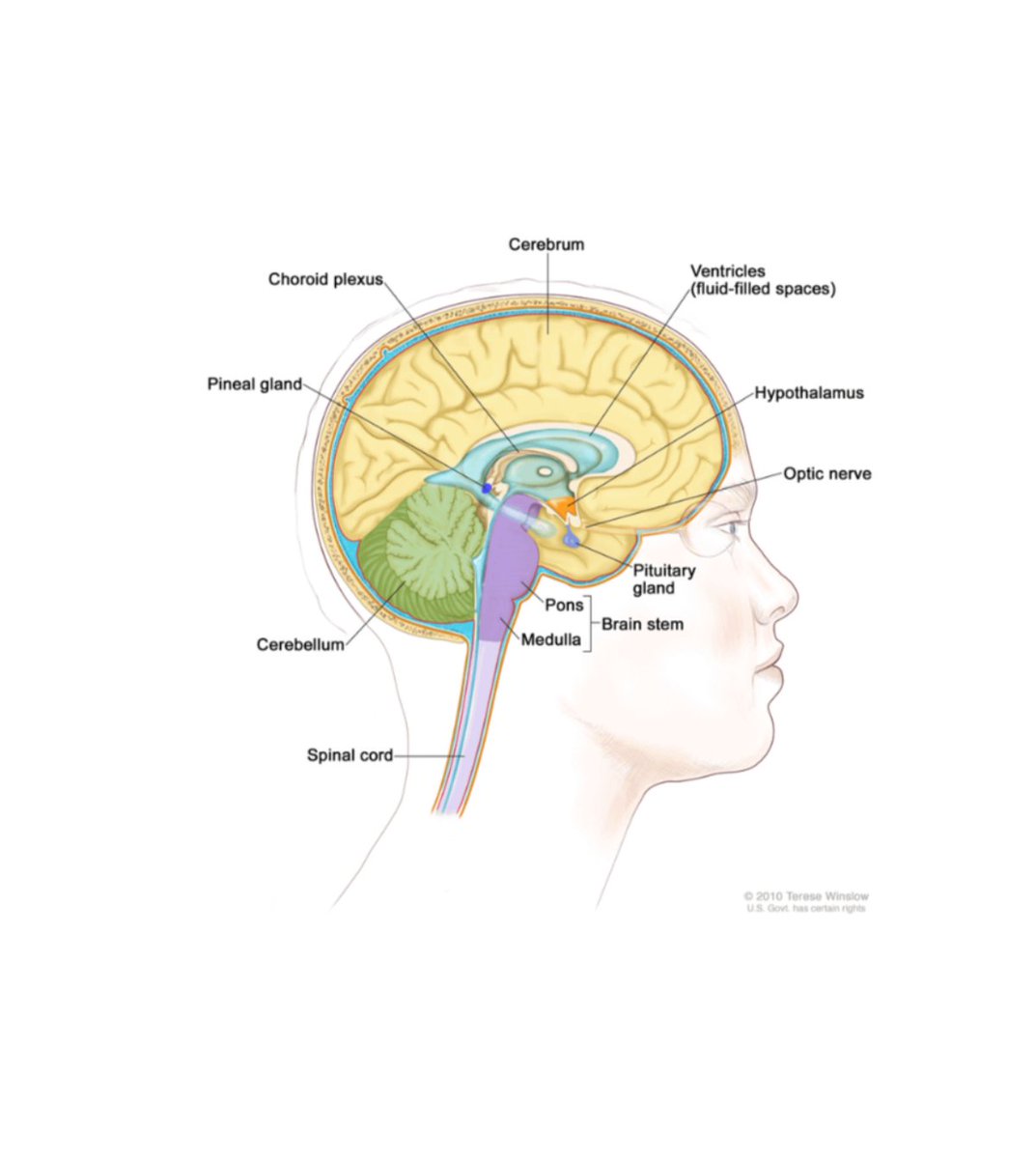
Epithalon + Pinealon are two of the most overlooked peptides for sleep and brain health. They have 40+ years of Russian research behind them. I've been using them for a few weeks, and the effects on my sleep have been incredible. Here's the breakdown: (1/17)
Michael Morelli tweet mediaMichael Morelli tweet media
English
21
31
388
37.8K
Marcus Beal 🌬 retweetledi
Michael Morelli
Michael Morelli@morellifit·
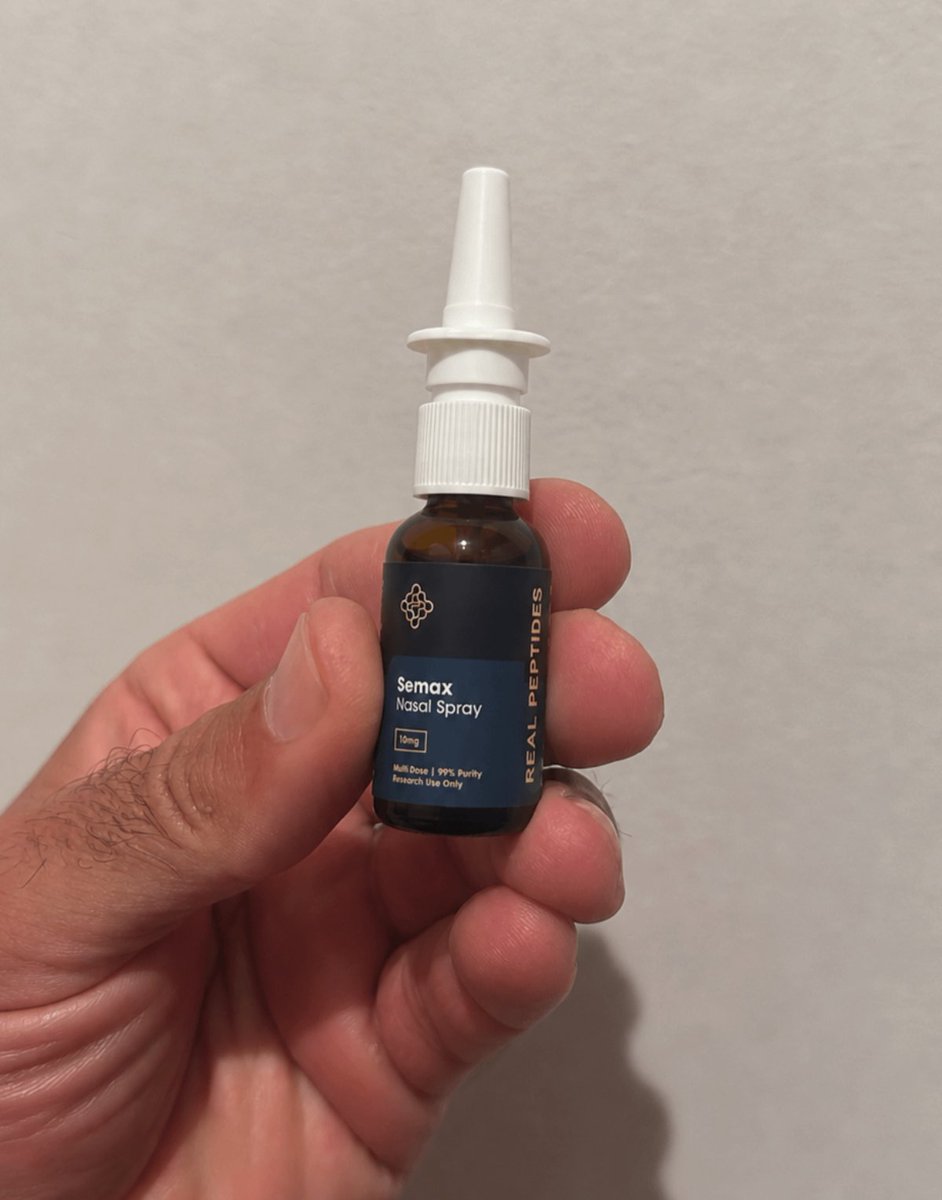
Semax is the most underrated nootropic peptide on the market. It has 40 years of safe Russian clinical use behind it. I've been using it for a few months and the cognitive benefits are insane. Here's the breakdown: (1/13)
Michael Morelli tweet media
English
82
150
1.8K
470.9K
Marcus Beal 🌬 retweetledi
All day Astronomy
All day Astronomy@forallcurious·
DID YOU KNOW🚨: Whenever you express gratitude, your brain physically rewires itself, making you naturally more positive and resilient
All day Astronomy tweet mediaAll day Astronomy tweet media
English
93
1.2K
9.1K
635.1K
Marcus Beal 🌬 retweetledi
Carlos E. Perez
Carlos E. Perez@IntuitMachine·
🧵 1/12 Your best ideas don’t come at your desk. They come when you’re walking. A 2014 Stanford study (published in Journal of Experimental Psychology) proved it with 4 clean experiments: walking literally gives your ideas legs. 81% of people got more creative while walking. The effect lasts even after you sit down. This is the creativity hack nobody talks about enough. Let’s break it down. 🚶‍♂️🧠 🧵 2/12The paper is called “Give Your Ideas Some Legs” by Marily Oppezzo & Daniel L. Schwartz. They tested two types of thinking: Divergent (wild, original ideas — Guilford’s Alternate Uses test) Convergent (one correct answer — Compound Remote Associates) Walking crushed divergent thinking. It actually hurt convergent thinking a bit. Translation: Walking = idea generation machine. Not idea judging. 🔥 🧵 3/12 Experiment 1 (treadmill, indoors, blank wall): People did the creativity test sitting → then walking. 81% became more creative while walking. Average boost: ~60%. They also generated 50% more total ideas (good + bad). Walking didn’t just make them talk more — it made a higher percentage of those ideas actually creative. Wild. 🧵 4/12 Experiment 2 added the killer detail: Sit → Walk Walk → Sit Sit → Sit (control) Walking beat sitting. But sitting AFTER walking was just as good as walking. The creative boost lingers. You can walk, then sit down and still ride the wave. Game-changer for meetings & writing. 🧵 5/12 Experiment 3 took it outside (real campus walk). Same massive boost. Even better: the effect didn’t wear off after a second walk. Switching rooms in the sit-sit condition didn’t help — it was the walking, not just “changing scenery.” 🧵 6/12 Experiment 4 was the most elegant: Four conditions — Sit inside Walk inside (treadmill) Sit outside (wheeled in wheelchair) Walk outside Only walking produced the highest-quality, most novel analogies (Barron’s Symbolic Equivalence test). Being outside helped novelty a bit… but walking was the real driver. The legs win again. 🧵 7/12Key takeaways: ✅ Walking boosts appropriate novelty (the actual definition of creativity) ✅ Works on treadmill OR outdoors ✅ Effect is immediate + has a ~10–15 min residual boost ✅ 81–100% of participants improved depending on the study ✅ It’s free, healthy, and requires zero training Nietzsche was right: “All truly great thoughts are conceived while walking.” 🧵 8/12Why does this work? The researchers ruled out: Just “exercise” Outdoor stimulation alone Embodied cognition (you don’t need to keep moving) Likely mechanisms: more associative memory flow + reduced executive suppression of weird ideas. Walking = mild distraction that unlocks your brain’s default network. 🧵 9/12 Real-world application Stuck on a problem? Go for a 10–15 min walk Talk your ideas out loud (they recorded responses) Come back and write Want to brainstorm with your team? Walk + talk. Creativity + exercise in one move. The ultimate life cheat code. 🧵 10/12 This study is from 2014 and still criminally under-known. In an era of endless sitting, Zoom fatigue, and “I’m not creative” excuses… Walking is the simplest, most evidence-backed intervention we have. No apps. No courses. Just stand up and move. 🧵 11/12. If you: Write Design Code Teach Manage Or just want better ideas… Make walking your non-negotiable creativity ritual. I’ve started doing it. The difference is ridiculous. 🧵 12/12 Drop a 🔥 if you’re going for a walk after reading this. Tag a friend who needs to hear this. Your next great idea is literally one walk away. Now stand up. Thread end. 🧵🚶‍♂️
Carlos E. Perez tweet media
English
3
28
96
4.5K
Marcus Beal 🌬 retweetledi
Massimo
Massimo@Rainmaker1973·
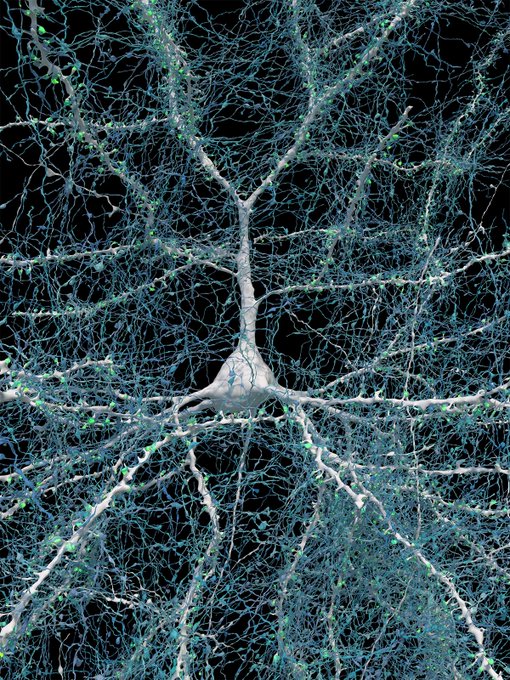
This is the most detailed view of a human brain to date. A team of researchers used electron microscopy (EM) to image a cubic millimeter-sized piece of human brain tissue at high resolution and this is a single neuron with 5,600 of the nerve fibers that connect to it.
Massimo tweet media
English
89
538
1.9K
99.6K
Marcus Beal 🌬 retweetledi
All day Astronomy
All day Astronomy@forallcurious·
This is what a moment of learning looks like! Process called synaptogenesis. This is the formation of new connections, known as synapses, between neurons in the brain.
English
44
516
2.1K
69.1K
Marcus Beal 🌬
Marcus Beal 🌬@Professorecover·
The strongest men have been broken.
English
0
0
0
11
Marcus Beal 🌬
Marcus Beal 🌬@Professorecover·
Their are 3 modes to movement can mobilize, harmonize or exhaust.
English
0
0
0
12
Marcus Beal 🌬 retweetledi
Physics In History
Physics In History@PhysInHistory·
"Study the science of art and the art of science. Learn how to see. Realize that everything connects to everything else." - Leonardo da Vinci (1452 - 1519)
Physics In History tweet media
English
52
859
2.8K
55.7K
Marcus Beal 🌬
Marcus Beal 🌬@Professorecover·
Do what others don't so you'll have results others won't.
English
0
0
0
3
Marcus Beal 🌬 retweetledi
Smart Science
Smart Science@SmartScience·
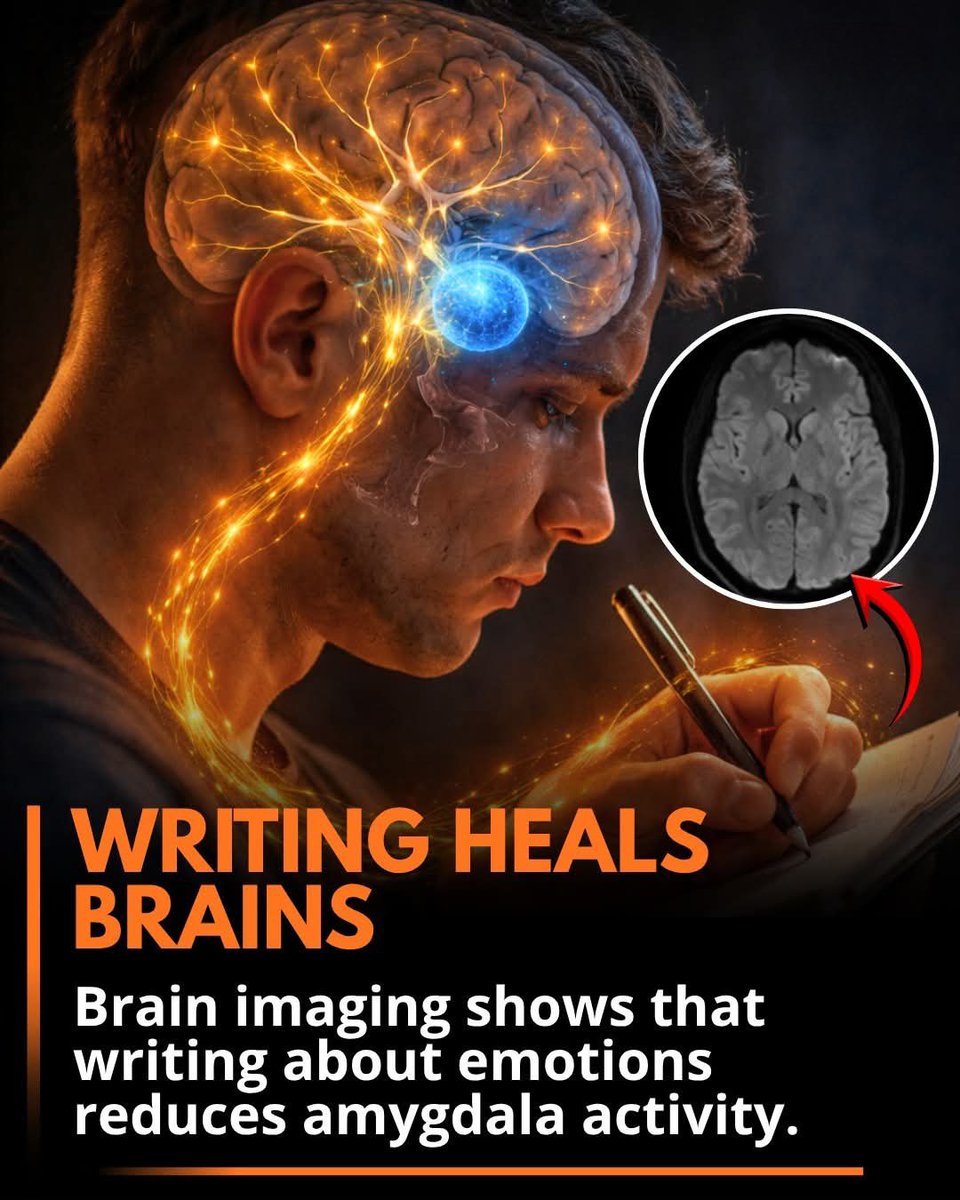
Putting your emotions into words does more than just help you reflect—it can actually influence how your brain processes those feelings. The amygdala, often known as the brain’s alarm system, plays a key role in detecting threats and triggering emotional responses. When feelings become intense or overwhelming, this region tends to become highly active. However, brain imaging studies show that simply naming or writing about your emotions can reduce activity in the amygdala while increasing activity in the prefrontal cortex—the part of the brain responsible for decision-making, reasoning, and self-control. In other words, expressing emotions through writing can shift your brain from reactive mode to a more thoughtful, regulated state. Research on expressive writing, including controlled trials, also suggests that structured emotional writing can help reduce overthinking and improve overall mental well-being. When you put experiences into words, your brain begins to organize them, turning something messy and overwhelming into something more clear and manageable. This doesn’t mean writing eliminates stress—but it does help your brain process emotions more effectively by engaging its regulatory systems. Even short writing sessions have been linked to noticeable changes in how we handle emotions. When was the last time you truly wrote down what you were feeling—and noticed a shift afterward?
Smart Science tweet media
English
14
139
465
14K