PROSPUR

327 posts

PROSPUR banner
PROSPUR

PROSPUR

@Prospur_

Wealth practice for HNIs, professionals & NRIs MFs · Fixed Income · Fixed Deposits and more AMFI Registered MFD · ARN-348873

Mumbai Katılım Aralık 2025
95 Takip Edilen44 Takipçiler
PROSPUR
PROSPUR@Prospur_·
Fair point, but there is a difference between cutting consumption and improving capital allocation. For a country, real wealth creation comes from productivity, exports, innovation, formal savings, and investment, not just spending more or spending less. India’s challenge is to convert household savings and domestic demand into productive capital, while the US challenge is managing leverage without damaging future returns. Both models can work, but the risks are very different.
English

0
0
1
268
Akshat Shrivastava
Akshat Shrivastava@Akshat_World·
0 people got rich by cutting their expenses. To get rich, you need to grow income. This applies at a national level too. Zoom out and look:- 1) India is asking to cut: let rupee fall, buy less foreign goods, don't buy gold, don't travel abroad etc We are basically cutting (except for taxes of course) 2) US is asking to speculate. Circular financing in AI, IR cuts talks, collab with China etc. Both the markets are great. But, one is cutting while the other is building more leverage. How you play this is a good test of investing :)
English
56
47
617
36K
PROSPUR
PROSPUR@Prospur_·
Agree with the broader direction. India needs deeper financialization, not more incentives for capital to stay locked in hard assets. A simpler and more asset-neutral tax framework for financial assets can help improve participation across deposits, bonds, REITs, InvITs, ETFs, and equities. The bigger reform is not just lower taxes. It is predictability, parity across products, and encouraging long-term, tax-compliant savings to move into productive capital.
English
0
0
0
480
PROSPUR
PROSPUR@Prospur_·
True. Market leadership changes much faster than market narratives. One phase belongs to large caps another to mid and small caps. That is why blindly following every downgrade, upgrade, or institutional view can become costly. FIIs can influence flows, but they do not always capture domestic liquidity, earnings momentum, positioning, and investor behaviour on the ground. Independent thinking matters because returns are not only linked to information. They are equally linked to temperament.
English
0
0
0
206
PROSPUR
PROSPUR@Prospur_·
Multi-asset funds are gaining attention in volatile markets, but the return gap tells the real story. Diversification alone does not explain outcomes. The difference comes from how each fund allocates across equity, debt, commodities, arbitrage, global exposure, and REITs/InvITs. Same category, very different portfolio behavior. The real story is not just "multi-asset" but how the allocation is managed across market cycles
PROSPUR tweet media
English
0
0
2
23
PROSPUR
PROSPUR@Prospur_·
Right. The concept of multi-asset is not just about adding more products to a portfolio. It is about combining assets that behave differently when growth, inflation, interest rates, currency moves, and market stress occur. Equity, debt, gold, global exposure, and alternatives all play different roles at different times in the cycle. That is where allocation discipline matters more than asset-class loyalty.
English
0
0
2
87
Sahil Kapoor
Sahil Kapoor@SahilKapoor·
When will we learn It is not passive vs active. It is not Indian equities vs global equities. It is not gold vs stocks. It is not bonds vs stocks. It is not this vs that. It is AND. Multi Asset.
English
7
3
62
3.6K
PROSPUR
PROSPUR@Prospur_·
FD laddering comes into play when the rate cycle is uncertain. In India, with the RBI on pause and markets still debating the next direction for rates, splitting maturities avoids turning the whole FD allocation into one big timing call. It forms a straightforward setup where some money matures on a regular basis, liquidity is not entirely sacrificed, and reinvestment happens gradually as rates shift. #RBI #FixedDeposit
PROSPUR tweet media
English
0
2
2
31
PROSPUR
PROSPUR@Prospur_·
Good point,Calling SIP money merely “exit liquidity” for FIIs is simplistic. Clearly, Indian markets have become more stable and less dependent on foreign money, thanks to domestic flows. But with strong inflows also comes a different type of responsibility. The real challenge is not just to deploy the money coming in each month but to do it without compromising on liquidity, valuations, and portfolio quality. In a good cycle, it is easier to build AUM. The real test is what happens to portfolios when the cycle turns.
English
0
0
0
505
sandip sabharwal
sandip sabharwal@sandipsabharwal·
The notion that SIP investors have merely provided exits to FIIs at higher prices is overly simplistic and misguided. Where I would agree, however, is that relentless SIP inflows into funds managed by inexperienced fund managers have encouraged excessive risk-taking and investments in stocks at valuations where generating meaningful long-term returns becomes extremely difficult. There are far too many fund managers today who are incapable of managing even Rs 100 crore, yet are overseeing portfolios of Rs 10,000 crore. FPIs currently see relatively better opportunities elsewhere. However, once the profitability cycle in Chips and Semis peaks and begins a sharp decline from 2027 onwards, we are likely to see a shift in global capital flows, and India should receive its fair share of allocations.
English
18
14
152
18.4K
PROSPUR
PROSPUR@Prospur_·
Fair point. The case for small caps is less about “small caps always perform better” and more about the size of the opportunity set. A wider universe gives active managers more room for stock selection, but it also increases the importance of liquidity, valuation discipline, and risk control. That is why time horizon matters so much in this category.
English
0
0
0
112
Investment_ Mantra
Investment_ Mantra@Keval_IM·
Mostly we suggest Small Cap fund for 7+ year Why Simple logic Considering 2000 CR+ market cap is universe for mutual fund , there are 1192 company in it as of now Remove First 250 (large and mid) and you have 942 company for small cap 942 This is where active fund can make alpha. In coming year many new company will list , most of them will fall in small cap category only. Some will say Why not flexi cap , its true that flexi cap can invest across market but category average allocation in small cap is 18%. Simple logic is there more option for active fund to allocation , more possibility for it to generate alpha.
Investment_ Mantra tweet media
English
3
2
24
4.1K
PROSPUR
PROSPUR@Prospur_·
Agree with this. Market prediction is attractive, but risk management is what keeps you in the game. The real edge is not just knowing what to buy but having enough liquidity, discipline, and allocation balance to act when markets correct. Compounding works best when capital survives volatility.
English
0
0
2
542
PROSPUR
PROSPUR@Prospur_·
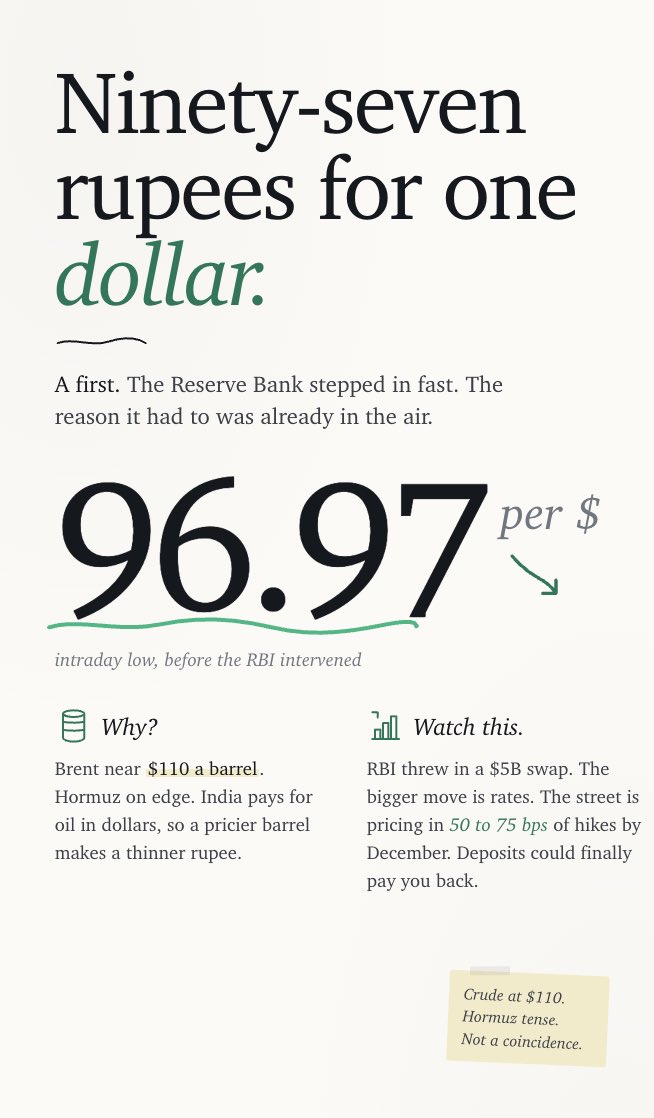
The USD/INR hit an intraday low of 96.97 before the RBI stepped in. The culprits? Brent crude hovering near $110/barrel and brewing Hormuz tensions. To stabilize things, the RBI just threw in a $5B swap, and the street is now pricing in 50-75 bps of rate hikes by December.
PROSPUR tweet media
English
0
1
4
162
PROSPUR
PROSPUR@Prospur_·
SEBI’s salary-linked SIP proposal is being pitched as a simpler way for SIP payments via payroll. It does not mean the employer is picking where you invest. The employee is the actual investor, decides whether to opt in or out and selects the scheme. The employer role would be largely to deduct the SIP amount from salary and pass it through the approved process. So the real change is not in ownership but in convenience and discipline of execution. #SEBI #SIP #MutualFund
English
0
3
5
95
PROSPUR
PROSPUR@Prospur_·
Owning 5 mutual funds does not always mean owning a diversified portfolio. Many equity funds can end up holding the same large stocks, which creates portfolio overlap. On paper, it feels diversified. In reality, your money may still be concentrated in the same companies and sectors. The real check is not just “how many funds do I own?” It is “what do these funds actually own underneath?” In this week’s Prospur Finletter, we break down portfolio overlap, fake diversification and how investors can audit their mutual fund holdings better. Read the full Finletter to understand whether your portfolio is truly diversified or just repeated exposure in different wrappers. prospur.in/finletter
PROSPUR tweet media
English
0
2
4
79
PROSPUR
PROSPUR@Prospur_·
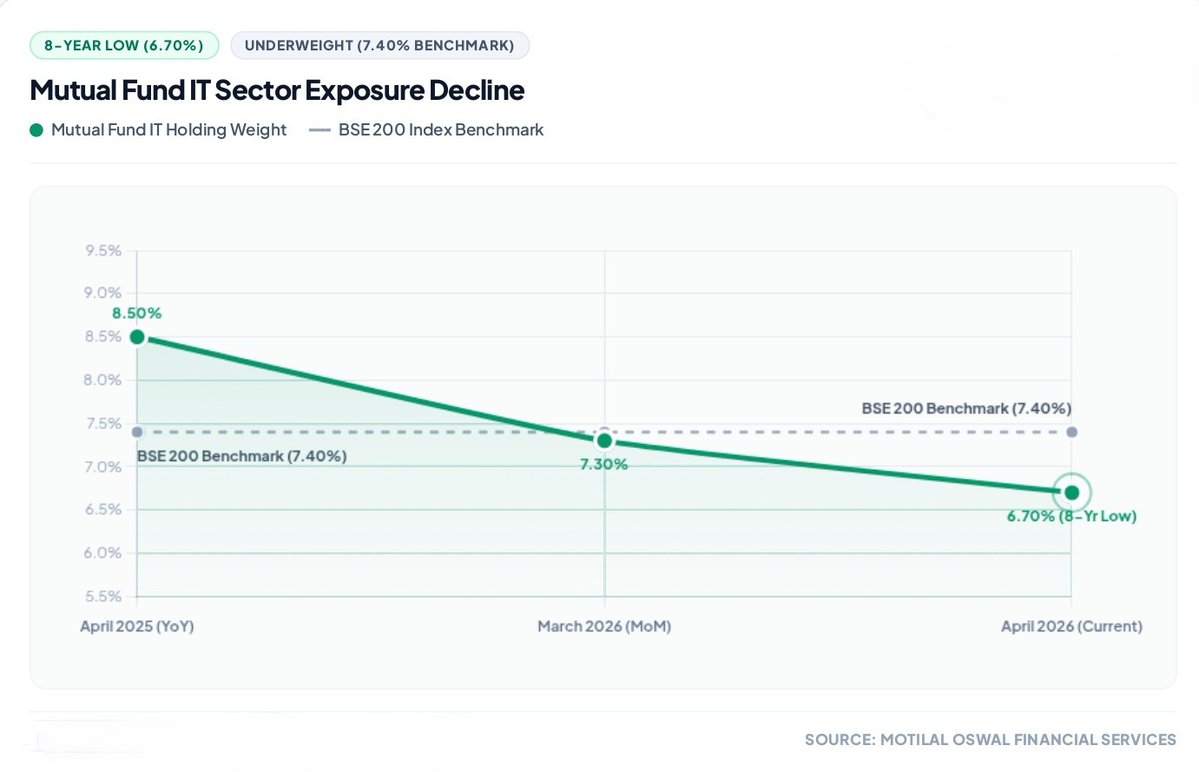
Mutual funds’ technology sector allocation fell to 6.7% in April 2026, an 8-year low, down from 8.5% in April 2025 and 7.3% in March 2026. This looks less like a short-term price reaction and more like a sector level reassessment. Slower global tech spending, muted earnings visibility, and AI-led disruption are changing how traditional IT services are being viewed. The key sign is the underweight relative to the benchmark. seems to be a reflection of uncertainty rather than just recent weakness in institutional allocation.
PROSPUR tweet media
English
0
1
3
68
PROSPUR
PROSPUR@Prospur_·
Liquid funds registered a net inflow of ₹1.65 lakh crore in April 2026, up by ₹46,448 crore from ₹1.19 lakh crore in April 2025. That is not a debt fund number It reflects investors’ preference for liquidity, lower volatility, and flexibility while market uncertainty remains high. Sometimes, fund flows reveal investor behavior better than market headlines.
English
0
0
2
30
PROSPUR
PROSPUR@Prospur_·
Flexi-cap funds saw record inflows of ₹10,147 crore in April, even as overall equity MF inflows declined 5% month-on-month and SIP contributions slipped 3%. So it doesn’t look like investors are pulling back from equity. They just seem more comfortable allowing the fund manager to decide where the money should go across large, mid, and small caps.
English
0
1
4
80
PROSPUR
PROSPUR@Prospur_·
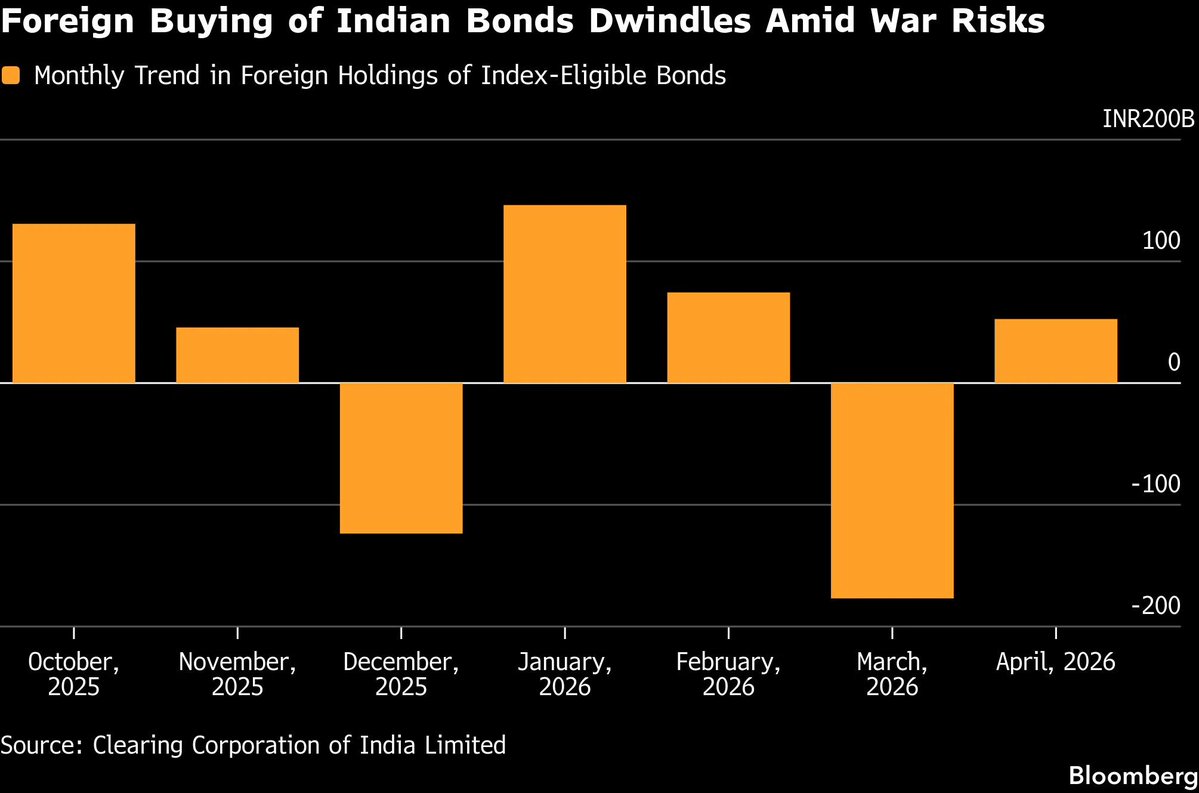
Foreign buying in India’s index-eligible bonds has slowed sharply, and March even saw a clear outflow. This might help in explaining why India is reportedly looking at cutting taxes on foreign investors’ bond income. Coupon income is currently taxed at nearly 20%, after the earlier 5% concessional rate ended in 2023. A lower tax rate could make Indian bonds more attractive, support FPI flows, and ease some pressure on the rupee. However, foreigners still own only around 3% of India’s $1.3 trillion sovereign bond market, so the bigger story is India trying to make its bond market more globally competitive.
PROSPUR tweet media
English
0
1
4
70
PROSPUR
PROSPUR@Prospur_·
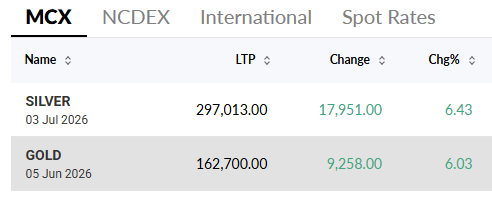
Gold and silver are flying today. The government just hiked import duties from 6% to 15% overnight, so the cost of bringing metals into India spiked instantly. When the landed price jumps that fast, local rates follow immediately. Between this, a weaker rupee, and some global jitters, everyone is piling back into gold as a safety net. Wild move.
PROSPUR tweet media
English
0
2
4
149
PROSPUR
PROSPUR@Prospur_·
This is more than just a bad day in the market. The fall could have been driven by fears of war, but India’s bigger worry is oil and the rupee. Oil is expensive, rupee is weak, and now selling has spread in the market. ₹10.11 lakh crore of investor wealth being wiped out in a single day is no small thing. The next few days depend on two things, whether oil cools down and whether the rupee stops falling.
English
0
0
4
52
PROSPUR
PROSPUR@Prospur_·
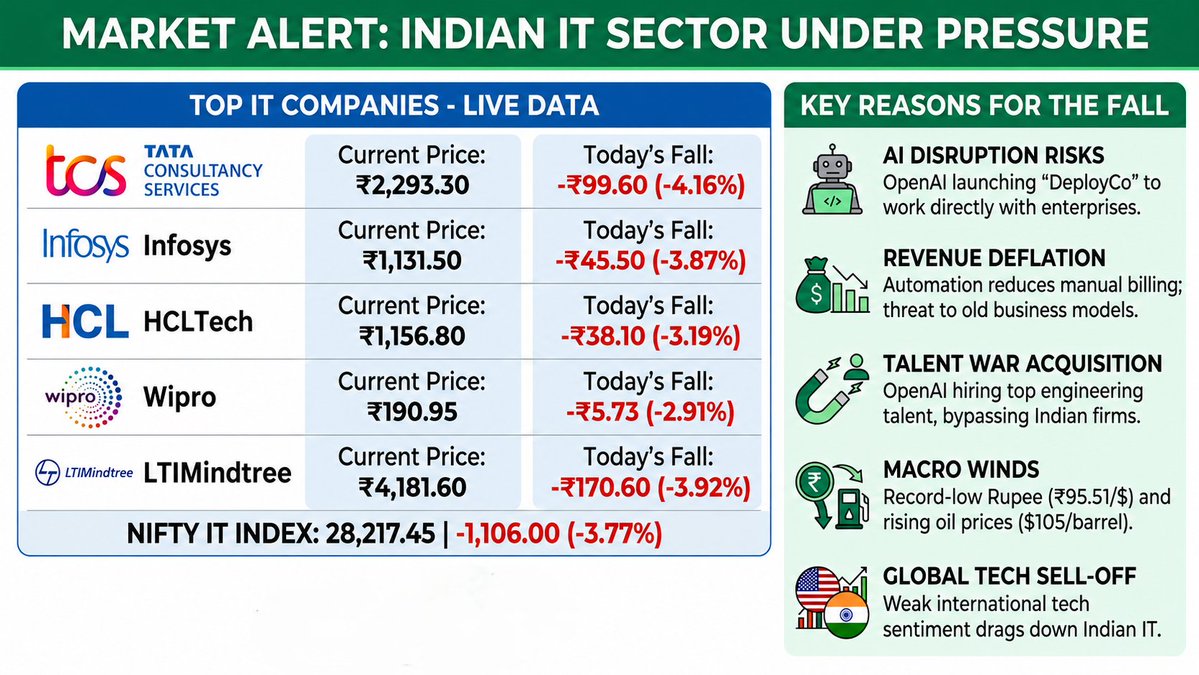
Indian IT stocks are trading significantly lower today as the Nifty IT index slips nearly 3.7%. The market is currently weighing the impact of OpenAI's recent enterprise service announcements alongside broader macroeconomic factors like the falling rupee and rising oil prices.
PROSPUR tweet media
English
0
1
5
101