Suzanne Prout

231 posts

Suzanne Prout

Suzanne Prout

@ProutSuzanne

Lead Practitioner: Curriculum, Teaching and Learning @amsdorset

Katılım Mart 2019
211 Takip Edilen133 Takipçiler
Suzanne Prout retweetledi
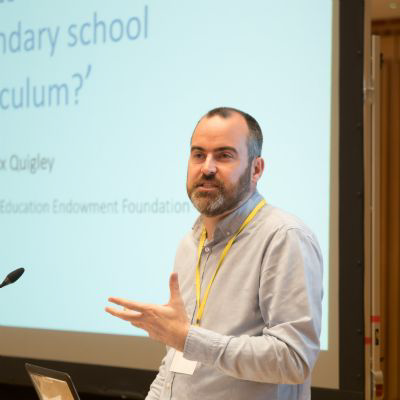
Alex Quigley
Alex Quigley@AlexJQuigley·
How can feedback drive successful teacher adaptations? This new Education Endowment Foundation (EEF) resource - ‘Check.Adapt’ - offers a concise, usuable resource to reflect on decisions in the classroom. Read more here: educationendowmentfoundation.org.uk/news/checking-…
English
0
36
106
10.7K
Suzanne Prout
Suzanne Prout@ProutSuzanne·
This ⬇️ “Leadership in schools…is not about brilliance. It’s about systems, habits and the discipline of improvement. Systems make the right actions more likely and the wrong ones harder to repeat… That mindset is not glamorous. It is transformative.”
Lee Woods@LeeWoods0722

Most school leaders are not chasing perfection. They are chasing progress. Quietly. Relentlessly. Under pressure. That is why Better by Atul Gawande resonates so deeply with leadership in schools. It is not about brilliance. It is about systems, habits and the discipline of improvement. In surgery, failure costs lives. In education, it costs opportunity. The lesson is the same in both fields: Care is not enough. Systems matter. That simple truth sits at the heart of Better: A Surgeon’s Notes on Performance by Atul Gawande. Although written through the lens of medicine, it may be one of the most quietly powerful leadership books a leader can read. Because it strips performance back to its essentials. Not vision statements. Not slogans. But habits, systems, humility and the relentless pursuit of improvement. In schools, as in surgery, we often celebrate individual excellence. The outstanding teacher. The inspirational leader. The charismatic head. Gawande dismantles this myth with precision. He shows that even the most talented professionals fail without: •Clear systems •Consistent routines •Feedback that is acted upon •A culture that allows challenge and learning The lesson is uncomfortable but necessary. Performance does not improve because people care more. It improves because systems make the right actions more likely and the wrong ones harder to repeat. One of Gawande’s central arguments is that improvement rarely comes from dramatic breakthroughs. It comes from marginal gains applied consistently. This is profoundly relevant to school leadership. Better attendance rarely comes from one assembly. Better behaviour rarely comes from one policy rewrite. Better teaching rarely comes from one INSET day. It comes from leaders who: •Clarify expectations •Remove ambiguity •Build routines that survive pressure •Accept that good intentions are not enough In Gawande’s world, checklists save lives. In ours, systems save learning time. Perhaps the most striking section of Better is Gawande’s exploration of coaching. Even elite surgeons, at the top of their profession, actively seek feedback from others who can see what they cannot. This is where leadership in schools is often tested. Senior leaders are expected to have answers. Yet the most effective leaders are those who remain open to scrutiny. The parallel is clear. Schools improve fastest when leaders: Invite challenge rather than defend practice Use evidence to refine decisions Model learning rather than certainty Leadership is not diminished by coaching. It is strengthened by it. What makes Better resonate so strongly with education is its realism. Gawande does not argue that failure can be eliminated. He argues that it can be reduced. He does not promise excellence overnight. He commits to progress, relentlessly pursued. This mirrors the reality of schools. We work in complex systems, serving diverse communities, under constant pressure. Improvement is rarely neat. But it is possible. The leaders who make the biggest difference are those who ask, repeatedly: What worked today? What did not? What one thing can we do better tomorrow? That mindset is not glamorous. It is transformative. Better is not a book about medicine. It is a book about responsibility. Responsibility to design systems that protect people. Responsibility to reflect honestly on performance. Responsibility to keep improving even when progress feels slow. For school leaders, that message could not be more relevant. Because the work is not about being flawless. It is about being better. Every day.

English
0
0
1
59
Suzanne Prout retweetledi
Jamie Clark
Jamie Clark@XpatEducator·
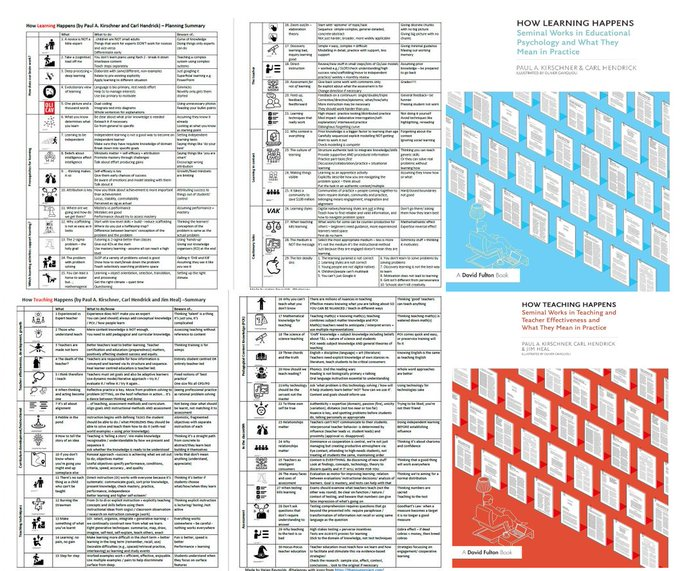
📣 NEW! “If there’s one thing to get right in teaching, it’s Checking for Understanding.” This new one-page guide breaks down how to thread CfU checks into every lesson — inspired by the ‘How Learning Happens’ work by @C_Hendrick and @HughesHaili Look out for the next edition of ⚗️DistillED, exploring this in Rosenshine’s 6th Principle of Instruction: CfU—coming Thursday. newsletter.jamieleeclark.com
Jamie Clark tweet media
English
3
88
303
33.3K
Suzanne Prout
Suzanne Prout@ProutSuzanne·
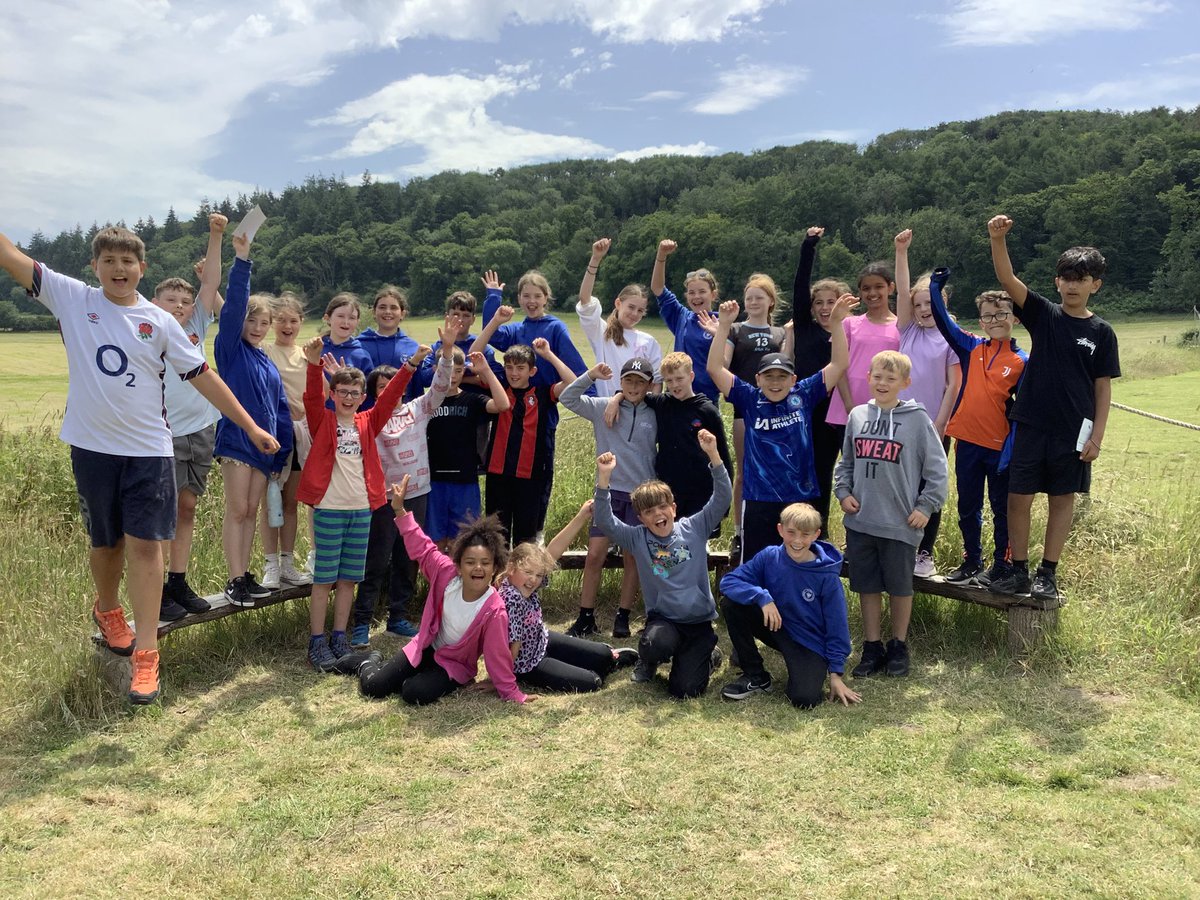
@stivesprimary A huge thank you for posting photos each day. It has been so lovely seeing what amazing experiences they have had. Lots of memories made!
English
0
0
0
7
Mrs L Crossley
Mrs L Crossley@stivesprimary·
Having a wonderful time.
Mrs L Crossley tweet media
English
1
0
8
182
Suzanne Prout
Suzanne Prout@ProutSuzanne·
@stivesprimary6 A huge thank you for posting these photos each day. It has been so lovely seeing what amazing experiences they have had. Lots of memories made!
English
0
0
0
15
Year 6
Year 6@stivesprimary6·
Goodbye Brenscombe!
Year 6 tweet mediaYear 6 tweet media
English
1
1
6
315
Suzanne Prout
Suzanne Prout@ProutSuzanne·
@adamboxer1 I agree but at least AI levels the playing field for those who didn’t have access to help previously.
English
2
0
2
1.2K
Adam Boxer
Adam Boxer@adamboxer1·
I'm not normally one for "AI changes everything" but my oh my personal statements need to be scrapped
English
10
5
85
16.7K
Suzanne Prout retweetledi
Jamie Clark
Jamie Clark@XpatEducator·
🏗️ Scaffolding Think, Pair, Share can help facilitate deep discussions and drive thinking from ALL students. This handy resource is designed to help students master the WHAT, WHY, and HOW of the process. 👊 Support my work by tapping REPOST and grab a FREE high-quality copy here: jamieleeclark.com/graphics
Jamie Clark tweet media
English
9
484
1.1K
240.5K
Suzanne Prout
Suzanne Prout@ProutSuzanne·
@educationgovuk @bphillipsonMP As a teacher with 18 years of experience, it is so disheartening to read so many of these comments. Unfortunately, they reflect how we seem to be viewed by a growing number of people. Thank you @bphillipsonMP for valuing what we do - it is truly refreshing.
English
1
1
24
1.1K
Department for Education
Department for Education@educationgovuk·
The Government has accepted the recommendations of the School Teacher’s Pay Review Body to fully fund a 5.5% pay award. @bphillipsonmp has also confirmed additional steps to reduce workload, increase flexibility and restore teaching as the go-to profession for graduates.
English
113
72
369
265.3K
Suzanne Prout retweetledi
Jamie Clark
Jamie Clark@XpatEducator·
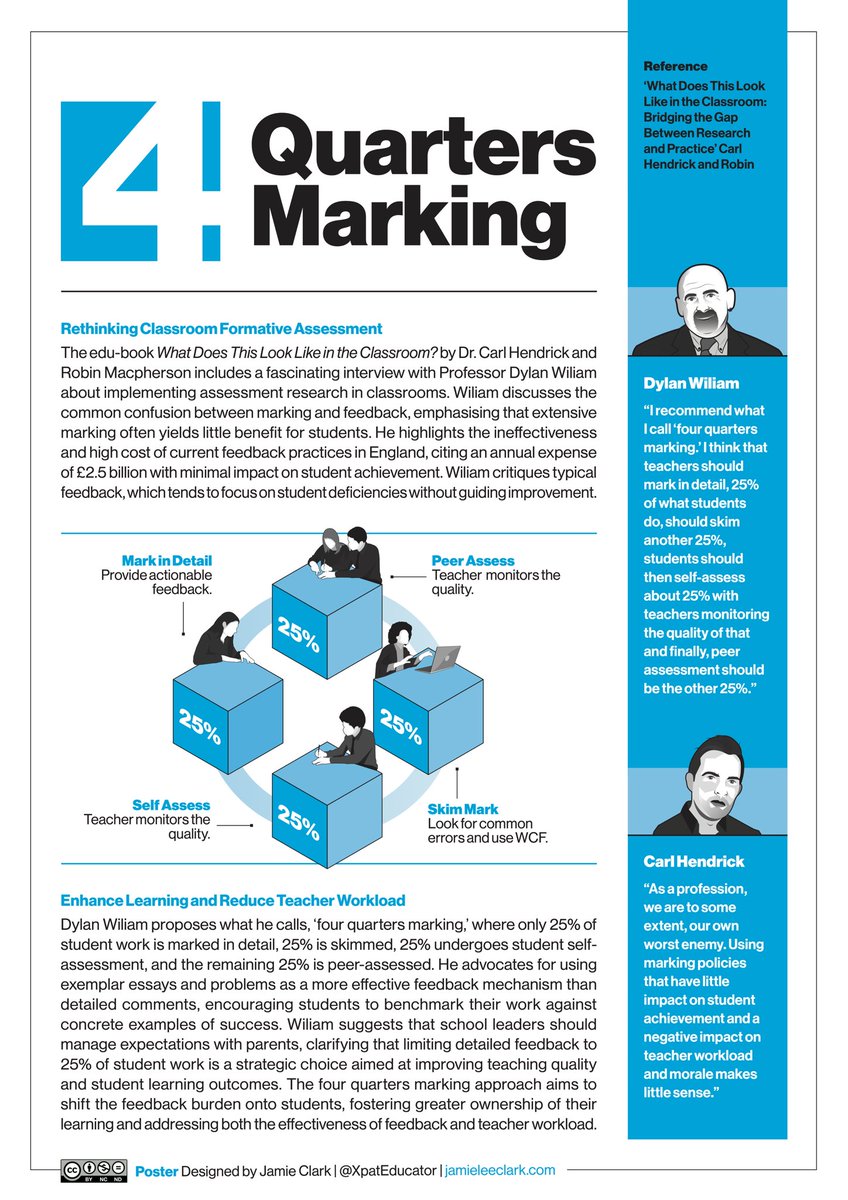
Dylan Wiliam’s 4 Quarters Marking is a great solution to streamlining assessment and reducing teacher workload. This summary is based on @C_Hendrick interview with @dylanwiliam in his book 'What Does This Look Like in the Classroom?’
Jamie Clark tweet media
English
7
110
361
54.4K
Chris Daw
Chris Daw@cdawcs·
Well done to @EmmanuelMiddle for organising a dress as your dream job day. My youngest daughter wanted to go as a teacher. @ProutSuzanne take note of her reading material!
Chris Daw tweet media
English
1
0
3
79
Suzanne Prout
Suzanne Prout@ProutSuzanne·
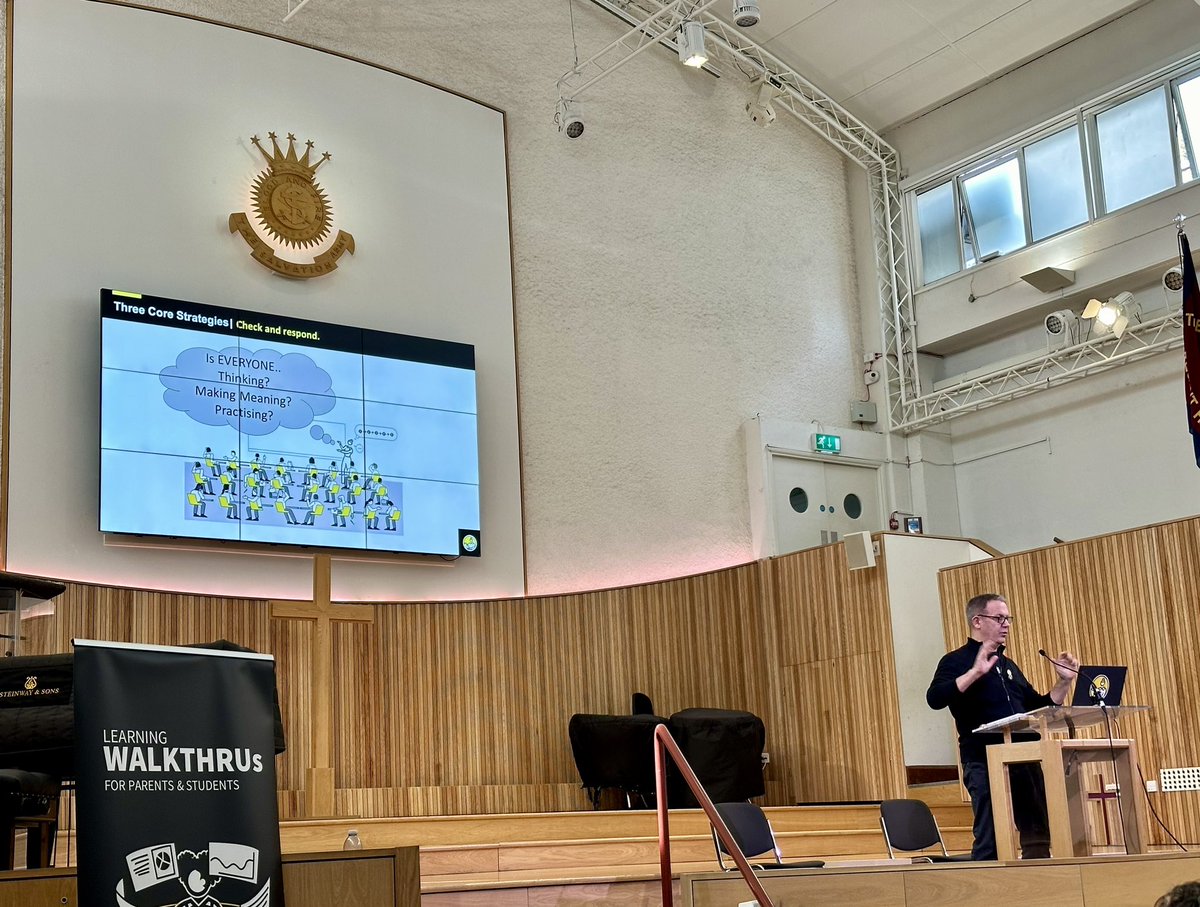
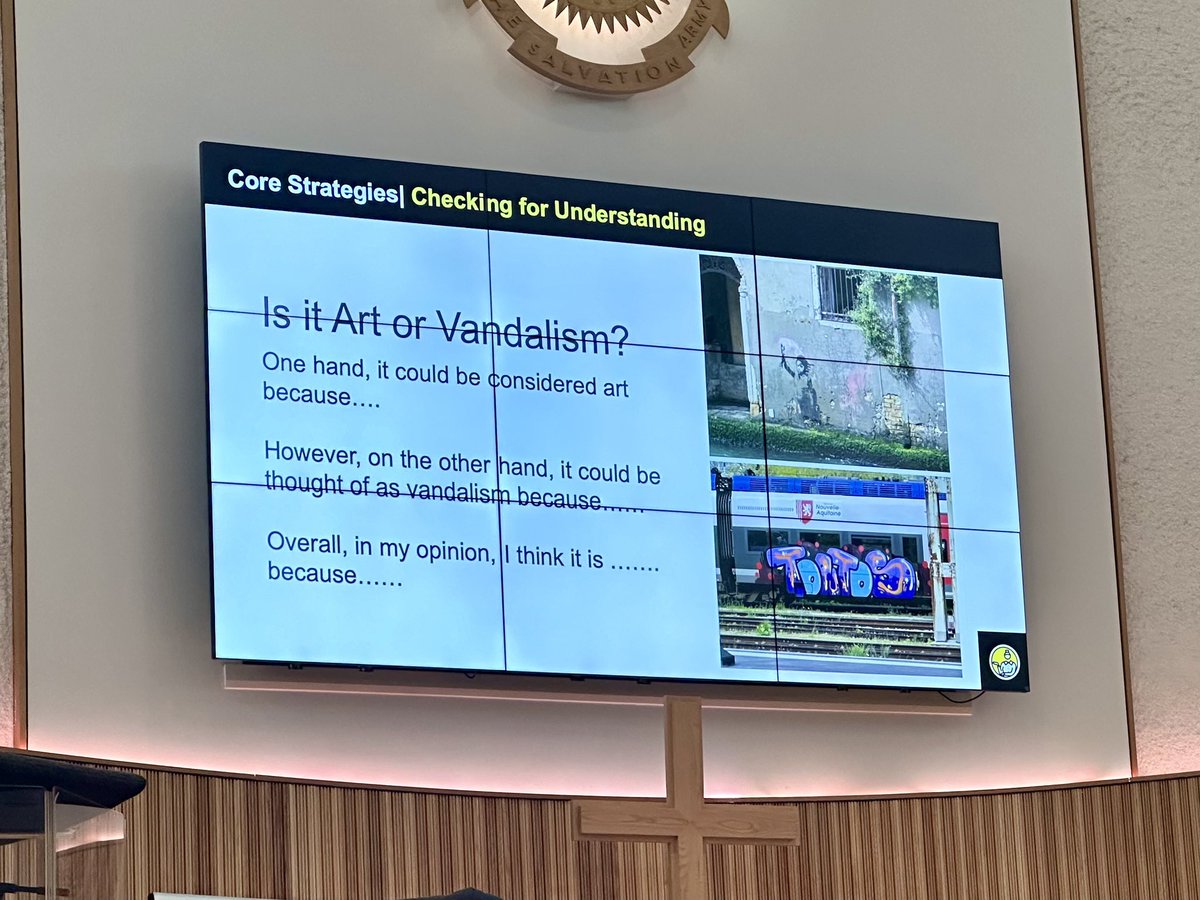
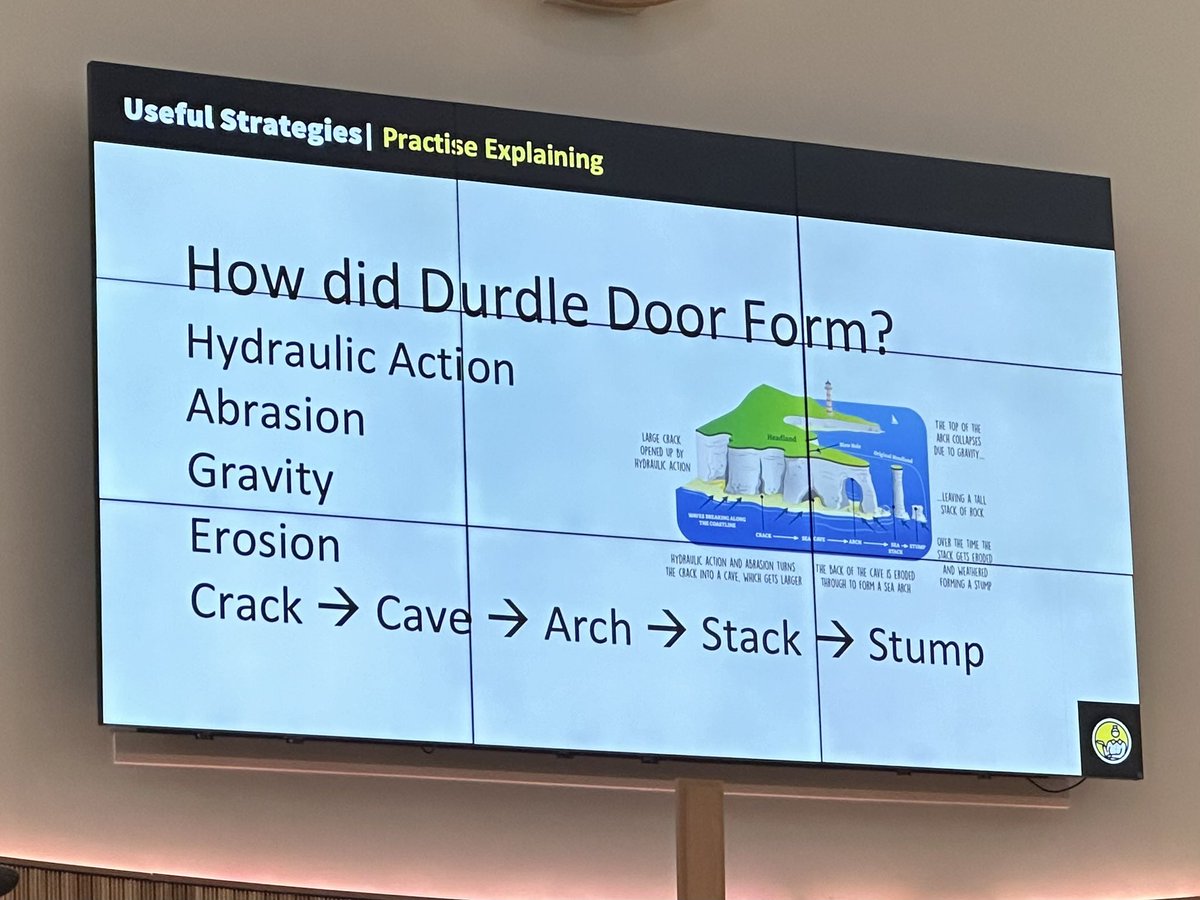
Absolutely buzzing after brilliant day at the #WALKTHRUSCONF24. It was great to have @teacherhead deliver the Class Discussion and Practise Explaining Walkthrus and to hear all of the Case Stories. So many takeaways.
Suzanne Prout tweet mediaSuzanne Prout tweet mediaSuzanne Prout tweet media
English
0
2
13
383
Alice Keeler
Alice Keeler@alicekeeler·
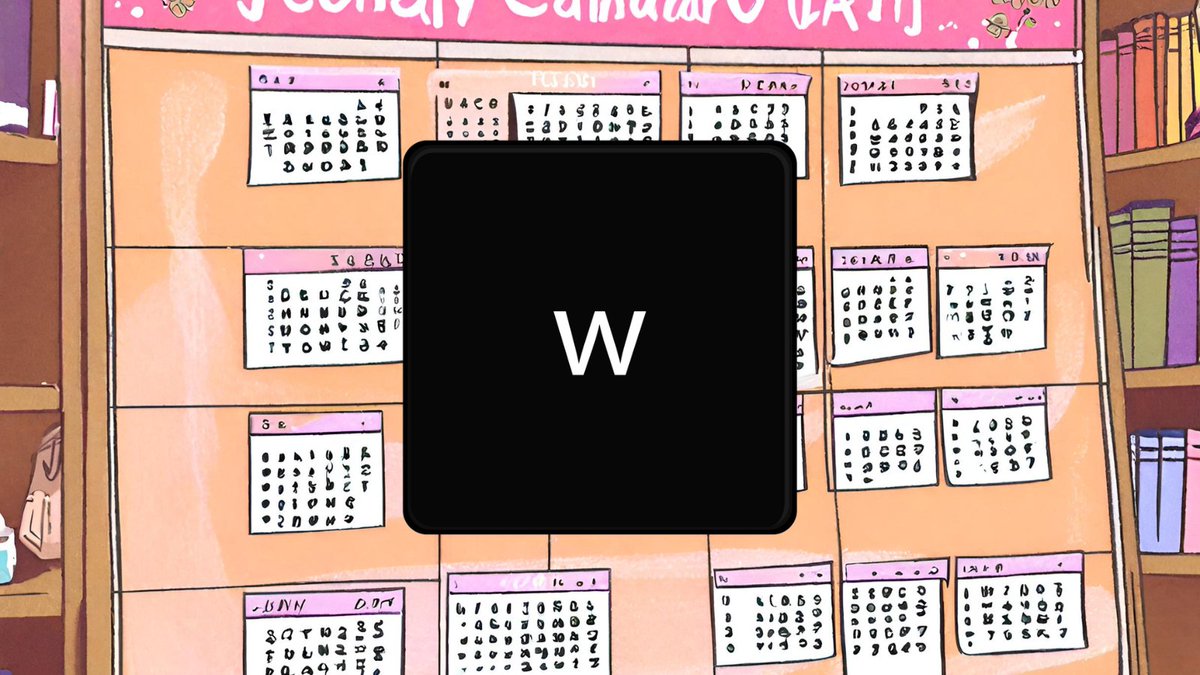
🗓️ Simplify Google Calendar: 📅 Use W for the week view 📆 Use A for the agenda view #GoogleEDU
Alice Keeler tweet media
English
1
2
1
2.1K
Suzanne Prout
Suzanne Prout@ProutSuzanne·
@Meraki_mmy @tombennett71 I would give increased thinking time, use pre-call (let him know I’m going to ask him in advance) or batch call (say I’m going to ask at least three pupils starting with pupil A, B and C and put him second or third which gives him more thinking time).
English
0
0
7
216
Meraki_mmy
Meraki_mmy@Meraki_mmy·
@tombennett71 No. My child is dyslexic. He needs more processing time. He is often diligently playing catch up. Cold calling flags this difference to his peers, makes him panic and destroys his confidence. What accommodations would you suggest in this instance?
English
5
0
3
1.2K
Tom Bennett OBE
Tom Bennett OBE@tombennett71·
Cold-calling/ asking students questions they might not be able to answer, is one of the oldest, most common things a teacher can do. People getting upset about that are treating children like delicate China. They will not break. Once children get used to it, and the atmosphere celebrates making an attempt, it becomes entirely normal. Stop impeding their growth as human beings.
English
16
31
456
78.9K