Tom Bennett OBE

240.7K posts

Tom Bennett OBE banner
Tom Bennett OBE

Tom Bennett OBE

@tombennett71

Founder researchED https://t.co/oQXPjqTJ9b Behaviour advisor- UK DfE. Professor of School Behaviour, Academica Uni. Substack: https://t.co/EvxAwiV4GD

UK Katılım Ekim 2010
5.6K Takip Edilen115.9K Takipçiler
Sabitlenmiş Tweet
Tom Bennett OBE
Tom Bennett OBE@tombennett71·
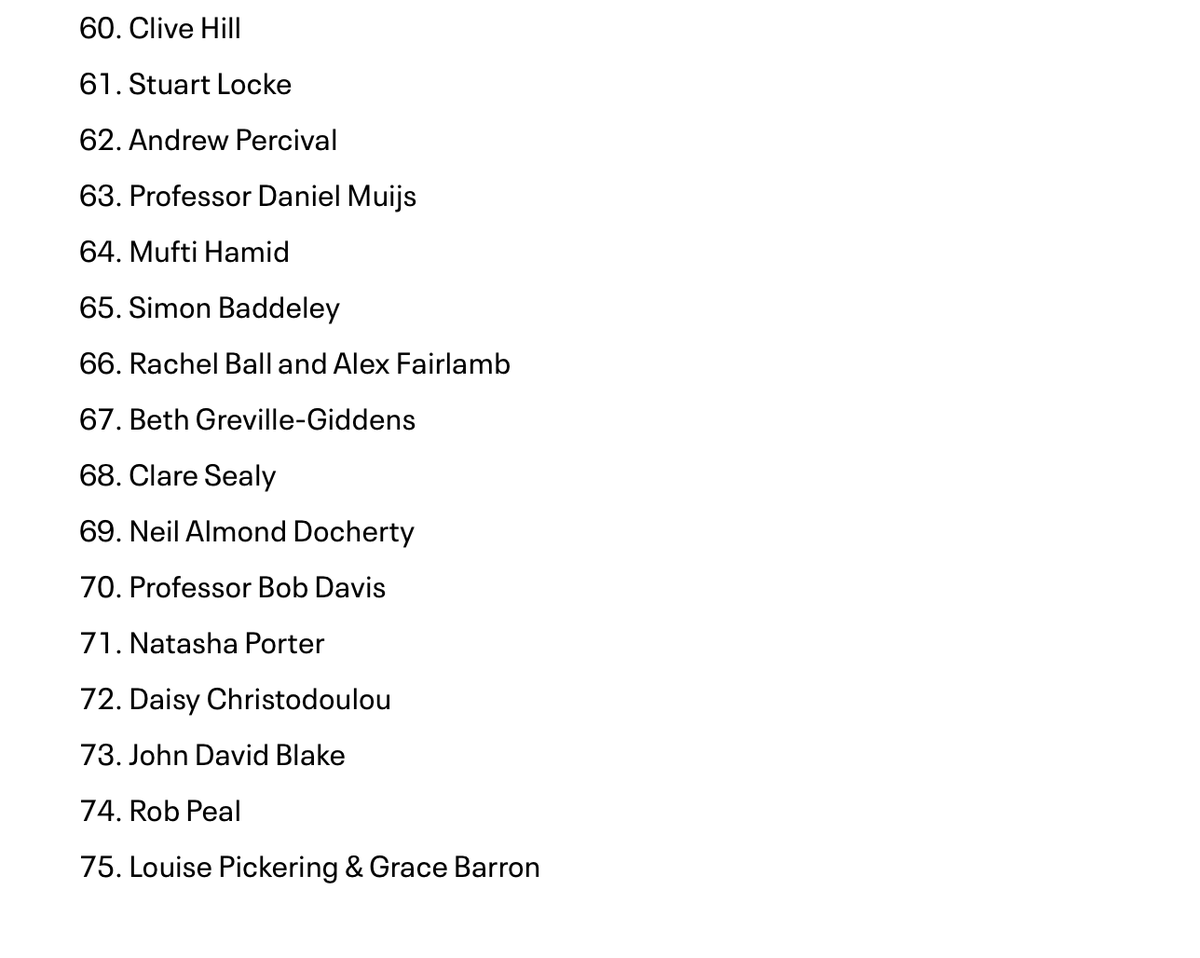
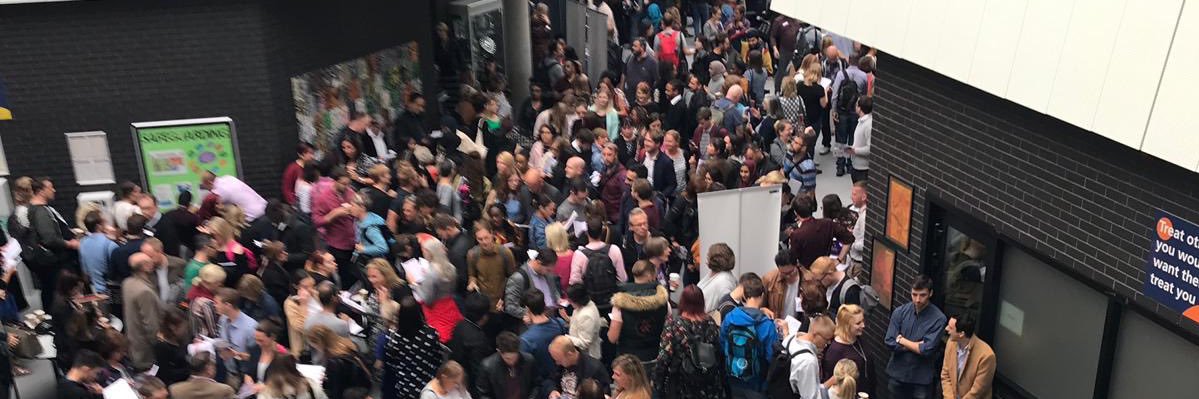
Some AMAZING names already signed up to speak at 🔬researchED National Conference 2026, Sept 5th, Parliament Hill, London. An Olympic pantheon of reason, practice, and evidence. More to come! Ticket link below ⬇️
Tom Bennett OBE tweet mediaTom Bennett OBE tweet mediaTom Bennett OBE tweet mediaTom Bennett OBE tweet media
English
2
18
45
44.9K
Tom Bennett OBE
Tom Bennett OBE@tombennett71·
@dylanwiliam This makes me want to teach children through Mr Beast videos and Dua Lipa TikTok dances.
English
0
0
0
430
Dylan Wiliam
Dylan Wiliam@dylanwiliam·
@tombennett71 Reminds me of Kipling's "And what should they know of England who only England know?"
English
2
0
3
861
Craig Mark
Craig Mark@NMSResources·
@tombennett71 "No adult could endure a workplace where colleagues intimidated you, hurt you, constantly disrupted your environment." That happens to almost all adults at most workplaces, actually.
English
1
0
1
33
Tom Bennett OBE
Tom Bennett OBE@tombennett71·
Unfortunately one of the dangers of using suspensions and exclusions as a metric to evaluate a school's effectiveness is that it will simply put toxic pressure on heads not to exclude, like in the 2000s and early 2010s. Which leads to chaotic and violent students being retained in the classroom, and everyone loses- including them. It also leads to lower level sanctions becoming meaningless, because a core of repeat offenders realise that defiance will lead nowhere. This is how school cultures perish. We've been here before, and we shouldn't go back to mistakes we already learned from. Some schools need to exclude and suspend, sometimes, They are a necessary mechanism to protect other vulnerable students, classroom cultures, and preserve the dignity and safety of staff. They should be a last resort for the most part, but when they are necessary, they are *necessary*. And some schools need to suspend more than others, because they serve more challenging cohorts. Mallory Towers and Waterloo Road have different behaviour profiles. There are more deaths in a hospital than a cinema, but that doesn't mean they are more dangerous places. No adult could endure a workplace where colleagues intimidated you, hurt you, constantly disrupted your environment. Why should we expect children, the most vulnerable of us, to endure it, when we could not?
Cherryl-kd@cherrylkd

Source: Schools Week share.google/2XNNmEfzvFl19V…

English
5
15
90
7.9K
Tom Bennett OBE retweetledi
Steve Caldwell
Steve Caldwell@stevie_caldwell·
When someone claiming to know about educational theory says learning styles:
Steve Caldwell tweet media
Eliana Goldin@Eliana_Goldin

With AI, teaching will become unnecessary. But the role of teacher will become ever more irreplaceable. In the past, teachers stood at the front of the classroom and they taught. They explained things and then answered questions. Sometimes they were extra special, and they cracked jokes. Today, AI is indisputably a better teacher than human beings. It recognizes how you're thinking about a problem and addresses your particular gap immediately. It uses the Socratic Method and Scaffolded Hints without fail and never resorts to over-explaining. It speaks to you in your language, with your learning style, at your pace. And yes, it can even crack jokes. The days of frontal teaching are over. But what is not over is the need for teachers. With AI teaching the technical information, the human teacher is free to tend to the human being. This is best illustrated by example. I've worked with many kids who struggle with math. I'll give my company a quick shoutout -- we raised our students' test scores 2 standard deviations well above the mean, and in an absurdly quick amount of time. Our AI did nearly all of the math, but our tutors did something else: They broke through the emotional walls that prevent learning from happening in the first place. Our tutors noticed when math was making kids beat up on themselves. Our tutors noticed when math was no longer really about math. And that's what they spent their time on: Confidence. When @Josiah was working with his student testing in the 29th percentile, the kid would often burst into tears. Each time, Josiah would gently remind his student that he is capable, math is hard, and that if he takes it step-by-step, he can figure it out and do anything he sets his mind to. They practiced this over and over over, and one season later, the kid placed in the 65th percentile. Together, our AI Rocky optimized the curriculum and Josiah, our human tutor, healed the relationship with failure.

English
0
4
10
1.3K
Tom Bennett OBE retweetledi
Daniel Priestley
Daniel Priestley@DanielPriestley·
About 250 years ago a quirky moral philosopher named Adam Smith discovered a chain of logic whereby the selfish desires of man would result in widespread prosperity. It’s one of the greatest discoveries of all time. Here’s how it goes… 1.Selfish desire seeks wealth, status, security. No virtue required. This is the raw material, as unpromising as it sounds. 2. In a market with property rights, you can’t take, you must trade. Theft and fraud are policed, so the only legal route to someone else’s money is offering them something they want more. Self-interest is channelled through voluntary exchange. This is the crucial valve: the baker serves your bread not from benevolence, but because it’s how he gets paid. 3.Every voluntary trade creates value for both sides. Nobody trades unless they prefer what they’re getting to what they’re giving. So each transaction is positive-sum by construction. Wealth isn’t moved; it’s made. 4.Competition forces the selfish to serve better. You’re not the only one chasing that customer’s money. To win, you must offer more value, lower prices, or something new. Greed disciplined by rivalry becomes, functionally, service. The customer becomes the boss of every capitalist. 5.Prices emerge as signals of what people actually want. Millions of trades compress dispersed knowledge - scarcity, preference, urgency - into a single number. No planner needed. High prices shout “make more of this” and falling prices say “stop making this.” The cure for high prices IS high prices. 6.Profit directs capital toward unmet needs. Profit is the reward for spotting something people want but can’t get, and losses are the punishment for guessing wrong. Capital flows automatically toward solving problems and away from waste - a self-correcting search algorithm running on selfishness. The profit motive pulls the greedy person towards genuine service and efficiency. 7.The pursuit of advantage drives innovation. The only durable way to out-earn competitors is to do something new - create a better product, a cheaper process. Each entrepreneur trying to get rich makes the previous solution obsolete and the average person’s life better. 8.Specialisation and scale compound productivity. Competition pushes everyone toward what they do best; trade lets them exchange it. Output per person rises. 9.Rising productivity spreads as falling prices and rising wages. Competition doesn’t let producers keep the gains forever - they’re competed away to consumers. The luxuries of one generation (cars, flights, antibiotics, computing) become the staples of the next. The rich get richer, but the poor get richer too. 10. Prosperity becomes self-reinforcing and civilising. Wealth funds education, health, science, and even the welfare state that redistributes it. Commerce rewards trust, reliability, and cooperation with strangers (doux commerce). A system built on self-interest ends up producing the most extensive cooperation network in human history: millions of strangers coordinating to put breakfast on your table. The hockey stick after 1800: from ~$3/day for all of human history to a 30-fold rise in living standards wherever this system took hold is pure magic.
English
64
302
1.3K
44K
Tom Bennett OBE
Tom Bennett OBE@tombennett71·
@scriptwren I also think schools need to dial down setting everything on digital platforms so that kids become habituated into constant access at home.
English
2
2
8
725
B
B@scriptwren·
@tombennett71 What is difficult is the pressure to set homework on teams etc from parents and then the mobile phone issue. Not every school gives students chromebooks etc or even has good WiFi.
English
1
0
3
286
Tom Bennett OBE retweetledi
Dylan O'Sullivan
Dylan O'Sullivan@DylanoA4·
I'd put this single paragraph from G. K. Chesterton up against any self-help book out there
Dylan O'Sullivan tweet media
English
38
586
4.7K
138.6K
Tom Bennett OBE
Tom Bennett OBE@tombennett71·
This is literally one of the worst ways to present information you want people to process and retain.
𝕁𝕖𝕤𝕤 🌍🐱🖤@MissCatnach

@BBCNews need to look into cognitive load and working memory because the amount of different things going on on this screen is NUTS. A live interview, a video linked to the story, two live feed videos from a different story and a separate scrolling update bar at the bottom 🫠

English
1
1
16
4.3K
Tom Bennett OBE retweetledi
Pamela Snow
Pamela Snow@PCSnow1604·
I enjoy the thought-provoking writing of GK Chesterton and in 2021 wrote a piece about “Chesterton’s Fence” as applied to reading instruction, after being introduced to this concept by @stephenfry in a podcast. Pretty sure it still applies in 2026. pamelasnow.blogspot.com/2021/01/the-sc…
Tom Bennett OBE@tombennett71

An elegant rationale for all education: to wander in the world in order to better understand our own world.

English
0
2
7
1.3K
Tom Bennett OBE retweetledi
Michael Chiles 🌍
Michael Chiles 🌍@m_chiles·
“I was only laughing” “It’s not that deep” A phrase we should challenge is “I was only…” All too often this is dismissed. We should be focusing on sweating the small stuff. We should clearly explain why the behaviour is unacceptable and link back to our school values. Small moments become big norms if left unchallenged. The standard you walk past is the standard you accept.
English
4
7
65
11.8K