The Dead Bird 

14.3K posts

The Dead Bird  banner
The Dead Bird 

The Dead Bird 

@Psuedosecular

I share/repost only positive stock market related newspaper clippings, brokerage upgrades and tweets | Eat, Pray, Love and Stay Invested.

Bedford, TN Katılım Aralık 2019
110 Takip Edilen346 Takipçiler
The Dead Bird  retweetledi
Rima Sarkar
Rima Sarkar@_RimaSarkar·
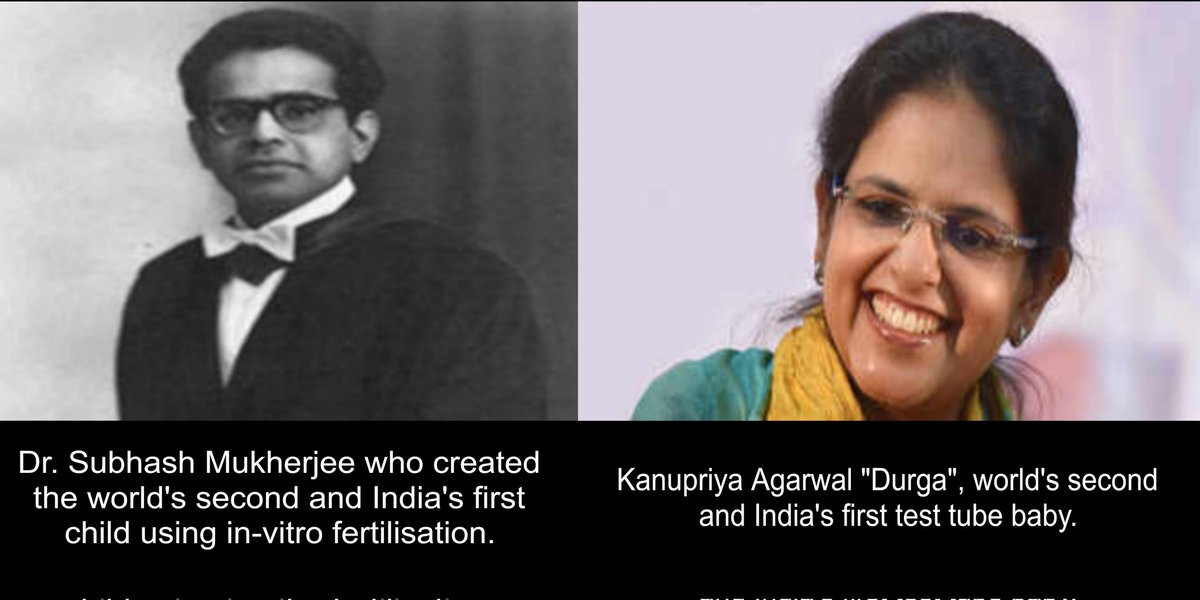
■ The Doctor Who Created Life, Only to End His Own: India’s Tragic Scientific Story. On October 3, 1978, in a small nursing home in southern Calcutta, a baby girl named Kanupriya Agarwal affectionately called “Durga” was born. She was India’s first child conceived through in-vitro fertilization (IVF) and the world’s second, arriving approximately 67–70 days after Louise Brown, the first IVF baby, in the UK on July 25, 1978. ■At the center of this achievement was Dr. Subhash Mukherjee, a physician and endocrinologist working at Kolkata’s Nil Ratan Sircar Medical College. He collaborated with cryobiologist Sunit Mukherji and gynecologist Dr. Saroj Kanti Bhattacharya. Using rudimentary laboratory facilities and limited resources, the team successfully performed IVF. ■His approach differed notably from the early British work by Patrick Steptoe and Robert Edwards, who initially relied on natural menstrual cycles for single-egg retrieval. He pioneered the use of gonadotropins (such as human menopausal gonadotropin) to stimulate the ovaries and produce multiple eggs, an innovation that later became the global standard in IVF protocols. Even more remarkably, his team cryopreserved an eight-cell embryo (frozen for about 53 days in this case) and transferred it, resulting in a live birth. This is widely recognized as the world’s first successful pregnancy and birth from a frozen embryo, a milestone replicated in the West several years later. ■Rather than celebration, his announcement faced intense skepticism and institutional hostility. The West Bengal government formed an inquiry committee dominated by specialists outside reproductive biology including a radio-astronomer/radiophysicist (chair), a nuclear physicist, a gynecologist, and a neurophysiologist. The committee subjected him to interrogations and ultimately dismissed his claims as unproven or bogus. He was barred from presenting his work at international conferences, denied permissions to publish formally in scientific journals and subjected to transfers, including one to the Regional Institute of Ophthalmology, far removed from his field of expertise. ■Isolated, professionally ostracized, and under immense psychological strain, he died by suicide in 1981, at his Kolkata residence at the age of 50. ■For years afterward, credit for India’s first IVF baby was attributed to the Mumbai team led by Dr. T.C. Anand Kumar and Dr. Indira Hinduja, whose baby Harsha was born in 1986 and was the first extensively documented case at the time. ■However, in 1997, Dr. Anand Kumar examined Mukherjee’s preserved handwritten notes, lab records, and spoke with the parents of Kanupriya Agarwal. Convinced of their authenticity, he publicly acknowledged Mukhopadhyay’s priority at a national conference and later published a paper titled “Architect of India’s First Test Tube Baby: Dr. Subhash Mukerjee” in Current Science. This act of scientific integrity corrected the historical record. ■By the early 2000s, ICMR and other bodies formally recognized Dr. Mukherjee’s contributions. His name was added to the Dictionary of Medical Biography, and a bust honoring him now stands at Nil Ratan Sircar Medical College in Kolkata. Kanupriya Agarwal (Durga) has herself spoken publicly about his pioneering role. ■Dr. Subhas Mukherjee's story remains a poignant chapter in the history of Indian science, one of remarkable ingenuity under constraints, followed by tragic institutional failure, and eventual posthumous vindication. His work helped lay the foundation for the millions of IVF births that have occurred worldwide since. ■Today marks the 45th anniversary of Dr. Mukherjee's passing. #OnThisDay 1981, India lost a visionary who achieved what the world’s leading centers had only just begun to explore yet was failed by the very system that should have celebrated him. His legacy endures in every IVF family, a reminder of the price sometimes paid by those ahead of their time.
Rima Sarkar tweet media
English
18
160
372
46.4K
The Dead Bird 
The Dead Bird @Psuedosecular·
@REDBOXINDIA This is really a welcome move. Orthodox Jains don't invest in sin product companies. Now the onus is on BSE to double check the products and services of the company and add to the index. 🙌
English
0
0
6
2.4K
RedboxGlobal India
RedboxGlobal India@REDBOXINDIA·
BSE LAUNCHES INDIA’S FIRST SAATVIK INDEX TO BRING VALUE-BASED INVESTING TO MARKETS
English
61
49
920
163.3K
The Dead Bird 
The Dead Bird @Psuedosecular·
@LearningEleven Some furus reposting 3-4 years old tweets and saying..."see, I told you". Such people should be avoided.
English
0
0
2
685
Sekhar
Sekhar@LearningEleven·
I just don't understand the urge some people have to claim, "I discovered this stock" or "I initiated coverage first." I see even seasoned folks carrying this "maine bola tha" mindset. The reality is, no single individual, brokerage, or research house "discovers" a stock. There were buyers before you bought it, and there will be buyers long after you have sold it. We are all simply time-bound participants in the market, each viewing the same opportunity through a different lens. Humility travels much farther than the need to claim ownership of an idea.
English
19
11
347
29K
EpicCommentsTelugu
EpicCommentsTelugu@EpicCmntsTelugu·
Sudden ga chusi New Zealand anukunna. Malli ardamayyindi ma Kadapa ground ey ani.
EpicCommentsTelugu tweet media
Filipino
64
372
4.5K
720.3K
The Dead Bird 
The Dead Bird @Psuedosecular·
@LearningEleven A few years back...long-term means > 1 year...then they said > 3 years...again they revised to > 5 years...some furus said > 10 years. How long is the long-term is a debate now.
English
0
0
0
471
Sekhar
Sekhar@LearningEleven·
Why "I want to hold this stock for 10 years" is no longer an easy proposition. Many of the market's darlings from just a few years ago command very little respect today. The pace of disruption is only accelerating. Once upon a time, the market told stories like a Test match. Then it shifted to ODIs. Today, it increasingly behaves like a T20. That is why market context has become just as important as company fundamentals when deciding the holding period. Earlier, the market would rarely price in earnings more than 2-3 years ahead. Those were exceptions rather than the rule. For instance, Neuland Labs was one such exception in the CDMO space, while most other CDMO companies were not valued that way. Today, when a sector turns "hot," the market often prices in the entire opportunity 2-3 years before the underlying businesses reach their earnings peak. We have seen this play out in Renewable EPC, Transformers, ER&D, and now in AI/Data Centre proxies, Aerospace Ancillaries, and Precision Engineering. As a result, many stocks achieve their peak valuations much earlier in the business cycle than they did in the past. This doesn't mean long-term investing is dead. It simply means that "Buy and Hold" is no longer a one-size-fits-all strategy. In many sectors, "Buy, Hold, and Re-evaluate" may be the more appropriate approach.
Sekhar tweet media
English
18
18
216
19.5K
The Dead Bird 
The Dead Bird @Psuedosecular·
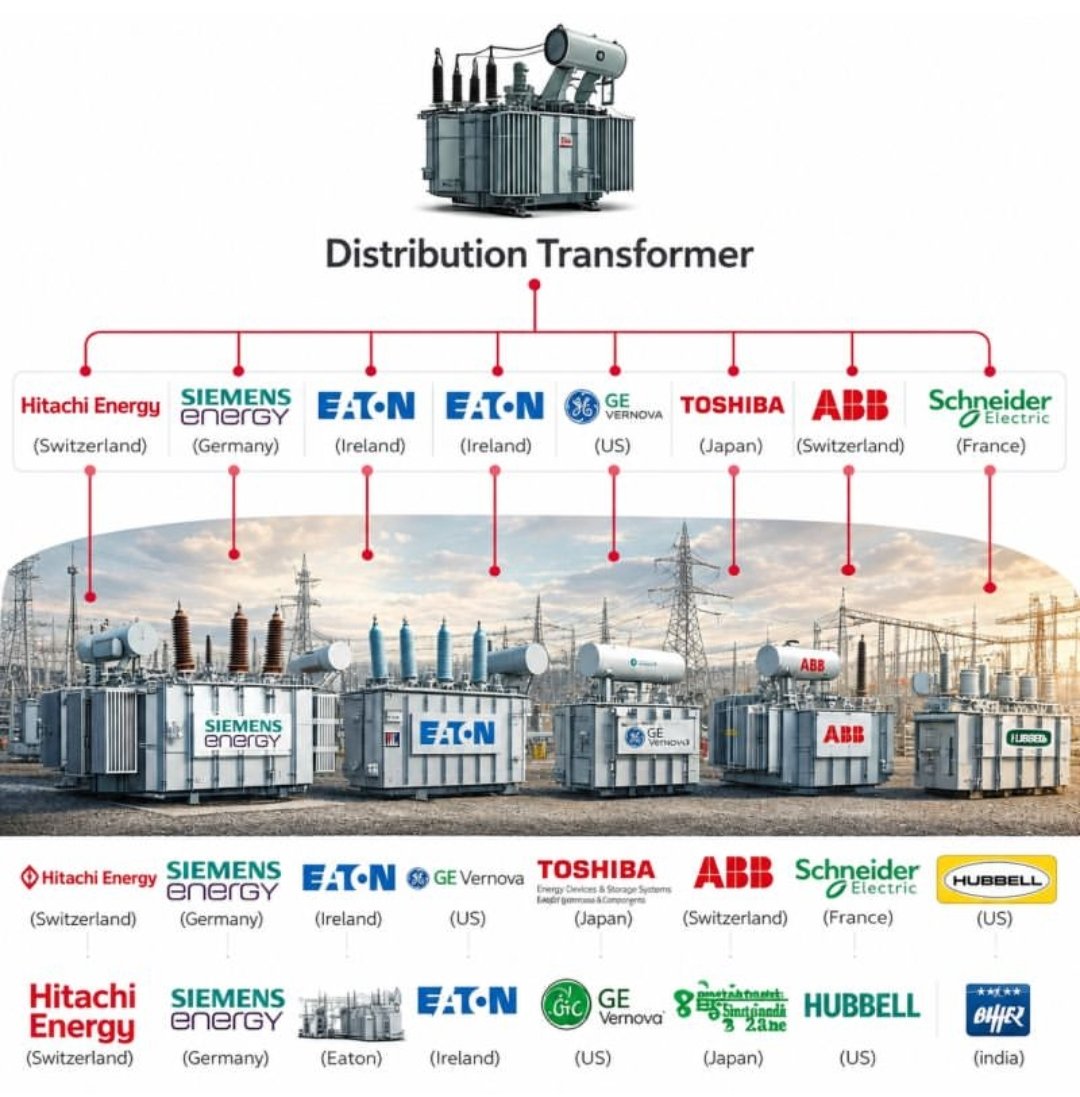
@Sanjay_Sriv Below stocks cover the complete value chain; launch, propulsion, optics, payload electronics, RF systems, and ground infrastructure. - BEL - MTAR - HAL - Paras Defence - Walchandnagar - Data Patterns - Astra Microwave
English
0
0
1
194
Sanjay Srivastava
Sanjay Srivastava@Sanjay_Sriv·
1,600+ Indian satellites lighting up the sky. 🛰 Jio’s $10B+ LEO plans: Atmanirbhar Bharat’s bold bid for space sovereignty. Reliance Jio is entering the Low Earth Orbit (LEO) satellite game. This marks the first major Indian private player challenge in a space long controlled by foreign constellations. Why this matters for India’s tech sovereignty: • Reduces risky over-dependence on foreign satellites for critical comms, broadband & strategic data. • Strengthens national security & digital infrastructure independence. • Positions India as a serious space economy player beyond just launches. Jio’s Proposed Plans: • 1,600+ LEO satellites constellation planned with investment of ~$10-15 billion. • Targeting broadband, direct-to-device connectivity, and enterprise services. • Proposal already submitted to IN-SPACe (Indian National Space Promotion and Authorization Centre). • Aiming for deployment in next 3 years to offer seamless coverage. Strategic Context & Numbers: Starlink operates thousands of satellites at ~450-550 km altitude. Jio eyes similar low-altitude orbit for low-latency performance. Government (via DoT/ IT Ministry) is actively looking to support Indian entities with spectrum & regulatory backing. Implications: ▪︎ Could spark real competition → better prices, faster rural connectivity, innovation. ▪︎ Boost to “Make in India” in space tech: satellites, ground stations, Indian manufacturing ecosystem. ▪︎ Strengthens India’s hand in global satellite comms race (vs China’s GuoWang, Europe’s initiatives). ▪︎ Critical for defence, disaster management, remote education & healthcare. India cannot afford to outsource its orbital backbone. This is how digital & strategic sovereignty gets built: ambitious Indian capital + government coordination + cutting-edge tech. @INSPACeIND @DoT_India @reliancejio By @kiranrathee1
Sanjay Srivastava tweet mediaSanjay Srivastava tweet media
English
1
21
76
3.4K
The Dead Bird 
The Dead Bird @Psuedosecular·
@DhvanilB @yatinmota @grok DAX index from Frankfurt Stock Exchange, Germany. Bhai, He has this habit of posting cryptic messages and not answering to followers questions.
English
0
0
0
258
Yatin Mota
Yatin Mota@yatinmota·
Accenture down 15% कल क्या IT शेयर्स होगा भोज्यं ?
Yatin Mota tweet media
48
32
586
91.7K
The Dead Bird 
The Dead Bird @Psuedosecular·
Nimesh Shah@nimeshscnbc

HSBC on Coforge Buy, TP Rs 1710 Investor day takeaways Coforge believes AI to be a net tailwind for its business and has set FY30e revenue target at USD5bn; inclusive of a large M&A Management is committed to FY27e EBIT margin of 16.5% and FCF/PAT of +100% with growth picking up from 2QFY27 Coforge retains growth leadership in tech services & now with better margin/FCF outlook Nomura on Coforge Buy, TP Rs 2100 Investor day takeaways Eyeing $5bn of revenue by FY30E with significant tailwinds from AI Disciplined financial rigour to continue AI is central to delivery org Solution team aiding in large deal win momentum Coforge continues to work on its playbook of scaling accounts, scaling its big bets (focus areas), partner-led growth & acquisitions to double its revenue by FY30 Jefferies on Coforge Buy, TP Rs 1860 Coforge highlighted its US$5bn revenue aspiration (19% CAGR; 15% organic), led by account mining, AI-led services and ecosystem partnerships, with selective M&A support. Coforge is pivoting to an AI-native, platform-driven model, combining domain expertise with reusable assets Move to FDE-led, mod squad delivery is improving productivity and enabling larger, outcome-based deals, supporting sustained profitable growth. UBS on Coforge Neutral, TP Rs 1505 Investor day highlights Management highlighted non-linear growth in enterprise AI spend and its impact on services demand. Management expects post AI outsourced IT spend to grow 40-50% over next 3-5 years, a key tailwind for Coforge's growth. Company stated 1) scaling up key accounts; 2) scaling up big bets; 3) partner-led growth; 4) acquisitions to drive growth. Revenue of US$2.5bn in FY26 is likely to grow to US$5bn by FY30 (CAGR of 19%) including inorganic. Within this, management expects verticals like healthcare & hitech and government outside India to grow 17-18% followed by insurance and travel at 14% and BFSI at 12%. Margin expansion led by operational discipline; capital allocation to prioritize growth @Reematendulkar @CNBCTV18News

QME
0
0
0
158