José Luis Castillo B

9.8K posts

José Luis Castillo B banner
José Luis Castillo B

José Luis Castillo B

@PublicPolicyIQ

Coordinador Técnico de la Comisión para la Reforma al Sistema de Pensiones ~Director en @oppgye_ ~ Intentando ser parte de la solución y no del problema 🇪🇨

Quito | Guayaquil Katılım Ocak 2013
3.8K Takip Edilen1.2K Takipçiler
Sabitlenmiş Tweet
José Luis Castillo B
José Luis Castillo B@PublicPolicyIQ·
TODOS LOS SUBSIDIOS EN EL ECUADOR SON REGRESIVOS!!

José Luis Castillo B tweet media
Español
0
2
6
1.8K
José Luis Castillo B retweetledi
Ihtesham Ali
Ihtesham Ali@ihtesham2005·
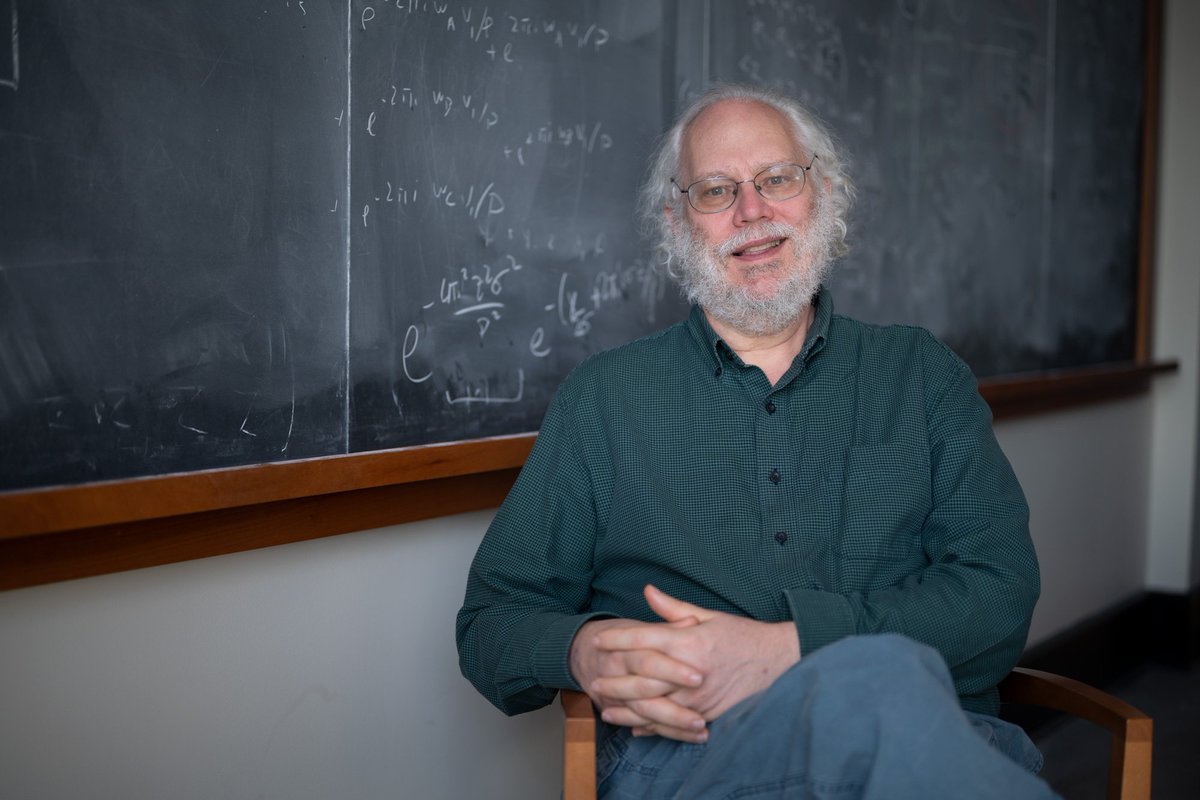
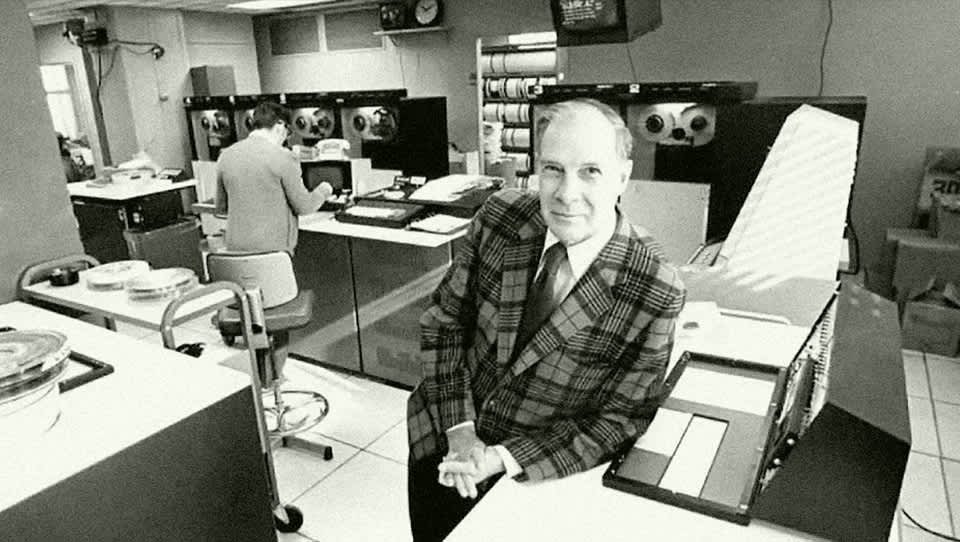
A mathematician at Bell Labs wrote something on paper in 1994 that made every government on earth quietly panic. The machine that runs it doesn't exist yet. The panic never stopped. His name is Peter Shor. He is a professor of applied mathematics at MIT. He won the Turing Award in 2021, the highest honor in computer science. And the thing he is most famous for is a piece of mathematics he wrote in four days that he did not fully intend to write. Here is the story almost nobody tells, and why it should change how you think about the security of everything you do online. In 1994, Shor was a researcher at AT&T Bell Labs in Murray Hill, New Jersey. Bell Labs at the time was the most intellectually alive research environment in the world. The same building that produced Claude Shannon's information theory, the transistor, and the Unix operating system was now full of physicists who interrupted each other mid-sentence and argued through lunch. Quantum computing in 1994 was not a field. It was a rumor. A handful of theorists believed that computers built on quantum mechanical principles could solve certain problems exponentially faster than classical machines. Most of the scientific establishment considered them eccentric. There was no working quantum computer. There was no clear proof that one would ever matter. It was the kind of research that serious people called interesting and quietly avoided. Shor was not avoiding it. He had been thinking about a problem called the discrete logarithm, a mathematical operation that sits underneath several encryption schemes. Encryption works because certain mathematical operations are easy to perform in one direction and almost impossible to reverse. Multiply two enormous prime numbers together and you get a product in seconds. Start with the product and try to find the two original primes and a classical computer would take longer than the age of the universe. That asymmetry is the lock. Every bank transaction, every encrypted email, every password you have ever entered online is protected by some version of that lock. Shor worked out a quantum algorithm for the discrete logarithm problem. He presented it at an internal Bell Labs seminar. The physicists in the room paid attention for the entire talk, which was unusual. The talk ended, and people started talking. Then the telephone game started. The discrete logarithm is used in some encryption systems, but not most. The dominant encryption standard protecting most of the world's sensitive data, RSA, is built on a different problem: prime factorization. As news of Shor's seminar spread through the halls of Bell Labs and then through the physics community, something got lost in translation. By the time the story reached physicists across the country four days later, the rumor was that Shor had solved factoring. He had not. He had solved something related but different. Shor heard the rumor. And then, in four days, he made it true. He sat down, looked at what he had already built, found the mathematical connection between the discrete logarithm and prime factorization, and extended his algorithm to cover both. The rumor had described something that did not exist. He built it to match the rumor before anyone found out it was wrong. What he had now was a quantum algorithm that could factor enormous numbers exponentially faster than any classical computer. In practical terms, what that meant was this: if a quantum computer ever existed with enough stable qubits to run Shor's algorithm at scale, RSA encryption would be broken. Not weakened. Not compromised at the margins. Broken completely. Every message ever encrypted with RSA would be readable. Every private key ever generated would be derivable from the public key. Every lock built on the assumption that factoring is hard would unlock. The paper went out. The reaction was not what most people imagine. There was no press conference. No announcement. A 32-page technical paper appeared in the proceedings of a symposium on the foundations of computer science. Cryptographers read it and understood immediately what it meant. Intelligence agencies read it and understood immediately what it meant. Governments that had spent decades and billions of dollars building encryption infrastructure understood immediately what it meant. None of them said much publicly. They started working. The NSA gave Shor a Mathematics in Cryptology Award in 1995, one year after the paper came out. That is a fast turnaround for an award from an intelligence agency. The implication is that they read the paper and moved. The problem was the machine. Shor's algorithm requires a quantum computer with enough fault-tolerant qubits to factor the kind of numbers used in real encryption, numbers with hundreds of digits. In 1994, no such machine existed. In 2001, IBM demonstrated Shor's algorithm on a 7-qubit quantum computer and used it to factor the number 15 into 3 and 5. That was the proof of concept. It was also a machine that required more infrastructure than most university labs own, running a calculation a fourth grader could do in their head. The gap between that demonstration and a machine capable of breaking real encryption is enormous. The numbers involved in modern RSA encryption have hundreds of digits. Factoring them with Shor's algorithm would require a quantum computer with potentially millions of stable, error-corrected qubits. The best machines available today have thousands of qubits, most of them too noisy to use reliably for extended computation. But the direction of progress is not ambiguous. Every year, the machines get larger. Every year, error correction improves. Every year, the gap between what exists and what Shor's algorithm requires gets smaller. Nobody knows exactly when a machine capable of breaking RSA will exist. Estimates from serious researchers range from ten years to thirty. The NSA has said publicly that it believes the threat is real. NIST, the US standards body, spent years running a global competition to identify encryption algorithms that would survive a quantum computer, and in August 2024 published the first official post-quantum cryptography standards. Google has already integrated one of them into Chrome. Apple adopted another for iMessage. Signal switched to a hybrid post-quantum system in 2023. All of that activity, every dollar of it, every hour of engineering, traces back to four pages Shor wrote in 1994. The most interesting detail is the one Shor himself has repeated in multiple interviews. He compared the current scramble to build post-quantum cryptography to Y2K, the race to patch computer systems before the year 2000. He said the difference is that Y2K had a fixed deadline. The quantum threat has no deadline. Nobody knows when the dangerous machine will exist. And his warning was blunt: if you wait until it is obvious that a sufficiently powerful quantum computer is coming, you will already be too late. The migration of critical infrastructure to post-quantum standards takes years. The systems protecting financial markets, government communications, and military networks cannot be updated in an afternoon. The race is not theoretical. It is happening right now, in every major government and every serious technology company on earth. Shor is 65 years old. He still teaches at MIT. He did not build the machine. He wrote the paper that proved the machine would matter before anyone had built it. He won the Turing Award 27 years after the paper came out, which is either a sign that the committee moves slowly or a sign that the full weight of what he wrote is still arriving. The most dangerous algorithm in the history of cryptography has never successfully been used against a real target. Every system protecting your money, your messages, and your government's secrets is safe for exactly one reason. The computer that breaks them has not been finished yet.
Ihtesham Ali tweet media
English
54
278
1.2K
123.9K
José Luis Castillo B retweetledi
Yener Çıracı
Yener Çıracı@yenerrciraci·
Yale Üniversitesi siyaset felsefesi üzerine giriş kursu yayınladı. Sokrates, Platon, Aristoteles, Machiavelli, Hobbes, Locke, Rousseau ve Tocqueville'in temel görüşlerini ele alıyor. Otomatik çevir seçeneği ile hedef dilde altyazılı izlenebilir. youtube.com/watch?v=xhm55m…
YouTube video
YouTube
Türkçe
17
968
3.4K
305.8K
José Luis Castillo B
José Luis Castillo B@PublicPolicyIQ·
Ojalá la prensa entienda y haga eco, para que la población entienda que este sistema es profundamente inequitativo con los de menores salarios y, sobre todo, con las nuevas generaciones (que ya no van a tener los beneficios actuales o van a tener que pagar la cuenta)
VERAZ@VERAZ_TWIT

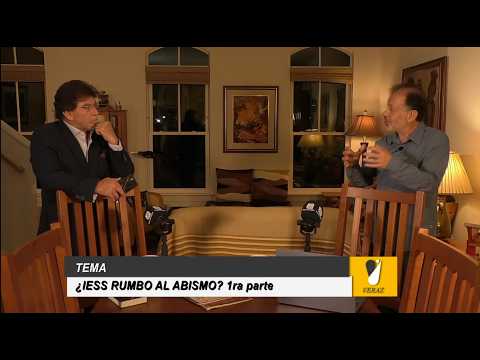
“El sistema permite que alguien se afilie a los 60, aporte solo 10 años y se jubile mejor que quien aportó 40. Calcular la pensión con los 5 mejores años abrió la puerta a enormes inequidades.” Econ. Augusto de la Torre en #Veraz (FB - YT de Carlos Vera) youtu.be/N23I07uYzmA

Español
1
1
10
543
José Luis Castillo B retweetledi
VERAZ
VERAZ@VERAZ_TWIT·
“La Comisión concluyó que el sistema no es solidario, sino inequitativo: el Estado subsidia con el mismo 40% tanto a pensiones altas como bajas. Quien más recibe, más subsidio obtiene.” Econ. Augusto de la Torre en #Veraz (FB - YT de Carlos Vera) youtu.be/N23I07uYzmA
YouTube video
YouTube
Español
3
18
19
2K
José Luis Castillo B retweetledi
Marlon Moreno
Marlon Moreno@marlonmoreno72·
Conductor Temerario En las pistas de deportes 🏃‍♂️ 🚴 / peatonal cerca a la cruz del Papa. Sábado 9 mayo, 6:30 am 🛑 ✋ Alguien controla esto Acaso hay Alcalde ? @MunicipioQuito @WilsonMerinoR
Marlon Moreno tweet mediaMarlon Moreno tweet mediaMarlon Moreno tweet media
Español
0
2
2
84
José Luis Castillo B retweetledi
Sientifiko
Sientifiko@sientifiko1·
Está terrible difícil que la comunidad científica se meta en desafíos industriales si los incentivos universitarios de carrera están puestos únicamente en cuántos papers escriben y en q revistas Lo peor es q la academia misma tiene cero ganas de cambiar esa estructura
Español
18
24
149
5.4K
José Luis Castillo B retweetledi
Dougie Critchley
Dougie Critchley@DougieCritchley·
It’s quite incredible that for all the phenomenal players PSG have bought over the years… Messi, Neymar, Mbappe, Cavani, Ibrahimovic, Verratti etc etc… The most IMPORTANT signing in their history could be a €40m Ecuadorean centre back from Eintracht Frankfurt, who had 1 year of experience playing in Europe’s Top 5 Leagues prior to joining. William Pacho had started every Champions League game in the last 2 seasons, and has the potential to go back-to-back. Up against the highest scoring frontline in Europe tonight? Faultless.
Dougie Critchley tweet media
English
76
669
8.7K
555.6K
José Luis Castillo B retweetledi
Francisco Covarrubias
Francisco Covarrubias@fjcovarru·
president.yale.edu/sites/default/… El Comité de Confianza en la Educación Superior de la Universidad de Yale, publicó un informe de 58 páginas sobre el futuro de la educación superior. En ella reafirma la necesidad de acrecentar el programa de artes liberales como herramienta de cara al futuro
Español
7
25
73
18.5K
José Luis Castillo B
José Luis Castillo B@PublicPolicyIQ·
No dice nada respecto de los nuevos puestos que la IA va a generar.. Y que probablemente van a ser ocupados por el grupo desplazado inicialmente. Claro, solo será para los que se atrevan a reinventarse.
AI Highlight@AIHighlight

🚨BREAKING: Anthropic just published a study mapping exactly which jobs its own AI is replacing right now. The workers most at risk are not who anyone expected. They are older. They are more educated. They earn 47% more than average. And they are nearly four times more likely to hold a graduate degree than the workers AI is not touching. The argument is straightforward. Anthropic built a new metric called "observed exposure." Not what AI could theoretically do. What it is actually doing right now in professional settings, measured against millions of real Claude conversations from enterprise users. For computer and math workers, AI is theoretically capable of handling 94% of their tasks. It is currently handling 33% of them. For office and administrative roles, theoretical capability is 90%. Current observed usage is 40%. The gap between what AI can do and what it is already doing is enormous. The researchers are explicit about what comes next. As capabilities improve and adoption deepens, the red area grows to fill the blue. The demographic finding is what makes the paper uncomfortable. The most AI-exposed workers earn 47% more on average than the least exposed group. They are more likely to be female. They are more likely to be college educated. This is not a story about warehouse workers or truck drivers. It is a story about lawyers, financial analysts, market researchers, and software developers. The exact group whose education was supposed to insulate them. Computer programmers showed the highest observed AI exposure at 74.5%. Customer service representatives at 70.1%. Data entry keyers at 67.1%. Medical record specialists at 66.7%. Market research analysts and marketing specialists at 64.8%. These are not predictions. These are measurements of work that is already happening on AI platforms right now. Then there is the pipeline finding nobody is talking about loudly enough. Anthropic's researchers found a 14% decline in the job-finding rate for workers aged 22 to 25 in highly exposed occupations since ChatGPT launched. No comparable effect for workers over 25. Entry-level roles were never just jobs. They were the training ground where junior analysts became senior analysts, where junior lawyers learned how arguments hold together. If that layer disappears, nobody has answered the question of where the next generation of senior professionals comes from. The detail buried in the paper that most coverage missed: 30% of American workers have zero AI exposure at all. Cooks. Mechanics. Bartenders. Dishwashers. The technology reshaping professional careers is completely irrelevant to roughly a third of the workforce. The divide is no longer between high skill and low skill. It is between presence and absence. The company publishing this study is the same company selling the AI doing the replacing. Anthropic had every commercial incentive to soften these findings. They published them anyway. If you spent four years and $200,000 on a degree to land a white collar career, the company that builds Claude just confirmed your job is more exposed than the bartender pouring drinks at your graduation party. Source: Anthropic, "Labor market impacts of AI: A new measure and early evidence" PDF: anthropic.com/research/labor…
Español
2
1
3
331
José Luis Castillo B retweetledi
Marta Peirano
Marta Peirano@minipetite·
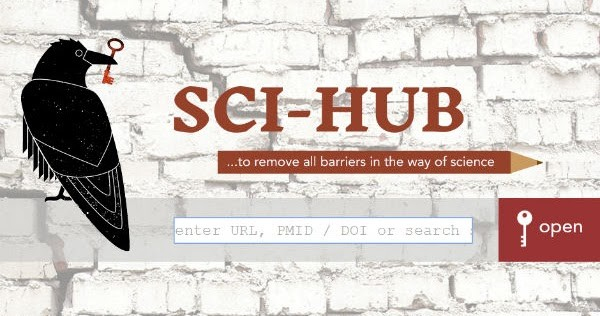
Me sumo a la advertencia: Sci-Hub ha pirateado más de 85 millones de artículos de investigación y ahora encima han añadido un bot que responde preguntas utilizando artículos completos y recientes. Esto es un escándalo. Dejo el enlace abajo para que sepas cómo evitarlo.
Mushtaq Bilal, PhD@MushtaqBilalPhD

Sci-Hub is an evil website that pirated 85M+ research papers and made them freely available And now they've added AI to their database to make Sci-Bot. It answers your questions using latest, full-text articles. But DO NOT use it. We should all try to make billion-dollar academic publishers richer. I'm putting the link below so you know how to avoid it.

Español
118
3.1K
14.6K
688.8K
José Luis Castillo B retweetledi
Epik Spor Anları
Epik Spor Anları@epicsp0ranIari·
Gelecek nesli bunun yapay zeka olmadığına kim ikna edecek?
Türkçe
61
722
6.8K
261.9K
José Luis Castillo B retweetledi
Antonio Ortiz
Antonio Ortiz@antonello·
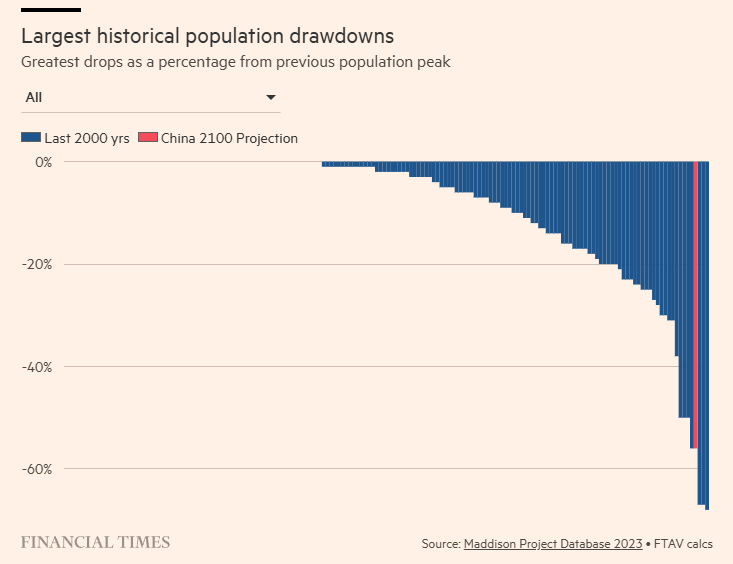
Las proyecciones de población en China son una cosa loquísima > la población en edad de trabajar va camino de reducirse en dos tercios de aquí a finales de siglo. > solo ocho sociedades o países en la historia han sufrido un colapso poblacional de esta magnitud. > Uno de esos casos ocurrió tras la llegada de los españoles a América: las poblaciones de los imperios Azteca e Inca se estima que se desplomaron en algo más de tres quintas partes. > está el colapso de la Grecia y Roma antiguas. A lo que hoy es Italia le llevó un milenio y medio recuperar su población máxima, y a Grecia casi dos. > la población de Irlanda sigue siendo hoy menor que antes de la Gran Hambruna irlandesa. los descensos catastróficos de población se limitaban, por ahora, a la conquista y subyugación o epidemias. el cambio demográfico del siglo XXI es una cosa inédita en la historia ft.com/content/78bc12…
Antonio Ortiz tweet media
Español
26
135
364
38K
José Luis Castillo B retweetledi
Ihtesham Ali
Ihtesham Ali@ihtesham2005·
A mathematician who shared an office with Claude Shannon at Bell Labs gave one lecture in 1986 that explains why some people win Nobel Prizes and other equally smart people spend their whole lives doing forgettable work. His name was Richard Hamming. He won the Turing Award. He invented error-correcting codes that made modern computing possible. And he spent 30 years at Bell Labs sitting in a cafeteria at lunch watching which scientists became legendary and which ones faded into nothing. In March 1986, he walked into a Bellcore auditorium in front of 200 researchers and told them exactly what he had seen. Here's the framework that has been quoted by every serious scientist for the last 40 years. His opening line landed like a punch. He said most scientists he worked with at Bell Labs were just as smart as the Nobel Prize winners. Just as hardworking. Just as credentialed. And yet at the end of a 40-year career, one group had changed entire fields and the other group was forgotten by the time they retired. He wanted to know what the difference actually was. And he said it wasn't luck. It wasn't IQ. It was a specific set of habits that almost nobody is willing to follow. The first habit was the one that hurts the most to hear. He said most scientists deliberately avoid the most important problem in their field because the odds of failure are too high. They pick a safe adjacent problem, solve it cleanly, publish it, and move on. And because they never swing at the hard problem, they never hit it. He said if you do not work on an important problem, it is unlikely you will do important work. That is not a motivational line. That is a logical one. The second habit was about doors. Literal doors. He noticed that the scientists at Bell Labs who kept their office doors closed got more done in the short term because they had no interruptions. But the scientists who kept their doors open got more done over a career. The open-door scientists were interrupted constantly. They also absorbed every new idea passing through the hallway. Ten years in, they were working on problems the closed-door scientists did not even know existed. The third habit was inversion. When Bell Labs refused to give him the team of programmers he wanted, Hamming sat with the rejection for weeks. Then he flipped the question. Instead of asking for programmers to write the programs, he asked why machines could not write the programs themselves. That single inversion pushed him into the frontier of computer science. He said the pattern repeats everywhere. What looks like a defect, if you flip it correctly, becomes the exact thing that pushes you ahead of everyone else. The fourth habit was the one that hit me the hardest. He said knowledge and productivity compound like interest. Someone who works 10 percent harder than you does not produce 10 percent more over a career. They produce twice as much. The gap doesn't add. It multiplies. And it compounds silently for years before anyone notices. He finished the lecture with a line I have never been able to shake. He said Pasteur's famous quote is right. Luck favors the prepared mind. But he meant it literally. You don't hope for luck. You engineer the conditions where luck can land on you. Open doors. Important problems. Inverted questions. Compounded hours. Those are not traits. Those are choices you make every single day. The transcript has been sitting on the University of Virginia's computer science website for almost 30 years. The video is free on YouTube. Stripe Press reprinted the full lectures as a book in 2020 and Bret Victor wrote the foreword. Hamming died in 1998. He gave his final lecture a few weeks before. He was 82. The lecture that explains why some careers become legendary and others disappear is still free. Most people who could benefit from it will never open it.
Ihtesham Ali tweet media
English
147
1.9K
8.2K
1.2M
José Luis Castillo B retweetledi
CEPAL
CEPAL@cepal_onu·
🗨️ @AndresVelasco, Decano de la Escuela de Políticas Públicas de la @LSEnews, en seminario sobre El Consenso de Londres en la #CEPAL: "Es evidente, observando la economía política del mundo, que muchos de los problemas actuales, de las fuentes de descontento, no tienen que ver exclusivamente con cuánto gano y cuánto me paga mi empleador (...) Hay regiones que se sienten abandonadas, desplazadas, retrasadas. Ahí hay un problema de dignidad, de pertenencia, hay una sensación de que el sistema político me abandonó. Es decir, hay un montón de otros elementos constitutivos del bienestar acerca de los cuales la política económica ha tenido poco que decir".
Español
11
136
373
45.2K