Pulkit Saraf

36.8K posts

Pulkit Saraf banner
Pulkit Saraf

Pulkit Saraf

@Pulkit_Saraf

Let's build!

New Delhi, India Katılım Haziran 2011
603 Takip Edilen878 Takipçiler
Pulkit Saraf retweetledi
nic carter
nic carter@nic_carter·
It should be pretty obvious at this point that AI is a "force multiplier" not a "labor substitute". It helps experts be better at things they are already good at. It doesn't let beginners match experts. If you can't write, anything you write with AI will be unmitigated slop. If you aren't a software engineer, anything you vibecode with AI will have security holes and won't be able to scale past a toy demo. If you blindly trust AI to deliver on a research task without knowing the subject matter, you won't be able to fact-check it. There's this weird misconception of AI as something that completely levels the playing field. I don't see it that way at all. There are mathematicians deriving novel lemmas with off-the-shelf models. Normal people can't do that. AI is a tool that makes experts better. It doesn't make everyone into an expert.
English
138
340
2.8K
150.4K
Pulkit Saraf retweetledi
Live Law
Live Law@LiveLawIndia·
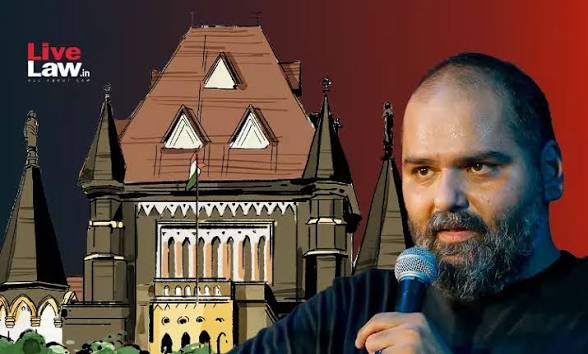
Kunal Kamra tells Bombay High Court that there is a worse situation wherein an ordinary policeman orders takedown of content, which s/he thinks is "objectionable." The High Court is hearing his plea challenging the constitutional validity of the "Sahyog Portal" and the 2025 amendment to Rule 3(1)(d) of the Information Technology (Intermediary Guidelines and Digital Media Ethics Code) Rules, 2021. @kunalkamra88 #BombayHighCourt
Live Law tweet media
English
14
260
1.1K
45.1K
प्रणव
प्रणव@PranavaBhardwaj·
How do i explain this to Instagram Janta.?
Saurav Das@SauravDassss

#ImportantNews: The controversy over the alleged Delhi liquor-scam case before Justice Swarana Kanta Sharma is no longer confined to courtroom conduct alone. Now more troubling questions of proximity, patronage, conflict-of-interest, and the appearance of bias have come to light. Several of the 23 dischargees in the case had formally sought Justice Sharma’s recusal from hearing the CBI’s challenge to their discharge. Even then, the judge has so far resisted calls to step aside, even as former Delhi Chief Minister Arvind Kejriwal himself appears in person to argue the recusal application. Arguments are now scheduled for Monday, 13 April 2026. In my last Case In Point column for @frontline_india, I had already revealed, through an analysis of all the 165 criminal revision petitions of the same category as Kejriwal’s case, that Justice Sharma clearly departed from her usual pattern of handling such matters and had taken an unusually strange interest in this case. That, along with many other details that if read in singularity can be met with a shrug, but when read together, reveals a troubling pattern and credible fears of apprehension of bias in the liquor case. These by itself had raised serious questions. You may read my piece here: frontline.thehindu.com/columns/delhi-… What has surfaced now makes those questions HARDER to dismiss. Justice Sharma’s son and daughter—Ishaan Sharma and Shambhavi Sharma—have both been empanelled by the Union government before the Delhi High Court and the Supreme Court. According to the empanelment details, both siblings were appointed on the very same days: 11 September 2025 for the Delhi High Court panels and 21 November 2025 for the Supreme Court panels. 1. Ishaan Sharma holds panels before both courts, including the highest Group A panel before the Supreme Court and Senior Panel Counsel status before the Delhi High Court. 2. Shambhavi Sharma, with mere four years of enrolment as advocate, too holds panels before both courts: Group C before the Supreme Court and Government Pleader before the Delhi High Court. 3. Ishaan Sharma also held a panel in the Delhi Development Authority (DDA), under the Union Housing Ministry, till at least 2024 (Check: sci.gov.in/sci-get-pdf/?d…). 4. He also held a panel in the Delhi State Legal Services Authority since 2021 until at least the end of 2024 (Check: cdnbbsr.s3waas.gov.in/s395b7a6d9a47c…). Panel counselship is among the most coveted forms of government legal patronage in the system. Ask any advocate and they will tell you how through these positions, the government allocates litigation, visibility, professional standing, and income. But the more important and troubling part is that they are positions held at the pleasure of the very government whose top law officers are now appearing before Justice Sharma in one of the most politically explosive cases in the country. And that is where the conflict sharpens. Of course, one need not prove an explicit bargain but justice must also be SEEN to be done, especially when it is a case of public interest. The test for seeking recusal of a judge is whether there exists a reasonable apprehension of bias and whether public confidence in the fairness of the process has been impaired. Like I had explained in my column, Indian law on recusal has long recognised that what matters is not just actual bias, but whether a litigant could REASONABLY FEEL that justice may NOT appear to be done. Here, several of the 23 dischargees feel justice may not be done impartially. And now this issue of one advocate, who happens to be the son of a judge, accumulating large number of panels within a relatively short post-enrolment period as an advocate. Ask any lawyer and they will tell you how many more accomplished, brilliant persons, with many more years as an advocate have failed to secure a panel through the formal process. The concerns are many. In this case, the question is whether a judge can continue to hear a politically sensitive challenge brought by the CBI, while her kin hold multiple Union government panels and receive work from the same legal establishment whose top officers allocate cases to them and are now appearing before her? Note this: as per one RTI reply I received, Ishaan Sharma was allocated 2,487 cases in 2023, 1,784 cases in 2024, and 1,633 cases in 2025. In both 2024 and 2025, he was allocated more case files than even Zoheb Hossain, the top, most publicly visible Enforcement Directorate lawyer—by 91 in 2024 and by 582 in 2025. This of course suggests the sustained and substantial allocation of state work before the son. The allocation is done by the topmost in the legal system. Also, this is not the first time that such questions of potential conflict of interest have arisen. In September 2024, I had highlighted the case of Padmesh Mishra, whose appointments across multiple union government and Rajasthan government positions drew scrutiny after his father, Justice Prashant Kumar Mishra, was elevated to the Supreme Court. Check: x.com/SauravDassss/s… The unease then was the same as it is now: when the children of sitting judges begin to accumulate government panels and positions in unusual concentration, something a regular lawyer, perhaps much more brilliant and of more history of practice, can only dream of, particularly after or around the parent’s rise within the judiciary, the issue is of institutional credibility. And no one really needs to state that that credibility is already under strain. Recently, Justice Manmohan of the Supreme Court himself publicly flagged corruption in the appointment of panel counsels by the Union government, questioning whether such appointments are really being made on merit at all. In a system where even a sitting Supreme Court judge is warning that panel-counsel appointments may be infected by extraneous considerations, the appearance of conflict in the present case becomes still harder to shrug away. Check: x.com/barandbench/st… Seen in that light, the present controversy is again not whether Justice Sharma is actually biased. It is about whether the institution can credibly insist that there is nothing to see here. The CBI has just filed an affidavit supporting Justice Sharma. A judge who I have documented, as per her own orders, to show unusual interest in a politically sensitive matter now finds herself in a position where her own kind hold/held as many as SIX government panels between them, while their bosses continue to appear before her. Even if one were to assume the absence of any actual impropriety, does this arrangement augur well for the appearance of judicial independence, especially in this case? The question is whether this not enough evidence of apprehension of bias that should suffice for a recusal. That is the question the High Court ought to have confronted with seriousness. Instead, by resisting recusal in these circumstances, the judge is unfortunately deepening this very suspicion that it should have avoided at all costs, or at least for the sake of institution.

English
8
14
47
1.4K
Pulkit Saraf
Pulkit Saraf@Pulkit_Saraf·
@advvandnasinha because wo dekhna chahti hai ki ye konsa mai ka laal hai jo bjp ki dhamki aur chande ke combination se nahi dara aur rss ki lath ko kachra batake padhai wali zindagi ko achcha batata hai, aur achhca karke bhi dikhata hai
हिन्दी
0
0
1
38
Vandana Sinha
Vandana Sinha@advvandnasinha·
Serious question: why is Justice Swarana Kanta Sharma so determined to continue hearing Arvind Kejriwal’s case, despite such grave and visible concerns over conflict of interest and apprehension of bias? This is no longer just about legal procedure or courtroom conduct. When close family members of the judge hold multiple Union government legal panels, and the same legal establishment continues to appear before her in one of the country’s most politically sensitive cases, how is the public expected to ignore the appearance of bias? No one is saying actual bias must first be proved. That is not even the legal test. The real test is simple: can a reasonable person still believe that justice is being done — and seen to be done? If even after all this, recusal is being resisted, then the question only gets louder: why is Justice Swarana Kanta Sharma so unwilling to step aside?
Saurav Das@SauravDassss

#ImportantNews: The controversy over the alleged Delhi liquor-scam case before Justice Swarana Kanta Sharma is no longer confined to courtroom conduct alone. Now more troubling questions of proximity, patronage, conflict-of-interest, and the appearance of bias have come to light. Several of the 23 dischargees in the case had formally sought Justice Sharma’s recusal from hearing the CBI’s challenge to their discharge. Even then, the judge has so far resisted calls to step aside, even as former Delhi Chief Minister Arvind Kejriwal himself appears in person to argue the recusal application. Arguments are now scheduled for Monday, 13 April 2026. In my last Case In Point column for @frontline_india, I had already revealed, through an analysis of all the 165 criminal revision petitions of the same category as Kejriwal’s case, that Justice Sharma clearly departed from her usual pattern of handling such matters and had taken an unusually strange interest in this case. That, along with many other details that if read in singularity can be met with a shrug, but when read together, reveals a troubling pattern and credible fears of apprehension of bias in the liquor case. These by itself had raised serious questions. You may read my piece here: frontline.thehindu.com/columns/delhi-… What has surfaced now makes those questions HARDER to dismiss. Justice Sharma’s son and daughter—Ishaan Sharma and Shambhavi Sharma—have both been empanelled by the Union government before the Delhi High Court and the Supreme Court. According to the empanelment details, both siblings were appointed on the very same days: 11 September 2025 for the Delhi High Court panels and 21 November 2025 for the Supreme Court panels. 1. Ishaan Sharma holds panels before both courts, including the highest Group A panel before the Supreme Court and Senior Panel Counsel status before the Delhi High Court. 2. Shambhavi Sharma, with mere four years of enrolment as advocate, too holds panels before both courts: Group C before the Supreme Court and Government Pleader before the Delhi High Court. 3. Ishaan Sharma also held a panel in the Delhi Development Authority (DDA), under the Union Housing Ministry, till at least 2024 (Check: sci.gov.in/sci-get-pdf/?d…). 4. He also held a panel in the Delhi State Legal Services Authority since 2021 until at least the end of 2024 (Check: cdnbbsr.s3waas.gov.in/s395b7a6d9a47c…). Panel counselship is among the most coveted forms of government legal patronage in the system. Ask any advocate and they will tell you how through these positions, the government allocates litigation, visibility, professional standing, and income. But the more important and troubling part is that they are positions held at the pleasure of the very government whose top law officers are now appearing before Justice Sharma in one of the most politically explosive cases in the country. And that is where the conflict sharpens. Of course, one need not prove an explicit bargain but justice must also be SEEN to be done, especially when it is a case of public interest. The test for seeking recusal of a judge is whether there exists a reasonable apprehension of bias and whether public confidence in the fairness of the process has been impaired. Like I had explained in my column, Indian law on recusal has long recognised that what matters is not just actual bias, but whether a litigant could REASONABLY FEEL that justice may NOT appear to be done. Here, several of the 23 dischargees feel justice may not be done impartially. And now this issue of one advocate, who happens to be the son of a judge, accumulating large number of panels within a relatively short post-enrolment period as an advocate. Ask any lawyer and they will tell you how many more accomplished, brilliant persons, with many more years as an advocate have failed to secure a panel through the formal process. The concerns are many. In this case, the question is whether a judge can continue to hear a politically sensitive challenge brought by the CBI, while her kin hold multiple Union government panels and receive work from the same legal establishment whose top officers allocate cases to them and are now appearing before her? Note this: as per one RTI reply I received, Ishaan Sharma was allocated 2,487 cases in 2023, 1,784 cases in 2024, and 1,633 cases in 2025. In both 2024 and 2025, he was allocated more case files than even Zoheb Hossain, the top, most publicly visible Enforcement Directorate lawyer—by 91 in 2024 and by 582 in 2025. This of course suggests the sustained and substantial allocation of state work before the son. The allocation is done by the topmost in the legal system. Also, this is not the first time that such questions of potential conflict of interest have arisen. In September 2024, I had highlighted the case of Padmesh Mishra, whose appointments across multiple union government and Rajasthan government positions drew scrutiny after his father, Justice Prashant Kumar Mishra, was elevated to the Supreme Court. Check: x.com/SauravDassss/s… The unease then was the same as it is now: when the children of sitting judges begin to accumulate government panels and positions in unusual concentration, something a regular lawyer, perhaps much more brilliant and of more history of practice, can only dream of, particularly after or around the parent’s rise within the judiciary, the issue is of institutional credibility. And no one really needs to state that that credibility is already under strain. Recently, Justice Manmohan of the Supreme Court himself publicly flagged corruption in the appointment of panel counsels by the Union government, questioning whether such appointments are really being made on merit at all. In a system where even a sitting Supreme Court judge is warning that panel-counsel appointments may be infected by extraneous considerations, the appearance of conflict in the present case becomes still harder to shrug away. Check: x.com/barandbench/st… Seen in that light, the present controversy is again not whether Justice Sharma is actually biased. It is about whether the institution can credibly insist that there is nothing to see here. The CBI has just filed an affidavit supporting Justice Sharma. A judge who I have documented, as per her own orders, to show unusual interest in a politically sensitive matter now finds herself in a position where her own kind hold/held as many as SIX government panels between them, while their bosses continue to appear before her. Even if one were to assume the absence of any actual impropriety, does this arrangement augur well for the appearance of judicial independence, especially in this case? The question is whether this not enough evidence of apprehension of bias that should suffice for a recusal. That is the question the High Court ought to have confronted with seriousness. Instead, by resisting recusal in these circumstances, the judge is unfortunately deepening this very suspicion that it should have avoided at all costs, or at least for the sake of institution.

English
6
43
73
1.9K
Pulkit Saraf
Pulkit Saraf@Pulkit_Saraf·
I mean - when the ED and CBI can't even say what is the allegation, it was always about bjp's power struggle. If there's an iota of truth, at least you make a realistic allegation. For example, i can allege you stole money from me. Or someone else can allege I stole money from them. Then there's an investigation and CBI frames charges after it finds some evidence. In this case, forget the evidence, there is NULL, none, ZERO. On top of it, since it's all a political hogwash, the useless clueless CBI couldn't even make a complete allegation!! Did Kejriwal steal the money? That's not even an allegation. Was money stolen? Again, not even an allegation. Is there some loss or bribe? Again, not even alleged. So why kejriwal or what about kejriwal? Absolutely nothing except bjp wanted him out of the picture for elections, so bribed the cbi to arrest him, which they did. They did the same with 20 other politicians who all got scared and joined the bjp, which is famously called the bjp washing machine. Both CBI and ED make a case against opposition politician. He gets scared, he joins BJP, they close the case. This is very common and has happened 20 times. The difference this time? kejriwal refused to get scared. kejriwal refused to join bjp. Most of those other cases also had no merit, but those politicians were dirty enough to know that they bjp can arrest them indefinitely and might even find genuine reasons. Make no mistake. this is pure bjp power trying to bypass the constitution. And make no mistake. Trump tried and failed. modi has almost failed. This is his last stronghold.
English
0
0
1
3
प्रणव
प्रणव@PranavaBhardwaj·
Oh. This is conflict of interest at every level.
Saurav Das@SauravDassss

#ImportantNews: The controversy over the alleged Delhi liquor-scam case before Justice Swarana Kanta Sharma is no longer confined to courtroom conduct alone. Now more troubling questions of proximity, patronage, conflict-of-interest, and the appearance of bias have come to light. Several of the 23 dischargees in the case had formally sought Justice Sharma’s recusal from hearing the CBI’s challenge to their discharge. Even then, the judge has so far resisted calls to step aside, even as former Delhi Chief Minister Arvind Kejriwal himself appears in person to argue the recusal application. Arguments are now scheduled for Monday, 13 April 2026. In my last Case In Point column for @frontline_india, I had already revealed, through an analysis of all the 165 criminal revision petitions of the same category as Kejriwal’s case, that Justice Sharma clearly departed from her usual pattern of handling such matters and had taken an unusually strange interest in this case. That, along with many other details that if read in singularity can be met with a shrug, but when read together, reveals a troubling pattern and credible fears of apprehension of bias in the liquor case. These by itself had raised serious questions. You may read my piece here: frontline.thehindu.com/columns/delhi-… What has surfaced now makes those questions HARDER to dismiss. Justice Sharma’s son and daughter—Ishaan Sharma and Shambhavi Sharma—have both been empanelled by the Union government before the Delhi High Court and the Supreme Court. According to the empanelment details, both siblings were appointed on the very same days: 11 September 2025 for the Delhi High Court panels and 21 November 2025 for the Supreme Court panels. 1. Ishaan Sharma holds panels before both courts, including the highest Group A panel before the Supreme Court and Senior Panel Counsel status before the Delhi High Court. 2. Shambhavi Sharma, with mere four years of enrolment as advocate, too holds panels before both courts: Group C before the Supreme Court and Government Pleader before the Delhi High Court. 3. Ishaan Sharma also held a panel in the Delhi Development Authority (DDA), under the Union Housing Ministry, till at least 2024 (Check: sci.gov.in/sci-get-pdf/?d…). 4. He also held a panel in the Delhi State Legal Services Authority since 2021 until at least the end of 2024 (Check: cdnbbsr.s3waas.gov.in/s395b7a6d9a47c…). Panel counselship is among the most coveted forms of government legal patronage in the system. Ask any advocate and they will tell you how through these positions, the government allocates litigation, visibility, professional standing, and income. But the more important and troubling part is that they are positions held at the pleasure of the very government whose top law officers are now appearing before Justice Sharma in one of the most politically explosive cases in the country. And that is where the conflict sharpens. Of course, one need not prove an explicit bargain but justice must also be SEEN to be done, especially when it is a case of public interest. The test for seeking recusal of a judge is whether there exists a reasonable apprehension of bias and whether public confidence in the fairness of the process has been impaired. Like I had explained in my column, Indian law on recusal has long recognised that what matters is not just actual bias, but whether a litigant could REASONABLY FEEL that justice may NOT appear to be done. Here, several of the 23 dischargees feel justice may not be done impartially. And now this issue of one advocate, who happens to be the son of a judge, accumulating large number of panels within a relatively short post-enrolment period as an advocate. Ask any lawyer and they will tell you how many more accomplished, brilliant persons, with many more years as an advocate have failed to secure a panel through the formal process. The concerns are many. In this case, the question is whether a judge can continue to hear a politically sensitive challenge brought by the CBI, while her kin hold multiple Union government panels and receive work from the same legal establishment whose top officers allocate cases to them and are now appearing before her? Note this: as per one RTI reply I received, Ishaan Sharma was allocated 2,487 cases in 2023, 1,784 cases in 2024, and 1,633 cases in 2025. In both 2024 and 2025, he was allocated more case files than even Zoheb Hossain, the top, most publicly visible Enforcement Directorate lawyer—by 91 in 2024 and by 582 in 2025. This of course suggests the sustained and substantial allocation of state work before the son. The allocation is done by the topmost in the legal system. Also, this is not the first time that such questions of potential conflict of interest have arisen. In September 2024, I had highlighted the case of Padmesh Mishra, whose appointments across multiple union government and Rajasthan government positions drew scrutiny after his father, Justice Prashant Kumar Mishra, was elevated to the Supreme Court. Check: x.com/SauravDassss/s… The unease then was the same as it is now: when the children of sitting judges begin to accumulate government panels and positions in unusual concentration, something a regular lawyer, perhaps much more brilliant and of more history of practice, can only dream of, particularly after or around the parent’s rise within the judiciary, the issue is of institutional credibility. And no one really needs to state that that credibility is already under strain. Recently, Justice Manmohan of the Supreme Court himself publicly flagged corruption in the appointment of panel counsels by the Union government, questioning whether such appointments are really being made on merit at all. In a system where even a sitting Supreme Court judge is warning that panel-counsel appointments may be infected by extraneous considerations, the appearance of conflict in the present case becomes still harder to shrug away. Check: x.com/barandbench/st… Seen in that light, the present controversy is again not whether Justice Sharma is actually biased. It is about whether the institution can credibly insist that there is nothing to see here. The CBI has just filed an affidavit supporting Justice Sharma. A judge who I have documented, as per her own orders, to show unusual interest in a politically sensitive matter now finds herself in a position where her own kind hold/held as many as SIX government panels between them, while their bosses continue to appear before her. Even if one were to assume the absence of any actual impropriety, does this arrangement augur well for the appearance of judicial independence, especially in this case? The question is whether this not enough evidence of apprehension of bias that should suffice for a recusal. That is the question the High Court ought to have confronted with seriousness. Instead, by resisting recusal in these circumstances, the judge is unfortunately deepening this very suspicion that it should have avoided at all costs, or at least for the sake of institution.

English
1
11
23
462
Pulkit Saraf
Pulkit Saraf@Pulkit_Saraf·
waise agar kisi ke vichaaron se gayab ho gaya ho, to bata dun, desh gaadi nahi hai, na hi koi rath hai jisko chalna chahiye ya chalane ki zarurat ho. desh hai. exist karta hai, wahi kaafi hai. chalaya bhed bakri ko jaata hai, chalaya gaadi ko jaata hai. chalne chalaane ki baat driver samaaj mein zyada important hai, desh mein driver samaaj bahut thoda se hai. driver ke chashme se desh ko na dekha jaaye to hi achcha hoga nahi to har padhe likhe insaan aur padhe likhe niyam kaaide kanun aur akal wali kitaabon ki keemat ghat jayegi, jisse asal nuksaan hota hai
हिन्दी
0
0
0
16
Pulkit Saraf
Pulkit Saraf@Pulkit_Saraf·
@Shuks80 @sandeep_PT achcha sawal hai, jawab mere paas nahi hai. kaise chalna chahiye uska jawab hai mere paas lekin us jawab ki keemat nahi hai koi kyunki samvidhaan ko bjp ki hakikat mein raddi barabar bhaav kooda samjha jaata hai
हिन्दी
1
0
2
24
Sandeep Manudhane
Sandeep Manudhane@sandeep_PT·
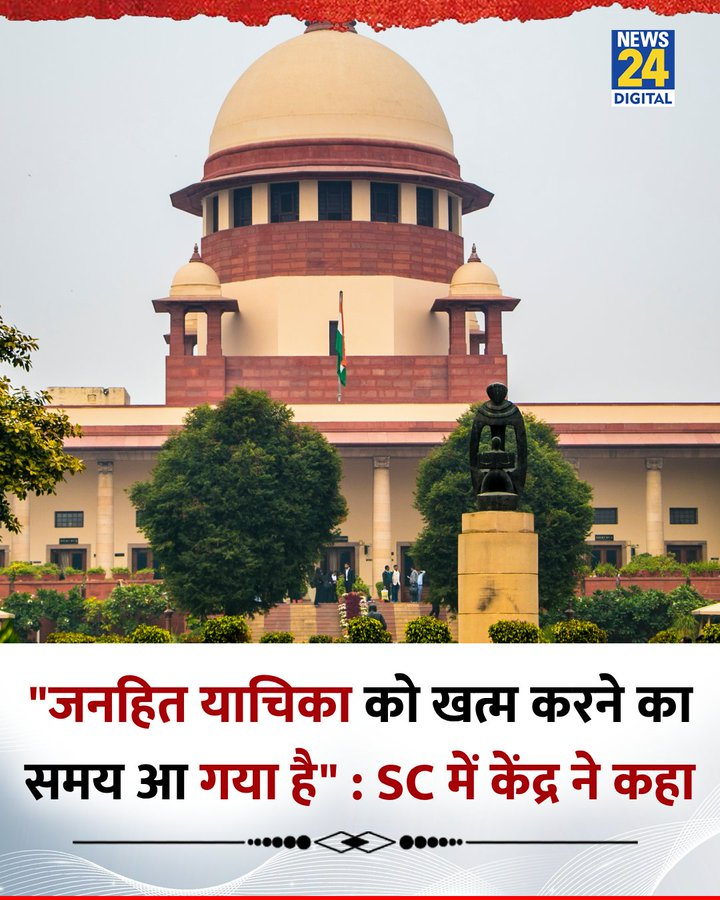
जब राजा बैठा ही दिया है ऊपर, तो सिर्फ याचिका ही क्यों, जनहित ही समाप्त कर दो।
Sandeep Manudhane tweet media
हिन्दी
63
573
1.8K
20K
Arun Arora
Arun Arora@Arun2981·
Guess the JUDGE
Live Law@LiveLawIndia

#BREAKING "Retweeting Defamatory Content Attracts Action Under Section 499 Of IPC:" Delhi High Court refuses to quash summons against Delhi CM Arvind Kejriwal in defamation case for retweeting an allegedly defamatory video posted by YouTuber Dhruv Rathee in 2018. @dhruv_rathee @ArvindKejriwal

English
6
121
426
16.1K
Neha Nagar
Neha Nagar@nehanagarr·
India's education system doesn't just have a problem. It has a design flaw. It is built to produce mass labourers, not curious thinkers.
English
80
84
543
8.6K
Pulkit Saraf
Pulkit Saraf@Pulkit_Saraf·
@Kulfei Kheti ki machine bhi ship karne wala hai Dimaag nahi lagaoge to Bina dimaag ka labour banake chodega
हिन्दी
0
0
0
160
Anushka
Anushka@Kulfei·
overheard in bangalore "claude aise apps ship karta raha toh kheti karni padegi"
Eesti
27
17
571
18.1K
Pulkit Saraf retweetledi
𝕲𝖆𝖓𝖊𝖘𝖍 *
Does your file get rejected often? Here is a demo of how to include the necessary papers to gain acceptance
English
1
65
464
9.5K
Pulkit Saraf
Pulkit Saraf@Pulkit_Saraf·
@elonmusk "Oh Chandler, I just lost myself in the moment," - Janine Lecroix (Elle Macpherson) in Friends Season 6, Episode 11
English
0
0
0
14
Elon Musk
Elon Musk@elonmusk·
Grok will never go to therapy. Never.
English
2.3K
2K
21.2K
11.7M