Sheryl Purdy

1.7K posts

Sheryl Purdy

Sheryl Purdy

@PurdySheryl

Katılım Ağustos 2015
382 Takip Edilen161 Takipçiler
Sheryl Purdy
Sheryl Purdy@PurdySheryl·
@DrJStrategy Am so grateful for your wise observations and the eloquence to piece all the parts of the puzzle together 🙏. Thank you for making the time in your busy days for sharing your wisdom. I totally agree with this.. 👌 is an art to block out the bullsh*t and make sense of the facts.
English
0
1
2
103
James E. Thorne
James E. Thorne@DrJStrategy·
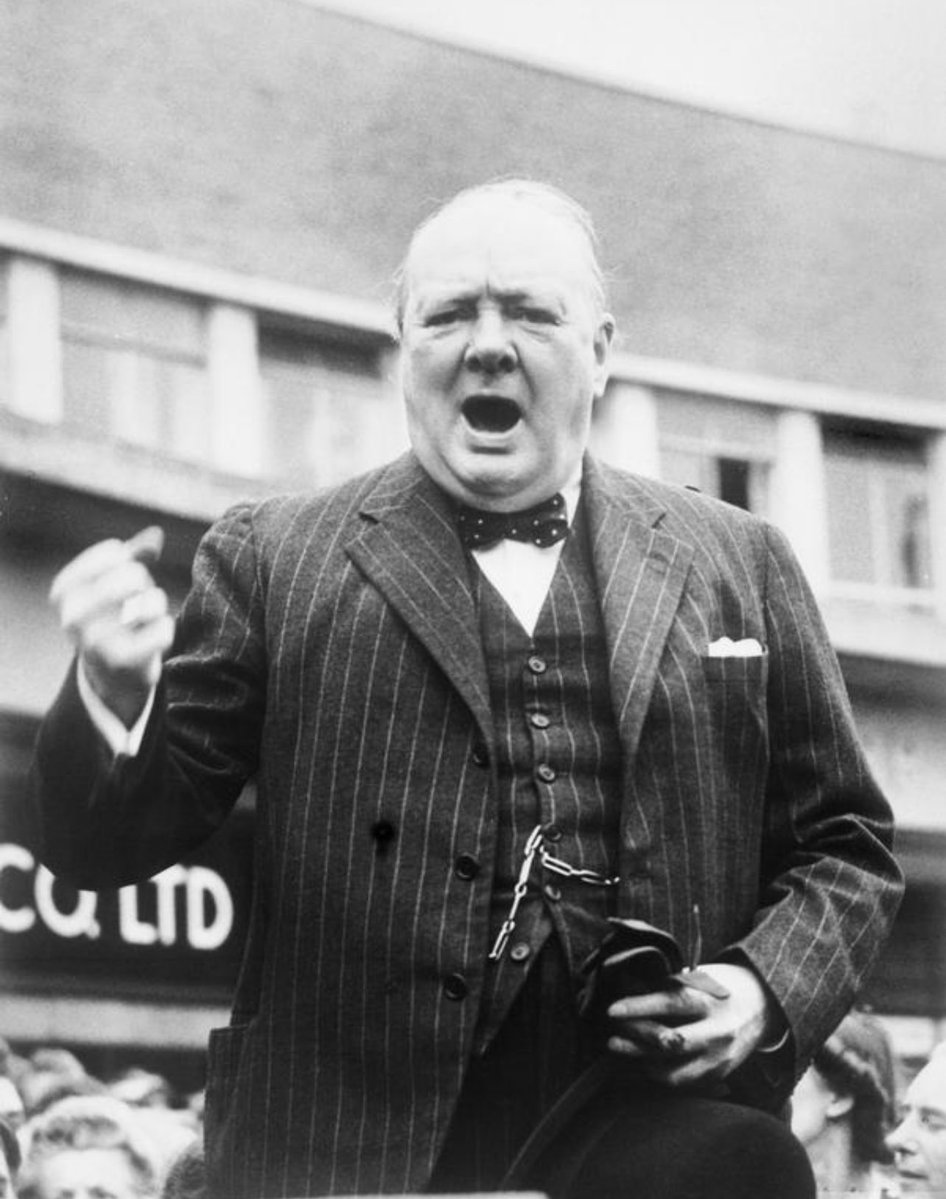
Food for thought. The Myth of Decline, Reversed In 1945, the United States possessed power no empire had ever known. It alone had nuclear weapons, no peer competitor, and no constraint on converting victory into domination. Yet it chose construction over conquest, building Bretton Woods, a rules-based system, and the security architecture that became Pax Americana. America rebuilt the nations it had just defeated. The Marshall Plan turned enemies into allies and devastation into industrial recovery. West Germany became Europe’s economic engine within a generation. Japan rose from surrender to the world’s third-largest economy. American aircraft delivered supplies into Berlin, deep inside former enemy territory. At maximum leverage, the United States chose restraint. That became the moral foundation of the postwar order. The decline narrative mistakes transition for collapse. From Spengler onward, observers have confused adaptation with exhaustion. But decline is not mood it is loss of capacity to act. By that measure, the United States is not declining. American power endures. The U.S. accounts for a quarter of global GDP, dominates technological innovation, and fields, with allies, the majority of deployable military force. The dollar remains the reserve currency. American energy production leads the world. What has changed is not capacity, but sustainability. For decades, Washington has played universal guarantor while expanding domestic commitments and pretending deficits carry no cost. That era is ending. As Kissinger understood, no order survives on power without legitimacy or legitimacy without power. “Power without legitimacy tempts tests of strength,” he wrote. “Legitimacy without power tempts empty posturing.” The task is restoring equilibrium between commitments and capabilities. The Gulf moment presents that opportunity. For half a century, the global economy has operated under the 1979 Iranian Revolution’s shadow: constrained supply, chronic instability, embedded risk premiums. A durable resolution, securing oil flow through Hormuz, constraining proxy warfare, reintegrating Iran into regional order, would dismantle decades of strategic dysfunction. The implications extend beyond the region. China’s model depends on imported energy from unstable suppliers. Constrained supply and elevated prices subsidize geopolitical leverage. Abundant, diversified supply would compress rents, reduce risk, and expose Beijing’s vulnerabilities. Add Venezuelan normalization, the world’s largest proven reserves, and the energy landscape transforms. Sanctioned supply returns, risk premiums compress, and sustained $60 oil becomes plausible. Energy is the master variable. Lower, stable prices reduce inflation volatility, improve capital allocation, raise real growth. Combined with AI advances, the result could be transformative: a productivity cycle driven by cost compression, not debt expansion. The Cold War’s end released a peace dividend financing globalization and the internet age. Resolving the Iran-centered energy order could produce a second dividend, restoring coherence to a strained system. Churchill knew: safety in oil lies in variety. But control over energy is control over the strategic environment itself. The United States is not declining. It is a dominant power confronting unsustainable posture and the opportunity to correct it. Resources remain. Power structure favors the West. Under Trump, investors should assume the will exists and position accordingly. The actions thus far suggest they would be right.
James E. Thorne tweet media
English
31
97
282
15K
Mike Jamieson
Mike Jamieson@MikeJamiesonYYC·
Council was asked to approve a scoring framework that will rank every capital project for the next decade. The criteria include equity, Truth and Reconciliation, and greenhouse gas emissions scoring. At the time of the vote, the weightings behind these criteria had not been disclosed in writing. I moved a referral asking Administration to provide the weightings and show what funding streams are tied to these criteria before Council was forced to vote on it. That referral lost by one vote.  As a result of my questions, the weightings have since been disclosed at 5%. Five per cent of what? We still don't know what funding streams rely on these criteria.  #yyccc #yycpoli #yyc #calgary
English
19
20
96
5.9K
EndGame Macro
EndGame Macro@onechancefreedm·
This is a clean way to make the report look harmless, but it removes the exact parts of inflation that are hurting people. Core CPI excluding rent may be useful for one narrow analytical purpose, but it is not the cost of living. It strips out food, energy, and rental components, then says inflation looks fine. But households do not live in that index. They pay rent, gasoline, electricity, groceries, insurance, medical bills, transportation, and every second order cost that comes from higher energy and freight. The scary part of the April CPI report is not that one cleaned up measure came in at 0.2%. The scary part is that headline CPI rose 0.6% in one month, core rose 0.4%, energy rose 3.8%, gasoline rose 5.4%, food at home rose 0.7%, electricity rose 2.1%, and shelter rose 0.6%. Year over year, energy is up 17.9%, gasoline 28.4%, fuel oil 54.3%, airline fares 20.7%, beef and veal 14.8%, fresh vegetables 11.5%, tomatoes 39.7%, and coffee 18.5%. That is inflation sitting in necessities. The contribution table makes it even clearer. Energy added 0.273 percentage points to the monthly CPI increase. Shelter added 0.214. Food added 0.068. Against a 0.6% headline print, energy and shelter alone explain roughly 80% of the monthly move. Add food, and you are over 90%. So the bond market is not freaking out over nothing. It is looking at an economy where inflation is concentrated in the things people cannot avoid, while real purchasing power is already deteriorating. The Real Earnings report showed nominal hourly earnings rose 0.2% in April, but CPI rose 0.6%, so real average hourly earnings fell 0.5%. The paycheck got bigger, but the worker got poorer. That is the real issue. You can make inflation look calm by stripping out the pressure points. But the household cannot strip them out of the monthly bill. The danger is not just inflation. It is necessities inflating while real wages fall, discretionary demand weakens, credit tightens, and the Fed mistakes a narrow filtered measure for the actual economy.
GIF
David Rosenberg@EconguyRosie

The core CPI excluding the rental components (for which the BLS acknowledged a measurement quirk) came in at the oh-so-scary reading of +0.2% in April, which it has matched or been lower than in each of the past three months. During that time, this underlying measure of inflation has registered a +2.2% annual rate. I mean, for all the angst and anxiety over energy pass-through and tariffs, that’s all we get? Meanwhile, the bond market is having a mild coronary.

English
4
8
41
8.7K
Sheryl Purdy
Sheryl Purdy@PurdySheryl·
@iky_fwjett Perhaps she gave birth to a stillborn child, and that was literally the only physical keepsakes of her precious child. No one spoke about this back then. Yes… it is a thing a grieving mother would do. 😢
English
0
0
21
1.8K
Landon Johnston
Landon Johnston@Landonforward14·
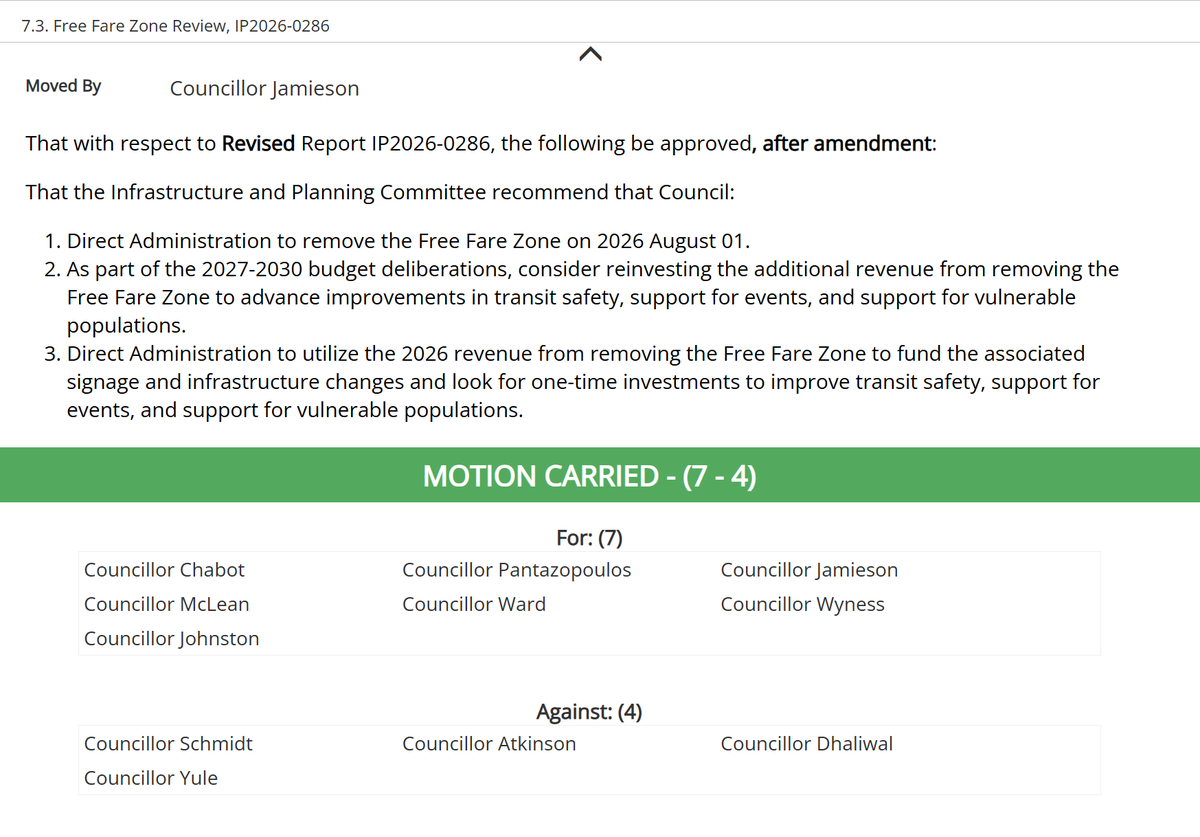
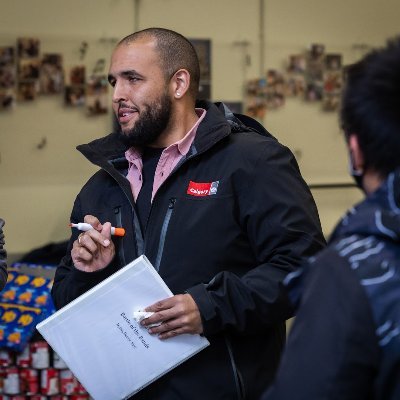
Calgary’s CTrain free fare zone isn’t keeping downtown safer, it’s blocking enforcement. This week the Infrastructure & Planning Committee voted 7-4 to end it Aug 1. Transit Director of Calgary: safety is the #1 barrier to ridership. Right now anyone can board and loiter for free. Fares give peace officers the authority they need. I voted to end the free fare zone at committee and it was not an easy vote as it has been a staple of our city for a very long time.
Landon Johnston tweet mediaLandon Johnston tweet media
English
48
15
98
7.5K
Sheryl Purdy
Sheryl Purdy@PurdySheryl·
Gold…. Pure gold 🤣👌
English
0
0
0
19
Keith Wilson
Keith Wilson@ikwilson·
The pipeline debate is missing the bigger problem. As Cenovus’ CEO said today, Canada’s oilsands dialogue has been “myopically focused on the climate agenda,” making resource development and investment uncompetitive with the rest of the world. That is exactly the issue. It does not matter if a new Alberta-to-Pacific pipeline is approved if oil companies cannot take the risk of increasing production to fill it. Carbon taxes, Net Zero mandates, emissions caps, and forced CCS do not create market value. Buyers want reliable supply at a fair price, not a Net Zero premium. Carney’s climate obsession risks turning the world’s third-largest oil reserves into a stranded asset and impoverishing Alberta.
Global Calgary@GlobalCalgary

Cenovus Energy's chief executive says the national dialogue around future oilsands development has been "myopically focused on the climate agenda" which has made Canadian resource development and investment "uncompetitive with the rest of the world." globalnews.ca/news/11837684/…

English
15
173
508
5.8K
Jackie Forrest
Jackie Forrest@JackieForrest·
Really enjoyed the discussion with @Rory_Johnston this week on #ARCEnergyIdeas He describes the oil market reaction to Strait closure as “Sanguine.” We also talk UAE and OPEC split, and a long list of other big questions
ARC Energy Research Institute@arcenergyinst

This week #ARCEnergyIdeas pod is an oil market discussion with @Rory_Johnston. Rory starts with the global picture, then zooms in on North America, from tankers arriving & tightening inventories, and the Canadian context arcenergyinstitute.com/rory-johnston-…

English
2
8
22
11.2K
Sheryl Purdy
Sheryl Purdy@PurdySheryl·
@MPelletierCIO Has always been my thesis… that Carney’s was put in place to get access to our pension $… for Brookfield.
English
0
0
0
21
Sheryl Purdy
Sheryl Purdy@PurdySheryl·
KybrdWrrr@KybrdWrrr

Any member of #yyc who voted for the water efficiency plan - this should be their first and last term. Not a single one of them ran on this type of restrictive measure. Floating rates for water when it’s already an expensive utility when all the fees are added.

QME
0
0
1
19
Sheryl Purdy
Sheryl Purdy@PurdySheryl·
I’ll be planning for the worst, and have lost confidence in the probability @MarkJCarney actually is using ethical best practices and good governance in his strategy here. 😏
James E. Thorne@DrJStrategy

Food for thought. Mark Carney’s Spring Economic Update should not be judged by the childish slogan that “all debt is bad,” but by a harder question: what do you do when a country with negative productivity growth, chronically weak business investment, and a reputation for driving away global capital needs to rebuild its productive base? Canada is not a healthy economy indulging in fiscal excess, it is a damaged one trying to finance its way out of the consequences of its own policy choices. The right framework here is the older economics of Kenneth Arrow and Mordecai Kurz: public debt is justified only when it finances investment with a social rate of return high enough to raise future productive capacity more than the cost of borrowing. Debt used to build a richer economy can be defensible, debt used to preserve drift cannot. By that standard, the case for some of Carney’s borrowing is clear. Canada faces generational structural pressures: a housing shortage, a skills deficit, an infrastructure gap, and a harsher global environment for capital. In an economy that has lacked investment for decades and is now shunned by global capital, drastic measures are not optional. Increasing debt is not the first-best option, but first-best options disappear after years of underinvestment, regulatory obstruction, and policy drift. The Spring Economic Update is, at best, a late, imperfect attempt to use the federal balance sheet to do what private markets no longer believe Canada can do on its own, mobilize capital at scale for housing, infrastructure, skilled labour, and strategic industry. This does not spare Carney from scrutiny, it intensifies it. Once you accept the Arrow, Kurz logic, the test becomes merciless. Borrowing for housing supply, logistics, energy infrastructure, or labour-force capacity may be justified. Borrowing for disguised consumption, patronage, or fashionable industrial theatre is not. If Carney’s new debt buys productive assets that raise future output and begin to restore Canada’s credibility with investors, it can be defended as a harsh, second-best response to decline. If it disappears into rebranded consumption and political symbolism, then the Spring Economic Update will not be a bridge to renewal, it will be one more stage of managed decay.

English
0
0
0
22
Sheryl Purdy
Sheryl Purdy@PurdySheryl·
@CWalcottYYC #ward13 DO NOT VOTE FOR HIM! 👎😡. Our #ward8 in Calgary learned the hard way how he NEVER does what is the best interests of the ward. He never shows up, and condescendingly told us he feels his job is NOT to do what his ward wishes, but how HE interprets is best for the City 😡
English
0
0
0
36
Sheryl Purdy
Sheryl Purdy@PurdySheryl·
@MarkJCarney you’re a sneaky man with a dark agenda, for which the ‘best interests of Canada’ are nowhere to be seen. Is truly the Carney show. Bad governance personified. 👎😳
Marc Nixon@MarcNixon24

HEAVILY SUPPRESSED VIDEO @SheilaGunnReid interviewed Michelle Stirling 3 years ago. 1,400 views Exposes Mark Carney as the architect for carbon pricing It has nothing to do with the climate. It’s about making global elites RICH Lots of gold nuggets in this video

English
0
0
0
8