
Sabitlenmiş Tweet
Кирилл :)
32.3K posts


@NarbutTanya Какая красивая девушка была. Надеюсь эти гниды страшно мучались сдыхая.
Русский

Счёт закрыт. Все пятеро уничтожены . Сегодня последний . Переворачиваем страницу - на ней будут остальные имена террористов . И так до последнего .
Все насильники и убийцы израильтянки Шани Николь Люк - были ликвидированы силами Цахала, занимающейся поиском и устранением всех, кто планировал, осуществлял или иным образом участвовал в массовой резне 7 октября.
Ни один уйдет от возмездия . Амен .


Русский
Кирилл :) retweetledi

Кирилл :) retweetledi

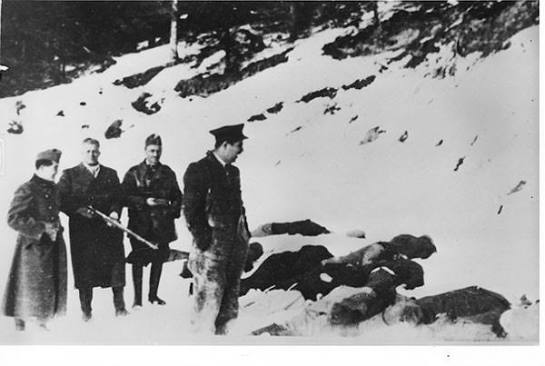
Верецький розстріл — масове вбивство від 500 до 600 полонених вояків «Карпатської Січі», яке сталося у березні 1939 року на Верецькому перевалі.
Угорщина передали українських добровольців польським прикордоникам, після чого їх без суду та слідства вбилибіля лінії кордону.
⬇️⬇️⬇️
Українська
Кирилл :) retweetledi


Кирилл :) retweetledi


Кирилл :) retweetledi
30.07.1937 подписан секретный приказ НКВД № 00447. В СССР начался Большой террор. Арестовано около 1,7 млн. человек, около 700 тыс. человек казнены.

Русский
@13Hellis_13 В Одессе два прилёта ракет и целый шахеды шныряют. Так что ни чем. Ибо должен был разговаривать не комик а профессиональный политик.
Русский

Кирилл :) retweetledi

Россияне занимаются любимым делом в уничтоженном ими же Бахмуте – мародерят в уничтоженных ими же квартирах и не стесняясь снимают это на камеру.
Распространеняйте их преступления.
Российская армия – армия мародеров, насильников и убийц.
Русский
Кирилл :) retweetledi

‘Ukraine is an artificial nation. The language is a Russian dialect.’ Moscow’s oldest claim. Let the empire’s own archive answer it.
1863, the Valuev Circular, imperial Russia’s censorship chief: the Ukrainian language ‘never existed, does not exist, and cannot exist’ — in a decree banning it.
Sit with that sentence. They prohibited, by law, a thing they declared imaginary.
1876: the Ems Ukaz bans Ukrainian books, plays, even song lyrics. The 1930s: a generation of Ukrainian writers executed — history names them the Executed Renaissance. Today, in every occupied territory: Ukrainian removed from schools within months, as the first order of business.
Three centuries. One policy. And one logical problem the empire has never solved:
You do not ban a language that does not exist.
You do not shoot poets of a nation that is imaginary. You do not need four hundred years of decrees against a fiction.
Every ban is a certificate of existence — notarized by the empire itself, in triplicate, since 1863.
English
Кирилл :) retweetledi
‘Just stop sending weapons, and the war will end.’
Correct. It will. Let me describe the ending, since its advocates never do.
We know exactly what Russian occupation looks like, because Ukraine has liberated towns and counted. Bucha lived under Russian rule for thirty-three days: 458 bodies. Torture basements in district after district, standardized like franchises. Twenty thousand children deported for ‘reeducation.’ Mayors executed. Teachers filtered. Mass graves with bound wrists.
Now extend thirty-three days to forever, and one town to a nation of forty million.
That is the ‘peace’ this arithmetic purchases.
If Russia stops fighting, the war ends. If Ukraine stops fighting, Ukraine ends — not as a flag on a map, but family by family, basement by basement, off camera, for years.
Weapons are not prolonging this war. They are the only thing standing between an entire nation and Bucha at scale.
Pacifism that disarms the victim has a proper name: complicity with better manners.
English

Did you know that Western Civilization was saved by a Polish king?
The morning of September 12, 1683. The largest cavalry charge in history. Sixty thousand horsemen.
The Winged Hussars at the center – the most terrifying cavalry force in the world, the eagle feathers on their armor creating a sound like thunder as they descended at full gallop into the Ottoman camp below Vienna. The siege that had lasted two months collapsed within hours. Vienna was saved. Europe was saved. The road west, which had been open, closed.
The man who led it was Polish. Jan Sobieski had not come because he had to. He had come because he understood what was actually at stake – that if Vienna fell, Poland might be next, and after Poland, everyone. The Habsburg Emperor Leopold had fled the city before the siege. The Pope had funded the campaign. The Germans had joined late. Western civilization was saved by a coalition of the reluctant and the self-interested, held together by one king who grasped the full civilizational stakes and acted on them anyway.
That night Sobieski wrote to his wife describing the battle. The letter survives. Leopold received him the next day without removing his hat – the deliberate insult of a rescued man to his rescuer. Poland knows this story well. It keeps happening.
What that charge made possible is the rest of the story. Mozart, Beethoven, Schubert, Brahms, Mahler – all Vienna. Wittgenstein, Popper, Hayek – all Vienna. The coffeehouse culture that produced more civilization per square meter than anywhere else on earth. A city freed to become what it became – because a Polish king did what nobody else was willing to do.
He was never properly thanked. He never expected to be. That too is Polish.
We need more Sobieskis. People who see the full civilizational stakes when everyone else is calculating their own position. Who ride down the hill not because the alliance is solid or the gratitude is guaranteed – but because they understand that if this falls, everything falls. The reluctant and the self-interested will always be there. The question is whether there is anyone willing to hold the coalition together by the force of their own clarity.
The hat stays on. You ride anyway.
Krzysztof Szczawinski 🇵🇱@Kristof_Poland
Our Civilization is Nobody’s Department Western civilization has regulators for finance, watchdogs for governments, frameworks for security, international bodies for everything from fisheries to intellectual property. It has no institution tasked with safeguarding the civilization itself. This was not an oversight. It was an assumption – that what had endured would simply keep enduring. Assumptions are not a strategy. Every great system eventually requires conscious stewardship. The Romans assumed the Republic would hold. The Venetians assumed the trade routes would always be theirs. Every civilization that ever declined assumed it wouldn’t – right up until the moment the assumption became obviously wrong, at which point it was already too late to do much about it. What makes this moment different is the paradox: a civilization powerful enough to have shaped the entire world, yet seemingly unable to consciously preserve its own existence. We have built extraordinary mechanisms for managing parts of the system – the financial regulators, the defense alliances, the legal frameworks. The deeper foundations — cultural memory, shared values, intellectual honesty, civic responsibility, the willingness to say what is true in public — are left diffuse, unmanaged, and increasingly abandoned. Nobody’s department. Nobody’s budget line. Nobody’s quarterly report. The result is not collapse. It is drift. Slow, quiet, constant. The kind that shows up not in a single catastrophic event but in the gradual erosion of standards, the slow lowering of expectations, the institutions that stopped reinforcing the civilization’s principles and started undermining them – from the inside, with the best intentions (or not…), in the language of progress. And into that drift, other civilizations are moving. Not always with armies. Often with patience, money, demographic pressure, and the simple advantage of believing their civilization is worth advancing while ours debates whether it deserves to exist. A civilization doesn’t need a single authority to watch over it. That would be its own kind of tyranny. But it needs something harder to build and easier to lose: a distributed sense of responsibility among enough of its people, enough institutions that reinforce rather than corrode its principles, and the willingness to examine itself honestly without dissolving into the self-hatred that mistakes destruction for sophistication. The question is not only who should guard Western civilization. It is whether it still believes it is worth guarding – and whether enough people are willing to take that responsibility personally, seriously, and now. The threat is real. Other civilizations are entering every space we vacate, every institution we hollow out, every conversation we are too afraid to have. They are organized. They are purposeful. They are not confused about what they want. The answer is not one institution. It is many people, in many places, choosing the same thing: tell the truth. Have the courage it requires. And build — the structures, the networks, the institutions, the arguments, the communities — that a civilization needs when it can no longer take itself for granted. Powerful individual men are great – a structure is even better. Tell the truth, have courage and build.
English
Кирилл :) retweetledi

Кирилл :) retweetledi


Кирилл :) retweetledi

Nicklas Nilsson förklarar skillnaden mellan höger och vänstermänniskor i klockren text på Facebook:
"Om en högerpolitisk person är bög, så är han det, och bryr sig inte om vad andra tycker.
Om en vänster är bög, så kräver han lagändringar, protesterar mot allt och alla, och gör det till en politisk kamp.
Om en höger är vegan, så äter han helt enkelt inte kött.
Om en vänster är vegan, så vill han förbjuda kött, stoppa matproduktionen och protestera utanför bondgårdar och hönsfarmer.
Om en höger inte gillar vapen, så köper han inga.
Om en vänster inte gillar vapen, så försöker han förbjuda dem, hindra alla andra från att äga ett, och hatar dem som har.
Om en höger oroar sig för klimatet, så flyger han mindre, kör elbil om det passar honom och sorterar sitt avfall.
Om en vänster oroar sig för klimatet, så vill han förbjuda fossilbilar, flygresor och kött för alla andra, protestera utanför fabriker och kräva att staten tvingar fram förändringen.
Om en höger vill ge sina barn en bra skolgång, så flyttar han till ett område med bra skolor, eller väljer en privatskola eller engagerar sig själv.
Om en vänster vill ge sina barn en bra skolgång, så kräver han mer skattepengar från alla, lika resultat för alla, förbud mot friskolor och protesterar mot varje skillnad.
Om en höger klagar på sitt jobb eller arbetsplats.. det gör han det inte. Han byter jobb eller startar ett eget företag.
Om en vänster klagar på sitt jobb – så är det chefen, företaget eller kollegorna det är fel på. Han kräver kollektivavtal, strejk, förändringar för hela orten och protesterar mot företaget så att det ska passa honom.
Om en höger är missnöjd med sin bostad eller hyra, så flyttar han, renoverar eller köper något annat.
Om en vänster är missnöjd med sin bostad eller hyra, så kräver han hyresstopp, mer bidrag, regleringar för alla och protesterar mot hyresvärdar och politiker.
Om en höger misslyckas med en affär eller en investering som går snett, så reser han sig upp, dammar av sig och försöker igen imorgon.
Om en vänster har slut på pengar den 24:e, så skyller han på att de rika har för mycket och måste bidra mer, skyller på att lotterivinsten inte gick hem förra veckan och muttrar att han har så himla otur.
Om en höger ser det här – så skickar han det till några kompisar för ett gott skratt.
Om en vänster ser det här – så försöker han argumentera emot, få det bortplockat och radera mig från Facebook."
Svenska


Кирилл :) retweetledi

Текст из FB, который лучше всего суммирует реакцию украинцев на стенания малого бизнеса из РФ по поводу товаров, пропавших на складе Wildberries. Возразить на аргументы автора абсолютно нечем:
«Мы потеряли всё: планы, мечты, дома, близких. Мы ехали в набитых эвакуационных поездах, ночевали в сырых подвалах, бежали на работу под бомбами, замерзали без отопления, выхаживали тяжелораненых, хоронили родных, доставали тела детей из-под завалов… Но я не помню ни одной массовой истерики украинцев.
Сегодня все ленты заполонил новый русский тренд – люди размазывают на камеру сопли по лицу. Просто из антропологического любопытства хочется спросить их зачем они это делают. Чтобы что?
Здоровый мужчина рыдает по сгоревшему на складе товару. Кстати, совершенно справедливо сгоревшему. А я смотрю на него и вспоминаю последние секунды жизни Александра Мациевского, слова "Слава Україні!". Сашу расстреляли оголтелые. Безоружного, в упор.
Я вспоминаю папу Камаля из Тернополя, как он на кладбище укачивал крохотный белый гробик с годовалым сыном. Малыша убила российская ракета.
Вспоминаю деда на Северной Салтовке, который жил в разрушенном микрорайоне буквально один. Пил талый снег, готовил на костре возле подъезда. Мне трудно представить, чтобы этот дед записал кружочек в поисках помощи или хотя бы сострадания.
— Та все гаразд, — говорил дед иностранным журналистам.
Я буквально вчера видела ролик, где потрясающе танцует девятилетняя гимнастка Саша Паскаль — девочка, которой в двадцать втором ампутировали ногу после обстрела под Одессой. Ребенок совершил невозможное — она выжила, выстояла и вернулась в спорт.
А тут реальные слёзы катятся по щекам бородатого дядьки. У него сгорели китайские дерматиновые сумки, на миллион или ахулион, неважно.
То, что россияне где-то в уральских деревнях не улавливают причинно-следственной связи между георгиевскими ленточками на лацканах своих фуфаек и горящими складами в подмосковье – хотя бы понятно. Но образованные молодые бизнесмены, питерцы, которые захлебываясь от рыданий вопрошают "за что это нам?" – вот этого я понять не могу, хоть убейте.
— Мы три года выстраивали этот бизнес, — плачет блондинка в инстаграм, — А его ни за что, ни про что разрушили. "Ни за что. Ни про что" — так и говорит.
Хоть бы один кружочек попался, где россиянин в слезах сказал бы: "Мы создавали и вели бизнес в террористическом государстве, на наши налоги кремль годами финансировал бессмысленную войну, с нашего молчаливого согласия убивают, грабят, насилуют украинцев. Мы отобрали сотни тысяч жизней, покалечили миллионы людей, разрушили города, сожгли больницы, школы. Мы всё это заслужили".
Но нет. Такой кружочек мне не попадался».
Источник: Facebook, Анна Гин.

Русский

Кирилл :) retweetledi

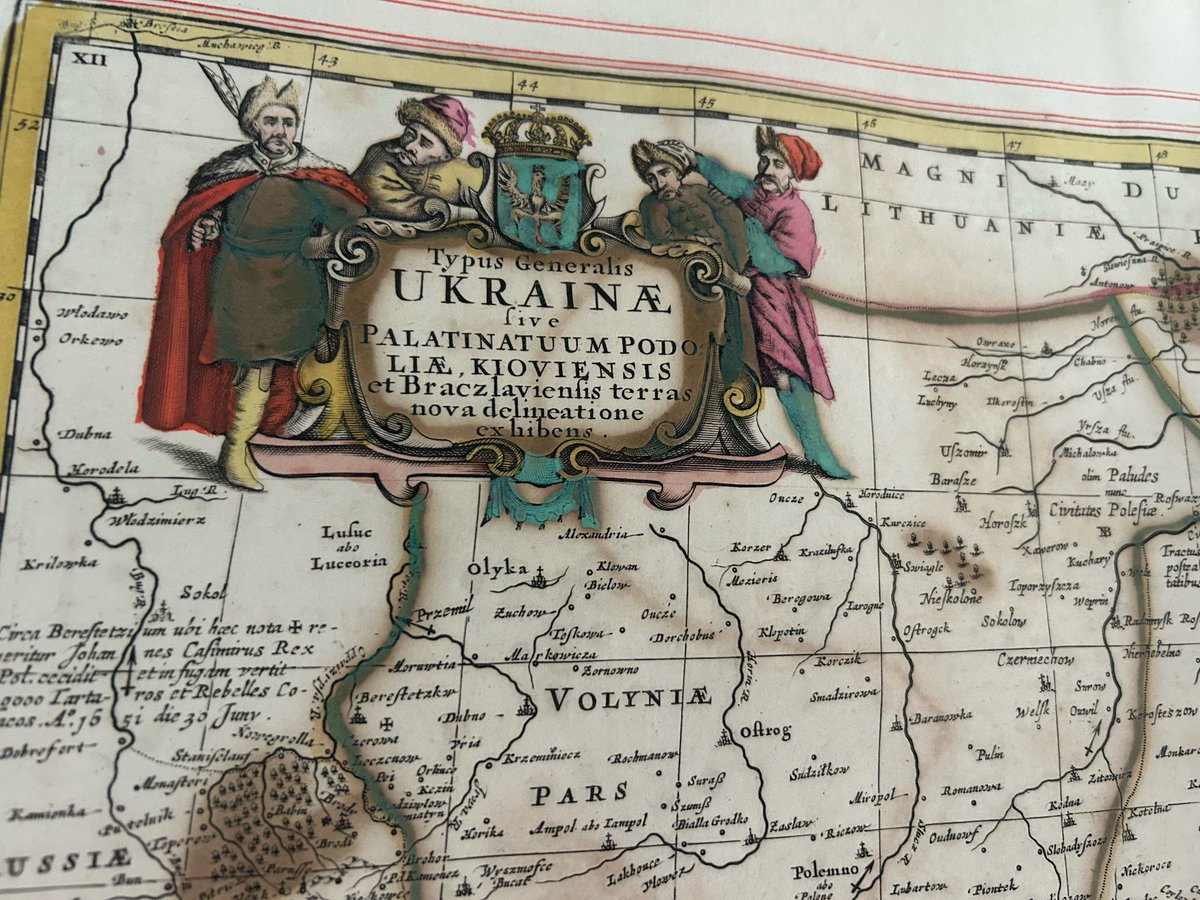
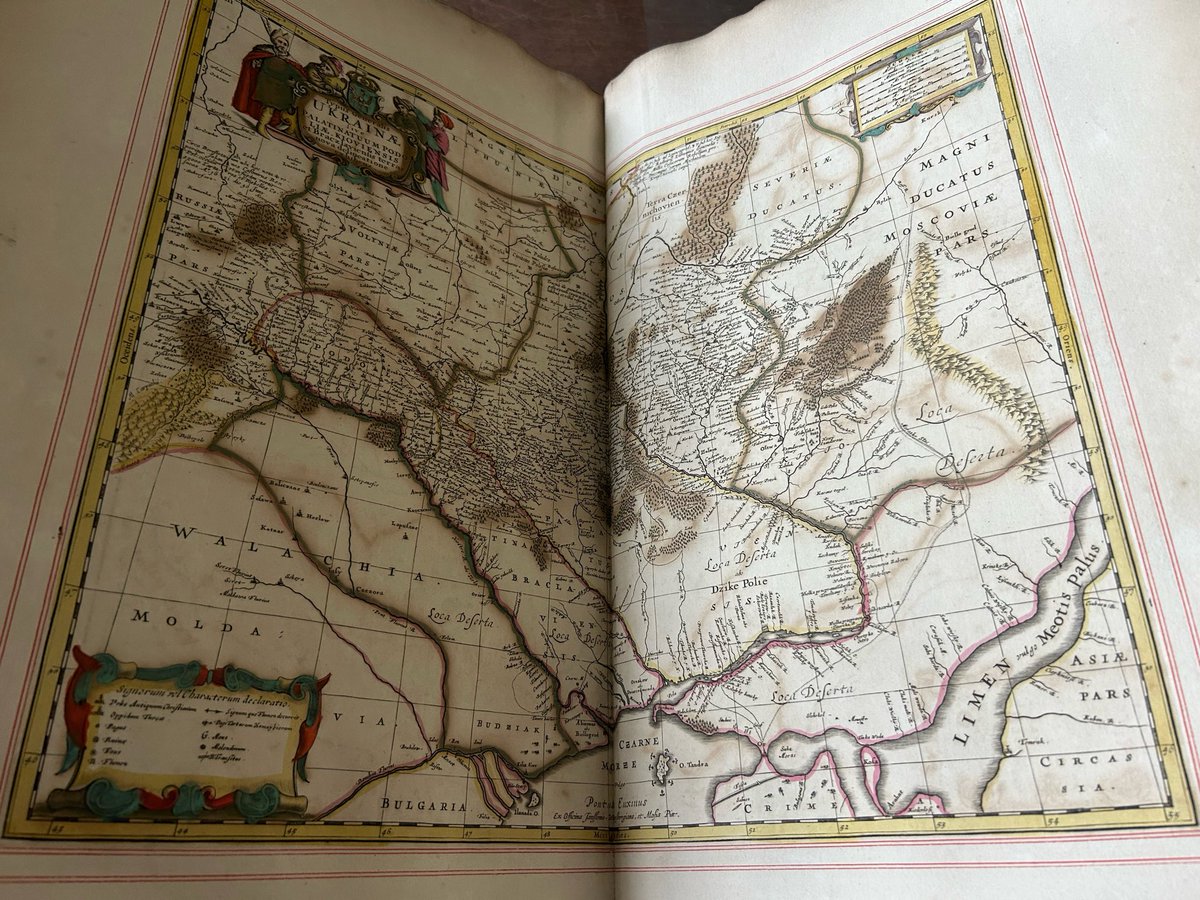
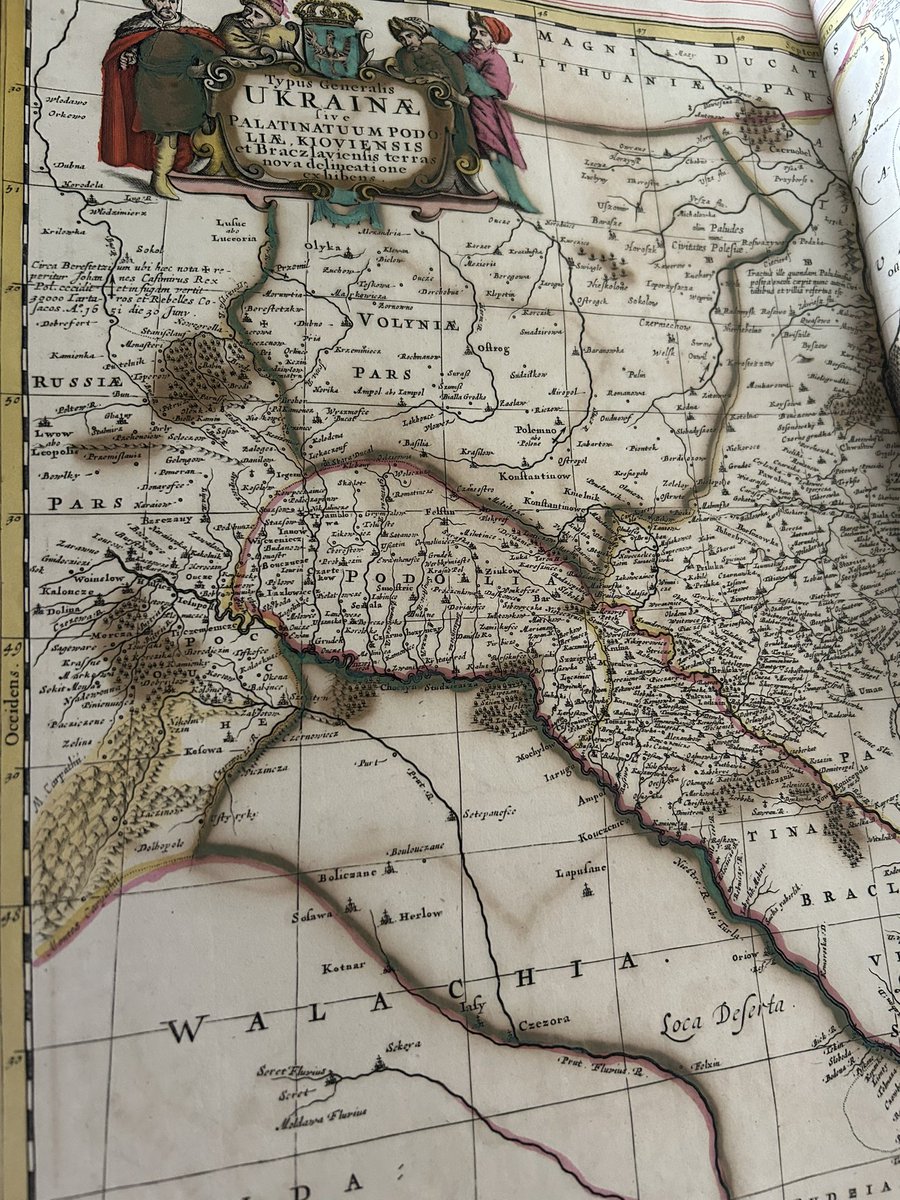
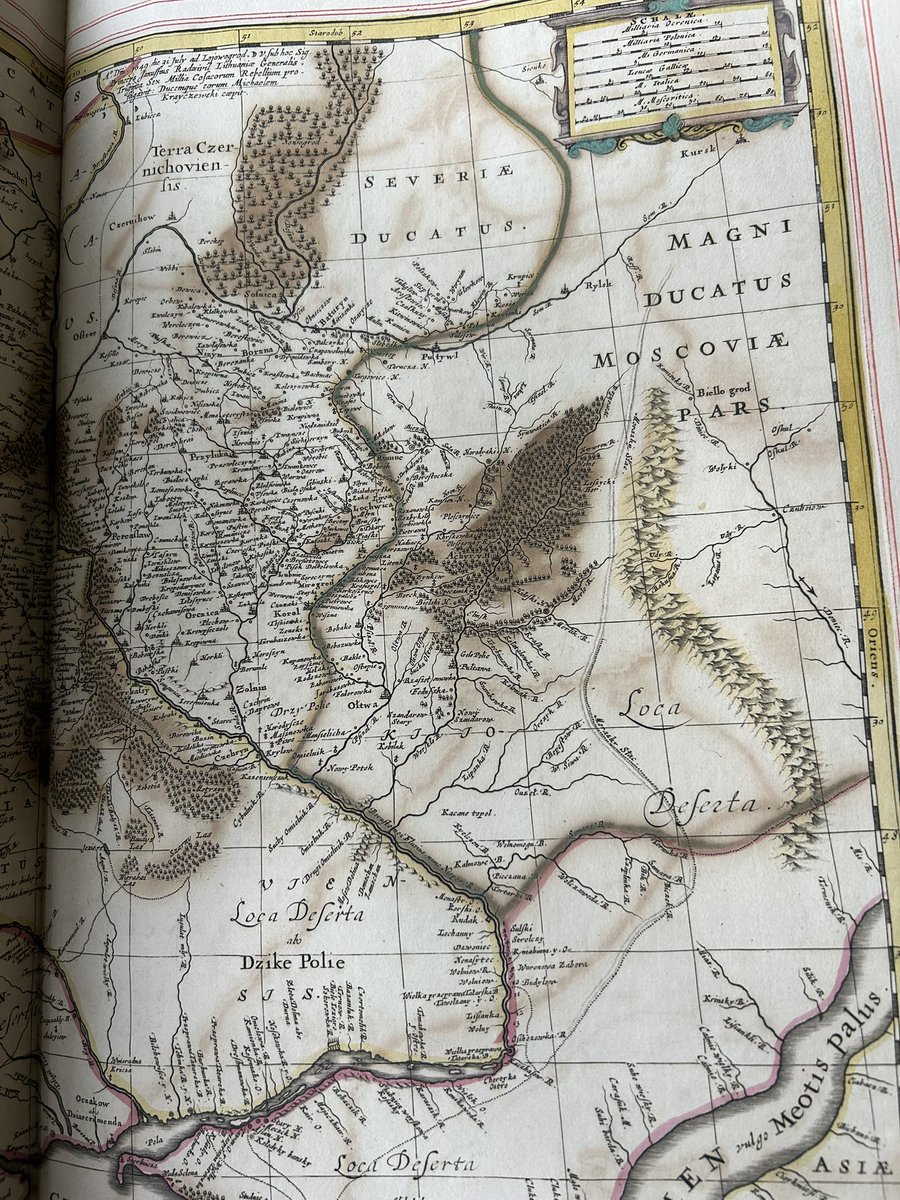
В библиотеке Марша в Дублине хранится голландский географический атлас 1660-х годов издания, созданный голландским картографом Janssonius van Waesberge. В атласе содержится карта Украины авторства французского картографа и инженера Guillaume Le Vasseur de Beauplan (c. 1600–1673). Эта карта так и озаглавлена - «Украина».
До «создания Украины Лениным», по версии Кремля, оставалось более 250 лет…
Русский
Кирилл :) retweetledi
