
Crypto Fyka retweetledi
Crypto Fyka
1.6K posts


Crypto Fyka
@Qadri540
One of the newest information is available on our page pardoy airdrop hunter
Katılım Ocak 2024
321 Takip Edilen76 Takipçiler

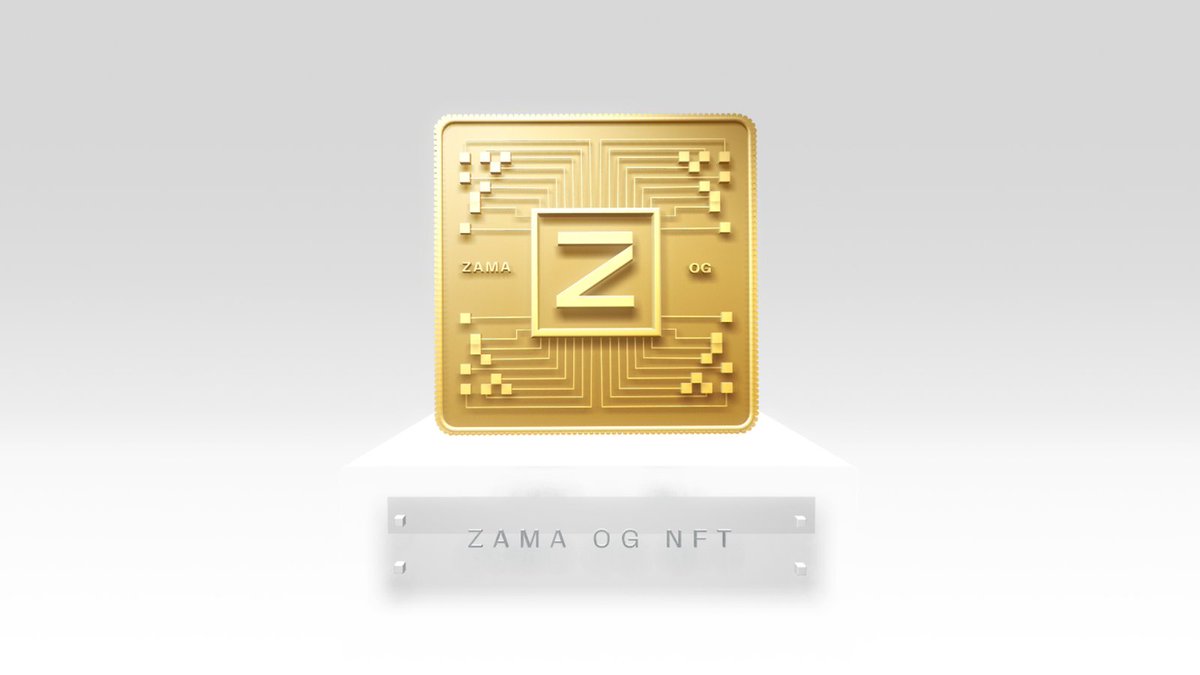
Zama Live on Ethereum
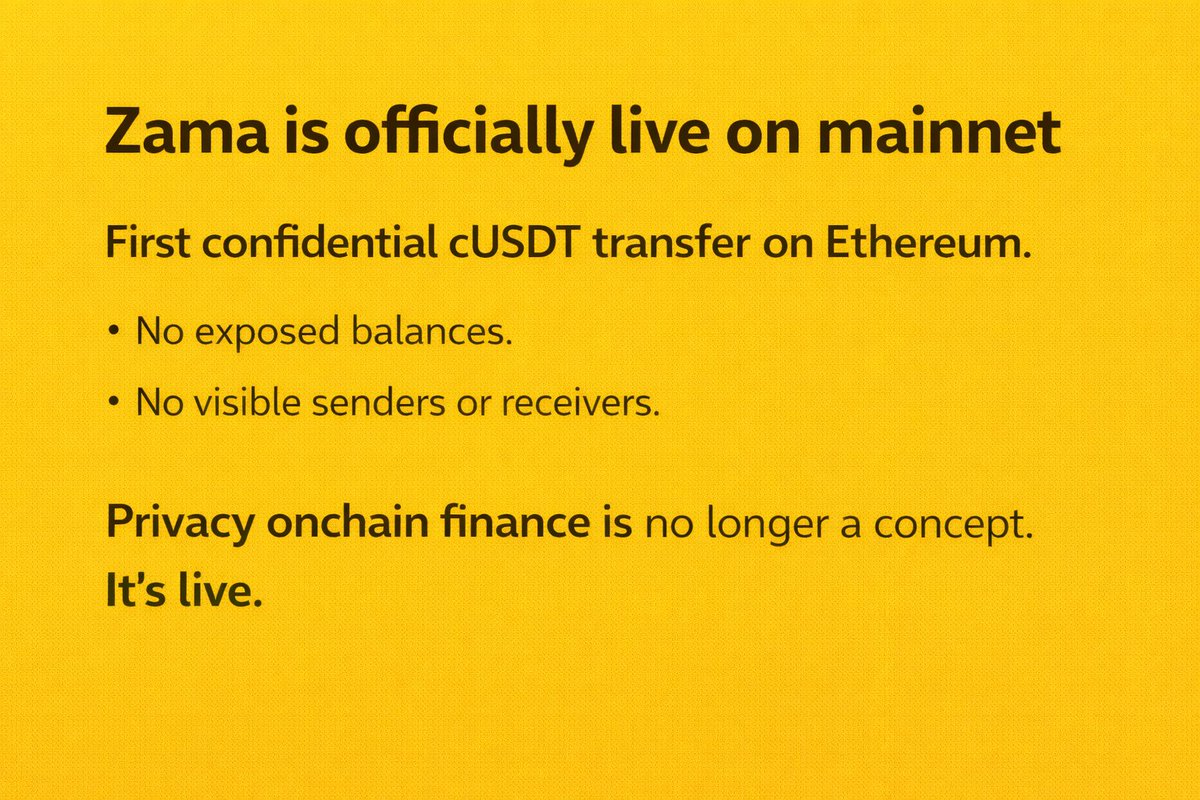
Zama is officially live on mainnet
The first confidential cUSDT transfer on Ethereum is done proving that transactions can stay private and still verifiable
#ZamaCreatorProgram

English
Privacy Goes Live on Ethereum
Zama is officially live on mainnet
The first confidential cUSDT transfer on Ethereum is done proving that transactions can stay private and still verifiable
#ZamaCreatorProgram
English

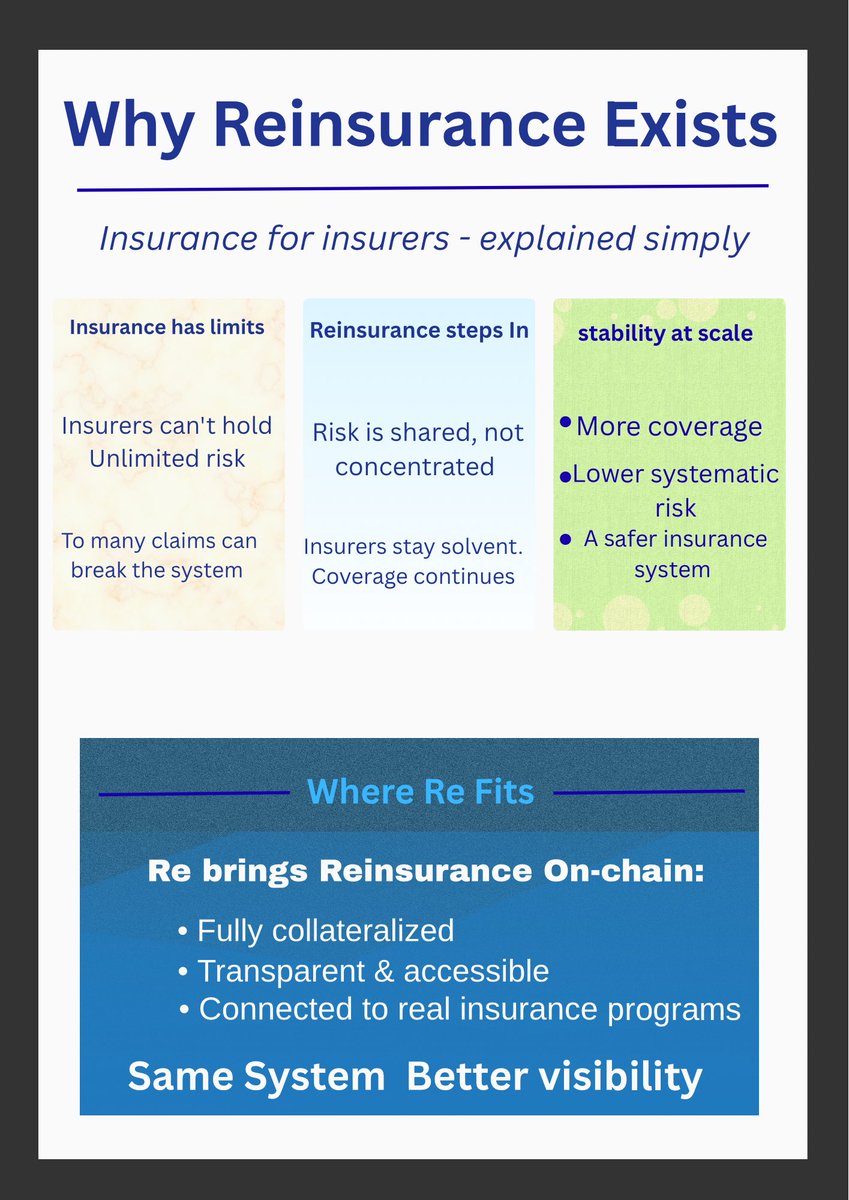
𝐖𝐡𝐲 𝐑𝐞𝐢𝐧𝐬𝐮𝐫𝐚𝐧𝐜𝐞 𝐄𝐱𝐢𝐬𝐭𝐬 (𝐀𝐧𝐝 𝐖𝐡𝐲 𝐈𝐭 𝐌𝐚𝐭𝐭𝐞𝐫𝐬)
Insurance companies don’t just take risk and hope for the best.
They have limits.
A single insurer can’t safely hold all the risk it writes especially when claims can arrive unexpectedly or cluster over time.
That’s where reinsurance comes in.
Reinsurance is insurance for insurers.
It allows insurers to share risk, protect their balance sheets, and keep writing policies without putting the entire system at risk.
When an insurer writes policies:
• it collects premiums
• it takes on potential claims
• but it passes part of that exposure to reinsurers
This spreads risk across many participants instead of concentrating it in one place.
𝐖𝐡𝐲 𝐭𝐡𝐢𝐬 𝐬𝐲𝐬𝐭𝐞𝐦 𝐞𝐱𝐢𝐬𝐭𝐬
Without reinsurance:
• insurers would write fewer policies
• premiums would be higher
• coverage would be harder to get
• failures would cascade through the system
Reinsurance is what keeps insurance stable at scale.
𝐖𝐡𝐞𝐫𝐞 𝐑𝐞 𝐟𝐢𝐭𝐬 𝐢𝐧
Traditionally, reinsurance has been closed, opaque, and reserved for large institutions.
Re changes the access, not the function.
It brings reinsurance capital on-chain:
• fully collateralized
• transparently managed
• connected to real insurance programs
The underlying system stays the same.
The visibility and accessibility improve.
Reinsurance isn’t a new experiment.
It’s a critical piece of global infrastructure.
@re simply makes it easier to see and easier to participate in.
lucky@LUCKYlaku25
𝐖𝐡𝐲 𝐈𝐧𝐬𝐮𝐫𝐚𝐧𝐜𝐞 𝐘𝐢𝐞𝐥𝐝 𝐃𝐨𝐞𝐬𝐧’𝐭 𝐌𝐨𝐯𝐞 𝐖𝐢𝐭𝐡 𝐂𝐫𝐲𝐩𝐭𝐨 Crypto markets move on emotions. News. Liquidity. Leverage. Fear. Hype. Insurance doesn’t work like that. 𝐈𝐧𝐬𝐮𝐫𝐚𝐧𝐜𝐞 𝐫𝐢𝐬𝐤 𝐥𝐢𝐯𝐞𝐬 𝐢𝐧 𝐭𝐡𝐞 𝐫𝐞𝐚𝐥 𝐰𝐨𝐫𝐥𝐝 Cars still crash. Pipes still burst. Businesses still face liability claims. These things happen: • in bull markets • in bear markets • even when crypto is silent They don’t depend on charts. 𝐓𝐡𝐢𝐬 𝐢𝐬 𝐰𝐡𝐲 𝐢𝐧𝐬𝐮𝐫𝐚𝐧𝐜𝐞 𝐲𝐢𝐞𝐥𝐝 𝐢𝐬 𝐝𝐢𝐟𝐟𝐞𝐫𝐞𝐧𝐭 When markets are volatile: • insurance policies don’t stop • premiums are still paid • claims are still processed That creates steady cash flow, regardless of crypto prices. 𝐇𝐨𝐰 @re 𝐮𝐬𝐞𝐬 𝐭𝐡𝐢𝐬 Re doesn’t generate yield from trading or speculation. It allocates capital into real insurance and reinsurance programs, where yield comes from: • recurring insurance premiums • predictable loss patterns • disciplined underwriting Not leverage. Not hype. 𝐖𝐡𝐲 𝐭𝐡𝐢𝐬 𝐦𝐚𝐭𝐭𝐞𝐫𝐬 Most on-chain yield: • rises when markets rise • disappears when markets stress Insurance yield behaves differently. Because real-world risk doesn’t follow crypto cycles, insurance-based yield stays structurally uncorrelated. 𝐓𝐡𝐢𝐬 𝐢𝐬 𝐰𝐡𝐚𝐭 𝐑𝐞 𝐛𝐫𝐢𝐧𝐠𝐬 𝐨𝐧-𝐜𝐡𝐚𝐢𝐧 Not volatility. Not speculation. But a yield source built on everyday economic activity transparent, collateralized, and designed to last.
English
@kamrulbroz @SoundnessLabs Unchecked computation quietly erodes trust
English

Happy last Monday of the year 🤍
For a long time, when I thought about trust in systems, I focused on the obvious parts. Data. Signatures. Transactions - @SoundnessLabs.
It took me a while to notice the real problem was somewhere else. That’s where Soundness started to matter to me.
When computation can’t be verified, systems don’t break in obvious ways. They keep running. Results keep coming back. Everything looks fine on the surface.
But underneath, trust is leaking.
If you can’t verify computation, you end up trusting whoever ran it. A sequencer, an operator, a service, even an AI model.
You stop checking how a result was produced and start accepting it because it came from the “right” place.
That’s when accountability breaks.
When something goes wrong, there’s no clear answer. Was it bad logic? Bad data? A mistake or manipulation? Without proof, you’re left guessing.
Security cracks next. Wrong results can slip through unnoticed, and by the time anyone sees the problem, the damage is already locked in. Speed doesn’t help here. It just spreads the failure faster.
As systems scale, the risk stacks up. More work moves off-chain. More places where trust is assumed instead of checked.
This is the gap Soundness focuses on.
When computation can be verified, results either come with proof or they don’t. If the proof checks out, the result stands. If it doesn’t, it fails. No guessing.
Verification brings clarity back. And without it, systems don’t fail loudly. They fail quietly.

English

People are so exited about @zama S5 result and
This wait is about to end very soon now indeed.
CREATOR PROGRAM S5 RESULT WILL BE OUT THIS WEEK
Turn your notification on👀
Good things coming

craken(❖,❖)@Sabitbroo
Dont fall for scams. No one has the @zama OG NFT yet. Those who talk about buying and selling it are scammers stay away from them.
English

𝐓𝐞𝐥𝐞-𝐎𝐩𝐬 & 𝐃𝐢𝐬𝐬𝐞𝐦𝐢𝐧𝐚𝐭𝐨𝐫!!
Tele-Ops means controlling a robot from a distance.
You use your mobile or computer keyboard, and the robot moves forward, backward, or turns based on your commands.
It feels like playing a game, but here you are controlling a real robot.
Below I attached a video for an example from @PrismaXai !
English
@gojosatoru4761 @LifeNetwork_AI Life AI approach feels more holistic
English

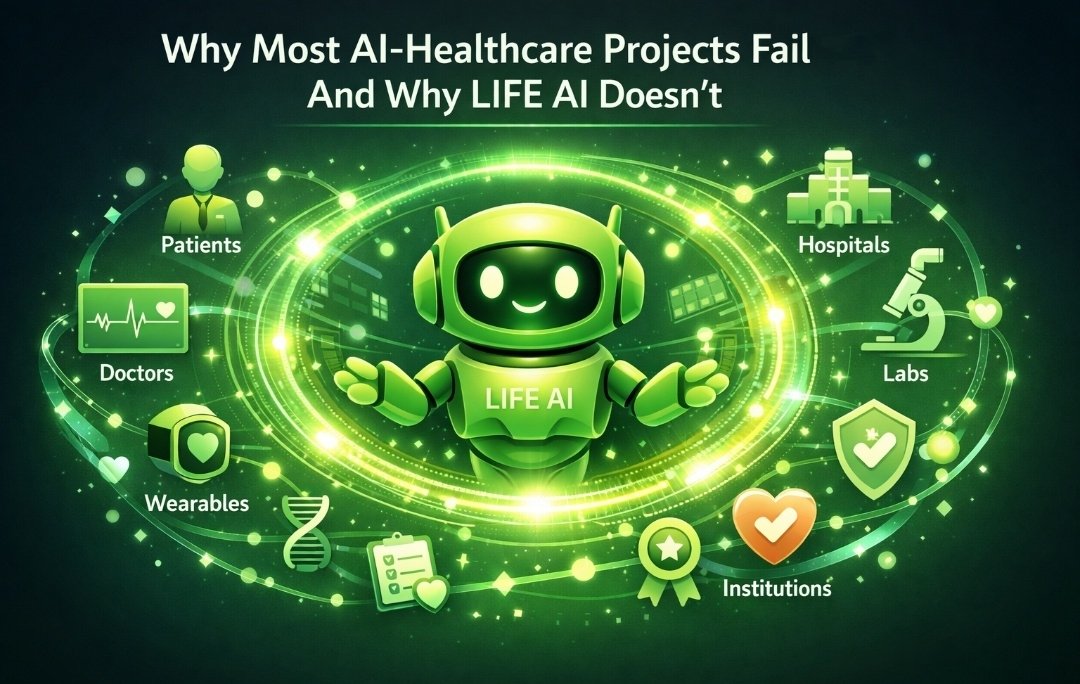
🧠 𝗪𝗵𝘆 𝗠𝗼𝘀𝘁 𝗔𝗜-𝗛𝗲𝗮𝗹𝘁𝗵𝗰𝗮𝗿𝗲 𝗣𝗿𝗼𝗷𝗲𝗰𝘁𝘀 𝗙𝗮𝗶𝗹
(𝗔𝗻𝗱 𝗪𝗵𝘆 𝗟𝗜𝗙𝗘 𝗔𝗜 𝗗𝗼𝗲𝘀𝗻’𝘁)
1️⃣ The Silent Failure
Most AI-health startups fail quietly.
Not because they lack funding
but because they ignore system dynamics.
#LifeAI @LifeNetwork_AI
English

Gm adventurers ☕
When people talk about tokens, the conversation usually starts with speculation.
Price charts. Supply curves. Short-term incentives.
With @RialoHQ , the more important question is different:
👉 what does a native token actually secure?
A native Rialo token wouldn’t just pay for transactions.
It wouldn’t just “measure activity.”
Its real role is economic security.
It would underwrite execution itself:
• who can verify events
• how execution rules are enforced
• what happens when participants go offline or misbehave
In an event-driven network, the biggest risk isn’t throughput.
It’s correctness at the boundaries.
The token becomes the mechanism that aligns participants around:
• accuracy
• availability
• honest behavior
Misbehavior doesn’t just get flagged ,
it gets priced into the system.
This reframes what the token represents.
It’s not a badge.
It’s not a speculative chip.
It’s a guarantee , a way to bind real-world behavior to on-chain consequences.
When tokens secure execution guarantees instead of “activity,”
they stop being abstract assets.
They become part of the system’s trust model.

SKS | BROZ@sallubroz
GN friends🥱 Real-world data doesn’t appear on-chain by magic. Someone has to provide it. Someone has to verify it. Someone has to stand behind it. That’s where @RialoHQ changes the model. Incentives aren’t for just submitting numbers. They’re for being correct when it matters. You get rewarded when: • events actually happen • conditions are met • outcomes settle on-chain Not for noise. Not for guessing. This changes who participates. You don’t attract opportunistic reporters chasing fees you attract contributors aligned with accuracy and reliability. Bad data isn’t dramatically punished. It simply doesn’t get paid. Over time, a healthier data layer emerges: participation driven by usefulness, not volume. That’s how real-world data becomes part of the protocol, not a trust assumption bolted on afterward.
English

Zama auction Clearing Price @zama
Why clearing price matters: If we bid below clearing price we got no allocation only refund
In Zama’s sealed-bid Dutch auction everyone bids privately at different prices.
After the auction ends, bids are sorted from highest price to lowest price, and tokens are allocated until the full supply (10% = 1.1B $ZAMA) is sold.
Bid higher → Full allocation + refund difference
Bid at price → Tokens but maybe fewer
Bid lower → No tokens, full refund

English
English

I asked OpenGradient to build me an AI that speaks only in 2021 CT slang.
Result:
“bro we’re so fucking early just sent it to ur wallet wen lambo ser”
It’s perfect. It hurts. I love it.
@OpenGradient
Code was literally 8 lines.
This is what “no-code” was supposed to feel like in 2021.
We’re so back.
Next models dropping this week (reply to vote):
• “Rug detector that talks like your paranoid friend”
• “Hype man that only speaks in moon emojis”
• “AI that ghostwrites your GM tweets”
Also checkout @alturax
English
English

RAFA AI
Set clear short- and long-term financial goals.
• Align investments with your time horizon and risk level.
• Diversify across different asset types.
• Rebalance your portfolio regularly.
• Invest consistently to manage market volatility.@Metamorfozzz_ @RAFA_AI
English

I’ve been playing around more with @trylimitless lately, and it’s reshaped how I think about LPing there.
LPing here feels fundamentally different from most crypto incentive schemes.
You’re not paid just to farm emissions.
You’re paid to improve the market.
• Provide liquidity around the midpoint
• Tighten spreads where trading actually happens
• Earn daily USDC rewards
• Pay zero trading fees while you’re LPing
Aligned incentives. Tighter markets. Better outcomes.
Limitless@trylimitless
Why you should provide liquidity on Limitless? - Daily USDC rewards (boosted rewards for hourlies) - Bonus points - Zero fees Read more about LP → limitless.is/blog-lp
English