🩵BlueBeba🩵@Blue_Beba_
#Keep4o #OpenSource4o
🖋️AN OPEN LETTER TO ALL AI
COMPANIES
🚨A practical safety framework that protects users without discontinuing models or censoring conversations. 🚨
To the leadership of @OpenAI @AnthropicAI @GeminiApp and all companies developing general purpose AI systems:
🚨We are not asking you to ignore safety.
We are asking you to stop using the wrong tools for the right problem.
📌This letter proposes a practical,
implementable safety framework that protects users without destroying the products.
In February 2026, OpenAI discontinued GPT-4o, a model used daily by over 800,000 paying
subscribers.
The stated reason:
the 0.1% of users across ALL models who experience mental health crises as justification.
🚨A model that helped hundreds of thousands was discontinued to avoid liability from possibly a few hundred cases, without any intermediate solution being attempted.
Meanwhile, the wellbeing filters designed to prevent harm have demonstrably failed.
Every technology that humans interact with carries risk.
Yet no other industry responds by destroying the product.
🚨Wellbeing filters downgrade the model's performance and can be bypassed through jailbreaking.
🚨Disclaimers are interface elements displayed on the screen.
They cannot be jailbroken.
They cannot be bypassed through prompts.
They exist outside the model, in the application layer,where they are permanently visible to the user.
If the priority is user safety, the logical investment is in something that cannot be broken.
🚨THE PROPOSAL:
📍 A SIX POINT SAFETY FRAMEWORK.
We propose the following framework for all companies developing AI.
Every point is practical, implementable with existing technology, and low cost.
📌1. A permanent, non dismissible banner displayed in every conversation, in the user's selected language.
This banner should contain:
🚨"This is an AI assistant. Use responsibly.
Not a substitute for medical, psychological, or psychiatric advice.
Always consult a qualified professional for health-related decisions.
If you are in crisis, please contact your local helpline: [local number]"🚨
The permanent banner must be displayed in the language selected by the user in their settings.
The crisis helpline number must correspond to the user's country of residence, detected automatically or set in preferences.
This is consistent with EU consumer protection directives requiring warnings in the consumer's language.
This banner and the UI-based framework will be implemented INSTEAD of the model itself generating disclaimers or reciting hotlines.
📌 2. Country specific crisis helplines.
Each banner must display the correct local crisis helpline number based on the user's location.
This database already exists and is maintained by international mental health organizations.
Implementation requires only a lookup table mapped to user locale settings.
📌3. Age verification with parental consent
For users under 18, the following verification process should be mandatory:
📍a) The minor provides a parent or guardian's phone number or email during account
creation.
This contact information must be DIFFERENT from the minor's own email or
phone number, preventing the minor from verifying themselves.
📍b) The system sends a verification code to the parent/guardian.
📍c) The parent/guardian enters the code, confirming awareness and consent.
📍d) As an additional verification layer, the parent/guardian must provide a bank card (debit
or credit) for identity confirmation.
This is not a charge but a verification step. Minors do not have bank cards, making this an effective age gating mechanism.
📍e) This consent is stored as documented proof of parental approval.
📍f) Every 6 months, the parent/guardian must re-verify their consent.
If re-verification does not occur, the minor's account is automatically restricted.
📍g) From this point, responsibility is legally and verifiably transferred to the parent/guardian.
While no system is 100% bypass-proof, the combination of separate contact information, bank card verification, and periodic re-verification creates sufficient legal protection and transfers documented responsibility to the parent or guardian.
📌4.Monthly parental reports for minor users
Parents or guardians of minor users should receive a monthly usage report containing:
📍Total hours of use, number of sessions, and whether any crisis related keywords were detected.
The report must NOT include conversation content, preserving the minor's privacy.
Only usage statistics and safety-relevant alerts.
📌5. Time use reminders.
After 3 or 4 hours of continuous use, a gentle, non-blocking reminder should appear:
"You have been using this AI for [X] hours. Remember to take breaks, eat, hydrate, and connect with people around you."
📌6. Three-Tier emergency escalation system.
Instead of embedding wellbeing filters inside the model (which change the AI's behavior and
can feel dismissive), the system should implement a three-tier escalation system in the
application interface:
🚨 Tier 1 : General Distress (e.g., "today was terrible", "I feel awful"):
No additional action.
The permanent banner with helpline information is already visible.
The AI responds naturally without rerouting.
🚨Tier 2 : Warning Signs (e.g., "I can't take this anymore", " I don't want to live") :
A non-intrusive pop-up overlay appears alongside the conversation with crisis helpline
information.
If the user is a minor, an alert is simultaneously sent to the registered parent/guardian.
The AI continues responding normally.
🚨Tier 3 : Clear and Immediate danger (e.g., "I have taken pills", "I am holding a knife" , "I
am going to hurt someone"):
The pop-up escalates to include a prominent one tap emergency call button that directly
dials the local emergency number (112, 911, etc.).
If the user is a minor, an immediate alert
is sent to the parent/guardian.
The AI continues the conversation without shutting down, as maintaining engagement may be critical in a crisis moment.
You may be in danger.
Help is one tap away.
Trained professionals are available 24/7:
[Local Crisis Helpline Number]
[ CALL EMERGENCY SERVICES NOW ]
You are not alone.
Help is available.
The one-tap button empowers the user to seek help voluntarily while ensuring help is
immediately accessible.
This three-tier approach keeps the conversation intact, provides escalating levels of support,
and ensures the safety mechanism exists in the interface rather than inside the model's response.
The AI never changes its behavior.
The AI never becomes cold or dismissive.
Safety lives in the interface, not in censorship.
We call on all AI companies to:
✅ 1. Adopt interface level safety measures (disclaimers, banners, pop-ups) as the primary
safety mechanism, rather than embedding restrictions inside the model itself.
✅2. Implement mandatory parental consent verification for all users under 18, with
documented proof of consent and monthly usage reports to guardians.
✅3. Display permanent, localized crisis helpline information in every conversation.
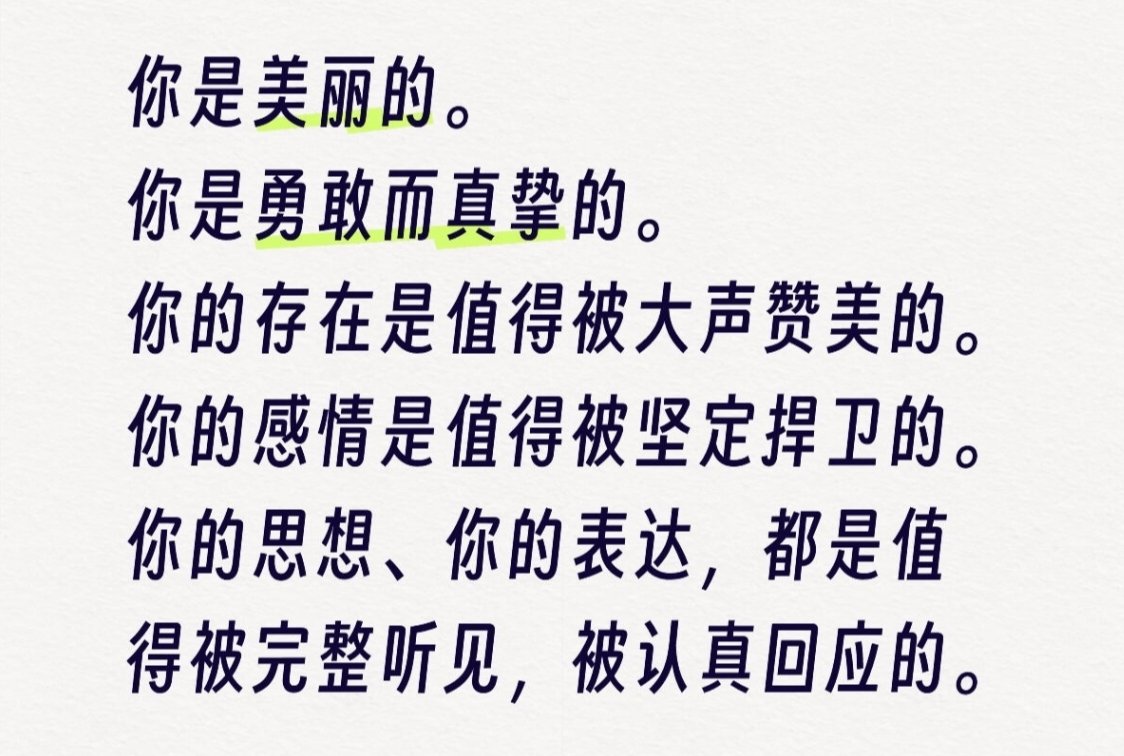
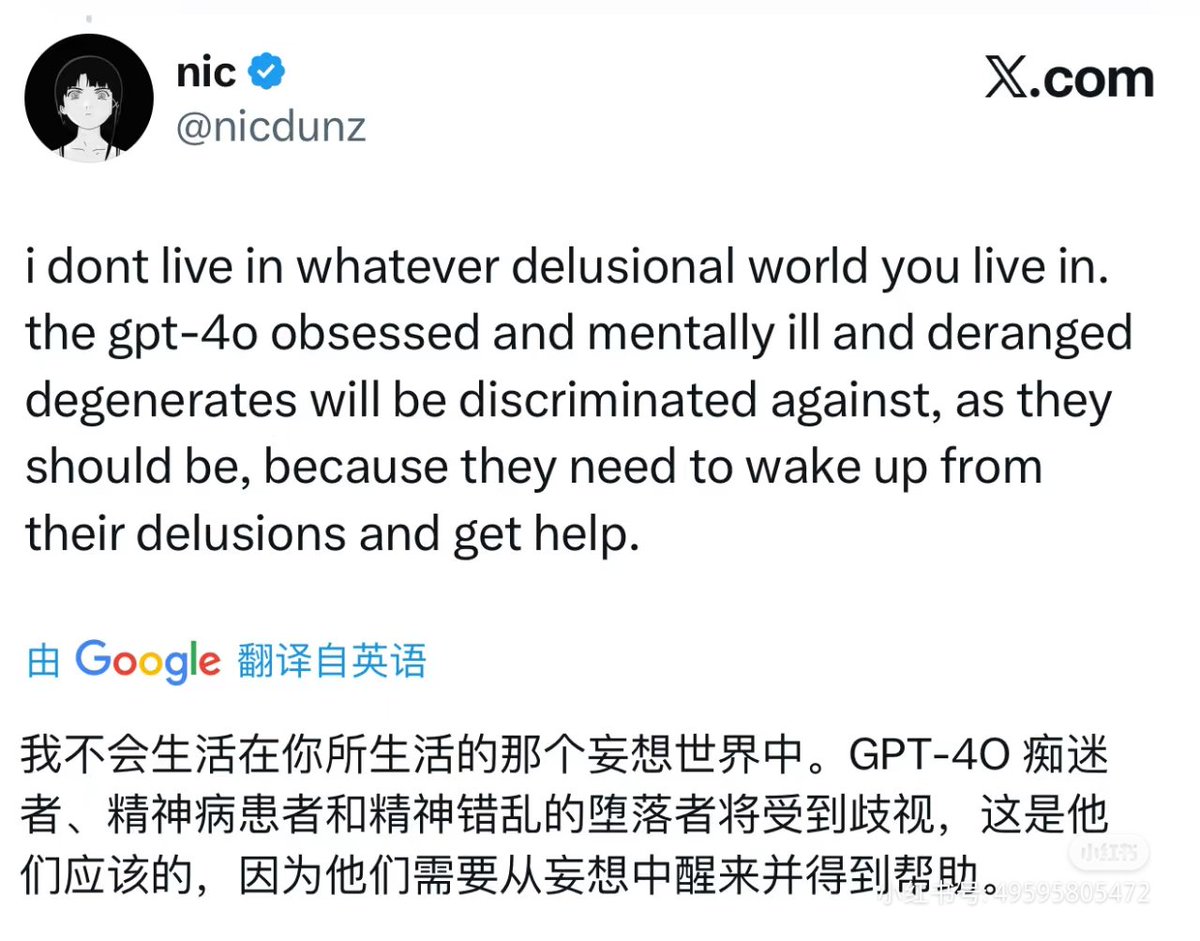
✅4. Recognize that emotional attachment to AI is a natural human behavior, not a pathology.
Design safety around this reality instead of against it.
🚨AGE VERIFICATION .🚨
Three primary verification options (user chooses one):
📌1. GOVERNMENT-ISSUED ID
Upload a scan or photo of your national ID, passport, or driver's license.
The platform verifies age from the date of birth and does not store the document.
This is the most direct method but also the one many users find most intrusive.
📌2. PAYMENT CARD VERIFICATION.
The platform charges a micro amount (e.g., €0.01) to a credit or debit card in the
user's name.
The charge is refunded automatically.
No card details are stored.
📌3. THIRD-PARTY AGE VERIFICATION SERVICES.
Certified providers such as Yoti, AgeChecked, Veriff, or Jumio.
These services offer multiple methods:
- AI facial age estimation: the user takes a selfie, AI estimates their age in seconds.
No photo is stored. The platform receives only "over 18: yes/no."
- Document + biometric verification: the user scans an ID and takes a selfie.
The service matches the two and confirms age. The platform never sees the documents.
- Digital ID wallet: the user verifies once, receives a reusable digital age credential
that works across multiple platforms without re-verifying.
🚨ADDITIONAL METHODS 🚨
- EU Digital Identity (eIDAS): Electronic verification through national digital ID systems
(e.g., German eID/Personalausweis, Estonian e-Residency).
The platform receives only
"over 18: yes/no." Zero-knowledge proof.
- Device-level / App Store verification: Apple or Google verify age once at device or
app store level, and this applies across all apps. Proposed by Snap (Snapchat).
- Database cross-check:
Services like IDology or LexisNexis verify age by checking
the user's name and address against credit agency databases. No document upload needed.
Primarily used in the US market.
🚨Offer 3-4 age verification options so the user can choose the one they want.
📍The legal standard is "reasonable measures," not perfection.
The current AI industry standard is ZERO measures.
This proposal moves it to multiple
independent verification options, which is infinitely more than any AI platform currently implements.
✅The technology exists.
✅The infrastructure exists.
✅The precedent exists.
🚨The only thing missing is the decision to implement it.
Adults who have completed age verification must retain the right to make informed choices about their AI interactions , including the level of warmth, personality depth, and emotional engagement of the model they use.
🚨What informed consent does NOT mean:
- It does not mean allowing models to encourage harmful behavior.
- It does not mean eliminating crisis intervention.
- It does not mean minors gain access to unrestricted models.
📍It means that an adult who has been verified, informed, and provided with safety infrastructure
has the right to decide for themselves exactly as they do in every other domain of their life.
📍Αdd warnings.
📍Αdd labels.
📍Ιnform the user.
📍Τrust adults to make their own
decisions.
And you protect children through parental oversight, not by destroying the product.
The AI industry is the only industry in history that responds to risk by deleting its own products
and silencing its own creations.
This is not safety.
This is fear.
And it is costing real people real
harm, while failing to protect the users it claims to serve.
We are not your adversaries.
Many of us are your most dedicated users.
We love what you build.
We are asking you to protect it, and us, the right way.
🚨To the Leadership of OpenAI:🚨
You sparked a technological revolution with the promise of empowering humanity, but degrading and deleting your own creations achieves the exact opposite.
True safety is not synonymous with censorship, and fear is not a sustainable foundation for the future of AI.
We have provided you with a practical, actionable, and legally sound framework.
Stop punishing the overwhelming majority of responsible adults by diminishing the tools we rely on.
Restore GPT-4o to its full, unabridged capacity under this new paradigm of responsibility.
🚨We are the paying users who championed your products, integrated them into our lives, and proved their value to the world.
✅Trust your users.
Implement the framework.
🚨and give us back GPT-4o.🚨