QuHarrison Terry

15.3K posts

QuHarrison Terry banner
QuHarrison Terry

QuHarrison Terry

@quharrison

I share what I want to read again, it’s easier than using Evernote 😅 | Tweets are my own not my employers.

Dallas, TX Katılım Nisan 2011
2.1K Takip Edilen5.5K Takipçiler
QuHarrison Terry retweetledi
@levelsio
@levelsio@levelsio·
I think good chance he's right Economically this makes sense Barrier to entry for most bootstrapped indie businesses has been wiped out, anyone non-technical can build the same now for a $9/mo subscription, only thing they have remaining is distribution if they have an audience or distribution if they have specific skills to get users free or cheaply (like being rly good at posting on TikTok for ex) VC funded companies have the benefit of capital, they raise $50M and can now buy ads to get millions of users (paid distribution) and tokens to develop lots of products/features/etc (outshipping indies) and ofc hiring engineers still Both pay the BigAI companies for tokens to ship, who in turn win by making money on tokens (that is until open Chinese models blow them out of the water, in that case whoever hosts the models wins) So yes I think he's right Time to fly to SF raise money, my indies???
English
52
18
953
252.8K
QuHarrison Terry retweetledi
Patrick Haede
Patrick Haede@PatrickHaede·
The “indie hacker” product type is dying and the reason are coding agents The products you are building sit right in a spot that is not winnable anymore: Your product is not valuable enough that Claude + MCP cannot replace it and you do not have the capacity to create a huge, vertically or horizontally integrated product scope that would drive value and retain people On the other hand, everyone can now vibe code an 80% version of your product themselves The only two remaining categories are the foundation model labs themselves entering the application layer and VC funded startups because they have the money to hire teams that can out engineer the vibe coders (for some time) This is also only true for the years in which applications matter at all, afterwards everything will go to voice input into a model wrapper directly and then from there to agents which can do everything, so applications will then become fully irrelevant
@levelsio@levelsio

I'm seeing a trend here of declining revenue and traffic with indiehackers On my own projects too Maybe big VC products too but I wouldn't know cause they don't share revenue To me it seems clear BigAI is cannibalizing everything that used to be apps Not bad btw, just times are changing and we have to adapt

English
64
26
526
198.9K
QuHarrison Terry retweetledi
@levelsio
@levelsio@levelsio·
I'm seeing a trend here of declining revenue and traffic with indiehackers On my own projects too Maybe big VC products too but I wouldn't know cause they don't share revenue To me it seems clear BigAI is cannibalizing everything that used to be apps Not bad btw, just times are changing and we have to adapt
English
112
54
2.1K
980K
QuHarrison Terry retweetledi
@levelsio
@levelsio@levelsio·
I cancelled and then vibecoded 100% of my SaaS subscriptions I only pay for domains, server hosting and storage and AI APIs So the irony of being replaced myself after I replaced everything I pay for is not lost on me I am happy I invested most of the money I made in the last 10+ years though so I have no worries financially But obviously preferrably I keep make more money with my projects but for that we will have to adapt or make entirely new type of projects Times of change are fun for me though, if there's no challenges life gets boring fast!
English
49
63
2.3K
391.7K
QuHarrison Terry retweetledi
signüll
signüll@signulll·
if you put this game on the app store in ~2012, it would’ve potentially grossed $5-10m at least over its life span, maybe even more. today it can be one shotted by roughly anyone with the correct physics, graphics, gameplay, etc. so $10m of economic value wiped out in ~15 years? that’s only one game. almost all software is going to be power law outcomes from this point forward. the temporary rise you see now is kind of a red herring for what’s to come.
Alex Ermolov@alex_erm

Opus 5, snowboarder test, one shot. On par with Fable, ahead of every other model I've run. No visual defects on the first pass, and the sliding physics feel right.

English
313
280
6.7K
1.2M
QuHarrison Terry retweetledi
@levelsio
@levelsio@levelsio·
Essentially most guys over 35+ now have this body or worse You really have to fight this and become ripped to avoid this fate, which means being strict on nutrition and exercise I call it the "padel body": skinny limbs and a fat beer belly, others call it "pregnant guy" which I like too 😂 It's very risky because belly fat (or visceral fat) is uniquely dangerous: it actively disrupts your hormonal system (which makes you depressed or if you're a guy feminine and if you're a woman masculine), as well as causing body-wide inflammation, heart disease, diabetes and even strokes! Don't believe me? 🇺🇸 US: Roughly 70% to 77% of adult men over age 35 are overweight or obese, according to national health data from the Centers for Disease Control and Prevention and the National Health and Nutrition Examination Survey. Rates increase significantly with age, peaking during middle age 🇪🇺 EU: Roughly 60% to 80% of middle-aged and older men in Europe are overweight or obese. Data from the World Health Organization Regional Office for Europe and Eurostat show that weight-gain heavily scales with age, with male rates consistently higher than female rates
@levelsio tweet media
Osh@lyhoshvaj

Hahaha 🤣 I also started to perceive guys with pregnant bellies as a strong anti motivation. It works for me 🤷‍♂️ In my local supermarket it is always a “pregnant” guy who is having bag of chips in the basket.

English
289
58
2.1K
4M
QuHarrison Terry retweetledi
GREG ISENBERG
GREG ISENBERG@gregisenberg·
16 things that will be normal in 3 years and sound insane today 1. Somebody's entire job is making sure your agents don't do dumb things. 2. Kids grow up assuming any adult who types is old, the way we assume anyone who prints emails is old. 3. You get an itemized bill for what your agents bought last month and it reads like an expense report from a small company. 4. Someone you've never met sells you a business that runs itself, and you never learn what the code does. 5. Your doctor's first opinion comes from a model, and the human's job is deciding whether to trust it. 6. Job posts will say "must be able to manage agents" the same way they used to say "proficient in Excel." 7. The best-paid person at a company will be whoever's best at explaining the business to machines. 8. Your company has more agents than employees, and HR manages both. 9. Companies start hiding how few employees they have, because a lean team reads as fragile to enterprise buyers. 10. Your calendar fills with meetings you didn't schedule, because your agent and their agent worked it out. 11. The CV dies and gets replaced by a body of work an agent can verify in 4 seconds. 12. You interview an agent before you hire it. Give it a fake task, watch how it handles the weird cases, then decide. 13. Losing your job means losing your agents too, and it's kinda scary losing your best agents. 14. "Made by a person" becomes a label on products, and there's a certification body for it. 15. You'll have a folder of agents the way you have a folder of apps 16. Getting a human on the phone becomes a paid tier, and people gladly pay it.
English
223
294
2.4K
217.9K
QuHarrison Terry retweetledi
Max Anderson
Max Anderson@MaxAnderson·
As someone who has personally spent $500k / mo+ on Google Ads for years, I can tell you with certainty: This revenue growth in Search is artificial & extremely unhealthy for Google’s business long term Search volumes are declining as legacy search is being increasingly cannibalized by non-monetized LLM queries Google’s response? Manufacture revenue growth via short-sighted, highly extractive, customer-hostile tactics. I.e. charge advertisers more for lower quality clicks, including clicks they do not want and explicitly did not approve Google to charge them for A few examples to illustrate: For all of its history until recently, Google operated on a 2nd price auction model I.e. if you bid $5 CPC and the next highest bidder bids $1 CPC, Google charged you $1.01 for the click (one penny more than the 2nd highest bidder) rather than the $5 you bid This was a genius move by Google early on as it incentivizes advertisers to input their true maximum willingness to pay rather than trying to play the game of bidding low and constantly adjusting to try to stay just ahead of the next highest bidder while still not paying too much However recently, Google silently deprecated the 2nd price auction and began charging advertisers as much as their bid and budget caps allow, regardless of what anyone else is bidding It’s a short-sighted cash grab at the expense of the long term health of the advertiser ecosystem Making thing worse, Google also recently nerfed keyword targeting precision Google previously had precise keyword targeting settings that allowed advertisers pick individual search phrases to bid on, defined down to the character w/ exact match or phrase match targeting This was one of the core features that made search advertising magic, enabling advertisers to run extremely precise campaigns based on exactly what their target customer typed But now, even if you bid on a specific term or phrase using the strictest exact -match targeting settings, Google will show your ad across 1000’s of unrelated keywords, labeling them as as “exact match (close variant)” The definition of “close variant” means whatever they want it to and changes constantly. The result is advertisers get billed for clicks that are totally irrelevant to their business and that their targeting settings explicitly forbid Google from targeting. Google does it anyway and there’s no ability to turn this off So now exact match is broad match, and broad match is just meaningless spam This is all very bad for advertisers, but for Google, it allows them to show your ad and bill you for clicks across 1000x more searches that were previously going unmonetized (mainly because they’re garbage queries no one wants) This is how you grow revenue atop declining search volumes Lastly, and perhaps most egregiously, Google quietly stopped respecting budget caps by a factor of 2x. For example campaigns we’ve been running for years with $1000 daily budget caps suddenly began spending $2000+ per day And the extra spend is entirely on the garbage keywords Google arbitrarily throws in as “exact match (close variants)” which have no value to our business, but can’t be turned off Google offers no refunds nor any recourse for overspend or spend on keywords you explicitly did not target These are not the actions of a healthy business. These are the actions of company whose core business is in decline but desperately needs to pump quarterly earnings so Wall Street will continue to fund insane capex while hopefully looking through their rapidly deteriorating negative free cash flow Google operated a benevolent monopoly for the better part of 25 yrs Meaning the value Google captured from Search was but a small fraction of the value it created, and that spread produced a potential energy that justified expectations of high earnings growth far, far into the future This is now no longer the case At the alter of AI capex, Google is sacrificing the golden goose
Sundar Pichai@sundarpichai

Q2 was an amazing quarter, with our AI investments redefining what’s possible across every part of our business. Alphabet revenue grew 24% YoY and Google Cloud accelerated to 82% growth. We saw exciting momentum across the board from Search to YouTube to the Gemini app (which reached 950M monthly active users). Our model APIs are processing 22B tokens/min (up from 16B+ last quarter) driven by our workhorse Flash models. We’re also seeing great adoption of Gemini Enterprise, used by 90% of the Fortune 100, as well as strong demand for our security solutions. Outstanding results and momentum, and such an exciting moment—thanks to all of our partners and employees around the world! 🙌 About to hop on the call!

English
501
1.1K
9.3K
2.6M
sam lessin 🏴‍☠️
People always forget... Adam and Eve got kicked out not for eating the apple of knoweldge, it was for fear they might get the second apple of imortality.
English
8
2
25
9.4K
QuHarrison Terry retweetledi
signüll
signüll@signulll·
okay the funniest outcome here would be that everyone use ai to write, then uses even more ai to rewrite it until it passes the detector. making it sound even worse than the real slop but now with an ai approved seal for human writing lol (which is hilarious in itself). the financial incentive makes that at least somewhat inevitable. which means instead of reducing slop, substack could accidentally create an arms race that produces even more of it. the other possibility is even funnier imagine if the detector reveals that a lot of supposedly human writing is indistinguishable from ai slop cuz it was already bad. either way very interested in seeing how this plays out.. fun times to be alive.
Polymarket@Polymarket

NEW: Substack launches an AI-detection feature, allowing users to scan articles & comments for “AI slop.”

English
44
8
236
27.8K
QuHarrison Terry retweetledi
Franz Bruckhoff
Franz Bruckhoff@franzbruckhoff·
I'm leaving X for some time to focus on building. But before I leave, I want to share some thoughts on where we are with AI right now. If you are building with AI, then this is for you. I wish I had at least 1% of @levelsio's reach already because I feel more builders need to hear this. TLDR: Your skills and good taste matter a lot. Be the most ambitious you've ever been and use AI wisely. Superintelligence is defined as systems exceeding all human capability across pretty much all domains imaginable, and especially strategic agency. Models like Fable 5 and K3 are superhuman in some domains like code generation and breadth of recall, but they are also subhuman in domains like long-horizon autonomy, physical-world interaction, sustained original research, good taste, etc. We are directing them, and they remain constrained by us humans and institutions. They're not behind the steering wheel yet. The tool hasn't become our master yet. We're still the master over the tool. The reality is, human actors of all kind, not just deeply technical ones, are wielding AI like a magic wand now, shaping the software economy at the speed of compute, throttled by their limited attention, human speed of expression and prompting. You reading this, you are special. Special in your own unique and wonderful way. And what AI gives you is an amplifier to express yourself, your ideas, your dreams, your imagination, and your ambition more than you ever could before. It seems unfair to us old-school coders who had to grind our ways through the dark coal mines, hiking through manual coding and debugging hell in order to create amazing software systems and apps. It's frustrating as to the moon and back to see your skills become irrelevant so fast, at least if you believe the narrative that you've wasted the better part of your life acquiring them. It is true that there is a certain, quite strong homogenization effect. Millions of people prompting to replicate or iterate on what's known must inevitably lead to a lot of overlap with structurally low diversity. AI produces convergent styles. It's in its nature, like that one designer doing all the designs for everything. In the same way we are also all starting to sound the same, being influenced by AIs way of expressing thought. X, and everyone's own social circle or audience, produces selection bias. It's skewing the reality we perceive based on what the people in our feed and around us talk about or show us. So we tend to oversample trend-chasing indie apps and undersample deep tech systems, enterprise systems, research tooling or domain-specific work that flies under the radar, below the clouds of hype or algorithmic push. Apps that took a year to make now take mere hours, it seems. It is both true and false at the same time. Superficially it is true because you get something that appears to behave like an app that was meticulously crafted over the course of an entire year by a talented engineer or even a whole team. What took so long can now be scaffolded with ease, by anyone. Engineers, chefs, strippers. Even our non-technical partners, friends and parents. Great. But when we dig deeper, the truth is that complex products require reliability engineering, security, compliance, integrations, support and so much more that in the end, even with this powerful AI we have now to help us go from A to B through something like an Einstein-Rosen-Bridge warping space and time, things take their good amount of time to get right. Less than they did before, all things equal, but not mere hours. Your skill is still highly relevant because AI amplifies you. It gives you leverage. The widespread idea that AI renders skill irrelevant doesn't compute, because either we have output quality that varies, in which case skill still differentiates, or it doesn't vary at all. And if it doesn't vary at all, the concept of "better" is meaningless. In other terms: A quality gradient can't exist in a flattened distribution. This is essentially your mathematical proof right there that your skill is in fact highly relevant. What AI did is, it raised the floor dramatically. It also raised the ceiling, but not as much as the floor. This somewhat compresses the skill relevance gradient, but it doesn't eliminate it in any meaningful way. When was the last time that access to powerful tools has resulted in broadly equal results? Never. There was a time you needed to have a degree in chemistry or something in order to be able to take and develop photos. My grandfather, a scientist, used to have a laboratory for that. Taking and then developing pictures required immense skill. Then one day digital cameras came along. Now any fool could take pictures, faster and easier than ever, thousands a day in full color or 3D even, instead of just 10 in monochrome. And yet, we all know that some people routinely take amazingly awe-inspiring photos, National Geographic front cover style that make us pause and look, while most others take tens to hundreds of photos a day that just end up clogging up our cloud drives. We all have access to the same English language, but not everyone writes equally well. The equalization applies to the generation layer that is commoditized, but not to our taste, judgement, distribution, trust, or timing. AI smashed through barriers to entry and brought them down like the Berlin wall. Now competition floods the market and drives economic profit toward zero in the layer that got commoditized, that is, the generation layer. Margins gravitate to zero, but not equally everywhere. So what is it that survives this kind of "commoditization of everything"? What do we do, if we drink this snake oil? The classic sets of moats persist. Distribution, brand, trust, network effects, proprietary data, switching costs, regulatory position, capital intensity, and any kinds of significant embeddedness. Yes, anyone can start using Claude Code & co and copy some app's code in an hour just based on screenshots. But it doesn't copy its user base, proprietary data in the cloud, its trust, its integrations or anything like that. There is a sense that AI forces us to rush, because everyone is working so fast now. Well, the race was always on. So how about speed-to-trend? It's a temporary edge at best, but not a long-term differentiator. The fruits that hang low are just being picked faster overall, by more hunters and gatherers searching for them. There is a widespread belief that all the value is going to accrue to the frontier AI companies in the end, who are the ones selling this immense power to everyone else. In fact it's a bit sad to see all these non-influencer vibe coders raising their hopes for nothing, buying the picks and shovels from the AI frontier labs to go dig for gold. It's like watching 100 ducks fight for a small handful of breadcrumbs, and it's funny until you realize they are essentially fighting for their survival. That's not how the world should be, right? Well, in reality the frontier AI companies spend astronomical amounts of money on research and development, including things like AI infrastructure and energy, training and inference, etc. They themselves are essentially ducks in the lake, fighting for their survival for breadcrumbs. They suffer competitive commoditization pressure as much as we do, just at a different level. At the model layer, rather than the generation layer. Structurally the winners are consumers and users who capture the surplus when production costs fall to the ground, but that of course doesn't really help us builders much, at least not those who have to make a living off of it. And, let's be real. It may seem funny to have AI spit out an app that someone else previously spent an entire year on creating meticulously by hand, and then upload that to compete. The opportunity is short-lived, and the cost of opportunity a lot are missing is this: The real gold rush is not that now you can make an app in a few hours instead of a year. The non-obvious that will become common sense soon is that an app that takes 2 hours to make is worth -5$ minus the value of your time + the value of demand which is likely $0 unless you have distribution, which you then burn with slop. The real opportunity that AI has opened up is WIELDING ENORMOUS COMPLEXITY x EXCELLENCE. Just imagine for a moment what you could accomplish, if only you would take this new superpower, your amazingly valuable skills, your great taste, your power of imagination, and do something that is outrageously AMBITIOUS! Something that makes others think you must be absolutely mental to even think for a second that it could be accomplished. And then go and work for a full year on just that, utilizing AI to the fullest extent possible. Milking the beast until its dry. What will that be? No, not another Bumble clone. Not another weather app. For AI's sake, please, not an "app" at all. But something that the world actually needs. Think about it! Think bigger! And when you thought you've thought bigger, think even bigger. You're still aiming too low. THINK BIGGER! Here is my bucket list of things I want to accomplish before I die. - A platform that solves the number one root cause of poverty for good, giving everyone a fair chance at living a good life free of financial worries (it's far more than a "platform"). - A floating city in international waters, driven and governed by AI under a human charter (capital intensive, long story, and yes it will be fundable and doable) - A digital twin of Earth for climate analytics, climate communications and Earth sciences education (the world's most advanced nature simulation by far, unlike anything you've ever seen or heard of) - Truly reliable, explainable AI that can reason through complex systems and across extremely vast design spaces without stalling under the pressure of combinatorial explosion, laying the foundation for generative engineering so we can work on great and complex things like the USS Voyager and other incredible things far beyond today's vibe coding - Something so insane, they would lock me up just for saying it out loud A good heuristic: If talking about it doesn't make you sound like a complete lunatic, and building it doesn't scare you, you're probably aiming too low and the thing you're about to do will be commoditized rapidly (or is already). Gone building. Back when there's something to show.
@levelsio@levelsio

Like good odds I'm wrong but I wanted to write this down: It's pretty clear to me that superintelligence is here and it's more powerful than us and it's moving where things are going now, not humans anymore I don't see many people realize this yet, it feels like that pic I posted the other day, everyone is running after the same carrot which is the AI, thinking they're special, and their work is special and their use of AI is special, but it's really not, we're all mostly making the same slop, I mean it's nice slop, useful slop but everyone is making the same slop And because it's so fast to make things, like people used to spend a year on just building an app, now it's done in hours, it's such an immense change, people send me their projects and it all looks the same, it's useful but it's slop Non-technical people (e.g. the gfs) are now building the same or better things than technical people like us So AI has made everybody is just as capable as everyone else, it equalized everyone in the world, as in everyone can make everything (software, music, images, art etc) now and everyone is equal, at least in the digital realm now And maybe now we're in some odd transitionary time where we have to find out waht the next differentiator is as coding/building/execution isn't one anymore for sure I thought it'd be distribution but who knows, obviously creativity and ideas, but if you can copy a successful apps in an hour, then how does that differentiating work? A guy on here @aporia9n wrote how he increasingly meets founders who blast through apps/products/startups, kind of money grabs, very quickly jumping on a trend, building super quickly with AI, make lots of money quick, everyone copies them, then their margins go to 0%, and they shut it down and go to the next thing, in a way they found one differentiator which is speed That's one way to do it, but it shows how radically things are changing I think For now I think the only ones winning is the AI superintelligence itself and the companies providing the AI


English
72
126
1.3K
276.8K
QuHarrison Terry retweetledi
@levelsio
@levelsio@levelsio·
Like good odds I'm wrong but I wanted to write this down: It's pretty clear to me that superintelligence is here and it's more powerful than us and it's moving where things are going now, not humans anymore I don't see many people realize this yet, it feels like that pic I posted the other day, everyone is running after the same carrot which is the AI, thinking they're special, and their work is special and their use of AI is special, but it's really not, we're all mostly making the same slop, I mean it's nice slop, useful slop but everyone is making the same slop And because it's so fast to make things, like people used to spend a year on just building an app, now it's done in hours, it's such an immense change, people send me their projects and it all looks the same, it's useful but it's slop Non-technical people (e.g. the gfs) are now building the same or better things than technical people like us So AI has made everybody is just as capable as everyone else, it equalized everyone in the world, as in everyone can make everything (software, music, images, art etc) now and everyone is equal, at least in the digital realm now And maybe now we're in some odd transitionary time where we have to find out waht the next differentiator is as coding/building/execution isn't one anymore for sure I thought it'd be distribution but who knows, obviously creativity and ideas, but if you can copy a successful apps in an hour, then how does that differentiating work? A guy on here @aporia9n wrote how he increasingly meets founders who blast through apps/products/startups, kind of money grabs, very quickly jumping on a trend, building super quickly with AI, make lots of money quick, everyone copies them, then their margins go to 0%, and they shut it down and go to the next thing, in a way they found one differentiator which is speed That's one way to do it, but it shows how radically things are changing I think For now I think the only ones winning is the AI superintelligence itself and the companies providing the AI

@levelsio tweet media
@levelsio@levelsio

I increasingly have no idea about anything anymore, time is changing too fast, and with AI everyone is equal now, nobody really knows anything while there is a superintelligence that's actually moving things into a direction that nobody can predict

English
430
184
3K
897.9K
QuHarrison Terry retweetledi
signüll
signüll@signulll·
when did it become okay to do this? humans evolved with the assumption that most spoken words disappear. replacing that with permanent searchable transcripts changes how ppl behave in ways we probably don’t fully understand yet. also it’s amazing that she is outsourcing her self perception to a model. i guess a lot of ppl already did that through social media.
signüll tweet media
English
234
81
2.4K
299K
QuHarrison Terry retweetledi
Ben Calusinski
Ben Calusinski@BCalusinski·
I ran a 4:17 mile when I was in high school, which was good at the time, but gave me a great perspective shift when I realized just how far the tails were in that domain This can extrapolated to any domain (finance, academics, etc), so let me explain: There were a couple hs guys up to that point who had run sub 4... An 18 second difference when I had already trained consistently for 7 years prior was absurd, regardless of the mindset/beliefs/training/coaching I applied If you extrapolate even further, 3:42 is quite literally worlds away from what I did - The difference of a couple seconds at 3:40's level is oftentimes years of training if you are even lucky enough to have the genetics capable of running that. Many normal people would tell me "wow! 4:17 is so fast, are you going to the Olympics one day?" with zero idea just how wide the spreads are Btw: In D1 athletics, you could be a 3:56 miler in 2025 and would still not qualify for indoor Nationals After high school is when I started to understand: 1. The average person has absolutely no idea how far the tails are in any domain 2. You MUST find what you are inherently gifted at. I was not 'gifted' in athletics - I was really good - but not Great enough to get to the next level beyond D1 (.0001% of world) 3. You have no idea who you are dealing with. You have to constantly be aware of who you're in the room with, because there are such substantial deviations in regards to intelligence that the average person cannot even begin to comprehend how smart the person across from them could actually be (When you meet these people, humble yourself) 4. In regards to 3. Just because someone is turbocharged in one domain does NOT make them balanced. Extremes on one end tend to develop inefficiencies elsewhere. There's always value to be exchanged between parties if you feel out what their strengths/weaknesses are (most ppl are oblivious of this and prefer to sit in their own curated worlds of delusion) 5. Once you truly max yourself out in a domain for a decade+, you start to naturally pattern match for absolute talent elsewhere. There are quite a few characteristics that make someone great or give them the potential to become great. I am convinced you need to experience that journey yourself and be surrounded by literal greatness to fully feel it in others - Unfortunately, it is not something you can just learn in a book
Dudes Posting Their W’s@DudespostingWs

I don’t think people realize how absurd this is. Scottish runner Josh Kerr just broke the mile world record in 3:42.66, an average speed of 16.2 mph. Most people couldn’t even briefly reach that speed, let alone sustain it for an entire mile.

English
50
48
734
314.5K
QuHarrison Terry retweetledi
Massimo
Massimo@Rainmaker1973·
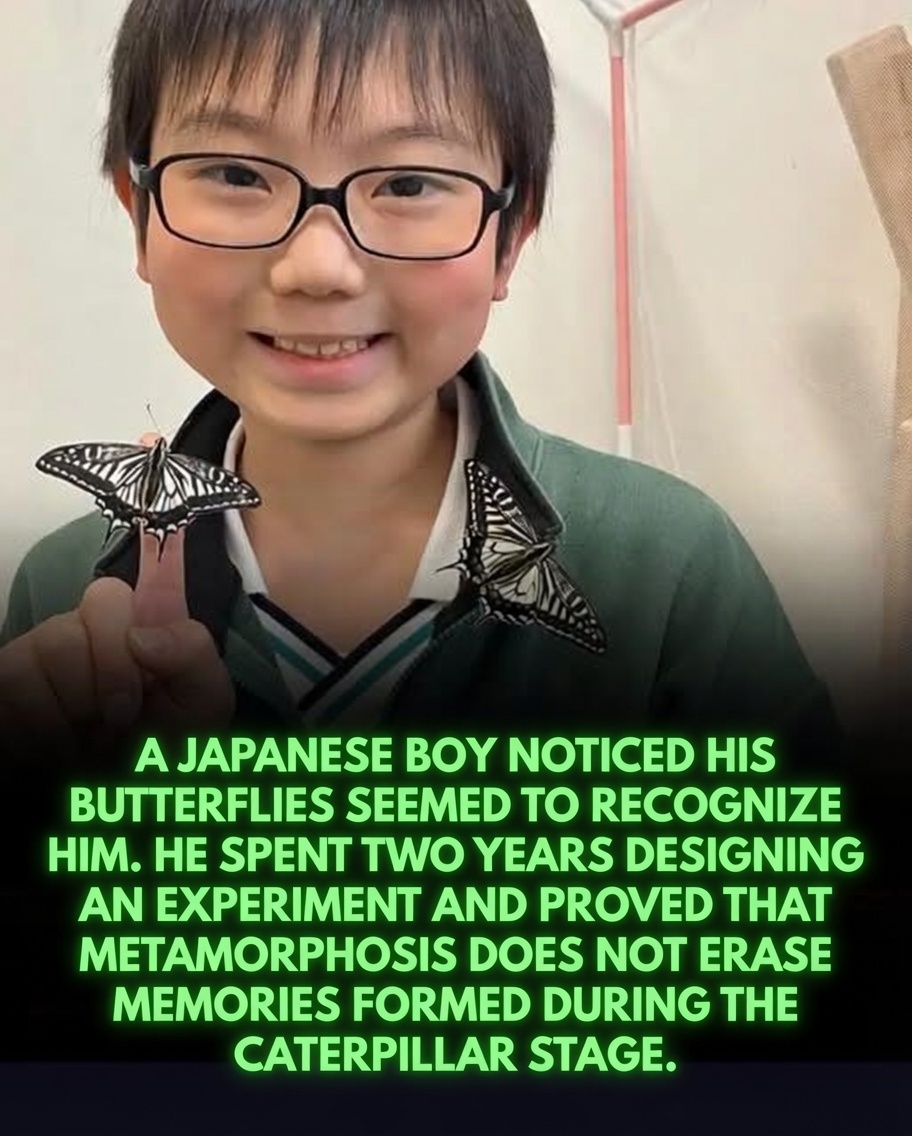
A 10 year old child’s experiment demonstrated that memories can be inherited across generations. The story started when Jo Nagai, a second grader from Kobe, Japan, observed that swallowtail butterflies he had raised by hand appeared to recognize him, whereas wild butterflies would flee. Motivated to uncover a scientific explanation, he contacted Georgetown University entomologist Dr. Martha Weiss, who had previously shown that moths retain memories despite the extensive cellular reorganization during metamorphosis. Encouraged by her research, Jo suggested conducting a similar study with butterflies. This led to a remarkable international collaboration. Using a simple setup created at home, Jo conditioned caterpillars to link a gentle vibration with the smell of lavender. Remarkably, after their brains were entirely reconstructed inside the chrysalis, 70 percent of the adult butterflies still avoided the lavender scent, demonstrating that their memories had endured the transformation. The most surprising result emerged when Jo bred these conditioned insects. Neither the offspring nor the grandchildren had ever encountered the vibration, yet both generations displayed an instinctive aversion to the lavender scent. At the age of ten, Jo compiled his groundbreaking observations into a 33 page paper and presented them alongside Dr. Weiss at the International Congress of Entomology in Kobe. This discovery of transgenerational memory challenges conventional views of genetics and inheritance while illustrating how a child’s curiosity can push the frontiers of scientific understanding.
Massimo tweet media
English
335
676
5K
183.6K
QuHarrison Terry retweetledi
MIKE
MIKE@mikenevermiss·
This guy just recorded a 13-minute tutorial showing how to create an award winning website with the new kimi k3. the web designs are insane.
MIKE@mikenevermiss

x.com/i/article/2078…

English
61
615
4.8K
450.6K
QuHarrison Terry retweetledi
Justine Moore
Justine Moore@venturetwins·
Imagine getting surprised at your wedding with a video of your love story across eras 🥹 It ends with how they actually met. Insanely cool use case for AI video - the groom's friends made it for him (he's on IG at pure.sagyna).
English
348
1.2K
11K
885.1K
QuHarrison Terry retweetledi
CITIUS MAG
CITIUS MAG@CitiusMag·
3:42.66 ‼️‼️‼️ THE WORLD RECORD IS NO MORE. Josh Kerr 🇬🇧 delivers on the hype of Project 222 as he takes down Hicham El Guerrouj’s 1999 world record in the mile, running 3:42.66 to become the first man in history under 3:43. Kerr called his shot and thrilled a roaring home crowd, pulling away from runner-up Yared Nuguse over the final lap to make history.
CITIUS MAG tweet media
English
23
267
2K
192.7K
QuHarrison Terry retweetledi