Quantum Elements

19 posts

Quantum Elements banner
Quantum Elements

Quantum Elements

@Qu_Elements

AI-native platform for quantum software and hardware development. Transforming how the world programs quantum systems.

California, USA Katılım Kasım 2025
316 Takip Edilen38 Takipçiler
Quantum Elements
Quantum Elements@Qu_Elements·
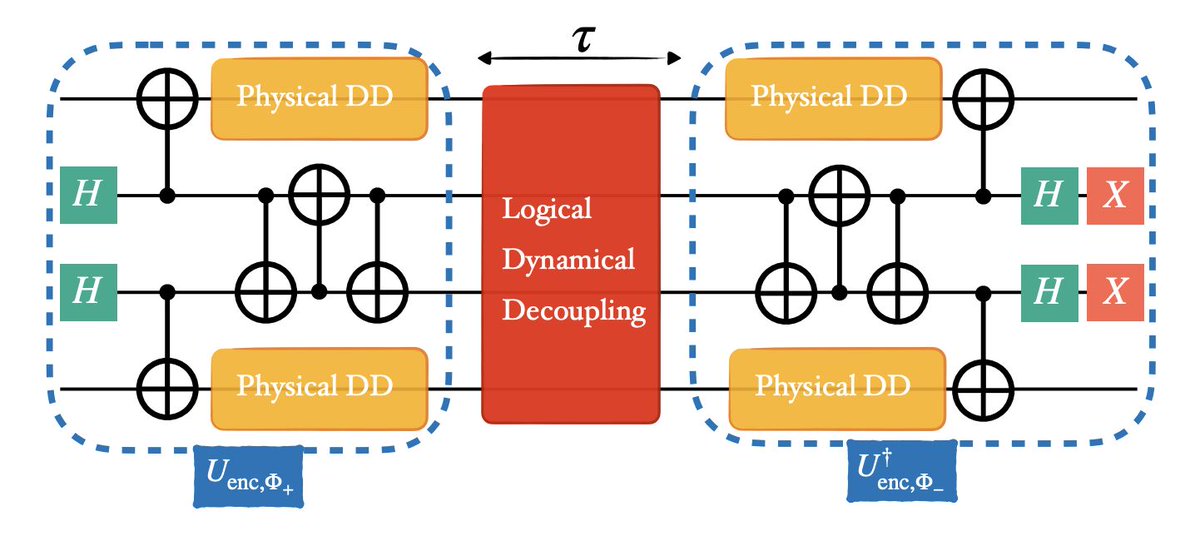
We've been interviewed for @NetworkWorld about our latest peer-reviewed research, which was recently published by @Nature Communications. Logical dynamical decoupling involves shifting qubits between different states, our CEO @IzharMedalsy explained to writer @MariaKorolov. The article also dives into how what we do with our AI-powered, digital-twin-style quantum computer simulator, Constellation, is different from other products on the market. Izhar explains: “Quantum Elements’ digital twin is aimed at hardware-faithful simulation at experiment scale… it is designed to preserve the full noise signature, both coherent and incoherent.” networkworld.com/article/414572…
English
0
0
1
1
Quantum Elements
Quantum Elements@Qu_Elements·
At Quantum Elements, we’re excited to be featured in a @newscientist article exploring the latest breakthroughs towards overcoming errors in quantum computing. The article highlights research led by our quantum research scientist Dr Arian Vezvaee into a new approach in quantum error correction. As author @kpcallaghan_ writes, “the team showed that giving idle qubits extra ‘kick’ of electromagnetic radiation can create the most reliable entanglement between logical qubits to date.” newscientist.com/article/251897…
English
0
0
2
14
Quantum Elements
Quantum Elements@Qu_Elements·
We’re proud to have co-authored a paper that breaks new ground: It demonstrates the highest fidelity of entangled, logical qubits on a superconducting quantum computer ever achieved with a new error detection and suppression approach. It has been published in @Nature Communications. In this peer-reviewed paper, co-authored with University of Southern California’s Center for Quantum Information Science & Technology, @IBM, and the Institute for Quantum Information of RWTH Aachen University in Germany, we demonstrate the use of a hybrid technique combining quantum error detection (QED) with a new form of dynamical decoupling. By using the normalizer elements of a standard QED code as logical-level decoupling pulses, the method directly identifies and suppresses both logical and physical errors, significantly boosting the fidelity of entangled logical qubits on a 127-qubit IBM superconducting processor. “By integrating code-based dynamical decoupling directly into the logical layer, the research shows that we can suppress errors significantly more effectively than with physical techniques alone,” said co-author Daniel Lidar, holder of the Viterbi Professorship of Engineering at University of Southern California and our co-founder and Chief Scientific Officer. “The method allows us to protect a pair of entangled logical qubits at record high fidelities on superconducting hardware, a potentially valuable step on the path to more reliable quantum computation at the error-corrected, logical level.” Key achievements from the research include: - First-ever experimental suppression of logical errors in a quantum error-detecting code using logical dynamical decoupling (LDD), a new technique applying carefully chosen logical-level operations to reduce error channels inaccessible to standard codes. - ‘Beyond breakeven’ performance: Encoded logical Bell states maintain significantly higher fidelity over time than the best physical (unencoded) Bell pairs on the same hardware, even subject to physical-level dynamical decoupling. - Long-duration high-fidelity logical entanglement: Average logical Bell state fidelities reach 91–94% over the full time window of each experiment. - Record-setting encoded-state preparation: Post-selected encoded Bell-state fidelities reach 98%, exceeding previous transmon-based demonstrations (typically 79–93%). - Hardware-efficient overhead: LDD uses a small, fixed set of logical pulse generators, enabling error suppression without adding qubits. - Path toward scalable fault tolerance: Demonstrates a low-cost strategy for extending code performance without increasing code distance — keeping hardware overhead minimal while raising logical-qubit quality. We are very proud of this groundbreaking work by all the scientists involved in this research. We will fully integrate these new techniques into our existing software solutions to accelerate the development of fault-tolerant quantum computing for our customers and partners. 👉 nature.com/articles/s4146…
Quantum Elements tweet media
English
0
0
2
19
Quantum Elements
Quantum Elements@Qu_Elements·
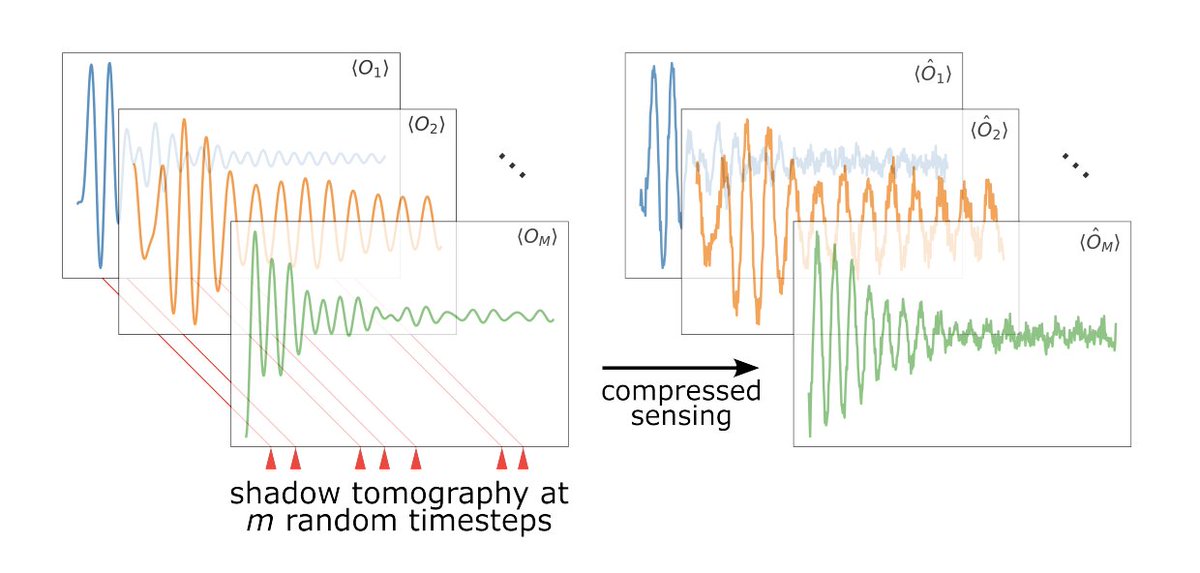
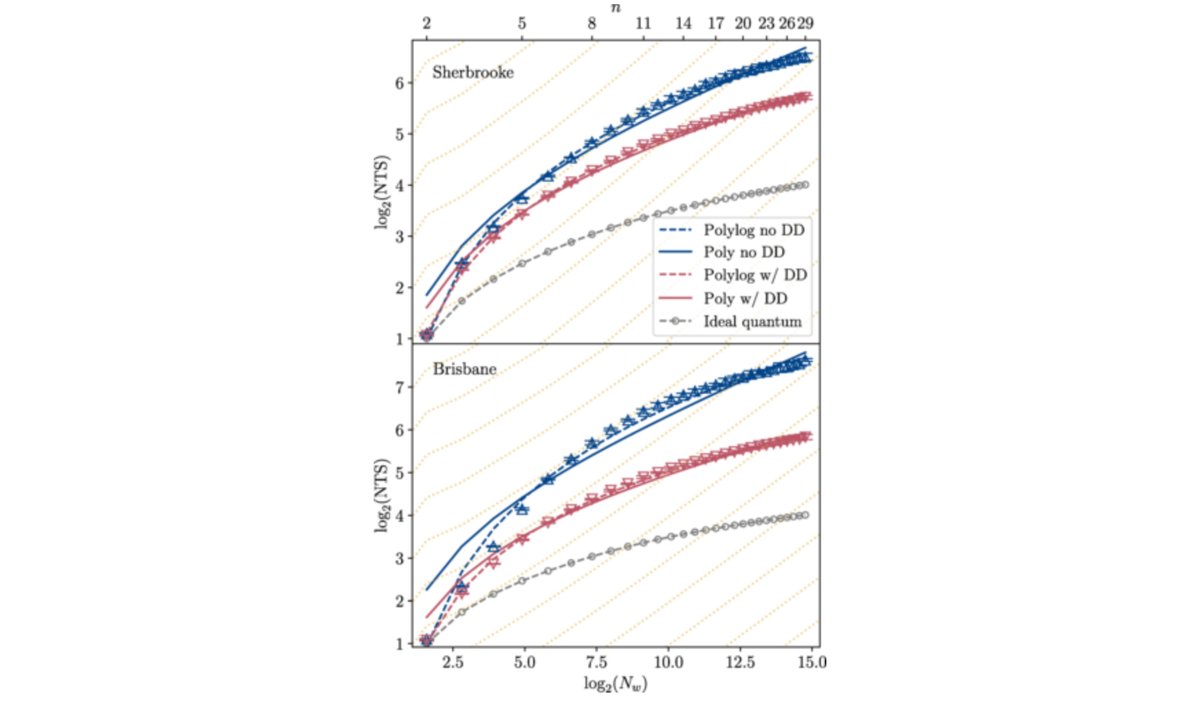
High-quality research underpins everything we do at Quantum Elements. New work by our co-founder Daniel Lidar has been profiled in an article from @QuantumStateX The research by lead author Joseph Barreto of the University of Southern California, Daniel’s research takes on the challenge of efficiently estimating numerous local expectation values over time. This is a big problem in quantum simulation and device characterization, and the new research tackles it in a new way: Compressed Sensing Shadow Tomography (CSST). CSST represents a substantial advancement for resource-efficient quantum information processing. Research like this feeds into our AI-native quantum development platform that allows you to build, optimize, and launch quantum applications faster than ever. quantumzeitgeist.com/quantum-techni…
Quantum Elements tweet media
English
0
0
2
38
Quantum Elements
Quantum Elements@Qu_Elements·
We’re looking forward to attending the 2026 @MontySummit, organized by @MarchCPs in Santa Monica on March 10th and 11th. Our CEO @IzharMedalsy will be speaking at this exclusive event, alongside founders, investors and journalists to discuss the most important innovations in business and technology. As one of the only quantum technology companies in southern California, we’re excited to share our progress and the world of quantum technology with Bringing together leaders at the intersection of geopolitics, capital, and technology, this is a high-impact event with an incredible lineup of attendees from the worlds of technology and business. If you’re going, we look forward to seeing you there.
Quantum Elements tweet media
English
1
0
3
33
Quantum Elements retweetledi
Izhar Medalsy
Izhar Medalsy@IzharMedalsy·
This is the type of conversation you’ll see a lot more in the coming months… What executives need to know about quantum computing and AI. Daniel Lidar and I recently joined @emerj's AI in Business podcast for a deep dive... Listen here: open.spotify.com/episode/5gugxk…
Izhar Medalsy tweet media
English
0
1
2
34
Quantum Elements
Quantum Elements@Qu_Elements·
Why do business executives need to understand quantum computing today? The reason we do what we do at Quantum Elements is because of the impact quantum technology can make on our world in the future. Our co-founders @IzharMedalsy and Daniel Lidar recently joined @emerj Editorial Director Matthew DeMello on the AI in Business podcast to discuss what executives need to know about quantum computing and AI. In the podcast, they explored why quantum computing is entering enterprise strategy now, explained terms like qubits and quantum twins, and explored practical applications beyond the hype. Explaining quantum technology in simple terms isn’t easy but having some understanding of it, even if you’re not a quantum physicist, is useful as the technology becomes increasingly important. Take a listen! open.spotify.com/episode/5gugxk…
Quantum Elements tweet media
English
1
1
3
41
Quantum Elements retweetledi
Izhar Medalsy
Izhar Medalsy@IzharMedalsy·
Read how our research with @USC and @IBM showed how to mitigate the noise in today’s quantum computers to prove exponential scaling in problem solving. It’s really exciting work like this that underpins our Constellation Platform. ibm.com/quantum/blog/s…
Izhar Medalsy tweet media
English
0
1
1
23
Quantum Elements
Quantum Elements@Qu_Elements·
Our software learns how quantum computers hardware and algorithms fail and fixes them, in real time. Our technology is underpinned by thorough research, such as the work our co-founder and CSO Daniel Lidar and his team at @USC conducted with @IBM Quantum. The research offers proof of quantum scaling speedup that is not dependent on unproven assumptions regarding the limitations of classical methods. As IBM explains: “The team ran circuits on noisy quantum hardware up to 126 qubits, demonstrating that as the problem increased in size, the speedup scaled exponentially for quantum. However, past 58 qubits, noise inherent to today’s quantum computers allowed classical to win.” The secret to maintaining an exponential advantage with quantum computers is to mitigate the ‘crosstalk’ noise inherent in today’s quantum hardware. Through circuit optimization, dynamical decoupling, and measurement error mitigation, the team were able to show that a quantum computer could beat the mathematical challenge known as 'Simon’s problem' exponentially faster than any classical computer. It’s groundbreaking work like this that underpins our Constellation Platform. Read more: ibm.com/quantum/blog/s…
Quantum Elements tweet media
English
0
1
1
36
Quantum Elements retweetledi
Izhar Medalsy
Izhar Medalsy@IzharMedalsy·
2026 will mark the moment when “quantum infrastructure” becomes the real battleground — because hardware alone no longer drives progress. @QuantumDaily asked me to offer my predictions for what 2026 has in store for quantum technology... thequantuminsider.com/2025/12/30/tqi…
English
0
1
1
12
Quantum Elements
Quantum Elements@Qu_Elements·
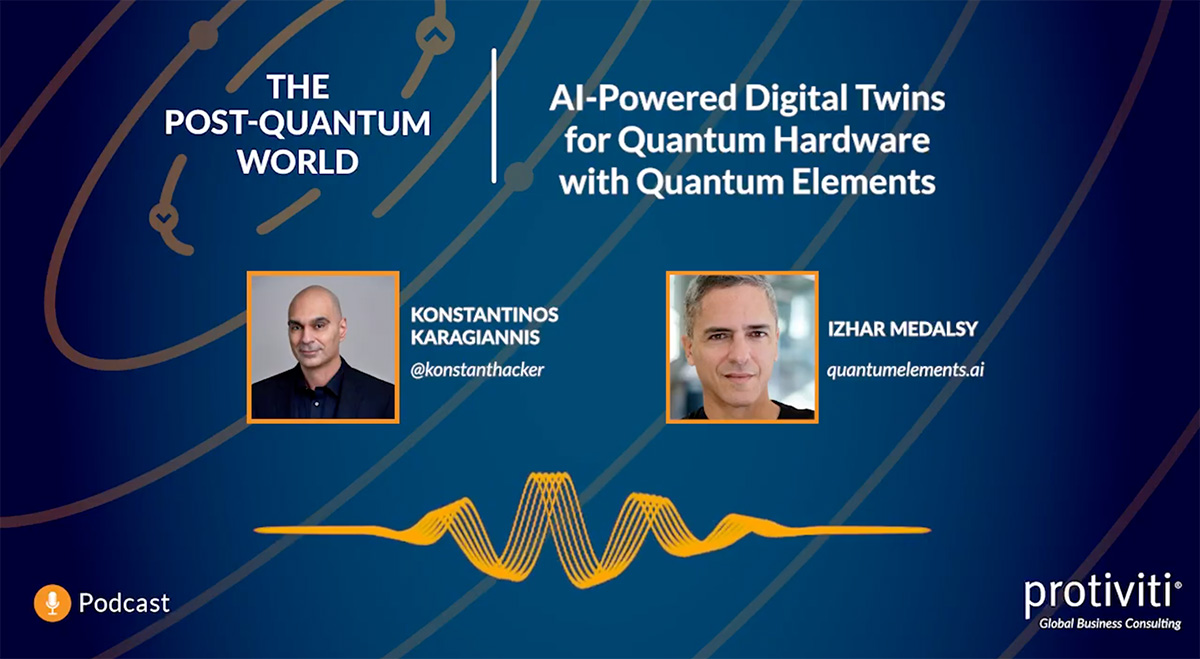
Want to understand our Constellation Platform in more depth? We took a deep dive into how it works with @KonstantHacker on the Post-Quantum World podcast. Our CEO @IzharMedalsy explained how the platform’s digital twin capability allows you to experiment with quantum computing hardware without the downsides of doing that directly: “One of the things that we know is very limiting in a quantum process is the fact that you can only ask a question once. Once you measure the state of your system, you disrupt it in a way that it's unrecoverable. "When you have a realistic digital twin, now you have the ability to eliminate and target the different governing principles and noise models that are part of what makes your hardware your specific system. “And when you're doing that, you're able to pinpoint the areas that are of interest to you and address them in a very surgical and accurate way.” And that’s not all: “It allows you to also play around with things that take much longer time and much more money if you would like to do it on real hardware. "For instance, what if you want to design a different chip or configuration layout? What if you want to look at the long range interaction between different qubits, or what if you would like to explore new midcircuit error suppression strategies at scale? “All of that is relatively hard on hardware… but if you're able to dissect and address different components individually, now you have the freedom to really pinpoint where the issues are, address them, and then go from there.” Konsantinos really probed deeply into the working of the Constellation Platform and why it’s a significant leap forward for quantum development. Details like: - How we break the 50-qubit simulation barrier - How AI is key to our platform - How we can improve quantum computing performance through avoiding crosstalk, as demonstrated with @IBM Quantum Thank you to @Protiviti for inviting us onto the show. youtube.com/watch?v=8RMzNH…
YouTube video
YouTube
Quantum Elements tweet media
English
0
2
3
225
Quantum Elements
Quantum Elements@Qu_Elements·
Most CIOs aren’t asking whether quantum computing will matter. They’re asking when they need to care. That question came up repeatedly during a recent Southern California CIO Executive Summit and the discussion that followed was one of the most energizing conversations of the day. What stood out wasn’t hype. It was clarity. Here’s what resonated most with the CIO community: • Translating quantum from abstract physics into business-relevant timelines (3–5 years) • Understanding where quantum + classical systems will first create advantage • And, importantly, realizing that waiting for “quantum maturity” may already be waiting too long One comment stuck with me: “I left with a better understanding of where quantum computing actually stands as a viable technology.” That’s the bar. At this stage, quantum leadership isn’t about adoption it’s about preparedness: * Knowing which problems quantum is likely to impact first * Building literacy at the executive level * And creating space now for informed experimentation later At Quantum Elements, we see this shift happening fast. The most forward-thinking leaders aren’t trying to predict the future — they’re positioning their organizations so they’re not surprised by it. Curious how other CIOs are thinking about emerging technologies with uncertain timelines but asymmetric upside. What signals are you watching right now? #CIO #QuantumComputing #FutureOfTechnology #Leadership #EmergingTech #DigitalTransformation
Quantum Elements tweet media
English
0
0
0
62
Quantum Elements
Quantum Elements@Qu_Elements·
Our CEO Izhar Medalsy is speaking at the @PlugandPlayTC, Silicon Valley Summit — one of the largest tech gatherings in the Valley with 4,000+ participants. He’ll join the Agentic AI with Quantum Computing panel to discuss how AI is accelerating the path to functional quantum computers at scale Come join us! Plug and Play HQ (Silicon Valley Room) Today, 1:30–2:30 PM #QuantumComputing #AI #AgenticAI #DeepTech #Innovation #QuantumTechnology
Quantum Elements tweet media
English
0
0
0
44
Quantum Elements
Quantum Elements@Qu_Elements·
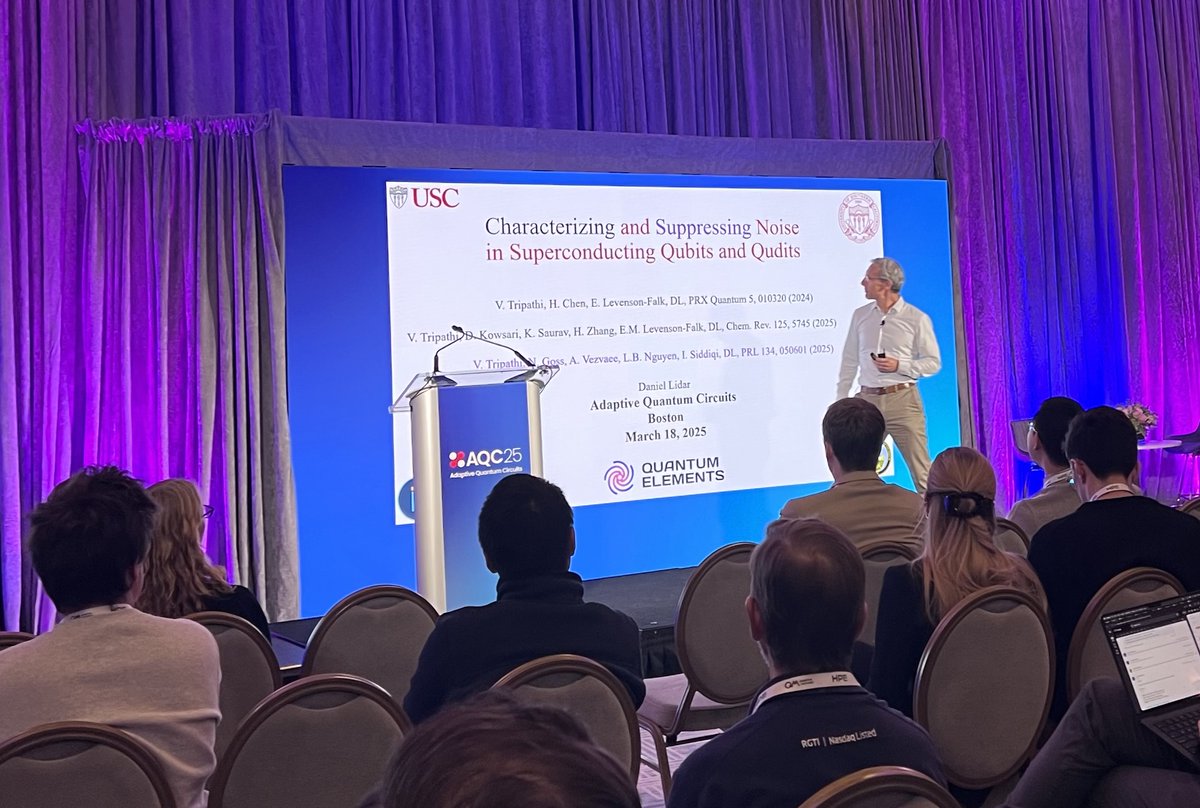
Just stepped out of an exceptional talk by our co-founder, @ProfDanielLidar, diving into one of the most pivotal challenges in quantum computing: error suppression. If you’re here at AQC25, come say hi to the @QuantumElements team and join the conversation — it’s shaping the next decade of quantum innovation. #QuantumComputing #QuantumTech #QuantumInnovation #ErrorSuppression #QuantumResearch #AQC25 #ScienceInnovation #QuantumElements #FutureOfComputing
Quantum Elements tweet media
English
0
0
0
47
Quantum Elements
Quantum Elements@Qu_Elements·
We are thrilled to announce quantum industry visionary @ChadRigetti has joined Quantum Elements board of directors! As a quantum industry pioneer and major contributor to the commercialization of quantum computing and quantum-classical approaches, Chad brings a wealth of experience and expertise to the Quantum Elements team as we help accelerate the development real-world quantum solutions at scale. Chad is also a venture partner with @QDNLP, a $70 million venture capital firm dedicated to investing in early-stage quantum technology companies, including Quantum Elements. We are grateful to have Chad Rigetti’s support and insights thequantuminsider.com/2025/11/12/cha… #quantumcomputing #quantum #quantumAI #quantumclassical #quantumplatform #quantumforbusiness #quantumtech #technology #business #computing #innovation #ChadRigetti
English
0
0
1
37