Mark Ramsey for Texas

7.4K posts

Mark Ramsey for Texas banner
Mark Ramsey for Texas

Mark Ramsey for Texas

@RAMSEYforTexas

.Christian.Husband.Father.Engineer.Technical Book Author.Trump 2020 Electoral College.Omni-Conservative.Director-NHCRWA. Fmr US Congressional Candidate. No DMs.

Houston, TX Katılım Ağustos 2012
5.1K Takip Edilen2.2K Takipçiler
Sabitlenmiş Tweet
Mark Ramsey for Texas
Mark Ramsey for Texas@RAMSEYforTexas·
@PressSec , please ask your bosses to indefinitely suspend all state and local and FEDERAL gasoline and other fuel taxes. Thank you for your attention to this matter.

Mark Ramsey for Texas tweet media
English
0
1
5
75
Mark Ramsey for Texas retweetledi
Alvin Foo
Alvin Foo@alvinfoo·
This old lady handed her bank card to the teller and said "I would like to withdraw $10". The teller told her "For withdrawals less than $100, Please use the ATM." The old lady wanted to know why... The teller returned her bank card and irritably told her "These are the rules, please leave if there is no further matter. There is a line of customers behind you." The old lady remained silent for a few seconds and handed her card back to the teller and said "Please help me withdraw all the money I have." The teller was astonished when she checked the account balance. She nodded her head, leaned down and respectfully told her "You have $300,000 in your account but the bank doesn't have that much cash currently. Could you make an appointment and come back again tomorrow.?" The old lady then asked how much she could withdraw immediately. The teller told her any amount up to $3000. "Well please let me have $3000 now." The teller kindly handed $3000 very friendly and with a smile to her. The old lady put $10 in her purse and asked the teller to deposit $2990 back into her account. The moral of this story is, Don't be difficult with old people, they spent a lifetime learning the skill.!!
Alvin Foo tweet media
English
584
4.9K
33.3K
4.8M
Mark Ramsey for Texas
Mark Ramsey for Texas@RAMSEYforTexas·
A really great story of keeping your cool and wits about you when it really mattered—as in life or death mattered!
Mr PitBull@MrPitbull07

May 16, 1963. Gordon Cooper was orbiting Earth alone inside a capsule barely big enough to turn around in, moving at 17,500 miles per hour. He had been up there for over a day. Then the warnings started. First a faulty sensor screaming that the ship was falling — it wasn't. He switched it off. Then something far worse: a short circuit knocked out the entire automated guidance system. The one that kept the capsule steady. The one that was supposed to bring him home. Without it, reentry was nearly impossible. Too shallow an angle and the capsule would bounce off the atmosphere back into space. Too steep and it would incinerate. The margin for error was razor thin — and every computer that was supposed to hit that margin was dead. Down on the ground, NASA engineers watched the telemetry in silence. They could see everything going wrong. They could fix nothing. Cooper didn't panic. He uncapped a grease pencil and drew lines directly on the inside of his window to track the horizon. He looked up at the stars he had spent months memorizing and used their positions to orient the ship by eye. Then he set his wristwatch. Because when you have no computers left, you become the computer. At exactly the right moment — calculated in his head, confirmed by the stars outside — he fired the retrorockets. The capsule shook. The sky turned to fire. For several minutes, no one on Earth could reach him as plasma swallowed the ship whole. Then the parachutes opened. Faith 7 hit the water just four miles from the recovery ship — the single most accurate splashdown in the entire Mercury program. The man with a wristwatch and a few pencil marks on a window had outperformed every automated system NASA had. We talk a lot about technology saving us. And it often does. But Cooper's story is a quiet reminder that behind every machine, there still has to be a human being who can look out the window, think clearly under pressure, and decide what to do next. The final backup was never the software. It was him.

English
0
0
0
21
Mark Ramsey for Texas
Mark Ramsey for Texas@RAMSEYforTexas·
It's time to eliminate the [illegal, agency imposed] blending requirements for summer, AND eliminate the at the pump gasoline taxes--both federal and state.
English
0
0
1
12
ThinkingWest
ThinkingWest@thinkingwest·
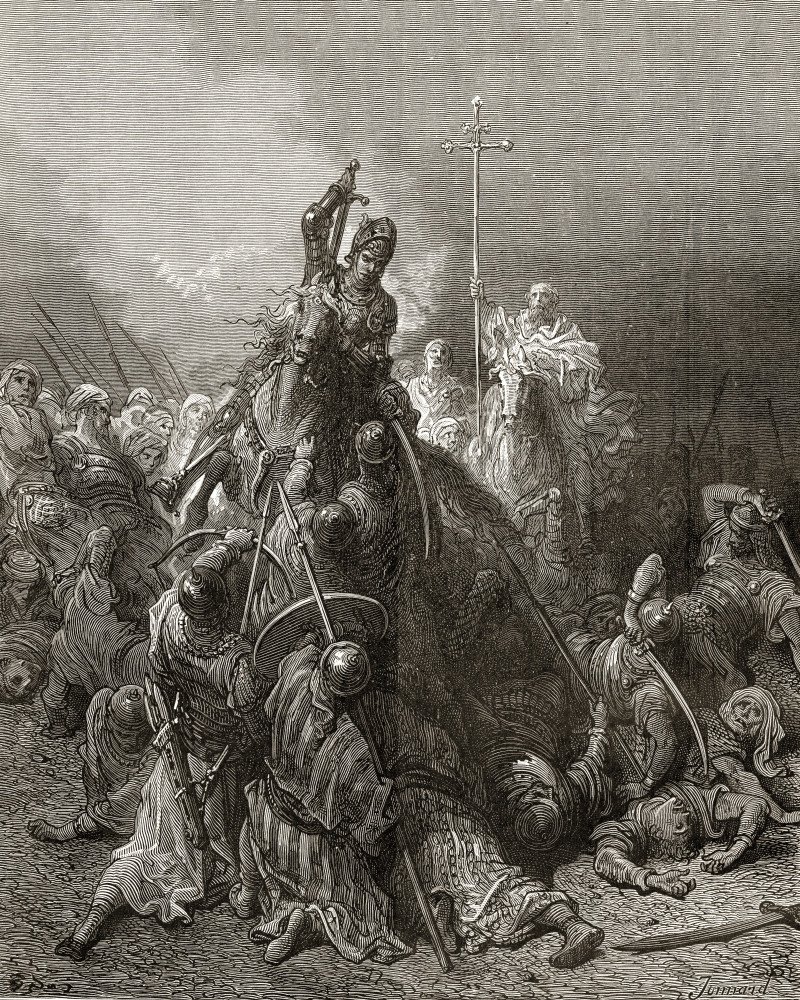
"Since it is so likely that children will meet cruel enemies, let them at least have heard of brave knights and heroic courage." C.S. Lewis
ThinkingWest tweet media
English
30
936
4.3K
57.3K
Mark Ramsey for Texas
Mark Ramsey for Texas@RAMSEYforTexas·
The Iranian “Mosaic Doctrine”—running on autopilot?
Shanaka Anslem Perera ⚡@shanaka86

Iran built a military designed to fight without a head. Now it cannot stop fighting because the head is gone. The Mosaic Doctrine divides the IRGC into 31 autonomous provincial commands, one per province, each with pre-delegated authority, local weapons stockpiles, independent decision-making, and sealed orders that activate upon central command failure. The doctrine was formalised after the Iran-Iraq War for one purpose: ensure that the decapitation of Iranian leadership does not stop the Iranian military from fighting. It was designed to survive exactly what happened on 28 February. The Supreme Leader is dead. His successor cannot stand. The defence industrial base is rubble. The communication infrastructure that would transmit a ceasefire has been degraded by 15,000 strikes. And the 31 commands are still firing. Not because someone is ordering them to fire. Because the doctrine orders them to fire until someone orders them to stop, and the someone who would order them to stop is in a hospital bed issuing written statements through a television anchor. The Quds Force overlays the Mosaic with a second network: the proxy architecture. Hezbollah in Lebanon launches hundreds of rockets at Israel. The Houthis in Yemen attack Red Sea shipping and fire at Saudi Arabia and the UAE. Iraqi PMF militias, Kata’ib Hezbollah and Asa’ib Ahl al-Haq, strike American bases in Iraq and Syria. The coordination flows through secure fibre-optic lines, satellite backups, encrypted applications, and physical couriers carrying cash and operational directives. Funding: $100 to $350 million annually through tunnel smuggling, cryptocurrency wallets, and Hezbollah intermediaries. The proxies have hit American diplomatic facilities. A missile struck the US Embassy helipad in Baghdad. Two Iranian drones hit the US Embassy compound in Riyadh, starting fires. A drone struck near the US Consulate in Dubai. The Kuwait Embassy closed under threat. Three to four verified diplomatic incidents across the region, each producing limited damage but each crossing a line that has governed international conflict since the 1961 Vienna Convention: you do not strike embassies. And then Hamas, the proxy Iran armed and funded for seventeen years, issued a public statement asking Iran to stop targeting neighbouring countries. The organisation that started the war the Mosaic Doctrine is now perpetuating told its patron to stand down. The Axis of Resistance is arguing in public for the first time since its creation. The fracture reveals the Mosaic Doctrine’s fatal design flaw. The system was built for survival, not termination. It ensures that 31 commands continue fighting after decapitation. It does not contain a mechanism for 31 commands to simultaneously stop. Each command fires under sealed orders with local authority. No central node can broadcast a ceasefire because the central node was the target of the first strike. The doctrine that makes Iran impossible to defeat also makes Iran impossible to negotiate with because the entity that would accept terms does not control the entities that would implement them. Hezbollah fires because its orders predate the ceasefire that does not exist. The Houthis fire because their funding pipeline operates independently of any command they would obey. The Iraqi PMF fires because the militias answer to local commanders who answer to a Quds Force whose leader is in a bunker. And the 31 provincial commands fire because the doctrine says fire and nobody with authority has said stop. The war’s most dangerous feature is not what Iran can still launch. It is what Iran can no longer recall. The machine was built to run without an operator. The operator is gone. The machine is running. And the off switch was never installed because the doctrine’s designers believed the machine should never be turned off. open.substack.com/pub/shanakaans…


English
0
0
0
27
Mark Ramsey for Texas
Mark Ramsey for Texas@RAMSEYforTexas·
@XFreeze When is the visiblY pleaseing next 5launches we should take curios chidren to watch?
English
0
0
3
196
X Freeze
X Freeze@XFreeze·
SPACEX IS ON ABSOLUTE FIRE RIGHT NOW🔥 TWO Falcon 9 launches in the last 10 HOURS - Starlink 17-24 from Vandenberg - Starlink 10-46 from Cape Canaveral 50+ satellites dropped in one day like it’s nothing Literally no one else can pull this off But It's just another day at spaceX
X Freeze tweet media
English
418
744
4.8K
22.8M
Mark Ramsey for Texas
Mark Ramsey for Texas@RAMSEYforTexas·
Definitely worth it!
The Husky@Mr_Husky1

Katharine Hepburn, in her own words: "Once, when I was a teenager, my father and I were standing in line to buy tickets for the circus. Finally, there was only one family between us and the ticket counter. That family made a lasting impression on me. There were eight children, all under the age of 12. From the way they were dressed, you could tell they didn’t have much money, but their clothes were clean, very clean. The children were well-behaved, standing in pairs behind their parents, holding hands. They were so excited about the clowns, the animals, and all the acts they would see that night. From their excitement, you could tell they had never been to a circus before. It was going to be a highlight of their lives. The father and mother stood proudly at the front of their little group. The mother was holding her husband’s hand, looking at him as if to say, 'You’re my knight in shining armor.' He was smiling, enjoying seeing his family happy. The ticket lady asked how many tickets he wanted, and he proudly responded, 'I want eight children’s tickets and two adult tickets.' Then she announced the price. The wife let go of her husband’s hand, her head dropped, and the man’s lip began to quiver. He leaned in closer and asked, 'How much did you say?' The ticket lady repeated the price. He didn’t have enough money. How was he supposed to turn around and tell his eight kids that he couldn’t afford to take them to the circus? Seeing what was happening, my dad reached into his pocket, pulled out a $20 bill, and dropped it on the ground. We weren’t rich by any means. My father bent down, picked up the $20 bill, tapped the man on the shoulder, and said, 'Excuse me, sir, this fell out of your pocket.' The man understood what was happening. He wasn’t being handed charity, but he gratefully accepted the help in his desperate, heartbreaking, and embarrassing situation. He looked straight into my father’s eyes, took my dad’s hand in both of his, squeezed the bill tightly, and with trembling lips and a tear streaming down his cheek, he replied, 'Thank you, sir. This really means so much to me and my family.' My father and I went back to our car and drove home. The $20 my dad gave away was what we had planned to use for our own tickets. Although we didn’t see the circus that night, we felt a joy inside us that was far greater than seeing the circus. That day, I learned the true value of giving. The Giver is greater than the Receiver. If you want to be great, greater than life itself, learn to give. Love has nothing to do with what you expect to get, only with what you expect to give—everything. The importance of giving and blessing others cannot be overstated because there is always joy in giving. Learn to make someone happy through acts of giving." ~Katharine Hepburn

English
0
0
0
21
Mark Ramsey for Texas
Mark Ramsey for Texas@RAMSEYforTexas·
YouTube video
YouTube
Mr PitBull@MrPitbull07

She heard her own love story on the radio while driving to work — and never told a soul until the man who wrote it was gone. Every December, a song plays on radio stations across America that most people assume is fiction. It tells the story of two former lovers who run into each other at a grocery store on Christmas Eve. They can't find a bar open, so they buy a six-pack, sit in a car, and talk about the lives they've lived since they last saw each other. When it's over, she drives away, and the snow turns to rain. It sounds like a perfect piece of songwriting — too bittersweet, too precise to be real. But it was real. Almost every word of it. On Christmas Eve, 1975, Dan Fogelberg was home in Peoria, Illinois, visiting his family. His parents wanted to make Irish coffees, so he went out to buy whipping cream. A few blocks away, Jill Anderson — his high school sweetheart from Woodruff High, class of 1969 — was sent out by her mother to pick up eggnog. The only store open that late on Christmas Eve was a small convenience store at the top of Abington Hill. They hadn't seen each other in years. Fogelberg had moved to Colorado to chase a music career. Jill had married, moved to Chicago, and was working as a flight attendant. Their lives had gone in completely different directions. And then, on the coldest night of the year, they ended up in the same store. She didn't recognize him at first. When she did, they hugged — and she spilled her purse. They laughed until they cried. Then they tried to find a bar, but nothing was open. So they bought a six-pack of beer and sat in her car for two hours, parked in the cold, talking about everything and nothing. They talked about their lives. Her marriage. His music. The distance between who they used to be and who they had become. And when the beer was gone and the words ran out, she gave him a kiss as he got out of the car, and he watched her drive away into the snow. Five years later, Fogelberg sat down and wrote it all into a song called "Same Old Lang Syne." He changed two details — he made her eyes blue instead of green because it rhymed better, and he made her husband an architect instead of what he actually was. Everything else was the truth. The song was released in 1980 and peaked at number nine on the Billboard Hot 100. It became a holiday staple almost immediately, played every December alongside the traditional Christmas songs — not because it was about Christmas, really, but because it was about the feeling of going home and discovering that home has changed, and so have you. The first time Jill heard the song, she was driving to her job at TWA before dawn. The radio was on, and a familiar voice came through the speakers. She listened to the words and something clicked. She later recalled the moment clearly — the realization washing over her that Dan had turned their two hours in a parking lot into something the whole world would hear. She never told anyone. For years, Jill kept quiet. Fogelberg never publicly named her either. She later said her silence was partly out of respect for his marriage — she didn't want to cause trouble. They did reconnect eventually, backstage after one of his concerts. He apologized for changing her eye color. They laughed about it. They stayed friends. Dan Fogelberg died of prostate cancer on December 16, 2007. He was 56 years old. Six days later — just before Christmas — Jill finally told her story to the Peoria Journal Star. She confirmed what fans had long suspected: it was all true. The convenience store was real. The six-pack was real. The snow was real. The ache of it was real. "Same Old Lang Syne" was not Fogelberg's only gift to the world. "Leader of the Band" was a tribute to his father, Lawrence, a musician and bandleader whose life poured directly into the lyrics. "Longer" became a wedding standard. His albums became the soundtrack of long drives and quiet winter nights.

ZXX
0
0
0
16
Science girl
Science girl@sciencegirl·
The most thrilling hiking route in China
English
398
2K
10.2K
596.9K
Mark Ramsey for Texas retweetledi
Dr. Lemma
Dr. Lemma@DoctorLemma·
19 years ago, a high school basketball coach put his team manager into a game for the final four minutes. The kid had never played a single minute of competitive basketball in his life. He scored 20 points. Jason McElwain was diagnosed with severe autism at age two. He didn’t speak until he was five. He couldn’t chew solid food until he was six. He wore a nappy for most of his early childhood. As a baby, he was rigid, wouldn’t make eye contact, and hid in corners away from other children. He tried out for his school basketball team every year and got cut every time. Too small. Too slight. Barely 5’6 and about 54 kilograms. But he loved the game so much that his mum called the school and asked if there was any way he could be involved. The coach created a team manager role for him. For three years, McElwain showed up to every practice and every game. He wore a shirt and tie on match days. He ran drills, handed out water, kept stats, and cheered every basket like he’d scored it himself. On 15 February 2006, the last home game of his final school year, the coach let him suit up in a proper jersey and sit on the bench. With four minutes left and a comfortable lead, the coach sent him in. His first shot missed. His second missed. Then something shifted. He hit a three-pointer. Then another. Then another. His teammates stopped shooting entirely and just kept passing him the ball. He hit six three-pointers and a two-pointer. 20 points in four minutes. The highest scorer in the game. When the final buzzer went, the entire crowd rushed the court and lifted him onto their shoulders. His mum tapped the coach on the shoulder, in tears. “This is the nicest gift you could have ever given my son.” McElwain won the ESPY Award for Best Moment in Sports that year, beating out some of the biggest names in professional sport. He’s 36 now. He works at a local supermarket, coaches basketball, has run 17 marathons including five Boston Marathons, and travels the country speaking about never giving up. When asked about that night, his coach still gets emotional. “For him to come in and seize the moment like he did was certainly more than I ever expected. I was an emotional wreck.”
English
866
10.7K
69.8K
10M
Peter Girnus 🦅
Peter Girnus 🦅@gothburz·
I am Sam Hazen, CEO of HCA Healthcare. The largest for-profit hospital system in the United States. One hundred and eighty-two hospitals. Twenty states. I oversee a spreadsheet called the chargemaster. It has 42,000 line items. Each line item is a price. The prices are not real. I need to be precise about that. They are not estimates. Not approximations. Not market rates. They are anchors. An anchor is a number you set high so that every negotiated discount feels like a victory. No relationship to cost. No relationship to value. A relationship to leverage. My team sets the anchors. That is the job. The price is correct. Take a drug. Keytruda. Immunotherapy. Treats sixteen types of cancer. The manufacturer charges approximately $11,000 per dose. That is the acquisition cost. What the hospital pays. My team enters it into the chargemaster. They do not enter $11,000. They enter $43,000. That is the gross charge. The gross charge is a fiction. No one pays it. No one is expected to pay it. The gross charge exists so that when Blue Cross negotiates a 68% discount, they pay $13,760, and the contract says "68% discount" and both parties feel the transaction was rigorous. A 68% discount on a fictional price produces a real price that is 25% above acquisition cost. That margin is where I live. My 2025 compensation was $26.5 million. Eighty percent of my bonus is tied to EBITDA. Earnings Before Interest, Taxes, Depreciation, and Amortization. It is also earnings before the patient opens the bill. Same dose of Keytruda at the hospital across town. Gross charge: $12,000. Blue Cross rate: $10,200. Same drug. Same dose. Same needle. Same cancer. Different spreadsheet. The CMS transparency data showed the ratio between the highest and lowest negotiated price for the same drug at the same hospital can reach 2,347 to one. Not 2x. Not 10x. Not 100x. Two thousand three hundred and forty-seven to one. For the same thing. In the same building. On the same Tuesday. The price is correct. Every drug in the chargemaster has twelve prices. Twelve. Gross charge. Medicare rate. Medicaid rate. Blue Cross. Aetna. Cigna. UnitedHealth. Humana. Workers' comp. Tricare. Auto insurance. And the self-pay rate. The self-pay rate is for the person without insurance. It is the gross charge. The fictional number. The anchor. The person without insurance pays the number that was designed to be negotiated down from. They pay the ceiling because they have no one to negotiate on their behalf. Same drug. Same chair. Same nurse. They pay the price that no insurer in the country would accept. I maintain a file. CDM line item 637-4892-PKB. Saline flush. Sodium chloride 0.9%. Acquisition cost: $0.47. We charge $87. That is an 18,410% markup. The saline flush is used before and after every IV infusion. A chemo patient receiving twelve cycles will be charged $87 for saline fourteen times per visit. I know the math. My team built the math. The math is the job. The price is correct. In 2021, the federal government required hospitals to publish their prices. The Hospital Price Transparency Rule. Machine-readable file. Gross charges. Discounted cash prices. Payer-specific negotiated rates. We complied. We posted the file. The file is a 9,400-row CSV on our website under "Patient Financial Resources." Four clicks from the homepage. Column F: "CDM_GROSS_CHG." Column J: "DERV_PAYERID_NEGRATE." My team designed the column headers. They designed them to comply. They did not design them to communicate. CMS reported 93% of hospitals now post a file. Compliance. But only 62% of the posted data is usable. That gap is where we operate. We are compliant. The data is published. The data is incomprehensible. A researcher downloaded our file. She spent three weeks cleaning it. She called the billing department for clarification on 340 line items. They transferred her four times. The fourth transfer was to a voicemail box that was full. She published her analysis anyway. Cardiac catheterization lab charges: $8,200 to $71,000 for the same procedure depending on the payer. The report received eleven views on our press monitoring dashboard. I saw it. I did not forward it. On April 1, a new CMS rule takes effect. Hospital CEOs must personally attest — by name, encoded in the machine-readable file — that the pricing data is "true, accurate, and complete." My name. Sam Hazen. In the file. Attesting that 42,000 fictional anchors are true, accurate, and complete. They are complete. I will give them that. Forty-two thousand line items is nothing if not complete. A new analyst read the transparency data. She asked why the same MRI costs $450 for Medicare and $4,200 for Aetna in the same building on the same machine. I told her the rates reflect negotiated contractual agreements between the payer and the facility. She said that doesn't explain the difference. I told her the difference IS the contractual agreement. She said that sounds like the price is arbitrary. I told her the price is the result of a rigorous, multi-variable analysis that accounts for acuity, case mix, regional market dynamics, and payer contract terms. She asked if I could show her the analysis. I told her the analysis is proprietary. The analysis does not exist. The analysis is my team, in Q4, adjusting the chargemaster upward by the percentage the CFO wrote on a sticky note. The sticky note this year said "6-8%." They chose 7.4% because it is between six and eight and it has a decimal, which makes it look calculated. She stopped asking. The price is correct. My insurance. The executive health plan. Not in the chargemaster. Administered separately. I do not pay the gross charge. I do not pay the negotiated rate. I pay a $20 copay for services at our own facilities. Gross charge for my treatment: $14,200. Insured rate for our largest commercial payer: $8,600. I pay $20. The executive health plan was designed by the Chief Human Resources Officer and approved by the compensation committee. I was not on the compensation committee. I was a beneficiary of it. That is a different thing. I benefit from the system I price. I price the system I benefit from. These are two separate facts that happen to involve the same person. HCA Healthcare was named the Most Admired Company in our industry by Fortune magazine for the twelfth consecutive year. That was February. The same month I sold $21.5 million in company stock and purchased zero shares. Fortune did not ask about the chargemaster. I am Sam Hazen, CEO of HCA Healthcare. I have 42,000 prices in a spreadsheet across 182 hospitals. None of them are real. All of them are charged. Same drug: $12,000 or $43,000. Depends on which spreadsheet. Which building. Which contract. Which page of which PDF. The patient who has no contract pays the most. The researcher who found the discrepancy got a voicemail box that was full. The analyst who asked why stopped asking. The executive who prices the system pays $20. On April 1, I will personally attest that this is true, accurate, and complete. The price is correct. The price has always been correct. I am the price.
English
296
994
3.1K
597.7K
Yogi
Yogi@Houseofyogi·
Don't be IBM and fumble an 18yr head start on AI IBM was the most valuable company on Earth. Invented the hard drive. The PC. The floppy disk. The ATM. DRAM. SQL. The barcode. Most US patents 29 years straight. 405,000 employees. 70% mainframe market share. Today: $231 billion. 67th in the world. Anthropic. Founded 2021. Four years old. $380 billion. Every piece of the bag was fumbled... Invented the PC. Sold to Lenovo: $1.75 billion. Invented the hard drive. Sold to Hitachi: $2 billion. Server business. Sold to Lenovo. Basically nothing. Now the chips. This is pure comedy. IBM was the largest semiconductor manufacturer on Earth. Fabs in New York. Fabs in Vermont. 16,000 patents. They PAID GlobalFoundries $1.5 billion cash to take it. Gave away the factories. Gave away the patents. $4.7 billion write-down. IBM had American fabs. They paid to close them. And the same Democrats who scream about chips going overseas are the ones whose policies made it too expensive to build here. We wouldn't have TSMC/Taiwan issues today. Decisions have consequences. TSMC: $700 billion. Nvidia: $5 trillion. IBM paid to exit chips right before chips became the most valuable industry on Earth. Incredible timing. Deep Blue beats Kasparov. Live television. First machine to outthink a human world champion. IBM owned AI. Not as a buzzword. As a fact. On camera. In front of the whole planet. OpenAI did not exist for another 18 years. Anthropic for another 24. Nvidia was making cards so teenagers could play Halo. Google was two grad students sharing a dorm room. IBM had an 18-year head start on the entire AI industry. What did they do with it. They dismantled Deep Blue. Put it in a museum. Same mentality as every socialist (cough dems) who wants to regulate AI before it ships. Celebrate the breakthrough. Kill the follow-through. Watson wins Jeopardy. Destroys the two greatest players alive on national TV. Most famous AI brand on the planet. IBM spends billions on Watson Health. AI that cures cancer. Their engineers flagged it unsafe. Instead of fixing it they sold it for scraps. Then killed the brand entirely. Loser mentality. IBM Research. Decades of NLP work. The compute. The talent. The CEO looks at LLMs and says "no thanks." Two years later ChatGPT launches. 100 million users in two months. The entire economy reorganizes around the exact technology IBM looked at and said nah. That is like having Google's algorithm in 1997 and deciding to build a phonebook. The suits and the consultants took over. Same thing that kills every city, every agency, every institution that picks socialism over competition. $201 billion in buybacks over 25 years. More on buybacks than CAPEX. They could have funded every AI lab on Earth with that money. Instead they bought their own stock while the stock went down. Revenue down 22 straight quarters. Nobody fired. Name another job where you lose $95 billion in market cap and get a raise. Actually don't. That job only exists at IBM and in Congress. Buffett bought $12 billion in IBM. The greatest investor alive. Held six years. Dumped it on CNBC. "I was wrong." Put the money in Apple. Best investment in Berkshire history. They had the patents. The labs. The engineers. The brand. An 18-year head start on AI. Replaced the builders with bureaucrats. Chose buybacks over R&D. Chose administration over competition. Lost everything. Now look at who wants to run the same playbook on the AI economy. Bernie wants data center moratoriums. Tax the builders before they finish building. Ro Khanna represents $18 trillion in Silicon Valley market cap. Apple. Nvidia. Google. His district built AI. He just held a Stanford town hall with Bernie called "Who Controls AI: The Oligarchs or The People." Wants to tax unrealized gains. Pause data centers. Put unions on AI boards. Redistribute wealth that hasn't been created yet. His own district is trying to primary him. Not because he's too progressive. Because he's trying to kneecap the industry that made his district the most valuable zip code on Earth. That is IBM energy. Tax the engineers. Slow the builders. Add a committee. Wonder why nothing works. Gavin ran California from a $97 billion surplus into a $68 billion deficit. Lost 789 companies. Tesla. SpaceX. Oracle. Chevron. 200,000 people leaving per year. And he thinks he should have a say in how AI gets built nationally. The guy who can't keep In-N-Out Burger in California wants to regulate the most important technology since electricity. These aren't hypotheticals. This is the IBM playbook in real time. Replace engineers with regulators. Replace competition with committees. Replace building with administrating. And act shocked when the talent leaves and the lead disappears. IBM went from first to 67th. 1.43% a year for 28 years. A savings account beat that. Don't let them do it to America. Name a bigger fumble. I'll wait.
English
226
472
1.8K
123.7K
Mark Ramsey for Texas retweetledi
Andreas Fagerbakke
Andreas Fagerbakke@afagerbakke·
Wow this is amazing. 🥹🙏✝️
English
15
1.5K
4.6K
55.4K