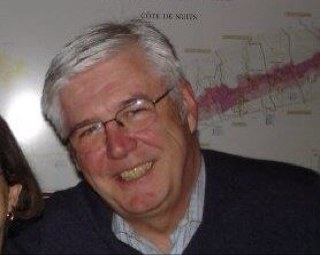
Craig Kennedy

4.8K posts

Craig Kennedy

Craig Kennedy

@RCK52

Senior Fellow at The Giving Review and formerly President of the German Marshall Fund and of The Joyce Foundation

Washington DC and Venice FL Katılım Nisan 2009
423 Takip Edilen864 Takipçiler
Craig Kennedy retweetledi
The Giving Review
The Giving Review@GivingReview·
thegivingreview.com/the-new-york-t… Last month, @GivingReview senior fellow @RCK52 criticized a @nytimes article on billionaires’ political funding because it was “misleading in two respects. First, it ignores ‘dark money’ that goes through various intermediary organizations. Second, it ignores the role that groups categorized under Internal Revenue Code §§ 501(c)(3) and 501(c)(4) play in influencing elections. When you broaden the lens to include these two elements, a very different partisan picture emerges.” In the Times article, according to Kennedy, Steven Rich and Mike Baker “focus on Federal Election Committee data concerning contributions to candidates, PACs, and parties. In doing so, they take a very narrow view of how the wealthy shape elections and political outcomes.” This morning’s Times articles by @teddyschleifer and Rich well-examines the “gray-money” role of (c)(3) and (4) nonprofits in electoral politics. 1/3
English
1
3
2
110
Craig Kennedy retweetledi
The Giving Review
The Giving Review@GivingReview·
nytimes.com/2026/04/03/us/… “A relatively new collection of liberal nonprofits—some with dizzyingly similar names, and some operated by the very same people—is playing a big role in this trend,” @nytimes@teddyschleifer reports, “muscling out consultants like Arabella Advisors that have historically dominated liberal philanthropy. “Much of the Democratic dark-money story revolves around what has been the largest Democratic super PAC, known as Future Forward,” according to Schleifer. “But good luck figuring out how all of it is funded.” There’s the Super PAC and two connected nonprofits, one of them “explicitly nonpolitical,” as Schleifer puts it. “Much of how the money flowed from donors to the nonprofits, between the two nonprofits, and from the nonprofits to the super PAC, is not public. Future Forward said that all its money was used for its intended legal purpose.”
English
0
3
3
90
Craig Kennedy retweetledi
John Podhoretz
John Podhoretz@jpodhoretz·
A remarkable post by @SethAMandel on what we've learned about society's tolerance for the anti-Semitic barbarities since October 7.
John Podhoretz tweet media
English
60
274
1.1K
163.1K
Craig Kennedy retweetledi
The Giving Review
The Giving Review@GivingReview·
philanthropy.com/opinion/opinio… “I would welcome retaliatory hearings by both parties when they control a branch of Congress, @GivingReview senior fellow @RCK52 writes in his @Philanthropy column today, “just as I would welcome more scathing investigations of nonprofit behavior by the mainstream and partisan media. An environment of scrutiny and recrimination may be the only path by which a sharper line between charity and political action can be drawn.”
English
0
4
3
93
Craig Kennedy retweetledi
The Giving Review
The Giving Review@GivingReview·
philanthropy.com/opinion/stop-g… In his newest @Philanthropy column, @GivingReview senior fellow @RCK52 examines role that private-foundation expenses play in depleting dollars going to charities … Creators of these foundations “received significant tax deductions because their funds were supposed to support nonprofits,” Kennedy writes. “It’s hard to see how spending on large and growing program staffs and fancy offices fulfill the responsibilities entailed by that subsidy.” Does donor freedom, he asks, “mean that you can spend as much on your staff and offices as you want? I don’t think so.”
English
0
4
3
114
Craig Kennedy retweetledi
The Giving Review
The Giving Review@GivingReview·
thegivingreview.com/a-conversation… In 2nd part of 2-part conversation with @GivingReview’s @RCK52 and @mhartmannmke, the Philanthropy Project’s @janmasaoka talks about the politics of policy reform in philanthropy, the pressures brought to bear on those either proposing or receptive to reform, and the importance of the nonprofit sector … Offering an analogy, Masaoka says, “Agribusiness has been very smart about holding up the image of the family farm. So when people think about farming, they think about Mom and Pop with a pitchfork and two pigs, you know? And instead, it’s literally hundreds of thousands of acres under machine-based cultivation with undocumented people from Mexico picking strawberries. So I think we need to do a better job of saying, We’re trying to regulate big business, but … we intend to protect family farms.” In the philanthropy context, reform advocates “have not made that differentiation very clearly,” she says. Community foundations and other nonprofits that sponsor DAFs have allied themselves with commercially affiliated nonprofit DAFs because these large financial behemoths (think for-profit Fidelity and Schwab, among others) generously fund lobbying efforts to protect all entities in the DAF sector, according to Masaoka, resulting in wide opposition to any proposed reforms threatening its underlying structure and the business model of the money-making behemoths. “[T]he community foundations are saying, Cool, we don’t have to do anything. We just have to show up at the hearing,” she says. “Fidelity doesn’t even show up. They just send us our talking points ahead of time and they pay the $50 million dollars in lobbying fees to do this. To me, that’s been a huge change in the politics of it.” Masaoka broadly emphasizes the importance of the nonprofit sector as the operationalization of First Amendment freedoms, urging that any reform respect and protect civil society and voluntary, small-scale nonprofit charities. Asked whether civil society more broadly needs the tax-incentivization of nonprofit status to exist and succeed, she answers, “if we got rid of the tax deduction, we would keep the all-volunteer organizations,” which are 70% of the nonprofit groups in America, and we would keep the big, national, heavily government-funded nonprofits, but “we would lose the mid-level, locally based organizations and I think those are really important.” Then, asked whether the word nonprofit is being misused or abused, Masaoka concludes, “I guess every word is misused. I mean, Christian is an example of a word that’s misused a lot, but that doesn’t mean that Christians should stop calling themselves a Christian.”
English
0
5
6
137
Craig Kennedy retweetledi
The Giving Review
The Giving Review@GivingReview·
thegivingreview.com/stop-giving-fu… @GivingReview republishes senior fellow @RCK52’s newest @Philanthropy column, in which he examines role that private-foundation expenses play in depleting dollars going to charities … Creators of these foundations “received significant tax deductions because their funds were supposed to support nonprofits,” Kennedy writes. “It’s hard to see how spending on large and growing program staffs and fancy offices fulfill the responsibilities entailed by that subsidy.” Does donor freedom, he asks, “mean that you can spend as much on your staff and offices as you want? I don’t think so.”
English
0
3
2
83
Craig Kennedy retweetledi
The Giving Review
The Giving Review@GivingReview·
thegivingreview.com/a-conversation… In 1st part of 2-part conversation with @GivingReview’s @RCK52 and @mhartmannmke, after talking about some positive trends in philanthropy, the Philanthropy Project’s @janmasaoka discusses several of philanthropy’s problems and areas for potential reform—making a few specific suggestions … “We can start by sort of the low-hanging fruit,” according to Masaoka. “It’s kind of like if you want to improve traffic safety, you can start with drunk driving, right?, and people running through red lights, without getting into a philosophical discussion about the role of driving regulations before you get into things like giving people tickets for not signaling a lane change.” In defending private foundations’ existing required payout of five percent of assets, they and those associations that speak for them “have gotten into this mode of, We’re in the business of helping foundations exist for perpetuity and any payout above five percent is going to damage those chances,” Masaoka says. “Why is perpetuity the purpose of policy? Isn’t it helping charities?” Among other problems, she cites the way in which DAF-account assets are allocated as one that should be addressed. “If you have a hundred million dollars in a donor-advised fund, not only did you get a tax deduction for that in the year that you made the donation, but you can also deploy the assets,” she says. “You can also say whether your assets are at a community foundation or Fidelity. You can say, I want $50 million invested in my best friend’s company, or a company that I want to have some influence with, or at that I want to have become a customer of mine, right? I think that idea of using assets for private gain and for private influence is not as well understood …. Now, I don’t know what to do about that. That’s where the smart guys come in.” At core, DAFs reflect a financialization of charity that too greatly prioritizes financialization over charity. “The fundraising industrial complex right now is telling everybody that” DAFs are “a new source of revenue,” she says. There are “all these webinars now on how to raise money from donor-advised funds, which is sort of to me like having a webinar on how to raise money from Wells Fargo checking accounts.”
English
0
4
4
87
Craig Kennedy retweetledi
The Giving Review
The Giving Review@GivingReview·
philanthropy.com/opinion/stop-g… In his newest @Philanthropy column, @GivingReview columnist @RCK52 examines role that private-foundation expenses play in depleting dollars going to charities … Creators of these foundations “received significant tax deductions because their funds were supposed to support nonprofits,” Kennedy writes. “It’s hard to see how spending on large and growing program staffs and fancy offices fulfill the responsibilities entailed by that subsidy.” Does donor freedom, he asks, “mean that you can spend as much on your staff and offices as you want? I don’t think so.”
English
0
4
3
89
Craig Kennedy
Craig Kennedy@RCK52·
An excellent and honest assessment of how tax-deductible money is used to support political activities by David Callahan. Notable for his willingness to assign blame broadly and fairly. api-esp.piano.io/story/estored/…
English
1
1
1
41
Craig Kennedy retweetledi
The Giving Review
The Giving Review@GivingReview·
thegivingreview.com/bipartisan-voi… @GivingReview republishes senior fellow @RCK52’s contribution to recent @Philanthropy collection of predictions about philanthropy-related policy reform … “A resolution is unlikely in the continuing debate over raising the minimum foundation payout rate, but I expect Congress to move closer toward that goal in 2026,” according to Kennedy. “Just one barrier stands in the way of a payout increase: Conservatives’ fear that an increase in foundation giving would largely fund election-adjacent projects and groups promoting progressive causes, instead of just funding programs that provide services to communities in need,” he writes. “If an increase in the payout rate was linked to equally strong requirements for donor-advised funds, progressives might be willing to accept limitations on politically related nonprofit activities, recognizing that even a 1 percent rise would provide a huge amount of new money to charities.”
English
0
4
4
136
Craig Kennedy
Craig Kennedy@RCK52·
A very powerful piece that everyone should read. My Gaza is ready for peace. Hamas is trying to destroy it. wapo.st/3Lmpbgr
English
0
0
1
43
Craig Kennedy
Craig Kennedy@RCK52·
Great piece by Mike Hartmann the Giving Review - Independent analysis of and commentary about philanthropy and giving Co-edited by William A. Schambra, Daniel P. Schmidt, and Michael E. Hartmann thegivingreview.com
English
0
0
2
89
Craig Kennedy retweetledi
The Giving Review
The Giving Review@GivingReview·
thegivingreview.com/a-bipartisan-p… @GivingReview republishes @RCK52’s newest @Philanthropy column ... After noting private foundations’ very positive investment returns, Kennedy writes, “Given this bounty, I believe it’s time to stop simply talking about raising the foundation payout rate and start taking steps to actually do it.” On philanthropy reform more generally, according to Kennedy, “The left and right need to find common ground. That’s possible, but only if progressives are willing to accept a definition of charitable giving that does not include politically charged activities.”
English
0
5
3
330