Richard Findlay

766 posts

Richard Findlay

Richard Findlay

@RGFWesterdale

Hill Farmer in the North York Moor National Park. Currently on the North East Regional Live Stock board & Chairman of the National Live Stock board

Katılım Mart 2013
226 Takip Edilen516 Takipçiler
Richard Findlay retweetledi
Sama Hoole
Sama Hoole@SamaHoole·
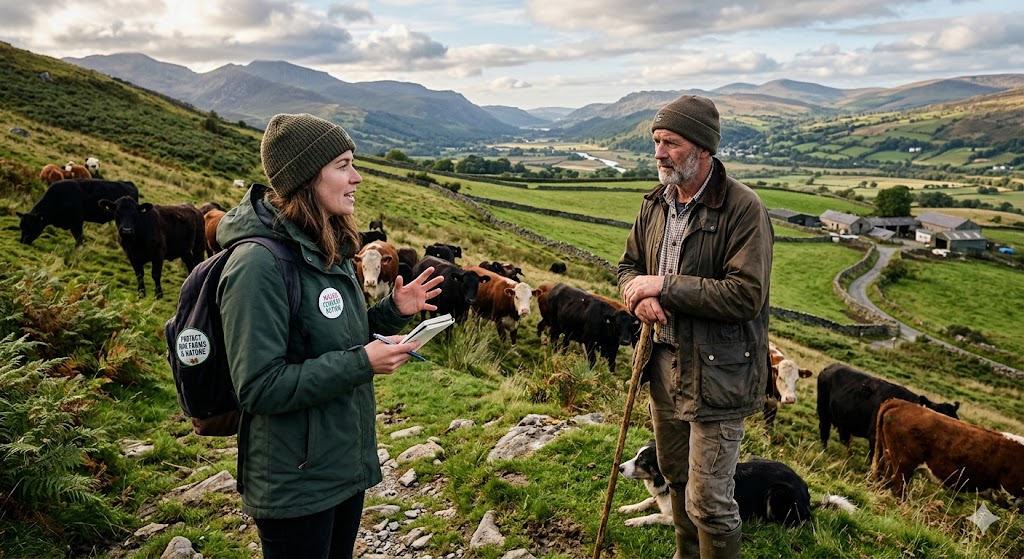
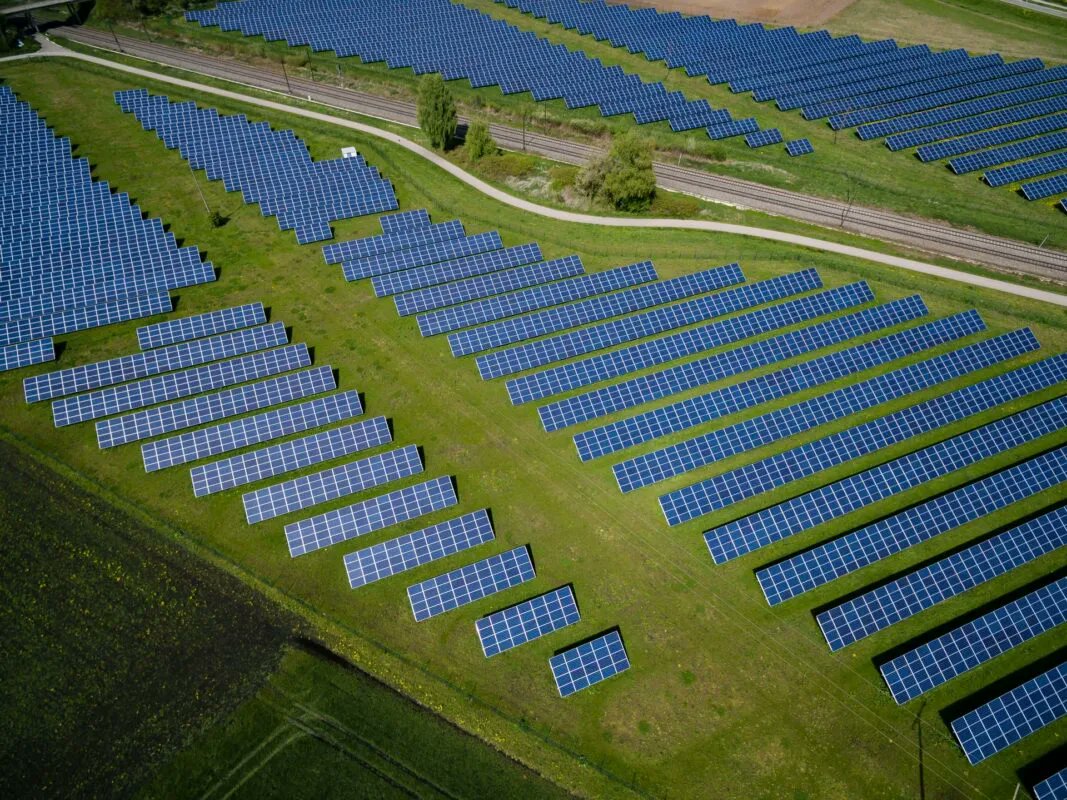
A pasture in the Lincolnshire Wolds has carried cattle for a thousand years. It's worked by the Crawford family. Has been since the reign of George IV. Two hundred years of calving in the small hours, of bringing the herd in before storms, of two hundred years of knowing that the Lincoln Reds prefer the south-facing slopes in spring and the sheltered hollow when the wind comes off the North Sea in October. In 2025, a solar developer offered them £1,250 an acre per year, index-linked, on a forty-year lease. The suckler herd was running at a loss before subsidy. With subsidy, the margin was thin enough that one bad winter or one TB reactor wiped it out. The family is thinking about it. You can't blame them. The maths is not subtle. The maths is a father and a son walking the herd at first light, neither of them speaking, both of them knowing that the figure on the developer's letter is more than the farm has cleared in a decade. If they sign, the panels go up in 2027. The herd will be dispersed at Louth, which is now the last remaining livestock market in Lincolnshire. Two hundred head of one of the oldest beef breeds in Britain, descended from cattle the Norse settlers brought across the North Sea, finished on grass without a grain of cereal, broken up and sold to whoever turns up with a trailer. Fewer than five hundred original-population Lincoln Reds remain in the world. The Crawford herd was one of the larger ones. The barn becomes a substation. The cattle grid gets lifted. The hedge the great-grandfather planted in 1958 gets pulled out to widen the access track for the construction lorries. The Crawfords did not choose this. The economics were engineered, in Westminster, over fifteen years, to make this the only sensible option. The panels are not the villain. The panels are the symptom. The villain is a country that decided British beef mattered less than electricity it could have generated from the roof of the Amazon warehouse outside Grantham. The shelf in the supermarket where the Lincoln Red used to sit will be filled, quietly, by Irish beef, then Australian, then Brazilian, and nobody will tell the shopper why the country stopped feeding itself. The roof of the warehouse is still empty. The herd is gone.
Sama Hoole tweet media
English
101
1.1K
2.3K
38.4K
Richard Findlay retweetledi
Sama Hoole
Sama Hoole@SamaHoole·
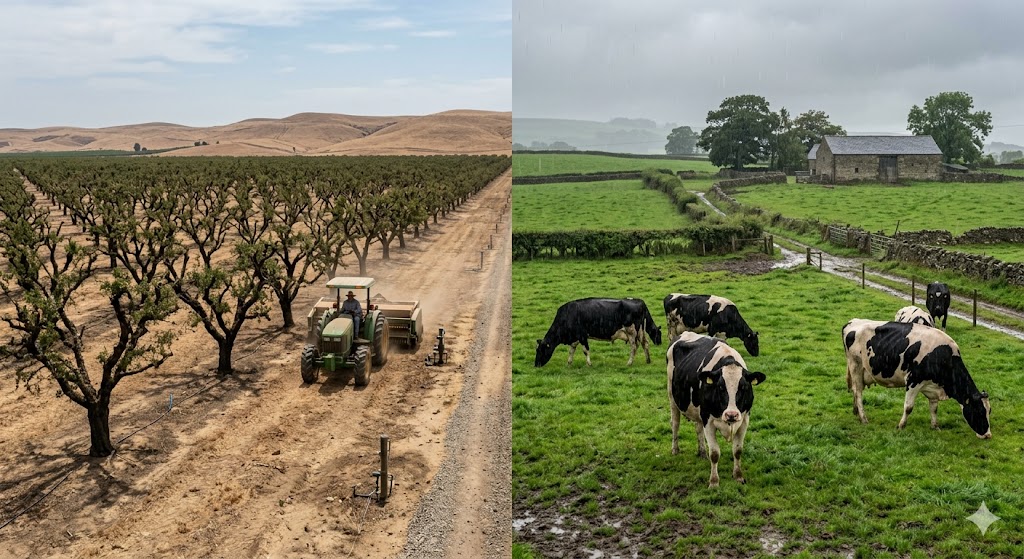
The funniest maths in modern environmentalism. One almond requires 12 litres of irrigated water to produce. Peer-reviewed, ScienceDirect, 2017. A glass of almond milk contains roughly 50 of them. 600 litres of water before the carton is filled. The water comes from the San Joaquin Valley in California, which sits over one of the most over-extracted aquifers on earth. The valley floor has subsided by up to nine metres in places due to groundwater depletion. The carton is then refrigerated, sailed across the Atlantic, refrigerated again, lorried to a Manchester Tesco, and bought by someone who is concerned about the environmental impact of dairy. Meanwhile, in Cheshire. A British dairy cow drinks roughly 70 to 100 litres of water a day and produces around 28 litres of milk. That's about 3.5 litres of water per litre of milk. The water is rainwater that fell on her field or came from a local stream fed by the same rainwater. The rain was going to fall on the field whether the cow stood in it or not. 80% of her moisture intake comes from the grass itself, which is also rain. She converts the grass, free of charge, into a litre of milk containing seven times the protein and four times the calcium of almond milk, and shipped roughly 18 miles to the same Tesco. To recap. 600 litres of stolen aquifer, flown halfway round the world for nutritionally worthless beige water. Or 3.5 litres of rain that was already falling, converted by an animal you can pet, into actual food. The shopper picks the almond. She has been told this is the ethical position. The aquifer would like a word.
Sama Hoole tweet media
English
289
5.2K
14.8K
298.3K
Richard Findlay retweetledi
Sama Hoole
Sama Hoole@SamaHoole·
It's not vegan leather. It's plastic. It's not oat milk. It's a beverage made by enzymatically processing oat starch and emulsifying it with rapeseed oil. It's not vegan cheese. It's coconut oil, modified starch, and titanium dioxide pressed into a slice. It's not plant-based meat. It's pea-protein isolate, seed oils, and methylcellulose extruded into a patty. It's not a butter alternative. It's an industrial spread invented by a soap company. It's not a milk alternative. It's water with oats and additives, sold for double the price of milk. Every product on the plant-based shelf has been linguistically rebranded to borrow the legitimacy of the food it replaced. The cow has not been consulted on the use of her name. The sheep has not consented to the term vegan wool. The marketing department in London has consented to all of it. The animals predate the marketing department by ten thousand years. The marketing department will be gone before the animals will.
English
79
1.5K
4.3K
96.1K
Richard Findlay retweetledi
Sama Hoole
Sama Hoole@SamaHoole·
Activist: "Beef uses an obscene amount of water. Fifteen thousand litres per kilo." Farmer: "Where did the water come from?" Activist: "What?" Farmer: "The fifteen thousand litres. Where was it before it was on the bill." Activist: "I don't know. A river?" Farmer: "The sky. About ninety-four percent of that figure is rain that fell on the field and got drunk by the grass. The cow ate the grass. The rain was on its way down whether the cow was here or not." Activist: "But it still counts as water used." Farmer: "By the grass. Which would have used it whether I farmed or moved to Spain. The cow isn't commissioning the rainfall. The rain isn't on the cow's payroll." Activist: "Then just don't have the cow." Farmer: "The rain still falls. The grass still drinks it. The water cycles back into the air anyway, just without anyone getting fed in the middle." Activist: "It's not that simple." Farmer: "It's rain, grass, cow, river. Or it's rain, grass, rot, river. Same circle, fewer dinners. Meanwhile every almond in your milk took a gallon of pumped aquifer water in California to grow. That one you might want to worry about. The rain in Wales is doing fine without your concern."
Sama Hoole tweet media
English
209
4.4K
20.6K
1.4M
Richard Findlay retweetledi
Sama Hoole
Sama Hoole@SamaHoole·
Activist: "Your cows are putting carbon into the atmosphere." Farmer: "Where did they get it?" Activist: "What?" Farmer: "The carbon. Where did the cow get it before it put it anywhere." Activist: "From... eating?" Farmer: "From eating grass. And where did the grass get it." Activist: "The soil?" Farmer: "The air. The grass pulled it out of the air last spring. The cow ate the grass. The cow breathed some of it back out. It went back into the air it came from." Activist: "But it's still going into the atmosphere." Farmer: "It's going back. There's a difference between a thing going somewhere and a thing going back. You've described a circle and you're frightened of it." Activist: "Then just don't have the cow." Farmer: "The grass still dies in autumn. It rots where it falls. The carbon goes back into the air either way, just without anyone getting fed in the middle." Activist: "It's not that simple." Farmer: "It's grass, cow, breath, grass. Or it's grass, rot, air, grass. Same circle, fewer dinners. If that's complicated for you I'd stay away from the water cycle. That one's got clouds in it."
Sama Hoole tweet media
English
2.4K
42.7K
161.5K
5.8M
Richard Findlay retweetledi
Sama Hoole
Sama Hoole@SamaHoole·
Myth: "I only wear vegan fabrics. Better for the animals, better for the planet." Let's check in on Doris's annual contribution. Once a year, in late spring, Doris is sheared. The procedure takes approximately three minutes. Doris does not enjoy it. Doris does not, by any visible measure, suffer from it. Doris is, immediately afterwards, a noticeably more comfortable animal in the British summer. The fleece weighs approximately 3 kilograms. It is sold to the British Wool Marketing Board for, depending on the year, between £0.40 and £2.50 per kilogram. The shearing costs more than the wool fetches. Brian is shearing Doris at a loss. The wool is then: - Naturally flame-retardant - Naturally antibacterial - Moisture-wicking - Biodegradable - Renewable, annually - Carbon-storing while in use The replacement, in performance fabrics: - Polyester - Polyamide - Acrylic - Polypropylene - All petroleum-derived - All shedding microplastics on every wash - All requiring fossil fuel inputs to produce - All non-biodegradable, with a typical landfill lifespan of 200-500 years A single wash of a polyester fleece can release up to 700,000 microplastic fibres into the water system. These fibres are now in: every tested water source on earth, every tested human placenta, every tested rainfall sample, the deep ocean, the Arctic ice, and the lungs of marine mammals. A single wash of a wool jumper releases: nothing. The wool, when eventually disposed of, returns to soil within a few years. The fabric being marketed as the "ethical" alternative to wool is plastic. The plastic is "ethical" because nobody has been asked to slaughter the polymer. The polymer also has not been asked. Doris, by being a sheep on a fell, is producing the most thoroughly sustainable performance fabric humans have ever made. Brian is selling it at a loss. The fashion industry, meanwhile, is selling petroleum at a profit and calling it ethical. Reject plastic. Wear wool. Doris is, this morning, growing next year's batch.
Sama Hoole tweet media
English
272
3.3K
12K
183.5K
Richard Findlay retweetledi
Sama Hoole
Sama Hoole@SamaHoole·
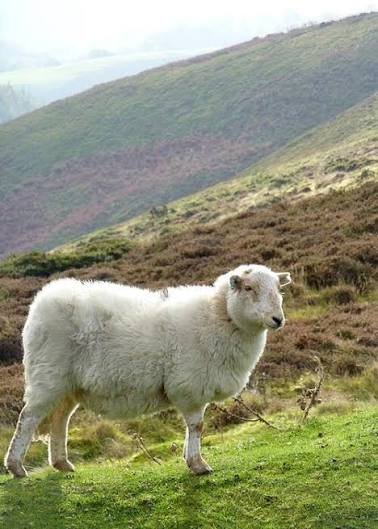
A sheep eats grass on a Welsh hillside where nothing else will grow. The slope is too steep for a tractor, the soil too thin for a plough, the rainfall too relentless for crops. In return it provides: - Wool (renewable clothing that biodegrades back into soil) - Meat (complete nutrition in one package) - Lanolin (waterproofing, cosmetics, leather conditioning) - Sheepskin (insulation, clothing, rugs that outlast the sofa) - Bones (tools, broth, fertiliser) - Manure (soil building, free of charge) All from grass on terrain that no other food system can touch. The environmental alternative is petroleum-based fleece that sheds microplastics into every river, synthetic insulation spun from fossil fuels, and food imported from industrial agriculture that's busy turning prime farmland into dust. But the sheep grazing on a cliff in Snowdonia is the problem. Make it make sense. I'll wait.
Sama Hoole tweet media
English
13
325
1.2K
9.6K
Richard Findlay retweetledi
Sama Hoole
Sama Hoole@SamaHoole·
The British cow is a controversial figure in modernity. She stands on a hillside in Cumbria, in weather that nothing else in the food system can survive, and people would like her to stop. Stop doing what, exactly, is rarely specified. Stop existing, mostly. Stop breathing. Stop being a cow. She eats grass. Specifically, she eats grass that grows on land where wheat would lie down and weep, where soya would never germinate, where vegetables would be a hobby project rather than a food source. Sixty-five percent of British agricultural land cannot grow human food directly. The cow is the conversion mechanism. She turns sunlight, rain, and cellulose, none of which we can digest, into protein, fat, and minerals, all of which we built our species on. She stands under rain that was going to fall whether she stood under it or not. The rain hits the grass. The grass photosynthesises. The cow eats the grass. The cow makes manure. The manure feeds the soil. The soil grows the grass. The cycle is roughly ten thousand years old in these isles and was working perfectly well before anyone had a spreadsheet. She produces a food matrix that no laboratory has ever replicated and no plant has ever come close to. Complete protein. Heme iron in the form your body actually absorbs. B12, which exists nowhere else in nature. Zinc that doesn't fight phytates for the privilege of being absorbed. Vitamin K2 in the precise form that escorts calcium into bone rather than into your arteries. Conjugated linoleic acid. Choline. Selenium. The fat-soluble vitamins in concentrations that grain has spent centuries pretending to match. She does this on a hillside. In the rain. On her own. The arguments against her are remarkable for what they leave out. They leave out the topography. They leave out the rainfall. They leave out the soil depth. They leave out the fact that "just grow vegetables instead" is a sentence written by someone who has not seen the Pennines in February. They leave out that the alternative is not a thriving arable landscape but an abandoned one, scrubbing over, the skylarks gone, the wildflowers smothered, the soil compacting under bracken until nothing wants to live there at all. The cow is not the problem. The cow is the answer to a problem most of her critics didn't know existed. She has been on this hillside, in some form, since the Bronze Age. She will be on it after the next thirty news cycles have moved on to whatever comes next. The cow on the hillside is the quiet centre of a system that took ten thousand years to build and could be dismantled in twenty. Worth a moment's thought, before joining the chorus that wants her gone.
Sama Hoole tweet media
English
23
301
994
10.5K
Richard Findlay retweetledi
Sama Hoole
Sama Hoole@SamaHoole·
Activist: "Going vegan would save the planet." Farmer: "From what?" Activist: "Cattle. They're destroying it." Farmer: "Which bit?" Activist: "All of it." Farmer: "Including this hillside?" Activist: "Yes." Farmer: "Right. Grow me a wheat field on it." Activist: "Then rewild it." Farmer: "It was grazed by aurochs." Activist: "Aurochs are extinct." Farmer: "Yes. The cows noticed." Activist: "But the methane." Farmer: "The aurochs had that covered too." Activist: "We need plant-based alternatives." Farmer: "Smashing. Plant something." Activist: "On this?" Farmer: "On this." Activist: "It's a slope." Farmer: "It is." Activist: "Nothing would grow." Farmer: "Nearly there."
Sama Hoole tweet media
English
5
114
822
15.9K
Richard Findlay retweetledi
Sama Hoole
Sama Hoole@SamaHoole·
A wool jumper, made in 1985, washed in cold water once a month, worn through three decades of British winters, would currently be sitting in someone's wardrobe doing fine. A polyester fleece, made in 2026, machine-washed weekly, will start to lose its structural integrity within three to five years, shed an estimated 700,000 microfibres per wash into the water system, and end its life in landfill where it will persist for approximately 200 years. The wool jumper: - Came from a sheep - Required grass and rain - Will biodegrade entirely within three years of being buried - Will keep you warm when wet - Will not melt if exposed to a flame - Will probably outlive you - Cost £80 in 1985, which is £230 today, and represents the entire jumper budget for the next forty years The polyester fleece: - Came from an oil refinery in Texas - Required hexane extraction, polymerisation and dyeing in three different factories on three different continents - Will not biodegrade in any human timeframe - Will get cold and clammy when wet - Will melt against your skin if exposed to a flame - Will be in landfill within five years - Cost £40 in 2026, which means you'll buy ten of them across the next forty years for a total of £400, and the planet will still be eating the residue in the year 2226 But yes. The sheep is the problem. The sheep, standing in a field in mid-Wales, growing a renewable fibre from grass and rain. The sheep is the problem.
Sama Hoole tweet media
English
451
5.4K
18.6K
296.1K
Richard Findlay retweetledi
Sama Hoole
Sama Hoole@SamaHoole·
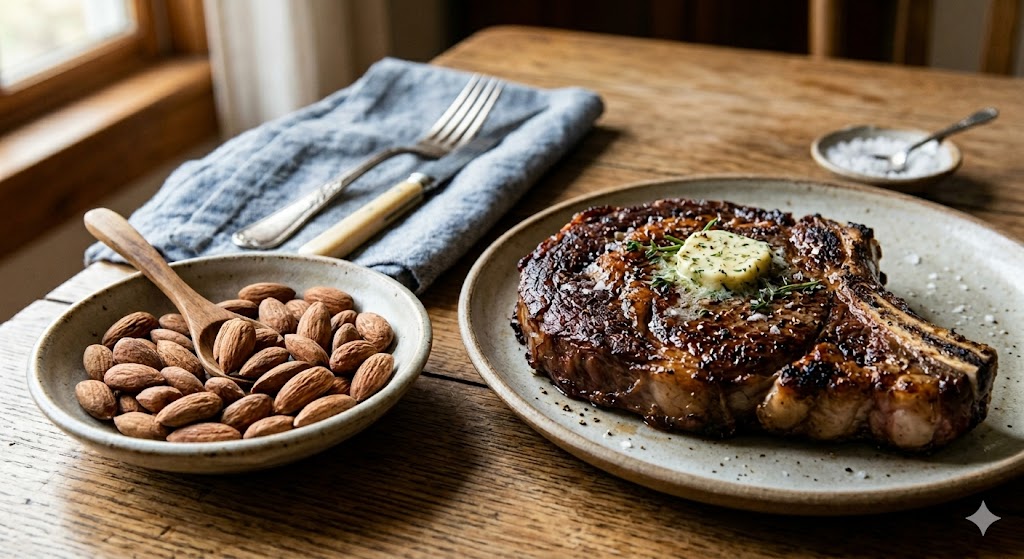
The almond vs the cow. The almond: - Grows in a desert. - Needs water the desert doesn't have. - Drains a prehistoric aquifer to get it. - The ground above that aquifer is now sinking. - Requires 70% of America's commercial bee population trucked in every February. - The bees don't come back the same. - Cannot survive without heavy fungicide application. - 50% fat of mostly linoleic acid, an omega-6 that sits in your cell membranes and oxidises under stress. - Also contains oxalates, phytic acid, and protease inhibitors. One anti-nutrient apparently wasn't enough. - Has no B12. No creatine. No carnitine. - Gets shipped six thousand miles in a refrigerated container. - Is described as a superfood. The cow: - Stands in a field. - Eats the grass. - The grass grew because it rained. - The rain required no infrastructure. - Complete protein. Fully absorbable. - B12, zinc, haem iron, creatine, carnitine, and every fat-soluble vitamin your brain has been waiting for. - Zero oxalates. Zero phytic acid. Zero protease inhibitors. - Has been building strong humans for ten thousand years. - Has an ingredients list of one item. The sad little nut that drains aquifers and kills bees, or the walking multivitamin that built civilisation. We chose the nut.
Sama Hoole tweet media
Sama Hoole@SamaHoole

Can someone please explain, in very simple language, how growing almonds in a Californian desert, draining the local aquifer until the ground subsides, spraying the entire crop with fungicides because almonds can't survive without them, killing off the commercial bee population in the process, then refrigerating the harvest and shipping it six thousand miles to Britain is environmentally friendly, but buying a piece of beef from a farmer twelve miles down the road, whose cattle eat the grass that grows in the rain that falls on the hills that have been there since before anyone had opinions about this, is a planetary emergency? Asking for the cow.

English
14
120
428
11.4K
Richard Findlay retweetledi
Matthew Blair
Matthew Blair@ThrimbyFarms·
💥💥💥Going to be a millionaire 💥💥💥 Carbon capture machine incoming… Share, tag do whatever, i’m on to something… Move over Ed. I’ll take the £650k to teach defra…
English
30
267
918
11.7K
Richard Findlay retweetledi
No Farmers, No Food
No Farmers, No Food@NoFarmsNoFoods·
The University of Nebraska has debunked the onesided manipulation behind cow farts/burps and methane emissions: “They have not accounted for the capture part, they only account for methane being released. Carbon capture in soil and grass - helped out by cow grazing and manure - can far outweigh the emissions from cattle. Grasslands can take up more CO2 and carbon in the soil and plants, that offsets the CO2 that cattle are producing but it also offsets the methane.”
English
69
964
3.1K
37.2K
Richard Findlay retweetledi
Dave
Dave@DaveKent101·
This is hilarious - Keir Starmer sings the Barry Manilow classic “Oh Mandy”…🤣🤣🤣
English
342
2.6K
7.2K
588.1K
Richard Findlay retweetledi
No Farmers, No Food
No Farmers, No Food@NoFarmsNoFoods·
“Farmers are fighting for food sovereignty and against the corporate takeover of farming at the expense of family run farms. They are fighting not just for themselves but for all of us. There’s nothing right-wing about this. These are the things that the left used to fight for.”
English
14
277
919
9.7K
Richard Findlay retweetledi
Tim Farron
Tim Farron@timfarron·
By 2028, the average hill farm income will only be 55% of the national minimum wage. And now the Government is forcing those farmers to pay a huge inheritance tax bill. This is a disaster for our environment and our nation's food security. I'll keep fighting for our farmers.
English
64
299
1.3K
29K