HRH

12.1K posts

HRH banner
HRH

HRH

@RH13schb

Interested in Reading on History, Fiction, Cricket, Humour, Spirituality, Tech & Science. Retweets are not my views.

Bangalore Katılım Nisan 2010
1.7K Takip Edilen166 Takipçiler
Sagar_H 🏏
Sagar_H 🏏@SagarH62·
Only real cricket fans will get this one 👀🏏 No Google. No hints. Who is he? 👀
Sagar_H 🏏 tweet media
English
1K
20
191
100K
HRH
HRH@RH13schb·
@kolappan Dravidian ideology and propaganda in a nutshell 😄
English
0
0
0
7
B. Kolappan
B. Kolappan@kolappan·
How to survive in politics? கல்லாத ஒருவனை நான் கற்றாய் என்றேன் காடெறியும் மறவனை நாடு ஆள்வாய் என்றேன் பொல்லாத ஒருவனை நான் நல்லாய் என்றேன் போர்முகத்தை அறியானைப் புலியேறு என்றேன் மல்ஆரும் புயம் என்றேன் சூம்பல் தோளை வழங்காத கையனை நான் வள்ளல் என்றேன் இல்லாது சொன்னேனுக்கு இல்லை என்றான் யானும் என் குற்றத்தால் ஏகின்றேனே! AI translation “I called an unlearned man a scholar I called a forest-roaming warrior fit to rule a nation. I called a wicked man good. I called one who knew nothing of battle a tiger-like hero. I praised weak shoulders as mighty like those of a wrestler. I called a miser, whose hands never gave, a great philanthropist. I spoke of qualities that did not exist in him; yet he said he had nothing for me. Realizing my own fault, I now leave in shame.”
தமிழ்
7
15
62
4.7K
HRH
HRH@RH13schb·
@sanjayuvacha Why don’t you complete your story, that Jinnah was appalled with Gandhi for support Khilafat movement and accused him of hobnobbing with communal elements to gain Muslim support ? This was the beginning of “secular” politics in India.
English
0
0
1
12
SANJAY HEGDE
SANJAY HEGDE@sanjayuvacha·
"Essentials of Hindutva" was written in 1923 a full decade before Chaudhry Rehmat Ali proposed the name Pakistan in 1933. Jinnah came into the seperatist cause later. He was Gokhale's secretary and Tilak's lawyer. He grew his politics as a representative of the Muslims of undivided India and made it to the Viceroy's council. His advocacy of a separate Pakistan was a post 1935 phenomenon once the Congress governments refused to share power. I do not defend his post 1940 trajectory, but one must dispassionately examine historical events against the timeline which they emerged from. For example when the history of the metamorphosis of the Secular Indian Republic into a Hindu first Rashtra is written, we would have to relate the complicity of Hindu minded Congress politicians, from Gobind Vallabh Pant, whose government allowed the installation of the Rama idol in the Masjid, to the people who advised Rajiv Gandhi to get the locks removed, to the Advani Rath Yatra and the riots following the demolition, the Bombay blasts, the Godhra train , to the dominance of the Modi era. History is not linear, not even an arc, but sometimes it seems to be a spiral.
Parag Hede पराग हेदे 🙏@Indepthcomments

Hindutva came into being precisely because of Jinnah and how Cong was playing it soft with Jinnah. The appeasement politics of Congress is as old as the party even when Jinnah was an active Congress member. And this is the reason BJP today is relentlessly targeting Muslims because of old Cong appeasment politics.

English
49
181
404
32.7K
HRH
HRH@RH13schb·
@kolappan She did far worse during the emergency
English
0
0
1
14
B. Kolappan
B. Kolappan@kolappan·
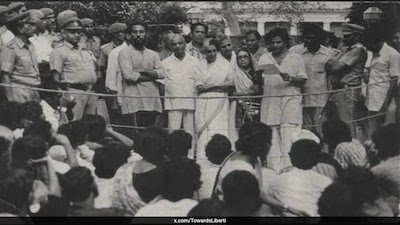
The photograph of late CPI(M) leader Sitaram Yechury reading out a statement in the presence of former Prime Minister Indira Gandhi conveys a lot and seems unthinkable today. Knowing well that Jawaharlal Nehru University had become a breeding ground for Left intellectuals and leaders, she could have brutally suppressed them and changed the atmosphere on the campus. But the purpose of a university is to nurture a liberal political environment without compromising academic excellence. Perhaps she realised this, even though she was the one who imposed the Emergency. Some values still persisted then. Not anymore.
B. Kolappan tweet media
English
5
24
100
4.5K
HRH
HRH@RH13schb·
@saravofcl There is no philosophy called Dravidam ! Bullshit is your ideology, if there is no discrimination by birth, then how are Stalin & Udhayanidhi heading the party ? Why are all the sobs, daughters of your top leaders inheriting MP, MLA seats ?
English
0
0
1
18
HRH retweetledi
Military Observer
Military Observer@TheMilObserverr·
An Indian journalist asked Marco Rubio about Trump calling India a hellhole.🇮🇳 The journalist asked Rubio about racist remarks made against Indians in the United States. Rubio looked genuinely caught off guard. "Who said that?" The journalist replied calmly You know who. Rubio still fumbling asked again Who made those comments? The journalist still did not say the name. That pause lasted long enough to go viral on its own. Rubio replied Every country in the world has stupid people. I'm sure there are stupid people in the United States who make dumb comments all the time. America's Secretary of State just indirectly called his own President stupid. On camera In New Delhi, In front of Jaishankar and the Media. Nobody had a better week than that Indian journalist. 🇮🇳
English
69
572
2.6K
326.6K
HRH
HRH@RH13schb·
@Aabhas24 @patrollate @timesofindia Wow ! The take down of the flippant history writer Parvati Sharma is complete with facts, excerpts from direct source. The days of peddling narratives in history are long over. Professionals decode from direct sources, do not rely on western interpretations or seek their approval
English
0
0
1
23
Aabhas Maldahiyar 🇮🇳
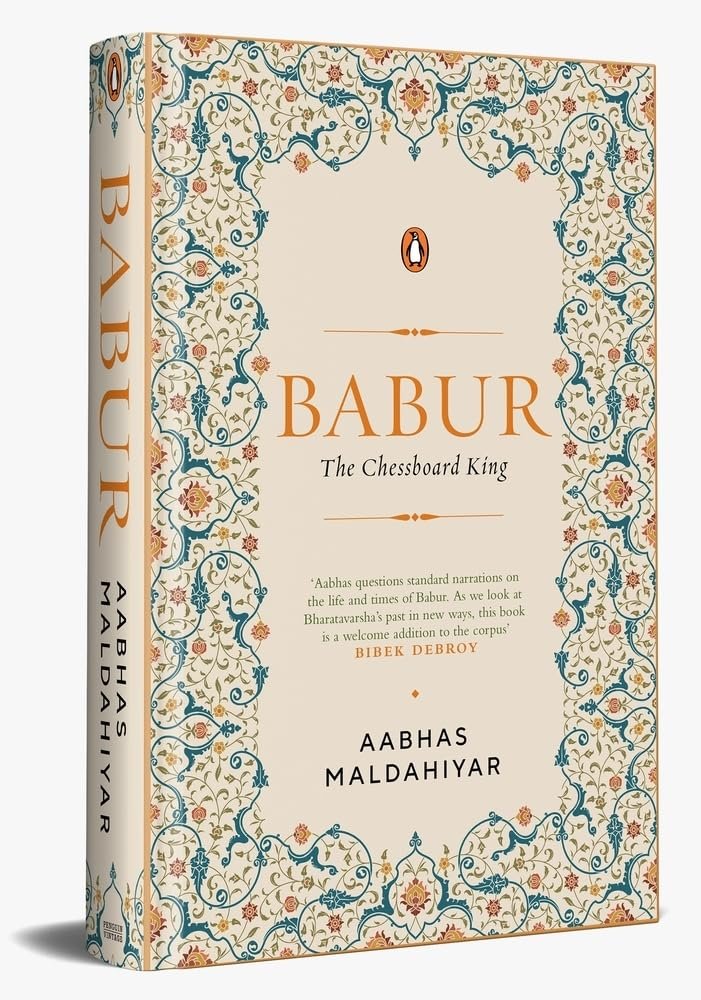
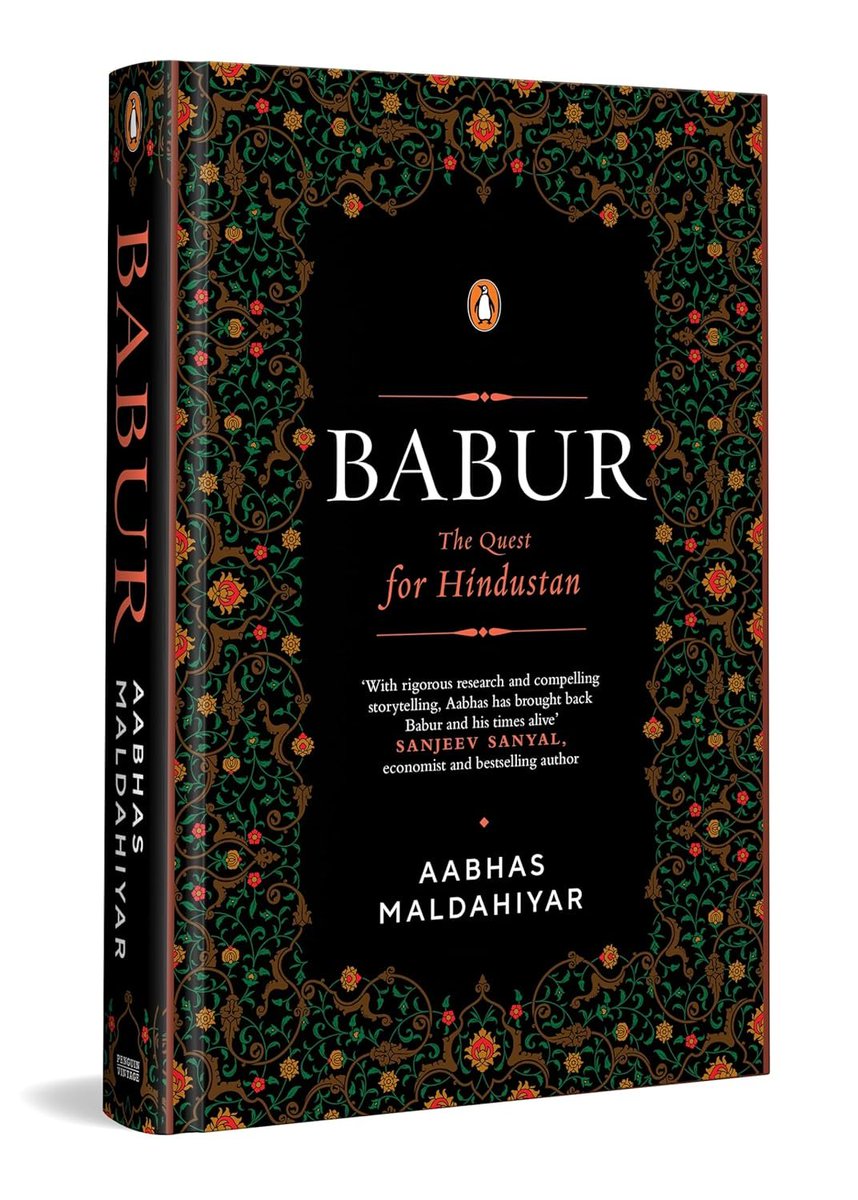
#SadarPranam @patrollate ji! Read your piece in @timesofindia today glorifying Babur. As someone who has spent years studying Babur and writing his biography, I felt it deserved a rebuttal since your piece is highly uniformed. So, here is a point-wise response to your piece. 1) You invoke the Battle of Panipat, yet conveniently omit Babur’s use of Panipat’s villages as human shields (see Baburnama, Persian folio 264). So yes, the Battle of Panipat is indeed a matter of anguish for me. It is difficult to romanticize a battlefield when the cries of ordinary people are buried beneath narratives of conquest; though that discomfort, it appears, does not seem to trouble you, or perhaps you did not even know about it. 2) You bring up the Taj and then drag in the familiar debate surrounding the so-called RW claim that it was a temple. The reality is simpler and more nuanced: neither was it a temple, nor was it necessarily a structure conjured entirely from nothing. I have already discussed this in detail in a podcast with @kushal_mehra. Here, I will not enter into the debate on whether Shah Jahan built it entirely from scratch; I will address that separately through primary sources in my upcoming work on Shah Jahan in the years to come. Economically, however, the Taj commissioned in 1631 reportedly cost 41.8 million silver rupees, at a time when a farmer’s family survived on roughly one Dam a day and one rupee equaled forty Dams (Shireen Moosvi, The Economy of the Mughal Empire, C.1595: A Statistical Study, 301). This coincided with the devastating Deccan Famine of 1630–32, which claimed around 7.4 million lives (A famine in Surat in 1631 and Dodos on Mauritius: a long lost manuscript rediscovered. R. Winters, J. P. Hume, M. Leenstra. 1, s.l.: The Society for the History of Natural History, 2017, Archives of Natural History, Vol. 44, pp. 134–50), worsened by imperial campaigns that ravaged Malwa and the Deccan, leaving “scarcely a vestige of cultivation,” as chroniclers recorded. I was shaken after reading the agony of the people and, surprisingly, court chronicler Abdul Hamid Lahori did not attempt to drape silk over suffering or bury horror beneath royal praise (Abdul Hamid Lahori, Badshahnama; Henry Miers Elliot (ed.), John Dowson, The History of India, as Told by Its Own Historians, London: Sh. Mubarak Ali, 1867–77, Vol. VII, p. 12): "Inhabitants were reduced to the direst extremity. Life was offered for a loaf, but none would buy. Dog’s flesh was sold for goat flesh. The pounded bones of the dead were mixed in flour and sold. Men began to devour each other, and the flesh of a son was preferred to his love. The number of deaths caused obstructions in the roads. Those lands which had been famous for fertility and plenty of resources retain no traces of production." Peter Mundy, the seventeenth-century British traveler and merchant who visited the region during the famine, wrote in his diary (Peter Mundy, The Travels of Peter Mundy in Europe and Asia, 1608–1667, Vol. II, pp. 40–48): "Surat (Gujarat)- Great famine, highways unpassable, infested by thieves looking not for gold but grain; Kirka- Town empty. Half inhabitants fled. Another half dead; Children sold for 6 dams or given for free to any who could take them so they might be kept alive; Nandurbar (Maharashtra)-No space to pitch a tent, dead bodies everywhere. Noisome smell from a neighboring pit where 40 dead bodies were thrown. Survivors searching for grains in the excrement of men and animals. Highway stowed with dead bodies from Surat to Burhanpur." He gives complete details of how the Timurid lords were treating people. He further wrote (Peter Mundy, The Travels of Peter Mundy in Europe and Asia, 1608–1667, Vol. II, pp. 40–48): "In Bazar lay people dead and others breathing their last with the food almost near their mouths, yet dying for want of it, they not having wherewith to buy, nor the others so much pity to spare them any without money. There being no course taken in this Country to remedy this great evil, the rich and strong engrossing and taking perforce all to themselves." While famine devoured the countryside, Shah Jahan’s imperial camp remained stocked, insulated, and abundant, with supplies flowing in from all directions. Even amid this devastation, taxes continued to be extracted. Timurid revenue demands were among the heaviest in the world, often taking more than half of peasant produce, compared to systems such as Vijayanagara that took roughly one-sixth. Records also suggest that nearly 62 percent of revenue was spent on merely 665 court elites (Irfan Habib, ‘Agrarian Relations and Land Revenue’, The Cambridge Economic History of India, p. 242). Coupled with devastated cultivation, diversion of resources, and failed rains, the famine of 1630–32 claimed around eight million lives. Through this lens, the Taj, celebrated as a monument of imperial glory, begins to cast a far darker shadow. 3) She argues that people are trying to erase Babur. That is a rather curious; and frankly weak ; argument. I am someone often seen as a Hindutva ideologue, yet I spent years learning the Persian of that era and wrote a 1000-page biography on Babur precisely so that I could read the Baburnama firsthand. One does not spend years studying a figure one seeks to erase. And of course, Babur cannot be erased. History is not a blackboard to be wiped clean at convenience. But history also cannot become a selective mirror where only flattering reflections survive. You make the point that Babur was a “throneless king” at the age of eleven. That is inaccurate. According to Baburnama, Babur assumed the title of Padshah only in 1507. Prior to that, he was regarded as an Amir, not a sovereign king in the fuller imperial sense. Nobody denies that Baburnama presents him as a poet, a refined literary mind, an avid drinker, and a man with varied personal dimensions. But one cannot conveniently read only those pages while shutting the rest of the manuscript. The Baburnama also records Babur as a Ghazi (Folio 325), expresses his hostility toward Hindus (Folio 316b), contains passages where he speaks of destroying Hindu gods and goddesses like vessels of wine (Folio 313), and records comparisons with figures such as Ghazni and Ghauri. His memoirs also contain references to his emotional and personal attachments, including those concerning Baburi, which historians have long discussed. He was a gay, only to turn bisexual later. As for invoking eleven years of age as though it alone grants extraordinary historical distinction, let us remember that age by itself is not achievement. Prithviraj Chauhan became king at around eleven and went on to live a legendary life defending his realm. There are numerous examples of rulers displaying remarkable courage at very young ages. One cannot forget Chhatrapati Shivaji, who challenged powerful established rule, issued a Sanskrit royal seal, and consciously reduced the dominance of Persian in state correspondence. Bappa Rawal too is remembered in traditions as displaying extraordinary military leadership at a remarkably young age. 4) You say that the first thing Babur did upon arriving in Agra was create gardens. I am not sure you have examined what the original manuscript of the Baburnama itself records. According to the same text, after reaching Agra there was a massive distribution of wealth and spoils among Babur’s circles. The wealth was also transported to Samarkand, Khurasan, Kashghar, Iraq, Mecca, and Medina (Baburnama, folio 294). Curiously, this part of the story rarely appears when romantic portraits of Babur are painted. His attitude toward Hindus also emerges clearly in his own words after the Battle of Khanwa, in the context of constructing towers of defeated “Kafir” heads. Baburnama, folio 316b mentions: "All the Hindus slain, wretched and lowly, By matchlock fire, as if under elephants’ might, Piles of their bodies rose like hills, From each mound, a fountain of flowing blood." Now coming to the point on Charbagh at Agra: the passage you refer to appears in folio 300, which comes six folios after Babur had already discussed the movement and distribution of loot in folio 294. Therefore, if we are reading the Baburnama, it ought to be read in its entirety rather than selectively lifting gardens while quietly passing over the caravans of wealth that preceded them. 5) Then you make the point that Babur came to transform Hindustan, not replace religion. Come on @patrollate, give me a break. After the Battle of Chanderi, Babur explicitly states that he had destroyed Dar-ul-Harb (Baburnama, ff. 334b–335), and yet we are expected to believe that religion had nothing to do with his mission? If one is going to invoke the Baburnama, then one should read all of it, not merely the comfortable portions. You argue that “garden” appears around 40 times in the Baburnama. Interesting. But “Islam” appears around 55 times, and “Kafir” around 15 times. More importantly, numbers alone prove nothing. Context matters far more than word frequency. Battles against non-Muslim rulers are repeatedly framed in the language of jihad in the text. The manuscript itself gives us insight into Babur’s worldview. And he was going to “transform” India? Ma’am, Babur himself tells us that Hindustan attracted him because of its immense wealth, abundant gold and silver, and availability of labor. The idea that he arrived to civilize or transform an empty cultural landscape collapses once one turns to the historical record. Do you know that Shahrukh’s son had sent the ambassador Abdur Razzaq, who was astonished by the scale and prosperity of Vijayanagar? He found it grander than anything familiar to him from his own world. Razzaq described a city enclosed by seven concentric stone fortifications, containing not merely structures but vast orchards, gardens, and thriving spaces of life. The city seemed to expand through greenery as much as through stone. Flowers perfumed broad markets and were considered as indispensable as food itself. To him, Vijayanagar was not merely a seat of power; it was a landscape where prosperity itself had taken root. And long before Babur ever set foot in Hindustan, Kalidasa spoke of pleasure gardens. The Ramayana and Mahabharata describe expansive and beautiful gardens. The Mauryas had elaborate systems of gardens. The Guptas too possessed a sophisticated understanding of landscape and aesthetics. Evidence from the Saraswati–Sindhu civilization also points toward planned settlements with cultivated spaces. I could go on endlessly about gardens in ancient and early medieval India. So please do not advance this rather strange argument that Babur arrived with some civilizational mission to teach India the idea of gardens. Babur himself admits that back home major architectural undertakings were constrained by limitations in skilled labor. He did not enter Hindustan with a mission to transform it; he came because Hindustan was already enormously rich, already flourishing, and already possessed traditions far older than him. Of course, none of us can erase Babur, nor should history be approached through erasure. His invasion of India and the chain of events it set into motion remain part of our historical memory. For many, he will continue to be remembered not as a civilizational benefactor, but as an antagonist who entered Hindustan with political and religious ambitions, the consequences of which shaped some of the darkest chapters of our past. His successors, in different ways and to varying degrees, carried forward parts of that legacy. And FYI, the claim that these rulers saw Hindustan as their natural home is something I have addressed at length in the introduction section of my book Babur: The Quest for Hindustan, through references drawn from primary sources and contemporary records. I would request @toi to provide me space to publish a detailed rebuttal supported by primary sources, because history deserves engagement through manuscripts and evidence rather than selective remembrance. And for those who genuinely wish to understand Babur beyond social-media caricatures and selective narratives, I would recommend going through my volume works on Babur (images attached) based on primary sources.
Aabhas Maldahiyar 🇮🇳 tweet mediaAabhas Maldahiyar 🇮🇳 tweet media
Aabhas Maldahiyar 🇮🇳@Aabhas24

Dear @timesofindia , I’ll like to write a rebuttal to this piece by @patrollate . Would you be open to this?


English
25
229
465
17.2K
HRH
HRH@RH13schb·
@TUnlimitedd Hope & Pray ICC realises the importance of Test Cricket, popularise bilateral series among top Test playing nations, improve in stadia facilities for spectators watching Test Cricket, incentivise boards to develop Test pitches of character, neither underprepared nor flat decks
English
0
0
1
15
Troll cricket unlimitedd
Troll cricket unlimitedd@TUnlimitedd·
"If we lose test cricket, we will lose the cricket we truly know. History remembers legendary test careers not franchise triumphs. Cricket without Tests has no real meaning. Winning a T20 World Cup may put you at the centre of world cricket today, but whether that is truly good for the game remains open to debate. Test cricket earned its name because it challenges every quality a player possesses, technique, patience, temperament,endurance and character. It is not simply about clearing the ropes for entertainment; It is about battling through pressure, adapting to conditions, and surviving the physical and mental demands of five intense days" - Sir Ian Botham
Troll cricket unlimitedd tweet media
English
147
393
2.3K
150.3K
HRH retweetledi
𑀓𑀺𑀭𑀼𑀱𑁆𑀡𑀷𑁆 🇮🇳
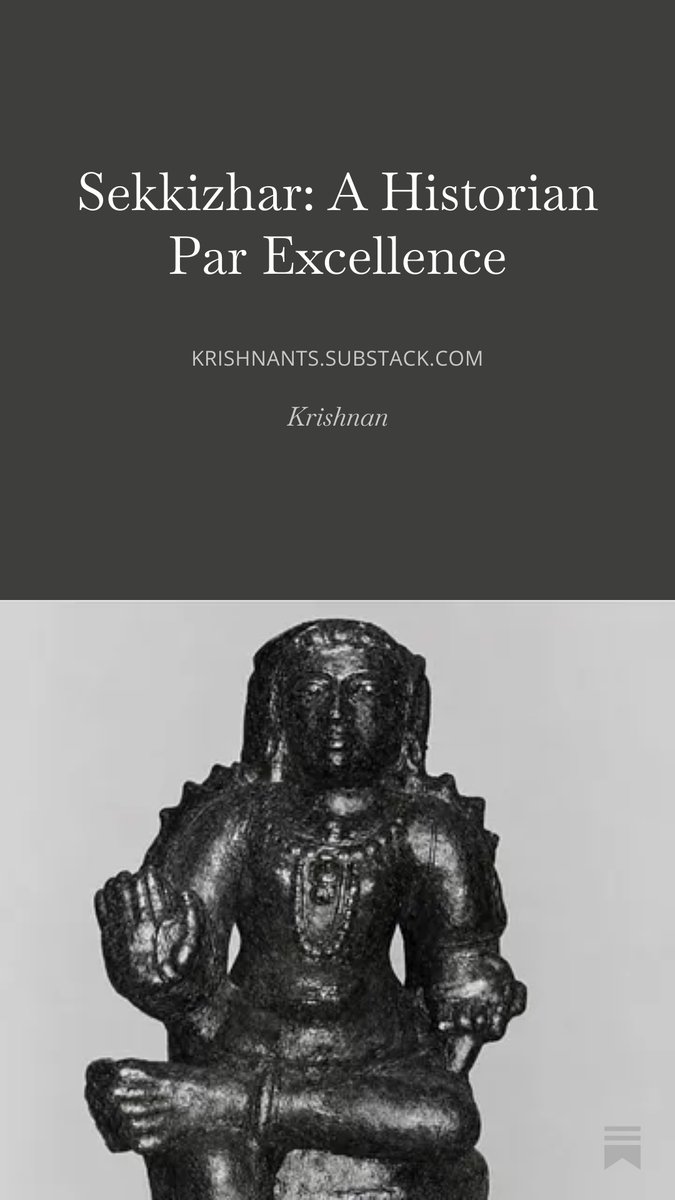
Sekkizhar is a revered Saiva saint who composed the great Periya Puranam, the life history of the 63 Saiva saints. But beyond the saint-poet, there was also a historian in him. His work is filled with remarkable historical references, showing the depth of research behind his composition. Here are some of them. krishnants.substack.com/p/sekkizhar-a-…
𑀓𑀺𑀭𑀼𑀱𑁆𑀡𑀷𑁆 🇮🇳 tweet media
English
14
122
347
12K
HRH
HRH@RH13schb·
@kolappan They said this in 1967, MGR continued to sway voters for 2 decades.
English
0
0
0
4
B. Kolappan
B. Kolappan@kolappan·
DMK president M. K. Stalin compared voters’ fascination for actor Vijay to a child’s fascination with a new doll. “If children see a new doll, they will want to have it. But within two days they will get bored and throw it away. In a similar manner, people have voted for their favourite actor who launched a party. Soon they will lose interest in the doll. Like a child longing for its mother, they will search for the DMK,” he said. Mr. Stalin said what had happened in Tamil Nadu was “not a political tsunami, but a cinema tsunami”. “The glitter of cinema has been capitalised on to lure voters. But they are not able to attract everyone,” he said.
English
34
39
260
22.1K
Nimal Raghavan
Nimal Raghavan@being_nimal·
நாம் சீரமைத்த புதுக்கோட்டை மாவட்டம் ஆவுடையார் கோவில் வட்டம் பொய்யாதநல்லூர் ஏரி💫
தமிழ்
33
298
1.4K
25.4K
HRH
HRH@RH13schb·
@DrPraveenwrites Never underestimate the powers of @saravofcl ! He just laughed his party out of Government, how many could do this ?
English
0
0
1
8
Dr. Praveen Vijaykumar
Dr. Praveen Vijaykumar@DrPraveenwrites·
Vaa Saravanaa Vaa – DMK should be the last party to lecture anyone about Law & Order! Indhaa Vaainko Saravanaa! • Cyanide allegedly found in government liquor • Ganja menace spreading across the State • Synthetic drugs menace • Rising crimes linked to intoxication • Vengaivayal incident • Nanguneri incident • Marakkanam illicit liquor deaths (around 14) • Kallakurichi illicit liquor deaths (around 65) • Murder of Armstrong, the state president of a national party • Honour killing of Dalit youth Kavin • Women’s safety becoming a complete laughing stock -a lady police officer allegedly molested during a DMK conference itself • Anna University scandal • Samsung protests • Agitations erupting from every corner - nurses, teachers, government staff, everyone • Increasing lock-up deaths • Air show tragedy where 5 civilians reportedly died due to dehydration • Jaffar Sadiq drug scandal And after all this, DMK still wants to speak about governance and law & order with a straight face? See you next time, Saravanaa! @saravofcl
English
7
9
28
2.4K
HRH
HRH@RH13schb·
@amaruvi Very well written, brings clarity to the centuries old dispute. The differences may get resolved but larger worry is the gradual diminishing of this heritage. Dare I say, Sri Vaishnavas could perhaps take a leaf out of Smartha’s worship of duality, Easwaran & Perumal, for harmony
English
1
0
1
9
HRH
HRH@RH13schb·
@ambkcsingh Indeed, a solace & refugee for socialist and social justice warriors who warded off the capitalist & communal threats so bravely for decades. Barbarians are at the gate now, eager to pull the edifice down…😄
English
0
0
0
2
K. C. Singh
K. C. Singh@ambkcsingh·
Apropos Union Gov’s decision to destroy #DelhiGymkhanaClub my views: 1. I joined it in 1978/79 (applied in 1974). My father wasn’t a member. 2. Only all-India services & military officers got membership routinely. 3. The club, besides its other services, was famous for its tennis & squash facilities. Famous writer/journalist Khushwant Singh played tennis there till his 90s 4. The elected committees may’ve performed poorly, making gov nominate members. 5. As my old friend @thekiranbedi has opined Del Gym Club is a repository of sporting, services & cultural memories. Destroying it is untenable.
English
443
53
320
344.9K
HRH
HRH@RH13schb·
@tnexplorer Indeed, on a recent visit, the popular temple as of Chidambaram, Thirunallaru, Vaitheeswaran kill, Oppiliyappan were all full of devotees but temples like Chandranar koil, few others in Kumbakonam, papanasam were serene, so wonderful with just few people.
English
0
0
1
32
HRH retweetledi
Sabareeswaran Elangovan
TN has 38,615 temples. 🛕 But only a handful get 90% of the tourist traffic. The remaining ones are empty, peaceful, and genuinely ancient.
English
5
7
102
5.2K
HRH
HRH@RH13schb·
@ambkcsingh Oh Please ! You sound more ridiculous than usual. Whom are you trying to fool Sir ? These are places where they meet the moneyed class and get deals done.
English
0
0
0
2
Arata ☀️
Arata ☀️@Moamoriamoi_·
Hadimba Devi Temple, Manali, Himachal Pradesh, India 🛕
Arata ☀️ tweet mediaArata ☀️ tweet mediaArata ☀️ tweet mediaArata ☀️ tweet media
HT
12
67
805
11.2K