Raj

6.5K posts

Raj

Raj

@rkarmani

Agentic until AGI. Dancing forever. Equity: @farmersfridge @first_intel @pisquared Minor: @replit @gumroad @maybe @wefunder $BTC $ETH. Exits @gritdotio @askwhai

Silicon Valley 🌄 Katılım Mart 2009
787 Takip Edilen1.5K Takipçiler
Raj
Raj@rkarmani·
@PaulSpacey This makes sense but will they stay team 2 forever? What can the parents do to prepare for team 1?
English
1
0
0
27
James Melville 🚜
James Melville 🚜@JamesMelville·
PSG 5 Bayern Munich 4 One of the greatest games of football I have ever seen in my life. A game that had everything. Intensity. Flair. Creativity. Pace. Movement. Two teams just going full pelt at each other. A reminder of football being played as the beautiful game. #PSGBAY
English
44
94
1.1K
40.8K
Raj
Raj@rkarmani·
Second Brains are back again
Andrej Karpathy@karpathy

LLM Knowledge Bases Something I'm finding very useful recently: using LLMs to build personal knowledge bases for various topics of research interest. In this way, a large fraction of my recent token throughput is going less into manipulating code, and more into manipulating knowledge (stored as markdown and images). The latest LLMs are quite good at it. So: Data ingest: I index source documents (articles, papers, repos, datasets, images, etc.) into a raw/ directory, then I use an LLM to incrementally "compile" a wiki, which is just a collection of .md files in a directory structure. The wiki includes summaries of all the data in raw/, backlinks, and then it categorizes data into concepts, writes articles for them, and links them all. To convert web articles into .md files I like to use the Obsidian Web Clipper extension, and then I also use a hotkey to download all the related images to local so that my LLM can easily reference them. IDE: I use Obsidian as the IDE "frontend" where I can view the raw data, the the compiled wiki, and the derived visualizations. Important to note that the LLM writes and maintains all of the data of the wiki, I rarely touch it directly. I've played with a few Obsidian plugins to render and view data in other ways (e.g. Marp for slides). Q&A: Where things get interesting is that once your wiki is big enough (e.g. mine on some recent research is ~100 articles and ~400K words), you can ask your LLM agent all kinds of complex questions against the wiki, and it will go off, research the answers, etc. I thought I had to reach for fancy RAG, but the LLM has been pretty good about auto-maintaining index files and brief summaries of all the documents and it reads all the important related data fairly easily at this ~small scale. Output: Instead of getting answers in text/terminal, I like to have it render markdown files for me, or slide shows (Marp format), or matplotlib images, all of which I then view again in Obsidian. You can imagine many other visual output formats depending on the query. Often, I end up "filing" the outputs back into the wiki to enhance it for further queries. So my own explorations and queries always "add up" in the knowledge base. Linting: I've run some LLM "health checks" over the wiki to e.g. find inconsistent data, impute missing data (with web searchers), find interesting connections for new article candidates, etc., to incrementally clean up the wiki and enhance its overall data integrity. The LLMs are quite good at suggesting further questions to ask and look into. Extra tools: I find myself developing additional tools to process the data, e.g. I vibe coded a small and naive search engine over the wiki, which I both use directly (in a web ui), but more often I want to hand it off to an LLM via CLI as a tool for larger queries. Further explorations: As the repo grows, the natural desire is to also think about synthetic data generation + finetuning to have your LLM "know" the data in its weights instead of just context windows. TLDR: raw data from a given number of sources is collected, then compiled by an LLM into a .md wiki, then operated on by various CLIs by the LLM to do Q&A and to incrementally enhance the wiki, and all of it viewable in Obsidian. You rarely ever write or edit the wiki manually, it's the domain of the LLM. I think there is room here for an incredible new product instead of a hacky collection of scripts.

English
0
0
0
273
Raj retweetledi
Stijn Noorman
Stijn Noorman@stijnnoorman·
Dumb people are impressed by complexity. Smart people are impressed by simplicity.
English
313
1.9K
12.7K
226.5K
Raj
Raj@rkarmani·
@Toohey_sp US Clubs need to get more secure about free play. It really expands their customer base
English
0
0
0
51
Jeremy Toohey
Jeremy Toohey@Toohey_sp·
Worked in professional down to youth soccer in Spain 🇪🇸 and noticed: ▪️Development first ▪️Ball mastery starts earlier and higher standards ▪️SSGs are bigger influence ▪️Everything flows through clubs ▪️Free play more encouraged The US 🇺🇸 ▪️Development second ▪️Pay to play (too many games) ▪️Rehearsed drills heavy (not enough tactical intelligence) ▪️Next to no free play ▪️Late specialization in skill @PaulSpacey
Kokou Assigbe@KAssigbe

⚽️ culture in 🇺🇸 is about what makes parents happy. We create new leagues, tournaments, & whatever is necessary to appease parents. It’s not about the kids & what they need, so we can’t expect a better national team when the system is not about developing players.

English
12
12
74
23.4K
Raj retweetledi
anita
anita@anitakirkovska·
all of a suden OpenAI feels like Microsoft, and Claude like Apple.
English
306
960
22.5K
719.2K
Raj retweetledi
Flowers ☾
Flowers ☾@flowersslop·
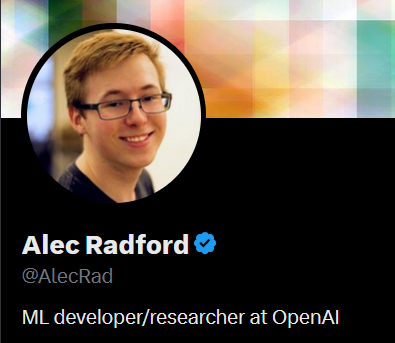
Every LLM from any lab today traces back to this guy, who was the only person at OpenAI pushing for pretraining transformer language models. He built GPT-1. After that did others see the potential. He invented it, and almost none of the so called AI experts even know his name.
Flowers ☾ tweet media
English
85
235
4.3K
1.8M
Cricketologist
Cricketologist@AMP86793444·
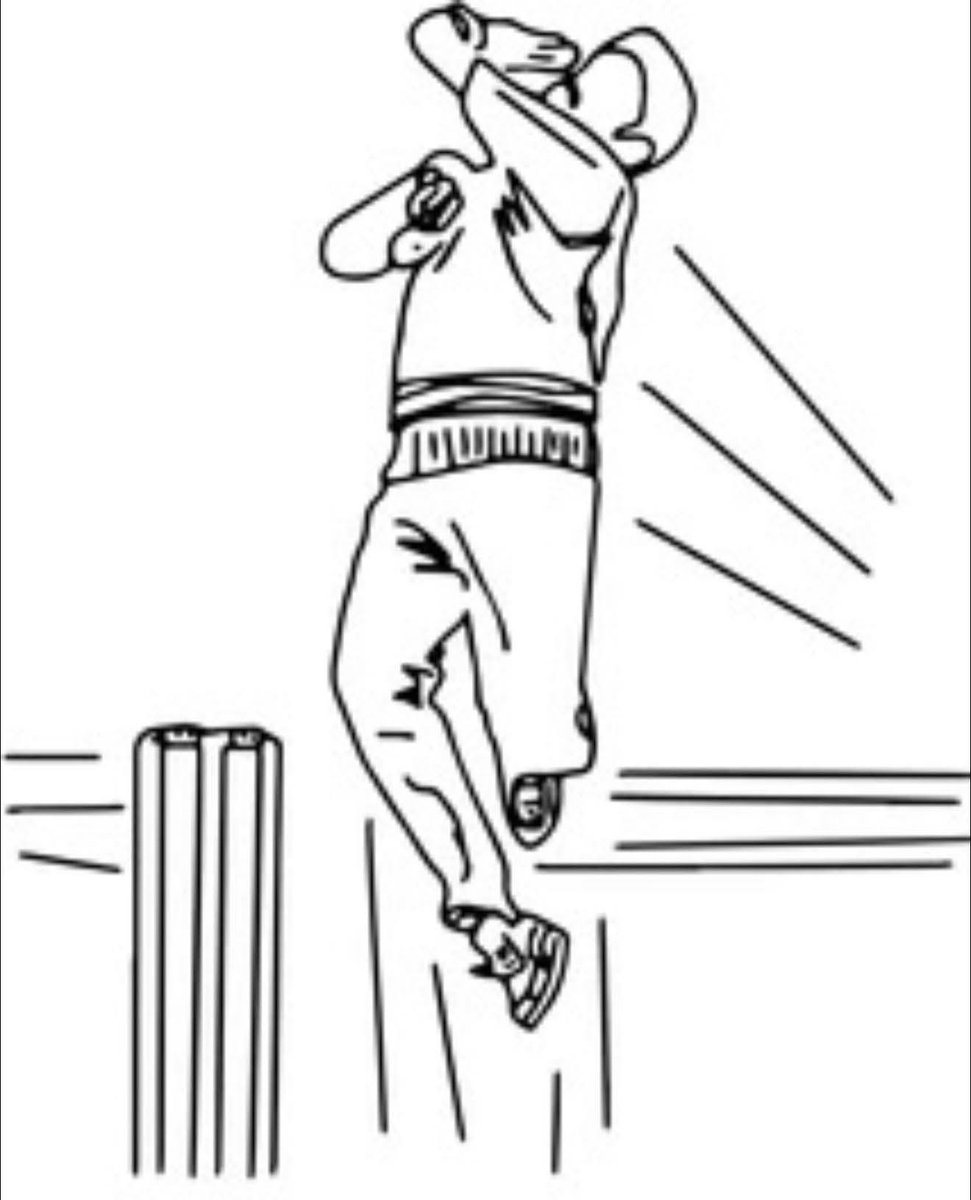
This World Cup logo was designed based on the bowling action of which bowler?
Cricketologist tweet media
English
1.5K
64
1.5K
471.2K
Cricketologist
Cricketologist@AMP86793444·
Tell us who this is without telling us who this is.
Cricketologist tweet media
English
2.4K
47
927
199K
Raj
Raj@rkarmani·
This ⚽️
Tom Byerトム•バイヤー@tomsan106

There’s a growing obsession with pouring hundreds of millions into state-of-the-art sports facilities, as if elite players are manufactured by architecture and price tags. Football investors, in particular, love to unveil these massive projects with the same promise: this investment will pay for itself by producing top-tier talent. It sounds compelling, but it fundamentally misunderstands how player development actually works. Elite players aren’t the product of pristine buildings or exclusive complexes. They emerge from repetition, freedom, and access, thousands of unstructured hours with the ball, often in small, tight spaces, long before they ever set foot in a high-performance center. By the time a player reaches one of these facilities, most of the real development has already happened. If investors truly understood this, their strategy would look very different. Instead of concentrating resources into a single, expensive hub, they would decentralize access. They’d build dozens, hundreds, of small, free, local pitches embedded in communities. Places where kids can show up anytime, play without barriers, and fall in love with the game on their own terms. Because the real lever isn’t luxury, it’s volume, accessibility, and environment. The next generation of elite players won’t come from marble-floored academies. They’ll come from the streets, the cages, and the small-sided pitches where the game is played constantly, creatively, and without permission.

English
0
0
0
637
Raj retweetledi
Valerio Capraro
Valerio Capraro@ValerioCapraro·
Here's the longer version of our Nature piece. Our argument is simple: statistical approximation is not the same thing as intelligence. Strong benchmark scores often say very little about how LLMs behave under novelty, uncertainty, or shifting goals. Even more importantly, similar behaviors can arise from fundamentally different processes. In another paper, we identified seven epistemological fault lines between humans and LLMs. For example, LLMs have no internal representation of what is true. They often generate confident contradictions, especially in longer interactions, because they do not track what is actually true. Another example. Yes, LLMs have solved some open mathematical problems, but these cases typically involve applying known methods to well-defined problems. LLMs cannot invent anything that is truly new and true at the same time, because they lack the epistemic machinery to determine what is true. None of this means LLMs are useless. Quite the opposite: they are extraordinarily useful. But we should be careful about what they are and what they are not. Producing plausible text is not the same as understanding. Statistical prediction is not the same as intelligence. So despite the hype from the usual suspects, AGI has not been achieved. * paper in the first reply Joint with @Walter4C and @GaryMarcus
Valerio Capraro tweet media
English
83
188
775
140.3K
Raj retweetledi
shira
shira@shiraeis·
"limit your kid's screen time" is correct advice today, but people are confused about why it's correct, and that matters because the reason has an expiration date. the issue with ipad kids was never too much screen time in some vague moral sense, but that the software on the other side of the glass is essentially a superstimulus engine running a curriculum in learned helplessness. bright colors, zero latency rewards, infinite novelty, no boredom, no friction, and no consequence. you poke the most interesting square and something happens immediately. if the world worked that way, it'd be fine, but the world is almost entirely delayed gratification, ambiguous feedback, physical constraint, and needing to sit with uncertainty long enough to actually figure something out. so you're training a kid on an environment that is aggressively uncorrelated with the one they'll have to function in. it's a distribution mismatch problem. this means the winning parenting heuristic isn't "less screen time," but "don't let your kid marinate in a training environment optimized for engagement extraction when they should be building a world model." screens just happen to be a horrible training environment. but that's contingent and doesn't have to stay true. consider an AI that actually knows your kid, not in a creepy ad-targeting way, but in a way an aristocratic tutor knows their pupil. it follows them since birth, and maybe it remembers what confused them in march and checks whether they've resolved it by june. it notices when they're pattern matching instead of reasoning and calls them out on it. it asks hard questions at the right time, not to test them, but because it has a genuine model of what they're ready to think about next, and critically, it keeps routing them back to real world problems instead of substituting for them. this probably starts life as a stuffed animal, but the same entity transfers across form factors as the kid ages. the plush rabbit becomes a voice in their earbuds. he memory and the relationship are continuous. the interface changes, but it's one long developmental arc, not a series of disconnected apps. the thing that made ipad kids a cautionary tale was that the optimization target was retention. a sufficiently good AI tutor could optimize for what actually matters, like reflection, causal reasoning, metacognition, and tolerance for confusion, using the kid's actual life as curriculum instead of some frictionless cartoon sandbox. basically, the principle I'd actually endorse isn't "minimize screens." it's closer to "choose the training environment that best teaches your kid to think, pay attention, and update on evidence." right now that means less screen time, but in maybe two-five years the correct parenting move might be something nobody is emotionally prepared to hear, which is, your kid should probably be raised in part by an aristocratic tutor with perfect recall and great priors who happens to live inside a stuffed rabbit.
English
72
74
992
150.1K
Raj
Raj@rkarmani·
@Base44 Can they run ClawHub Skills?
English
1
0
0
1.4K
Base44
Base44@Base44·
Introducing Base44 Superagents. AI agents built with managed infrastructure, secured by default, one-click integrations, and 24/7 execution from the start. Everything is taken care of so you can focus on what your agent does, not how to get it running. That means no API keys to juggle, no config files, no security setup, and no maintenance. We handle all of it. Your Superagent connects to all the tools you already use in one click, runs on schedules and triggers, remembers context across sessions, acts proactively on your behalf, and keeps working around the clock. All from wherever you already are, WhatsApp, Telegram, Slack, or your browser. The AI agent everyone's been waiting for, with everything you need already built in. We're excited to get this into your hands, so we're giving free credits to everyone who comments and reposts in the next 24 hours.
English
1.1K
852
2.5K
1.6M
claudia roussel
claudia roussel@claudiaroussel_·
i'm 21, aussie, and just moved to SF last time i was in the US, i got picked up in this NYC street video that went viral the comments were all some version of "this girl would kill it in the US" or "move here!!!" reader, that's exactly what i did. i'm here with all the other displaced Aussies building @superpower, a new health system focused on longevity. a few things about me: - i like electric guitar, ballet, vintage clothing, architecture, and the great outdoors - i have an accent that adds +30 credibility to everything i say - i tend to smile at strangers in the street (which is controversial here, allegedly) if you're in SF and want to grab a coffee or show me your favorite spot, say hiii
claudia roussel tweet media
English
414
31
3K
1.6M
Raj
Raj@rkarmani·
@VaibhavSisinty Maybe they should hire more people. Despite a great product, they are do far behind ChatGPT and Gemini in mindshare.
English
0
0
7
1.9K
Vaibhav Sisinty
Vaibhav Sisinty@VaibhavSisinty·
Anthropic is valued at $380 billion. For nearly a year during its fastest growth period, their entire marketing operation was one guy. Austin Lau, a non-technical growth lead, was running paid search, paid social, email & SEO completely solo. Just Claude Code & some insane automation he built himself without writing a single line of code. Here's the exact workflow: - Export ad performance CSVs into Claude Code - AI flags what's underperforming - Sub-agent 1 writes headlines - Sub-agent 2 writes descriptions - Figma plugin auto-swaps copy into 100 ad templates - MCP server pulls live Meta data to close the loop Output went up 10x. Creation went from 2 hours to 15 minutes. Conversion rates beat industry average by 41%. This isn't AI helping a marketing team. This is one person replacing what used to be a 50-person department.
English
161
444
6.4K
990.6K
signüll
signüll@signulll·
no one has been able to solve ai memory yet. it’s brittle, it’s fragmented, & often times less helpful than not using memory. it’s an incredibly fascinating problem, way more of an art than a science at this point.
English
269
69
1.6K
127.2K