RLE at MIT

1.9K posts

RLE at MIT banner
RLE at MIT

RLE at MIT

@RLEatMIT

The Research Laboratory of Electronics (RLE) at the Massachusetts Institute of Technology (MIT)

Cambridge, MA Katılım Ocak 2012
239 Takip Edilen3.6K Takipçiler
RLE at MIT retweetledi

Massachusetts Institute of Technology (MIT)
Science is Curiosity on a Mission: It includes all of us who ask "why" and make it our mission to find out. These are the discoveries that move the country forward. The pursuit of ideas that seemed impossible until they weren’t. #CuriosityOnAMission
English
10
56
144
21.5K
RLE at MIT
RLE at MIT@RLEatMIT·
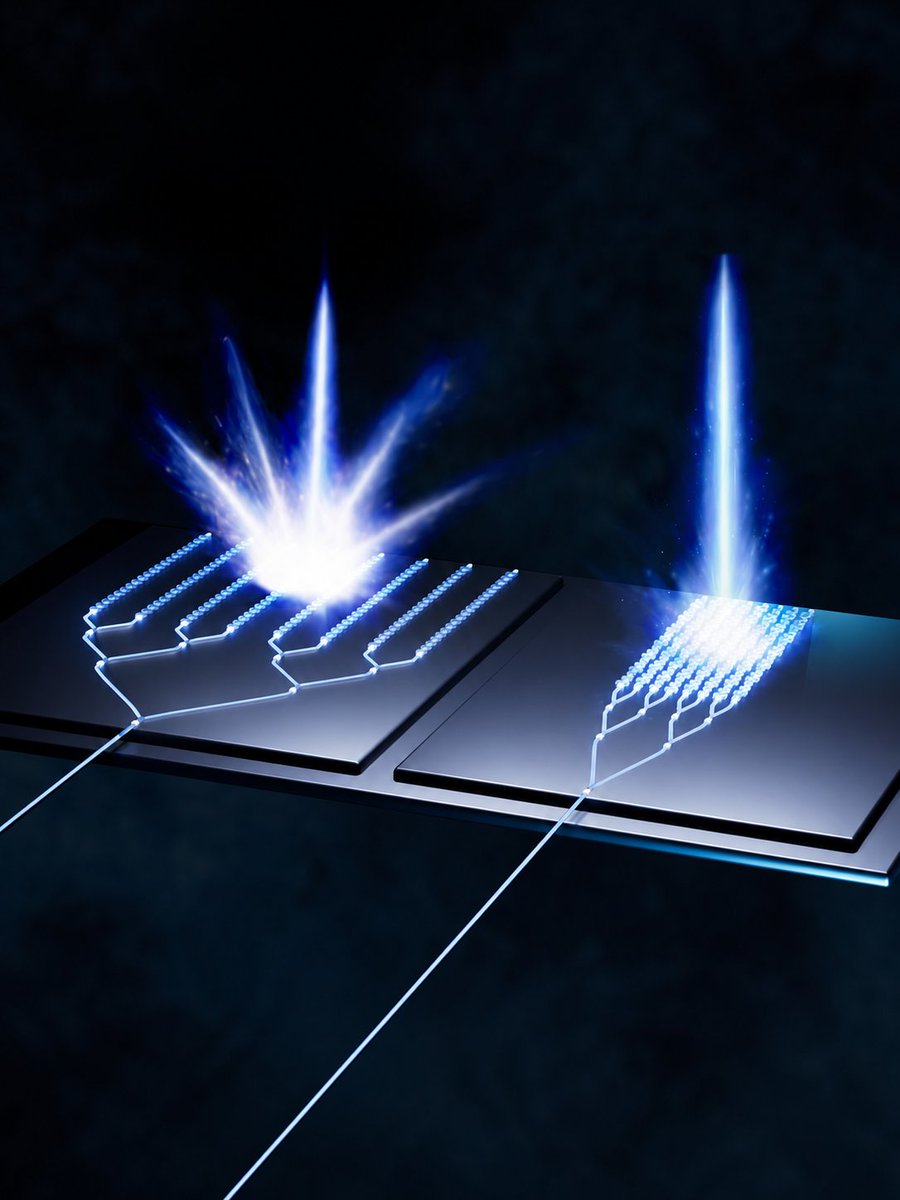
Compact, High-Performance Lidar Sensors! 📡 Researchers at MIT developed a novel antenna array design that reduces crosstalk in chip-based lidar systems, enabling wider field-of-view scanning with low-noise operation. The advance could support more compact, high-performance lidar technologies. 🔬 🔗Read the full article here: bit.ly/42rzSUA #Photonics #Lidar #MIT #Engineering #RLE
RLE at MIT tweet media
English
0
0
1
152
RLE at MIT retweetledi
MIT School of Engineering
MIT School of Engineering@MITEngineering·
MIT engineers have developed “mini livers” that could be injected into the body and take over the functions of the failing liver. This would help patients who are on a waitlist for a liver transplant or those who aren’t healthy enough to tolerate surgery. news.mit.edu/2026/injectabl…
GIF
English
98
1.6K
5.5K
1.2M
RLE at MIT retweetledi
MIT CSAIL
MIT CSAIL@MIT_CSAIL·
The story of Mirai, MIT's AI model that can detect breast cancer years before humans do: tinyurl.com/mrx95vxx
English
6
34
125
20.3K
RLE at MIT retweetledi
Massachusetts Institute of Technology (MIT)
Joey Davis' work has helped reveal that unlike building a house, which happens in a prescribed sequence of steps — pouring the foundation, building the frame, putting on the roof — ribosomes can be assembled in a more flexible way. Understanding how these structures form and later break down could help researchers learn more about how disruptions of these fundamental processes can lead to disease. news.mit.edu/2026/biologist…
English
1
32
91
8.3K
RLE at MIT retweetledi
IEEE Brain
IEEE Brain@IEEEBrain·
Clarity from chaos? Yes, thanks to @MIT researchers who found chaotic #laser light can self-organize into a precise beam, enabling #3D #brain imaging up to 25× faster and tracking how drugs move in real time. Read more about it at @sciencedaily: bit.ly/42BqfT1 #neurotech
IEEE Brain tweet media
English
0
3
7
453
RLE at MIT retweetledi
MIT Spectrum
MIT Spectrum@MIT_Spectrum·
.@mit_hst PhD student HEALS fellow Vivek Gopalakrishnan is using the math behind video games and animated films to turn 2D X‑rays into personalized 3D tools for doctors. bit.ly/4d2u5uq
GIF
English
1
3
6
5.1K
RLE at MIT retweetledi
DMSE at MIT
DMSE at MIT@mit_dmse·
Spring DMSE Frontiers is out! Yoel Fink receives the APS Sakharov Prize, Frances Ross joins the National Academy of Engineering, and Yet-Ming Chiang and colleagues uncover why cracks form in solid-state batteries. Read the latest from MIT DMSE: buff.ly/utzn4Tg
DMSE at MIT tweet mediaDMSE at MIT tweet mediaDMSE at MIT tweet media
English
1
1
7
489
RLE at MIT retweetledi
Massachusetts Institute of Technology (MIT)
The cancer immunotherapy saving lives today? It started 30-40 years ago with scientists just following their curiosity. President Sally Kornbluth joined Lizzie O’Leary of Slate’s "What Next: TBD" podcast. Basic science isn't always flashy, but it's how we get to the breakthroughs that matter. Sometimes the best investments take decades. youtu.be/N6ETeg7dgkw?si…
YouTube video
YouTube
Massachusetts Institute of Technology (MIT) tweet media
English
3
14
53
4.7K
RLE at MIT retweetledi
MIT Open Learning
MIT Open Learning@mitopenlearning·
Meet 7 of @mit's top educators according to MIT students — the 2026 Teaching with Digital Technology Award winners! They use tech like VR, games, and data tools to help their students build student confidence, create belonging, and make complex labs and mathematics accessible. Read more: bit.ly/4chD4X7
English
0
5
19
866
RLE at MIT retweetledi
RLE at MIT
RLE at MIT@RLEatMIT·
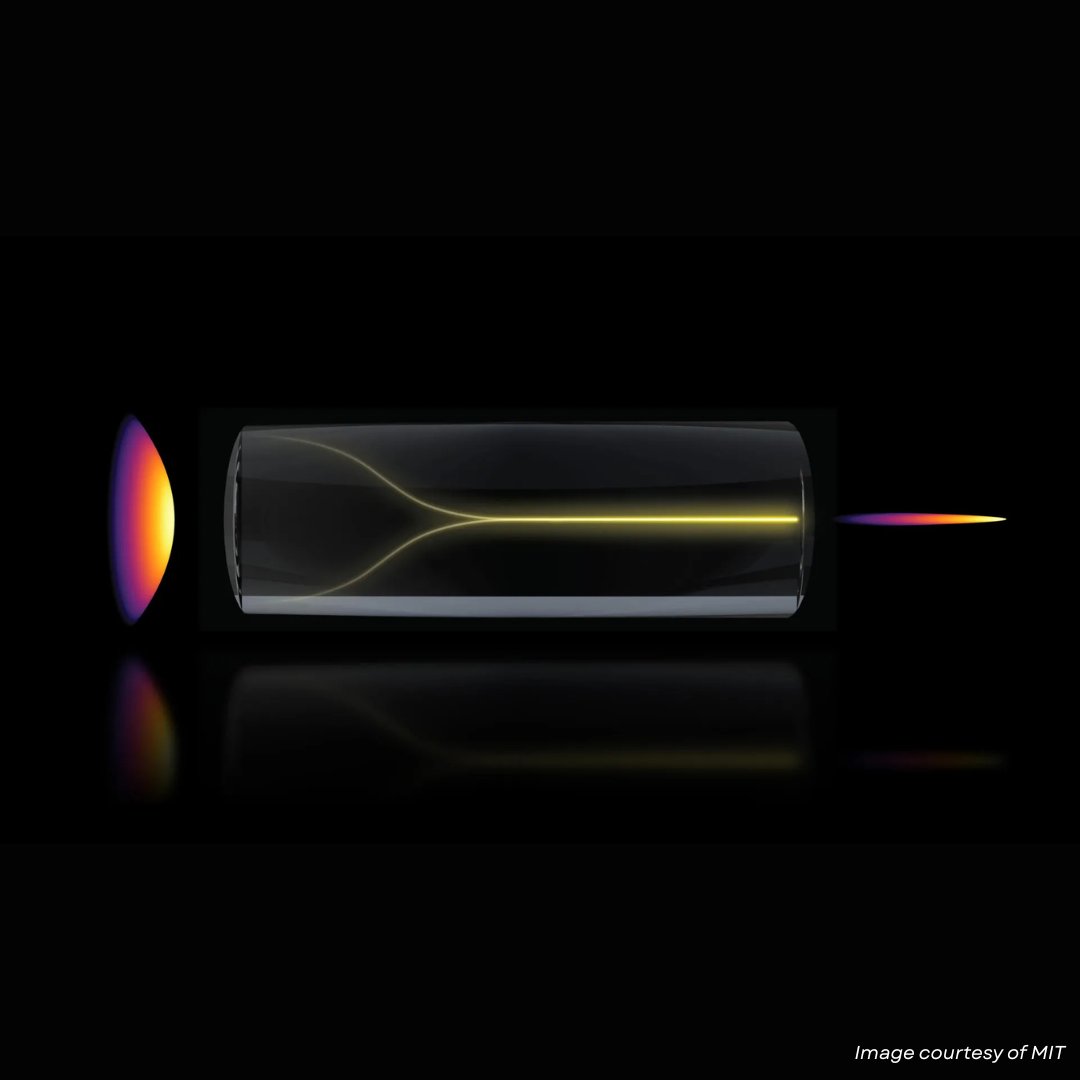
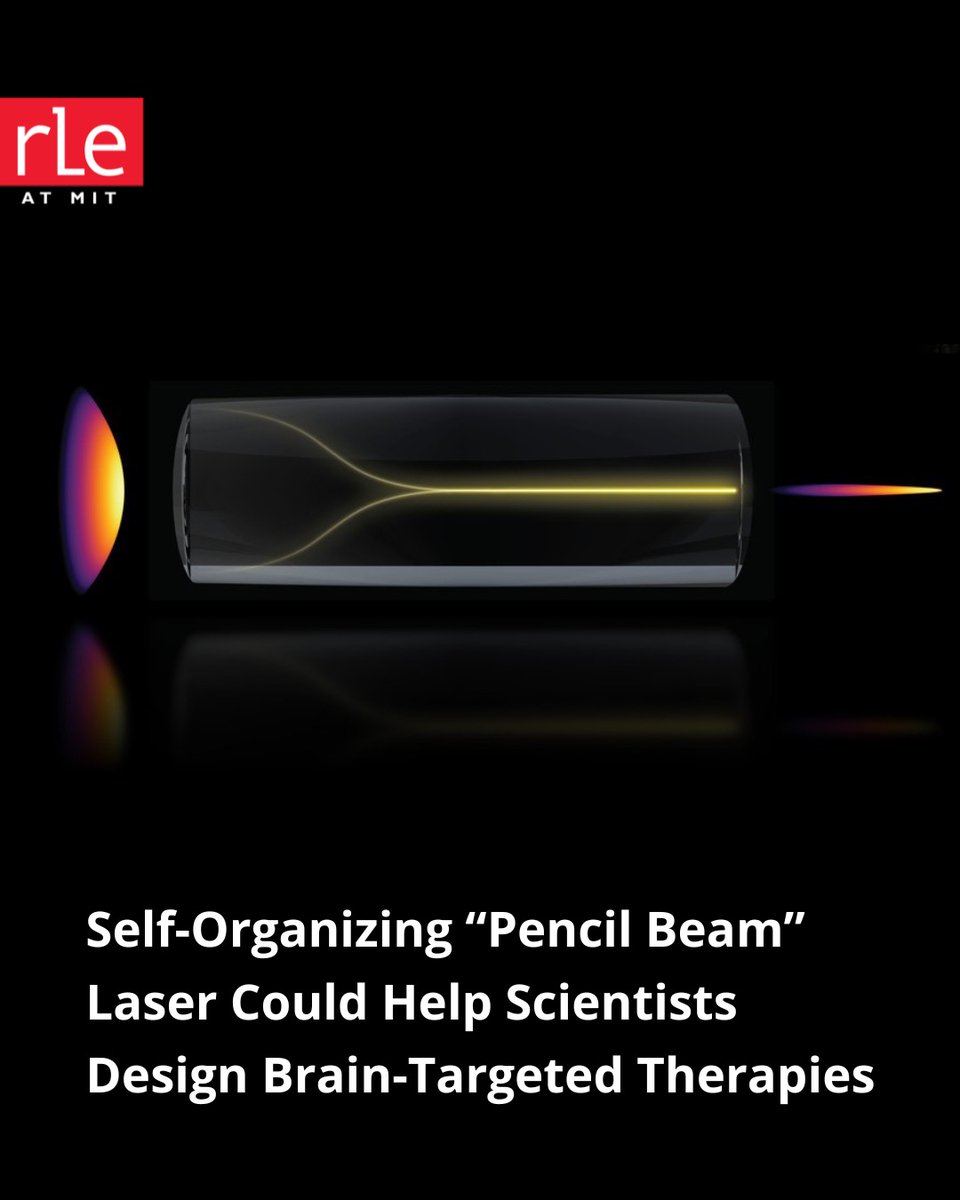
Researchers at MIT just made a discovery that might help cure neurodegenerative diseases🧠🔬 When the team cranked up the power on a laser, they were expecting it to turn into a chaotic mess of light. Instead, it snapped into a highly focused “pencil beam.”🔦 That beam can now capture the human blood-brain barrier 25x faster than before, allowing scientists to watch in real time how drugs are absorbed in the brain. This discovery can transform treatment for Alzheimer’s, ALS, and more. The team is continuing to experiment, and eventually bring this technology to the medical field. #MIT #RLEatMIT #research #laser #bioimaging
RLE at MIT tweet media
English
0
1
2
111
RLE at MIT retweetledi
Massachusetts Institute of Technology (MIT)
MIT researchers have developed a new electronics integration platform which allows scientists to make transistors and memory devices in one compact stack on a semiconductor chip. This eliminates a lot of wasted energy while boosting the speed of computation. news.mit.edu/2025/new-mater…
English
23
99
345
21.3K
RLE at MIT retweetledi
Massachusetts Institute of Technology (MIT)
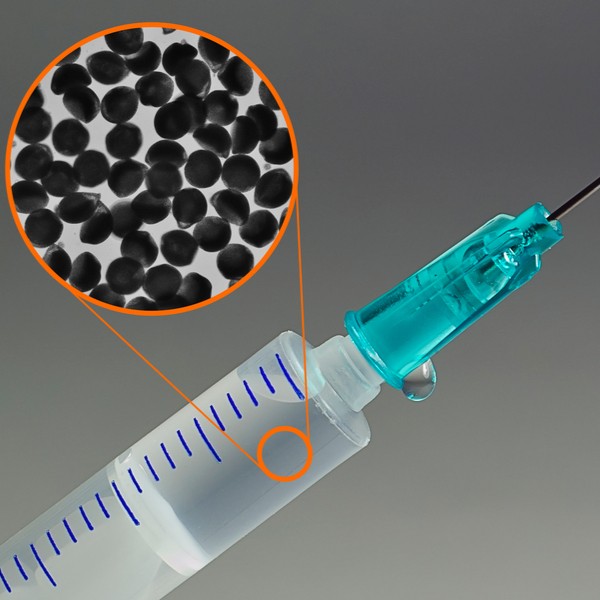
Antibody treatments for cancer and other diseases are typically delivered intravenously, because of the large volumes that are needed per dose. This means patients have to spend hours in a hospital for every treatment. MIT engineers have now taken a major step toward reformulating antibodies so that they can be injected using a standard syringe. news.mit.edu/2025/new-way-d…
Massachusetts Institute of Technology (MIT) tweet media
English
11
117
409
28.9K
RLE at MIT
RLE at MIT@RLEatMIT·
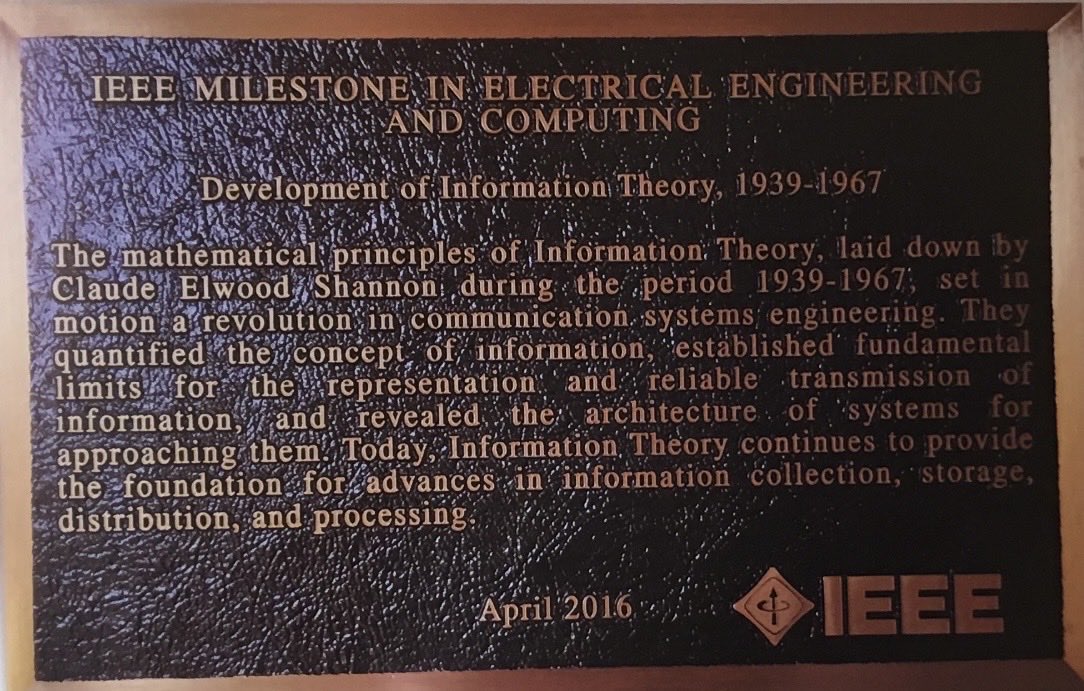
@BellLabs Shannon was an early member of our lab! We celebrated this IEEE Milestone dedication in building 36 of the MIT campus.
RLE at MIT tweet media
English
0
0
1
67
Bell Labs
Bell Labs@BellLabs·
We're continuing to celebrate Claude Shannon's 110th birthday this month. Here's some short but shrewd wisdom from the father of information theory himself: "Information is the resolution of uncertainty." Shannon's quest to resolve uncertainty laid the foundations of modern AI.
Bell Labs tweet media
English
7
80
259
14.9K
RLE at MIT retweetledi
Massachusetts Institute of Technology (MIT)
As people age, their immune system function declines. T cell populations decline and can’t react to pathogens as quickly, making people more susceptible to infections. To try to overcome that decline, researchers at MIT and the Broad Institute have found a way to temporarily program cells in the liver to improve T-cell function. news.mit.edu/2025/new-study…
English
17
135
399
26.1K
RLE at MIT retweetledi
MIT School of Engineering
MIT School of Engineering@MITEngineering·
Strajo Janjusevic, a graduate researcher with MIT LIDS and the MIT Maritime Consortium, is developing AI-driven solutions to secure critical maritime infrastructure. His work addresses the intersection of technical defense and policy frameworks. news.mit.edu/2026/enhancing…
English
0
4
18
867
RLE at MIT
RLE at MIT@RLEatMIT·
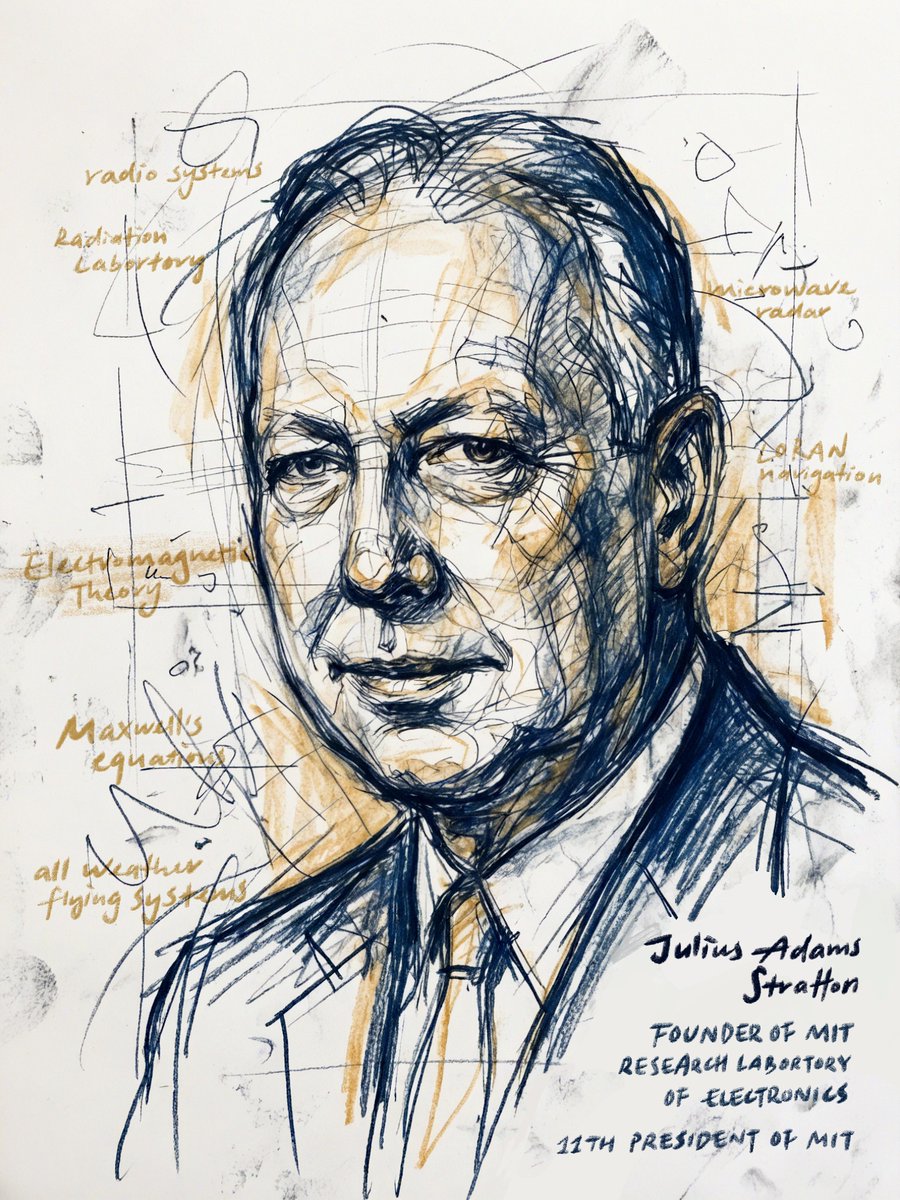
🏛️It has been 80 years since RLE was founded by Dr. Julius Adams Stratton! The author of one of the most influential textbooks in electromagnetic theory, Professor Stratton was one of the first staff members of the MIT Radiation Laboratory. In addition to founding the Research Laboratory of Electronics in 1946, he served as the 11th president of MIT from 1959 to 1966, transforming the school into a top-tier research university🔬 His impact continues to inspire a new generation of thinkers, pushing the boundaries of what is possible💫 🎨 Illustration by Amy Pan #MIT #RLEatMIT #AcademicHistory #InnovationThroughTime
RLE at MIT tweet media
English
0
0
5
100
RLE at MIT retweetledi
Tech with Mak
Tech with Mak@techNmak·
In 1948, a 32-year-old at Bell Labs published a paper nobody fully understood. Engineers found it too mathematical. Mathematicians found it too engineering-focused. One prominent mathematician reviewed it negatively. That paper - "A Mathematical Theory of Communication", became the founding document of the digital age. The man was Claude Shannon. Father of Information Theory. At 21, he wrote the most important master's thesis of the 20th century. Working at MIT on an early mechanical computer, Shannon noticed its relay switches had exactly two states - open or closed. He had just taken a philosophy course introducing Boolean algebra, which also operated on two values: true and false. Nobody had ever connected these two things. His 1937 thesis proved that Boolean algebra and electrical circuits are mathematically identical, and that any logical operation could be built from simple switches. Howard Gardner called it "possibly the most important, and also the most famous, master's thesis of the century." Every digital computer ever built traces back to this insight. At 29, he proved that perfect encryption exists. During WWII, Shannon worked on classified cryptography at Bell Labs. His work contributed to SIGSALY, the secure voice system used for confidential communications between Roosevelt and Churchill. In a classified 1945 memorandum, he mathematically proved the one-time pad provides perfect secrecy, unbreakable not just computationally, but provably, permanently, against an adversary with infinite power. When declassified in 1949, it transformed cryptography from an art into a science. It laid the foundations for DES, AES, and every modern encryption standard. At 32, he defined what information is. His 1948 paper introduced one equation: H = −Σ p(x) log p(x) Shannon entropy. The average uncertainty in a probability distribution. The minimum bits required to encode a message. Three things followed: > He defined the bit - the fundamental unit of all information. His colleague John Tukey coined the name. > He proved the channel capacity theorem, every communication channel has a maximum rate of reliable transmission. You can approach it. You can never exceed it. > He unified telegraph, telephone, and radio into a single mathematical framework for the first time. Robert Lucky of Bell Labs called it the greatest work "in the annals of technological thought." Where his equation lives in AI today: Cross-entropy loss - the function training every classifier and language model, is derived directly from H. Decision tree splits use information gain, which is H applied to data. Perplexity, the standard LLM evaluation metric, is an exponentiation of cross-entropy. Every time a neural network trains, Shannon's formula runs inside it. He also built the first AI learning device. In 1950, Shannon built Theseus, a mechanical mouse that navigated a maze through trial and error, learned the correct path, and repeated it perfectly. Mazin Gilbert of Bell Labs said: "Theseus inspired the whole field of AI." That same year he published the first paper on programming a computer to play chess. He co-organized the 1956 Dartmouth Workshop, the founding event of AI as a field. The man: He rode a unicycle through Bell Labs hallways while juggling. He built a flame-throwing trumpet, a rocket-powered Frisbee, and Styrofoam shoes to walk on the lake behind his house. He called his home Entropy House. When asked what motivated him: "I was motivated by curiosity. Never by the desire for financial gain. I just wondered how things were put together." In 1985, he appeared unexpectedly at a conference in Brighton. The crowd mobbed him for autographs. Persuaded to speak at the banquet, he talked briefly, then pulled three balls from his pockets and juggled instead. One engineer said: "It was as if Newton had showed up at a physics conference." He died in 2001 after a decade with Alzheimer's, the cruel irony of information slowly leaving the mind of the man who defined what information was. Claude, the AI model, is named after Claude Shannon, the mathematician who laid the foundation for the digital world we rely on today.
Tech with Mak tweet media
English
195
2.1K
7.7K
456.2K