Richard Lazowski

28.4K posts

Richard Lazowski

Richard Lazowski

@RLazowski

Proud Canadian; retired, supporter of Alberta, Pro Business, Oil & Gas, scientific fundamentals, sound engineering and responsible resource management.

Sherwood Park, Alberta Katılım Temmuz 2016
53 Takip Edilen282 Takipçiler
Richard Lazowski retweetledi
Canada Proud
Canada Proud@WeAreCanProud·
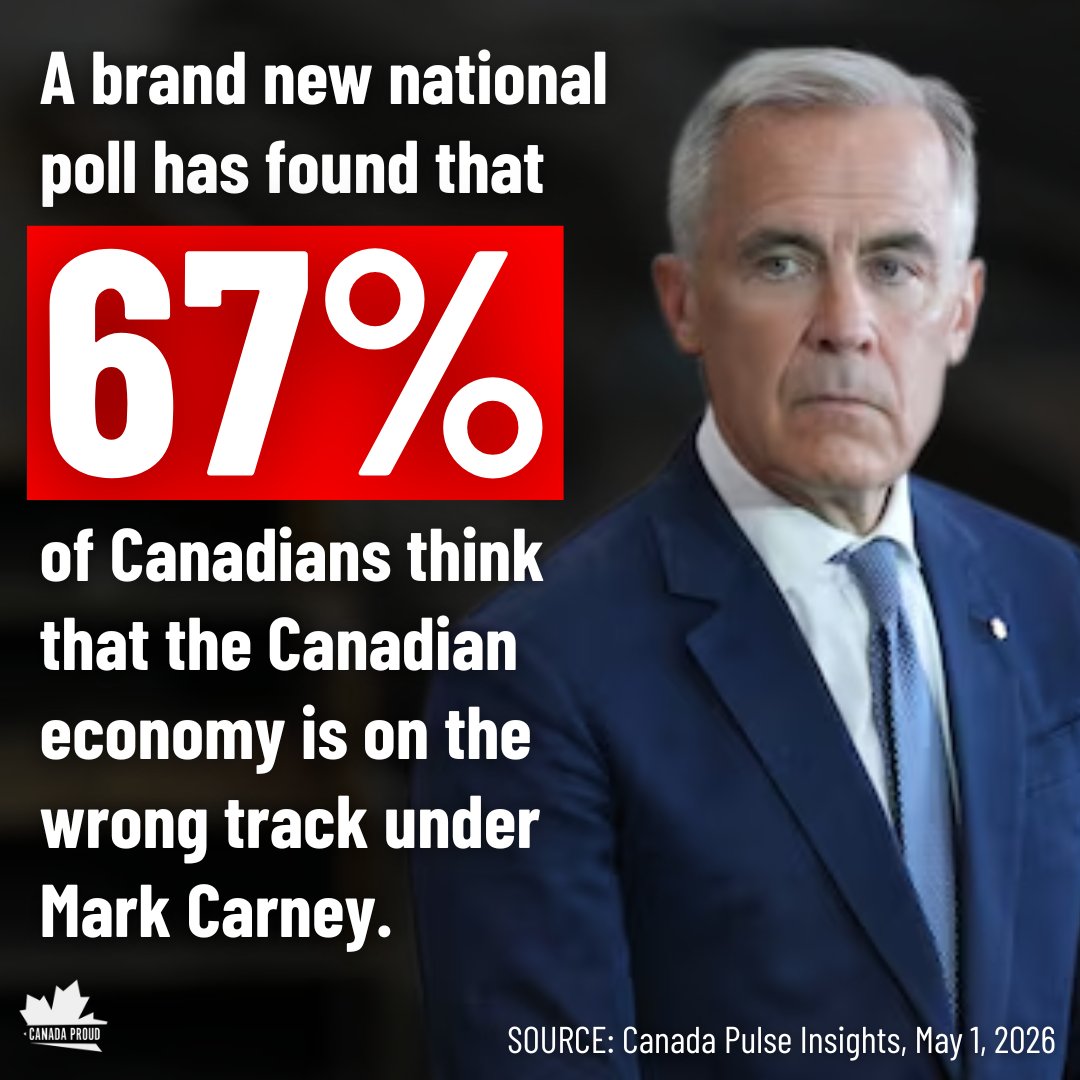
NEW: Over TWO THIRDS of Canadians think that our economy is on the wrong track under Mark Carney's leadership. Are you one of them? 🤔
Canada Proud tweet media
English
628
776
2.6K
32.9K
Richard Lazowski retweetledi
CCMBC 2021
CCMBC 2021@2021Ccmbc·
The Liberal claim is classic cherry picking. The deficit is “coming down,” but only from enormous to still enormous. Ottawa still projects annual deficits above $50 billion through 2030 to 2031. Home prices are down, but that reflects a weak housing market and mortgage pressure, not affordability solved. Rents are not broadly down. CMHC says average two bedroom rents still rose 5.1 percent in 2025. GDP is up, but barely enough to brag about unless the bar is now buried under the floorboards. Real GDP grew 1.7 percent in 2025, while per capita GDP rose only 0.6 percent after two years of decline. The IMF still warns Canada’s central problem is weak productivity. Non U.S. exports are up, yes. But overall goods exports fell, and Canada’s goods trade deficit widened from $7.2 billion to $31.3 billion. So no, this is not proof the plan is “paying off.” It is selective data dressed up as success, because apparently if you crop the wreckage tightly enough, you can call it a renovation.🤦‍♂️
English
0
2
23
157
Richard Lazowski retweetledi
Melanie In Saskatchewan
Melanie In Saskatchewan@saskatchewan_in·
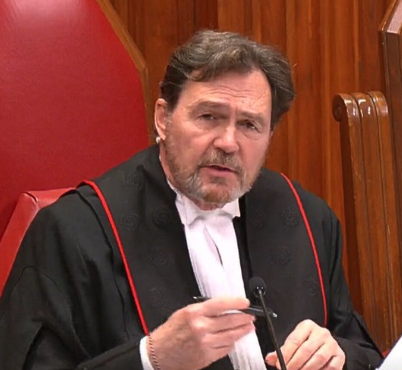
A Failure of Judgment at the Highest Court To Richard Wagner, Your refusal to recuse yourself from the Emergencies Act appeal is not a demonstration of judicial confidence. It is a failure of judgment at a moment that demanded restraint. You have justified your decision on the basis that your prior public comments did not address the specific legal questions before the Court. That argument may satisfy a narrow, technical reading of judicial conduct. It does not satisfy the standard Canadians are entitled to expect from the Chief Justice of the Supreme Court. The governing principle is not whether you commented on the precise statutory interpretation of the Emergencies Act. It is whether a reasonable and informed person would conclude that your previously expressed views could influence your assessment of the case. You publicly characterized the convoy as the “budding start of anarchy,” described residents as being “taken hostage,” and spoke in terms that conveyed clear condemnation of the events and participants. Those were not neutral observations. They were judgments about the nature, legitimacy, and perceived threat posed by the very situation now under review. This appeal is not a retrial. It does not exist to rehear evidence or relitigate the convoy as though the past can be reset. Appellate review in Canada is focused on whether the law was correctly interpreted and properly applied to established facts, with significant deference given to the findings already made by the lower courts. That distinction matters. The federal government is asking the Supreme Court of Canada to overturn decisions that found its use of the Emergencies Act unlawful. Those rulings concluded that the legal threshold for a national emergency was not met, that existing laws were sufficient, and that certain measures infringed Charter rights. In response, the government argues that the courts applied the wrong legal standard, failed to give appropriate deference to executive decision-making during a crisis, interpreted the definition of a threat to the security of Canada too narrowly, and erred in their Charter analysis. Each of those arguments turns on how serious and threatening the underlying events were understood to be in law. The Court must assess necessity, proportionality, and justification. It must determine whether extraordinary powers were warranted under the circumstances that existed at the time. Those are not abstract exercises. They require judgment about the nature of the events themselves. To suggest that prior public condemnation of those events has no bearing on your ability to assess the legality of the government’s response is to rely on a distinction that may be legally convenient but is publicly unconvincing. The issue is not your personal belief in your own impartiality. Every judge holds that belief. The issue is whether Canadians can reasonably maintain confidence in the Court’s impartiality when the Chief Justice has already expressed strong views about the factual foundation of the case. Recusal would not have weakened the Court. It would have strengthened it. It would have demonstrated that the Supreme Court understands the difference between legal defensibility and institutional legitimacy. It would have signaled that preserving public trust matters more than maintaining personal participation in a high-profile case. Instead, your decision suggests that the threshold for stepping aside is so narrow that even prior public condemnation of the central events of a case does not meet it. That is not a reassuring message to Canadians. Other members of the Court have recognized the importance of avoiding even the perception of bias and have stepped aside in contentious cases to preserve the integrity of the institution. That example was available. It was not followed. The principle of natural justice is clear. Justice must not only be done, it must be seen to be done. In a case of this magnitude, involving the limits of state power and the rights of citizens, that principle should have guided your decision. This was an opportunity to reinforce public confidence in Canada’s institutions at a time when that confidence is already strained. You declined it. As Chief Justice, you are not merely a participant in this case. You are the steward of the reputation of the Supreme Court of Canada itself. That reputation rests not on assertions of impartiality, but on decisions that demonstrate it beyond reasonable doubt. In choosing not to recuse yourself under these circumstances, you have not strengthened that reputation. You have placed it at risk, at a time when public confidence in national institutions is already fragile. The damage may not be immediate, but it is real, and it is yours to own. Respectfully, Melanie in Saskatchewan
National Post@nationalpost

Chief Justice Richard Wagner dismisses request to recuse from Emergencies Act appeal nationalpost.com/news/politics/…

English
80
505
994
16.3K
Richard Lazowski retweetledi
Dave West
Dave West@davidallenwest·
🇨🇦 - Truth below
Dave West tweet media
English
9
62
91
684
Richard Lazowski retweetledi
CCMBC 2021
CCMBC 2021@2021Ccmbc·
Stripping it down even further, here you go: Ah yes… the “new” fiscal discipline. From $31B to $65.3B in one year.🫰 But relax, it’s not really a deficit anymore. It’s been carefully reworded, gently reframed, and likely tucked under something that sounds responsible enough to survive a press conference.🎙️ Funny how that works. ✔️Same deficits. ✔️Different branding. Meanwhile, Canadians: cutting groceries, delaying bills, stretching every dollar. And Ottawa: “What if we just double it and call it discipline?” Bold. Visionary. And completely detached from reality. #cdnpoli #MarkCarney #Deficit #CostOfLiving #FiscalFantasy @WorkingCdns @FinanceCanada @jasrajshallan
CCMBC 2021 tweet media
English
1
3
4
88
Richard Lazowski retweetledi
Melanie In Saskatchewan
Melanie In Saskatchewan@saskatchewan_in·
Minister @LenaMetlegeDiab Your recent committee appearance was not reassuring. It was revealing. You were asked direct questions about decision-making, oversight, and accountability within your department. Instead of answering them, you defaulted to pre-written talking points that bore little resemblance to what was actually asked. When pressed for clarity, you expanded the same non-answers into longer statements that still avoided the substance. You clearly have no idea about your portfolio, revealing yourself to be too incompetent to even answer basic questions. At one point, you were asked a straightforward question about responsibility within your portfolio. Rather than identifying who made the decision or what safeguards failed, you pivoted into general statements about processes and values. That is not an answer. It is a placeholder. In another exchange, when questioned about specific cases and screening concerns, you again declined to engage with the details, opting instead for broad assurances about the system. Assurances are not substitutes for explanations, especially when public trust is already strained. This pattern repeated throughout your testimony. Question. Deflection. Rehearsed response. No accountability. You hold one of the most sensitive portfolios in government. Immigration decisions carry real consequences for public safety, system integrity, and national confidence. When credible concerns arise, including widely reported cases involving individuals who should have triggered far greater scrutiny, Canadians expect clear answers. Not scripted detours. At the same time, your office is now the focus of coordinated pressure from advocacy groups demanding sweeping expansions to permanent residency. A coalition of 38 organizations has called for broad access with minimal or no exclusions, extending beyond temporary workers to students, refugees, and undocumented individuals. This is not a technical adjustment. It is a fundamental shift in policy direction. And Canadians are not asking for it. Across the country, people are already grappling with housing shortages, rising costs, and job competition. Public sentiment is not ambiguous on this point. It is tightening. It is hardening. And it is increasingly at odds with the direction being advocated around your portfolio. History is not subtle about what happens when governments ignore that gap. When people feel unheard, when legitimate concerns are brushed aside, and when accountability is replaced with rehearsed language, frustration does not disappear. It accumulates. Quietly at first. Then all at once. That is not a threat. It is a pattern. And it is one you are now walking directly into. If you are confident in your decisions, explain them. If you are confident in your department, defend it with specifics. If you are accountable, act like it. Because right now, what Canadians saw was something else entirely. They saw a minister who could not or would not answer the question in front of her. And that raises a simple, uncomfortable question for you: If the answers exist, why won’t you give them? And if they don’t, what exactly are you doing in the role? Public confidence is not an unlimited resource. It erodes. And once it is gone, it does not return on command. At some point, dignity means recognizing when a position requires a level of command and clarity that is not being demonstrated. That point has arrived. For the sake of the department, for the credibility of the system, and for what remains of public trust, you should step aside and allow someone capable of answering basic questions to take over. Canadians deserve answers. Not word salads dressed up as accountability.
English
10
75
197
1.9K
Richard Lazowski retweetledi
Paul Manning
Paul Manning@mobinfiltrator·
Chief Justice Richard Wagner is refusing to recuse himself from the Emergencies Act case, despite previously calling the Freedom Convoy the “start of anarchy” and saying protesters “took citizens hostage.” He has clearly shown his bias. Now he says there’s “no reasonable apprehension of bias.” That’s a problem. You don’t publicly characterize one side in those terms, then turn around and sit in judgment over them. This isn’t about whether he believes he’s impartial, it’s whether a reasonable person would. Do you or I believe him to be unbiased with everything we currently know? From his comments I don't see him as unbiased on this matter. When the Chief Justice has already framed the conduct as “anarchy,” the answer isn’t complicated. It's a given. Even Mahmud Jamal stepped aside in another case to avoid becoming a distraction, not because he had to, but because public confidence matters. That’s the standard. This isn’t just about one case, it’s about whether the public believes the process is fair. Because once that’s gone, the ruling doesn’t matter. No one will believe his "findings." And we currently have a government that are happy to ignore 'bias' in their favour if it adds momentum to their current goals. #onpoli #cdnpoli
Paul Manning tweet media
English
472
1.7K
3.7K
157.7K
Richard Lazowski retweetledi
CCMBC 2021
CCMBC 2021@2021Ccmbc·
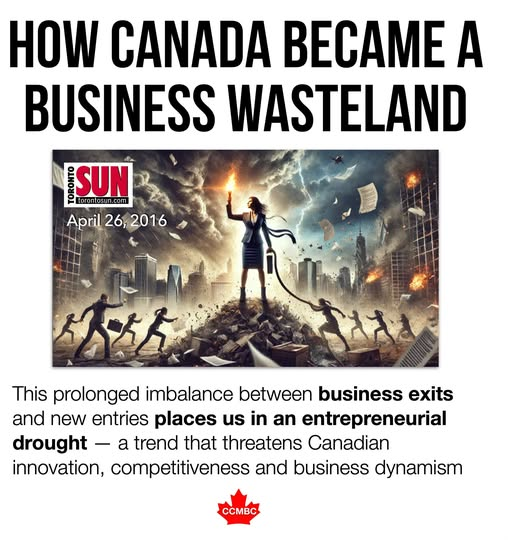
🚨CANADA DIDN'T RUN OUT OF ENTREPRENEURS🚨 We #regulated, #taxed, and #suffocated them out of existence. This didn’t happen by accident. It’s policy. While government grows, businesses disappear. While bureaucracy expands, opportunity contracts. And somehow we’re told this is “progress.” At what point do we admit the model is broken? 📉 Fewer new businesses 📉 Less innovation 📉 Slower growth 📉 Fewer jobs But sure… let’s keep doing the same thing and expect a different outcome. #cdnpoli #Canada #SmallBusiness #Entrepreneurship #Economy #CFIB #EconomicReality @WorkingCdns
CCMBC 2021 tweet media
English
2
11
16
155
Richard Lazowski retweetledi
Melanie In Saskatchewan
Melanie In Saskatchewan@saskatchewan_in·
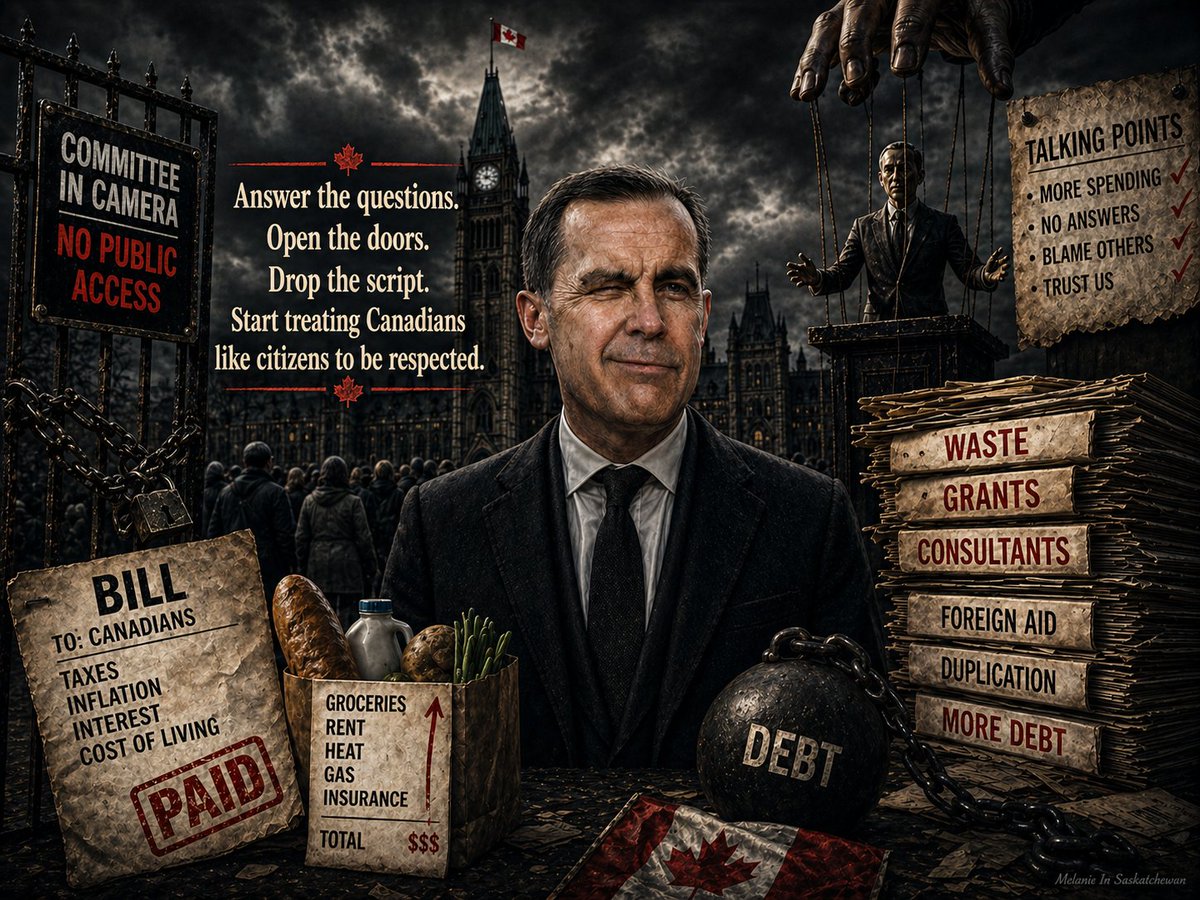
WE ARE OVERTAXED CANADIANS. We get up early, we do the work, we carry our end of the deal, and somewhere along the way it stopped feeling like citizenship and started feeling like a subscription we can’t cancel. The money leaves our accounts with flawless efficiency, every deduction right on time, every tax accounted for. What comes back feels suspiciously like a concept. Services thin out, costs go up, and somehow we’re told everything is working exactly as intended under your leadership. WE ARE PRICED OUT CANADIANS. Groceries used to be routine. Now they’re a quiet negotiation with ourselves in aisle seven. What stays, what goes, what gets quietly put back like it never belonged. You start making trade offs you never used to think about, and you do it without saying much because everyone else around you is doing the same thing. Meanwhile, you roll out another billion dollar “solution” with a polished name and a straight face, as if the problem was simply that you hadn’t spent quite enough yet. WE ARE WATCHING CANADIANS. We still turn on Question Period, partly out of habit, partly out of stubborn optimism that maybe, just maybe, someone in your government will answer something directly. Real questions about debt, inflation, and affordability go in. Your ministers deliver pre-written talking points. It’s less accountability and more a stage production where everyone already knows their lines and nobody is allowed to improvise. The outcome is managed, the tone is rehearsed, and the substance quietly disappears. WE ARE TALKED DOWN TO CANADIANS. When your Minister, Steve MacKinnon, asks what inflationary spending should be cut, it isn’t curiosity. It’s a facetious, performative Question Period setup, delivered in that self satisfied tone for the cameras, not for an actual answer. He knows full well the question being asked is about waste and inflationary pressure, not core supports Canadians rely on. But under your government’s approach, he pivots anyway and starts listing dental care, child care, school lunches, as if that was ever the point. It’s not a serious exchange. It’s staged grandstanding designed to misrepresent the argument before it can even be made. The message is obvious. Ask real questions and your government will paint Canadians as unreasonable. Convenient, if the goal is to avoid answering anything at all. WE ARE PAYING CANADIANS. So let’s answer the question your government keeps pretending to ask. Cut the waste that multiplies like it’s getting a bonus. Cut the gun buyback that spends freely and achieves very little. Cut the high speed rail daydream your government is selling as legacy while people are pricing out ground beef. Trim the consultant carousel and the bureaucracy your ministers keep expanding that produces announcements instead of results. Then get to the part your government avoids. Stop duplicating funds just to re-brand them. We already have an Infrastructure Bank. We don’t need another “Canada Strong” wrapper doing the same job with a bigger press conference under your watch. Take a hard look at foreign aid your government champions that reads beautifully in a release and very differently on a ledger. Millions into gender themed programs in countries that don’t share those values, while affordability at home keeps slipping. Boxes checked abroad, bills checked at home. Audit the endless grants, pilot projects, innovation funds, advisory panels, and communications contracts your government continues to expand no matter what the economy is doing. None of this touches core services. It touches the excess your government never seems to notice until Canadians point directly at it. WE ARE SHUT OUT CANADIANS. This week, under your leadership, committees went in camera. Doors closed. Cameras off. The public removed from the room at the exact moment scrutiny matters. You added more Liberal members to each committee, tipped the balance, then your government took away the view. Efficient, controlled, and very convenient if the goal is to limit questions instead of answer them. WE ARE SIDELINED CANADIANS. Committees are supposed to be where serious work happens. Where decisions are examined, numbers are defended, and someone has to explain how the math actually works without a script. Instead, under your direction, they are being reshaped into something quieter, safer, and far more predictable, while the people funding it all are left outside, expected to trust a process your government no longer allows them to see. Trust, apparently, is something your government expects without earning. WE ARE MISLED CANADIANS. Your government tells us there are only two choices. Endless spending or cruelty. Ask for restraint and suddenly the conversation shifts to fear, to worst case scenarios, to carefully selected examples meant to shut down debate. Meanwhile, the debt grows, the interest compounds, and the cost of living keeps tightening. Compassion isn’t measured by how much your government spends. It’s measured by whether people can actually live, and right now that answer is getting harder to defend. WE ARE PAYING FOR IT TWICE CANADIANS. We fund the programs. We fund the waste around them. We fund the interest on both. Then a portion comes back dressed up as relief, and your government expects gratitude, as though it appeared out of nowhere. It isn’t help. It’s our own money taking a scenic route through Ottawa first, picking up a press release along the way. WE ARE STILL HERE CANADIANS. We still believe in this country, which is probably the most stubborn thing about us. We believe in people who show up, help each other, and carry more than their share when they have to. We believe government answers to us, not the other way around. That accountability matters. That transparency is not optional. That leadership means facing questions, not managing them or redirecting them until nobody remembers what was asked. WE ARE DONE PRETENDING CANADIANS. Answer the questions. Open the doors. Drop the script. Stop treating Canadians like an audience to be managed instead of citizens to be respected. Stop assuming we won’t notice, won’t connect the dots, won’t push back. This isn’t your money. It never was. It’s ours. Now act accordingly. Signed, The Canadians You Clearly Think Are Beneath You 👇 open.substack.com/pub/melanieins… 👇 buymeacoffee.com/melanieinsaska… Image Made With AI, Just In Case You Can't Tell🤦‍♀️
Melanie In Saskatchewan tweet media
English
15
83
172
1.5K
Richard Lazowski retweetledi
Melanie In Saskatchewan
Melanie In Saskatchewan@saskatchewan_in·
Dear @MarkJCarney and François-Philippe @FP_Champagne Before you step up today and tell Canadians how well everything is going, understand this first. People are paying attention now. Not casually, not passively. Carefully. Because over the past year, you’ve given them a reason to. You’ve said the economy is strong while growth slows to a crawl. You’ve said things are resilient while unemployment edges upward. You’ve talked about momentum while businesses pull back and households tighten everything they can. That gap between what you’re saying and what people are living is exactly why this update matters. Now comes the Spring Economic Update, and Canadians already know the play. You’ll take a large deficit and present it as “strategic investment.” You’ll say the numbers are “better than expected” without reminding anyone the original expectations were already a problem. You’ll lean on words like “nation-building” and “long-term growth,” and avoid the simpler word. Spending. Because that’s the shift you’ve been making all year. Take spending, attach a future benefit, call it an investment. Same dollars, different story. That’s where the Canada Strong Fund comes in. On paper, it’s a $25 billion investment vehicle. In reality, it’s borrowed money placed into a fund so it can be described as something else. Countries that build sovereign wealth funds do it from surplus. Canada is doing it while running deficits. That’s not investing profits. That’s repositioning debt. And once you do that, almost anything can be called an investment. Subsidies become investments. Infrastructure becomes investments. Policy becomes investments. Even spending with no direct return can be dressed up as “future growth.” The line doesn’t blur. It disappears. Because if everything is an investment, nothing looks like a cost. If everything is building the future, nothing answers for the present. And then there’s the IMF. You keep pulling out tidy little half-sentences like they’re gold stars. A phrase here. A compliment there. Just enough to suggest everything is on track. What you don’t mention is that those same paragraphs, sometimes even the same sentences, are packed with warnings about weak growth, poor productivity, high debt, and structural risks. That trick doesn’t work anymore. People are reading past the comma now. They’re reading the whole paragraph. They’re reading the report. But Canadians are noticing something you’re not acknowledging. They’re not living in the future. They’re living right now. They’re looking at grocery bills that don’t match your optimism, watching job markets that don’t reflect your confidence, doing math at their kitchen tables that doesn’t align with your messaging. And when reality doesn’t match the script, people don’t assume their lives are wrong. They assume the script is. So here’s the problem. You’re trying to rebuild trust using the same tactics that eroded it. Re-branding spending as investment doesn’t strengthen the economy. It polishes the explanation. Cherry-picking reports doesn’t prove strength. It proves you’re hoping nobody reads the rest. Calling a weaker outlook “resilient” doesn’t change the trajectory. It softens the language. And telling Canadians everything is fine while restructuring the books to make it look that way doesn’t demonstrate leadership. It demonstrates awareness. Awareness that the truth isn’t selling. So before you deliver your update, understand this. People are listening differently now. They’re watching the words, watching the emphasis, and watching what you avoid. Because this time, when you say “investment,” they’re going to ask a very simple question. What are we getting back? And when you quote the IMF, they’re going to keep reading. And if the answers aren’t there, no amount of re-branding, trimming, or selective quoting is going to cover it. Not anymore. Taking ordinary spending, attaching the word “investment,” wrapping it in sovereignty language, all while hoping Canadians do not notice the economy underneath is still coughing into a napkin and really bad governance. Melanie in Saskatchewan #cdnpoli #SpendingIsntInvestment Article here👇 Before You Sell It, We’re Already Reading the Fine Print open.substack.com/pub/melanieins…
Melanie In Saskatchewan tweet media
English
27
186
361
4K
Richard Lazowski retweetledi
CCMBC 2021
CCMBC 2021@2021Ccmbc·
Canada isn’t being choked by foreign tariffs. It’s being strangled by its own rule book.📒 Industry groups are now saying it plainly: red tape is costing us more than Trump’s tariffs ever did. We’re losing investment, jobs, and projects not because we lack resources, but because nothing can get approved without running a regulatory marathon ✴️Hundreds of permits. ✴️Years of delays. ✴️Billions in compliance costs layered on until the math stops working. Meanwhile, we get summits, announcements, and big glossy plans… while companies quietly build somewhere else. That’s not a trade problem. That’s a self-inflicted one. #Canada has everything it needs to lead. We just keep tripping over our own process on the way there. “Capital goes where it is welcome.” Apparently, that’s just not here.🇨🇦 #cdnpoli #Economy #RedTape #Investment #Energy #Manufacturing @WorkingCdns @RaquelDancho @ScotDavidsonMP @Shelby_Kramp @adamchamb
CCMBC 2021 tweet media
English
2
18
29
250
Richard Lazowski retweetledi
CCMBC 2021
CCMBC 2021@2021Ccmbc·
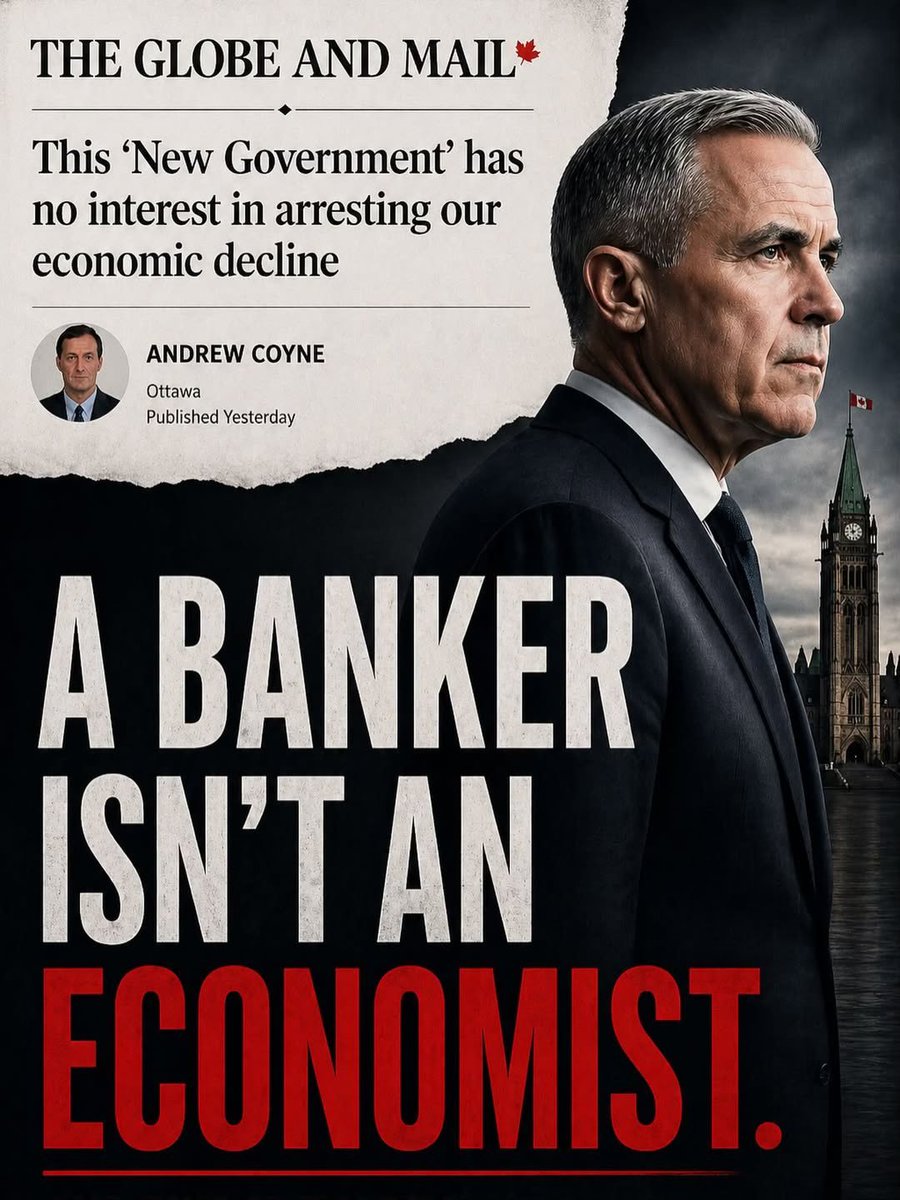
🧑‍💼A banker isn’t an economist. Not even close! 🇨🇦Canada is finding that out in real time. @MarkJCarney apparently knows how to manage inflation and interest rates. Marvelous. Growth, competition, productivity, investment? Different game entirely, and not in Carney's bailiwick. Instead, we get deficits parked at $65 to $67 billion, no real tax reform, no competition reform, and a productivity strategy that appears to be… hoping.🤞 They trimmed the headline but they kept the problem. Same inputs. Same outputs. Apparently this is the #Carney Liberal “plan.”🤦‍♂️ #cdnpoli #Canada #Economy #Deficit #Productivity @WorkingCdns @jasrajshallan @PierrePoilievre
CCMBC 2021 tweet media
English
13
115
189
1.3K
Richard Lazowski retweetledi
Melanie In Saskatchewan
Melanie In Saskatchewan@saskatchewan_in·
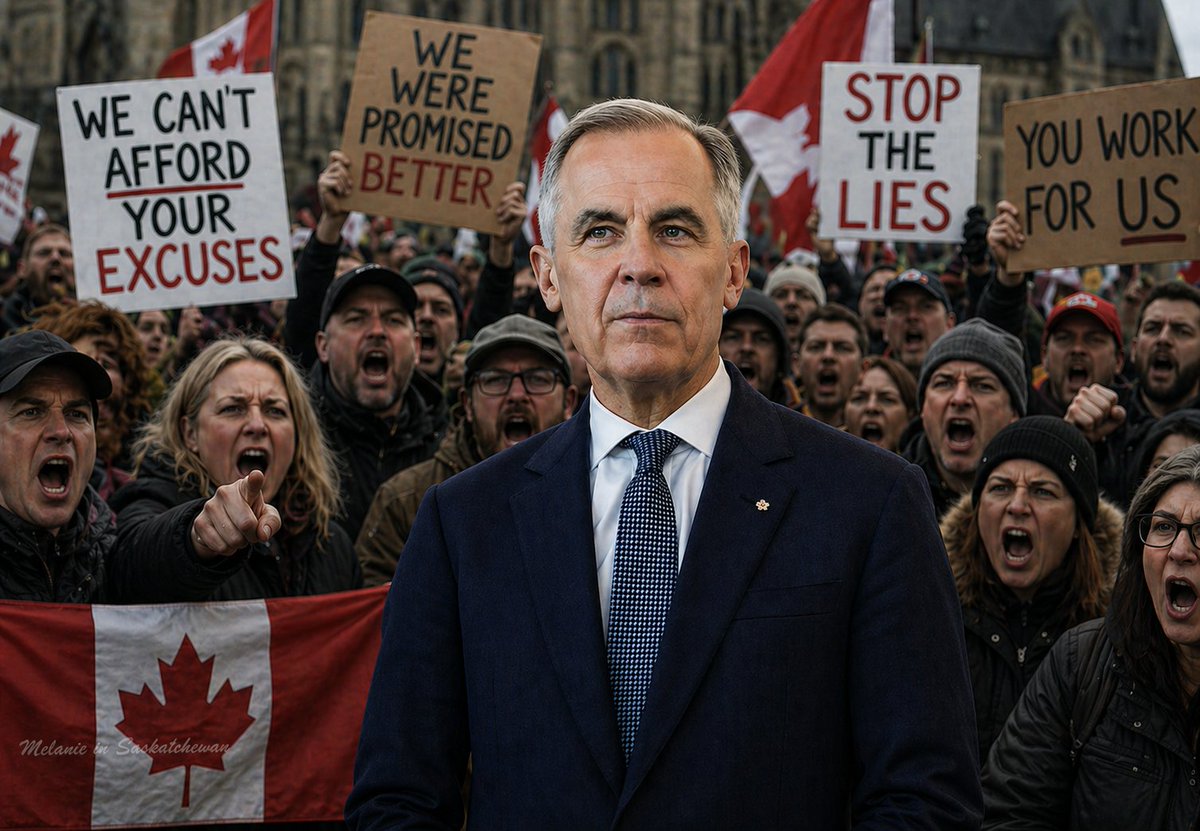
Prime Minister Mark Carney, You didn’t begin your majority by making life easier for people staring at a grocery total and quietly putting things back. You didn’t start with housing Canadians can afford or energy costs that don’t feel like a monthly gamble. You started by changing the machinery Parliament uses to ask you questions, which is a revealing place to begin if everything is supposedly going so beautifully. Let’s be clear about what your government keeps trying to obscure. If you had won a clear majority at the ballot box, Canadians would understand majority committee control. That is how the system works. But that is not how you got here. Your majority was assembled mid-Parliament through by-elections and floor crossings, legal on paper but not the same as going back to voters and asking for broader authority. Canadians elected a minority Parliament. They expected cooperation. Instead, they are watching your government behave as if the voters accidentally left the keys in the ignition. And what did you do with that newly assembled control? You didn’t fix the bills people can’t avoid. You fixed the room where those bills get discussed, which is an elegant little Ottawa trick: move the furniture, call it democracy, and hope nobody notices the exits are being managed. Motion No. 9 did not replace all the chairs. It did something far more useful. It changed committee composition so your government now holds the majority on every committee. The chairs remain where Canadians expect them to be, which is convenient theatre. But committees do not run on appearances. They run on votes. And those votes now sit with your caucus. That means your side can decide what gets studied, who gets called, how long a file stays alive, and whether an investigation ever gets its shoes on. You didn’t need to grab the gavel. You took the outcome. It wasn’t just that you took a majority on committees. You added more than you needed. One extra seat would have done the job. You chose two. That doesn’t read like routine housekeeping. It reads like an over-correction, the kind you make when you want outcomes to be certain before the meeting even starts. It doesn’t inspire confidence that proceedings will be even-handed. It invites people to watch closely, not because they’re curious, but because they no longer assume the process will speak for itself. On the surface, everything still looks normal. Ethics is still chaired by a Conservative. Public Accounts still looks opposition-led. Government Operations, the mighty OGGO, still carries an opposition chair, as an oversight committee dealing with spending, procurement, and contracts should. Very reassuring, if one only reads the placards and not the math. The watchdog still has a collar. Your caucus now holds the leash. The timing is the part that stinks through the wrapping. The Ethics Committee was already circling uncomfortable questions involving your Finance Minister and a $90 billion Crown corporation file. Opposition MPs were pushing for witnesses. The process was moving in the direction it was designed to move, which is usually when governments discover a sudden spiritual attachment to procedure. Then came delay. Filibusters. Closure. Debate on the motion to stack committee votes was itself shut down, because apparently even the discussion about limiting scrutiny required less scrutiny. Subtle as a brick through a stained-glass window, but with better stationery. You will say this is Westminster tradition. Majority governments control committees. Everything is perfectly normal. Technically, yes. But that argument only works if we pretend this majority arrived through the front door in a general election instead of being stitched together halfway through the Parliament Canadians actually voted for. That is the problem. Not the existence of the rule, but the way you are using it. A majority assembled mid-Parliament should come with restraint, humility, and a public commitment to let scrutiny breathe. Instead, you concentrated the levers and narrowed the lanes while calling it tradition. Very tidy. Very managerial. Very “trust us while we make it harder to check.” Canadians are not short on process. They are short on results. They are watching costs climb, options shrink, and paycheques stretch thinner while Ottawa explains, in increasingly polished language, why none of this is quite urgent enough to disturb the carpeting. Ordinary people do not get to re-balance their lives by adding two friendly votes to the kitchen table. They pay what the bill says or they go without. They don’t get to reorganize their problems. They live with them. When Canadians watch your government engineer a system where scrutiny is technically allowed but practically impossible for anyone outside your caucus, the reaction is not always loud. It is worse than that. It is the quiet, poisonous conclusion that the people in power can change the conditions of accountability whenever accountability becomes inconvenient. That is the real damage. Not one scandal burning hot for a week, but the slow settling of public cynicism into the floorboards. People stop expecting answers because the system has taught them how the story ends. A committee meets. A witness is delayed. A motion dies. A report softens. A minister survives. Everyone is told the rules were followed, which is always comforting when the rules have been arranged to protect the people using them. You did not eliminate scrutiny. You made it manageable. You turned accountability into something that can be scheduled, softened, outvoted, and walked quietly off stage before it becomes dangerous. You were sold as the steady hand, the competent manager, the adult in the room. But the first instinct your government that is led by your example showed, with majority power, was not confidence. It was control. Not leadership. Self preservation. Insulation, to put it another way. And insulation does not fix what is breaking. It just makes it easier for the people inside not to notice the cracking. You may want to think carefully about the optics of this farcical performance. Because the seeds of mistrust are already in the ground. All it takes is one single ray of sunlight to help it grow. And as you like to say, there’s good news: If there’s anything Canadians are good at, it’s finding the sunlight and sharing it with others. So, every time a meeting looks managed instead of open, every time a witness is delayed, every time a line of questioning quietly disappears, it doesn’t read as routine procedure to the people watching from the outside. It reads as something being kept out of view. To hide uncomfortable truths, About you. That’s how narratives take hold. Not because they’re proven, but because the conditions make them feel plausible. If you were looking for a way to convince Canadians that everything is above board, this isn’t it. This is how you end up with people assuming the opposite, not out of partisanship, but because they can no longer see how the process is supposed to protect them, and the inherent sense that any person who goes to such lengths to conceal information, must have something to hide. And once that doubt settles in, it doesn’t fade. It compounds. It hardens. And it becomes the lens through which everything your government does is judged. Melanie in Saskatchewan 👇 open.substack.com/pub/melanieins… 👇 buymeacoffee.com/melanieinsaska… Image created with AI
Melanie In Saskatchewan tweet media
English
17
80
183
2.2K