Robert Seso
53 posts


@MonikaGruber24 "Damals" hat es in MUC auch so angefangen, sogar die "Hand hoch" Gesten waren ähnlich
Deutsch

Religionsersatz und das war das Hochamt auf der Leopoldstrasse….
Terran Liberty@terran_liberty
Ich präsentiere euch ein Video von einer Demo für erneuerbare Energien. Und nein, meine Damen und Herren, das ist leider NICHT KI-generiert. Hört und seht selbst.

Deutsch

.@elonmusk we have a problem. >80% of content on X is AI generated clickbaiting slop and the fact it's being treated equal is killing our feeds. Please 1) add a "Likely AI generated" label to the posts and 2) make the algorithm prefer human over AI generated content
English

The hidden cost of "enterprise" .NET architecture:
Debugging hell.
I've spent 13+ years in .NET codebases, and I keep seeing the same pattern:
Teams add layers upon layers, to solve the problems they don't have.
IUserService calls IUserRepository.
IUserRepository wraps IUserDataAccess.
IUserDataAccess calls IUserQueryBuilder.
IUserQueryBuilder finally hits the database.
I've seen a lot of classes having one-line methods whose sole purpose was to call the next layer and that's it.
But to change one validation rule, you step through 5 layers.
To fix a bug, you open 7 files.
The justification is always the same:
"What if we need to swap out Entity Framework?"
"What if we switch databases?"
"What if we need multiple implementations?"
What if this, what if that.
The reality:
Those "what ifs" don't come to life in 99% of cases.
I haven't worked on a project where we had to swap the ORM.
But I've seen dozens of developers waste hours navigating through abstraction mazes.
This happens with both new and experienced developers.
New developers asking on Slack all the time:
"Where to put this new piece of code?"
But senior developers are too busy to answer that message. Why? Because they are debugging through the code that has more layers than a wedding cake.
The end result?
You spend more time navigating than building.
Good abstractions hide complexity.
Bad abstractions ARE the complexity.
And most enterprise .NET apps?
Way too much of the second kind.
English

@0x534c Why are there two ApplicationIds and are they constant (hardcoded)?
English

🚨 M365 Connector for Claude: Who’s Accessing Your Workloads?
Using the Defender XDR GraphAPIAuditEvents schema, I built a KQL query to list Entra users accessing Microsoft 365 workloads via the Claude connector and the specific workloads they touch. Once enabled, this connector allows Claude to directly access SharePoint, OneDrive, Outlook, and Teams — a powerful capability that demands governance oversight.
For defenders, this query provides actionable visibility into who is using the connector and what information they are accessing, helping SecOps teams monitor adoption pressure, enforce governance policies, and ensure connector risks are managed before they escalate.
KQL Code:
github.com/SlimKQL/Detect…
#Cybersecurity #M365ConnectorClaude #Entra #Governance

English

@eToro please fix the iPad App, it no longer shows the account balance on the home page in the portrait view.
English

@Mlu__N2 I tried both approaches and didn’t notice any noticeable difference in flavor in the finished product that could be traced back to whether I cooked meat or vegetables first, all other things being equal.
English

@12Knocksinna @Office365 It’s not just the Graph API, it’s everywhere. They pulled all good engineers to work on AI and a handful of other strategic services and left everything else to rot in the maintenance mode. Basically anything that’s not directly driving the AI consumption is no longer a priority.
English

.@Office365 Some Microsoft MVPs have questioned the gaps appearing in Graph API coverage and a lack of consistency and robustness in some APIs. It seems like Microsoft is not dedicating enough resources to this topic. Thoughts?
office365itpros.com/2026/03/18/mic…
#Microsoft365
English

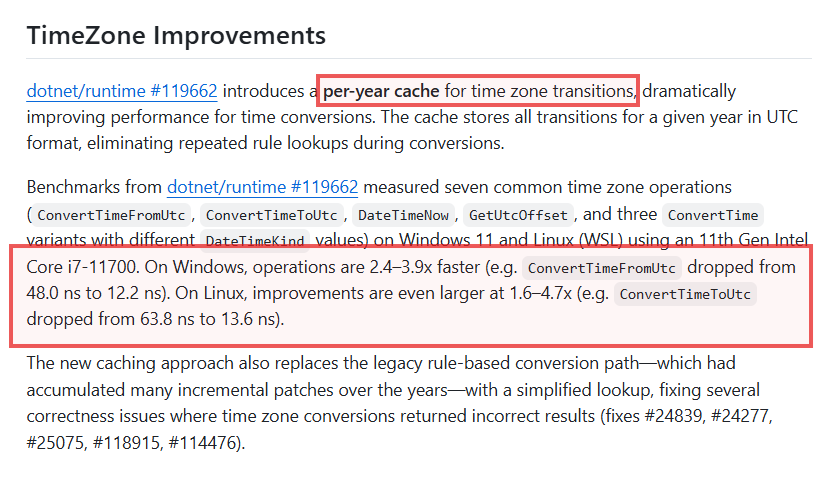
@Dave_DotNet Incredible how 24 years after .NET 1.0 was released there is still so much optimization potential left in such fundamental part of the framework. I wonder how much more could be improved in other fundamental areas.
English

@mjovanovictech Microsoft doesn’t recommend any specific versioning strategy, but rather provides the pros and cons for each of them and leaves the choice to you. That said, I prefer the URI versioning because it is explicit, easy to route, cache and discover. See #implement-versioning" target="_blank" rel="nofollow noopener">learn.microsoft.com/en-us/azure/ar…
English

How do you handle API versioning in ASP .NET Core?
I maintained a large public API with dozens of integrations, mainly serving mobile apps.
With that many clients, breaking changes weren’t an option.
✅ Adding new required params?
❌ Nope.
✅ Renaming fields?
❌ Nope.
To make changes, I had to version the API.
API versioning lets your API evolve without breaking existing clients.
There are three popular versioning approaches:
* URL versioning
* Header versioning
* Query parameter versioning
Microsoft recommends URL or query string versioning. I stick to URL versioning in most projects.
But what if there's a better way?
Media-type versioning is the most RESTful of them all.
It's also the least used, from what I've seen.
But I covered it in depth in Pragmatic REST APIs.
Here’s a full guide to API versioning in .NET: milanjovanovic.tech/blog/api-versi…
What’s been your experience with it?
P.S. The only thing better than API versioning is NO versioning. I know, I know - what is he talking about now? I recommend you explore API Change Management strategies. You'll shift your perspective.
---
Do you want to simplify your development process? Grab my Clean Architecture template here and save days of development time: milanjovanovic.tech/templates/clea…

English

@E_Boeminghaus Jeder Krieg fängt lange bevor der erste Schuss gefeuert wird an. Zuerst wird mit politischen und wirtschaftlichen Mitteln gearbeitet, erst dann sind die Waffen dran. Wir sind jetzt an dem Punkt angekommen.
Deutsch


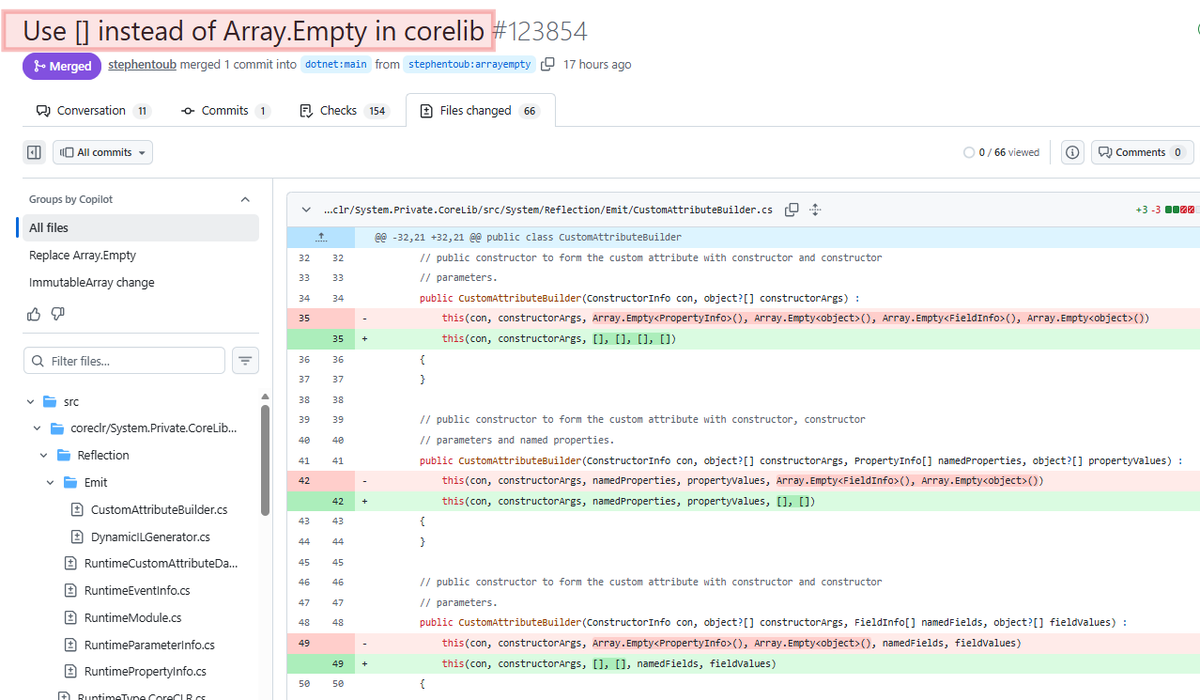
@Dave_DotNet Is this just syntactic sugar, or is there any actual difference in how it gets compiled to the IL?
English


@itsthewealth4me Yes if you’re in the US, no if you live and work in most other countries where salaries they pay are nowhere near as high as in the US (minus a few exceptions).
English

If you think about the 3 companies that reported in software, Microsoft NOW and SAP.
MSFT is down because they used GPUs for internal use and they missed on azure
NOW is down because I don’t know.
SAP is down because they had deals pushed out.
And the entire SaaS space is trading like it’s got a macro/disruption problem.
Don’t step in front of it but IMO it highlights how dumb/non fundamental the market is.
English

@orthodox_rasta @DarioCpx @grok RPO (remaining performance obligation) is the amount of contracted future revenue that has not yet been recognized, including 1) deferred revenue and 2) non-cancelable contracted amounts that will be invoiced and recognized as revenue in future periods.
English

I have a strong gut feeling that this huge jump in $MSFT RPOs in one quarter, from 392 to 625 bn$, I understand is mostly attributable to OpenAI, might be related to Oracle dropping its contract with OpenAI because the debt it needed to fulfill it is endangering $ORCL survival.
If the total amount of $ORCL RPOs disclosed in the next earnings drop sharply, my gut feeling will be confirmed. Keep an eye on this.
JustDario 🏊♂️@DarioCpx
~45% of $MSFT ~650bn$ commercial RPO is OpenAI, I remember I recently watched a movie that started with a similar line.
English

@pikaniuniu @DarioCpx So NVIDIA, Microsoft and Amazon will be giving money to OpenAI, so that OpenAI can pay their Azure and AWS bills, so that Microsoft and Amazon can buy additional chips from NVIDIA?
English

BREAKING: $MSFT made a subtle but big change in its disclosures I see nobody noticed so far. As per its revised disclosure, $MSFT is stating they will "continue" to invest in AI, but won't be "scaling" its AI investments anymore. Translated: $MSFT is going to scale back CAPEX.

JustDario 🏊♂️@DarioCpx
My dear followers, because of physical and mental limits 😅 please note I will take a bit of time to dissect $MSFT and $META numbers coming out shortly. Nevertheless, I am very looking forward to dive into them and check how big the AI black hole grew larger in the past 3 months
English

@nickchapsas @k_sasha You do realize that Apple will start shoving down Siri down your throat just like Microsoft is doing with Copilot as soon as they get Siri migrated to the Google‘s AI backend, don’t you?
English

@k_sasha Nah, that's boring, I think. It's basically: Windows has become a bloated broken mess with Copilot shoved down everyone's throat
English

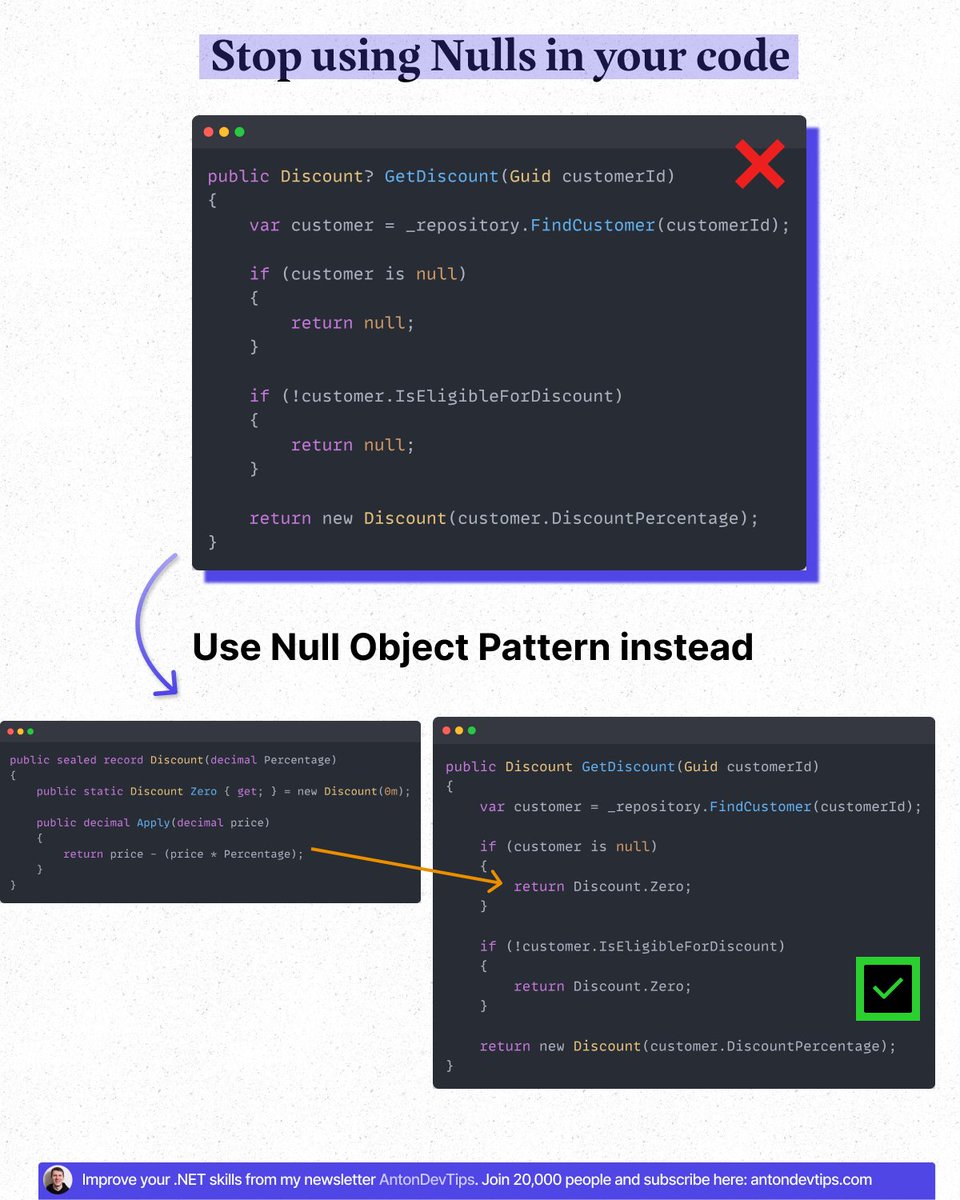
@AntonMartyniuk If customer == null (i.e. does not exist), then this method should throw and not return. If a method cannot do what it is supposed to do, throw, that’s a convention that the entire .NET Fx follows. Don’t fix problems that don’t exist.
English

𝗦𝘁𝗼𝗽 𝗿𝗲𝘁𝘂𝗿𝗻𝗶𝗻𝗴 𝗻𝘂𝗹𝗹 𝗶𝗻 𝘆𝗼𝘂𝗿 𝗰𝗼𝗱𝗲
Here is why 👇
Most developers return null every day.
It feels simple.
It feels harmless.
But here is the problem → null hides failure.
After 12 years in software development, I realized something important:
Returning null for everything makes code unclear, fragile, and easy to misuse.
↳ null does not explain why something failed.
↳ It forces every caller to check for null.
Here are the biggest issues I see in real systems:
• Hidden contracts → method signatures don't tell you null is possible
• Runtime surprises → missed null-checks lead to production bugs
• Defensive code → null checks everywhere
• Poor domain modeling → "nothing" instead of meaningful outcomes
So what's the alternative?
✅ Explicit results instead of null
Instead of returning null, return something that explains the outcome.
Common options:
↳ Result / Error objects
↳ Optional / Maybe types
↳ Domain-specific failure values
↳ Empty collection instead of null
null is easy to write.
But clarity is what truly scales.
👉 Get .NET interview Kit for free here:
↳ anton-devtips.kit.com/dotnet-intervi…
——
♻️ Repost to help others stop hiding failures behind null
➕ Follow me ( @AntonMartyniuk ) to improve your .NET and Architecture Skills

English

@brankopetric00 99.9% SLA on what scale - day, week, month, year? Can they get 99.9% if the region goes down? I'd make it an active-passive to be on the safe side: a globally distributed DB with the local AZ redundancy and a read-only replica in the other region, deploy the rest there if needed.
English

Client wanted multi-region active-active. I talked them out of it.
Their situation:
- 2,000 daily users, all in Western Europe
- 99.9% uptime requirement
- 18-month runway
- 3 engineers total
What they actually needed:
- Single region with proper HA
- Multi-AZ database with automated failover
- CDN for static assets
- Solid backup and restore tested monthly
Cost difference:
- Multi-region estimate: $23,000/month
- Single region HA: $4,200/month
They hit 99.95% uptime last year. Zero regrets.
Not every problem needs a distributed systems solution. Sometimes the answer is just good fundamentals done well.
English

@Dave_DotNet Both will compile to the exact same IL code, so it doesn’t matter. I prefer the „classic“ version for readability too, just like every sane dev born before 2000.
English