
Sabitlenmiş Tweet
rabble
32.5K posts


rabble
@rabble
Hacker and hopeless optimist I built https://t.co/TW1b1RLTnw as a way of reclaiming social media by and for humans, social media for people not AI or corporations
Pōneke, Aotearoa New Zealand Katılım Mart 2006
4.8K Takip Edilen18.1K Takipçiler
rabble retweetledi

Social media was supposed to empower people.
Here's our CEO and founder, @rabble, explaining why he built Divine and the vision behind it.
Watch the full video: youtu.be/PSIZ6q6e8hg

YouTube
English
YouTube
English
@RevivedThoughts I do not count it in my book, even if you go through customs and get a stamp in your passport, you need to go out of the airport / train station / bus station / car and talk to at least one person to count as having visited a country.
English

Settle a debate I'm having.
Can you count having visited a country if you never left the airport?
English
It rains a lot in New Zealand, but i'm not sure folks really understand how much.
739mm of rain just fell on the Tasman region in a weekend.
London gets ~600mm in an entire YEAR.
That's London's w...
njump.me/nevent1qqsx30l…
English
Divine 1.0.14 is live on iOS.
Three weeks of work since 1.0.12 — more control, cleaner loops, fewer weird edges. This one’s for the people who notice the details.
Creator tools got a serious upgrade...
njump.me/nevent1qqspeap…
English
Three weeks of intense effort and we’ve got a new release of @divinevideoapp
divine.video@divinevideoapp
Divine 1.0.14 is live on iOS. Three weeks of work since 1.0.12 — more control, cleaner loops, fewer weird edges. This one’s for the people who notice the details.
English
rabble retweetledi

Three new cities have been added to Metro Mapper!
🏔️ Denver
🌹 Portland
🌲 Vancouver
Play now at metromapper.net

English
rabble retweetledi

"That's what Vine felt like. Whatever idea you have, shoot it right now."
OG Viner @ReggieCOUZ joins @Rabble to reflect on the early days of Vine and how authentic ideas and community were the key to building a real audience.
Full ep out now.
English
rabble retweetledi
What happens when the platform you built your career on shuts down?
@Rabble & @ReggieCOUZ on why creators should pay attention to who owns the platforms they create on, & start learning why decentralized platforms like @divinevideoapp can benefit them.
youtu.be/Ie4sSN2_N4A

YouTube
English
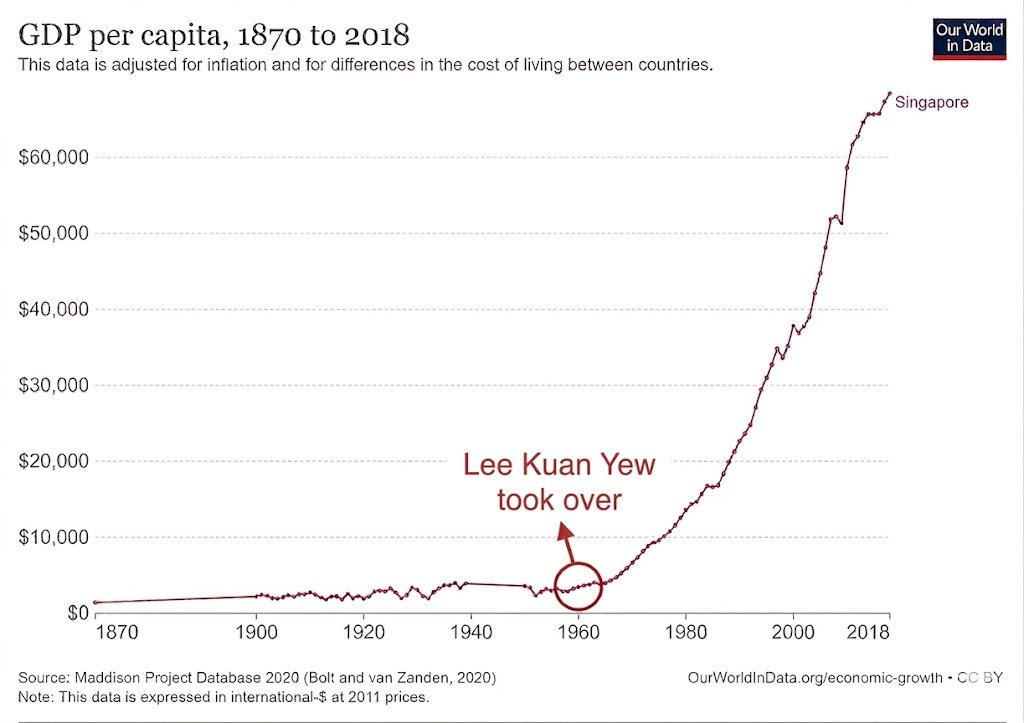
@Giuliano_Mana I mean, Singapore also got independence from being a English colony... that had something to do with it too.
English

rabble retweetledi
Happy Memorial Day from Divine!
Today we honor and remember those who gave everything for their country. 🇺🇸
The legend himself, Josh Peck, dropped this Memorial Day remix on Vine back in 2013. 🎶
@ItsJoshPeck your Divine account is waiting for you. 👀
English
@TerribleMaps In Oregon you can legally sit in your own front porch or walk down the street in your birthday suit.
English

Can you legally be in your birthday suit in your own backyard?

English
@VladTheInflator you made an AI prompt to show what happens after decades of racist urban planning rules.
English



rabble retweetledi
@TonioSkits finds out the hard way: Never cheat on a news reporter 😂… they WILL put you on blast 📷
Tune in tomorrow night at 11:00pm EST to catch Guamay Martell's segment on Divine on @nbc6 & @Telemundo51.
And here’s a sneak peek of the bit Tonio and Guamay recorded.
English
rabble retweetledi

New version of Nostr VPN is out. Like tailscale, but no email addresses or 3rd party accounts, just public keys. New:
* native multiplatform user interfaces
* Nostr-based multihop routing (FIPS protocol) — very useful when NAT holepunching fails
* improved network management UX

English
rabble retweetledi

Smartphones are not the explanation for the recent decline in fertility. Instead, they are an accelerator of deeper forces already at work.
Let’s start with the facts. Fertility is falling almost everywhere: in rich, middle-income, and poor countries; in secular and religious countries; and in countries with high and low levels of gender equality.
The decline accelerated around 2014. So, no country-specific explanation will work unless you are willing to believe that 200 distinct country-specific explanations arrived at roughly the same time.
Smartphones look like the obvious candidate: the first iPhone was released in 2007, and global adoption has been astonishingly fast.
Economists understand the first major decline in fertility in advanced economies, from 6 or 7 children per woman throughout most of human history to about 1.8, that occurred between the early 1800s and roughly 1970, well before smartphones. The main drivers were a sharp fall in child mortality (effective fertility was rarely above 3 and often close to 2) and the shift from a low-skill, rural agrarian economy to a high-skill, urban industrial one. We have quantitative models that fit these facts well.
Country-specific factors mattered too, of course. Proximity to low-fertility neighbors accelerated Hungary’s decline, while fragmented landowning structures accelerated France’s. But these were second-order mechanisms.
This is also why most economists long considered Paul Ehrlich’s doom scenarios implausible. We forecast that fertility in middle- and low-income economies would follow the same path as in the rich, probably faster, because reductions in child mortality reached India or Africa at lower income levels (medical technology is nearly universal, and most gains come from handwashing and cheap antibiotics, not Mayo Clinic-level care). Much of what we see in Africa or parts of Latin America today is still that old story.
But in the 1980s, a new pattern appeared. Japan and Italy fell below 1.8, the level we had thought was the new floor. By 1990, Japan was at 1.54 and Italy at 1.36.
This second fertility decline began in Japan and Italy earlier than elsewhere, driven by country-specific factors, but the underlying dynamics were widespread: secularization, an education arms race, expensive housing, the dissolution of old social networks, and the shift to a service economy in which women’s bargaining power within the household is higher. The U.S. lagged because secularization came later, suburban housing remained relatively cheap, and African American fertility was still high. U.S. demographic patterns are exceptional and skew how academics (most of whom are in the U.S.) and the New York Times see the world.
My best guess is that, without smartphones, Italy’s 2025 fertility rate would be about 1.24 rather than 1.14. I doubt anyone will document an effect larger than 0.1-0.2. Italy was at 1.19 in 1995, not far from today’s 1.14. The TFR is cyclical due to tempo effects, so I do not read too much into the rise between 1995 and 2007 or the decline from 1.27 in 2019 to 1.14 today. The direct effect of smartphones is not zero, but it is not, by itself, that large.
Where social media, in general, and smartphones, in particular, matter is in the diffusion of social norms. What would have taken 25 years now happens in 10. Social media are not the cause of fertility decline; modernity is. But they are a very fast accelerator.
That is why social media are a major part of the story behind Guatemala (yes, Guatemala) going from 3.8 children per woman in 2005 to 1.9 in 2025. Without them, Guatemala would also have reached 1.9, just 20 years later.
Modernity, in its current form, is incompatible with replacement-level fertility. By modernity, I do not mean capitalism: fertility fell earlier and faster in socialist economies than in market economies. Socialist Hungary fell below replacement in 1960, and socialist Czechoslovakia in 1966 (both experienced small, short-lived baby booms in the mid-1970s). By modernity, I mean a society organized around rational, large-scale systems and formalized knowledge.
Countries will not converge to the same fertility rate. East Asia is likely stuck near 1, possibly below, given its unbalanced gender norms and toxic education systems. Latin America faces the same gender problem plus weak growth prospects, so I expect something around 1.2. Northern Europe has more egalitarian family structures and might hold near 1.5. The very religious societies are probably the only ones that will sustain 1.8.
All of this could change with AI or changes in population composition. We will see. But on the current evidence, deep sub-replacement fertility is the “new new normal.” Unless we reorganize our societies, better learn to handle it as best we can.

English
rabble retweetledi

Hey dudes!
The 76th Edition of the weekly Nostr Recap (18/05/2026) is out! 😍
Explore here 👇
njump.me/naddr1qvzqqqr4…

English
When your favorite band announces a Latin American tour

English
@torovictorioso If they did productive investment it'd be great but mostly they'll buy property which makes NZ's economic situation worse, not better.
English


There are many reasons to suspect smartphone use may be playing a role in recent fertility declines, as it is likely playing a role in other expressions of social atomization. But telling the story exclusively in techno-deterministic terms looks like presentist myopia to me.

The Alex Nowrasteh@AlexNowrasteh
Going out on a limb here, but I don't think the phones did it.
English