RadG_Dodo

3.7K posts

RadG_Dodo

RadG_Dodo

@RadG_Dodo

Find your own voice & use it, use your own voice & find it...Jayne Cortez

Katılım Temmuz 2019
214 Takip Edilen108 Takipçiler
RadG_Dodo retweetledi
Nirupama Menon Rao 🇮🇳
Nirupama Menon Rao 🇮🇳@NMenonRao·
Shashi Tharoor makes a larger point that deserves to be separated from the moment. Women’s representation is not a bargaining chip. It is not an adjunct to some other structural exercise. It stands on its own moral and democratic foundation. We cannot afford to tie women’s reservation to any process that risks becoming contentious, partisan, or destabilising. Doing so dilutes the clarity of purpose. Worse, it delays justice that is already long overdue. Women’s reservation is not a concession. It is a correction. Our democratic institutions must reflect the society they claim to represent. Women are not a “special category” to be fitted in when conditions are convenient. They are half the nation, often more capable, often more resilient, and far too underrepresented in decision-making spaces. If we truly believe they are, as Mr. Tharoor puts it, the “better half,” then the path forward is simple: give this issue undivided attention, legislative priority, and political will, without encumbrances, without linkages, without delay. Let the reform stand alone. Let it stand tall. #NariShakti #WomenHoldUpHalftheSky
English
0
35
170
62.5K
RadG_Dodo retweetledi
Nirupama Menon Rao 🇮🇳
There is a certain genre of writing that substitutes accusation for argument. It begins by assigning motive, then arranges facts,real, distorted, or imagined, to fit that conclusion. The recent commentary on my views on India-Pakistan relations follows that familiar script. Let me state the essentials clearly. To argue that India must combine deterrence with engagement is NOT to diminish the reality of terrorism, nor to excuse it. It is to recognise how serious nations manage adversaries. India has, across governments and decades, done precisely this, responding firmly to terror while retaining channels of communication where necessary to prevent escalation and miscalculation. This is not sentimentality. It is statecraft. The suggestion that engagement grants “impunity” rests on a false binary, that one must either talk or act. In practice, states do both. To collapse that complexity into a moral accusation may make for forceful prose, but it does not make for sound policy. The caricature of a women’s caucus is equally misplaced. It is not proposed as a substitute for national policy, nor as a solution to entrenched conflict. It is a modest Track II initiative, one of many possible avenues, to widen dialogue, reduce hostility, and explore areas where cooperation may still be possible. Such efforts do not require approval from those who see every form of engagement as capitulation. Invoking the suffering of victims of terrorism to argue against any form of dialogue is particularly troubling. Their loss demands seriousness, not rhetorical deployment. Accountability is not strengthened by narrowing the space for thought. The claim that an idea is discredited because it is welcomed by a Pakistani voice is also a curious standard. If the merit of an argument is to be judged by who agrees with it, then independent judgment itself is surrendered. Ideas must stand or fall on their own logic. Beyond the rhetoric lies a more fundamental question: what is India’s end game with Pakistan? If it is to reduce Pakistan to rubble, that is fantasy dressed up as toughness. It is not going to happen, and any attempt to move in that direction would risk catastrophe for the entire region, not least for India. Nuclear geography is a stern schoolmaster. It does not indulge chest-thumping. The real end game has to be containment, deterrence, internal strengthening, and selective engagement. In plain words: India’s objective should be to make Pakistan’s use of terror too costly to sustain, while preventing the relationship from sliding into permanent uncontrolled escalation. That means four things. First, raise the cost of terrorism. Through intelligence, border management, diplomatic isolation where warranted, calibrated military response when necessary, and relentless exposure of the infrastructure of proxy violence. No illusions there. Second, deny Pakistan veto power over India’s future. We should not let our growth, our diplomacy, our regional ambitions, or our internal confidence be held hostage by a single hostile neighbour. The greatest strategic answer to Pakistan is a stronger, more cohesive, more prosperous India. Third, manage the conflict, not romanticise it. There will be no grand reconciliation in the near term. But neither can every interaction be reduced to rage. Ceasefire mechanisms, back channels, water safeguards, crisis hotlines, and limited functional engagement are not signs of softness. They are instruments of control. Fourth, keep open the possibility of a different future without betting on it. That is where dialogue belongs. Not as wishful thinking, not as “aman ki asha” balloon releases, but as disciplined statecraft. You talk not because you trust, but because you must understand, signal, warn, probe, and occasionally de-escalate. So the end game is not rubble. It is a Pakistan that is deterred, constrained, denied easy success, and unable to derail India’s future. Fury is a mood. It is not a policy.
English
0
255
868
612.6K
RadG_Dodo retweetledi
Gautam Menon
Gautam Menon@MenonBioPhysics·
This is an amazing story and a must-read. If there was a real candidate for forgotten Indian science figures, Bahadur and Ranganayaki would rank up at the top. Meticulous work from Shashi Thutupalli and group clarifies the importance of the 'jeevanu' they proposed.
Shashi Thutupalli@stpalli

Protocells from three inorganic salts, some formaldehyde and water? They grow? They synthesise organic molecules of core biomolecular classes: amino acids, sugars, lipid-like motifs? And, there are similar structures in today's oceans? Yes! Read on. arxiv.org/abs/2601.11013

English
1
9
16
3.3K
RadG_Dodo
RadG_Dodo@RadG_Dodo·
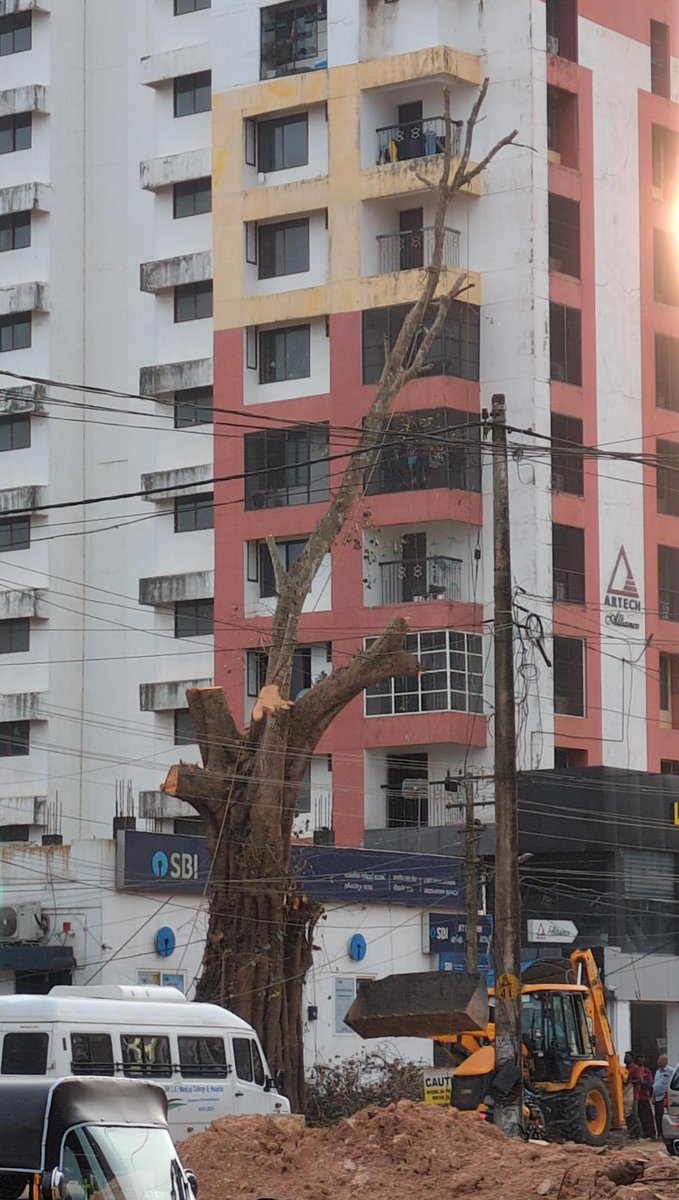
We teach our children Ficus trees (peepal, banyan) are keystone species. When a keystone falls the structure collapses. Sreekariyam junction is witness to flattening of 2 keystones. Who makes these decisions? What is the state’s position @keralaforestdpt @CMOKerala?
English
1
0
0
24
RadG_Dodo retweetledi
Dr Sudhir Kumar MD DM
Dr Sudhir Kumar MD DM@hyderabaddoctor·
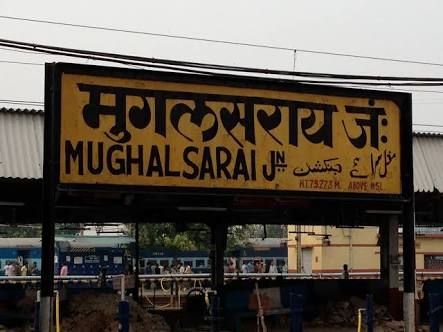
Why I Chose to Learn Tamil (Instead of Complaining About It) When I joined CMC Vellore for my MBBS in 1989, little did I know that one of the most important skills I’d pick up outside the classroom would be—reading Tamil. I had come from Bihar, where roads and public transport were notoriously poor at the time. So when I arrived in Tamil Nadu, I was genuinely impressed. The roads were excellent, the bus system well-organized, and the services surprisingly punctual. But there was one challenge: all the destination boards (on buses) were written only in Tamil. There were no signs in English or Hindi. Sure, the bus route numbers were there—but who could memorize the numbers for every possible destination? So, each time I had to catch a bus, I faced a choice: Either stand at the bus stop looking confused and ask a local Tamil speaker to read the board for me (and feel awkward doing it repeatedly), Or... learn to read Tamil myself. I chose the latter. It wasn’t about mastering the language—just enough to decode bus boards and shop signs. And it changed everything. I could now navigate confidently, spot landmarks, and even enjoy the satisfaction of reading signboards that once felt like hieroglyphics. Later, during my MD and DM years, and while working as a lecturer in Neurology (2001–2004), that small decision continued to serve me well. In hindsight, I could’ve joined the chorus of outsiders who complain about the lack of English signs. I could’ve argued that “we live in a multilingual country” or demanded change. But instead, I chose to adapt. And that small act of respect towards the local culture paid me back in countless ways—with independence, connection, and a deeper appreciation of where I lived. Sometimes, it’s easier—and far more enriching—to learn a few letters than to fight a system that's not broken, just different.
Dr Sudhir Kumar MD DM tweet media
English
343
1K
6.2K
399.6K
RadG_Dodo retweetledi
PWSapiens
PWSapiens@SapiensPW·
@TamamBeitJirja It must be deeply painful for all in the diaspora at present, particularly with family in Gaza. I am at my wit's end as to what on earth we can do now. I think we just have to keep pushing.
English
0
5
37
2.7K
RadG_Dodo retweetledi
Nicholas Fabiano, MD
Nicholas Fabiano, MD@NTFabiano·
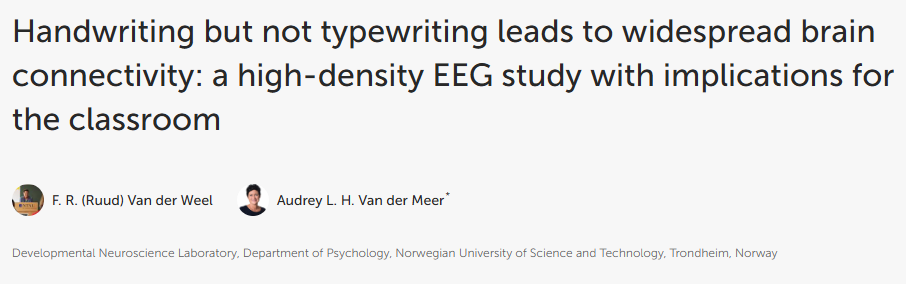
These findings are from a study in @FrontPsychol which recorded brain electrical activity in 36 university students as they were handwriting visually presented words using a digital pen and typewriting the words on a keyboard. frontiersin.org/journals/psych… 2/10
Nicholas Fabiano, MD tweet media
English
10
123
1.2K
114K
RadG_Dodo retweetledi
ParanjoyGuhaThakurta
ParanjoyGuhaThakurta@paranjoygt·
Dear Doctors, When you remove Saibaba’s eyes, Please add a touch of gentleness, For in them lie traces of the world he dreamt of, That might unfold within someone else. Please extract his heart with utmost skill, For in that tenacious heart that denied death In the fascist Manuvadi regime’s prison, You may find the roots of tender compassion For the Adivasis and the oppressed masses. In constant captivity, grappling with illness, He stood firm for his beliefs. Please check, perhaps, those polio-stricken legs Could leave a mark on the faces Of the chameleon activists who preach a new ideology every day. One more, final request… Please preserve that brain even more carefully for the future generations, For though ninety percent disabled, His “thinking mind” made this exploitative system tremble with fear. Someday, it may help someone identify the system’s weak link. Janjerla Ramesh Babu President, Telangana Forum Against Displacement (With a heart burdened by sorrow for the sudden martyrdom of Comrade G.N. Saibaba…)
English
40
574
1.7K
45.9K
RadG_Dodo retweetledi
jyoti punwani
jyoti punwani@jyotipunwani·
Every time I reported on his incarceration, I wondered at the depth of malevolence the State had towards him, & his equally deep capacity to withstand it. My tribute to an incredible intellectual. #ProfGNSaibaba rediff.com/news/column/g-…
English
11
102
295
7.9K
RadG_Dodo retweetledi
Siddharth
Siddharth@svaradarajan·
The joy in working for The Wire lies in getting exceptional pieces like this to a wider readership and then discovering that it is also the ‘most read’ on the site! If there is one piece you read this week, let it be this: To come to terms with the Supreme Court’s verdict on the ‘creamy layer’ among Scheduled Castes, a poet and teacher of literature in a mofussil college returns to a Brazilian short story, the Dred Scott case and the Preamble of the Constitution in order to reflect on the cosy members-only club called the collegium which helps the judiciary savour the cream and leave the whey to the masses. m.thewire.in/article/caste/…
English
24
186
417
99.9K
RadG_Dodo retweetledi
GRAIN
GRAIN@GRAIN_org·
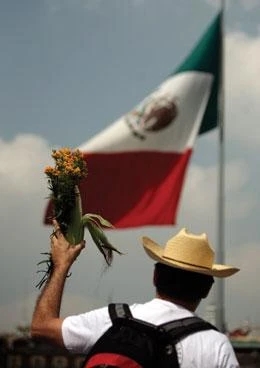
"The outcome of the US-Mexico trade dispute over GM maize could have global ramifications: if the panel rules in Mexico’s favour, it could set a legal precedent. That, in turn, could encourage other countries to ban GM crops. And that is the last thing the world’s agrochemical giants want," says @NickCorbishley nakedcapitalism.com/2024/07/mexico…
GRAIN tweet media
English
1
34
34
2.1K
RadG_Dodo retweetledi
Dr. S.Y. Quraishi
Dr. S.Y. Quraishi@DrSYQuraishi·
Why was this catch ignored by media ?You can praise Surya Kumar Yadav's catch, but also take a look at the catch taken by India's daughter, cricketer Harleen Deol...👍
English
454
683
3.3K
191.7K
RadG_Dodo retweetledi
Bhooshan Shukla
Bhooshan Shukla@docbhooshan·
#Parenting Teachers are important people in children's life. How we treat their teachers with our words and actions shapes child's worldview and view about education as well.
English
1
11
91
3.5K