Rajan Kashyap

242 posts

Rajan Kashyap

Rajan Kashyap

@Rajankashya

'KOHAM' - Who Am I

Katılım Haziran 2018
425 Takip Edilen126 Takipçiler
Rajan Kashyap retweetledi
Junhao (Hao) Wen
Junhao (Hao) Wen@JunhaoWen·
Excited to put the cherry on the top for our multi-organ, multi-omics biological aging clock work: After developing 3 brain MRI-based clocks (MRIBAG), 9 phenotype-based clocks (PhenoBAG), 11 proteome-based clocks (ProtBAG), 5 metabolome-based clocks (MetBAG), we have now published 7 MRIBAGs (nature.com/articles/s4159…) from the brain and other body systems using multi-organ MRI data. Great teamwork from @chrisdav66 at Penn, Luigi Ferrucci & Keenan Walker (BLSA) from @NIH and @NIHFunding, @AndrewZalesky from University of Melbourne, Michael Raffi # Paul Aisen (A4) from USC, and many others. 1/6🚩
English
2
9
33
5.4K
Rajan Kashyap
Rajan Kashyap@Rajankashya·
Dear @AlzheimersRes team- From Last 3 months there is constant harassment regarding APC payment. It is pity to see that such a big publication house has such poor management and there is constant mistakes from your end and no action to the 25 emails sent . Kindly help.
English
0
0
0
39
Rajan Kashyap retweetledi
Rodrigo Braga
Rodrigo Braga@RodBraga·
🚨 New Preprint 🚨 Targeting intracranial electrical stimulation (ES) to network regions defined within individuals causes network-level effects By Cyr et al. Q: Can we use individualized network maps from precision fMRI to modulate a targeted network via ES? A: Yes! 🧵:
Rodrigo Braga tweet media
English
3
37
101
9.2K
Rajan Kashyap
Rajan Kashyap@Rajankashya·
Here we used T1 weighted images of patients with semantic #PPA and non-fluent #PPA simulated three #tdcs montages- Frontal,Dorsal&Ventral using I-SATA Tool developed by us previously doi.org/10.21979/N9/KW…
English
1
0
0
34
Karishma Kaushik, MBBS, MD, PhD, Mom
It took me a while to articulate why the Ramalingaswami Fellowship does not get the prestige it deserves. 🙏 Whenever I have explained the fellowship to international colleagues, they are wide-eyed with awe. 'I wish my country had such a program' is the typical response. 🌎 It is because - in India, the prestige of permanent positions outweighs the scientist, and therefore fellowships are undervalued.
English
6
3
87
5.3K
Rajan Kashyap retweetledi
Thomas Yeo
Thomas Yeo@bttyeo·
While the world burns, we cook up a new preprint! doi.org/10.1101/2025.0… Biophysical modeling is a key tool to derive mechanistic insights into the brain. These models are governed by biologically meaningful parameters (unlike deep neural nets), but the dirty secret ... 1/N
Thomas Yeo tweet media
English
2
61
159
19.5K
Rajan Kashyap
Rajan Kashyap@Rajankashya·
@arpansview He has a mesmerising voice... especially in this song his voice served justice to ot
English
0
0
1
19
Rajan Kashyap retweetledi
Giulio Ruffini
Giulio Ruffini@ruffini·
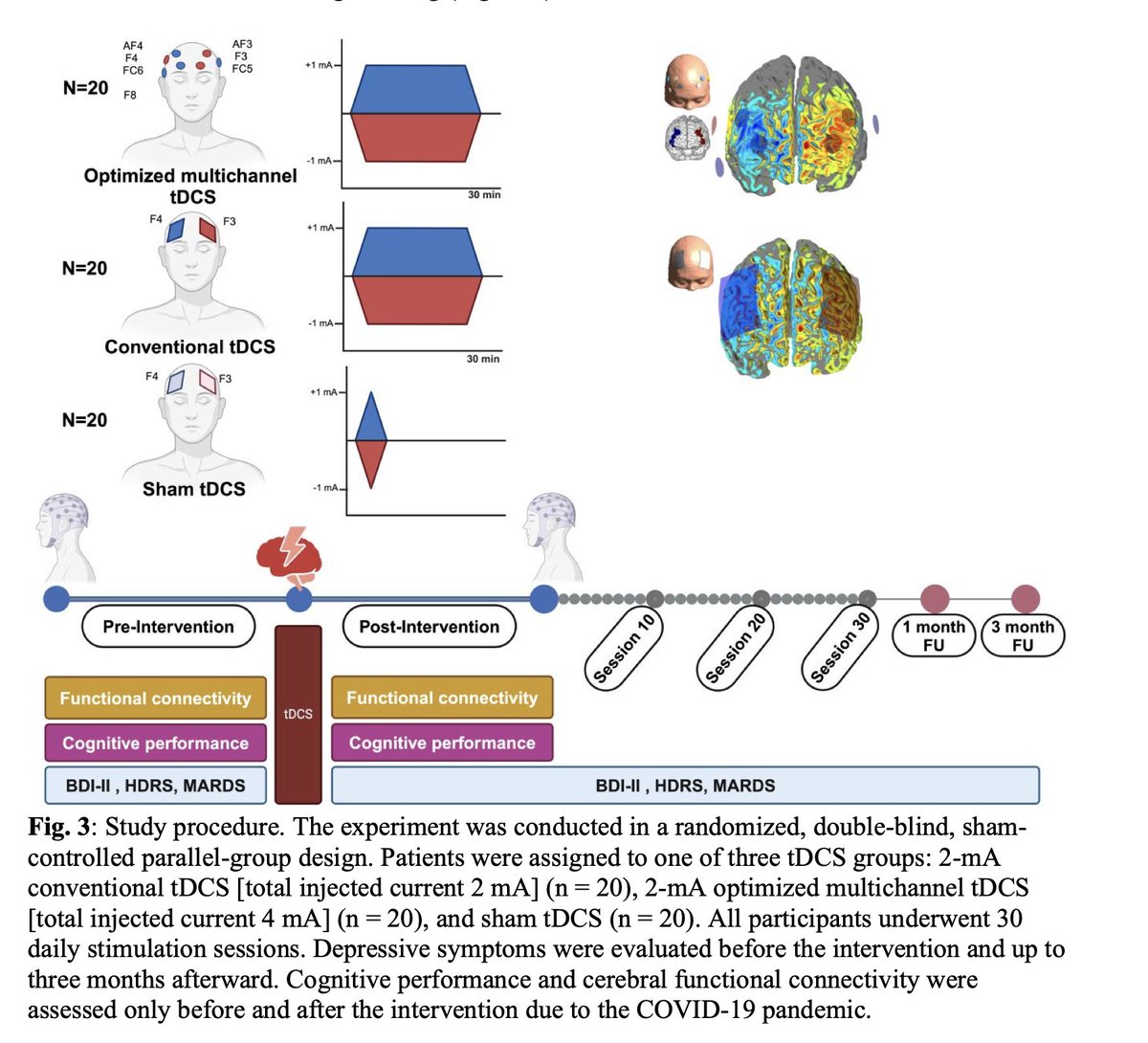
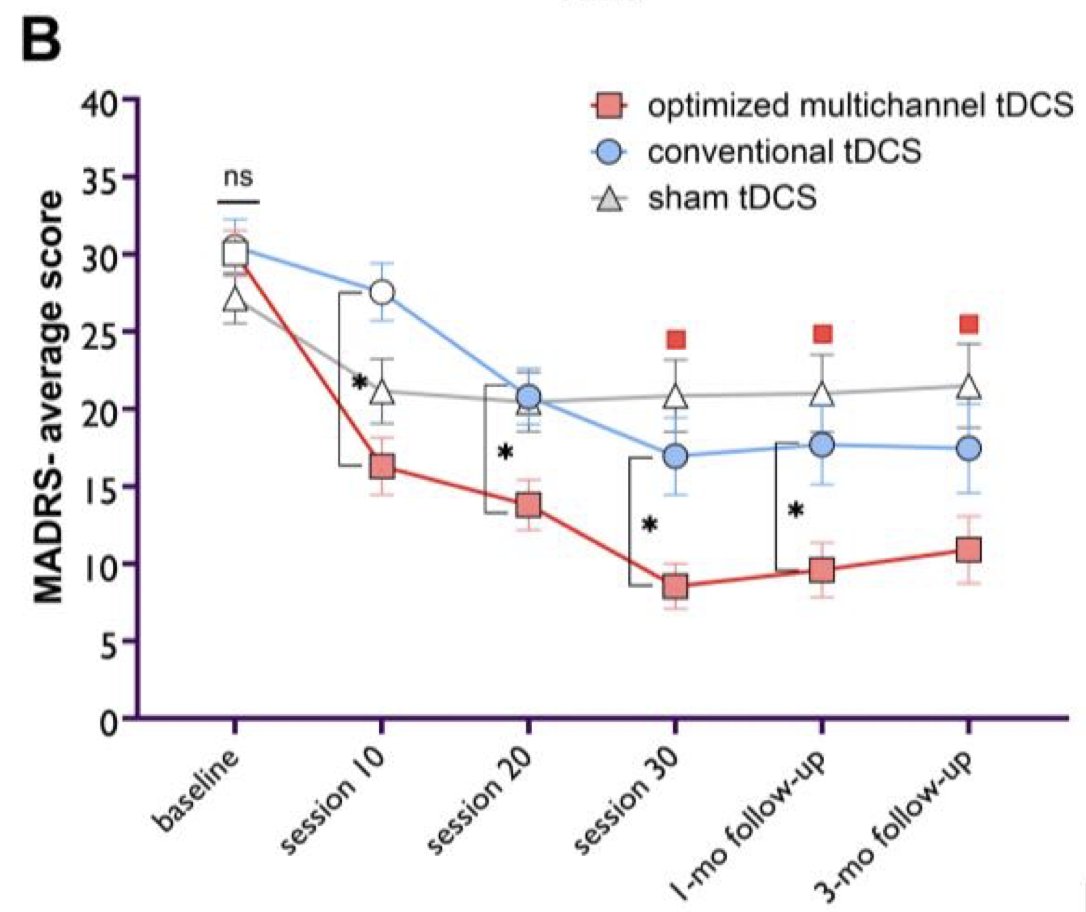
1/ New Starstim study alert in MDD! 🧠⚡ A randomized controlled trial compared optimized multichannel tDCS vs conventional tDCS for treating major depressive disorder (MDD). Findings? Optimized tDCS outperformed conventional and sham tDCS in reducing depressive symptoms and improving cognition. 2/ The study involved 60 MD patients receiving 30 sessions of either computationally-optimized multichannel tDCS (7 electrodes, 4.0 mA), conventional tDCS (2 electrodes, 2.0 mA), or sham tDCS. Both active protocols reduced symptoms, but optimized tDCS showed faster and greater improvements. 3/ Key results: Optimized multichannel tDCS was clinically superior to both conventional and sham tDCS. Optimized tDCS reduced depressive symptoms as early as the 10th session, with a 73% response rate at 1 month (Hedge’s g=2.8). Conventional tDCS showed (milder) benefits only after the 30th session. Both outperformed sham tDCS. 4/ Cognitive improvements were also significant with optimized tDCS: better working memory, sustained attention, and executive functions compared to conventional and sham tDCS. This suggests tDCS can target both mood and cognitive deficits in MD. 5/ Brain connectivity improved, too. Optimized tDCS enhanced functional connectivity in key networks (e.g., prefrontal-temporal regions), which are often disrupted in depression. This aligns with symptom reduction and cognitive improvements. 6/ Why does this matter? Computationally optimized multichannel tDCS offers a more targeted, effective, and faster-acting treatment for MD compared to conventional tDCS. tDCS is also non-invasive, affordable and can be used at home, and has fewer side effects than medications. 7/ Bottom line: Optimized multichannel tDCS is a promising intervention for MD, with benefits for both mood and cognition. Future research should explore its potential for other neuropsychiatric disorders. 8/ Efficacy results are in line with our earlier open label home study: frontiersin.org/journals/psych… #telemedicine #hometdcs 8/ Link to paper: medrxiv.org/content/10.110… #OpenAccess #ScienceTwitter @neuroelectrics Special thanks to Ali and Michael and the team for all the heavy lifting. #starstim #stimweaver #tDCS #mdd #depression #neuromodulation #MentalHealth #DepressionTreatment #BrainStimulation #Neuroscience #BrainHealth #MentalHealthTech #Innovation
Giulio Ruffini tweet mediaGiulio Ruffini tweet media
English
0
3
9
1.4K
Rajan Kashyap
Rajan Kashyap@Rajankashya·
For neurological disorders with atrophy, conventional is more safer than high definition #tdcs for personalised dose requirement #dementia
English
0
0
1
68
Rajan Kashyap
Rajan Kashyap@Rajankashya·
For psychiatric disorders without cortical atrophy, both conventional and Hdtdcs can be used for dose controlled Tdcs #depression (2/3)
English
0
0
2
55