Ralph Horacio SSR

77.6K posts

Ralph Horacio SSR banner
Ralph Horacio SSR

Ralph Horacio SSR

@RalphHoracioSSR

Verily With hardship comes ease. Setting the standard — Exhaust | Wheels 🛞 | Wraps | Maintenance | Collision Exotic Car Rentals | Crypto Enthusiast ₿.


United States Katılım Ocak 2024
616 Takip Edilen77.1K Takipçiler
Sabitlenmiş Tweet
Ralph Horacio SSR
Ralph Horacio SSR@RalphHoracioSSR·
This is what I do, not gifted or rented - All Engineered.
English
0
11
211
27.7K
Ralph Horacio SSR retweetledi
Tesla Japan
Tesla Japan@teslajapan·
新しいModel Y L 進化するSUV、プレミアム3列シート
Tesla Japan tweet media
日本語
64
300
1.5K
249.2K
Ralph Horacio SSR retweetledi
Nic Cruz Patane
Nic Cruz Patane@niccruzpatane·
Driving with Tesla FSD enabled is 9x safer than a human driving. This Model Y RWD is $40K and you can get it with 0% financing right now (+$99/mo for FSD).
English
48
114
1.2K
54.1K
Ralph Horacio SSR
Ralph Horacio SSR@RalphHoracioSSR·
Never seen him in such a rush haha 🤣
English
0
0
1
764
Ralph Horacio SSR
Ralph Horacio SSR@RalphHoracioSSR·
If you’re struggling in life, remember this: everything you see here is temporary — the Ferrari, the mountains, the sound of the V12. It will all fade and pass away. The only thing that lasts forever is the Word of God. Enjoy your blessings. Stay grateful. Stay humble.
English
0
0
0
604
Ralph Horacio SSR retweetledi
Vivek Sen
Vivek Sen@Vivek4real_·
🇺🇸 CATHIE WOOD REVEALED WHY BITCOIN IS ABOUT TO GO PARABOLIC: “GOLD PRECEDES A BIG MOVE IN BITCOIN” $1,000,000 INCOMING 🚀
English
99
123
1K
54.2K
Ralph Horacio SSR retweetledi
CryptoBullet
CryptoBullet@CryptoBullet1·
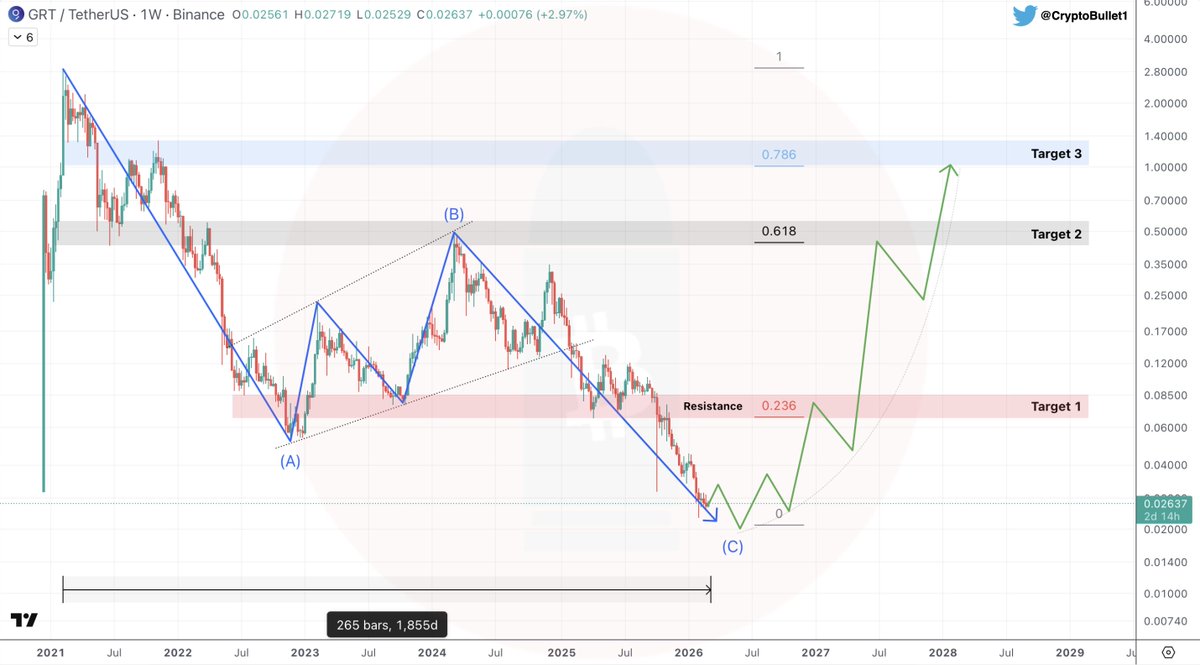
$GRT Macro chart This giant ABC is almost complete. We'll soon complete Wave (C) and start a multi-month bullish trend I believe the next cycle will be very bullish for Alts (see my $OTHERSBTC 1M chart) and $GRT is one of the few projects I'm keeping an eye on (The Graph is a web3 protocol for organizing and accessing blockchain data) 🎯 Target 1 - $0.065-0.085 🎯 Target 2 - $0.4-0.5 🎯 Target 3 - $1-1.2
CryptoBullet tweet media
English
39
57
301
29.9K
Ralph Horacio SSR retweetledi
Gemini
Gemini@Gemini·
Happy Friday.
Gemini tweet media
English
80
32
288
29.4K
Ralph Horacio SSR retweetledi
vitalik.eth
vitalik.eth@VitalikButerin·
Now, the quantum resistance roadmap. Today, four things in Ethereum are quantum-vulnerable: * consensus-layer BLS signatures * data availability (KZG commitments+proofs) * EOA signatures (ECDSA) * Application-layer ZK proofs (KZG or groth16) We can tackle these step by step: ## Consensus-layer signatures Lean consensus includes fully replacing BLS signatures with hash-based signatures (some variant of Winternitz), and using STARKs to do aggregation. Before lean finality, we stand a good chance of getting the Lean available chain. This also involves hash-based signatures, but there are much fewer signatures (eg. 256-1024 per slot), so we do not need STARKs for aggregation. One important thing upstream of this is choosing the hash function. This may be "Ethereum's last hash function", so it's important to choose wisely. Conventional hashes are too slow, and the most aggressive forms of Poseidon have taken hits on their security analysis recently. Likely options are: * Poseidon2 plus extra rounds, potentially non-arithmetic layers (eg. Monolith) mixed in * Poseidon1 (the older version of Poseidon, not vulnerable to any of the recent attacks on Poseidon2, but 2x slower) * BLAKE3 or similar (take the most efficient conventional hash we know) ## Data availability Today, we rely pretty heavily on KZG for erasure coding. We could move to STARKs, but this has two problems: 1. If we want to do 2D DAS, then our current setup for this relies on the "linearity" property of KZG commitments; with STARKs we don't have that. However, our current thinking is that it should be sufficient given our scale targets to just max out 1D DAS (ie. PeerDAS). Ethereum is taking a more conservative posture, it's not trying to be a high-scale data layer for the world. 2. We need proofs that erasure coded blobs are correctly constructed. KZG does this "for free". STARKs can substitute, but a STARK is ... bigger than a blob. So you need recursive starks (though there's also alternative techniques, that have their own tradeoffs). This is okay, but the logistics of this get harder if you want to support distributed blob selection. Summary: it's manageable, but there's a lot of engineering work to do. ## EOA signatures Here, the answer is clear: we add native AA (see eips.ethereum.org/EIPS/eip-8141 ), so that we get first-class accounts that can use any signature algorithm. However, to make this work, we also need quantum-resistant signature algorithms to actually be viable. ECDSA signature verification costs 3000 gas. Quantum-resistant signatures are ... much much larger and heavier to verify. We know of quantum-resistant hash-based signatures that are in the ~200k gas range to verify. We also know of lattice-based quantum-resistant signatures. Today, these are extremely inefficient to verify. However, there is work on vectorized math precompiles, that let you perform operations (+, *, %, dot product, also NTT / butterfly permutations) that are at the core of lattice math, and also STARKs. This could greatly reduce the gas cost of lattice-based signatures to a similar range, and potentially go even lower. The long-term fix is protocol-layer recursive signature and proof aggregation, which could reduce these gas overheads to near-zero. ## Proofs Today, a ZK-SNARK costs ~300-500k gas. A quantum-resistant STARK is more like 10m gas. The latter is unacceptable for privacy protocols, L2s, and other users of proofs. The solution again is protocol-layer recursive signature and proof aggregation. So let's talk about what this is. In EIP-8141, transactions have the ability to include a "validation frame", during which signature verifications and similar operations are supposed to happen. Validation frames cannot access the outside world, they can only look at their calldata and return a value, and nothing else can look at their calldata. This is designed so that it's possible to replace any validation frame (and its calldata) with a STARK that verifies it (potentially a single STARK for all the validation frames in a block). This way, a block could "contain" a thousand validation frames, each of which contains either a 3 kB signature or even a 256 kB proof, but that 3-256 MB (and the computation needed to verify it) would never come onchain. Instead, it would all get replaced by a proof verifying that the computation is correct. Potentially, this proving does not even need to be done by the block builder. Instead, I envision that it happens at mempool layer: every 500ms, each node could pass along the new valid transactions that it has seen, along with a proof verifying that they are all valid (including having validation frames that match their stated effects). The overhead is static: only one proof per 500ms. Here's a post where I talk about this: ethresear.ch/t/recursive-st… firefly.social/post/farcaster…
English
804
997
5.6K
916.2K
Ralph Horacio SSR retweetledi
vitalik.eth
vitalik.eth@VitalikButerin·
Now, scaling. There are two buckets here: short-term and long-term. Short term scaling I've written about elsewhere. Basically: * Block level access lists (coming in Glamsterdam) allow blocks to be verified in parallel. * ePBS (coming in Glamsterdam) has many features, of which one is that it becomes safe to use a large fraction of each slot (instead of just a few hundred milliseconds) to verify a block * Gas repricings ensure that gas costs of operations are aligned with the actual time it takes to execute them (plus other costs they impose). We're also taking early forays into multidimensional gas, which ensures that different resources are capped differently. Both allow us to take larger fractions of a slot to verify blocks, without fear of exceptional cases. There is a multi-stage roadmap for multidimensional gas. First, in Glamsterdam, we separate out "state creation" costs from "execution and calldata" costs. Today, an SSTORE that changes a slot from nonzero -> nonzero costs 5000 gas, an SSTORE that changes zero -> nonzero costs 20000. One of the Glamsterdam repricings greatly increases that extra amount (eg. to 60000); our goal doing this + gas limit increases is to scale execution capacity much more than we scale state size capacity, for reasons I've written before ( ethresear.ch/t/hyper-scalin… ). So in Glamsterdam, that SSTORE will charge 5000 "regular" gas and (eg.) 55000 "state creation gas". State creation gas will NOT count toward the ~16 million tx gas cap, so creating large contracts (larger than today) will be possible. One challenge is: how does this work in the EVM? The EVM opcodes (GAS, CALL...) all assume one dimension. Here is our approach. We maintain two invariants: * If you make a call with X gas, that call will have X gas that's usable for "regular" OR "state creation" OR other future dimensions * If you call the GAS opcode, it tells you you have Y gas, then you make a call with X gas, you still have at least Y-X gas, usable for any function, _after_ the call to do any post-operations What we do is, we create N+1 "dimensions" of gas, where by default N=1 (state creation), and the extra dimension we call "reservoir". EVM execution by default consumes the "specialized" dimensions if it can, and otherwise it consumes from reservoir. So eg. if you have (100000 state creation gas, 100000 reservoir), then if you use SSTORE to create new state three times, your remaining gas goes (100000, 100000) -> (45000, 95000) -> (0, 80000) -> (0, 20000). GAS returns reservoir. CALL passes along the specified gas amount from the reservoir, plus _all_ non-reservoir gas. Later, we switch to multi-dimensional *pricing*, where different dimensions can have different floating gas prices. This gives us long-term economic sustainability and optimality (see vitalik.eth.limo/general/2024/0… ). The reservoir mechanism solves the sub-call problem at the end of that article. Now, for long-term scaling, there are two parts: ZK-EVM, and blobs. For blobs, the plan is to continue to iterate on PeerDAS, and get it to an eventual end-state where it can ideally handle ~8 MB/sec of data. Enough for Ethereum's needs, not attempting to be some kind of global data layer. Today, blobs are for L2s. In the future, the plan is for Ethereum block data to directly go into blobs. This is necessary to enable someone to validate a hyperscaled Ethereum chain without personally downloading and re-executing it: ZK-SNARKs remove the need to re-execute, and PeerDAS on blobs lets you verify availability without personally downloading. For ZK-EVM, the goal is to step up our "comfort" relying on it in stages: * Clients that let you participate as an attester with ZK-EVMs will exist in 2026. They will not be safe enough to allow the network to run on them, but eg. 5% of the network relying on them will be ok. (If the ZK-EVM breaks, you *will not* be slashed, you'll just have a risk of building on an invalid block and losing revenue) * In 2027, we'll start recommending for a larger minority of the network to run on ZK-EVMs, and at the same time full focus will be on formally verifying, maximizing their security, etc. Even 20% of the network running ZK-EVMs will let us greatly increase the gaslimit, because it allows gas limits to greatly increase while having a cheap path for solo stakers, who are under 20% anyway. * When ready, we move to 3-of-5 mandatory proving. For a block to be valid, it would need to contain 3 of 5 types of proofs from different proof systems. By this point, we would expect that all nodes (except nodes that need to do indexing) will rely on ZK-EVM proofs. * Keep improving the ZK-EVM, and make it as robust, formally verified, etc as possible. This will also start to involve any VM change efforts (eg. RISC-V) firefly.social/post/lens/1040…
English
341
312
1.9K
276.6K
Ralph Horacio SSR retweetledi
vitalik.eth
vitalik.eth@VitalikButerin·
A very important document. Let's walk through this one "goal" at a time. We'll start with fast slots and fast finality. I expect that we'll reduce slot time in an incremental fashion, eg. I like the "sqrt(2) at a time" formula (12 -> 8 -> 6 -> 4 -> 3 -> 2, though the last two steps are more speculative and depend on heavy research). It is possible to go faster or slower here; but the high level is that we'll view the slot time as a parameter that we adjust down when we're confident it's safe to, similar to the blob target. Fast slots are off in their own lane at the top of the roadmap, and do not really seem to connect to anything. This is because the rest of the roadmap is pretty independent of the slot time: we would need to do roughly the same things whether the slot time is 2 seconds or 32 seconds There are a few intersection areas though. One is p2p improvements. @raulvk has recently been working on an optimized p2p layer for Ethereum, which uses erasure coding to greatly improve on the bandwidth/latency tradeoff frontier. Roughly speaking: in today's design, each node receives a full block body from several peers, and is able to accept and rebroadcast it as soon as it receives the first one. If the "width" (number of peers sending you the block) is low, then one bad peer can greatly delay when you receive the block. If width is high, there is a lot of unneeded data overhead. With erasure coding, you can choose a k-of-n setup, eg: split each block into 8 pieces so that with any 4 of them you can reconstruct the full block. This gives you much of the redundancy benefits of high width, without the overhead. We have stats that show that this architecture can greatly reduce 95th percentile block propagation time, making shorter slots viable with no security tradeoffs (except increased protocol complexity, though here the performance-gain-to-lines-of-code ratio is quite favorable) Another intersection area is the more complex slot structure that comes with ePBS, FOCIL, and the fast confirmation rule. These have important benefits, but they decrease the safe latency maximum from slot/3 to slot/5. There's ongoing research to try to pipeline things better to minimize losses (also note: the slot time is lower-bounded not just by slot latency, but also by the fixed-cost part of ZK prover latency), but there are some tradeoffs here. One way we are exploring to compensate for this is to change to an architecture where only ~256-1024 randomly selected attesters sign on each slot. For a fork choice (non-finalizing) function, this is totally sufficient. The smaller number of signatures lets us remove the aggregation phase, shortening the slots. Fast finality is more complex (the ultimate protocol is IMO simpler than status quo Gasper, but the change path is complex). Today, finality takes 16 minutes (12s slots * 32 slot epochs * 2.5 epochs) on average. The goal is to decouple slots and finality, so allow us to reason about both separately, and we are aiming to use a one-round-finality BFT algorithm (a Minimmit variant) to finalize. So endgame finality time might be eg. 6-16 sec. Because this is a very invasive set of changes, the plan is to bundle the largest step in each change with a switch of the cryptography, notably to post-quantum hash-based signatures, and to a maximally STARK-friendly hash (there are three possible responses to the recent Poseidon2 attacks: (i) increase round count or introduce other countermeasures such as a Monolith layer, (ii) go back to Poseidon1, which is even more lindy than Poseidon2 and has not seen flaws, (iii) use BLAKE3 or other maximally-cheap "conventional" hash. All are being researched). Additionally, there is a plan to introduce many of these changes piece-by-piece, eg. "1-epoch finality" means we adjust the current consensus to change from FFG-style finalization to Minimmit-style finalization. One possible finality time trajectory is: 16 min (today) -> 10m40s (8s slots) -> 6m24s (one-epoch finality) -> 1m12s (8-slot epochs, 6s slots) -> 48s (4s slots) -> 16s (minimmit) -> 8s (minimmit with more aggressive parameters) One interesting consequence of the incremental approach is that there is a pathway to making the slots quantum-resistant much sooner than making the finality quantum-resistant, so we may well quite quickly get to a regime where, if quantum computers suddenly appear, we lose the finality guarantee, but the chain keeps chugging along. Summary: expect to see progressive decreases of both slot time and finality time, and expect to see these changes to be intertwined with a "ship of Theseus" style component-by-component replacement of Ethereum's slot structure and consensus with a cleaner, simpler, quantum-resistant, prover-friendly, end-to-end formally-verified alternative.
Justin Drake@drakefjustin

Introducing strawmap, a strawman roadmap by EF Protocol. Believe in something. Believe in an Ethereum strawmap. Who is this for? The document, available at strawmap[.]org, is intended for advanced readers. It is a dense and technical resource primarily for researchers, developers, and participants in Ethereum governance. Visit ethereum[.]org/roadmap for more introductory material. Accessible explainers unpacking the strawmap will follow soon™. What is the strawmap? The strawmap is an invitation to view L1 protocol upgrades through a holistic lens. By placing proposals on a single visual it provides a unified perspective on Ethereum L1 ambitions. The time horizon spans years, extending beyond the immediate focus of All Core Devs (ACD) and forkcast[.]org which typically cover only the next couple of forks. What are some of the highlights? The strawmap features five simple north stars, presented as black boxes on the right: → fast L1: fast UX, via short slots and finality in seconds → gigagas L1: 1 gigagas/sec (10K TPS), via zkEVMs and real-time proving → teragas L2: 1 gigabyte/sec (10M TPS), via data availability sampling → post quantum L1: durable cryptography, via hash-based schemes → private L1: first-class privacy, via shielded ETH transfers What is the origin story? The strawman roadmap originated as a discussion starter at an EF workshop in Jan 2026, partly motivated by a desire to integrate lean Ethereum with shorter-term initiatives. Upgrade dependencies and fork constraints became particularly effective at surfacing valuable discussion topics. The strawman is now shared publicly in a spirit of proactive transparency and accelerationism. Why the "strawmap" name? "Strawmap" is a portmanteau of "strawman" and "roadmap". The strawman qualifier is deliberate for two reasons: 1. It acknowledges the limits of drafting a roadmap in a highly decentralized ecosystem. An "official" roadmap reflecting all Ethereum stakeholders is effectively impossible. Rough consensus is fundamentally an emergent, continuous, and inherent uncertain process. 2. It underscores the document's status as a work-in-progress. Although it originated within the EF Protocol cluster, there are competing views held among its 100 members, not to mention a rich diversity of non-EFer views. The strawmap is not a prediction. It is an accelerationist coordination tool, sketching one reasonably coherent path among millions of possible outcomes. What is the strawmap time frame? The strawmap focuses on forks extending through the end of the decade. It outlines seven forks by 2029 based on a rough cadence of one fork every six months. While grounded in current expectations, these timelines should be treated with healthy skepticism. The current draft assumes human-first development. AI-driven development and formal verification could significantly compress schedules. What do the letters on top represent? The strawmap is organized as a timeline, with forks progressing from left to right. Consensus layer forks follow a star-based naming scheme with incrementing first letters: Altair, Bellatrix, Capella, Deneb, Electra, Fulu, etc. Upcoming forks such as Glamsterdam and Hegotá have finalized names. Other forks, like I* and J*, have placeholder names (with I* pronounced "I star"). What do the colors and arrows represent? Upgrades are grouped into three color-coded horizontal layers: consensus (CL), data (DL), execution (EL). Dark boxes denote headliners (see below), grey boxes indicate offchain upgrades, and black boxes represent north stars. An explanatory legend appears at the bottom. Within each layer, upgrades are further organized by theme and sub-theme. Arrows signal hard technical dependencies or natural upgrade progressions. Underlined text in boxes links to relevant EIPs and write-ups. What are headliners? Headliners are particularly prominent and ambitious upgrades. To maintain a fast fork cadence, the modern ACD process limits itself to one consensus and one execution headliner per fork. For example, in Glamsterdam, these headliners are ePBS and BALs, respectively. (L* is an exceptional fork, displaying two headliners tied to the bigger lean consensus fork. Lean consensus landing in L* would be a fateful coincidence.) Will the strawmap evolve? Yes, the strawmap is a living and malleable document. It will evolve alongside community feedback, R&D advancements, and governance. Expect at least quarterly updates, with the latest revision date noted on the document. Can I share feedback? Yes, feedback is actively encouraged. The EF Protocol strawmap is maintained by the EF Architecture team: @adietrichs, @barnabemonnot, @fradamt, @drakefjustin. Each has open DMs and can be reached at first.name@ethereum[.]org. General inquiries can be sent to strawmap@ethereum[.]org.

English
323
257
1.6K
339.8K
Ralph Horacio SSR retweetledi
InvestAnswers
InvestAnswers@Investanswers·
END TIMES A ROTTING DYSTOPIAN ABYSS Where Marxism rises like a plague — devouring, strangling, and killing EVERYTHING I could sugar coat it but there is no pt. When there is no respect for law.... it is all cooked.
Officer Lew@officer_Lew

HAPPENING NOW🚨: Absolutely disgusting scene in Washington Square Park are out there this afternoon hurling snowballs at NYPD officers. Vile. No respect for Law Enforcement in New York. 🎥: @BGOnTheScene
English
68
66
712
47.7K
Ralph Horacio SSR retweetledi
InvestAnswers
InvestAnswers@Investanswers·
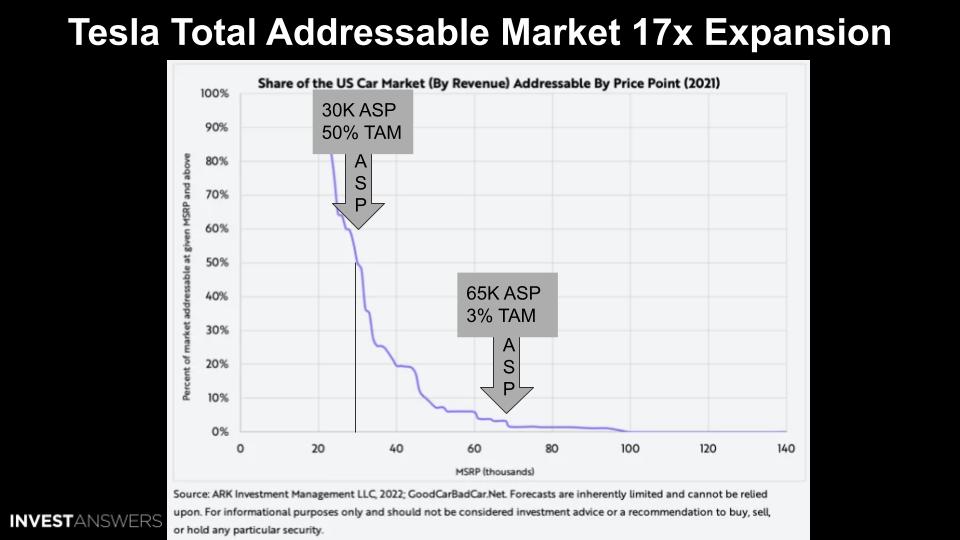
This chart is the perfect real-world example of price elasticity in action. Cut the price roughly in half (from about $65,000 to $30,000), and Tesla’s total potential market explodes by 16.6 times! We are seeing that impact of price cut from the new Cybertruck $59K Offer. Look at the graph: At the higher $65k average price, they could only reach the top 3% of the entire U.S. car market (the luxury buyers who can afford it). Drop the price to $30k, and suddenly they can go after 50% of the whole market. Bottom line: People already want Teslas. The real thing holding demand back isn’t desire — it’s simply whether they can afford one. Make it affordable, and the buyers show up in droves. h.t Ark for original chart
InvestAnswers tweet media
Sawyer Merritt@SawyerMerritt

BREAKING: The estimated delivery date for new $59,999 Cybertruck dual-motor AWD orders in the U.S. has changed to April 2027 (from Sept-Oct 2026 before) due to strong demand. The estimated delivery date was June 2026 just a few days ago. Now it’s a ~14 month wait time for new orders 🤯

English
21
34
362
36.8K
Ralph Horacio SSR retweetledi
Ryan Hogue
Ryan Hogue@RyansMethod·
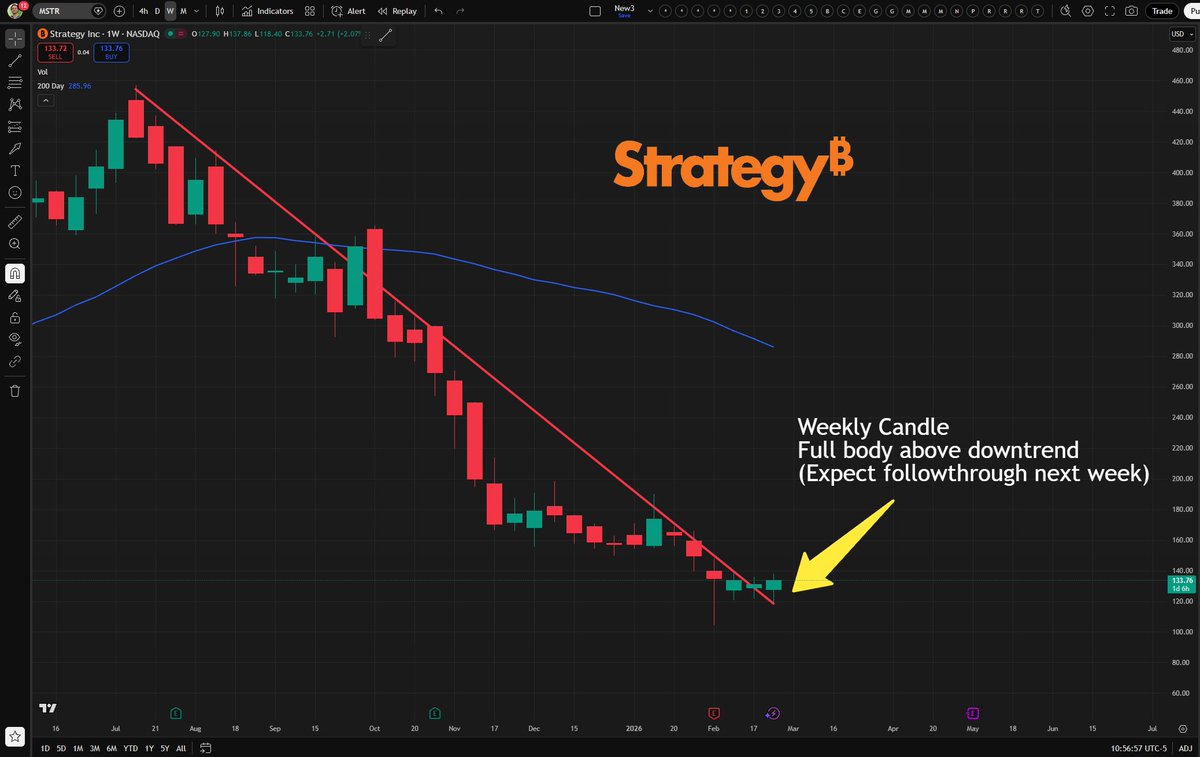
$MSTR is working on a weekly candle with its entire body above the downtrend that dragged price from $457 to $104. That’s not noise — expect follow through next week.
Ryan Hogue tweet media
English
27
34
440
30.5K
Ralph Horacio SSR
Ralph Horacio SSR@RalphHoracioSSR·
Collections serviced and in the show room of our clients for pick up .
English
0
0
6
803
Ralph Horacio SSR
Ralph Horacio SSR@RalphHoracioSSR·
Taken out for delivery to owner.
English
0
0
6
829
Ralph Horacio SSR retweetledi
Rekt Fencer
Rekt Fencer@rektfencer·
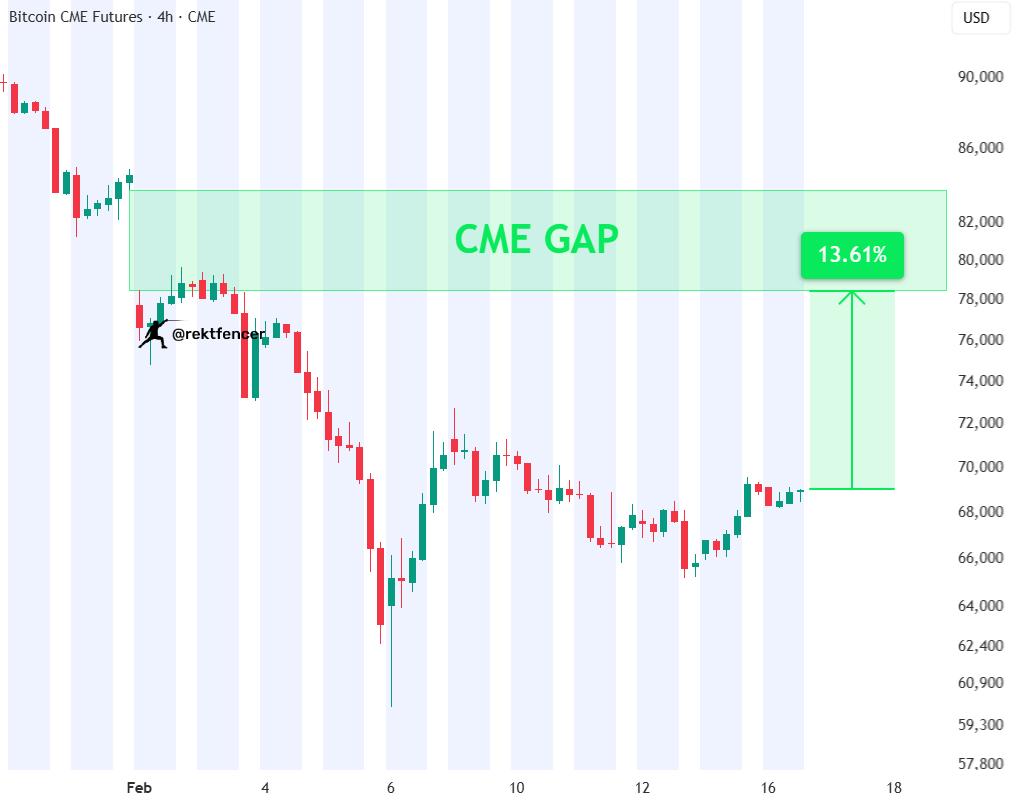
Bitcoin always closes its CME gaps. And there’s nothing bears can do now. Forced short liquidations will push the price higher.
Rekt Fencer tweet media
English
72
47
179
17.7K