

Admiral Marko Ramius
3K posts

Admiral Marko Ramius
@Ramius657199
Jumping between land and sea
VTZ, COK, IXZ, BOM Katılım Ekim 2024
176 Takip Edilen71 Takipçiler


English

@wartrophy_414 @TheSatanKi9895 Rafale won't fair any better than our LCAs? In terms of radar, I agree. But not anything else. How can you say this bhai? And how can we even compare two jets of different categories?
English

Trust me, all your criticisms are valid, and spot on. I have a question, though.
What are our options?
Dany@wartrophy_414
Guess how many of these have been answered?
English
@Paimon_goetia "Outright/Cleanly"
No end to the crying.
English
Dude, you people are copers who really believe that India win 48 & 65 outright/cleanly.
Would have been a good indulgence had it not influencing policies today, & deluding people about history.
Dany@wartrophy_414
Ahh yes the usual every war was "IA beating tribals, rebels etc untill the heroic PA arrived & turned the battle upside down". Funny it's almost in every damn war, 48-65-71-99
English
@Faheemism_ You could have just said “tourists” and that would have been enough. Which country do the people in video look like? Japanese? Nigerian?
But naa….andar ka Pakistani toh bahar aega hi.
English

I used Indian tourists as a general term it includes all states.I cant identify & list everyones state 1 by1 (Haryana tourist,Gujrt etc).Not everything is a conspiracy dumbo Maybe get a job instd of overanalyzing irritating & tagging other ppl here.Calling i tourists i is issue?
Monica Verma@TrulyMonica
Kashmiri man is writing tourists visiting Kashmir as “Indian Tourists” as if they are from a different country and Kashmir is not a part of India. Hope @HMOIndia takes notice.
English

@KSingh_1469 Being a Sikh yourself, you will oppose chief air marshal AP Singh?
Just asking
English
@sriramthg @sakthivel_cit93 We don't even have a professional airforce
Forget everything else
English
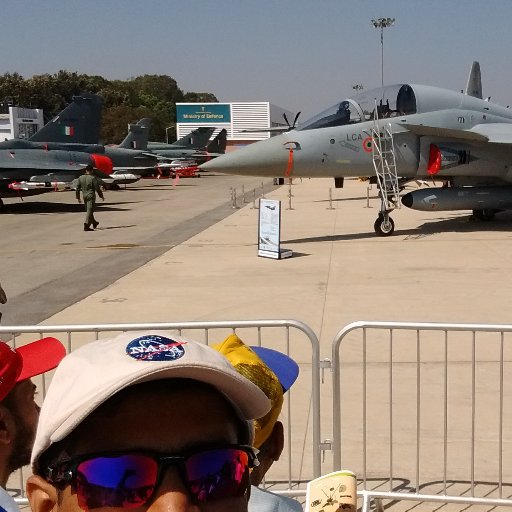
@KSingh_1469 Lol no
Imbecile Air Force prefers to get its pilots shot down and thrashed by 🇵🇰 villagers (& later humiliated on social media)
They don't even have the concept of Search & Rescue for downed pilots
English

This would cripple the IAF no doubt when their boutique gold plated toys get take out but all of this can be replaced by the US locally within a few months/years as they wish
Domestic industry is the ultimate force multiplier
Shiv Aroor@ShivAroor
Much being made of aircraft lost to rescue the F-15 pilot, but all it does it burnish the incredible ‘no man left behind’ credo. That the U.S. expended… 2 x HC-130 Herc (destroyed) 2 x HH-60 Pave Hawk (damaged) A-10 (destroyed) etc … only makes that commitment shine brighter.
English

These pakroaches have no idea, def twitter can do this all day and that too without any incentives.
Shahid Qazi@QaziShahid786
Meet #ISPR’s latest “digital trolls” posing with @OfficialDGISPR , ready to flood timelines, push narratives, and abuse anyone who disagrees.
English
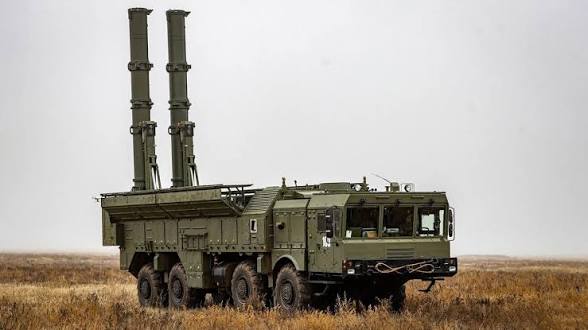
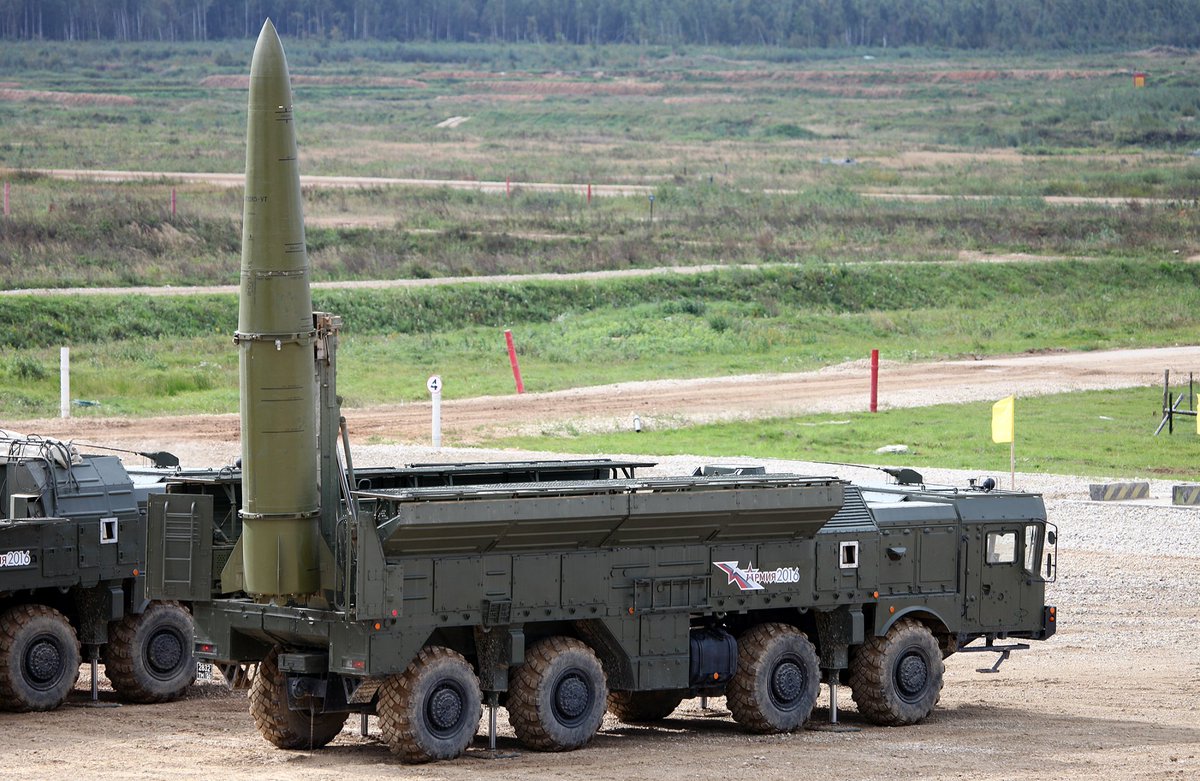
@highmach_yara @AjayshreeSamby3 @DRDO_India Separate launch arms for each configuration - can deploy only 1 config at a time.
The mission profile doesnt exist cos no TEL can carry and launch 1 TBM and 1 CM at the same time
English

@Ramius657199 @AjayshreeSamby3 @DRDO_India They can; the launch arms are interchangeable
The only thing is that there's no mission profile that's needs a single TEL to carry 1x TBM and 1x CM
English
@highmach_yara @AjayshreeSamby3 @DRDO_India 2 different variants of the same launcher catering for 2 different missiles.
1 launcher cant launch a P800 and an Iskander at the same time.
English
@Ramius657199 @AjayshreeSamby3 @DRDO_India The Iskander "system" was designed to be compatible with both Tactical Ballistic Missile and Cruise Missile
English
@kjsingh2 @SanUvacha Lol
All of ISI’s retired puppies in the IA are whining again
English

@SanUvacha You nuts ? You are actually , truly and in reality picking on Gen Bhatia and questioning his credentials? Who on earth are you , you little runt of a pip squeak. Mannnnn the gal of this this this *^^%%#
English

Not at all surprised Lt Gen Vinod Bhatia would stand with the Aman ki Tamasha gang.
Check out his role in dismantling the Army's Technical Support Division (TSD)—a key covert unit for counter-terror ops against Pakistan-backed threats—which weakened India's covert capabilities at a critical time.

Lt Gen Vinod Bhatia Retd@Ptr6Vb
India’s aim is peace stability and economic development- well being of 1.44 bn people. A major challenge is to change Pakistan behaviour in the mid to long term. @NMenonRao defines an effective and plausible way forward
English
@AmithabV49638 @SanUvacha Para-Airborne chaps are doing cross border ops now.
Hilarious
& yeah TSD was serving tea to your beloved jih@di brethren across the Lc
English

@Ramius657199 @SanUvacha Sure, abuse a decorated officer for no reason, who has conducted more cross border ops then all officers who were ever posted in TSD combined 😂 . TSD was not targeting anybody in Pakistan, that was never its brief, nor did it have the skills to do so
English
@Ptr6Vb @NMenonRao Vinod "Cucky" Bhatia here is the same chap who deliberately dismantled MI's Technical Support Division for its ops against his masters in Pakistan.
English
India’s aim is peace stability and economic development- well being of 1.44 bn people. A major challenge is to change Pakistan behaviour in the mid to long term. @NMenonRao defines an effective and plausible way forward
Nirupama Menon Rao 🇮🇳@NMenonRao
There is a certain genre of writing that substitutes accusation for argument. It begins by assigning motive, then arranges facts,real, distorted, or imagined, to fit that conclusion. The recent commentary on my views on India-Pakistan relations follows that familiar script. Let me state the essentials clearly. To argue that India must combine deterrence with engagement is NOT to diminish the reality of terrorism, nor to excuse it. It is to recognise how serious nations manage adversaries. India has, across governments and decades, done precisely this, responding firmly to terror while retaining channels of communication where necessary to prevent escalation and miscalculation. This is not sentimentality. It is statecraft. The suggestion that engagement grants “impunity” rests on a false binary, that one must either talk or act. In practice, states do both. To collapse that complexity into a moral accusation may make for forceful prose, but it does not make for sound policy. The caricature of a women’s caucus is equally misplaced. It is not proposed as a substitute for national policy, nor as a solution to entrenched conflict. It is a modest Track II initiative, one of many possible avenues, to widen dialogue, reduce hostility, and explore areas where cooperation may still be possible. Such efforts do not require approval from those who see every form of engagement as capitulation. Invoking the suffering of victims of terrorism to argue against any form of dialogue is particularly troubling. Their loss demands seriousness, not rhetorical deployment. Accountability is not strengthened by narrowing the space for thought. The claim that an idea is discredited because it is welcomed by a Pakistani voice is also a curious standard. If the merit of an argument is to be judged by who agrees with it, then independent judgment itself is surrendered. Ideas must stand or fall on their own logic. Beyond the rhetoric lies a more fundamental question: what is India’s end game with Pakistan? If it is to reduce Pakistan to rubble, that is fantasy dressed up as toughness. It is not going to happen, and any attempt to move in that direction would risk catastrophe for the entire region, not least for India. Nuclear geography is a stern schoolmaster. It does not indulge chest-thumping. The real end game has to be containment, deterrence, internal strengthening, and selective engagement. In plain words: India’s objective should be to make Pakistan’s use of terror too costly to sustain, while preventing the relationship from sliding into permanent uncontrolled escalation. That means four things. First, raise the cost of terrorism. Through intelligence, border management, diplomatic isolation where warranted, calibrated military response when necessary, and relentless exposure of the infrastructure of proxy violence. No illusions there. Second, deny Pakistan veto power over India’s future. We should not let our growth, our diplomacy, our regional ambitions, or our internal confidence be held hostage by a single hostile neighbour. The greatest strategic answer to Pakistan is a stronger, more cohesive, more prosperous India. Third, manage the conflict, not romanticise it. There will be no grand reconciliation in the near term. But neither can every interaction be reduced to rage. Ceasefire mechanisms, back channels, water safeguards, crisis hotlines, and limited functional engagement are not signs of softness. They are instruments of control. Fourth, keep open the possibility of a different future without betting on it. That is where dialogue belongs. Not as wishful thinking, not as “aman ki asha” balloon releases, but as disciplined statecraft. You talk not because you trust, but because you must understand, signal, warn, probe, and occasionally de-escalate. So the end game is not rubble. It is a Pakistan that is deterred, constrained, denied easy success, and unable to derail India’s future. Fury is a mood. It is not a policy.
English
@AmithabV49638 @SanUvacha It certainly wasnt rosy for eunuchs like Bhatia whose Pakistani masters were being rogered by the TSD.
English
@SanUvacha TSD was not a hey covert unit, also it had embezzlement issues. Everything was not as rosy as it seems
English
@MajorAdiyagya @SanUvacha Bhatia sahab wanted to save his Pakistani masters.
His wife's "proximity" to a certain Pakistani Defence Attache is very well known. Cuck chair callings galore.
English

Serious allegations require serious evidence.
Lt Gen Vinod Bhatia held senior operational and DGMO-level responsibilities. Decisions regarding units like TSD are institutional, taken within a structured chain of command, not driven by one individual’s whim.
Throwing around terms like “dismantling covert capability” without verifiable facts risks misinforming people and undermining professional military processes.
Debate his views if you disagree, but reducing complex national security decisions to insinuations does not strengthen the argument.
English

@Incognito_qfs There is a lot more nuance to this naxal issue than your can comprehend it seems.
English

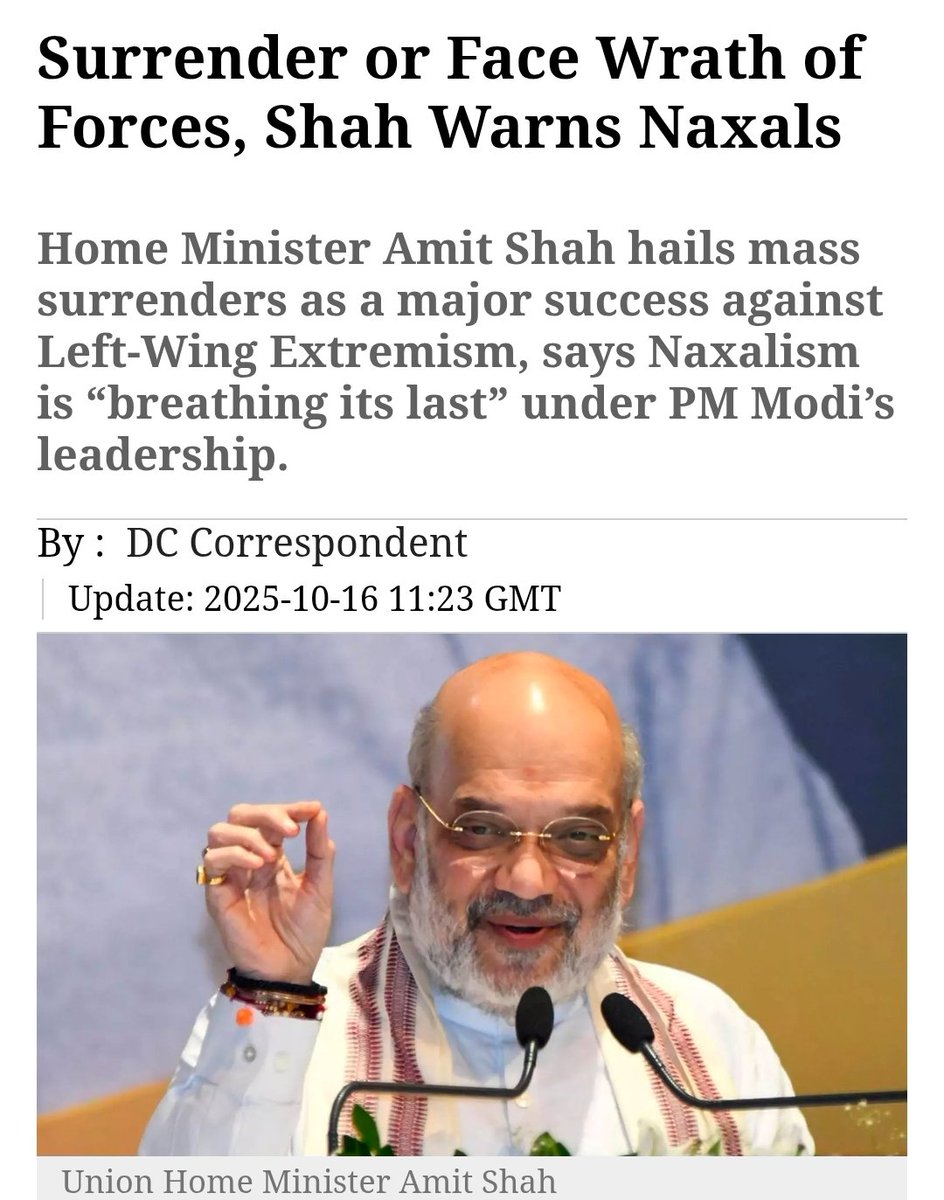
Chidambaram as Home Minister: I request Naxals to talk to us. I am not asking you to lay down arms because I know you won't do that because you know in armed struggle. (Journalists clap)
Amit Shah as Home Minister: Lay down arms or face wrath of forces.
People don't realise how f*cked up Congress Govt was.
English
@hummmHUH @HPhobiaWatch No
It was after 50 years of Congress rule
English

@HPhobiaWatch it was just after 8 years of liberalization... stop fooling people and study economics..
English

This is what 50 years of golden era gave us. 2 decades was ruled by super sexy white pussy haver Nehru, 1 decade by Iron Lady and Computer Gandhi followed by Narshimha "I am doing something" Rao with greatest economist of all time MaugaMohan 🔥🔥🔥
💖🌸@utthishta_
I was looking at this NDTV clip from 1998 HOLY FUCK THE LEVEL OF DESTITUTION IS EYE WATERING
English
@alleysconflict All of them are obsolete. 70s era equipment and training.
English

India has over 400 battalions of pure infantry, nearly 70 Armoured, numerous support arms and services that make the organisation work. Besides mainstay of counter insurgency is actually over 60 battalions of Rashtriya Rifles
On SM it’s only few enthus and half a dozen SF units
English