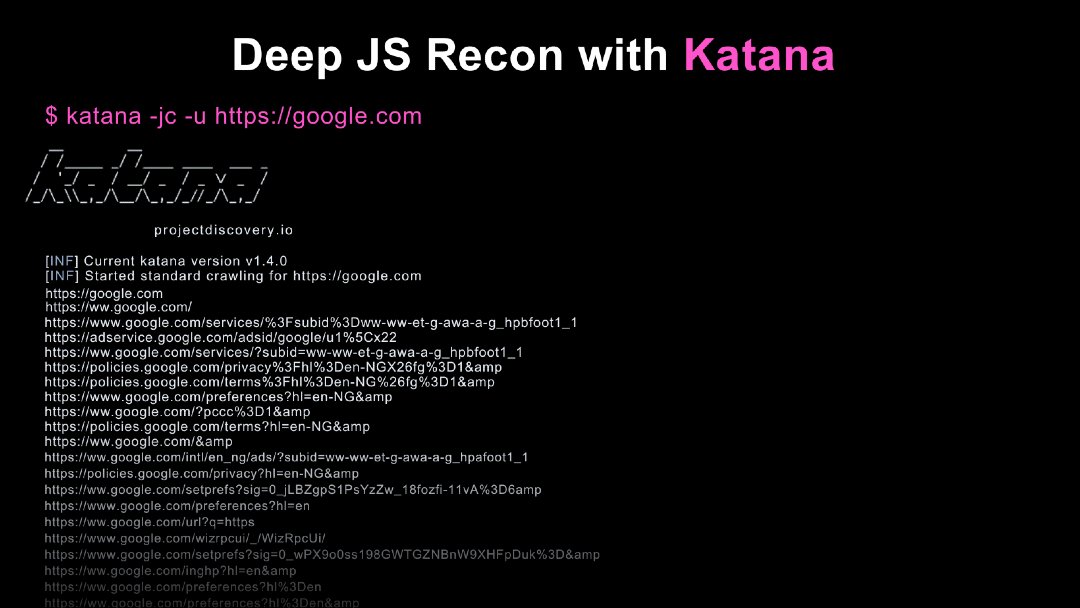
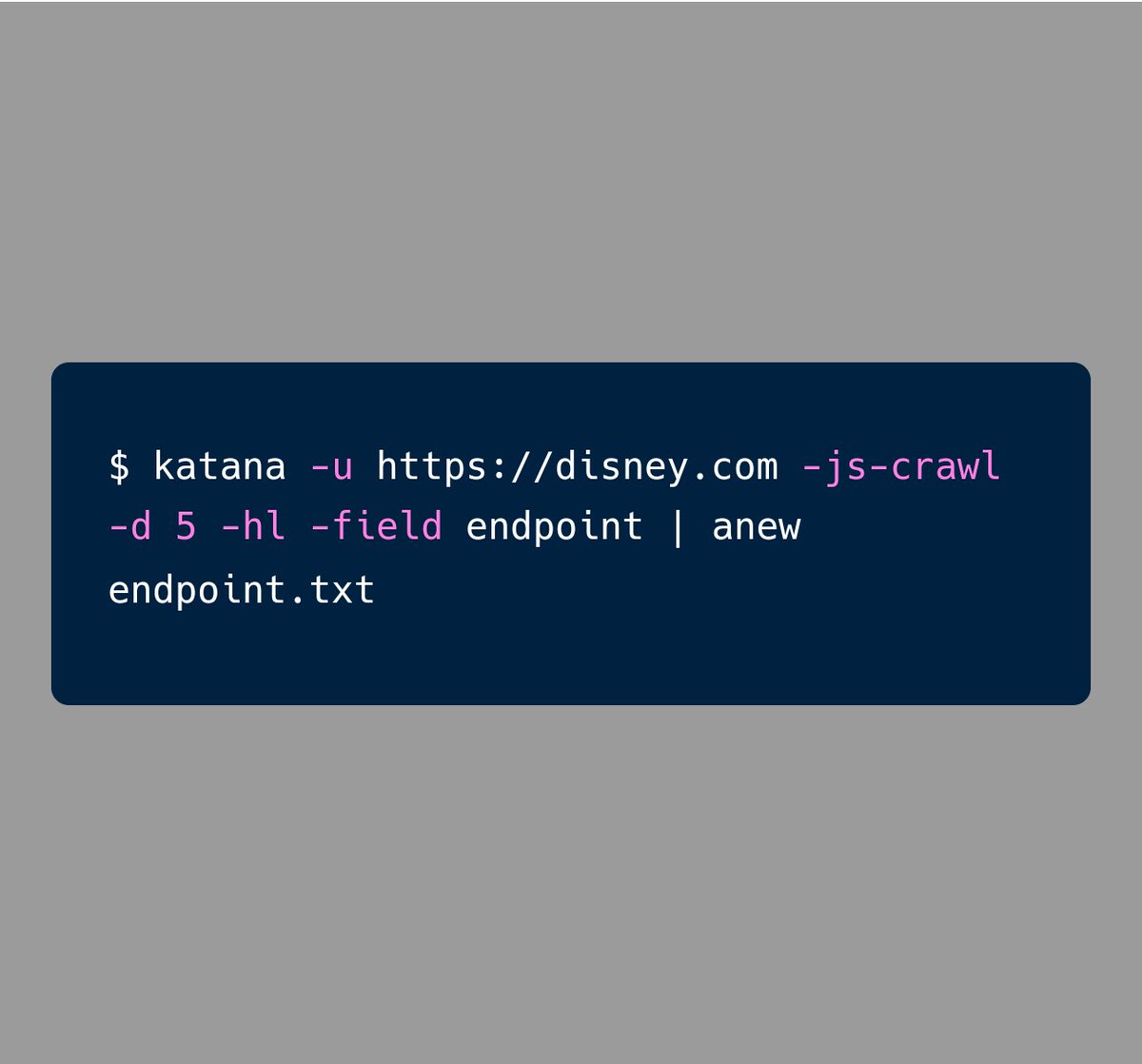
Maximize your endpoint discovery by digging into JavaScript files. Using the -jc flag allows you to parse and crawl JS files to find hidden paths and APIs that standard crawls might miss
Use this command👇
katana -jc -u https://target(.)com
How to start RECON in your #BugBounty Hunting
1. Subdomain Enumeration
2. Getting live hosts
3. Web Server Detection
4. Scan for file&dirs
5. Grab urls
6. What's in the JS file?
7. Github recon
8. Virtual Hosts
Open your terminal and start now 💪
#cybersecurity#recontips
Use NextJS? Recon ✨
A quick way to find "all" paths for Next.js websites:
DevTools->Console
console.log(__BUILD_MANIFEST.sortedPages)
javascript:console.log(__BUILD_MANIFEST.sortedPages.join('\n'));
Cred = linkedin.com/in/0xsojalsec?…#infosec#cybersec#bugbountytips
Scan smarter, not harder.
Here are 5 Naabu tweaks for faster, cleaner port discovery 👇
1️⃣ Tune -rate & -retries for speed vs false-positives
2️⃣ -exclude-cdn → only scan 80/443 for CDN IPs
3️⃣ Run -wn host discovery first
4️⃣ Bind -interface when routing matters
5️⃣ Use -resume for longer jobs
Install: github.com/projectdiscove…#Naabu#ProjectDiscovery#Infosec#BugBounty#PortScanning
Cross-site request forgery (CSRF) has survived the protections introduced to defeat it, so remains essential #BugBounty knowledge 📖 Our second ‘vulnerability vectors’ instalment details CSRF types and how to exploit them 👇
#BugBountyTipsyeswehack.com/learn-bug-boun…
We just dove into our shelf of archived bug bounty write-ups from the most notable hackers! 🤠
In this issue, we selected 5 compelling articles (that are still relevant today) to share with you, from which you can learn something new! 😎
🧵 👇