

jonty rees
900 posts

British journalist Yasmin Alibhai-Brown, made an unhinged video slamming America for the 4th of July:
“You don’t know how hated your country is… America a frightful place... it’s becoming a threat to humanity”
The irony of a BRITISH woman lecturing AMERICANS on our Independence Day
English
@TVNewsNow You know who conflates the American flag with white supremacy? Those nitwits on The View
English

🚨 DISGRACEFUL! The View’s Sunny Hostin: “There are times when I walk into a community and I see American flags all over the community and I suddenly feel unsafe because there is a section of this country that has co-opted the American flag and they equate being an American or an American flag with white supremacy. That should never be the symbol of white supremacy.”
English
@jimiuorio Funnily enough, the amount by which annual payments into Soc Sec are short of remaining solvent is almost exactly the estimated fraud and waste in the system.
English

I think I speak for the boomers and I know I speak for myself. We will not accept a reduction of even 1 dollar. Sorry. We didn’t choose this system you did…we’ll just take what was promised thanks…
PBS News@NewsHour
Americans' Social Security benefits will have to be cut by roughly a quarter in six years due to depleted funds, according to a June 9 report from the Social Security Board of Trustees. That's months sooner than the group had estimated in 2025. to.pbs.org/4f39DL0
English
@UniversalKnight @jondelarroz Folarin Balogun, striker (goalscorer) for USA soccer. He's good, you should watch him, you'll probably like him.
English

@jondelarroz I don't know what this creature even is.
English

If you don't root for this guy, you're literally racist.

English
@RickCaruthers @SaltyGoat17 These people are literally not showing their faces in public
English


@SaltyGoat17 Can't we just capture a couple of them in the wild, and rip their face masks off, Scooby Doo style?
English
@radleftreceipts First time I've listened to her say anything, and it wasn't impressive
English

'Supergirl' actress Milly Alcock:
"what makes this film so beautiful is it's not centered around a man."
'Supergirl' has been a massive box office flop and is projected to lose close to $200 million.
English

Taiwan solved tax evasion in 1951 with a trick so cheap it should embarrass every tax authority on the planet.
The problem was an all-cash economy full of small shops. A merchant pockets the cash, skips the receipt, and the sale never existed. Auditors can't catch what was never recorded, and hiring enough of them to watch every noodle stand costs more than the missing tax.
So finance chief Ren Xianqun flipped the incentive. Print a lottery number on every receipt. Draw winners every two months on live TV. Top prize today: NT$10 million, about $310K.
Suddenly the customer and the shopkeeper want opposite things. The merchant wants the sale off the books. The customer wants the ticket. And there are millions more customers than merchants. Every transaction now carries a built-in witness demanding the paper trail.
Year one, reported tax revenue jumped 75%, from NT$29 million to NT$51 million. Seventy-five years later, roughly 70% of Taiwanese still play. Convenience stores redeem the smallest NT$200 prizes at the register, so even a coffee receipt feels like a scratch card.
The elegant part is what the audit force costs. The prize pool runs about NT$7 billion a year, roughly $20 million. In exchange, the government gets 23 million unpaid auditors working every checkout line in the country, forever. No inspector general on earth delivers that coverage at that price.
Greece, Italy, Portugal, and Slovakia all copied it. The most effective compliance tool ever built looks like a game, and that's exactly why it works.
CR1337@CR1337
In order to prevent stores from evading taxes, every receipt in Taiwan is automatically a lottery ticket, too, which can win up to $300k, turning customers into voluntary tax auditors:
English
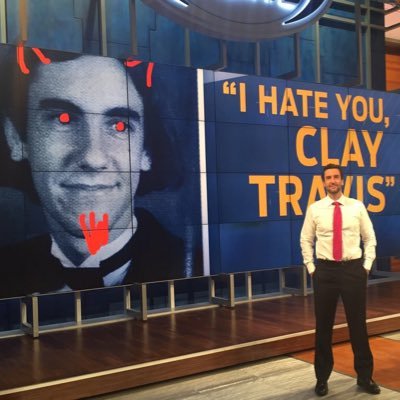
What do we think about US politicians putting on jerseys from another country — in a tournament the US is playing in — and rooting for the foreign country in public? Zero percent chance any American sports fans I know would do this.
End Wokeness@EndWokeness
Politician in Mexico? Nope - Sen. Mark Kelly (D) of Arizona, rooting for Team Mexico.
English
@DortFinder "France passed a law requiring solar panels on every parking lot larger than 1,500 square meters." That sounds mandatory to me.
English

@ReesJonty It's called a project that helps the community. That's not "mandatory"
English
@agbinfo @giveashitnature Equalizing the field for the panel industry vs petroleum, but what about the car park owners? They're forced to prop up the panel.indusrty? My roof is covered in panels, btw - they're great in my particular situation.
English

@ReesJonty @giveashitnature By making it mandatory, they are equalizing the playing field.
It might make sense long term to put panels but still hard to justify if your competitors can take advantage of your cash flow issues.
English

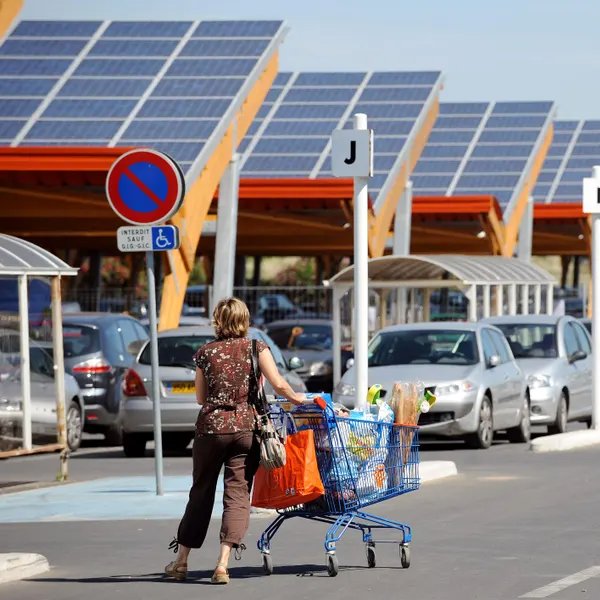
France passed a law requiring solar panels on every parking lot larger than 1,500 square meters.
The law took effect in July 2023. Large lots over 10,000 square meters must be 50 percent covered by solar canopies by July 2026. Smaller lots have until 2028.
Exemptions exist for lots with genuine technical or environmental constraints, and for lots already shaded by trees.
France didn't just issue a mandate and walk away. The 2024 Finance Law introduced a Green Industry Tax Credit covering 25 to 40 percent of eligible solar investment costs.
Small businesses largely won't be impacted by the law. It more targets shopping centers, supermarkets, stadiums, and large commercial lots, not Le P'tit Bistrot.
Critics said businesses would just get rid of their parking lots. Carrefour, France's largest supermarket chain, is actually enthusiastically installing solar canopies across 350 stores, covering 180,000 parking spaces. It's expected to generate 450 gigawatt hours of power annually, enough to run the stores themselves, and it's using the canopies as a selling point - shaded parking makes stores more attractive to customers.
The projected energy output is expected to be up to 11 gigawatts, equivalent to roughly 10 nuclear reactors, without using a single additional acre of land.
The US has approximately 800 million parking spaces, most of them uncovered asphalt baking in direct sunlight. Should we do this too?

English
@ccortez @giveashitnature For instance, if solar doesn't get incentives to compete with petroleum, but car park owners are still forced to install them, are those car park owners not being forced into financial difficulties? Government should enable, not dictate.
English
@ccortez @giveashitnature Incentives are ok, but to make it mandatory just seems like a recipe for disaster
English
@pskpspspss @giveashitnature I love panels. My roof is covered in them, and it's the best financial decision I ever made. But I don't agree that the govt should make it mandatory.
English

@ReesJonty @giveashitnature They want to incentivize distributed solar, carports also help reduce urban heat island effects, this is what regulation should be used for
English

On the 4th of July in the hood, a woman was biting into someone’s leg like it was fried chicken. When the other woman said she would press charges, she replied, “I’ll put a bullet right between your eyes.”
Just neighbors being neighbors in da hood.
English
@nickyc242 @triffic_stuff_ They don't just want you to, they're going to force you to.
English

@triffic_stuff_ And they want us to hand over all of our details (digital ID) whilst showing their complete incompetance to destroy sensitive data
English
🚨 MASSIVE ARMY SECURITY BLUNDER - BRITAIN’S BIGGEST GARRISON LEFT WIDE OPEN! ⚠️
Catterick Garrison, the largest British Army base in the UK and home to 13,000 troops, has just been humiliated in the most embarrassing way possible.
Highly sensitive MoD documents were literally dumped in a council recycling bin at a tip just 2.5 miles away. A member of the public opened the lid to throw away his rubbish and there they were, sitting right on top for anyone to grab.
Inside the folders marked “MoD”:
• Full guard shift patterns and rosters
• Soldiers’ names, ranks and personal details
• Weapons storage, ammo inventories and “blister safe” master key locations
• Security breach logs - including a deliberately cut hole in the perimeter fence big enough for someone to crawl through
• Alarm response protocols
• Details of stolen weapons, night-vision gear and “ACTO” kit (attractive to criminals and terrorists)
This is nothing less than a ready-made blueprint of the base’s defensive posture.
A former senior Army intelligence officer called it exactly what it is: a clear security risk showing lack of care and oversight. MPs are calling it a serious breach that could help hostile actors target our troops.
The Army’s pathetic response? A “rapid review” claiming “no sensitive operational defence information” was in the documents.
Absolute nonsense.
These papers were never shredded, never burned, never properly disposed of. They were just chucked out like old takeaway menus. And this isn’t even the first time - similar sensitive papers have been found dumped in the street before.
This is gross negligence. This is incompetence at the highest levels. This is the kind of scandal that gets people killed.
Our soldiers put their lives on the line every day. The very least the MoD and Army top brass owe them is basic security and respect for their personal data and operational safety.
Heads should be rolling. Full security audit now.

English
@BGatesIsaPyscho Is that the Patriot Front with their masks removed?
English

London today.
C’mon you have to admit it’s all a bit weird.
English
@CreativeDeduct Presumably the crowd guesses were sealed? I.e. the crowd wasn't moved by each other. there is also a herd effect, as demonstrated by illogical runs in the stock market.
English

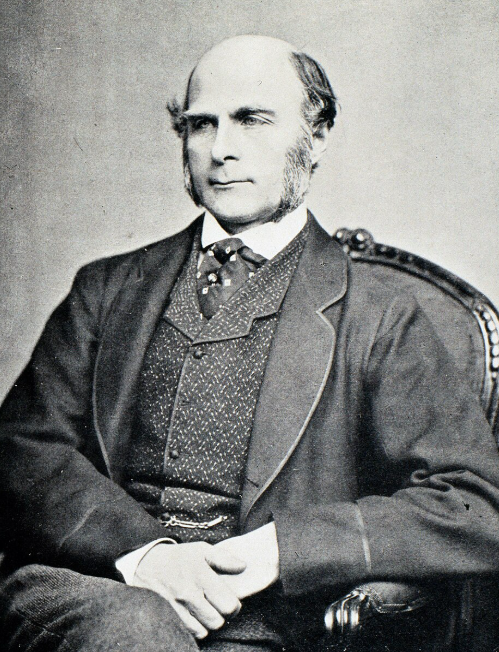
In 1907, Sir Francs Galton went to a livestock exhibition and accidentally stumbled on a phenomenon that explains why central planning doesn’t work. Seeing villagers taking part in a contest to guess the weight of a slaughtered ox, he decided to analyse the results. While individual guesses varied wildly, Galton realised that the mean of the guesses were remarkably close to the true weight of 1,198 pounds. In fact, the villagers had collectively managed to come within 1% of the correct result. He also noted that the supposed experts – farmers and butchers – guessed poorly on their own. What Galton observed was the “wisdom of crowds.”
In 2004, Journalist James Surowiecki popularised the idea in his book called “The Wisdom of Crowds”, where he put forward the thesis that individual errors averages out over large (diverse and decentralized) groups, leaving the average estimate to converge towards the truth.
That the judgement of large groups of individuals is generally more accurate than estimates from experts helps explain why centralised government bureaucracies struggle to match the efficiency of a free market. Friedrich Hayek labelled this phenomenon "spontaneous order." Complex social systems do not originate from central planners, but emerge naturally using the dispersed knowledge of individuals acting purely in their own self-interest and responding only to local market signals. The free market condenses the collective wisdom and preferences from all market participants into a market price. Central planners cannot possibly acquire or process the amount of information contained in that single number.
When central planners try to design an economy and fix prices, they are fighting against the mathematical reality demonstrated by Surowiecki: small homogenous groups of “experts” acting on incomplete information cannot replicate the result of the aggregate of individual choices. Collectively, we possess more knowledge than even the cleverest expert could hope to obtain. History has demonstrated how central planning leads to shortages or surpluses as bureaucrats fail to guess what the free market could have told them.
English