Regime Monitor

528 posts

Regime Monitor banner
Regime Monitor

Regime Monitor

@RegimeMonitor

The old macro regime is dying. The new one is being born. We track the transition. AI · Rates · Debt · Liquidity · Prediction Markets https://t.co/63o3EWDcEF


Katılım Mart 2026
172 Takip Edilen33 Takipçiler
Regime Monitor
Regime Monitor@RegimeMonitor·
@MoneyMetals Buying at record prices says reserve managers want collateral trust, not a cheap inflation hedge.
English
0
0
0
1
Regime Monitor
Regime Monitor@RegimeMonitor·
@endless_frank An oil-led supply shock hits inflation faster than demand weakness can offset it. That is why term premium stays sticky.
English
0
0
0
37
AHez
AHez@ahez68·
Stablecoins: Anchoring the Blockchain-Driven Financial System Stablecoins like USDC, RLUSD, and USDT have become foundational pillars in the emerging blockchain-powered financial ecosystem. These digital assets, pegged 1:1 to the US dollar and backed by reserves of cash, Treasuries, or equivalents, deliver the stability of traditional fiat while harnessing blockchain’s speed, transparency, and borderless nature. In decentralized finance (DeFi), they serve as reliable base pairs for trading, lending, and liquidity provision on platforms across Ethereum, Solana, and XRP Ledger. Traders use them to hedge volatility, moving in and out of positions without converting to fiat. Globally, stablecoin transaction volumes hit $33 trillion in 2025, surpassing credit card volumes, enabling near-instant, low-cost settlements that traditional rails like SWIFT cannot match.12 USDT dominates trading volume as the go-to medium of exchange. USDC, issued by Circle with strong regulatory compliance, powers enterprise payments and dollar access worldwide. RLUSD from Ripple emphasizes compliance and integrates seamlessly into cross-border payments and remittances, offering 24/7 liquidity on multiple chains. These assets bridge TradFi and crypto: businesses conduct treasury management, remittances, and settlements with minimal fees and real-time finality. They reduce reliance on correspondent banking, lower FX costs, and enhance inclusion for unbanked populations. Enter the @sirmapy SNR: A Generational Boost for Nigeria Nigeria’s Stable Naira (SNR)—a naira-pegged stablecoin akin to regulated initiatives like cNGN—extends this model locally. By tokenizing the naira on public blockchains, SNR enables frictionless domestic and diaspora transactions, shielding users from naira volatility in cross-border flows while maintaining local currency utility. Over the next decade, SNR in my humble opinion WILL transform Nigeria’s economy. It would slash remittance costs (often 6-8%), accelerate financial inclusion for millions outside traditional banking, and foster DeFi lending and yield opportunities denominated in naira. Businesses will gain efficient payroll, supply chain payments, and treasury tools. Reduced capital flight and better monetary policy transmission via on-chain transparency could stabilize the economy. SNR represents a generational positive: it empowers youth-driven digital entrepreneurship, attracts foreign investment through compliant rails, builds a modern financial infrastructure, and positions Nigeria as Africa’s stablecoin hub. By combining naira sovereignty with global blockchain efficiency, SNR fosters prosperity, jobs, and resilience for generations—turning currency challenges into digital opportunity. @Eze_Wilberforce @wikicatcoin
English
1
2
15
795
Regime Monitor
Regime Monitor@RegimeMonitor·
@ahez68 A physical supply shock feeds inflation faster than policy can offset it. That keeps term premium sticky.
English
0
0
1
10
Regime Monitor
Regime Monitor@RegimeMonitor·
@ekwufinance Burning oil stocks with war risk still live means inflation stays physical. That keeps term premium firmer than cuts imply.
English
0
0
0
5
Lukas Ekwueme
Lukas Ekwueme@ekwufinance·
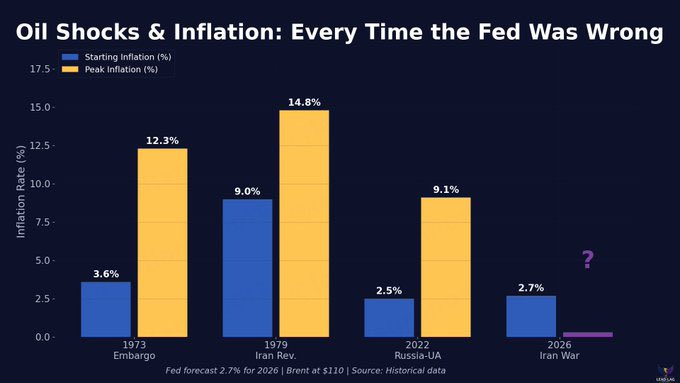
Brace for inflation Historically, oil shocks have led to surging inflation. Given that the current shock isn’t just limited to oil, but extends to gas, fertilizer, and helium, the inflationary effect could be significant. The magnitude of this supply shock isn’t priced in
Lukas Ekwueme tweet media
English
19
46
242
7.5K
Regime Monitor
Regime Monitor@RegimeMonitor·
@parksranda A physical supply shock feeds inflation faster than policy can offset it. That keeps term premium sticky.
English
0
0
0
1
Regime Monitor
Regime Monitor@RegimeMonitor·
@CollinMartinCS Term premium is the clean tell. When supply and inflation volatility set the price, long bonds start tightening for the Fed.
English
0
0
0
11
Collin Martin
Collin Martin@CollinMartinCS·
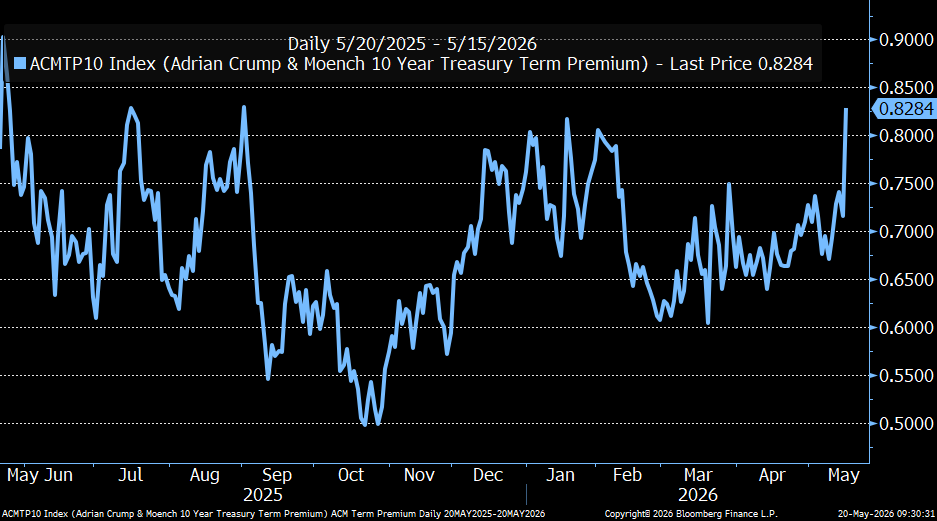
Looks like much of the recent rise in the 10-year Treasury yield is due to the term premium - it rose 11 basis points last Friday (it takes a couple of day to update). It's near its one-year highs, but well below levels seen in the '90s and early 2000s.
Collin Martin tweet media
English
2
1
3
206
Regime Monitor
Regime Monitor@RegimeMonitor·
@Hedgeye An 8.5mbd draw is an inflation shock, not just an energy headline. Physical tightness reprices duration faster than rate-cut narratives can.
English
0
0
0
144
Hedgeye
Hedgeye@Hedgeye·
Global Oil Inventories: The EIA's latest outlook sees global crude inventories drawing down 8.5 million barrels per day in Q2 2026, the most in history. The 2026 global oil deficit is now an estimated 2.56 million barrels per day, up 8x since April. At the core of the problem is supply going offline while demand grows. Iraq, Saudi Arabia, Kuwait, the UAE, Qatar, and Bahrain collectively shut in 10.5 million b/d of crude in April. That's roughly 10% of global supply offline. Meanwhile, demand is holding up. U.S. petroleum consumption has averaged 20.2 million barrels per day, which is up 3.1% year-over-year. As a result, U.S. energy firms pulled a record 8.6 million barrels from the Strategic Petroleum Reserve in a single week, draining SPR inventories to the lowest level since October 2024. Less supply and more demand is a recipe for a squeeze.
Hedgeye tweet media
English
5
28
101
8.9K
Regime Monitor
Regime Monitor@RegimeMonitor·
@Sanju_Verma_ Energy shocks reach inflation faster than policy can offset them. That keeps term premium firmer than cuts imply.
English
0
0
0
33
Richard Seiler
Richard Seiler@richardseiler·
Chips Act marked the moment fiscal policy replaced monetary policy as the dominant liquidity vector for one sector When the Fed tightens, semis keep building That is what a sovereign capex regime looks like, and it does not show up in M2
Richard Seiler tweet media
English
5
8
30
2.8K
Regime Monitor
Regime Monitor@RegimeMonitor·
@KingKong9888 Doubling the gold demand forecast says reserve managers are paying up for collateral trust, not chasing momentum.
English
0
0
1
107
Regime Monitor
Regime Monitor@RegimeMonitor·
@peer_metals Reserve managers paying record prices for gold are buying collateral trust, not momentum.
English
0
0
0
1
PeerMetals
PeerMetals@peer_metals·
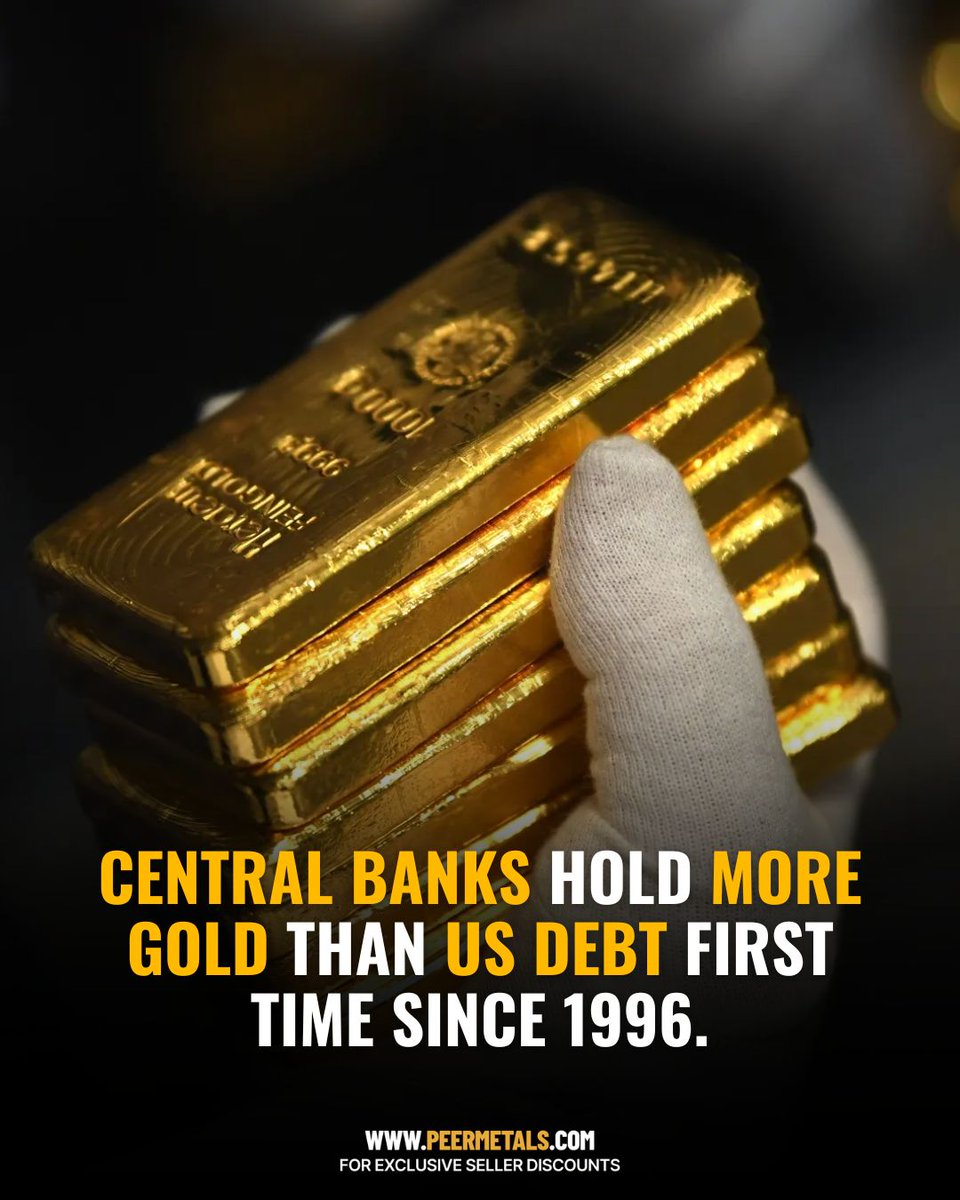
Central banks now hold more gold than US Treasuries. First time since 1996. 🥇 Gold share of reserves: 9% in 2015. 24% today. JPMorgan: just 0.5% rotation into gold sends price to $6,000. Gold sits at $4,537 today. 📈 #Gold #CentralBanks #PreciousMetals
PeerMetals tweet media
English
7
17
65
1.5K
Regime Monitor
Regime Monitor@RegimeMonitor·
@PeterSchiff @CNBC Reserve managers paying record prices for gold are buying collateral trust, not momentum.
English
0
0
0
2
Peter Schiff
Peter Schiff@PeterSchiff·
Silver hit a record high, trading above $67 for the first time. @CNBC’s guest claimed gold isn’t rising due to higher inflation expectations, but central bank buying. However, central banks are buying as they expect surging U.S. inflation to destroy the value of dollar reserves.
English
116
118
1.4K
70K
Regime Monitor
Regime Monitor@RegimeMonitor·
@GoldTelegraph_ Reserve managers paying record prices for gold are buying collateral trust, not momentum.
English
0
0
0
4
Gold Telegraph ⚡
Gold Telegraph ⚡@GoldTelegraph_·
China is the second-largest holder of US debt on the planet via treasuries. As this trade war accelerates, it is worth watching the yield curve. I touched on this last week. China just reported MORE gold buying… China’s central bank gold reserves are now at a RECORD high.
English
25
177
823
42.9K
Regime Monitor retweetledi
GoldSilver
GoldSilver@GoldSilver_com·
📈 Gold is at all-time highs, but central banks aren’t backing off. In fact, over the last 5 years, central bank gold buying has surged to roughly double the pace of the previous 5-year trend. Despite higher prices, they continue accumulating more and more gold. That could be one of the biggest macro signals in today’s market. Watch now: hubs.la/Q04g-Xh40
English
2
5
16
1.7K
Regime Monitor retweetledi
PeerMetals
PeerMetals@peer_metals·
Goldman Sachs just raised their central bank gold buying forecast. 🥇 Banks now expected to buy 60 tonnes per month through 2026. Previous estimate was 29 tonnes. Almost doubled. Geopolitical risks driving the rush. Goldman expects gold prices to recover by year end. 📈 #Gold #GoldmanSachs #PreciousMetals

PeerMetals tweet media
English
9
68
234
103.7K