Schuyler 'Rocky' Reidel

140 posts

Schuyler 'Rocky' Reidel banner
Schuyler 'Rocky' Reidel

Schuyler 'Rocky' Reidel

@ReidelLawFirm

Protect Your Business with Expert Franchise Reviews | Streamline Your International Trade Compliance Efforts | Get Professional Advice on Growing Your Franchise

Panama City, Panama Katılım Şubat 2024
31 Takip Edilen10 Takipçiler
Schuyler 'Rocky' Reidel
Schuyler 'Rocky' Reidel@ReidelLawFirm·
@FluentInFinance PE has been moving into franchising for the last decade, now about 15% of franchise systems are PE owned or backed. And your assessment can't be more true in these critical service industries. PE is already the elephant in the room for our industry
English
0
0
2
414
Andrew Lokenauth
Andrew Lokenauth@FluentInFinance·
The medical clinic I've been visiting the last 10 years was bought out by private equity. They cut costs so aggressively that they could not even keep a full time doctor on staff. Then they cut the staff. They replaced experienced nurses with cheaper workers. The place fell apart in under a year. Labor is the highest cost in any healthcare practice. Cut it, and the margins improve on paper. It is wild how fast a successful business gets destroyed by this model. PE acquisitions often use leveraged buyouts — meaning the debt used to buy the practice gets loaded onto the practice itself. It services that debt from operating revenue while also generating investor returns. Healthcare is a goldmine for private equity. In 2024, private equity completed 1,136 healthcare deals in the US. People get sick no matter what the economy is doing. It's guaranteed cash flow. The business model is simple. Buy a clinic. Load it up with debt. Cut costs to make the profit margin look amazing. Sell it to someone else in about 5 years. If the clinic goes bankrupt from all that debt later on? The investors don't care. They already made their money. Why is this happening? Greed.
English
22
39
174
23.7K
Schuyler 'Rocky' Reidel
Schuyler 'Rocky' Reidel@ReidelLawFirm·
A spice importer and a toy company just won an injunction against the 10% global tariff. Every other importer in the country keeps paying. That's the practical takeaway from the Court of International Trade's May 7 ruling against the Trump administration's Section 122 tariff regime, the replacement duties imposed after the Supreme Court struck down the IEEPA tariffs in February. Burlap and Barrel, Basic Fun, and the state of Washington (acting as a direct importer) are the only plaintiffs who walked away with a permanent injunction and refunds with interest. Twenty-three other states that joined the suit were dismissed for lack of standing, they couldn't show direct injury from tariffs they didn't pay as importers themselves. If you're an importer who's been absorbing the 10% Section 122 duty for months waiting on the courts to fix it, here's the uncomfortable reality: this ruling doesn't help you. The court explicitly declined to issue a universal injunction, citing the Supreme Court's CASA decision curtailing nationwide relief. The duties keep collecting at the ports for everyone not named on a complaint. The legal merits matter for what comes next. Judges Barnett and Kelly held that "balance-of-payments deficits" under Section 122 means deficits in liquidity, official settlements, or basic balance, as Congress understood the term in 1974. Trump's proclamation cited deficits in trade, primary income, and the current account — none of which match the statutory definition. Judge Stanceu dissented. This is heading back to the Supreme Court before year-end. So what should importers do right now? I've been telling clients the same thing since February: file protests and preserve refund rights on every entry subject to the IEEPA and Section 122 duties. Don't wait for a universal remedy that may never come. CBP's CAPE refund system has procedural requirements, and the 90-day reliquidation window is unforgiving. Entries outside that window need protests with specific legal arguments preserved on the record. Here's the question I'd ask every CFO right now: do you know which of your 2025–2026 entries are still inside the protest window, and which have gone final? A new year, the same trade chaos. The difference is we now know exactly how it plays out — narrow injunctions, dismissed states, and another trip to the Supreme Court. Plan accordingly. #internationaltrade #tariffs #customs #tradecompliance #tradelaw
English
0
0
0
21
Schuyler 'Rocky' Reidel
Schuyler 'Rocky' Reidel@ReidelLawFirm·
Burger King just posted 5.8% same-store sales growth in Q1 2026—beating McDonald's by 190 basis points and the broader fast-food sector by 500. For a brand that underperformed for nearly two decades, this isn't a fluke. It's the payoff from roughly $1.7 billion spent rebuilding the system instead of discounting their way to traffic. That figure breaks down into a $1 billion buyout of Carrols Restaurant Group (a 1,000-unit operator) plus $700 million on what the company calls "Reclaim the Flame"—remodels, training, operational fixes. When Tom Curtis took over as president in 2021, the average Burger King restaurant was 30 years old. Franchisees had spent years getting squeezed by management decisions like matching McDonald's $1 Double Cheeseburger with a more expensive product that bled red ink at the unit level. The system had been running itself into the ground chasing volume that didn't exist. Now look at the other side of this story. McDonald's posted a respectable 3.9% same-store sales increase—its fourth straight quarter of growth—but profit margins at company-owned restaurants dropped 25% last quarter. The CFO called those margins "not acceptable." Beef costs are at record highs, gas prices are up 50% since March, and the CEO openly admitted franchisees are "feeling under pressure from a cash flow standpoint." The company-led value push is moving units, but it's quietly hollowing out unit-level economics. In my practice, I've watched this dynamic play out across multiple QSR brands. A franchisee described it to me recently as top-line growth dressed up for the earnings call while operators eat the cost. Popeyes, Burger King's sister chain under the same parent company—posted a 6.5% same-store sales decline in the same quarter. That is a 1,230-basis-point gap between two brands sitting under one roof. Sweetgreen reported a 12.8% drop. Consumers aren't loyal to logos right now; they are loyal to whoever delivers a clean operation. So here is the question every prospective franchisee should be asking before signing: is the brand investing in operations and store conditions, or is it papering over weakness with value menus that compress operator margins? Item 19 won't always tell you. Same-store sales numbers won't tell you. You have to read FDD Item 11 against the remodel cycle, examine refranchising activity, and ask current franchisees what they are netting—not what the system is grossing. Burger King's turnaround took $1.7 billion and four years. Brands that try to discount their way out of structural problems usually end up paying that bill twice—once at the unit level, and again when the system has to be rebuilt anyway. #franchiselaw #franchising #FDD #franchisegrowth #restaurantindustry
English
0
0
0
22
Schuyler 'Rocky' Reidel
Schuyler 'Rocky' Reidel@ReidelLawFirm·
Dell's board just unanimously approved moving the company's incorporation from Delaware to Texas. Shareholders vote on June 25. That's a Fortune 50 enterprise, founded in an Austin dorm room in 1984, finally aligning its legal home with where it has always actually operated. And Dell isn't moving alone. Tesla, SpaceX, Neuralink, Coinbase, Affirm, TripAdvisor, eXp World Holdings, the Delaware exodus has accelerated from a trickle to a stampede in under two years. As a Texas business attorney, I've watched this build for a long time, and I want to give credit where it's earned. Years ago, a quiet, consistent effort by Texas business lawyers and the Texas Business Law Foundation set out to fix a real problem. District court judges across Texas, many with deep expertise in family law or general civil matters, were ruling on complex commercial disputes they didn't have the bandwidth or sophistication to handle. The result? Bad decisions later overturned on appeal, multi-year backlogs, and inconsistent outcomes that made Texas an expensive and unpredictable place to litigate a corporate dispute. That work produced the Texas Business Courts — a specialized forum staffed with judges who actually understand commercial litigation. Combined with the legislature's recent overhaul of the Texas Business Organizations Code, Texas now has, in my view, the most coherent and business-friendly corporate framework in the country. The numbers in Dell's filing tell you why this matters operationally. Under the Texas provisions Dell plans to adopt, shareholders need 3% ownership or $1 million in stock, whichever is lower, to submit shareholder proposals. A 3% threshold is also required to bring derivative lawsuits. Those guardrails would have been unthinkable in Delaware a decade ago. What broke Delaware? A single Chancery ruling in January 2024 voided Elon Musk's $56 billion Tesla pay package after shareholders had already approved it twice. Whatever you think of the package itself, the signal to founders and boards was unmistakable: a single judge can erase a decade of corporate decisions overnight, regardless of shareholder intent. Once founders saw that, the calculus changed. For franchise systems, holding companies, and growing private companies eyeing an IPO, where you incorporate is no longer a forms-and-fees question. It's a strategic decision about who gets the final word on bet-the-company disputes. Has your board reviewed your state of incorporation since 2024? If not, that conversation is overdue. If you're forming a new entity, evaluate Texas seriously. If you're sitting in a Delaware charter written ten years ago, a redomestication review is worth scheduling this quarter. The cost of inaction is no longer theoretical — it's measurable in unpredictable rulings, runaway derivative litigation, and the loss of strategic optionality. #texasbusiness #corporatelaw #businessstrategy #franchiselaw #boardgovernance
English
0
0
2
19
Schuyler 'Rocky' Reidel
Schuyler 'Rocky' Reidel@ReidelLawFirm·
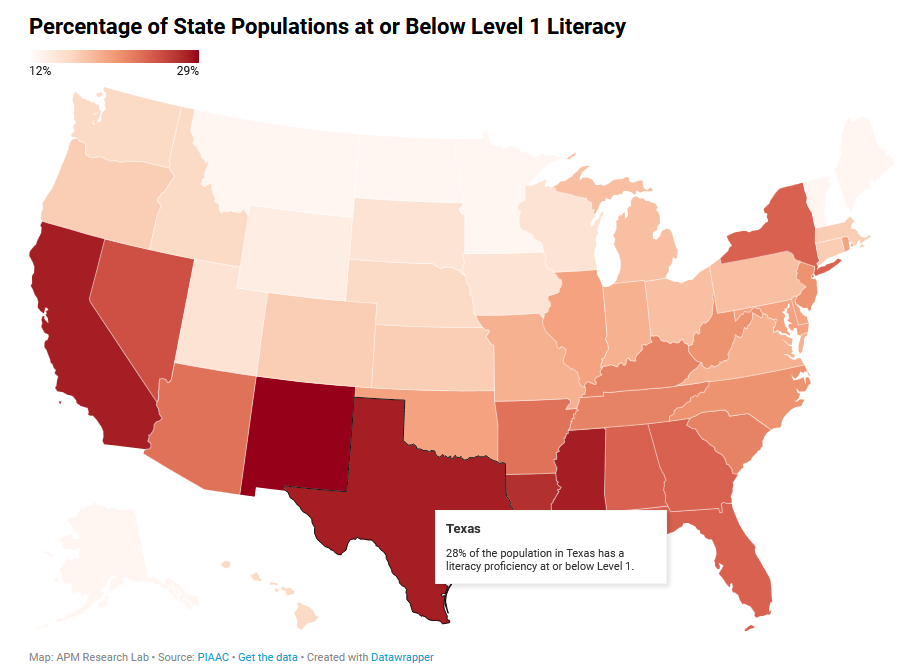
54% of American adults, roughly 130 million people, read below a sixth-grade level. In Texas, where I practice, 28% of the population reads at or below Level 1 literacy on the federal PIAAC scale. I'll be honest: numbers like these are easy to dismiss when your professional life is built around sophisticated projects and colleagues. The franchise lawyers, the lenders, the multi-unit operators, the brokers, most of the people I sit across from every week read contracts for a living. But the customers walking into a franchised location don't. The hourly employees running the shifts don't. And in many cases, the first-time franchisee buyer signing a 300-page Franchise Disclosure Document doesn't either. That last point should stop every franchise professional in their tracks. The FDD is a federally mandated document written in dense legal prose. Item 19 alone, the financial performance representation, can require a working understanding of averages, medians, percentiles, and footnoted assumptions. Item 8 sourcing requirements, Item 11 ongoing fees, the franchise agreement itself, the personal guaranty, the lease assignment, the development rider — none of it is written for someone reading at a sixth-grade level. How do you give meaningful informed consent to a document you can't fully parse? In my practice, I've watched the consequences of this gap play out repeatedly. Franchisees who genuinely did not understand the territorial limitations they signed. Operators who missed renewal windows because the notice provisions were buried in defined terms they never read. Buyers shocked, two years in, to learn their non-compete extended to family members. None of this was fraud. The disclosures were there. The signatures were valid. But the comprehension was not. This is why independent counsel matters. It's why a real FDD review — not a skim, not a "your lawyer can look at it later" assurance — is non-negotiable before signing. A franchisee shouldn't need a JD to understand what they're committing to. That is the lawyer's job: to translate the document into the language of the person actually making the decision. The same principle extends across operations. If you're a franchisor drafting an operations manual, an employee handbook, or a customer-facing disclosure, the question isn't whether the document is technically accurate. It's whether the people who need to act on it can actually read and apply it. Extend grace. Slow down. Translate before you assume comprehension. Half the country needs you to. #franchiselaw #FDD #franchising #franchiseinvestment #texasbusiness
Schuyler 'Rocky' Reidel tweet media
English
0
0
0
10
Schuyler 'Rocky' Reidel
Schuyler 'Rocky' Reidel@ReidelLawFirm·
Thales Defense & Security just paid BIS $44,750 because someone checked a box on a commercial invoice. That box certified the company's goods bound for the UAE contained no Israeli labor, capital, parts, or raw materials. That single certification was three violations of the Export Administration Regulations' antiboycott provisions. Here's what makes this case important for every exporter, freight forwarder, and in-house compliance team: Thales voluntarily disclosed the violations. They self-reported. And BIS still imposed the fine, with a one-year export privilege revocation hanging over them if they don't pay within 30 days. I see this exact scenario more often than you'd think. A buyer in the Gulf, UAE, Saudi Arabia, Qatar, Kuwait, sends a contract or a shipping document with what looks like a perfectly reasonable origin certification. The language is sometimes buried on page seven of a freight forwarder's standard packing list template. Sometimes it's a single sentence in a letter of credit. The clause asks the exporter to confirm that the goods, components, or even the raw materials, don't come from Israel. Have you ever scanned that language and assumed it was just a routine country-of-origin question? That is exactly how this violation happens. US persons, companies and individuals, are prohibited from participating in unsanctioned foreign boycotts. The Arab League boycott of Israel is the most common context this comes up around, but it isn't the only one. When a US exporter signs a certification that their goods are "Israel-free," they have furnished information in support of an unsanctioned boycott. That alone is a violation. Under the EAR, you also have an affirmative duty to report the receipt of the boycott request to BIS, even if you refuse to comply with it. Thales got hit on both counts. As a trade attorney and licensed customs broker, the place I want compliance professionals catching this is in contract review and document intake — not after the fact, in a voluntary disclosure to BIS. By the time the certification has been signed and transmitted, your remediation options have collapsed to "report it and hope for leniency." Voluntary disclosure helps. It does not erase the penalty. Three operational changes worth making this quarter: train your sales and shipping teams to flag any country-of-origin language that singles out Israel, audit your standard freight forwarder templates for embedded boycott language, and build a reporting workflow so the BIS notification happens automatically when a boycott request is received. The checkbox is innocent-looking. The penalty is not. #exportcontrols #tradecompliance #internationaltrade #sanctions #tradelaw
English
0
0
0
23
Schuyler 'Rocky' Reidel
Schuyler 'Rocky' Reidel@ReidelLawFirm·
I'm seeing six-figure franchise agreements arrive at signing with the franchisee's entity type listed three different ways across the data sheet, schedules, and signature page, from large, well-staffed franchisors that should know better. These are not errors from confusion. They are errors from carelessness. A corporation is supposed to be the franchisee. The signature page lists the corporation. The data sheet calls it an LLC. An exhibit calls it a general partnership. One franchisee, three entities, tens of thousands of dollars in initial fees on the line, and this is becoming routine based on my daily practice. So how does this happen at sophisticated franchise groups with legal departments and brand counsel? Here is my working theory. The actual document assembly, the "fill in the blanks" work, is being pushed down to junior staff or offshore VAs who do not understand the legal significance of what they are preparing. The person typing the entity name on the signature page may have never read Item 5 of the FDD or understand the liability difference between an LLC and a general partnership. The other pattern I am seeing is more troubling. Franchisees get rushed into signing in their personal capacity, sometimes without a personal guaranty even appearing in the document, and are reassured this is "typical industry practice." Months later, when the franchisee asks to assign the unit into an entity for liability protection, the franchisor drags its feet. And when the assignment finally happens, a personal guaranty suddenly materializes in the new agreement that was never in the original. Was that calculated? Sometimes I think so. More often, I think it is ego. The franchisor's staff cannot admit the original document was wrong, so "fixing" it becomes a renegotiation the franchisee never agreed to. Either way, the franchisee pays. Why does this matter if you are about to sign? Because the cost of a careless franchise agreement is never absorbed by the franchisor. It is absorbed by the franchisee, in legal fees to clean it up, in delayed SBA financing, in disputes that should never have existed, and occasionally in litigation that ends the unit before it opens. If a franchisor is willing to let a six-figure agreement leave their office with the wrong entity name on the signature page, what else are they willing to let slide once you are signed and operating? Penny-wise and pound-foolish, as they say. Except in this case the franchisee is the one paying the pounds. Before signing, read the data sheet, the schedules, and every exhibit. Compare every entity reference, every signatory, every guaranty provision. If anything is inconsistent, do not sign until it is corrected — in writing, on the document itself, before any money changes hands. The franchisor's carelessness becomes your liability the moment you sign. #franchiselaw #FDD #franchising #franchiseinvestment #franchisebroker
English
0
0
0
13
Schuyler 'Rocky' Reidel
Schuyler 'Rocky' Reidel@ReidelLawFirm·
9,500 independent restaurants closed their doors in 2025. That's a 2.3% net decline, leaving 412,498 independents standing — while the Top 500 chains added roughly 3,600 units in the same year. Read that again. Independents shrank. Chains expanded. Same operating environment. There's a popular narrative right now that AI is the great disruptor of every industry, that white collar work is finished, and food service, home services, and the trades are the safe harbor. I understand the instinct. But the restaurant numbers tell a different story, and the prospective franchisees I counsel need to hear it. AI hasn't meaningfully moved the needle on restaurant sales. What's crushing operators is more prosaic and more brutal: input costs (labor, rent, insurance) up mid-to-high single digits, consumer wallets tightening, menu price increases that hit traffic the moment they're enacted, and a population that grew 0.5% last year against a chain unit count that grew 1.4%. Too many restaurants. Too few consumer dollars. That's the math. So why did chains hold up while independents collapsed? Deeper pockets. Vendor leverage. Franchisor-level cost negotiation on food and supplies. Brand recognition that survives a price hike. Full-service independents lost 6,400 locations on the year. Full-service chains lost 165. But this is exactly where prospective franchisees need to slow down. The data does not say "all chains are safe." It says the chains that scaled their cost structure and stayed dynamic kept growing. The legacy brands without unit economics, without franchisor responsiveness, without a real value proposition? Those are the ones quietly bleeding out underneath the headline numbers. When I review FDDs in this environment, I'm paying closer attention than ever to Item 19, three-year same-store sales trends, transfer activity, and net unit growth. A brand that's "growing" because it's signing new franchisees while existing ones are closing isn't growth, it's churn dressed up for the prospectus. Is the franchisor you're evaluating actually expanding, or is the system just rotating new buyers through the same struggling locations? The right question was never whether food is recession-proof or AI-proof. It isn't. The right question is whether the specific franchisor you're signing with has the cost structure, the field support, and the franchisee relationship discipline to survive a market that is actively right-sizing itself. Many won't. If you're considering a franchise investment right now, the burden of diligence has gone up — not down. Buy the wrong system in this environment and the macro will not save you. #franchiselaw #franchising #restaurantindustry #franchiseinvestment #businessstrategy
English
0
0
0
12
Schuyler 'Rocky' Reidel
Schuyler 'Rocky' Reidel@ReidelLawFirm·
30% of entry summaries filed in 2025 contained discrepancies. For entries with 50 or more line items, that error rate hit 80%. A new analysis of over 300,000 line items representing $1 billion in declared goods just quantified what every customs broker felt last year: the system broke. And now CBP is coming back to collect. The numbers tell the story. As effective tariff rates tripled from 8% to 25% between April and December 2025, filers couldn't keep up. Importers initially underpaid by 12 or more percentage points, then overcorrected by 4-5 points trying to catch up. ACE didn't validate most of this data, the new IEEPA tariffs were rolling out faster than CBP's own systems could absorb them. It was, candidly, the Wild West. I won't pretend this is a good look for the industry. A 30% baseline error rate is painful for compliance professionals to read, and I include myself in that. But the context matters. We were filing against rates that changed week to week, with limited guidance and removed validations. Innocent errors were inevitable. The problem is that "innocent error" isn't a defense anymore. As importers file CAPE declarations to recover IEEPA overpayments, and the report identifies $35 million in recoverable overpayments, CBP is using those filings to surface 2025's mistakes. The example I have seen: a company paid IEEPA duties on China-origin goods but skipped the stacked Section 301. CBP processes the IEEPA refund, then offsets it against the unpaid Section 301. The refund evaporates. Sometimes the importer ends up owing. There's also $29.4 million in underpayment exposure sitting in those entries. Expect a wave of CF-28s and CF-29s over the next few quarters, and don't be surprised when some of them carry penalty proposals for false claims or improper entry filings. What does this mean operationally? If you're an importer with significant 2025 entry volume, and that includes franchise systems sourcing equipment, food service operators, and any business with stacked IEEPA/232/301 exposure, you need to audit your own entries before filing CAPE. Don't certify a CAPE declaration as true and accurate while sitting on uncorrected 2025 errors. That box you click matters. Build your validation process now. Run the ACE reports. Reconcile the duty calculations. Identify the underpayments and overpayments before CBP does it for you. The cost of a self-corrected error is always lower than the cost of one CBP finds first. #tradecompliance #customs #tariffs #importing #supplychainrisk
English
0
0
0
16
Schuyler 'Rocky' Reidel
Schuyler 'Rocky' Reidel@ReidelLawFirm·
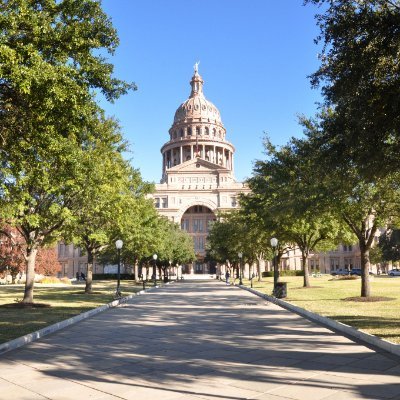
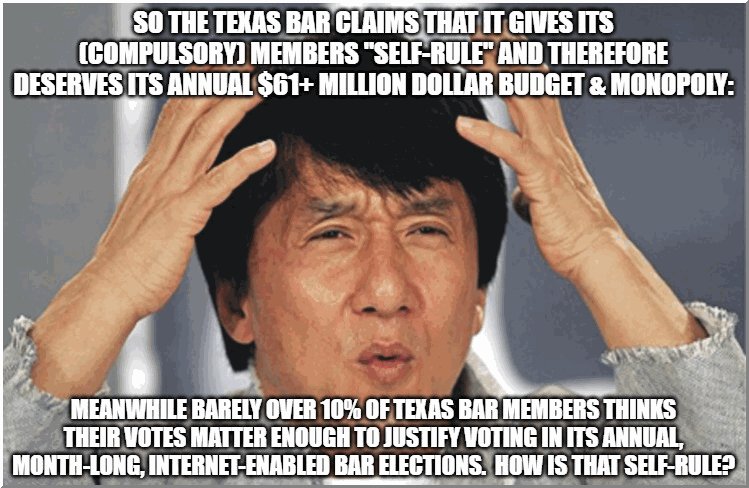
@texasbarsunset I am active abstentionist to Texas Bar voting. Candidates are all pre-vetted, nominated, and approved by the Bar leadership itself. Taking the best election cues from USSR, Iran, North Korea...
English
0
0
3
42
Schuyler 'Rocky' Reidel
Schuyler 'Rocky' Reidel@ReidelLawFirm·
For years, I've warned clients with China-based supply chains about a risk most don't see coming: the supplier visit that turns into a hostage negotiation. Chinese counterparties have used unlawful detentions of visiting executives as leverage in commercial disputes for as long as I've been practicing trade law. This month, Beijing made that playbook official policy. Premier Li Qiang signed an 18-point regulation that took effect April 14, giving Chinese authorities sweeping power to investigate and penalize foreign companies that move supply chains out of China. The rules let regulators question your employees, examine your corporate records, and, this is the part that should stop every executive cold, bar companies and individuals from leaving the country if they're suspected of "decoupling" under foreign pressure. Read that again. If you fly to Shanghai for a routine vendor audit and Beijing decides your sourcing decisions are politically motivated, you may not be flying home. China is framing this as protecting "security risks in industrial and supply chains." The real driver is the $1.2 trillion trade surplus that's now triggering protectionist responses across every developed economy. Beijing watched exports outpace imports by nearly $1.2 trillion last year and concluded the fix wasn't to import more, it was to legally trap the multinationals trying to leave. For franchise systems sourcing kitchen equipment, restaurant smallwares, and branded merchandise from Chinese manufacturers, this is no longer a sourcing question. It's a personnel risk question. Are you still sending procurement leads to inspect factories? Are franchisees coordinating direct buys from mainland suppliers? Every executive who steps onto Chinese soil during an active diversification effort is now exposed to a state-sanctioned exit bar. The vague language is the danger. "Suspected of moving supply chains under foreign pressure" can mean almost anything — including responding to U.S. tariffs, Section 301 actions, or UFLPA forced labor enforcement. The companies most aggressive about diversifying away from China are the ones with the largest target on their backs. Here's what I'm telling clients this week: Document every sourcing decision with a non-political rationale — cost, quality, lead time — before the diversification work begins. Suspend non-essential executive travel to mainland China while you assess exposure. Route Vietnam, India, and Mexico transitions through third-party sourcing agents wherever possible. And review your D&O coverage — most policies do not contemplate a state-imposed exit ban as a covered event. The decoupling era was always going to get harder. It just got dangerous. #internationaltrade #tradelaw #supplychainrisk #customs #franchiselaw
English
0
0
1
17
Schuyler 'Rocky' Reidel
Schuyler 'Rocky' Reidel@ReidelLawFirm·
A purchase agreement landed on my desk this week referencing the franchisor's "offering circular", a term the FTC eliminated in 2006 when it updated the Franchise Rule and replaced it with "Disclosure Document." That was the third red flag. The first was the format, a PDF, and the requirement at signing for the docs in triplicate (because apparently e-signature hasn't existed for the last 15 years), flagged as the "final" version, ready to sign in three days. I've been reviewing these long enough to spot a stale template at a glance, and this one was dripping with it. Multiple original signing copies required at closing. Outdated regulatory references. And the kicker, the named parties didn't even match the existing franchise agreement. Here's what made it worse: the franchisor volunteered this template. They may have drafted it themselves. And the seller sent it straight to my buyer client without counsel reviewing a single word. Is any of this fatal to the deal? No. It's fixable. But that three-day closing deadline is blown, and whoever cleared this draft on the franchisor side looks careless at best. I want to be clear about something, because I think it gets misunderstood. Transactions attorneys are not here to break deals. I'm not looking to throw wrenches or invent problems to justify a fee. When I push back on the parties listed in a purchase agreement, it isn't because I'm a stickler for paperwork. It's because those parties are legally meaningful — and they will absolutely become the problem when something unforeseen surfaces later. Like the lease assignment fee buried in that 7-year-old lease, the one the landlord requires to approve the sale. Who's paying that? Did anyone read the lease before drafting the purchase agreement? Because in my experience, "we'll figure it out at closing" is not a strategy — it's a hope. So a direct word to franchisors: do not draft legal documents for your franchisees. I know it feels helpful. I know it feels like you're saving them money. But your attorneys do not represent your franchisees, and sending a dated, deficient template into a live transaction is not a generous gesture — it's a legal bomb with a timer on it. The fallout, when it comes, lands on the franchisee who trusted that someone had looked out for them. And to franchisees: hire your own counsel. Someone whose only job is to get you to the finish line with your risks identified and mitigated — not someone whose loyalties run elsewhere. The deal closes when the documents are right. Not three days from now because someone said so. #franchiselaw #franchising #FDD #franchiseinvestment #franchisegrowth
English
1
0
1
14
Schuyler 'Rocky' Reidel
Schuyler 'Rocky' Reidel@ReidelLawFirm·
Ultimately it should come down to what the company goals are, what assets or knowledge needs to be protected, and if there are any industry specific concerns doing business in China. Based on those, a more thorough analysis can be done and a more firm answer. I will say, I am not generally opposed to either. Just a matter of choosing the right tool for the job.
English
0
0
0
7
Schuyler 'Rocky' Reidel
Schuyler 'Rocky' Reidel@ReidelLawFirm·
@Djoz_Song Its a big question. There is not a blanket answer for all companies or goals. Either could be the right fit but both have their challenges. For example Manus AI is finding out about bow about the long reach of China law despite being operationally located outside of China now.
English
1
0
0
22
Schuyler 'Rocky' Reidel
Schuyler 'Rocky' Reidel@ReidelLawFirm·
When the Deputy Secretary of State tells the Atlantic Council that American companies are "too concerned" about international trade compliance risk, I want him to spend a week in my office. Because last week, BIS hit Applied Materials with a $250 million penalty for illegal exports to China. That's the second-largest export enforcement fine in history. Not a rounding error. Not a theoretical risk. A quarter of a billion dollars — against one of the most sophisticated semiconductor equipment manufacturers in the world, with an in-house compliance team larger than most of my clients' entire workforces. And we're telling small and mid-sized exporters they're worrying too much? I've watched compliance violations put companies out of business. Not fraud cases. Not sanctions evaders. Ordinary small exporters who missed an ECCN reclassification, shipped to the wrong end-user, or relied on a freight forwarder who didn't flag a red flag. The penalties are not flippant. The government wields an enormous stick, and it uses it. Here's what makes the Deputy Secretary's comments genuinely infuriating: the real problem isn't that exporters or importers are too cautious. It's that the system has become functionally broken. For example, CSIS just released a survey showing 54% of semiconductor and IT companies lost business in 2025 because of BIS licensing delays. 62% said the delays damaged relationships with existing customers. 58% lost customers to foreign competitors, the exact Chinese entities the Deputy Secretary wants American firms to beat. And 42% had over $10 million in exports stuck in pending license review. 56% reported average review times over 180 days. More than a third waited over 300 days for a license decision. Can you imagine running a business where a single export sale takes ten months to clear government review, and during that ten months the government can pause reviews indefinitely with no explanation? That's not excessive caution. That's rational response to a system that punishes both action and inaction. So which is it? Are American companies too worried about compliance — or is the enforcement apparatus imposing $250 million penalties while the licensing apparatus sits on applications for 300 days? Both, actually. And that's the point. The government created this environment. Exporters and importers didn't invent it. If the Deputy Secretary wants U.S. firms beating Chinese competitors in every corner of the globe, the answer isn't telling importers or exporters to loosen up. It's fixing the licensing backlog, providing clear compliance guidance, and calibrating enforcement so that good-faith errors don't become company extinction events. Until then, my clients will keep doing exactly what the law requires — because the alternative is a $250 million line item. #exportcontrols #tradelaw #internationaltrade #tradecompliance #sanctions
English
1
0
0
29
Schuyler 'Rocky' Reidel
Schuyler 'Rocky' Reidel@ReidelLawFirm·
Exports are sitting at U.S. ports right now with no explanation, no AES notification, and no clear path to release. I haven't had this hit one of my export clients yet, but several customs broker and freight forwarders I'm talking to is seeing the same pattern, and it's accelerating. Here's the part that should concern every exporter: CBP's hold notification through the Automated Export System is discretionary. Message 97H gets sent "at the agency's discretion," and based on guidance going back to 2023, CBP can decide whether to notify based on the type of merchandise. From what NCBFAA's Transportation Committee is reporting, most ports simply aren't using it. Detroit is the exception, not the rule. So your container can be held at Long Beach, Savannah, or Houston, and the first time you find out is when your customer asks why the shipment hasn't moved. It gets worse. Carriers often don't know about the hold either, or they know and don't pass it through. And here's the kicker, CBP has penalized exporters who received a hold notification and failed to reach out to the agency. You can be punished for inaction on a notification you never saw. As a licensed customs broker, this is exactly the kind of operational gap that costs exporters real money: demurrage running $200 to $400 per container per day, detention fees, missed shipping windows, and contract penalties for late delivery. None of it is recoverable. What should exporters be doing right now? Monitor your AES filings actively. Don't wait for a notification — assume it isn't coming. If a shipment goes quiet, treat the silence as the signal. Brief your customs broker and freight forwarder on exactly who needs to be told the moment a hold appears, and confirm that AES messages flow to the party that filed the Electronic Export Information. Holds can sit in someone's queue for days while the clock runs. Build a port contact list before you need one. When a container is detained at the Port of Houston or Laredo, knowing who to call cuts days off the resolution. And document everything. If you do receive a 97H message, action it the same day and keep the record. CBP will not give you the benefit of the doubt if a penalty notice follows. This trend isn't reversing. Exporters who treat AES monitoring as a check-the-box compliance task are the ones who'll end up on the wrong side of a penalty notice in 2026. #internationaltrade #exportcontrols #tradelaw #customs #tradecompliance
English
0
0
0
14
Schuyler 'Rocky' Reidel
Schuyler 'Rocky' Reidel@ReidelLawFirm·
7-Eleven is closing 645 stores in North America over the next 11 months. That's the fifth straight year of net contraction for one of the most recognized convenience retail brands in the world. Set that next to a different headline: starting January 1, five states began restricting what SNAP recipients can buy with their benefits: soda, candy, and in Iowa's case, certain prepared foods. Eighteen states have waivers in motion. The program serves 42 million Americans and moves roughly $100 billion annually through retailers. I'm not going to pretend I can draw a straight line between SNAP restrictions and 7-Eleven's closure announcement. The convenience store sector is wrestling with bigger forces than that, slimmer fuel margins, foot traffic, their pending IPO, and a shift toward larger-format stores. But the broader point is one I think every prospective franchisee needs to sit with. A lot of franchise models, far more than people realize, are quietly subsidized by policy. Government nutrition programs, agricultural supports, fuel tax structures, healthcare reimbursement rules, immigration-driven labor pools, home maintainence tax incentives, energy policies, even tariff schedules. These aren't line items in any FDD I've ever read. They don't appear in Item 19 financial performance representations. They don't show up in the franchisor's pitch deck. But they shape unit economics in ways that can quietly inflate margins for years, until they don't. When the underlying policy shifts, the model that looked bulletproof during diligence starts to wobble. Categories that drove same-store sales suddenly underperform. Average unit volumes that anchored your projections become aspirational. The franchisor keeps collecting royalties on top-line revenue while you absorb the margin compression. So here's the question I'd ask before signing any franchise agreement: what percentage of this brand's category mix or transaction volume depends on a policy, program, or subsidy that could change with an election, a regulatory rulemaking, or a state-level waiver? In my practice, I see franchisees who did extensive diligence on the franchisor, read the FDD, talked to existing operators, ran the numbers, and still got blindsided because nobody surfaced the external policy exposure baked into the business model. That's not a failure of the FDD. It's a failure of the FDD framework. Those disclosures aren't designed to capture this layer of risk. The work has to happen outside the FDD. It means studying the product mix, understanding the customer base, and asking hard questions about which dollars in the till would still be there if the policy environment changed tomorrow. That analysis rarely happens in franchise sales conversations. It needs to happen in yours. #franchiselaw #FDD #franchiseinvestment #franchising #businessstrategy
English
0
0
0
11
Schuyler 'Rocky' Reidel
Schuyler 'Rocky' Reidel@ReidelLawFirm·
I had a client call me last month in disbelief. A shipment of industrial equipment they'd imported for years under a predictable duty structure had just cleared with a bill nearly 3x what they'd budgeted. Same product. Same supplier. Same classification. What changed? The tariff base. As of April 6, the Section 232 tariffs on steel, aluminum, and copper have been "simplified", and if you import anything containing metal, that word should make you deeply nervous. Here's what actually happened. The derivative product tariff rate dropped from 50% to 25%. Sounds like relief, right? It isn't. Under the old rules, that 50% applied only to the metal content inside a finished product. Under the new rules, the 25% applies to the full value of the finished product — labor, fabrication, machining, overhead, every cost baked into the landed price. Run the math on a $1,000 product with $200 in steel content. Old system: 50% on $200 = $100 duty. New system: 25% on $1,000 = $250 duty. A 150% increase in tariff liability, delivered as a "simplification." The full structure now looks like this: 50% on raw steel, aluminum, and copper. 25% on derivative products substantially made of those metals — appliances, trucks, silverware, industrial equipment. 15% on metal-intensive industrial and electrical grid equipment. 10% on products made abroad with American-sourced metal. Products with 15% or less metal by weight are exempt. And the formal process for adding new derivative products to the list? Terminated. Cabinet officials will now add goods on a rolling basis. Translation: your compliance exposure can change with a memo you never see. That's not hypothetical. Express Fasteners, an Illinois importer, is suing the government after CBP applied the 50% steel tariff to the full value of their imports, based on an internal December 2025 memorandum that was never published, never subject to comment, and that Express only learned about from another importer. They followed the published guidance. CBP used unpublished guidance to bill them anyway. For franchise systems sourcing kitchen equipment, walk-in coolers, prep tables, or branded metal fixtures from overseas suppliers, this is a direct hit to buildout economics. A $40,000 equipment package with significant steel or aluminum content could now carry $10,000 in Section 232 duties on top of reciprocal tariffs, per restaurant. What should importers do right now? Pull your HTS classifications on every metal-containing SKU and re-verify the tariff base your broker is declaring. Audit your entries from April 6 forward against both published and any discoverable internal CBP guidance. If you're seeing unexpected bills, preserve your protest rights — the 180-day clock starts at liquidation. And if your broker hasn't proactively flagged this shift, that's a conversation worth having this week. The administration calls it simpler. For importers, it's a tariff hike with a new mailing address. #internationaltrade #tariffs #customs #tradecompliance #franchiselaw
English
0
0
0
19
SMB Attorney
SMB Attorney@SMB_Attorney·
There's nothing funnier than when VC / tech bros talk Main Street business. Guys, this might work and you could make some money. But $500K? Please stop. We have to stop treating Main Street business owners like they are dummies. Building a business on Main Street is brutal. The 5-year failure rate is 90%+ Those that make it are smart and gritty people. You're not going to convince them to give you $2-$3K per month without a track record. And even if you do, the expectations are going to be sky high. You're not going to just show them ChatGPT and say "look and behold!" The average 65-year-old business owner has fired more people than you've met in your life. They will fire you... fast. We have to stop pushing the idea that you can supercharge a Main Street business by unplugging the fax machine and introducing technology. It is a fallacy. These businesses are held together by relationships and shoestrings. Again, this might work, and I'm not saying don't try it. But it's good idea to temper expectations a bit.
WOLF@WOLF_Financial

CHRIS CAMILLO JUST LAID OUT HOW TO MAKE $500,000 A YEAR AS AN "AI GUY" FOR LOCAL BUSINESSES His blueprint: 1. Walk into any HVAC, plumbing, or sprinkler business. 2. Ask where they're leaking money. 3. Build them an AI agent that answers after-hours calls, sends instant texts, and gets quotes out in real time. 4. Integrate it with their CRM for free. 5. Charge them $2K-$3K/month to be their "AI guy." Repeat across 10-20 businesses. "There are people right now doing this."

English
53
12
228
56.4K
Schuyler 'Rocky' Reidel
Schuyler 'Rocky' Reidel@ReidelLawFirm·
53% of every food and beverage dollar Americans spend now goes to restaurants and bars. In 2000, that figure was closer to a third. By any logical read of the numbers, this should be the best era in the history of the restaurant industry. It isn't. 42% of restaurant operators say they are currently unprofitable. Eight of the twenty largest chains in the country closed a net number of locations in 2025. Chipotle, Chick-fil-A, and Popeyes, three brands that have defined modern QSR growth, all posted surprising unit volume declines. TGI Fridays, Hooters, and Fat Brands, all financed through so-called bulletproof whole business securitization structures, filed for bankruptcy. Red Lobster is still working through one of the largest restaurant bankruptcies the industry has ever seen. So where are the profits going? I spend most of my practice reviewing FDDs and counseling prospective franchisees, and I can tell you the answer rarely shows up cleanly in Item 19. The honest answer is that restaurants, and franchised restaurants in particular, operate in one of the most ruthlessly competitive markets in the American economy, and competition crushes margins. Always has. The spending growth is real, but it's being sliced thinner every year because everyone wants in. Private equity opens units with aggressive debt and expensive leases. Emerging franchisors push unit counts faster than demand can absorb them. Independents open on every corner because plenty of people still believe they can run a restaurant better than the last person who tried. Each new location pulls from the same customer pool, and average unit volumes drop accordingly. Add third-party delivery fees, higher labor costs, ingredient inflation, and tipping expansion, and the average operator is working harder for less. The question I ask prospective franchisees is this: if the category you're buying into is growing, but the average operator inside that category is less profitable than they were six years ago, what exactly are you buying? A strong Item 19 average can mask a system where the bottom quartile is bleeding. Aggressive development schedules can look like momentum on paper and cannibalization on the ground. A franchisor's growth story can be financed by your royalty payments long after the economics have stopped working for franchisees. Rising consumer spending is not the same as a rising tide. In this industry, it has been propping up topline growth while profitability quietly erodes underneath. Anyone evaluating a restaurant franchise right now should be underwriting to that reality — not the macro spending chart. #franchiselaw #FDD #franchiseinvestment #restaurantindustry #privateequity
English
0
0
0
12