

Renee Teate
8.6K posts

Renee Teate
@ReneeTeate
From Alabama - destination Heaven
Temporary home - Memphis Katılım Mart 2009
977 Takip Edilen205 Takipçiler

Congrats to @NASA for successfully launching four astronauts into space at 17,500 miles per hour on their journey to the moon.
Coincidentally, this is the same speed y'all seem to go on I-40.
English
Renee Teate retweetledi

When 740 children were condemned to the sea and the world said no, one man said yes.
The world was on fire in 1942, and 740 exhausted children were trapped on a ship in the middle of the Arabian Sea with nowhere to go. These Polish orphans had already survived the horrors of Soviet labor camps, where they watched their parents perish from hunger and disease.
They had traveled through Iran to reach the coast of India, praying for safety, but every British-controlled port turned them away. One by one, the doors of the world slammed shut, leaving hundreds of hungry, terrified children drifting toward a certain death.
Among them was twelve-year-old Maria. She held her six-year-old brother’s hand tightly, remembering the last promise she made to their dying mother:
“Keep him safe.”
But as the ship’s food ran low and the medicine disappeared, Maria looked at the horizon and saw only rejection. The British authorities, who ruled India at the time, insisted the children were not their responsibility.
It seemed as though these 740 souls were invisible to a world consumed by war.
However, news of the wandering ship reached the ears of Jam Sahib Digvijay Singhji, the Maharaja of Nawanagar. He ruled a small princely state in Gujarat. He wasn’t a world leader with a massive army, and he certainly wasn’t required to help. In fact, by welcoming the children, he would be directly defying the British Empire, which had already said “no.”
When his advisors told him the tragic story, the Maharaja didn’t ask about the cost or the political risks. He simply asked how many children there were. When they told him “seven hundred and forty,” he made a decision that would echo through history.
He declared that while the British might control the ports, they did not control his conscience.
In August 1942, the ship finally docked at Nawanagar. The children who walked off that gangplank were skeletal, weak, and too traumatized to even cry. They expected to see soldiers or barbed wire. Instead, they saw a man dressed in white waiting for them on the pier.
The Maharaja knelt down so he could look the smallest children in the eye. Through an interpreter, he spoke words that changed their lives forever: “Do not consider yourselves orphans. From this moment on, I am your father, and you are my children.”
He didn’t just give them a place to sleep; he gave them a home. In the village of Balachadi, he built a sanctuary. He didn’t try to force Indian culture on them. Instead, he hired Polish teachers so they wouldn’t forget their language. He made sure they had Polish food and allowed them to practice their religion and sing their traditional songs.
Under the hot Indian sun, these children celebrated Polish Christmas and felt the warmth of a family they thought they had lost forever. For four years, while the rest of the planet was tearing itself apart, the Maharaja funded every doctor’s visit, every meal, and every schoolbook from his own personal fortune.
When the war finally ended and it was time for the “children of the Maharaja” to leave, many wept. They were leaving the only place that had treated them with dignity when the rest of the world looked away.
Those survivors have become doctors, engineers, and grandparents. In Poland, there are squares and schools named after Jam Sahib Digvijay Singhji, and he is remembered as a national hero.
Power is not measured by the lands you conquer, but by the lives you protect. When the world closes its heart, your greatest act of rebellion is to open yours. True immortality is found in the kindness that outlasts the king.

English
@Mr_Husky1 I love this so much!! Congratulations on staying sober and God bless Frank!!
English
I adopted my dog three weeks after I got sober and everyone in my life thought it was a terrible idea. My sponsor said I needed to focus on myself. My sister said I could barely keep a plant alive. My therapist said, carefully, that she wanted me to think about whether I was ready for that level of responsibility. They were all correct and I did it anyway.
His name is Frank. He is a six-year-old Basset Hound I found on the shelter website at 1:00 AM on a Thursday, which is the kind of decision-making hour that should probably require a second opinion, and I drove to the shelter the next morning before I could talk myself out of it. Frank had been there for five months. He was surrendered by a family who said he was too slow, which is the most accurate thing anyone has ever said about him and also not a reason to surrender a dog.
He sat in his kennel with the dignified resignation of someone waiting for a connecting flight they have accepted will be delayed indefinitely. When I knelt down at his kennel he walked over slowly, sniffed my hand with great thoroughness, and then sat on my foot. The volunteer said he had never done that before. I took him home that afternoon.
The first year of sobriety is hard in ways that are difficult to explain to someone who has not been through it. The cravings are obvious but the other parts are less discussed — the boredom, the social anxiety, the strange disorientation of being present in your own life after years of not being.
The evenings were the hardest.
That specific window between 7:00 and 10:00 PM when I did not know what to do with my hands or my thoughts and the silence in my apartment felt like something that needed to be filled.
Frank filled it. Not by being exciting. Frank is not exciting. He sleeps approximately nineteen hours a day and approaches every situation with the same level of unhurried evaluation, whether it is a new toy or a fire alarm. But he needed to be fed at 6:00 PM and walked at 7:00 and again at 9:00 and those three facts restructured my entire evening around something other than the inside of my own head.
My therapist said six months in that Frank might have been the best decision I made in early recovery. She said it like she was slightly annoyed about it, which I respected. I have been sober for two years and four months.
Frank is currently asleep on the couch with one ear flipped inside out, which is how he sleeps about half the time, and which I have stopped trying to fix because he clearly does not find it inconvenient. My sponsor asks about him every week now. My sister bought him a birthday cake last month.
Frank did not save my sobriety. That was my work and my choice and nobody else's. But he gave me a 7:00 PM and a 9:00 PM and a reason to be home and present and responsible on the nights when I most needed something that required it of me.
Sometimes a Basset Hound is exactly the right medicine.

English
Renee Teate retweetledi

Renee Teate retweetledi

WOW: @SpeakerJohnson shames the Pope with a MASTERCLASS in two minutes on the biblical—
and logical—
and classical American—
basis for enforcing border control, assimilation, and established immigration policy.
Put more Patriots in Congress!
English
Renee Teate retweetledi

This is one of my favorite details from Becket Cook’s testimony.
"Before I was a Christian, I was pro-choice...I've talked about this so many times, but the day I got saved, the day that God opened the eyes of my heart, I think it was that same very day, I understood the imago Dei. I instantly became pro-life, like immediately."
Check out the full conversation between him and Denny Burk. 👇
English
Renee Teate retweetledi

Renee Teate retweetledi

Jelly Roll just had an all-time Grammy acceptance speech
English
Renee Teate retweetledi

American Giant. One of the best to have ever done it.
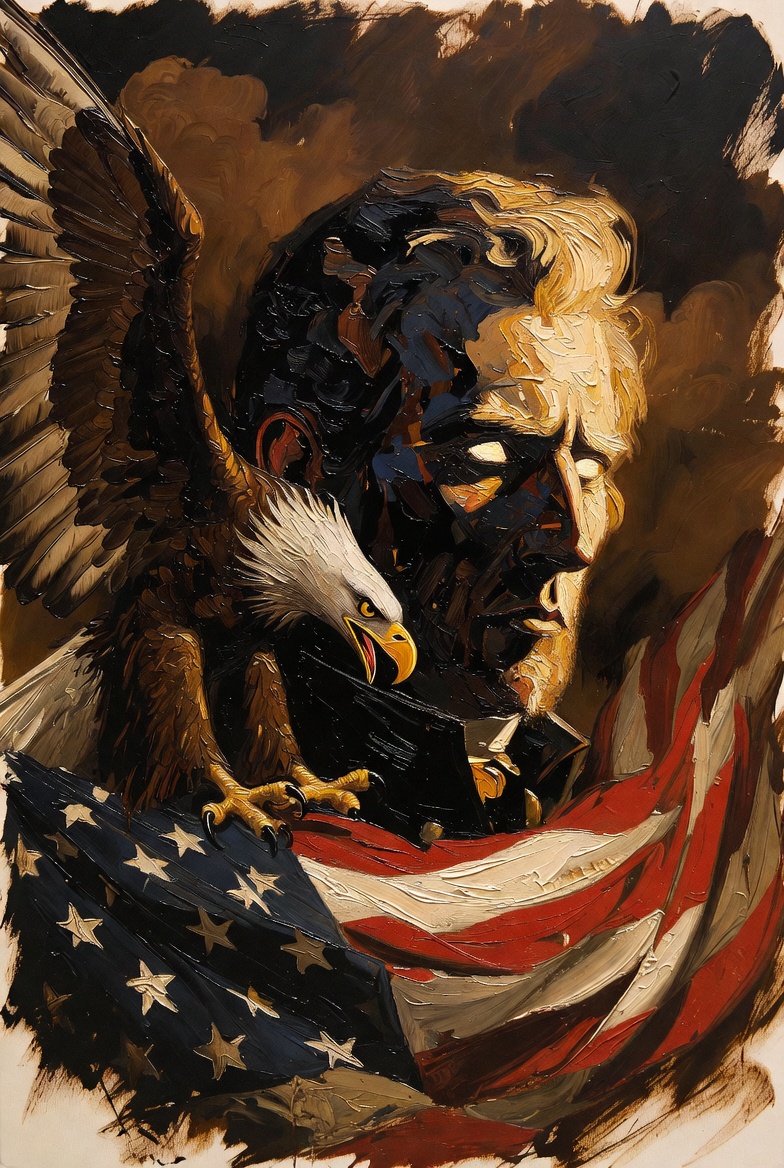
Be Andrew Jackson
>Born 1767. Carolina backcountry. Edge of civilization.
>Father dies before you’re born.
>Mother raises you alone. Hard woman.
>American Revolution breaks out. You’re a teenager.
>Age 13. British soldiers capture you.
>Officer orders you to clean his boots.
>You refuse.
>He slashes your face and hand with a sword.
>Scars never fade.
>Thrown into prison.
>Contract smallpox.
>Nearly die.
>Released in a prisoner exchange.
>Return home broken and fevered.
>Shortly after, your mother dies of cholera.
>She was nursing American prisoners of war.
>You are 14.
>Completely orphaned.
>Frontier life hardens you.
>Study law. No schools. No polish.
>Become a lawyer. Then a judge.
>Honor culture.
>Duel repeatedly.
>One duel goes wrong.
>Shot in the chest.
>Bullet lodges inches from your heart.
>Doctors cannot remove it.
>You carry it for life.
>Rise in Tennessee politics.
>Become a general.
>New Orleans.
>British Empire returns.
>Veterans of Europe. Best army in the world.
>You have militia. Riflemen. Pirates. Farmers.
>They expect a massacre.
>You annihilate them.
>Victory so decisive it shocks the world.
>Become a national hero overnight.
>Enter presidential politics.
>Win the popular vote.
>Lose in Congress.
>“Corrupt bargain.”
>You do not forget.
>Run again.
>You win.
>First true populist president.
>Enemies immediately: elites, editors, bankers.
>They call you dangerous.
>You agree.
>Then comes the real war.
>The Second Bank of the United States.
>Private. Politically connected. Foreign investors.
>Controls credit. Controls elections. Controls survival.
>They call it stability.
>You call it tyranny.
>Bank president Nicholas Biddle believes you can be managed.
>Congress renews the Bank’s charter early, to force your hand.
>You veto it.
>Publicly.
>“The rich and powerful too often bend the acts of government to their selfish purposes.”
>The bankers panic.
>They unleash newspapers.
>Contract credit.
>Trigger economic pressure to break you.
>You escalate.
>Remove federal deposits.
>Shift them to state banks.
>The central bank begins to suffocate.
>The Bank collapses.
>No central bank.
>No financial sovereign above the people.
>The bankers want you dead.
>January 30, 1835.
>Capitol steps.
>Assassin approaches.
>Pulls a pistol.
>Click.
>Misfire.
>Second pistol.
>Click.
>Another misfire.
>You don’t flee.
>You attack him with your cane.
>Beat him until restrained.
>Courts declare the assassin insane.
>You are not convinced.
>Leave office having paid off the national debt.
>Only president ever to do it.
>Die 1845.
>Age 78.
Leaves behind:
The destruction of the central bank.
The precedent that finance answers to sovereignty.
The expansion of executive power.
A nation reminded that elites are never permanent.
Proof that an orphan from the American frontier can defy empires.
English
Renee Teate retweetledi

The sun at the same time every day for 365 days. Amazing. The heavens declare the glory of God. Psalm 19:1.
English
Renee Teate retweetledi
Rosaria Butterfield on why Charlie Kirk was assassinated and why as a Christian you should not take your marching orders from Phil Vischer:
"Charlie Kirk died...because of two reasons: Number one, he said things people didn't like, and number two, he championed Christian conservatism and he highlighted the moral bankruptcy of leftist progressivism.
If you tell me, like Phil Vischer of VeggieTales, that the problem is political polarization, the solution is coming to the middle...The problem is not political polarization, but that Christians are accommodating lies...
The progressive left and true Christianity are not morally equivalent. We don't bring the light to the darkness by meeting in the middle. We defy lies, and we tell the truth."
English
Renee Teate retweetledi

@theryman Hey, Ryman! Is the @johnanderson concert a go or no go tomorrow night? 1/28/2026. This fan is coming from Memphis and concerned about road conditions! Thank you!!
English
Renee Teate retweetledi
Renee Teate retweetledi

A SHELTER IN PLACE order has been issued for Oxford, Mississippi as a crippling #icestorm continues. Hours of thunder freezing rain has accrued 1-2 inches of ice. Falling trees are a threat to life and property. #ice #winterstorm
English
Renee Teate retweetledi

Renee Teate retweetledi

Renee Teate retweetledi
Renee Teate retweetledi

104-year-old World War II veteran Dominick Critelli played the national anthem on the saxophone at the Rangers-Islanders game
Pretty special stuff 🇺🇸
English
Renee Teate retweetledi
