Chris Stewart

5.4K posts

Chris Stewart banner
Chris Stewart

Chris Stewart

@RepChrisStewart

Managing Partner, Skyline Capitol; Former Congressman for UT-02; Former House Intelligence and Appropriations Committees; World Record-setting Air Force Pilot

Utah and Washington, D.C. Katılım Ocak 2013
482 Takip Edilen43.4K Takipçiler
Chris Stewart
Chris Stewart@RepChrisStewart·
As Americans celebrated our nation's 250th birthday last weekend, some of our closest allies honored the occasion by illuminating landmarks in red, white, and blue. South Korea joined them, celebrating the alliance that has bound our nations together for more than seven decades. It was a welcome gesture. But in foreign policy, symbolism only goes so far. Friendly light shows cannot erase unfriendly actions. Because while South Korea was publicly celebrating the United States, its government was privately attacking American companies – and dismissing the findings of a formal U.S. congressional investigation documenting that abuse. During my time on the House Intelligence Committee and the House China Task Force, I spent years studying how authoritarian governments use state power to pressure American businesses. I never imagined seeing an American ally adopt tactics that look so familiar. Yet that is exactly what the Korean government is doing to Coupang (NYSE: CPNG), a Fortune 150 U.S. tech company and American exporter with major operations in Korea and throughout Asia. The basic facts are straightforward. Late last year, a former Coupang employee improperly accessed basic user data related to customers in Korea and Taiwan – the kind of information you’d find in a phonebook, like names and addresses. He downloaded roughly 3,000 records to his computers, which soon after were recovered. None of the data was sold or misused, and no consumers suffered any harm. By any reasonable standard, this should have triggered a regulatory review, improvement plan, and perhaps a fine. In fact, that is exactly what happened in Taiwan. But political leaders in Seoul instead chose to detonate an all-out government assault. Police repeatedly raided the company. A dozen regulatory agencies launched investigations and enforcement actions, most of which with no connection to data security. The company’s American founder was branded a “devil.” Lawmakers hauled in the company’s acting CEO – also a U.S. citizen – for days of theatrical hearings: they denied him assistance of American counsel, shouted epithets, ordered interpreters to mangle his answers, accused him of perjury for plainly truthful testimony, and threatened him with travel bans, criminal charges, and even jail time. Officials pressured Korea’s national pension fund to dump Coupang’s stock. Lawmakers threatened to drive the company out of Korea and encouraged the public to switch to domestic competitors. The prime minister urged regulators to pursue the company “with the same determination used to wipe out mafias.” Then they fined Coupang $409 million – the largest privacy fine in the country’s history and more than four times larger than the next-highest fine imposed on a Korean company, which had exposed significantly more sensitive information. This is the kind of conduct I spent a decade on the Intelligence Committee warning American companies about – when the country in question was China, Russia, or Iran. I never imagined it would come from an ally like Korea. The U.S. House Judiciary Committee conducted a thorough investigation and just last week published a formal report detailing this pattern of discrimination and abuse. The bilateral trade and commercial dimensions matter, particularly given the scale of the U.S.-South Korea economic relationship. But Americans should not lose sight of the broader strategic dimension. State-directed pressure campaigns against American companies are precisely the kind of behavior the U.S. intelligence community is trained to identify in adversarial systems. Such actions are flatly inconsistent with the principles that have long underpinned the U.S.-ROK alliance. What does it tell us if political actors can mobilize regulators, prosecutors, lawmakers, and even the national pension fund against an American company over a routine data incident? What message does that send to other U.S. allies and partners across the Indo-Pacific? And most importantly, what kind of message does it send to Beijing? The Chinese Communist Party has spent years promoting the idea that American companies should be viewed as political instruments rather than commercial actors. It has encouraged governments around the world to treat successful U.S. firms as convenient political targets. When elected officials in allied countries embrace similar tactics, they validate a model that Beijing has long sought to export. Every time an ally treats an American company as a political villain rather than a market participant, the CCP notches a win. Every time a friendly government appears willing to weaponize regulatory power against a U.S. company, Beijing’s argument against the rules-based economic order gains credibility. The asymmetry should concern every American who cares about reciprocity. Korean firms operating in the United States – Samsung, Hyundai, LG, SK, and many others – benefit from due process, transparent regulation, and predictable enforcement. Their executives are not subjected to public political spectacles simply because politicians need a target. If South Korea expects fair treatment for its companies in the American market, it must extend the same standard to American companies doing business in Korea. Washington is not a passive observer. The House Judiciary Committee’s findings give Congress a compelling reason to act. Many in the Trump Administration have already raised concerns, as have some of my former Democrat colleagues like Senator Maria Cantwell and Rep. Suzan DelBene. Seoul still has an opportunity to course-correct: separate legitimate cybersecurity oversight from political theater, end all politicized enforcement actions against U.S. companies, and reaffirm that South Korea remains committed to a rules-based economy. Or Seoul can continue down a path that increasingly resembles the coercive political and economic tactics the United States has long identified in its enemies. The current leadership in Korea must be made aware that actions such as this are seriously detrimental to our relationship. Most importantly, they weaken the American people’s resolve to protect the relationship between our two nations, creating an environment that makes Korea less stable and secure. We’re grateful for the red, white, and blue lights in Seoul – what matters more is that Seoul’s actions reflect the alliance those lights were meant to honor.
English

1
1
1
524
Chris Stewart retweetledi
Tim Sheehy
Tim Sheehy@TimSheehyMT·
This is concerning. South Korea is supposed to be one of our closest allies in the region, and it only exists because American troops have kept North Korean commies at bay for 75 years. They should immediately stop targeting American businesses.
POLARIS National Security@PolarisNatSec

🚨 THREAD: Last week, @JudiciaryGOP exposed South Korea's left-wing leaders for attacking American business. This commercial conflict is emboldening Communist China and threatens U.S. national security. @PolarisNatSec explains how Seoul's actions could create more fallout. 🧵⬇️

English
20
65
319
10.7K
Chris Stewart retweetledi
New York Post
New York Post@nypost·
US-based 'Amazon of South Korea' forced to recover laptop from bottom of Chinese river in bizarre data privacy clampdown: report trib.al/HxxL1a1
New York Post tweet media
English
13
42
104
54.9K
Chris Stewart retweetledi
America First Policy Institute
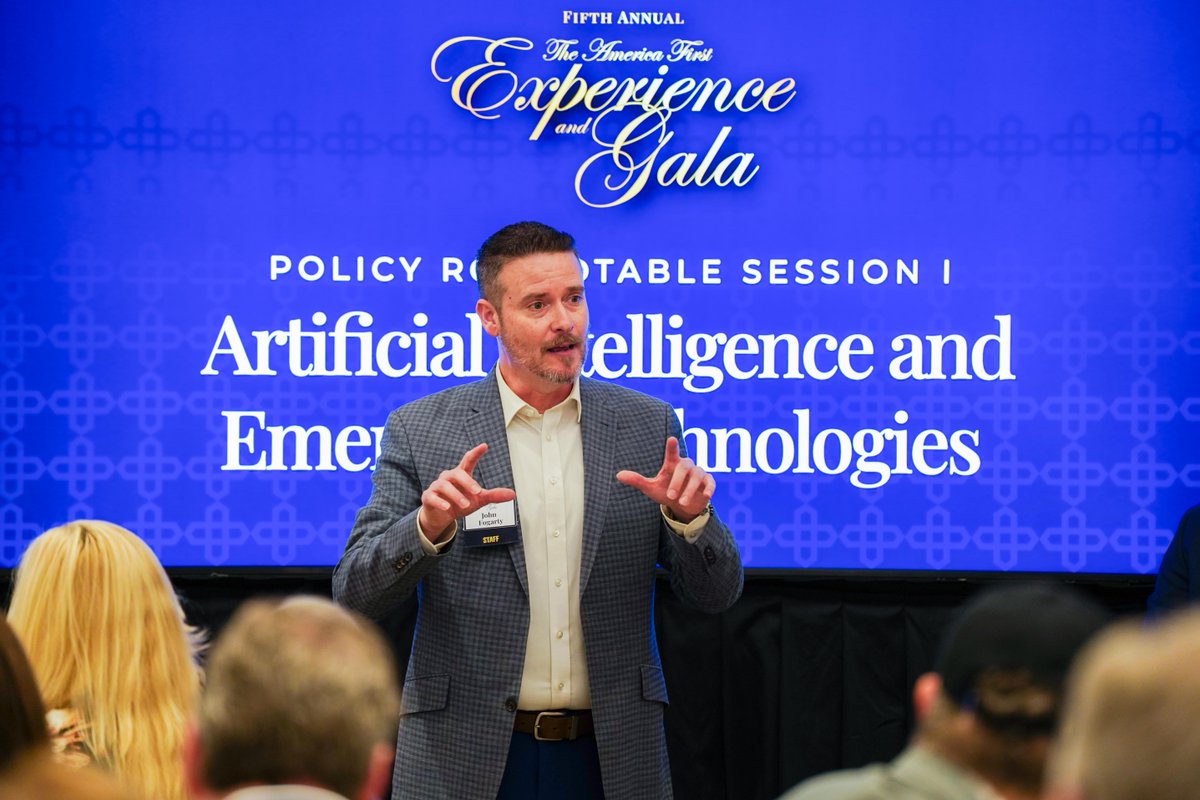
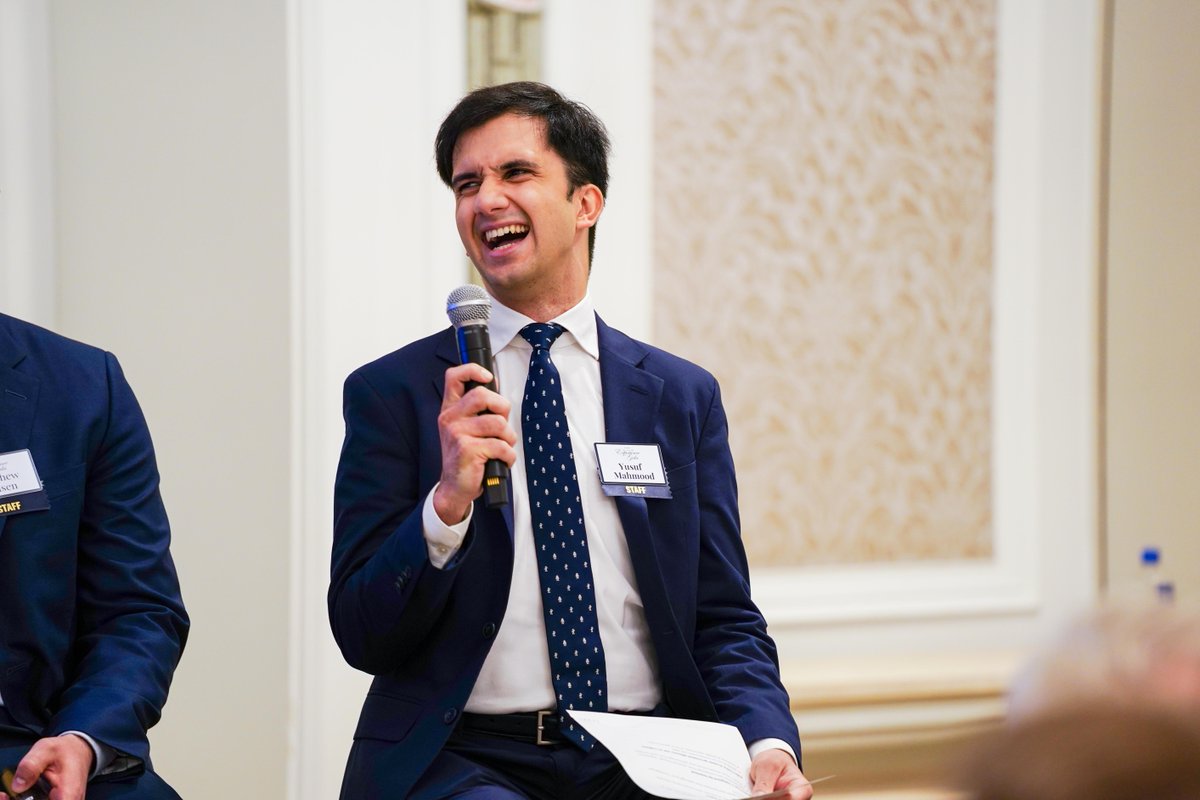
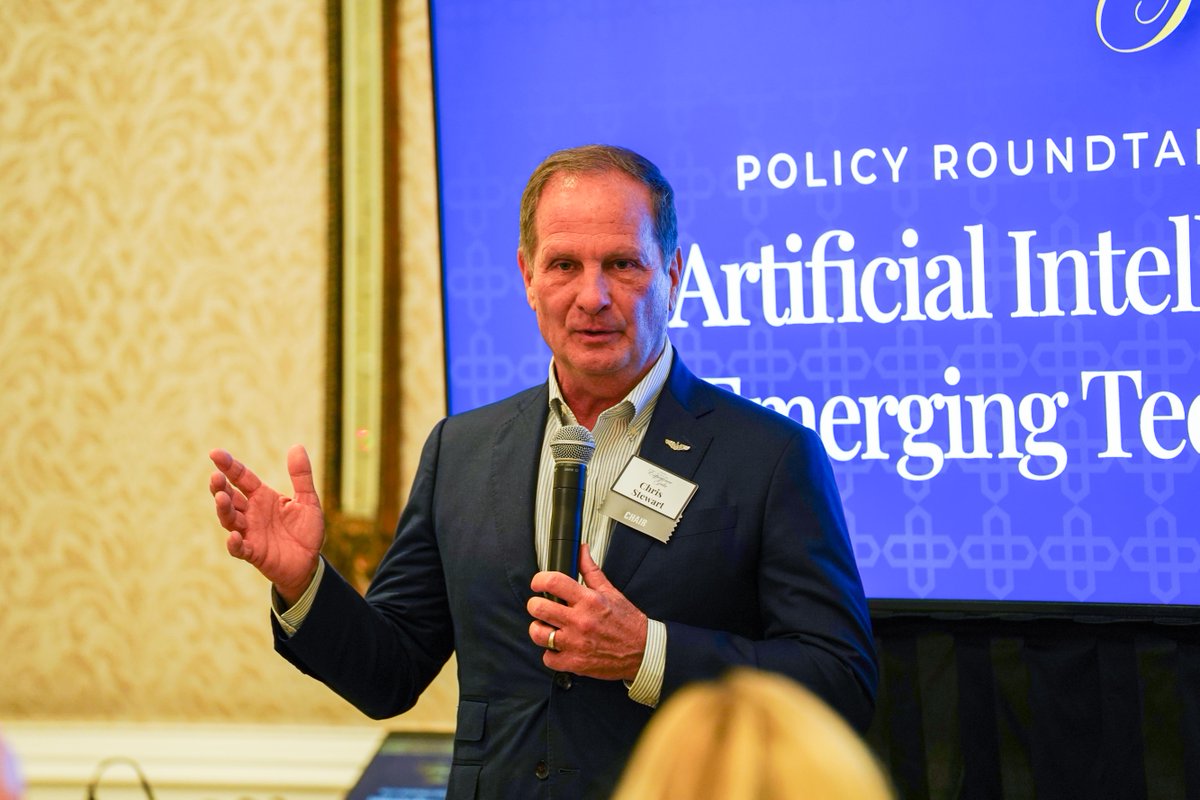
We are in an existential race with China in the AI war!🚨 Today, @RepChrisStewart and AFPI's @MattHJensen & Yusuf Mahmood discussed one of the defining challenges of our generation: AI and Emerging Technology.
America First Policy Institute tweet mediaAmerica First Policy Institute tweet mediaAmerica First Policy Institute tweet media
English
6
12
38
8.1K
Chris Stewart
Chris Stewart@RepChrisStewart·
It's my honor to join @A1Policy as Chairman of their new Artificial Intelligence and Emerging Tech team. AI is one of the most powerful forces shaping our economy, security, and culture. America can't afford to fall behind, and I look forward to advancing an agenda that no doubt draws inspiration from President Trump's AI Action Plan - one that's rooted in American values, promotes innovation, and protects our national security. americafirstpolicy.com/issues/afpi-la…
English
3
5
4
1K
Chris Stewart
Chris Stewart@RepChrisStewart·
President Trump has declared what many in DC have quietly said for years: foreign aid needs to change. We need an America-First model that promotes results over rhetoric, strength through compassion, and policy driven by what's good for America ⬇️ dailycaller.com/2025/07/29/ame…
English
5
1
10
748
Chris Stewart retweetledi
Rapid Response 47
Rapid Response 47@RapidResponse47·
.@SenJohnCurtis: "The first chapter in the book 'Peace Through Strength' should be the case study of what's happened here."
English
95
343
2.4K
115.3K
Chris Stewart retweetledi
Roll Call
Roll Call@rollcall·
OPINION — AI can sharpen America’s edge in the Pacific — if we move now, writes former Rep. Chris Stewart, R-Utah. ow.ly/SO0850W90AT
English
2
2
3
2.5K
Chris Stewart
Chris Stewart@RepChrisStewart·
The question is no longer if we integrate artificial intelligence into military operations, but how we do it. If we want to keep our edge over China in the Pacific, we need to bet on two of our greatest assets: America's innovators and warfighters. rollcall.com/2025/06/13/ai-…
English
2
0
4
563
Chris Stewart retweetledi
NY Post Opinion
NY Post Opinion@NYPostOpinion·
We need guardrails for artificial superintelligence NOW — before it’s too late trib.al/bbaR92f
NY Post Opinion tweet media
English
1
4
11
887
Chris Stewart
Chris Stewart@RepChrisStewart·
We're at a crossroads: the commercialization of AI can secure America’s future, but the weaponization of superintelligence could end it. Read my @nypost op-ed with @MarkBeall on how Trump can simultaneously win the AI race and prevent catastrophe: nypost.com/2025/06/08/opi…
English
3
10
15
1.3K
Chris Stewart
Chris Stewart@RepChrisStewart·
National Police Week was one of my favorite times in Congress. It's an important opportunity to reflect on and appreciate the sacrifices of these brave men and women. This week, take the time to thank a law enforcement officer for all they do to keep us safe 🇺🇸
FBI Director Kash Patel@FBIDirectorKash

The FBI is proud to stand with all those across the country observing Police Week 2025 — honoring the brave men and women of state, local, and federal law enforcement who protect and serve the American people, and those who paid the ultimate price in the line of duty. Never forget those who sacrificed everything, their families, and the colleagues they left behind.

English
6
0
3
887
Chris Stewart retweetledi
Senator John Curtis
Senator John Curtis@SenJohnCurtis·
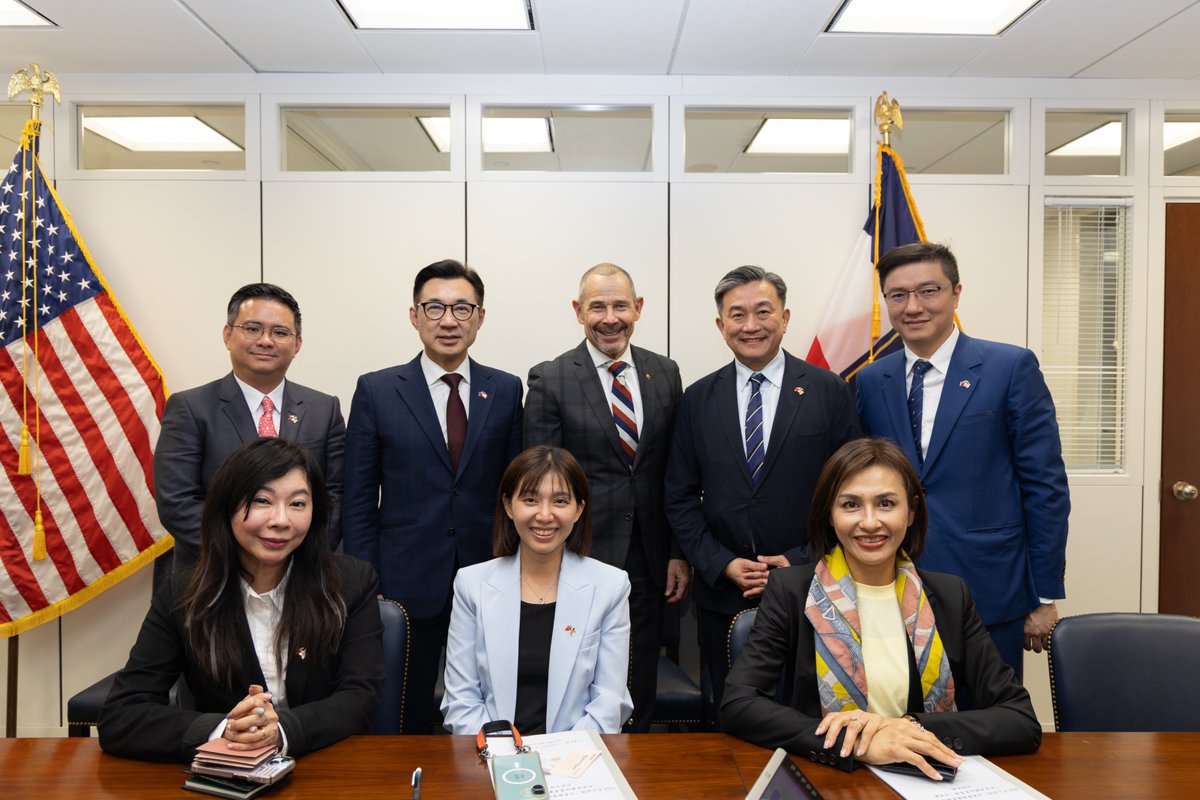
The United States and Taiwan have a longstanding, unshakable bond—rooted in our mutual commitment to freedom. I was honored to meet with members of the Taiwan Legislative Delegation to discuss democracy, stability in the Indo-Pacific, and economic partnerships in Utah.
Senator John Curtis tweet mediaSenator John Curtis tweet media
English
9
4
23
1.7K
Chris Stewart retweetledi
Fox News
Fox News@FoxNews·
Taiwanese representative to the U.S. Alexander Yui discusses a potential Chinese invasion and U.S.-Taiwan relations under a second Trump administration with @BretBaier.
English
34
60
239
84.6K
Chris Stewart
Chris Stewart@RepChrisStewart·
President Trump has an opportunity to counter China, stabilize a critical region, and strengthen an economic partnership. Here's why we need to partner with our friends in Africa on critical minerals:
English
7
2
4
626
Chris Stewart
Chris Stewart@RepChrisStewart·
I joined my friend @hughhewitt to answer an important question: Where are we going to get our critical minerals? I explain why it's in America's economic, national security, and geopolitical interest to partner with Africa ⬇️ hughhewitt.com/video/where-ar…
English
9
1
4
530
Chris Stewart
Chris Stewart@RepChrisStewart·
President Trump and Congress have a rare bipartisan opportunity to reduce dependence on China, safeguard U.S. national security, and strengthen an important alliance. Read my op-ed in @thehill on why we need to partner with Africa ⬇️ thehill.com/opinion/524550…
English
4
0
1
417
Chris Stewart retweetledi
Senator John Curtis
Senator John Curtis@SenJohnCurtis·
America must reclaim its mining capacity. We’ve lost too much to adversaries, where we have no oversight on environmental or labor conditions. We can mine better, cleaner, and more affordably right here at home. I saw it firsthand in Milford this week—Utah is ready to lead.
Senator John Curtis tweet media
Senator John Curtis@SenJohnCurtis

I just toured Milford Mine in Utah—an incredible copper extraction operation. Unfortunately, most U.S. copper gets shipped overseas, mainly to China, because we no longer have the capacity to refine it. When we outsource industry, we lose control over quality and environmental standards. It’s time to bring refining back home—to Utah and America.

English
42
33
191
23.8K