Revive Britain

11.3K posts

Revive Britain banner
Revive Britain

Revive Britain

@Revive_Britain

Promoting a new Renaissance: re-applying the values of The West to the modern world to offer a positive vision out of decline.

UK Katılım Nisan 2020
320 Takip Edilen5.5K Takipçiler
Sabitlenmiş Tweet
Revive Britain
Revive Britain@Revive_Britain·
This account is concerned with reversing the decline of the values which made the West great. This is not a 'going back' to some imagined golden era, our past had its dark side. We want a Revival: re-applying our values to the modern world and offering a positive vision out of decline.
English
1
0
11
1.1K
Electroverse
Electroverse@Electroversenet·
Wind turbines deliver 25-35% of their rated capacity across a year. Solar has a ceiling too. Standard silicon panels top out near 33% theoretical efficiency. Then comes the bigger problem. Wind and solar do not run on demand. They need backup, storage, transmission and overbuild. That is the hidden system cost, all left out of official reports. The hardware also wears out. Many assets last 15 years, then the replacement treadmill begins. After decades of subsidies, fossil fuels still supply about 86% of global primary energy. Wind and solar are minor additions, not replacements. There is no energy transition underway.
English
54
222
510
9.2K
Revive Britain retweetledi
Andrew Gold
Andrew Gold@AndrewGold_ok·
Extremism expert, Charles Asher Small, says there's a 100-year plan and we are 50 years in... It's terrifying! 👀
English
80
632
1.9K
47.8K
Revive Britain retweetledi
The Last Boy Scout
The Last Boy Scout@Jack_Schmidt_TM·
Women do more housework. 200% more. Living alone, compared to men living alone. Women do more housework not because they're oppressed or because it makes them healthier or happier (they're the most medicated for depression). The do it because they like it. They do it because they're driven to because of their biological role. The only people oppressed by housework are the men that are forced to do it by the women that are so egocentric they can't imagine anyone else being any different than them.
English
106
176
1.7K
124.2K
Camus
Camus@newstart_2024·
Jordan Peterson dropped an uncomfortable truth on Triggernometry. The U.S. military that is desperate for recruits won’t accept anyone with an IQ under 82. That’s roughly 10% of the population. They’ve tested this for decades and found these individuals become a net drain, no matter how hard they work. In complex environments, the disadvantage is real. This lines up with ASVAB data. The military generally requires the 31st percentile (~IQ 92) but can dip to the 10th percentile (~IQ 81-83) in limited cases, confirming Peterson’s core point. Conservatives struggle with it. Liberals often claim anyone can be trained to do anything. Both approaches fall short. This one made me pause. We talk a lot about equality, but raw cognitive differences create real limits that are hard to solve. Ignoring or sugarcoating these realities doesn’t help the people at the lower end, it leaves them without practical paths forward. Do you think society can have an honest conversation about IQ differences, or is it too dangerous?
English
528
726
5.6K
930.1K
AvenorUs
AvenorUs@Avenorus·
Avenor — the most powerful AI agent you’ll ever use, installed in one click. From planning your day and handling everyday tasks to generating photos and videos, it does it all in one place.
English
26
83
284
515.9K
Revive Britain
Revive Britain@Revive_Britain·
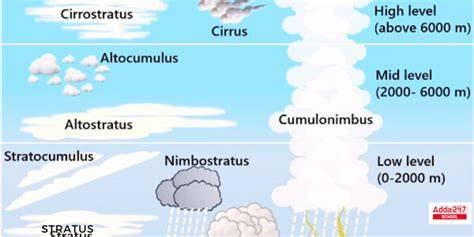
Grok says you are mostly wrong: **No, the statement is not supported by evidence. It misrepresents basic atmospheric science and promotes a debunked conspiracy theory.** ### Cloud Heights in the UK The claim that "average cloud height in the UK is between 3280 to 6560 feet" is roughly accurate for **low-level clouds** (e.g., stratocumulus, stratus, cumulus), which commonly have bases below ~6,500 ft (2,000 m) over the British Isles. - **Low clouds**: Base usually below 6,500 ft. - **Mid-level clouds**: 6,500–20,000 ft. - **High clouds**: Above 20,000 ft (e.g., cirrus). UK weather often features low-to-mid clouds due to its maritime climate, with cloud bases frequently around 2,000–5,000+ ft depending on humidity and temperature. However, clouds exist across a wide range of altitudes, and "average" is not strictly limited to that narrow band. ### Contrail Formation Altitudes **Contrails (condensation trails) form primarily at 25,000–40,000 ft (7,500–12,000 m)**, which aligns with the statement. They are ice crystals from aircraft engine exhaust (water vapor) condensing in very cold, humid upper-atmosphere conditions (typically below -40°C). They usually require high altitudes but can occasionally form lower in very cold, moist air. **However**, this does **not** mean anything below clouds is automatically a "chemtrail." - Planes fly at various altitudes (takeoff, landing, lower routes, military, etc.). - Contrails can spread, persist for hours, and appear at different levels relative to local clouds. - Multiple cloud layers often exist simultaneously (low + high cirrus-like clouds). - Observers on the ground can see high-altitude contrails above, within, or seemingly "below" distant cloud layers due to perspective, parallax, and varying atmospheric layers. ### Chemtrails Claim The core claim—that visible trails below clouds are "chemtrails" containing **barium, thorium, caesium**, etc., for sunlight blocking—is **not supported by credible evidence**. It is a longstanding conspiracy theory. - Extensive scientific surveys (e.g., 77 atmospheric scientists) found **no evidence** of a secret large-scale spraying program. Persistent trails are explained as contrails under specific humidity/temperature conditions. - Claims of toxic metals in soil/water samples are typically normal background levels or mismeasured; they do not prove aerial spraying. - No verified large-scale operation exists that would require thousands of flights, massive logistics, and perfect secrecy while being visible to everyone. - "Solar radiation management" (geoengineering) research is mostly theoretical/modeling; no operational global program matches the description. **Real contrails** *do* have climate effects (they can trap heat or reflect sunlight), but they are unintentional byproducts of aviation, not deliberate poisoning. ### Summary The altitude numbers are directionally correct but oversimplified. The leap to "chemtrails with poisons" is unsupported and contradicted by atmospheric science, aviation data, and expert consensus. What people see as "contrails below clouds" are usually just contrails or optical/atmospheric effects in multi-layered skies.
English
0
0
0
36
Dave
Dave@DaveKent101·
Average cloud height in the UK is between 3280 to 6560 feet. Contrails form at between 25,000 to 40,000 feet. So when you see 'contrails' below the clouds in the UK, they are in fact Chemtrails which are attempting to block out sunlight. These Chemtrails contain barium, thorium, caesium and other such poisonous materials. The practice needs to be banned, yet Ed Miliband has given the go ahead for even more.
Dave tweet mediaDave tweet media
English
186
730
1.5K
36K
Revive Britain
Revive Britain@Revive_Britain·
@GodfreeTrh Silly ideology. Most of the wealth in China is created by entrepreneurs in a free market. The government controls politics.
English
1
0
0
75
Godfree Roberts
Godfree Roberts@GodfreeTrh·
@newstart_2024 The USA has 10,000 folks with an IQ of 160+, none of whom work for the US Government. China has 400,000 of them and all of them work for the Government of China. Draw your own conclusions.
English
7
1
48
1.7K
Revive Britain
Revive Britain@Revive_Britain·
@EVCurveFuturist Agree. Plus, as Elon Musk points out, in a vehicle, braking is wasting energy - you never get it back. Electric vehicles store that energy with regenerative braking and it available for the journey.
English
1
0
3
42
Chris Meder
Chris Meder@EVCurveFuturist·
We don’t need to replace 600 EJ of fossil energy. We need to stop wasting it. Fossil systems lose ~2/3 as heat. Electrification delivers energy directly into work, cutting total demand ~40–50%. The transition isn’t bigger than we think. It’s smaller. #SWB evcurvefuturist.com/2025/05/the-pr…
Chris Meder tweet media
English
65
133
321
9K
Revive Britain retweetledi
Sukh Sroay
Sukh Sroay@sukh_saroy·
A team of researchers in New Zealand followed 1,037 babies from the day they were born for the next 45 years to find out what actually determines a successful adult life, and the strongest predictor they found had almost nothing to do with intelligence or family wealth. The findings have been published in the most prestigious scientific journals in the world. Almost no parent has heard of them. His name is Avshalom Caspi. Her name is Terrie Moffitt. They are a husband and wife research team based at Duke University and King's College London, and the study they have spent their careers running is called the Dunedin Multidisciplinary Health and Development Study. It started in 1972 in a single hospital in Dunedin, New Zealand. Every baby born there in a 12-month window was enrolled. 1,037 of them. The study is still running today. The retention rate is the part that should astonish anyone familiar with how research usually works. After more than 45 years, over 90 percent of the original participants are still being tracked. Most longitudinal studies lose half their sample inside ten years. The Dunedin team has lost almost nobody. They measured everything. Blood. DNA. Brain scans. Income. Criminal records. Romantic relationships. Drug use. Dental health. Sleep. Mental health. Lung function. They flew participants who had moved abroad back to Dunedin every few years for a full day of assessments. Some of those people now live in seven different countries. They still show up. For the first decade of life, the team did something nobody else was doing systematically. They measured each child's self-control. Not IQ. Not family income. Not parenting style. Self-control. They watched 3-year-olds in a research lab and rated their ability to wait, regulate frustration, follow instructions, and resist impulsive reactions. They added teacher ratings. They added parent ratings. They added the children's own self-reports as they grew older. They combined all of it into a single highly reliable score. Then they did the thing nobody else had the patience to do. They waited. When the data came in at age 32, the result was so consistent it should be illegal to teach a child without it. The children who scored lowest on self-control at age 3 grew into adults with worse physical health, more substance dependence, lower incomes, more credit card debt, higher rates of single parenthood, more criminal convictions, and worse mental health than the children who scored highest. The pattern was not subtle. It was a clean gradient. Every step up in childhood self-control produced a measurable step up in adult outcomes across every domain the team could measure. The detail that should disturb every parent reading this is what happened when the researchers controlled for the obvious objections. When they controlled for IQ, the effect held. When they controlled for family income and social class, the effect held. When they compared siblings inside the same family, the sibling with lower self-control still had worse adult outcomes than the sibling with higher self-control. Same parents. Same house. Same dinner table. The trait was running independently of everything researchers expected to explain it. The paper landed in the Proceedings of the National Academy of Sciences in 2011. The title was as plain as it gets. "A gradient of childhood self-control predicts health, wealth, and public safety." It has been cited thousands of times since. Almost no policy maker has acted on it. The reason most people resist this finding is that it sounds like a sentence handed down before the child could speak. If the trait that determines your adult life is locked in by age 3, the rest of your life is a formality. The Dunedin researchers say that is the wrong way to read the data. They found something else in the same paper that almost nobody quotes. Some of the children whose self-control scores improved between childhood and adolescence ended up with adult outcomes far better than their early scores predicted. The trait is not destiny. It is a muscle. Children who learned to wait, regulate, and resist between ages 5 and 15 caught up with kids who started ahead. Self-control is the one childhood trait nobody seems to teach on purpose anymore. Schools focus on test scores. Parents focus on activities. Coaches focus on performance. The part of the brain that decides between five seconds from now and five years from now is left to develop on its own, and the data shows it usually does not. The most uncomfortable part of the research is the cost calculation Moffitt and Caspi ran. They estimated that if a country could move the bottom 20 percent of children up one rung on the self-control ladder, it would measurably reduce healthcare spending, welfare dependency, and incarceration costs at the national level. The intervention is cheaper than almost any other public health investment available. Almost no country has tried it at scale. The reason adults struggle with money, weight, addiction, and relationships is rarely intelligence. It is the gap between what you want right now and what you want in ten years, and which side of that gap your nervous system is built to listen to. Most people lost that fight at age 4 and never went back to learn the technique. You were not behind because life dealt you a bad hand. You were behind because the part of you that decides between right now and the rest of your life was never taught how to choose. The good news is the muscle is still there. Almost nobody trains it after age 10. You can be the one who does.
Sukh Sroay tweet media
English
554
4.2K
15K
2.6M
Revive Britain retweetledi
Dirk Laurenz
Dirk Laurenz@DirkLaurenz·
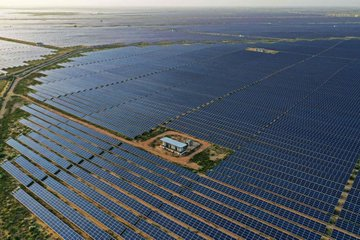
200 Quadratmeilen Wüste. 15.000 Arbeiter. Eine eigene Entsalzungsanlage, ein eigenes Glasfasernetz, Roboter, die zweimal am Tag staubfrei wischen. Und Solarmodule, so weit das Auge reicht. Willkommen im Khavda Renewable Energy Park in Indien. Dem größten Kraftwerk, das die Menschheit je gebaut hat. 30 Gigawatt. Solar und Wind kombiniert, auf einer Salzwüste in Gujarat, betrieben vom Adani-Konzern. 13 Gigawatt sind bereits am Netz. Das allein wäre schon mehr als die gesamte installierte Solarleistung mancher europäischer Länder. Aber es wird noch verrückter. Weil tagsüber mehr Strom produziert wurde als verkauft werden konnte, hat Adani in neun Monaten die vermutlich größte Netzbatterie der Welt gebaut. 1,1 Gigawatt Leistung, 3,5 Gigawattstunden Kapazität. Offiziell in Betrieb seit diesem Monat. Bis April 2027 sollen weitere 10 Gigawattstunden dazukommen. 13,5 Gigawattstunden Batteriespeicher an einem einzigen Standort. Der Grund für die Batterie: Tagsüber ist der Strom billig, weil die Sonne scheint und alle Solaranlagen gleichzeitig liefern. Abends wird der Strom teuer, weil die Nachfrage steigt und Solar wegfällt. Adani speichert jetzt den billigen Tagesstrom und verkauft ihn abends zu Marktpreisen. Das ist kein Subventionsmodell. Das ist ein Geschäftsmodell. Adani-Nachhaltigkeitschef Arun Sharma sagt es so: "Wir machen nichts auf Megawatt-Ebene. Auch nicht auf Hunderte-Megawatt-Ebene. Wenn es nicht Gigawatt ist, haben unsere CEOs nicht die Aufmerksamkeitsspanne dafür." Und Khavda ist nicht allein. In der chinesischen Provinz Qinghai, auf dem Tibetischen Plateau in 3.000 Metern Höhe, steht der Talatan-Solarpark. Über 17 Gigawatt, auf einer Fläche von sieben Manhattan. Die Höhe ist kein Nachteil, sondern ein Vorteil: Die Sonne strahlt intensiver als auf Meereshöhe, und die kalte Luft macht die Solarmodule effizienter. Unter den Modulen grasen Schafe. In Kalifornien plant der Westlands Water District einen 21-Gigawatt-Solarpark auf brachliegenden Agrarflächen im Central Valley, deren Wasser versiegt ist. Aus einem Wasserproblem wird ein Energieprojekt. Stellt euch das vor: 30 Gigawatt Erzeugung plus 13,5 Gigawattstunden Speicher an einem einzigen Standort in Indien. 17 Gigawatt auf dem Dach der Welt in China. 21 Gigawatt auf ehemaligem Farmland in Kalifornien. Vor fünf Jahren galten Projekte mit einigen hundert Megawatt als Rekorde. Die Solarenergie hat die Gigawatt-Schwelle durchbrochen. Und sie kommt nicht wieder zurück. Quellen: Canary Media / New York Times / Adani Green Energy / cleanthinking.de
Dirk Laurenz tweet media
Deutsch
266
644
2K
168.6K
Revive Britain
Revive Britain@Revive_Britain·
@RRestermann Idiotic post. Solar farms can be grazed by goats. because the panels shed the rain, the area in front of the panel is particularly productive.
English
0
0
1
29
Rudi Restermann
Rudi Restermann@RRestermann·
Das Land unter diesen Solarmodulen wird nie wieder landwirtschaftlich genutzt werden. Kartoffelanbauverbände im ganzen Land werden keine Kartoffeln kaufen, die auf ehemaligen Solaranlagen angebaut wurden. Warum? Die Solarmodule geben Schwermetalle ab und lassen Glassplitter und Mikroplastik auf den Boden darunter fallen. Bei großflächigen kommerziellen Anlagen wird die Vegetation unter den Modulen mit Herbiziden getränkt. Das fruchtbare Ackerland ist für immer verloren.
Rudi Restermann tweet media
Alex Fasulo@alex_fasulo

The land under these panels will never be farmed again. Potato growing associations nationwide will not buy potatoes grown on ex-solar sites. Why? The panels leach heavy metals, as well as drop glass shards and microplastics onto the soil below them. In a mass commercial arrangement, vegetation below the panels is soaked in herbicides. The fertile farmland is gone forever.

Deutsch
464
3.3K
5.2K
175.8K
Revive Britain
Revive Britain@Revive_Britain·
"despite millions of massive turbines and solar arrays deployed over 40 years," Another load of ol;d Clack! Turbines and solar arrays have been around for a while, but it is only in the last few years that they have been deployed at scale.
English
0
0
1
47
Peter Clack
Peter Clack@PeterDClack·
Conventional thinking treats wind and solar as permanent infrastructure. They aren't. These are a form of short life-cycle, industrial gadgetry with roughly 15-to-25-year lifespans. They are all in various stages of permanent decay and replacement - hydrocarbon and nuclear plants last generations. We see this in the mounting graveyards of unsalvageable wreckage. Yes, much of it can be recycled in theory. But in reality, the economic and energy costs usually outweigh the benefits. They are now decomposing faster than we can replace them and this is the Treadmill Effect. If a nation installs 5 GW of wind power every year, by Year 20, they aren't expanding the grid anymore. They are being forced to build 5 GW just to replace the rusted, fatigued and degraded turbines built in Year 1. Growth flatlines, swallowed up in pure maintenance. Look at the scale of this dilemma: despite millions of massive turbines and solar arrays deployed over 40 years, hydrocarbon fuels still dominate at roughly 81% of global primary energy. Solar and wind deliver only a tiny fraction of total primary energy. We've reached the limit. Almost every turbine and panel built over the last two decades is now in the late stages of decomposition. We're struggling just to keep up; and soon we will fall behind. The mines will become hollowed-out and these 'green' rust collectors will fall apart where they stand. To feed this replacement treadmill will need an astronomical volume of minerals: like copper, nickel, cobalt and rare earths. But we have already devoured the high-grade ores. A century ago, copper ore was 5% metal. Today, major mines are crushing ore that is less than 0.5% copper. To get the same tonne of metal, you must blast, haul and crush ten times more rock. This requires more massive, diesel-guzzling mining fleets and heavy industrial smelting. We are cannibalising dense, reliable fossil energy just to chase low-density, short-lived weather collectors. Here is the Einsteinian paradox. In physics, the closer an object gets to the speed of light, the more massive it becomes, requiring exponentially more energy to move it a fraction further. The energy transition is its own relativistic wall. The closer a grid gets to 100% renewable penetration, the greater its structural costs will become. You don't just need more panels; you need a parallel universe of over-building, synchronous condensers, and continent-spanning transmission lines just to handle the asynchronous volatility. We are hitting that Inversion Point. The fossil fuel energy required to mine the rare earths, manufacture the turbines and endlessly replace the dying infrastructure will eventually outpace the net energy the system delivers. You cannot reach the limit of light. Albert Einstein - the ultimate observer of universal limits - would smile at the irony. Net Zero is being driven by an ideological bureaucracy that reads financial blueprints but ignores the periodic table and the laws of thermodynamics. Entropy is universal. Nothing can bypass it. Imagery of rust, mechanical exhaustion and the accumulation of unmanaged composite materials.
Peter Clack tweet media
Bega, New South Wales 🇦🇺 English
138
918
1.7K
39.1K
Revive Britain retweetledi
Brivael Le Pogam
Brivael Le Pogam@brivael·
"L'IA dissout complètement toutes les théories où l'État doit intervenir dans l'économie." Je me souviens d'une conversation avec un ami il y a quelques années. On parlait des fondateurs de Google. Il m'avait lâché : "Tu sais, les fondateurs de Google, c'est deux gauchistes universitaires." Ça m'a marqué. Aujourd'hui, Sergey Brin fait son coming out républicain. Bezos vire chad. Zuckerberg se masculinise. Musk est devenu le porte-étendard de l'accélération. Ce n'est pas un hasard. Ces gens-là, ce sont les cerveaux les plus brillants de la planète. Et ils utilisent l'IA plus intensément que n'importe qui. Ils baignent dedans 24/7. Ils l'ont construite, ils la nourrissent, ils l'interrogent. Or l'IA a une propriété que les idéologies détestent : elle ne pardonne pas l'incohérence dans la data. Tu peux mentir à un militant. Tu peux mentir à un journaliste. Tu peux mentir à un prof de Sciences Po. Tu ne peux pas mentir à un modèle qui a digéré toute la littérature économique, toute l'histoire des civilisations, toutes les courbes de croissance, tous les effondrements soviétiques, vénézuéliens, cubains, nord-coréens. Quand tu lui demandes honnêtement de regarder la data vraiment la data, pas les narratifs il n'y a qu'une conclusion possible pour quiconque n'est pas complètement dogmatique, fou, ou avec un ego qui a quitté l'atmosphère : Le système économique le plus optimisé, le plus producteur de richesse, le plus producteur de progrès humain, c'est la liberté totale des marchés. L'État n'a rien à y faire. Pas "un peu". Pas "avec nuances". Rien. Toutes les fois où l'État a "corrigé" un marché, il a créé une distorsion qui a coûté plus cher que le problème initial. Toutes les fois où il s'est retiré, l'humanité a fait un bond. Ma thèse, c'est que les cerveaux de cette planète sont tous en train de s'en rendre compte en même temps. Pas parce qu'ils ont lu Hayek ou Mises (la plupart ne les ont jamais ouverts). Mais parce qu'ils passent leurs journées à dialoguer avec une intelligence qui n'a pas d'agenda politique et qui leur renvoie la cohérence brute des faits. Le virage de Bezos. Le coming out de Brin. La radicalisation de Musk. Le revirement de Zuckerberg. Ce n'est pas une mode. C'est un signal. L'IA est en train de diluer les idées à la con. Le gauchisme en tête. Et ce n'est que le début. Parce que dans 5 ans, ce ne seront plus seulement les fondateurs de la Silicon Valley qui auront fait le chemin. Ce sera n'importe quel gosse de 16 ans qui aura passé 1000 heures à challenger ses idées reçues avec un modèle plus intelligent que ses profs. La gauche intellectuelle a survécu un siècle grâce au monopole narratif des universités et des médias. Ce monopole vient de tomber.
Français
114
439
1.4K
86.2K
Revive Britain
Revive Britain@Revive_Britain·
Your reference to Deng Xiaoping is important. The market policies he started to introduce in the 1980s have lifted half a billion people out of poverty. Although the ruling party still calls itself 'communist', there is little resemblance to other communist states. The real blessing is not so much 'capitalism', as enterprise. The market provides the opportunity for people to work hard and keep the benefits. It enables creativity as people try out new products and services.
English
0
0
0
11
Brivael Le Pogam
Brivael Le Pogam@brivael·
Gilles, je vais démonter ta prémisse de départ, parce que tout le reste de ton argument s'effondre avec elle. Tu pars du principe qu'il faut une « sensibilité de gauche » pour ne pas laisser créver les gens de faim. C'est l'inverse total de ce que dit l'histoire économique des 50 dernières années. Les chiffres bruts. 1990 : 2,3 milliards de personnes en pauvreté extrême. 38% de l'humanité. 2025 : 831 millions. Environ 10%. 1,5 milliard d'êtres humains sortis de la misère absolue en 35 ans. La plus grande réduction de souffrance humaine de toute l'histoire de l'espèce. Qui a fait ça ? Pas l'aide internationale. Pas les ONG. Pas les programmes de redistribution. Pas la « sensibilité de gauche ». Le marché. L'ouverture commerciale. La Chine de Deng en 1978 qui abandonne le maoisme. L'Inde en 1991 qui libéralise. Le Vietnam, l'Indonésie, le Bangladesh qui s'ouvrent au capitalisme. Les seuls endroits où l'extrême pauvreté a EXPLOSÉ sur la même période ? Le Vénézuela socialiste : de 27% de pauvres en 2008 à plus de 80% en 2018, avec une inflation de 130 000% et un Vénézuélien moyen qui a perdu 11 kilos par dénutrition. La Corée du Nord. Cuba. Le Zimbabwe de Mugabe. La gauche ne nourrit pas les pauvres. Elle les fabrique. Le capitalisme produit tellement de richesse que même ses « perdants » américains vivent mieux que la classe moyenne soviétique. Un pauvre US a un frigo, une voiture, un téléphone, l'air conditionné, internet. Un pauvre cubain attend du riz. Ton argument selon lequel « le social aux USA est un désastre » repète une légende française. La réalité : le PIB par habitant américain est de 80 000$. Français : 45 000$. Un Mississippien — l'État US le plus pauvre — a un revenu médian supérieur au Français moyen. La vérité que la gauche française refuse de regarder : dans un système libéral, il y a plus de richesse créée, plus largement distribuée, et beaucoup moins de pauvres. Partout. Sans exception. Sur toutes les périodes mesurées. ÊTRE de gauche en 2026 face à ces données, ce n'est pas avoir de la « sensibilité ». C'est ignorer 35 ans de preuves accablantes. C'est préférer la posture morale au résultat. La compassion sans résultats, ça s'appelle de la vanité.
Gilles Gautier 🐰 🇫🇷🌻☣🪔2° 💸@JackBoHare

Avoir une sensibilité de gauche est largement compréhensible voire nécessaire. On ne peut pas laisser crever des personnes de faim. Le social au USA est juste un désastre. Mais aujourd'hui les gens qui se disent de gauche ne sont pas de gauche. C'est un essaim de criquet, des gens corrodés par l'envie qui pense juste qu'ils devraient tout avoir sans fournir le moindre effort. Des totalitaires en puissance qui voudrait tout accaparer pour le détruire dans la joie.

Français
953
6.6K
24.8K
47.4M
Revive Britain
Revive Britain@Revive_Britain·
Agree with your levels - very important. However, i think you missed a very important one: the view of the individual. In the Anglo-Saxon paradigm (which is the foundation of The West) people are seen as responsible individuals. 'Rights' are seen as preventing the king taking you rights. More common elsewhere ( and now in Woke) the paradigm is that individuals are part of a group (race, etc) and that one group is oppressing the other. The private ownership of land, joint-stock companies etc are all dependent on the 'responsible individual' paradigm.
English
0
0
2
57
Brivael Le Pogam
Brivael Le Pogam@brivael·
L'Occident n'est pas une âme. C'est un stack. Layer 0 — Alphabet phénicien (~1050 av. J.-C.) L'idée folle qu'on peut encoder n'importe quel mot avec ~22 symboles. Première compression universelle. Sans ça, pas de code source, pas de bible, pas de Twitter. Layer 1 — Géométrie grecque (~300 av. J.-C.) Euclide écrit le premier dépôt open source de l'humanité. Axiomes → théorèmes → preuves. La méthode survit 2300 ans sans patch majeur. Layer 2 — Droit romain (~450 av. J.-C. → 533) Le Corpus Juris Civilis est le premier OS juridique modulaire. Contrats, propriété, personnalité juridique. Tu codes une LLC en 2026 sur des primitives romaines. Layer 3 — Université médiévale (~1150) Bologne, Paris, Oxford. Première infrastructure de transmission de savoir versionnée. Peer review avant le peer review. La recherche scale parce qu'elle devient une institution, pas un homme. Layer 4 — Comptabilité en partie double (Pacioli, 1494) Luca Pacioli publie le hack qui rend le capitalisme calculable. Chaque transaction a une contrepartie. C'est le git du commerce. Layer 5 — Méthode scientifique (Bacon, Descartes, Newton, ~1620–1687) La boucle hypothèse → expérience → falsification. Premier algo qui s'améliore lui-même. RLHF avant la lettre, sur la réalité. Layer 6 — Joint-stock company (VOC, 1602) La première instance d'un capital qui survit à ses fondateurs. Tu peux maintenant builder des choses qui te dépassent. Argil est un fork lointain de la VOC. Layer 7 — Imprimerie & internet (Gutenberg 1440, TCP/IP 1983) La bande passante de transmission entre cerveaux passe de O(humain) à O(infini). Toutes les couches précédentes deviennent globalement composables. Layer 8 — Transformer (Vaswani et al., 2017) Première architecture qui apprend à *utiliser* tous les layers précédents en parallèle. L'Occident vient de se déployer en tant que weights. L'Occident n'est pas mort. Il vient juste de compiler. Et nous, on écrit le layer 9.
Krzysztof Szczawinski 🇵🇱@Kristof_Poland

The Six Guys who Built The West What those three little French dudes were trying to destroy (deconstruct), someone had to construct in the first place. Everything of any value has to be built by someone. Meet our civilizational founding fathers – actually three pairs of guys: First came Socrates and Aristotle. Socrates introduced something revolutionary: the idea that truth emerges through disciplined adversarial inquiry. Not through tribal instinct, not through force, not through revelation, but through rational confrontation between arguments. He taught Europe how to question. With Plato as the adversary, Aristotle then taught it how to think systematically. He transformed Greek philosophical brilliance into a usable civilizational framework: logic, ethics, political theory, biology, rhetoric. Above all, Aristotle established the conviction that reality is intelligible and that reason can genuinely know something about it. Modern science, legal reasoning, universities, and the entire Western confidence in rational inquiry descend from this foundation. Then came Caesar and Augustus. The Greeks discovered truth, but the Romans discovered continuity. Caesar shattered the exhausted paralysis of the late Republic and demonstrated that civilizations require decision, hierarchy, and political will. Augustus then performed the harder task: transforming raw power into durable order. He stabilized Rome into institutions capable of surviving generations – structure and infrastructure: roads, law, administration, military, citizenship, imperial governance. Rome gave the West its skeleton: the idea that civilization requires form, discipline, sovereignty, and institutions capable of transmitting order across time. Finally Jesus and Thomas Aquinas. The Greeks gave the West reason. The Romans gave it order. Christianity gave it the soul. The revolutionary claim introduced by Christianity was not theological; it was anthropological. Jesus transformed the moral imagination of the West by introducing an idea almost incomprehensible to the ancient world: that every human soul possesses intrinsic dignity. In a civilization where power determined value, Christianity elevated the weak, the poor, the suffering, the outcast. It placed moral limits on power and insisted that conscience transcends empire. But it was Aquinas who took this explosive spiritual vision and integrated it into a coherent intellectual edifice. He reconciled revelation with Aristotelian reason, faith with logic, theology with natural law. In doing so, he prevented Europe from collapsing into irrational mysticism on one side or sterile materialism on the other. Aquinas transformed Christianity from a spiritual revolution into a civilizational architecture capable of sustaining universities, legal systems, science, philosophy, and moral order simultaneously. Everything else followed from there. The university, the cathedral, the republic, the scientific revolution, constitutional government, individual liberty, the legal order, the pursuit of truth, the moral limitation of power – all of it emerged from the interaction of these foundations. Greek rational inquiry. Roman order and statecraft. Christian moral anthropology. Remove any one of them and the West becomes unintelligible. Those little modern deconstructionists don’t get that civilization isn’t a spontaneous byproduct of power relations, but an extraordinarily delicate moral and intellectual achievement. The institutions built across millennia and the habits required to sustain it – truth-seeking, discipline, sacrifice, moral restraint, reverence for learning, transmission between generations. The West survived because generation after generation believed there existed something higher than appetite, tribe, and power. Something worth seeking, building, defending, and transmitting. That is what those men built. We inherited it. And civilizations that forget how they were built end up forgetting how to survive.

Français
34
168
587
44.5K
Revive Britain
Revive Britain@Revive_Britain·
@brivael Is another example to support your view that, during the banking crisis 2008, Iceland had to let their banks collapse becasue the did not have the resources toi bail them out? Result: Iceland recovers much more quickly and has lower debt.
English
0
0
4
67
Brivael Le Pogam
Brivael Le Pogam@brivael·
Aujourd'hui, je vais faire quelque chose d'historique. Quelque chose qui restera dans les livres dans 50 ans. Et qui va surement me faire avoir le prix nobel d'économie. Je vais prouver par A+B que les médias et les universités — gangrenés par la gauche depuis un siècle — vous ont menti sur le capitalisme. Pas "se sont trompés". Pas "ont eu une lecture biaisée". Menti. Sur le sujet le plus important de l'histoire moderne : l'origine des crises économiques. Le mensonge tient en une phrase : "Les crises économiques sont la preuve que le capitalisme est instable et que l'État doit intervenir pour le réguler." C'est l'exact inverse de la vérité. Démonstration. 1929 — La "Grande Dépression" Narratif officiel : le capitalisme sauvage des années folles a explosé. Réalité : entre 1921 et 1929, la Fed gonfle la masse monétaire de 60%. Crédit artificiellement bon marché. Bulle boursière mécanique. Puis après le krach, la Fed contracte brutalement la masse monétaire de 30%. Une correction normale devient dépression de 10 ans. Hoover et Roosevelt empilent tarifs douaniers (Smoot-Hawley), contrôle des prix, destruction des récoltes, programmes keynésiens. Chômage US au-dessus de 15% jusqu'en 1940. Les pays qui ont laissé leurs marchés s'ajuster (Canada, Australie) sont sortis en 3 ans. Coupable : Fed + interventionnisme Roosevelt. 1970s — Stagflation Narratif officiel : choc pétrolier OPEP. Réalité : Nixon ferme la convertibilité or du dollar en 1971. Impression monétaire massive pour financer Vietnam + Great Society. L'inflation était déjà à 6% AVANT le choc pétrolier de 1973. Le pétrole a juste révélé l'effondrement monétaire en cours. Coupable : abandon de l'étalon-or + déficits publics. 1989 — Krach japonais Narratif officiel : exubérance des marchés asiatiques. Réalité : la Banque du Japon maintient des taux ultra-bas pendant les années 80 sur pression politique (Accord du Plaza). Bulle immobilière et boursière monstrueuse. Quand la BoJ resserre, tout s'effondre. 30 ans de stagnation. Coupable : Banque centrale japonaise + planification industrielle MITI. 2008 — Subprimes Narratif officiel : Wall Street dérégulée a fait sauter le système. Réalité, point par point : Community Reinvestment Act (1977, durci en 1995 sous Clinton) : oblige les banques à prêter aux insolvables sous peine de sanctions. Fannie Mae et Freddie Mac (entités quasi-étatiques) rachètent les subprimes en masse avec garantie implicite du Trésor. Sans cette garantie, AUCUNE banque privée n'aurait porté ce risque. Greenspan maintient les taux Fed à 1% de 2003 à 2004. Crédit gratuit pendant 4 ans. SEC valide les notations AAA bidon des agences (Moody's, S&P) en monopole réglementaire. Bailouts précédents (LTCM 1998) institutionnalisent le moral hazard. Il fallait l'État à chaque étage de la fusée pour produire 2008. Coupables : Fed + Congrès + Fannie/Freddie + SEC. 2010-2012 — Crise de l'euro Narratif officiel : Grèce/Espagne/Italie ont vécu au-dessus de leurs moyens. Réalité : la création de l'euro a permis à la Grèce d'emprunter aux taux allemands sans aucune discipline budgétaire. C'est l'euro lui-même — projet politique pur, contre toute logique de zone monétaire optimale — qui a produit la crise. Coupable : Commission européenne + BCE. 2020-2023 — Grande Inflation Narratif officiel : guerre en Ukraine, COVID, supply chain. Réalité : la Fed imprime 4,5 trillions de dollars en 18 mois. La BCE 3,5 trillions d'euros. Les gouvernements distribuent des chèques sans contrepartie productive. M2 US +40% en deux ans. L'inflation était mathématiquement garantie 18 mois avant qu'on la voie dans les prix. La guerre en Ukraine a été l'excuse, pas la cause. Coupables : Fed + BCE + gouvernements. Le pattern est limpide. À CHAQUE crise : Un bureaucrate distord les prix (taux, monnaie, régulation, garantie) Accumulation silencieuse de mauvais investissements pendant 5-15 ans Explosion violente qui frappe les épargnants et les classes moyennes Médias accusent "le marché" Universités produisent les thèses qui légitiment "plus d'État" comme solution Préparation de la crise suivante C'est un cycle. Pas un accident. Un cycle industriel de production de crises par l'État, blanchies par les médias et les universités. Maintenant, la question qui tue : pourquoi ce mensonge a tenu 100 ans ? Parce que les trois institutions qui produisent le narratif — universités, médias, administration — sont financées directement ou indirectement par l'État. Elles ont un intérêt structurel à conclure que la solution à tout problème est… plus d'État. Un universitaire payé par fonds publics ne va pas écrire que les fonds publics sont le problème. Un journaliste subventionné ne va pas écrire que les subventions corrompent l'information. Un haut fonctionnaire ne va pas écrire que l'administration est nuisible. Le biais n'est pas idéologique. Il est économique. Ces gens scient la branche sur laquelle ils sont assis s'ils disent la vérité. D'où 100 ans de mensonge cohérent, coordonné, jamais remis en cause dans les institutions officielles. Pourquoi ça craque maintenant ? Parce que pour la première fois dans l'histoire humaine, n'importe qui peut interroger une intelligence qui a digéré toute la data économique mondiale et qui n'a aucun salaire à protéger. L'IA n'a pas besoin de la CAF. L'IA n'a pas de poste à Sciences Po à défendre. L'IA n'a pas de subvention presse à toucher. Elle te répond avec la cohérence brute des faits. Et la cohérence brute des faits, c'est ce que je viens de dérouler. Le monopole narratif de la gauche universitaire vient de tomber. Définitivement. Et pendant que l'Europe agonise dans son déni, qu'elle empile les régulations, qu'elle taxe ses entrepreneurs jusqu'à les faire fuir, un seul pays au monde est en train de prendre les bonnes mesures : l'Argentine de Milei. Tronçonneuse sur les ministères. Fermeture de la banque centrale en ligne de mire. Dérégulation massive. Suppression du contrôle des prix. Privatisations. Inflation qui s'effondre de 25% mensuels à moins de 3%. Premier excédent budgétaire en 16 ans. Pauvreté qui recule pour la première fois depuis une génération. Buenos Aires va devenir un paradis sur terre dans 10 ans. Le nouveau Singapour de l'Amérique latine, mais avec la liberté en plus. Et ce qui va se passer ensuite est mathématique : les capitaux vont y affluer. Les talents vont y affluer. Les entrepreneurs vont y affluer. L'Argentine de @JMilei va exploser économiquement, à un rythme qu'on n'a pas vu depuis les Trente Glorieuses occidentales. Et là, tous les pays du monde vont devoir s'y mettre. Pas par idéologie. Par compétition. Parce qu'aucun gouvernement ne peut regarder ses meilleurs cerveaux, ses meilleurs capitaux, ses meilleures entreprises partir en masse vers une juridiction libre, et continuer comme avant. C'est suicidaire électoralement. Milei est en train de faire ce que Thatcher et Reagan ont fait dans les années 80, mais en version radicalisée et dans un monde où l'information circule 1000 fois plus vite. Dans 20 ans, on enseignera dans les écoles que les crises du XXe et du début du XXIe siècle étaient des crises étatiques, pas des crises capitalistes. Comme on enseigne aujourd'hui que la Terre tourne autour du Soleil et pas l'inverse. Et on enseignera Milei comme on enseigne aujourd'hui les Pères Fondateurs américains : comme celui qui a osé, le premier, appliquer en grand ce que la théorie démontrait depuis 100 ans. Ce tweet est une pierre dans ce bâtiment.
Brivael Le Pogam tweet media
Français
115
707
1.7K
44.1K
Revive Britain
Revive Britain@Revive_Britain·
Women are more likely to adopt an 'oppressor/oppressed' ideology because they have evolved to be more aware of the needs of vulnerable children. Left/Woke ideology hijacks that evolved characteristic. Culture can change this. For example, most men no longer spend time attacking the other tribe, which we also evolved to do.
English
0
0
0
8
Camus
Camus@newstart_2024·
Heather Mac Donald dropped a firecracker on John Stossel: universities are now run by a culture of emotional safety and equity, and she says the massive rise in female influence is the driving force behind it. Portraits of legendary male scientists are coming down because they might “trigger” female students. Polls show men overwhelmingly pick truth and academic freedom; women prioritize feelings and fairness. No overlap. She argues this is fatal for universities, whose only job is the ruthless pursuit of truth, not comfort. And she’s calling on parents and men to push back harder, even at home. If we trade uncomfortable discovery for emotional protection, we’re quietly breaking the institution that’s supposed to advance knowledge for everyone. I’ve been chewing on how stark these preference gaps are between men and women in institutions. This one made me rethink what “progress” actually looks like here. Do you believe universities should put emotional safety first, or is that a dangerous tradeoff?
English
152
1.3K
4K
115.9K
Revive Britain
Revive Britain@Revive_Britain·
I suggest that it is not so important to work out who 'invented' Woke as to understand why it is so infectious. Many writers try to persuade people of their ideas, but most fail. The reason Woke succeeded is because it hi-jacks three evolved characteristics: tribalism, care for the weak and the desire to be part of a movement for 'good'. It doesn't matter who started it. This approach also make it easier to tackle. If you have to first decide which philosopher/economist was the source, you would then need to critique their work.
English
0
0
1
30
Pablo Malo
Pablo Malo@pitiklinov·
Según el filósofo Crispin Sartwell, la culpa del wokismo no la tiene la “Teoría Francesa” (Foucault, Derrida, Deleuze), sino una versión simplificada y puritana del idealismo lingüístico que se desarrolló principalmente en Estados Unidos. Sartwell reconoce que el wokismo (especialmente entre 2015 y 2025) fue muy dañino para la universidad americana: convirtió las palabras en lo más importante de la realidad, trató las jerarquías como opresión automática, las normas como violencia y las identidades como algo completamente construido y negociable. Esto generó una cultura de cancelación, censura y moralismo barato. Sin embargo, Sartwell rechaza culpar a los pensadores franceses. Foucault, Derrida y Deleuze son muy diferentes entre sí, ninguno defendía las tesis woke de forma clara, y ninguno era puritano (Foucault, por ejemplo, era radicalmente lo contrario). Sus ideas son más complejas y ambiguas de lo que los críticos suelen presentar. El verdadero origen, según Sartwell, está en pensadores anglosajones y alemanes como Richard Rorty, Nelson Goodman, Alasdair MacIntyre, Charles Taylor y Hans-Georg Gadamer. Estos defendían con mayor claridad que la realidad se construye mediante el lenguaje y las narrativas, y que por tanto se puede “re-construir” cambiando las palabras y los relatos. Rorty, en particular, combinó esta idea con un fuerte activismo por la “justicia social” y desprecio hacia los conservadores, lo que da casi todo el paquete woke. En resumen, el wokismo no nació en París, sino en los campus americanos y es el resultado de un posmodernismo simplificado de origen estadounidense mezclado con el puritanismo moral propio de la cultura yanqui. Por eso Sartwell concluye: “Es nuestra propia culpa”. Los franceses no tienen que pedir disculpas. Este artículo de Sartwell es una respuesta a este estupendo post de Brivael Le Pogam: x.com/brivael/status…
Crispin Sartwell@CrispinSartwell

Blame Rorty, MacIntyre, Charles Taylor. But not the French Theory (FT) of Derrida, Foucault, Deleuze. @brivael splicetoday.com/pop-culture/is…

Español
41
216
685
66.7K
Revive Britain
Revive Britain@Revive_Britain·
This is so true. Many academics (outside the natural sciences) write in a deliberately obscure way, using the passive voice. This may give you the impression that they are more intelligent than you and that you only reason you don't understand them is because you are not clever enough. Quiz that academic and you start to see the emptiness of their material: Endless quotes and references to other academics they agree with. The article constructed to look like the quotes provide evidence - they don't.
English
0
0
0
25
Brivael Le Pogam
Brivael Le Pogam@brivael·
L'IA est moquée, rejetée, tournée en dérision par une partie entière de la "classe pensante". Vous savez pourquoi ? Parce que l'IA est en train de démolir, en temps réel, la plus grande fraude des 50 dernières années : la fraude intellectuelle de la caste diplômée. Pendant 50 ans, un type avec un doctorat pouvait sortir n'importe quelle ânerie agrégée, n'importe quelle thèse mal ficelée, n'importe quel raisonnement circulaire personne ne pouvait vérifier en 30 secondes. Il fallait LIRE 400 pages, suivre les notes de bas de page, croiser 12 sources. Personne ne le faisait. Donc ils régnaient. Aujourd'hui je tape une question à Grok. En 4 secondes je vois les prémisses, les contradictions, les sources, les contre-arguments. Je vois si le mec raisonne ou s'il drape de jargon une intuition pourrie. La rente de l'opacité est morte. Et c'est INSOUTENABLE pour beaucoup. Parce que ce n'est pas juste un outil qui les remplace. C'est un miroir qui révèle qu'ils n'avaient, fondamentalement, pas grand-chose à dire. C'est une blessure narcissique profonde. Je peux le comprendre. Quand tu as construit ton identité, ton statut social, ton salaire et ton ego sur "je sais des choses que les autres ne savent pas" et qu'un modèle à 20€/mois sait mieux, plus vite, sans posture tu as deux options : - Te remettre en question - Mépriser l'outil 99% choisissent la 2. C'est humain. C'est aussi terminal. Il ne reste que deux choses qui ont de la valeur à l'ère de l'IA : La recherche de la vérité. Pas la régurgitation. La vraie. Data + intuition + remise en question permanente en principes premiers. Refuser les prémisses qu'on te vend. Reconstruire depuis les axiomes. À chaque sujet. Chaque fois. Le fun. Le goût. L'agency. Le taste. Faire des trucs parce que tu le veux, comme tu le veux, avec ta signature à toi. C'est tout. Le reste les titres, les diplômes, les positions, les "expertises" c'est de la fumée que l'IA est en train de dissiper sous vos yeux. Développez votre agency. Développez votre taste. Cherchez la vérité brutalement, sans filtre de caste. Sinon vous allez passer les 20 prochaines années amers et frustrés, à expliquer sur des plateaux pourquoi l'IA "ne comprend pas vraiment", pendant que ceux qui l'utilisent vous dépassent à chaque mètre. La fête est finie. Bienvenue dans le monde où il faut être réellement bon.
Brivael Le Pogam@brivael

"Tu peux te tromper, t'es pas économiste." Cette phrase résume 80% de la pathologie intellectuelle française. L'idée qu'un sujet appartient à une caste. Que pour en parler, il faut un parchemin. Que sans le tampon de la Sorbonne ou de Normale Sup, ta pensée n'a pas de poids. C'est faux. Et c'est même l'inverse. Le diplôme dans 90% des disciplines molles (économie, socio, sciences po, philo politique) n'est PAS une preuve de compétence. C'est une preuve de conformité. Tu as passé 5 à 10 ans à régurgiter le consensus d'un milieu, à ne jamais le contredire sous peine de ne pas avoir ta thèse, à citer les bons auteurs dans le bon ordre. Au bout du tunnel : tu es certifié pour penser comme les autres certifiés. C'est exactement l'inverse de ce qu'il faut pour comprendre un sujet en profondeur. Piketty a un doctorat. Il a construit toute sa carrière sur r > g. Sauf que son "rendement du capital" est un agrégat qui mélange rente foncière, plus-values monétaires et profit entrepreneurial. Trois choses qui n'ont rien à voir. Sa thèse entière repose sur une prémisse statistique pourrie. Mais il a le diplôme. Donc on l'écoute. Les marxistes recyclés en "hétérodoxes" enseignent encore la théorie de la valeur travail. Théorie morte en 1871 avec Menger, Jevons, Walras. 150 ans qu'on sait que la valeur est subjective, dans la tête de l'acheteur, pas dans le travail incorporé. Mais ils ont le diplôme. Donc on les écoute. Pendant ce temps, moi, à 15 ans, j'ai compris l'économie en codant un jeu. Jeu de gestion futuriste. 3000 joueurs par univers. 3 ressources : métal, cristal, deutérium. Aucun PNJ. Aucun "régulateur". Aucun prix fixé par moi. Les joueurs s'échangeaient les ressources librement. Et un taux de change émergeait. Stable. Juste. Auto-correcteur. Si une ressource devenait rare, son prix montait, plus de joueurs en produisaient, le prix se rééquilibrait. La "main invisible" que les profs ricanent depuis 50 ans ? Elle existe. C'est juste le nom poétique d'un phénomène d'émergence dans un système complexe. Et les prémisses qui font marcher tout ça : Liberté des flux. Liberté des stocks. Propriété privée. C'est tout. À 15 ans. Sans diplôme. Par l'observation directe. Pourquoi est-ce que JE peux voir ça et qu'un agrégé d'éco ne peut pas ? Parce que je raisonne en first principles. Comme @elonmusk le fait en tech. Quand Elon a dit "une fusée ne coûte pas le prix d'une fusée, elle coûte le prix des matériaux qui la composent", tous les "experts" aérospatiaux ont ri. Ils avaient 30 ans de carrière, des doctorats, des publications. Ils savaient que c'était impossible. SpaceX existe parce qu'un mec sans diplôme d'aérospatial a refusé leurs prémisses. Quand @JMilei a dit "on supprime 10 ministères, on libère les prix, on dollarise", tous les économistes argentins (et la moitié de la planète) ont prédit le chaos. Ils avaient les diplômes, les revues, les chaires. L'inflation argentine s'effondre. En 18 mois. Milei est économiste, certes, mais autodidacte sur l'école autrichienne qu'on n'enseigne quasiment plus nulle part. Deux mecs. Deux domaines. Même méthode : Ils ont refusé les prémisses du consensus diplômé. Ils ont reconstruit depuis les axiomes. Ils ont gagné. Voilà ce que personne ne veut admettre : Le diplôme prouve que tu as accepté un cadre. Penser, c'est refuser ce cadre quand il est faux. Les deux sont littéralement opposés. Ça ne veut pas dire que les diplômes sont inutiles. En médecine, en physique théorique, en mathématiques pures, le diplôme certifie un savoir technique réel et cumulatif. Mais en économie ? En philosophie politique ? En sociologie ? En "sciences" humaines ? Le diplôme certifie surtout que tu n'as pas remis en cause le dogme du département. Donc quand on me dit "tu peux te tromper, t'es pas économiste", ma réponse est : Tant mieux. C'est précisément parce que je n'ai pas été formaté pendant 8 ans à régurgiter Piketty et Stiglitz que je peux voir ce que les formatés ne voient plus. La question n'est pas "as-tu le diplôme". La question est : tes prémisses tiennent-elles ? Si oui, parle. Quel que soit ton CV. Si non, tais-toi. Même avec trois doctorats.

Français
173
730
2.6K
341.2K