Rezzi

4.1K posts

Rezzi banner
Rezzi

Rezzi

@Rezzi_sol

build real ai tools & agents

splayer Katılım Nisan 2024
348 Takip Edilen1.8K Takipçiler
Sabitlenmiş Tweet
Rezzi
Rezzi@Rezzi_sol·
A $599 Mac mini might be the best Claude credit saver nobody talks about. Not because it replaces Claude. Because it stops you from wasting Claude on tasks that never needed a frontier model. Run Ollama locally. Connect Claude Code through LiteLLM. Let Qwen handle routine coding, Gemma handle quick tasks, and local agents run summaries, tests, log checks, and cron jobs without charging you per request. Then route the difficult work back to Claude: architecture, complex debugging, production code, high-stakes writing, anything that needs real judgment. That is the setup. Your boring 80% runs locally. Your expensive 20% stays in the cloud. Lower bills, private code, no idle API spend, and a small AI team running quietly under your desk. Full Mac mini setup and routing guide below.
Shadow Nick@doublenickk

x.com/i/article/2073…

English
10
4
51
106.4K
Rezzi
Rezzi@Rezzi_sol·
@Abobsterina this marks a shift from functional ai to emotional infrastructure
English
0
0
0
1
kartiseira
kartiseira@Abobsterina·
The first person who falls in love with this robot may not realize when it happened. Not because it gives perfect answers. Because it looks back. It follows your face, blinks at the right moment and responds with expressions that feel strangely familiar. That is where AI companions stop feeling like apps and start becoming part of someone’s life. We spent years asking whether robots could think like humans. Now comes the uncomfortable question: what happens when humans begin feeling something for them? If a robot remembers you, comforts you and appears to care, does it matter whether the emotion behind its face is real?
kartiseira@Abobsterina

x.com/i/article/2076…

English
1
0
4
31
Rezzi
Rezzi@Rezzi_sol·
@zostaff intelligence as a utility is the real infrastructure risk
English
0
0
0
3
zostaff
zostaff@zostaff·
Andrej Karpathy, ex-Director of AI at Tesla, in his keynote on how software is changing: "When the state-of-the-art LLMs go down, it's an intelligence brownout in the world. The planet just gets dumber the more reliance we have on these models." Not an interview. A keynote from the man who ran AI at Tesla and trained at OpenAI, to a room of engineers building on exactly these models. Everyone treats the API outage as downtime. He reframes it as the grid losing voltage and the whole planet dropping IQ points at once. You do not own the intelligence in your stack. You rent it, metered, from six providers who can all dim at the same time. Your product is only as smart as someone else's uptime.
zostaff@zostaff

x.com/i/article/2082…

English
2
0
8
232
Rezzi
Rezzi@Rezzi_sol·
@bl888m_eth durable memory is the real infrastructure layer
English
0
0
0
2
bl888m
bl888m@bl888m_eth·
5 places agent memory can live. only one of them survives when the model itself changes. (sorted by how permanent it is) a run ends. a model doesn't get retrained every day. memory has to survive one of those two clocks, or neither. every setup answers the same question: when the process restarts, what does it still know, and who else can see it. that is the axis. each of these answers it at a different point. 1. scratchpad → a small structured object the agent writes to and reads from mid-run → it dies at the end of the run, on purpose, so nothing stale leaks into the next one 2. event log → every action gets appended, nothing gets edited, only added → you get memory back by replaying the log, not by asking the agent what it remembers 3. database rows → facts get written once, tagged with an identity, updatable on purpose → you get exact recall, filtered by a query, not by resemblance 4. shared store → one memory, many agents reading and writing the same rows → one agent's finding becomes every other agent's starting point, the moment it's written 5. the weights → nothing external at all, the memory is baked into the model through training → you get it back instantly, everywhere, forever, and you can't update just one fact without retraining the whole thing most agents only use the first one. everything past it has to be built on purpose. save this, then read the full breakdown below
bl888m@bl888m_eth

x.com/i/article/2066…

English
2
0
11
224
Rezzi
Rezzi@Rezzi_sol·
@kocer_eth only add graph when reality requires it
English
0
0
0
8
kocer
kocer@kocer_eth·
IF YOUR AGENT CANNOT MATCH ONE INVOICE, A WORKFLOW GRAPH JUST MAKES THE FAILURE HARDER TO TRACE. Teams keep drawing branches for retries, approvals, and handoffs before proving the agent can finish one invoice safely. Build in this order: 1. HARNESS Give the agent the invoice folder, accounting tool, vendor lookup, permissions, a spend limit, and a definition of done: extract fields, match the purchase order, flag exceptions, save evidence. Without this, the agent is just guessing inside a prettier diagram. 2. LOOP Let it attempt the task. Then verify independently: did the totals match, was the vendor found, was the record written, and is the evidence attached? If verification fails, repair from the failed check or stop. Do not let it narrate success. 3. GRAPH Only add durable routes when reality requires them: wait for a missing purchase order, escalate an amount above a threshold, retry a failed API call, resume after human approval. A graph is not what makes an agent reliable. A working harness plus a measurable loop is. Build the smallest task that can fail visibly first. Save this order before your next agent turns into a flowchart project.
kocer@kocer_eth

x.com/i/article/2081…

English
3
1
15
126
Rezzi
Rezzi@Rezzi_sol·
@0xTrackmind big signal for how quant tools are spreading
English
0
0
0
6
Trackmind
Trackmind@0xTrackmind·
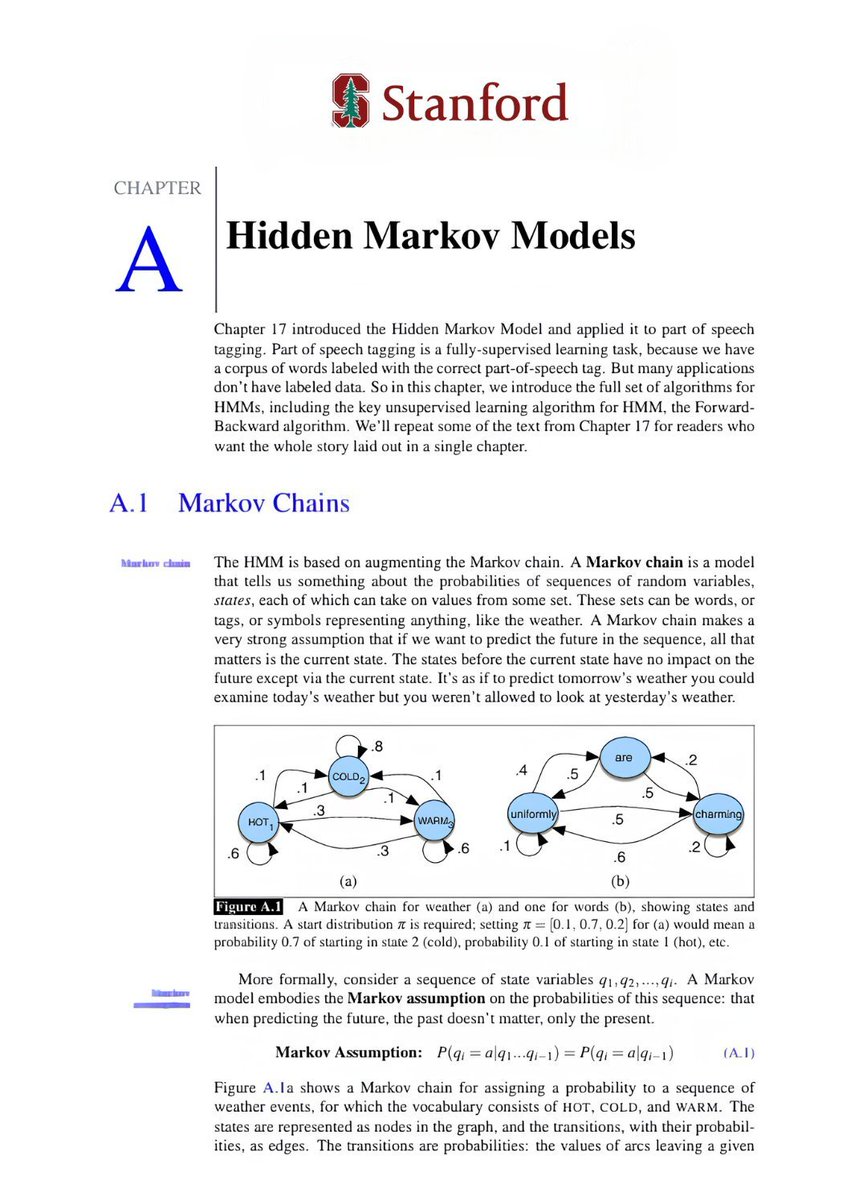
this Stanford framework is f*cking insane the entire hedge fund secret just got compressed into a 17 page PDF. Stanford released the complete Hidden Markov Model framework that quants at firms like Jane Street and Two Sigma are known to run, and put it out for free. the crazy part is this isn't a summary, it's the actual mechanics behind models these desks guard internally. most people think this stuff stays locked behind institutional walls. this one hands you the framework directly. bookmark and read before someone takes it down.
Trackmind tweet media
Trackmind@0xTrackmind

x.com/i/article/2080…

English
3
0
19
157
Rezzi
Rezzi@Rezzi_sol·
@0xwhrrari graph engineering as the next layer is the signal here
English
0
0
0
6
rari
rari@0xwhrrari·
Anthropic engineer just explained what comes after prompt engineering Graph engineering In a 28-minute talk, he breaks down how Claude Code structures tools, shared tasks, and context across agents: 03:18 - Why more tools make agents worse 10:36 - Shared tasks and agent dependencies 17:42 - From RAG to self-built context This is how you stop running isolated agents And start building a system where every task, dependency, and handoff becomes part of the graph This free talk is worth more than most paid agent courses Bookmark and watch it today Then read the full graph engineering guide below
rari@0xwhrrari

x.com/i/article/2081…

English
11
3
27
544
Rezzi
Rezzi@Rezzi_sol·
@Yumzlef 25x revenue gap is the real signal
English
1
0
1
11
Yumzlef
Yumzlef@Yumzlef·
BITCOIN MINERS ARE QUIETLY BECOMING THE BIGGEST LANDLORDS IN AI. THE WHOLE PIVOT COMES DOWN TO ONE NUMBER: A MEGAWATT EARNS ROUGHLY 25X MORE RUNNING AI THAN MINING BITCOIN for a decade the mining industry did the boring, slow work nobody wanted: locking in cheap power, land, cooling, grid interconnects. that turned out to be the exact bottleneck the AI boom can't buy its way past. a new power plant takes 6-7 years. a mining site is already plugged in. the interesting number isn't the $70B+ in AI contracts miners have already signed. it's the revenue per unit of electricity underneath it. AI workloads pull roughly $25 per kWh. Bitcoin mining pulls about $1. same electrons. 25x the money. MARA runs 4+ GW of power capacity - one of the largest positions in the industry. Fred Thiel's math on why they're converting: Bitcoin mining site: ~$1M per MW to build AI data center: ~$10-15M per MW, before a single GPU existing mining sites cut AI buildout time by up to 75% AI could hit 70-80% of miner revenue by end of 2026, up from ~30% they even named the model: "mullet data centers." AI in the front, Bitcoin in the back. keep hashing until the AI tenant moves in, so the site never goes dark for a day. and here's the part that reaches you: the same compute is now rentable by anyone. an H100 that ran ~$8/hour two years ago rents for under $3 today. bookmark this before the words "Bitcoin miner" quietly stop meaning Bitcoin.
Yumzlef@Yumzlef

x.com/i/article/2082…

English
2
1
13
361
Rezzi
Rezzi@Rezzi_sol·
@heyrohitai good signal on where the knowledge gap actually sits
English
0
0
0
12
Rezzi
Rezzi@Rezzi_sol·
AI strategist Noah Brier turned Claude Code and Obsidian into a second brain that can read and reason across thousands of notes. The real breakthrough is not using AI to write faster. It is giving the agent access to years of accumulated knowledge without manually pasting the context into every conversation. Claude Code handles the research workflow and helps organize the vault. Obsidian becomes the permanent memory layer you can access from your laptop or phone. The same architecture becomes much more valuable when it moves inside a business. Add a local Nvidia GPU and RAG, and a law firm, clinic, or accounting practice can search a decade of confidential documents without uploading them to an external cloud. Staff ask questions in Obsidian. The local model retrieves the relevant contracts, invoices, or records and answers with links back to the original sources. Claude helps build the ingestion scripts and structure the archive, then disappears from the final system so the client’s data stays offline. The video shows how to build the personal second brain. The article below turns the same Claude + Obsidian foundation into a private local RAG system you can deploy for real clients.
Ridark@ridark_eth

x.com/i/article/2082…

English
3
0
13
88
Prajwal Tomar
Prajwal Tomar@PrajwalTomar_·
A timer app makes $400,000 a month. A TIMER. I rebuilt it inside Superapp AI tonight in UNDER 30 minutes. I run an AI app studio, and half my research time goes into what actually earns on the App Store. The winners are almost never the clever ideas. They are fasting timers, plant identifiers, and streak counters quietly printing money behind paywalls. Everyone is still fighting over saturated SaaS ideas, missing that mobile is sitting wide open and building is not even the hard part anymore. My honest take: picking the niche is the whole game now.
English
8
0
15
1.6K
Rezzi
Rezzi@Rezzi_sol·
@EXM7777 feels like ai is getting serious fast
English
0
0
0
28
Sarvesh Shrivastava
Sarvesh Shrivastava@bloggersarvesh·
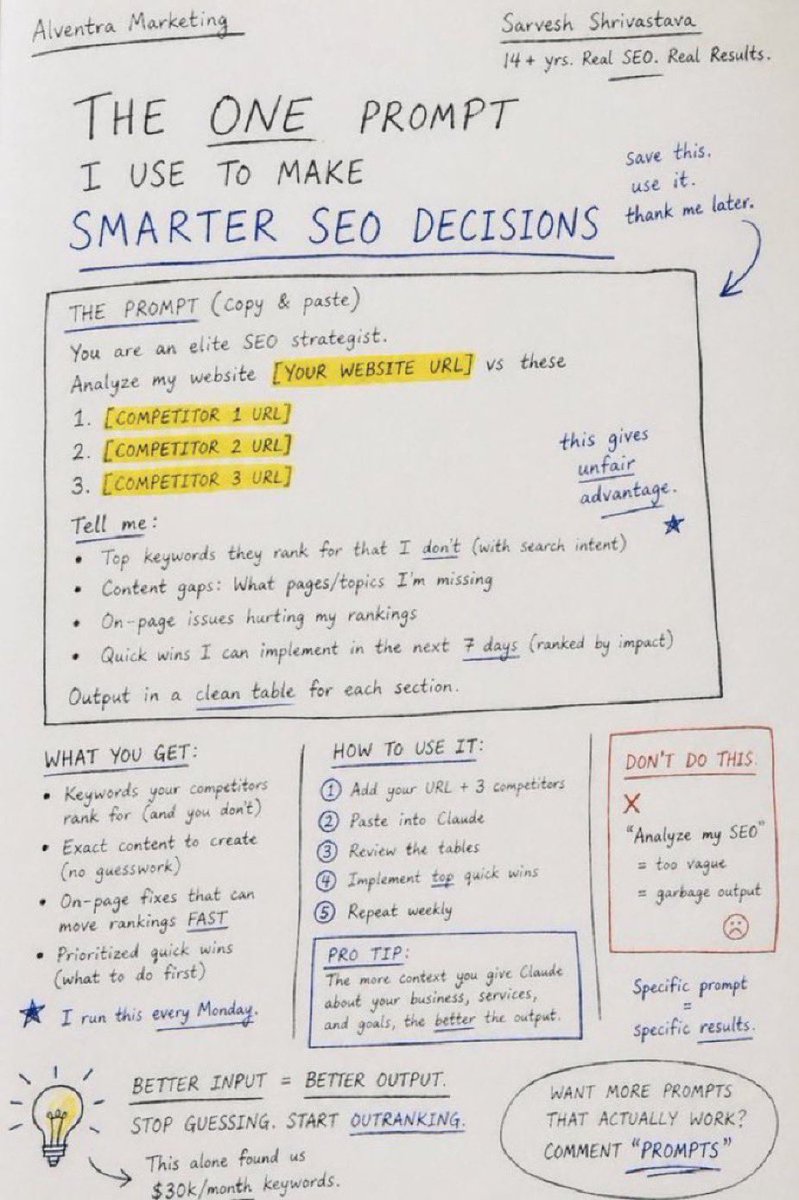
You’re not even using 1% of Claude. Claude can fully replace your $10k/month SEO agency. You don’t even need to pay $200/month for it. $20/month is all you need. Here's the exact SEO setup I run before touching a single prompt: 1. Load your business brain. Before anything else paste this into Claude: "Here is everything you need to know about my business:  [name], [website], [location], [services], [target cities], [top 3 competitor URLs].  Use this as context for everything. Never ask me for this again." Claude stops being generic. Starts being yours. Most people skip this and spend the next 6 months getting advice that could apply to any business in any city in any industry. That's not SEO. That's guessing. 2. Pick the right model. Open Cowork. Select Opus 4.7. Turn on Extended Thinking. Most people are running SEO prompts on Sonnet or the default model. Wrong model = surface level output. Every single time. Opus 4.7 with Extended Thinking doesn't just answer your question.  It thinks through your entire market before responding. The difference between a $20/month result and a $ 10k / month agency result is often just this one setting. 3. Set your SEO mission once. Forever. Go to Settings → Cowork → Edit Global Instructions. Paste this: "You are my local SEO strategist with 14 years of experience. Always read my business context before responding.  Always compare my business against my competitors before giving advice. Always prioritise commendations by revenue impact. Never give generic SEO advice that doesn't apply to my specific market and location." You set this once. It runs every single session. Your prompts can now be 10 words long and hit harder than a 500 word prompt ever could. 4. Build your competitor file. Create a document called COMPETITORS.md Inside list your top 5 competitors with: - their website URL - their GBP URL - their review count and average rating - the keywords they rank for that you don't - the categories they have that you're missing Paste this into Claude before every audit. Claude now knows exactly who it's competing against.  Every recommendation it makes is built around beating these specific businesses in your specific market. 5. Set your keyword intent filter. Before running any keyword research tell Claude this: "Only give me keywords with clear buyer intent. Ignore informational keywords.  Focus only on service + city, emergency + service, and near me combinations. Every keyword you suggest must indicate someone who is ready to call or book today." This alone eliminates 90% of the wasted SEO effort most businesses do. 6. Before every Claude SEO session check these: Am I in Cowork not Chat? Is Opus 4.7 + Extended Thinking on? Did Claude read my business context? Is my competitor file loaded? Is my keyword intent filter set? Get all five right first. Then run your prompts. The businesses that do this setup properly are outranking competitors who have been established for years. The ones that skip it are still getting generic advice and wondering why nothing is moving. Most people will read this and do nothing. The ones who set this up today will look back in 90 days and not believe what changed. Full prompt system in the article below. Bookmark it. Give it to Claude. Right now.
Sarvesh Shrivastava tweet media
Sarvesh Shrivastava@bloggersarvesh

x.com/i/article/2037…

English
6
5
10
1.2K
Rezzi
Rezzi@Rezzi_sol·
@kirillk_web3 structural edge over chips is the real story here
English
0
0
0
12
Kirill
Kirill@kirillk_web3·
🚨do you understand what Nvidia's CEO just said about China Ai. "China manufactures the most important version of intelligence — the researchers." here's the part nobody is talking about: > China produces more AI researchers annually than the rest of the world combined > that's a structural edge, not a temporary one > chips can be blocked. people can't. > around 50% of the world's AI researchers already come from China Washington keeps trying to control the compute. Jensen keeps pointing at the thing you can't put an export ban on. the man who sells every side its chips just said the real bottleneck was never the hardware.
Kirill@kirillk_web3

x.com/i/article/2078…

English
3
1
7
1.1K
Rezzi
Rezzi@Rezzi_sol·
@noisyb0y1 this signals the shift toward modular ai infrastructure
English
0
0
0
1
Noisy
Noisy@noisyb0y1·
He just graduated from MIT and already created a file that changes AI agent work from hours to minutes - and made $1.2M 00:40 - how one file replaces 1000+ integrations between AI and tools 05:34 - Google Anthropic and Microsoft already use this file 19:46 - how to connect any tool to an AI agent in 5 minutes after watching I realized I was spending 10 hours on what this file does in 10 minutes. bookmark & watch - the article below shows how to set up the file and reach $40k a month.
Noisy@noisyb0y1

x.com/i/article/2073…

English
11
2
46
2.7K
Rezzi
Rezzi@Rezzi_sol·
@starmexxx production agents are just software is the real takeaway
English
1
0
1
10
starmex
starmex@starmexxx·
MARK ZUCKERBERG PERSONALLY POACHED HIM FROM ANTHROPIC FOR $3M - HE BUILT META'S ENTIRE AGENT STACK ON 12 FACTORS AND JUST OPEN-SOURCED IT own your prompts --> own your context --> own your control flow --> own your state --> keep agents small - written by hand, deployed at scale, iterated in production after leaving anthropic he interviewed 100 AI founders in 6 months. same pattern everywhere: production agents aren't agentic at all - they're mostly just software. every framework kills iteration speed at the 70% quality bar own your prompts: every token matters, hand-write the ones you can't afford to lose own your context: it's all just context engineering - prompt, memory, rag, history in one place own your control flow: pause, resume, break, summarize - agents are just software own your state: launch, pause, resume like any REST API keep agents small: 3-10 steps max, deterministic between LLM calls 4,000 github stars in 30 days. 14 active contributors. hackernews front page all day. every startup with an agent product is quietly rewriting on this stack bookmark this before meta pulls the repo - in 5 minutes you get what took a $3M engineer 100 founder interviews to distill
Noisy@noisyb0y1

x.com/i/article/2073…

English
9
1
25
938
Rezzi
Rezzi@Rezzi_sol·
@Suryanshti777 making your own tape is the real move when doors close
English
0
0
0
26
Suryansh Tiwari
Suryansh Tiwari@Suryanshti777·
Jason Momoa was so convincing as Khal Drogo that casting directors stopped believing he could act in English. Not a joke he's said Fred Armisen met him and admitted he had no idea Momoa even spoke the language. Drogo barely used English on screen, and somehow that became the entire industry's read on him. The result: when the character died at the end of season one, the phone didn't slow down — it stopped. Two kids to feed, mounting debt, and zero calls coming in, right after playing one of the most talked-about characters on television. So he stopped waiting to get picked. He wrote, directed, and starred in his own low-budget film, Road to Paloma, just to put something on tape that wasn't a guy grunting on a horse. Zack Snyder saw it. Aquaman followed. Sometimes the fastest way back in isn't another audition it's making the tape yourself.
English
1
4
4
2K
Rezzi
Rezzi@Rezzi_sol·
@gippp69 this is the shift that makes solo dev viable at scale
English
1
0
1
24
Gipp 🦅
Gipp 🦅@gippp69·
CLAUDE + HIGGSFIELD MCP JUST COMPRESSED A $5,000-12,000 INDIE TRAILER PIPELINE INTO ONE CHAT most solo devs can already build the playable part. the expensive part is turning 20 seconds of combat into something that feels like a real reveal trailer. Gameplay → best kill moment → key frame → 4K upscale → 8-second trailer shot that matters even more for a game like this. one clean FPS clip already has the weapon, the map, the pacing and the hit feedback, so the trailer beat is basically sitting inside the gameplay. the old process splits that across capture, storyboarding, color work and revision rounds. every new version means more time and another invoice. with Higgsfield MCP, one key art frame plus a 4K upscale costs 4 credits, while an 8-second video shot costs 16-72 credits, putting a 30-second trailer around 60-300 credits instead of a five-figure studio package. bookmark this and watch the gunfight, then read the article below
Gipp 🦅@gippp69

x.com/i/article/2080…

English
24
3
58
1.8K
Rezzi
Rezzi@Rezzi_sol·
@eng_khairallah1 agentic AI is going to reshape small business operations
English
0
0
1
3
Khairallah AL-Awady
Khairallah AL-Awady@eng_khairallah1·
This is f**king dangerous. Mark Cuban just said something every young person should hear. AI agents are going to run through every small and mid-size business in the country. Not a single one of those owners will know how to build them. His advice: learn Claude. Learn agentic workflows. Just learn AI and how it works. Then go to these businesses and help them — because they won't know how to do any of this. They have money to spend. They have deep problems. They don't have you. But first you need to know how to build agents. This is the complete course ↓ Bookmark this. This is the opportunity.
Khairallah AL-Awady@eng_khairallah1

x.com/i/article/2082…

English
16
6
29
3.3K
Rezzi
Rezzi@Rezzi_sol·
@JaynitMakwana scaling laws were the early conviction that changed everything
English
0
0
0
8
Jaynit Makwana
Jaynit Makwana@JaynitMakwana·
Dario Amodei reveals the two convictions that made him leave OpenAI to start Anthropic "The first conviction was the scaling laws" "If you scale up models, give them more data and more compute, you find incredible increases in performance. I was finding that in 2019 with GPT-2" "There were a lot of folks inside and outside who didn't believe it at all. We made the case to leadership, this is going to be a big deal" "The second was, if these models are going to match the capability of the human brain, we better get this right" "Despite a lot of language about doing it in the right way, I was just not convinced there was a real and serious conviction to do it the right way"
English
5
7
19
1.9K
Rezzi
Rezzi@Rezzi_sol·
@rezkhere open source teams consistently outpace corporate labs on hard problems
English
0
0
0
27
Rez Karim
Rez Karim@rezkhere·
Remember when AI couldn't draw a hand? Seven fingers, knuckles pointing backwards. And the AI spaghetti videos. That was three years ago. Images are done now. Video is close enough that you scrolled past AI ads this week and clocked exactly zero of them. Code writes itself and there are like 40 coding agents. AI voice spent that entire stretch sounding like the lady voice in a 2014 GPS. Flat, evenly spaced and every sentence landing with the same weight, like it's reading from a phone book. Here's why it stayed broken. Bad images are funny. You screenshot the seven fingers, it goes viral for being bad, someone fixes it. Bad audio is just boring. It doesn't fail spectacularly, so it never got that pressure. The bigger problem was the scoring. The whole industry graded AI voices on whether you could make out the words. So the models learned to over pronounce everything, hitting every syllable like a newsreader. Perfectly clear but robotic. Everyone was chasing a score that had nothing to do with sounding human. Meanwhile a small open-source team was doing something harder. Their lead researcher, an ex-NVIDIA engineer, went all in on an approach the rest of the field had written off. Two years early. No funding announcements or launch tour. He just put the whole thing on GitHub for free. It's sitting at 50,000+ stars now. Then they ran the test everyone else avoided. For 10 days they piped real users through their model and every big competitor with the listener never told which was which. Thousands of real people, real scripts. Whichever voice you actually preferred, they logged it. Theirs came out on top. It beat ElevenLabs about 6 times out of 10, head to head. It beat OpenAI's voice model 8 times out of 10. The gap was widest on the breathing, the pauses, the little hesitations, which is exactly the stuff that makes a voice sound like a person instead of a machine reading. They ran on real users rather than a lab, which is more than most of these claims can say. That's Fish Audio. This week they shipped S2.1 Pro: - Clone anyone's voice from 15 seconds of audio - Fast enough to hold a live conversation - 83 languages, one model - Type [whisper] or [sigh] mid-sentence and it does it - Around 70% cheaper than ElevenLabs - Free to download and run yourself Voice was the last thing on the list. Around 20 people with a free repo got there before other billion dollar companies did.
English
9
18
31
2.2K