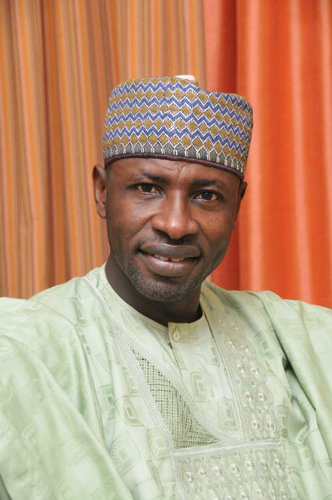
“If you look at the people we call leaders—go to the Senate, go to the House of Representatives—why should a senator or a member of the House be a praise singer for anyone? Why are those in government not able to face their boss and say, “Oga, this is the truth”? You have people who are supposed to represent the values of society behaving like illiterates. By the time you become a governor, you should be beyond looking for money. Most of Nigeria’s ruling class lack values—they are too cheap. If we truly want to fix this country, we need a principled ruling class. The ruling class needs to have values—values beyond stomach infrastructure.”
—HRM Sanusi Lamido Sanusi.✅
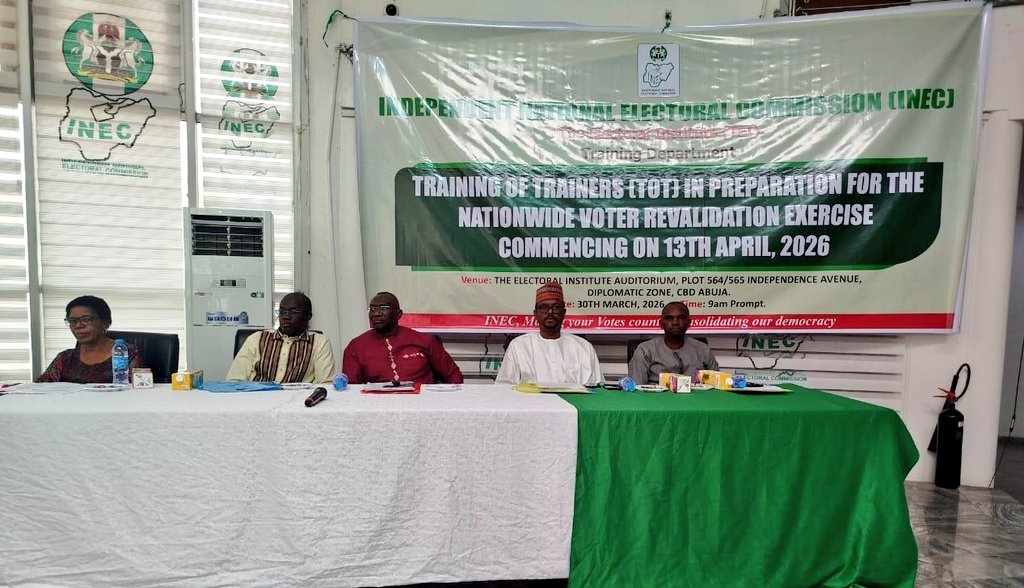
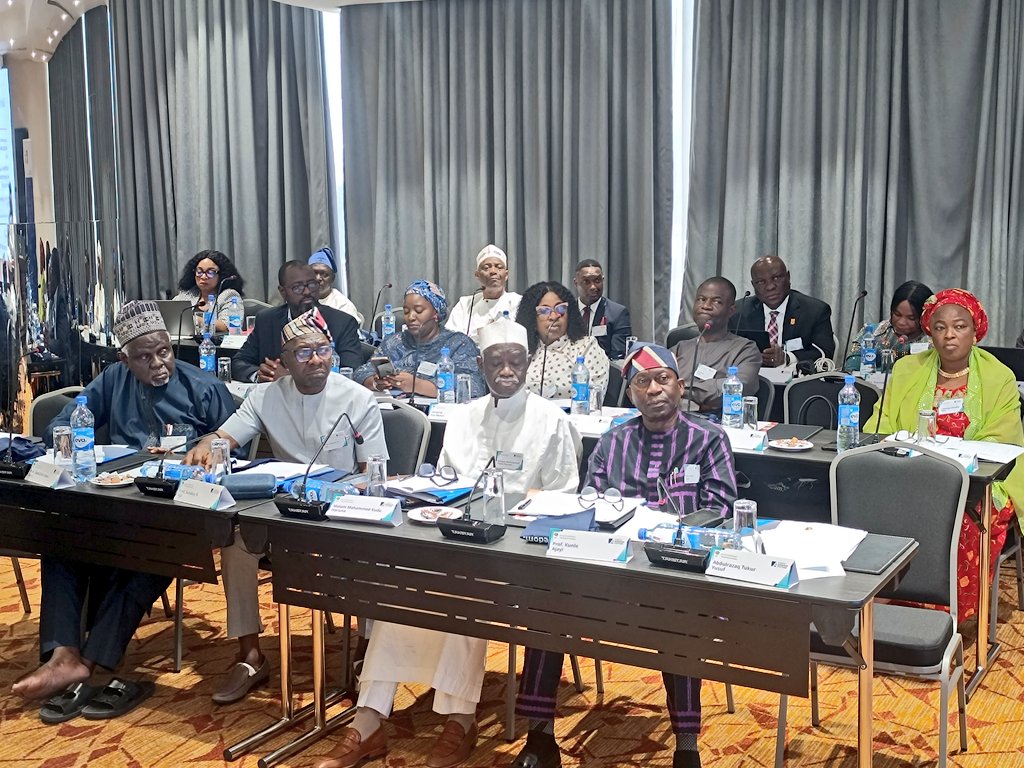
TRAINING OF TRAINERS (TOT) IN PREPARATION FOR THE NATIONWIDE VOTER REVALIDATION EXERCISE SCHEDULED TO COMMENCE 13TH APRIL, 2026
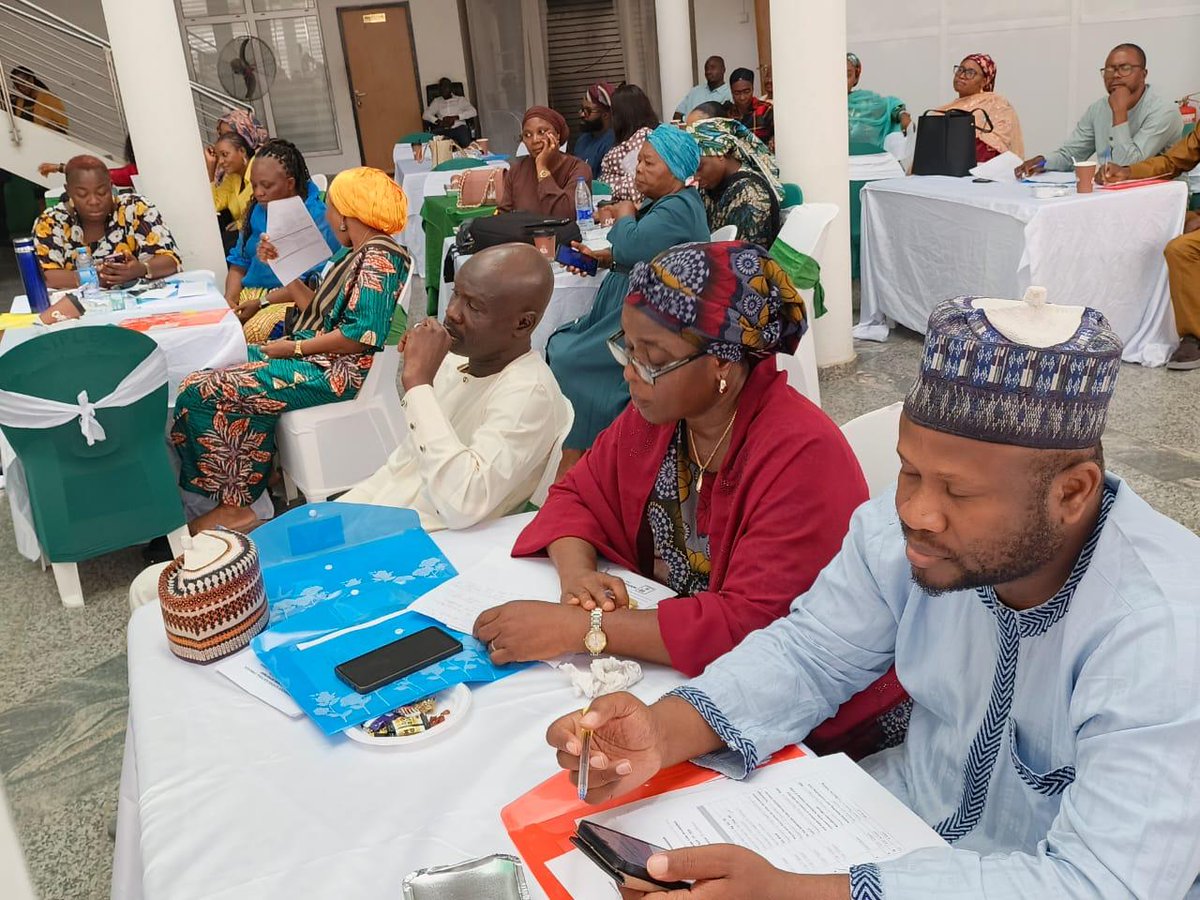
The Training-of-Trainers (ToT) workshop ahead of the Nationwide Voter Revalidation Exercise took place Monday 30th March, 2026 at The Electoral Institute (TEI). The ToT is to prepare Trainers for the cascade training of Registration Officials ahead of the Voter Revalidation Exercise scheduled to hold at the 774 INEC Local Government Offices, The 8,809 Registration Areas (RAs) and the 176,846 Polling Units (PUs) at different phases across the nation.
The Chair, Board of The Electoral Institute, Professor Kunle Ajayi pointed out that a credible election starts with a credible voter register and that it is critical to ensure the integrity of the register ahead of the 2027 General Election. He tasked the carefully selected participants made up of TEI Master Trainers and Staff of the Voter Regustry and ICT Departments to be attentive, engaged, and fully committed pointing out that the success of the entire cascade training program—and by extension, the revalidation exercise itself—rested on their shoulders.
The Ag. Director General, TEI while welcoming participants to the training also noted that the success of the revalidation exercise depend largely on their understanding of the procedures and framework of the exercise.
Trainers were taken through the relevant tools and systems, building the confidence and technical competence they need to pass on to thousands of Revalidation Officials.
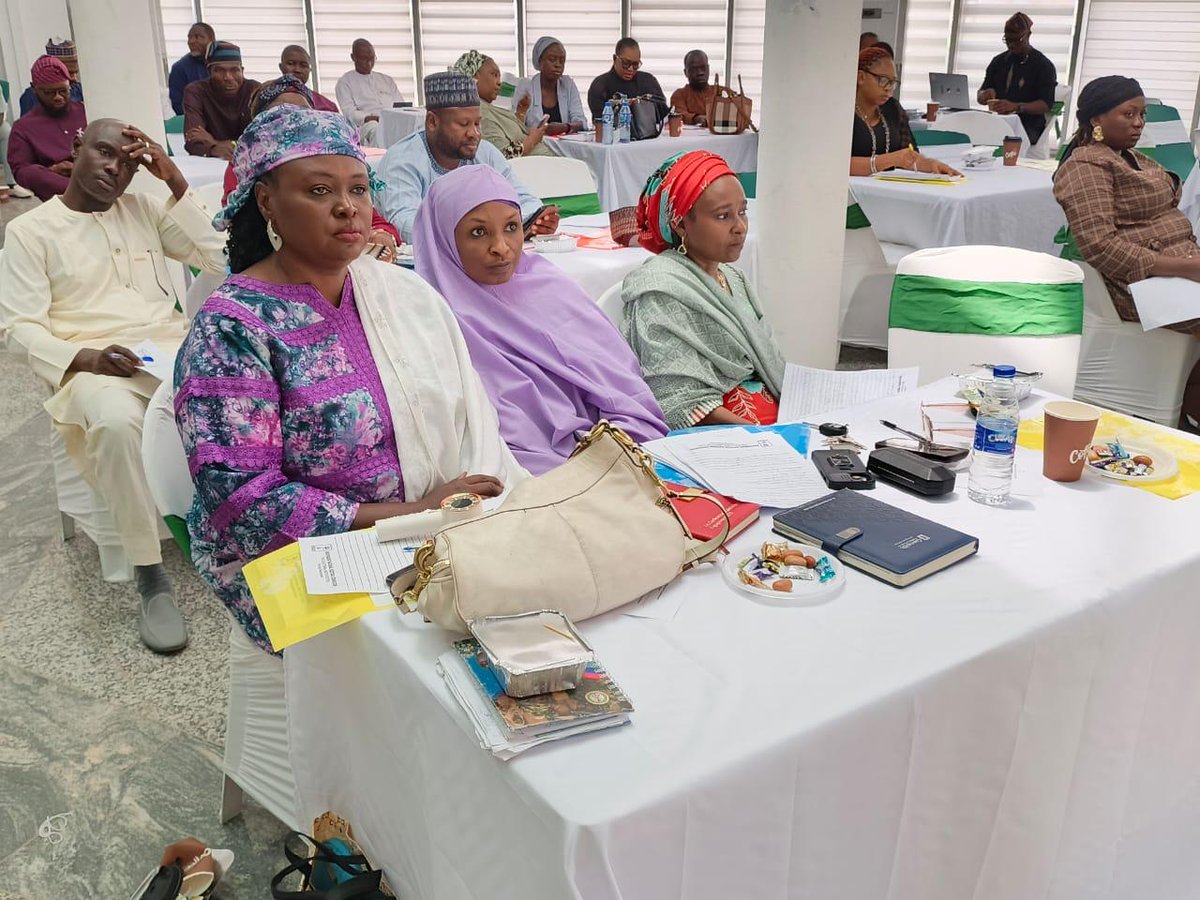
Below are pictures of a cross-section of participants during the training.
Let's assume Peter Obi wins the 2027 election - is there anything he will do differently than what Tinubu is doing?
Repeat same politicians esp those in Buhari Govt
Atiku, El rufai, even Aregbesola 😂🤡
Abi no be same politicians dey ADC?
Abi na different people dey there?
In line with the provisions of the Electoral Act 2026, the Chairman announced the release of the revised timetable and schedule of activities for the 2027 General Election. Presidential and National Assembly elections are now fixed for Saturday, 16th January 2027, while Governorship and State Assembly elections will hold on Saturday, 6th February 2027.
He explained that the early release of the timetable is a deliberate strategy aimed at providing clarity to all stakeholders—political parties, candidates, security agencies, and the electorate—while affording the Commission sufficient lead time to procure critical materials, deploy technology, and train personnel.
“Transparency begins with certainty,” the Chairman noted. “By releasing this timetable well in advance, we are sending a clear signal that INEC is prepared, that we are committed to predictability, and that we intend to conduct an election that meets the highest standards of credibility and professionalism.”
Prof. Amupitan also used the occasion to express the Commission’s profound gratitude to the Konrad-Adenauer-Stiftung for their technical partnership in facilitating the capacity building exercise. He described the collaboration as a testament to the shared commitment between INEC and international development partners to strengthen democratic institutions in Nigeria.
“The Konrad-Adenauer-Stiftung has been a steadfast partner in Nigeria’s democratic journey, and this workshop is yet another demonstration of their dedication to institutional strengthening,” he said. “We are grateful for their support, and we look forward to deepening this partnership in the years ahead.”
Turning to the participants, the Hon. Chairman charged them to approach the workshop with a sense of purpose and urgency. He noted that the knowledge and insights gained over the three days would directly shape the Commission’s preparedness for the 2027 elections.
“You are not here merely to listen to presentations or to exchange pleasantries,” he told them. “You are here to learn, to unlearn, and to relearn. You are here to interrogate existing practices, to challenge assumptions, and to identify practical solutions that will strengthen our procurement systems. The success of the 2027 elections will, in no small measure, depend on the quality of the decisions you make and the systems you put in place.”
The Chairman concluded his address with a call to collective responsibility, reminding participants that the strength of INEC lies in its willingness to learn, adapt, and continuously improve.
“Let us seize this opportunity to grow and strengthen INEC, and by extension, the democratic fabric of Nigeria,” he said. “The Nigerian people are watching, and they deserve nothing less than our very best.”
In his welcome remarks, the Resident Representative of KAS in Nigeria, Mr. Tobias Ruettershoff, emphasised that procurement plays a decisive role in shaping the credibility of democratic processes, noting that it directly impacts efficiency, fairness, and public trust.
He observed that while procurement is often perceived as a routine administrative function, it is, in reality, a core democratic mechanism that determines how public resources are translated into outcomes that affect governance and institutional legitimacy.
“At a time when democratic institutions are under increasing global scrutiny, initiatives such as this demonstrate a commitment to continuous improvement, transparency, and adherence to international best practices,” he said.
Mr. Ruettershoff traced the long history of KAS’s engagement in Nigeria, noting that the foundation resumed activities in the country in 2001 after a hiatus during the period of military rule. He expressed delight at the renewal and deepening of the partnership with INEC, which he described as a cornerstone of Nigeria’s democracy.
INEC Chairman, Prof. Joash Amupitan, SAN, Moves to Safeguard #NigeriaDecides2027 Elections with Major Procurement Reforms.
The Independent National Electoral Commission (INEC) has taken a major step in consolidating Nigeria’s electoral integrity framework with the unveiling of the timetable and schedule of activities for the 2027 General Election, alongside a renewed institutional drive to strengthen procurement systems as a critical pillar of credible elections.
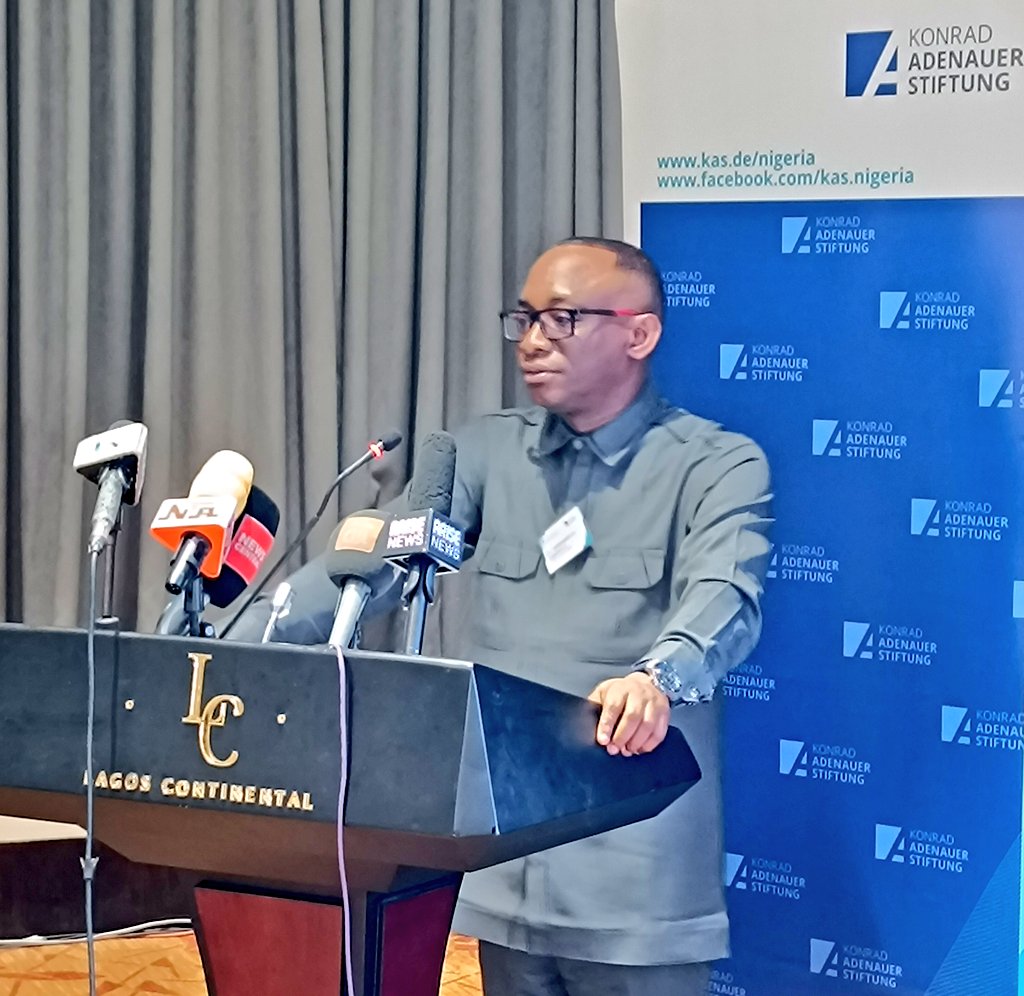
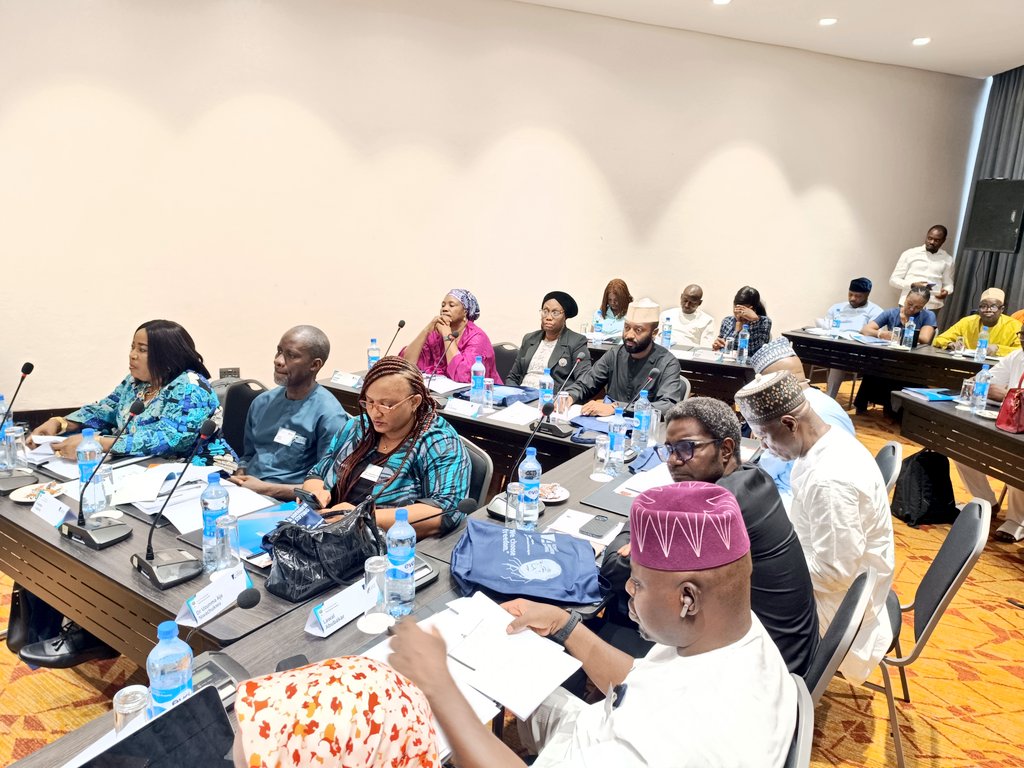
This development was the highlight of a three-day high-level capacity building workshop for National Electoral Commissioners and the Commission’s Management, held in Lagos in collaboration with the Konrad-Adenauer-Stiftung (KAS).
Declaring the workshop open on behalf of the INEC Chairman, Prof. Joash O. Amupitan, SAN, the National Commissioner, Mrs. May Agbamuche-Mbu, described the engagement as a defining moment in the Commission’s reform trajectory, coming at a time of significant legal and operational adjustments within Nigeria’s electoral system.
She conveyed the Chairman’s position that the Commission’s mandate extends beyond the conduct of elections to safeguarding the entire democratic ecosystem through systems that are transparent, accountable, and resilient.
Prof. Amupitan, in his address, reflected on the journey since his assumption of leadership, noting that the Commission gathers exactly 159 days into his tenure. He described this period as a watershed moment in Nigeria’s democratic evolution, one that demands a fundamental reimagining of how the Commission approaches its responsibilities.
“My primary mandate, and indeed our collective burden, is to ensure that the electoral architecture of Nigeria is not just robust in theory but strong in practice,” the Chairman stated. “We must move beyond the rhetoric of reform to the reality of implementation. This is why this workshop is not a mere routine gathering but a strategic intervention designed to equip the leadership of this Commission with the tools, knowledge, and foresight required to navigate the complex terrain ahead.”
Prof. Amupitan emphasised that the credibility of Nigeria’s elections rests on a foundation of meticulous planning, transparent processes, and accountable systems. He noted that procurement, often relegated to the background in discussions about electoral integrity, is in fact the invisible architecture upon which successful elections are built.
“When procurement is handled with integrity, it becomes the bedrock of public confidence. When it is compromised, it becomes the fault line through which trust collapses,” he said. “Our responsibility is not limited to election day activities. It encompasses the entire electoral value chain—from planning and logistics to procurement and deployment. Each component must function optimally to guarantee credible, transparent, and verifiable elections.”
The Chairman further underscored the significance of the recent enactment of the Electoral Act 2026, which he described as a landmark legislative intervention that has fundamentally recalibrated the Commission’s operational framework. He noted that the amendment to Clause 28, which reduced the mandatory notice period for elections from 360 to 300 days, represents a paradigm shift that demands unprecedented speed and critical precision from the Commission.
“This compressed timeline is not a challenge to be lamented but a reality to be mastered,” Prof. Amupitan declared. “It requires us to work with the efficiency of a well-calibrated machine, where every component procurement, logistics, training, and deployment operates in seamless synchrony. There is no room for delay, no margin for error, and no excuse for complacency.”
The children who participated in South East Maths Olympiad took all prices (1st, 2nd, 3rd and 4th positions) in all categories in Annual National Mathematics Competition Abuja.
We are all going to Rome this July to compete with 158 countries to bring our gold home.
if that abia guy didn’t become the governor of that state, you people will be here now asking us what he could have done differently.
ara ma san pa gbogbo yin funmi very soon.
As a Yoruba boy with deep roots in Ekiti and Ondo, and strong branches in Lagos, Oyo, and Ogun States, we are collectively giving Obi–Kwankwaso all our votes.
Yoruba, both home and abroad; Ẹ dìde!
@Nig_Farmer Good you claimed to be a farmer.
PO has always talked about the vast land in the North.
If you’re really a farmer, that’ll be what will make you know he’s different and not ask this question.
@Pius_imue@iman_adeyemi@Nig_Farmer Don’t mind them
That’s how they go about electing n supporting standing red flags everytime.
What happens to checkmating the character you’re entrusting your future and that of your generation to come on?
@iman_adeyemi@Nig_Farmer You're a clown.
ANYBODY could have seen that Tinubu, Buhari and the APC were disasters waiting to happen.
I predicted the current state of things since 2014 to anyone who would listen.
But you people chose emotional foolishness, and now you're pretending not to have known.
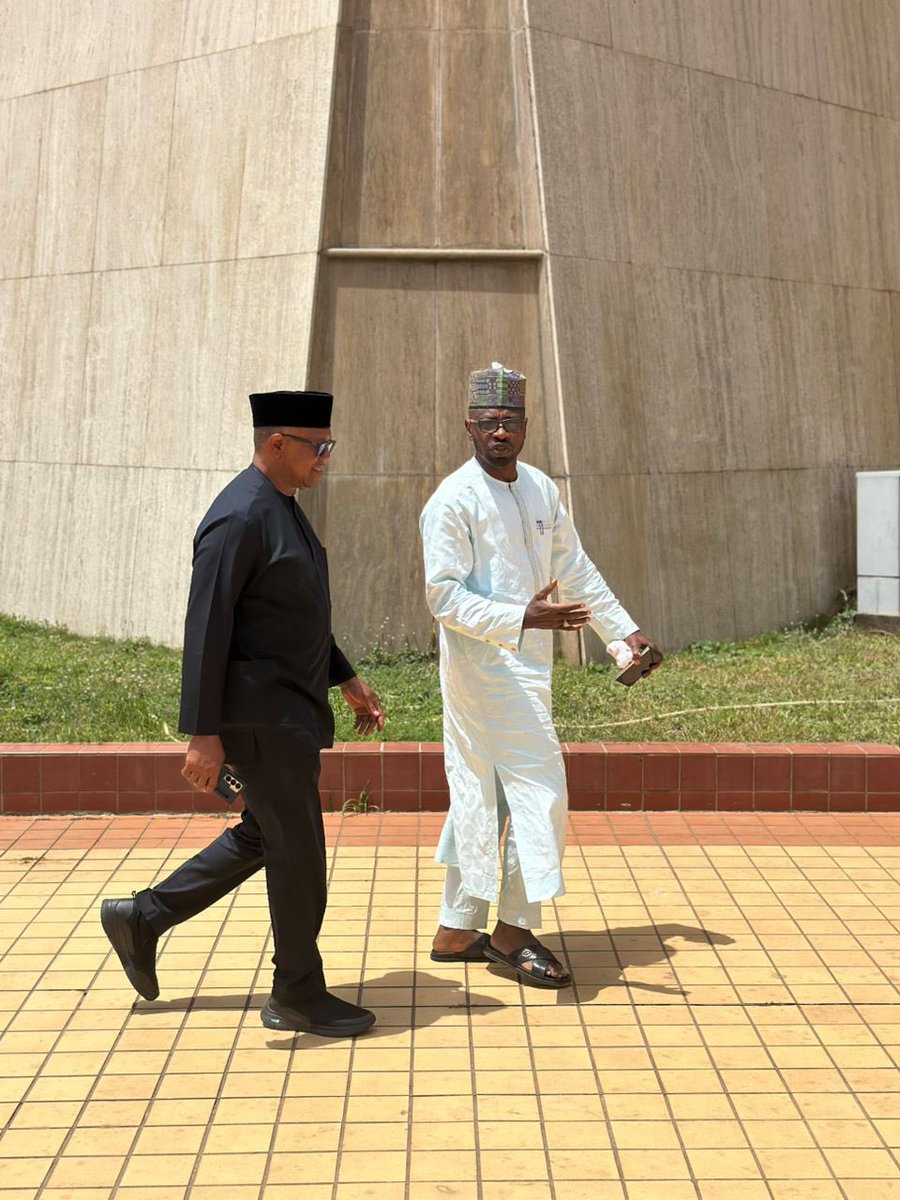
His Excellency Peter Obi paid a condolence visit to Nasir El-Rufai over the passing of his mother, Hajiya Umma. The Janazah prayer was held today at the Abuja National Mosque. May her soul rest Aljannah firdausi.
Are you Nigerian and looking to build a career in virtual assistance?
A US-based professional is offering free VA training and actively hiring Nigerians upon completion.
No prior experience is required. Just commitment and a willingness to learn.
To apply: hit the link
chat.whatsapp.com/IaUEhtaFi19DHE…