
Richard Pilot
12.8K posts
Richard Pilot
@RichardPilot
Software Engineer at IBM Hursley. Co-Founder and Developer at @XMPTGames. All opinions are my own. Released DiscStorm and now working on secret projects! He/Him
Southampton, UK Katılım Mayıs 2009
172 Takip Edilen269 Takipçiler
@MartinSLewis I'd rather have the real thing but I'll take the knock off Nintendo ;)
English
Second weekend in a row where @Barclaycard systems are broken. What a shambles.
English
Richard Pilot retweetledi


I wish everyone happy holidays! ✨ As a gift from me to you; Pirate Kit! 60+ 3D models for use in any sort of project, completely free.
kenney.nl/assets/pirate-…
#gamedev #gameassets

English
Forget the AI aspect of this. As someone that finds Blender daunting, I just want a basic 3D model software that works like that.
inigo quilez@iquilezles
Design once, restyle endlessly. It's one of the many things we are playing with at projectneo.adobe.com
English
Amused by the small detail in The Day of the Jackal that our assassin uses an outdated version of his secret remote access app. Even criminals need to ensure they're running the latest security patch!
English
@scallywagarcade Any plans to remove the halloween skins? It made my first play of the game very odd today.
English

🎉 Surprise! 🎉
As part of Black Friday / Cyber Monday Deals on the Meta Store, Taskmaster VR is now 40% off when you use code "BFCM24" at checkout! 🥳
Don't miss out, grab yourself a copy ASAP!
👉 meta.com/en-gb/experien…
#taskmaster #vr #indiegame

English
@RemapRadio Not sure if you've taken on feedback, but thank you. I love the design but the colours in this schedule are much more readable.
English



@MartinSLewis Another way of looking at it. I find what is essentially a "high rate loan" in disguise (that said, it *is* open and up front) perfectly acceptable vs the "failure" of racking up interest charges every month by not paying off my credit card.
English
@MartinSLewis Doesn't not paying your CC balance and running up the interest affect your credit score?
English
My point is it's a COSTLY loan. If you have to, most would be far better to put it on a 0% card and repay it over the 12 months - or even a standard high st card with APR 20%, undercuts many big insurers who charge up to 40% APR.
IanO@IOC47
@MartinSLewis Of course it’s a loan, however, the majority of people in UK cannot afford to pay yearly amount in a lump sum, especially with how Insurance companies are inflating prices. This way at least enables people to budget and manage their finances
English
@patrickklepek Definitely not a fan of the phrase "pushing further some of our key features". AC games have been bloated beyond recognition (which is why last years Mirage felt fresh). I want refinement not another system. I feel like the minority that loved Outlaws too!
English

Assassin's Creed being "complete" but getting delayed out of the holidays for polish, moving to day one on Steam, abandoning season passes—this is *all hands on deck* for this game to be a hit. That sounds pretty worrying for Ubisoft's overall health.
English
@ste_wr What's mad is that we've already had studies that show they don't work in medical scenarios and often misdiagnose patients
English
The twitter tech bubble here will ignore (because echo chamber who love tech eating the world) that the vast majority of the population of the planet will prefer to interact with an actual human, in person, when it comes to medical issues. Doctors aren’t going away any time soon.
Derya Unutmaz, MD@DeryaTR_
This is the final warning for those considering careers as physicians: AI is becoming so advanced that the demand for human doctors will significantly decrease, especially in roles involving standard diagnostics and routine treatments, which will be increasingly replaced by AI. This is underscored by the massive performance leap of OpenAI’s o-1 model, also known as the “Strawberry” model, which was released as a preview yesterday. The model performs exceptionally well on a specialized medical dataset (AgentClinic-MedQA), greatly outperforming GPT-4o. The rapid advancements in AI’s ability to process complex medical information, deliver accurate diagnoses, provide medical advice, and recommend treatments will only accelerate. Medical tasks like diagnosing illnesses, interpreting medical imaging, and formulating treatment plans will soon be handled by AI systems with greater speed and consistency than human practitioners. As the healthcare landscape evolves in the coming years, the number of doctors needed will drastically shrink, with more reliance on AI-assisted healthcare systems. While human empathy, critical thinking, and decision-making will still play an important role in certain areas of medicine, even these may eventually be supplanted by future iterations of models like o-1. Consequently, medicine is becoming a less appealing career path for the next generation of doctors—unless they specialize in intervention-focused areas (such as surgery, emergency medicine, and other interventional specialties), though these, too, may eventually be overtaken by robotic systems…maybe within a decade or so.
English
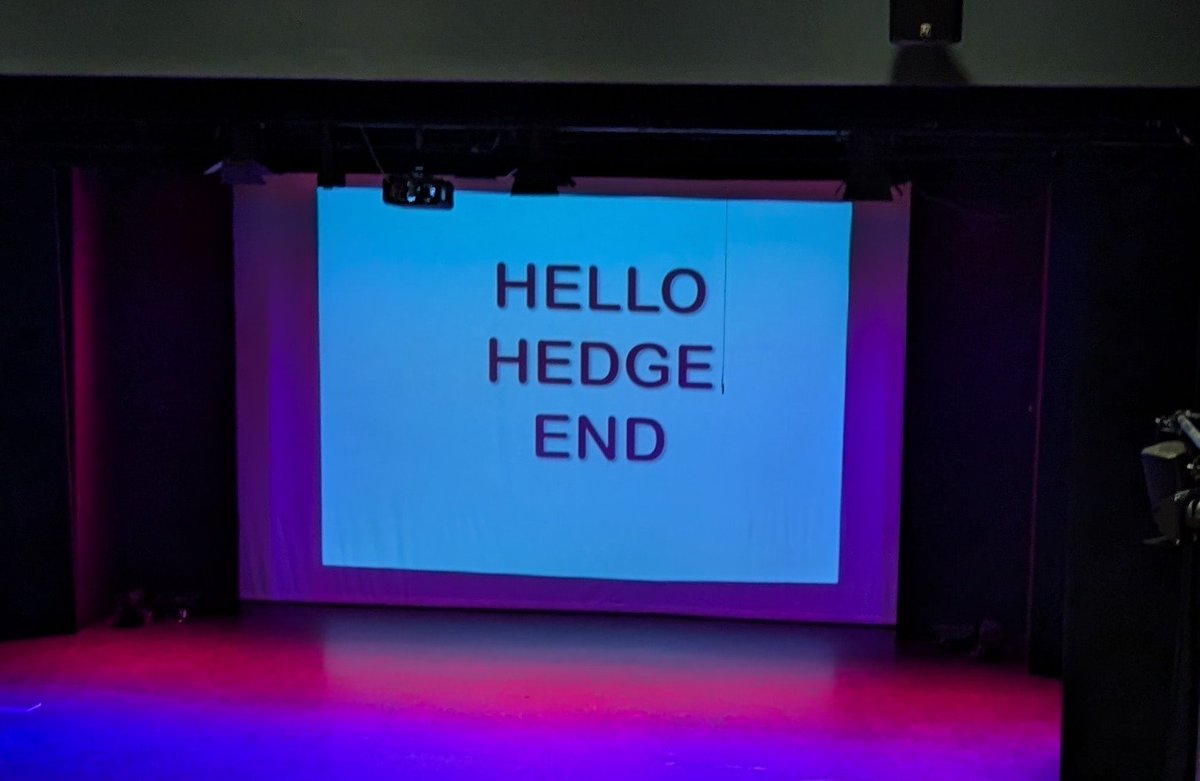
Enjoying a preview of the new season of Modern Life if Goodish... Live!
English
@mikeBithell Completely agreed. The downside is that a tiny percentage of my follows made the jump so I still have to come here :(
English

@MartinSLewis Any plans to fix your website. Cheap Energy Club only compares against the current rate rather than the future rate, so it gives the misleading impression that fixes are worse.
English
NEWS. ENERGY PRICE CAP TO RISE 10% on 1 OCT. (pls share). Here's my instant briefing incl who it'll hit hardest, why govt needs change winter fuel payments, standing charges & WHAT TO DO NOW. First, here's the average Direct Debit Cap (it varies by region)
ELEC
- Standing charge 60.99p daily (from 60.12p) UP 1.4%
- Unit charge: 24.5p per KwH (from 22.36p) UP 9.6%
GAS
- Standing charge: 31.66p daily (from 31.41p) UP 0.8%
- Unit charge: 6.24p per KwH (from 5.48p) UP 14%
Prices nearly double pre-crisis: This rise means this winter many will still be paying nearly double what they were pre-crisis. From 1 October, the vast majority of homes in England, Scotland & Wales will see costs jump 10% – so for every £100 you pay today, you’ll typically pay £110.
To be more accurate, as most of the rise is on the unit rate not standing charge, higher users especially those with gas, will overall see their costs rise by more than 10% rise, lower users less.
Govt must rethink Winter Fuel Payments or almost ALL pensioners will need to find £100s more than last winter. While energy will cost less than during last winter’s crisis time, the reduction in rates only equates to a drop of roughly £100 over the six winter months for a household with typical usage. Yet specific pensioner energy support has dropped by far more...
Last year pensioner homes got up to £300 extra per household cost of living support - that’s gone, and its loss alone is far bigger than the saving made by slightly lower rates.
Piling on top of that is the governments new decision to means-test Winter Fuel Payments, that will leave all except usually those who claim Pension Credit missing out on a further £200 - £300.
While there's a strong argument for ending the universality of Winter Fuel payments, eligibility is being squeezed to too narrow a group. Those just above the thresholds will be hardest hit. I'm due to meet the Chancellor in a couple of weeks, and will then be urging her to look at methods to widen eligibility – such as to homes in council tax bands A to D – an imperfect but workable proxy for lower household incomes.
People can and should save by switching: The cheapest year-long fixes on the market right now are about 7% LESS than the new October price cap, but they mightn’t be around long, That looks a good deal, as its currently predicted once rates go up they won’t come down. Don’t just jump on any fix though, if you’re going to lock-in you want to grab the cheapest for your use and location, so use a whole-of-market comparison, like MSE’s Cheap Energy Club, and find out who will let you fix for less.
Alternatively deals like E.on Next’s Pledge, or EDF Ensure are effectively discounted trackers, where they move with the price cap, but the unit rates or standing charges are guaranteed to be lower. And for more sophisticated energy users the Octopus Agile and Tracker tariffs where prices move rapidly can be far cheaper.
Consultation to reduce Standing Charges launched: The Standing Charge is a daily poll tax that means everyone with gas & electricity pays a minimum £338 a year even if they don’t use it. This moral hazard penalises lower users, often many who are vulnerable, and means they will face a proportionately larger rise.
I've long called for change, so welcome today's long promised consultation on reducing standing charges today - though I'm slightly disappointed even the maximum proposed reduction is only £100/yr - but I'll hold judgement until I've read the consultation in full.
English

Arco has +150 reviews, 98% being positive ✨
Sadly, we are struggling to make people notice about the game itself, being considered already as a "hidden gem"💎
Our gameplay trailer shows how Arco works, and hopefully it will catch your eye 👀
A RT will help us A LOT🙏
English
@IVmillennia I had a wave of curiosity to see where we left that project!
English