Jeffrey T. Riddle

5.9K posts

Jeffrey T. Riddle banner
Jeffrey T. Riddle

Jeffrey T. Riddle

@Riddle1689

Kηρυξ. "Grumpy Protestant." Pa-paw.

North Garden, Virginia Katılım Mayıs 2020
384 Takip Edilen1.6K Takipçiler
Sabitlenmiş Tweet
Jeffrey T. Riddle
Jeffrey T. Riddle@Riddle1689·
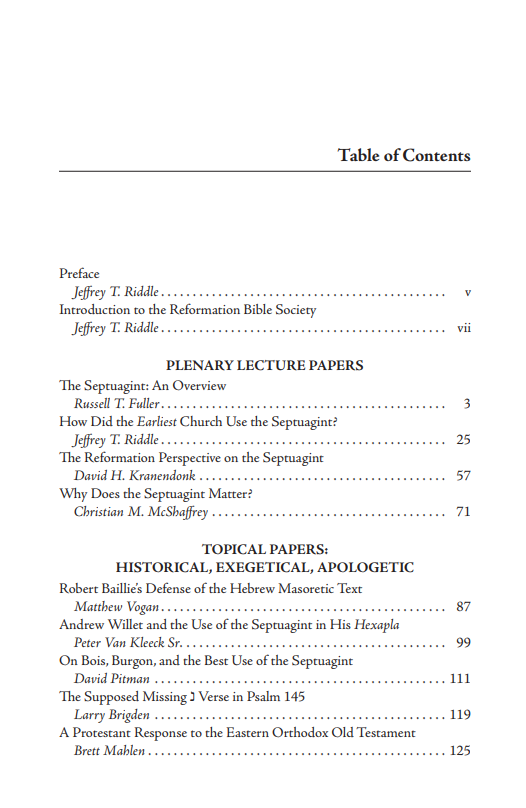
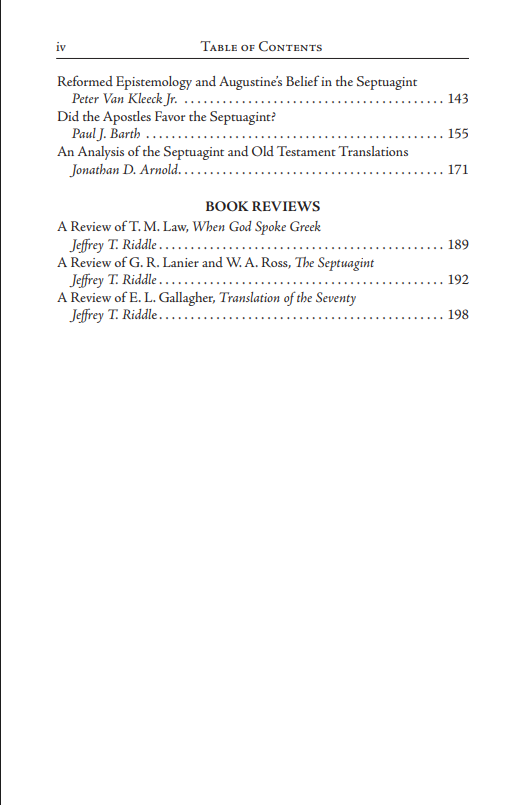
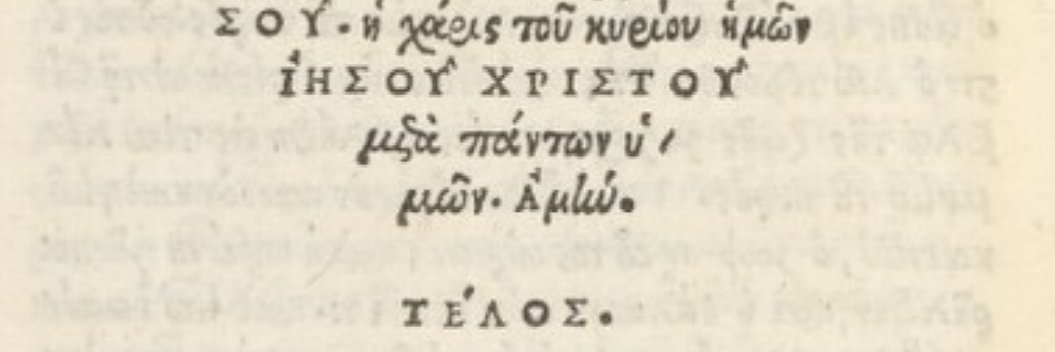
Reformation Bible Society Journal, Volume 1: The Reformation Text and the Septuagint (2025) is now available in e-book and paperback formats. Find ordering info here: reformationbiblesociety.org/journal/
Jeffrey T. Riddle tweet mediaJeffrey T. Riddle tweet mediaJeffrey T. Riddle tweet media
English
1
5
16
1.7K
Jeffrey T. Riddle
Jeffrey T. Riddle@Riddle1689·
Vision Devotional Article (3.20.26): Band of Brothers: Shakespeare’s Henry V includes a speech given by the king on St. Crispin’s Day just before his beleaguered and outnumbered English troops are about to go into a climactic battle against the French. He addresses them as, “We few, we happy few, we band of brothers.” The historian Stephen Ambrose would borrow words from this speech to title his 1992 book Band of Brothers about the experiences of the men of “Easy Company” from the 101st US Army Airborne in WW2. Long before Henry V, William Shakespeare, Easy Company and Stephen Ambrose, however, there was the apostle Paul and his letter to the saints at Philippi. In that letter, as Paul often did in his writings, he makes reference to the men who were his fellow laborers in the gospel. These were men who did not hold the value of their lives so highly that they were unwilling to lay them down for the cause of Christ and the gospel. Paul is recommending such men in Philippians 2:19-30. It is not the best-known passage in Philippians. It does not hold forth great Christological truths like the Christ Hymn in Philippians 2:5-11. It does not hold pithy and memorable verses like Philippians 1:21, “For me to live is Christ, and to die is gain” or Philippians 4:13, “I can do all things through Christ which strengtheneth me.” I suppose that few have taken a “life verse” from this passage! Paul makes reference here to two of his fellow workers, Timothy (vv. 19-23) and Epaphroditus (vv. 25-30), alongside a reference to himself (v. 24). The name Timothy means “one who honors God.” Timothy had a Jewish Christian mother (and even a Christian grandmother), but a pagan father (cf. Acts 16:1; 2 Tim 1:5). He had a good reputation among the disciples and joined Paul in his second missionary journey (Acts 16:2). In Philippians 2:20-22 Paul points to four admirable qualities held by Timothy. First, the apostle said he had no man who was so “like-minded” (v. 20a). The Greek term literally means “same spirited” or “same-souled.” Second, Paul says he knew no one who demonstrated a more natural or sincere care for the saints (v. 20b). Timothy was not a phony or a hypocrite, but a sincere minister. Third, Timothy did not seek his own things but the things of Christ (v. 21). Fourth, Timothy had a proven track record of service alongside the apostle “as a son with a father” (v. 22). The name Epaphroditus come from the Greek literally meaning “From Aphrodite” or “From Venus.” This indicates he was likely a Gentile. Perhaps his parents had prayed to the goddess Venus for a child, and when he arrived, they named him Epaphroditus. But at some point, he heard the gospel of the Lord Jesus Christ and became a servant not of any false god, but of the one true God. In Philippians 2:25 Paul notes several commendable qualities in this man. We’ll note just the first three. First, he calls him “my brother.” This means he was a genuine believer, a true brother in Christ. Second, Paul describes him as a “companion in labour.” This translates just one word in Greek: synergos. He was a “synergist” with the apostle in ministry. Third, he calls him a “fellowsoldier.” They were brothers in arms in spiritual warfare (cf. Eph 6:11-12). Think of these three men: Timothy, Paul and Epaphroditus. One, Timothy (“one who honors God”), had a pagan father and a Christian mother and grandmother. But he came to a point when he was called to follow Christ. One was Paul, a Hebrew of the Hebrews who had once persecuted Christians, but whose path dramatically changed after he encountered the risen Christ on the Damascus Road (Acts 9). One was Epaphroditus (“from Venus”) who came from a completely pagan household, but who became a brother, synergist, and fellowsoldier for Christ. All three of these men had at one time been enemies of Christ, with nothing in common to draw them into league with one another. Then Christ, the Word made flesh, by his death, burial, and resurrection made each of them his loyal subjects and then united them in faith to one another. As Paul wrote in Romans 5:10, “For if, when we were enemies, we were reconciled to God by the death of his Son, much more, being reconciled, we shall be saved by his life.” Christ our King delights in taking men who were strangers and turning them into a band of brothers who live to serve Him. For what do you live? To what cause have you joined yourself? Anything less than Christ and his kingdom will not satisfy. And with whom have you joined yourself? Do you stand alone or with a band of brothers in Christ’s church? Grace and peace, Pastor Jeff Riddle
Jeffrey T. Riddle tweet media
English
0
1
3
148
Jeffrey T. Riddle
Jeffrey T. Riddle@Riddle1689·
Seen on the beverage table at our church covered dish lunch last Sunday.
Jeffrey T. Riddle tweet media
English
0
0
9
227
Jeffrey T. Riddle
Jeffrey T. Riddle@Riddle1689·
"The Lord is full of compassion and mercy: long-suffering, and of great goodness." -Psalm 103:8, 1662 BCP, Day 20. Morning Prayer.
English
0
0
2
91
Jeffrey T. Riddle retweetledi
Pooyan Mehrshahi
Pooyan Mehrshahi@PooyanMehrshahi·
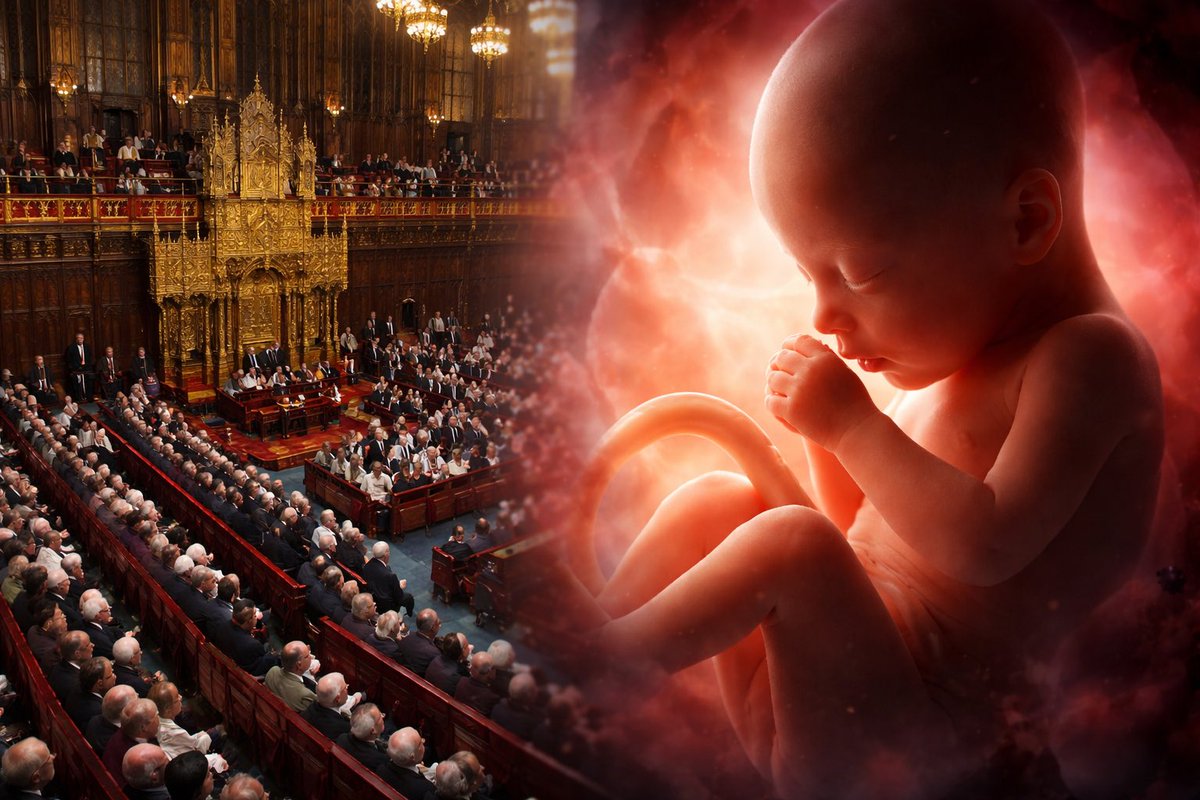
ABORT TILL BIRTH. What we see is not just decay, but God’s judgement, giving a nation over to blindness (Rom1:21–28). UK rulers are blind, and many church leaders with them (Mat15:14). Yet there is hope: Christ still saves. “Turn ye unto me… and I will turn unto you” (Zech1:3).
Pooyan Mehrshahi tweet media
English
0
3
8
166
Jeffrey T. Riddle
Jeffrey T. Riddle@Riddle1689·
In my role as Moderator of the Central Atlantic Reformed Baptist Association (CARBA), got to visit last evening a home midweek meeting at Providence RBC in Martinsburg, WVA, a new church planted last year, led by @L_Mace82 and @1689Dogmatician.
Jeffrey T. Riddle tweet mediaJeffrey T. Riddle tweet mediaJeffrey T. Riddle tweet mediaJeffrey T. Riddle tweet media
English
1
3
15
605
Jeffrey T. Riddle
Jeffrey T. Riddle@Riddle1689·
"Clouds and darkness are round about him: righteousness and judgement are the habitation of his seat." -Psalm 97:2, 1662 BCP, Day 19. Morning Prayer.
Jeffrey T. Riddle tweet media
English
0
0
5
121
Jeffrey T. Riddle
Jeffrey T. Riddle@Riddle1689·
It's not a "floating tradition." This is a modern myth. See Chris Keith's 2009 article "The Initial Location of the PA in Fourfold Tradition" in Novum Testamentum. He does not believe it is original (but I do!), still he dismantles the idea that it appeared anywhere else than its traditional location at John 7:53--8:11 until the 10th century.
English
0
0
0
8
Jared
Jared@jared_555·
@DanielRHyde @AdrielTweets I'm convinced it's Scripture, but I'm open to it being moved to its current place. What'd you think about that?
English
1
0
0
96
Adriel Sanchez
Adriel Sanchez@AdrielTweets·
You're preaching through the Gospel of John, and you come to the notorious pericope adulterae (7:53-8:11). Do you:
English
27
1
9
7K
Paul Flynn
Paul Flynn@PastorPaulFlynn·
@AdrielTweets God has preserved His Word, he has kept it pure in all ages. I reject a theory of Scripture that says Scripture has been corrupted that it has to be reconstructed from scratch by our generation. It has been received by the Church. I preached it, just like any part of Scripture.
English
3
1
2
170
Jeffrey T. Riddle
Jeffrey T. Riddle@Riddle1689·
Zanchi on why Paul so esteemed Epaphroditus (Phil 2:25-30): "It should be observed that the apostle did not celebrate Epaphroditus for his remarkable eloquence, his vast knowledge of philosophy, and so on.... Rather, it was for his great piety and love that Paul commended Epaphroditus, who made his life of no account for the work of the Lord. Paul wanted that sort of pastor in particular to be regarded as precious." -Commentary on Philippians, 441.
Jeffrey T. Riddle tweet media
English
0
3
16
633
Jeffrey T. Riddle
Jeffrey T. Riddle@Riddle1689·
"I will say unto the Lord, Thou art my hope, and my strong hold: my God, in him will I trust." -Psalm 91:2, 1662 BCP, Day 18. Morning Prayer.
English
0
0
2
116
Jeffrey T. Riddle
Jeffrey T. Riddle@Riddle1689·
Last five books or booklets read or listened to: 1. J. C. Ryle, Five English Reformers (Banner, 1999). 2. Wendell Berry, The World-Ending Fire: The Essential Wendell Berry (Counterpoint, 2017), via Audible. 3. John W. Wenham, Christ & the Bible (IVP, 1972). 4. Oliver Allmand-Smith, Gathered for Glory: Why We Worship (Broken Wharfe, 2025). 5. J. C. Ryle, Simplicity in Preaching (Banner, 2010).
English
1
1
16
1.2K
Jeffrey T. Riddle
Jeffrey T. Riddle@Riddle1689·
Zanchi on Paul's brotherly affection and sympathy for Epaphroditus (Phil 2:25-30): "We should observe that God does not approve of Stoic apathy but Christian sympathy. Although Paul was constantly putting up with prison and chains, nevertheless, we should not imagine that it never caused him to feel any sorrow. For, what virtue would that have been? Rather, the reason that constancy in misery is a virtue and pleasing to God is because, whatever sorrows we experience, we bear them with a steadfast heart for Christ's sake and offer our misery to God as a sacrifice.... Stoic apathy, then, is foreign to Christian piety and love. Sympathy, however, is a true mark of love." -Commentary on Philippians, 435.
Jeffrey T. Riddle tweet media
English
0
0
3
187
Jeffrey T. Riddle
Jeffrey T. Riddle@Riddle1689·
"All nations whom thou hast made shall come and worship thee, O Lord: and shall glorify thy Name." -Psalm 86:9, 1662 BCP, Day 17. Morning Prayer.
English
0
0
3
121
Jeffrey T. Riddle retweetledi
GribbenC 🇫🇴
GribbenC 🇫🇴@GribbenC·
Happy St Patrick’s day from the top of Slemish
GribbenC 🇫🇴 tweet media
English
1
6
35
647
Jeffrey T. Riddle
Jeffrey T. Riddle@Riddle1689·
Zanchi's two observations on the grave illness of Epaphroditus (Phil 2:25-30): "First, God permits even the most holy of men to suffer serious illnesses--indeed, often ministers--as a consequence of their labors in the Lord's work. Teachers and ministers of the Word experience stress and sleepless nights and various troubles, which they are forced to absorb.... And thus for someone to enjoy good and robust health is a singular gift of God." "Second, we must observe as well how wrong-headed is the judgement of those who draw an improper and perverse conclusion about the doctrine and salvation of certain distinguished men and teachers of the church because, at times, they are chronically ill..... Certainly Epaphroditus was beloved by God, and his doctrine was truly apostolic. Nevertheless, he nearly died of his illness." -Commentary on Philippians, 432.
Jeffrey T. Riddle tweet media
English
0
1
10
242
Jeffrey T. Riddle
Jeffrey T. Riddle@Riddle1689·
"I am the Lord thy God, who brought thee out of the land of Egypt: open thy mouth wide, and I shall fill it." -Psalm 81:11, 1662 BCP, Day 16. Morning Prayer.
English
0
0
5
130