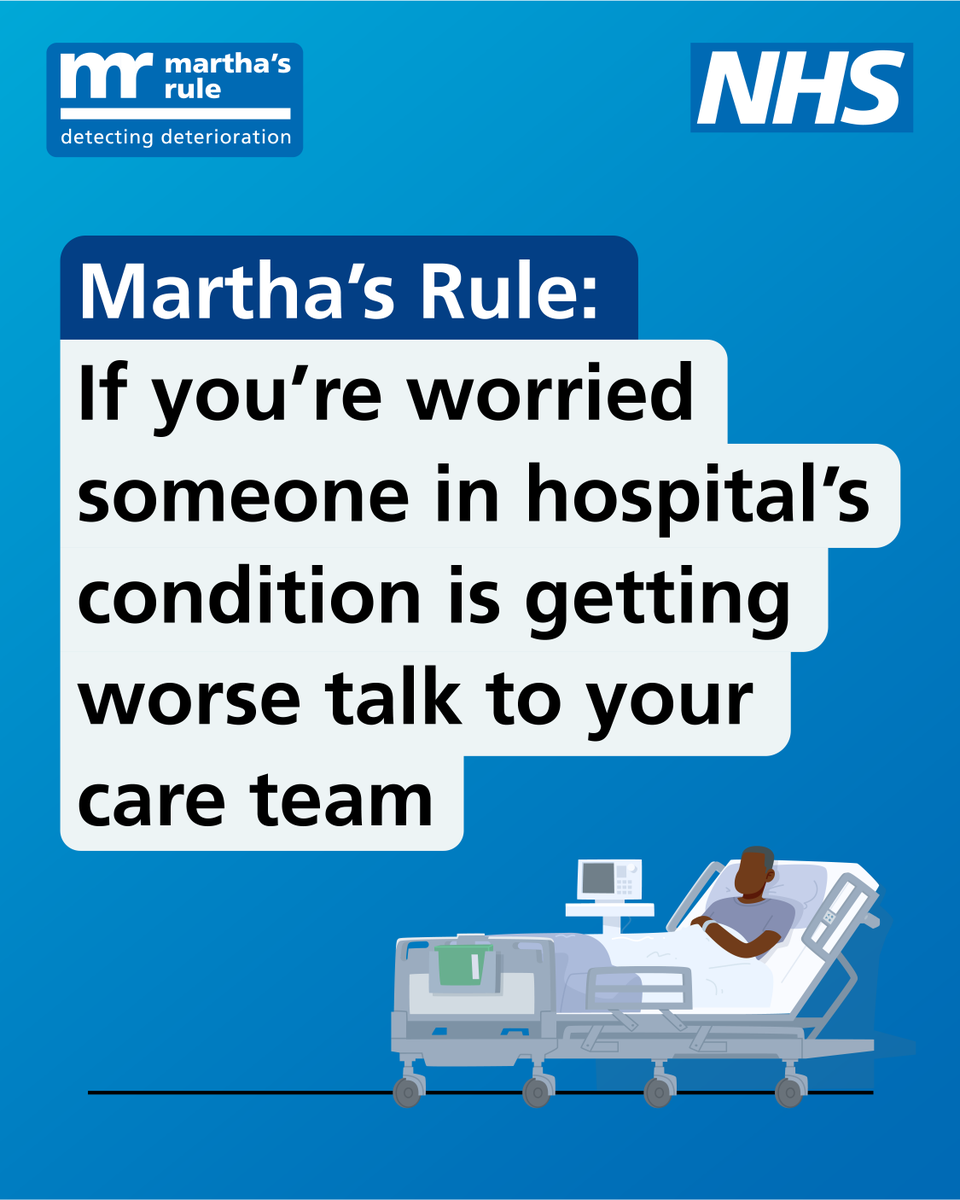
More than 10,000 calls have been made to Martha’s Rule helplines in the first 16 months of the scheme. Martha’s Rule gives patients and families the right to call for a rapid review if they’re worried their or a loved one’s condition is getting worse.
➡️ england.nhs.uk/2026/03/over-1…
This Sunday we celebrate the incredible women in the families we support and the dedicated women in our team 🧡 Your strength builds stronger families and brighter futures.
#InternationalWomensDay#BrighterFutures
We're delighted to share that one of our midwives , Josephine Lane, has won a national award for her outstanding contribution to perinatal mental health. Read more here bit.ly/4qAWZWn
⏳ One week left to respond to our standards of education and training consultation, closing Monday 16 February 2026.
✅ Find out more information on our website and respond to the consultation by filling in the survey 👉 hcpc-uk.org/sets-consultat…#myHCPCstandards#SETsConsultation
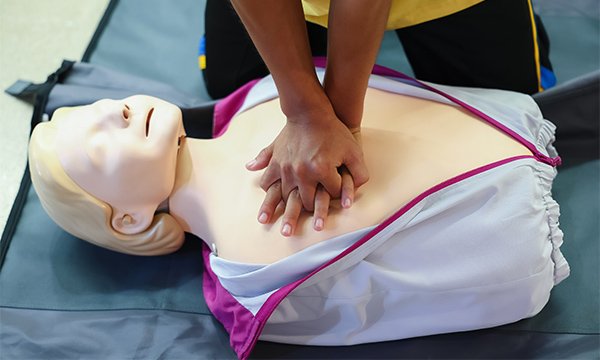
Resuscitation Council UK has published an update of its resuscitation guidelines, which are updated every five years.
We review the key changes for nursing practice, whether you’re care for adults, children or neonates.
rcni.com/nursing-standa…
⚠️ Burkholderia found in certain wipes.
#Burkholderia is a bacteria that rarely causes harm in healthy people but sometimes causes serious infections, particularly for those with certain medical conditions or managing IV lines at home:
gov.uk/government/new…
Following our recent consultation, we’ve updated our sanctions policy.
Now available on our website:
✅ Consultation documentation
✅ Details of the changes
✅ The updated sanctions policy
📅 Effective 2 March 2026
View the updates 👉 hcpc-uk.org/revised-sancti…
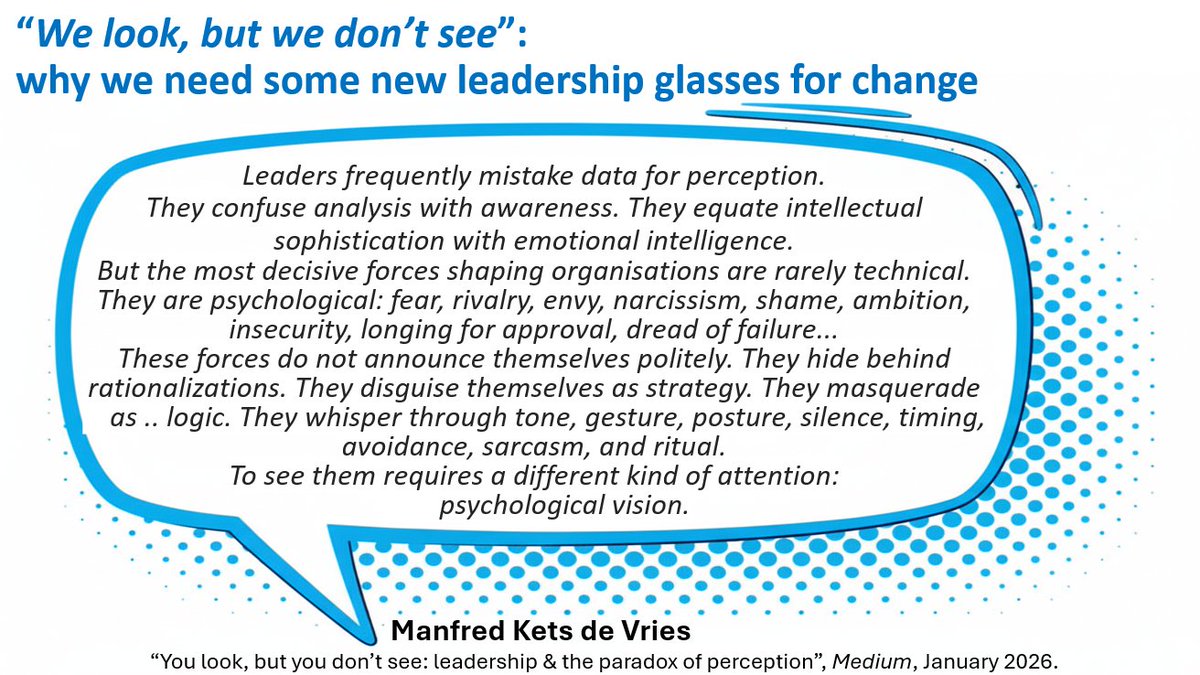
Most change initiatives don’t fail in the plan - they fail in what leaders don’t notice.
I want to reflect on a new Manfred Kets de Vries article: “You look, but you don’t see: leadership & the paradox of perception,” for leaders of change.
It reinforces that change initiatives are rarely governed by the “visible layer” (methods, metrics, milestones, RAG, governance, etc). These may appear “under control” while the most decisive forces remain under the surface: anxiety, fear, grief, resentment, rivalry, shame. What is labelled “resistance” may be self-protection; “alignment” may be passive compliance; “clarity” may be premature closure. Leading change is not only about implementing the plan but reading the emotional system the plan is landing in.
The article’s core idea is that “seeing” is an active leadership discipline, needing patience & humility. Change is less likely to be derailed by technical error than by psychological blindness: familiarity is mistaken for understanding, data for perception & analysis for awareness.
Curiosity must override certainty. Certainty is seductive, signalling competence, control & momentum. It also shuts down sense-making, especially if people are anxious. Curiosity keeps leaders open to contradiction & surprise. It reframes “what’s going wrong?” into “what’s being protected here?” & slows premature action.
We should use ourselves as instruments of "seeing": noticing what others evoke in us & treating it as data rather than noise. Feeling bored, confused, irritated or anxious in a meeting can be data about what’s happening relationally (avoidance, unspoken conflict, dependency, power etc).
How can leaders of change put on leadership glasses & see more clearly?
1) Build regular reflection time into change efforts (e.g., before key decisions & after difficult meetings) so we can notice patterns rather than just react.
2) Ask, “What emotion is driving this?” & “What might people be protecting?” to look beyond stated positions.
3) Use our own reactions as data: treat our feelings as signals to explore what’s happening in the relationship or group before pushing ahead.
4) Replace certainty with curiosity by framing early conclusions as “working theories,” then test them with questions like “What doesn’t fit?” & “What else could be true?”
5) Practise humility out loud: admit what we don’t know yet, invite challenge & revise our view openly so the system learns that learning is safe during change.
Too often, we look but we don’t see. “Seeing” means practising an enhanced kind of leadership: paying attention to human dynamics beneath surface data; making space for what doesn’t fit; holding tensions, contradictions & uncertainties & staying open to the unexpected. What becomes visible to those who practise “seeing” often determines whether change becomes movement rather than just motion.
The article in @Medium: @manfred.ketsdevries_62226/you-look-but-you-dont-see-leadership-and-the-paradox-of-perception-6d36b64966ba" target="_blank" rel="nofollow noopener">medium.com/@manfred.ketsd….
Levels of child poverty in the UK are at their highest since 2002, with around 4.5 million children in poverty.
Child poverty is toxic to health and wellbeing—coordinated action and binding targets are needed, say David Taylor-Robinson and @ProfKEPickettbmj.com/content/392/bm…
In England, nearly two women die a day from cervical cancer. Don’t ignore your cervical screening invite.
If you missed your last one, book an appointment with your GP practice today. Cervical screening saves lives. nhs.uk/cervicalscreen…
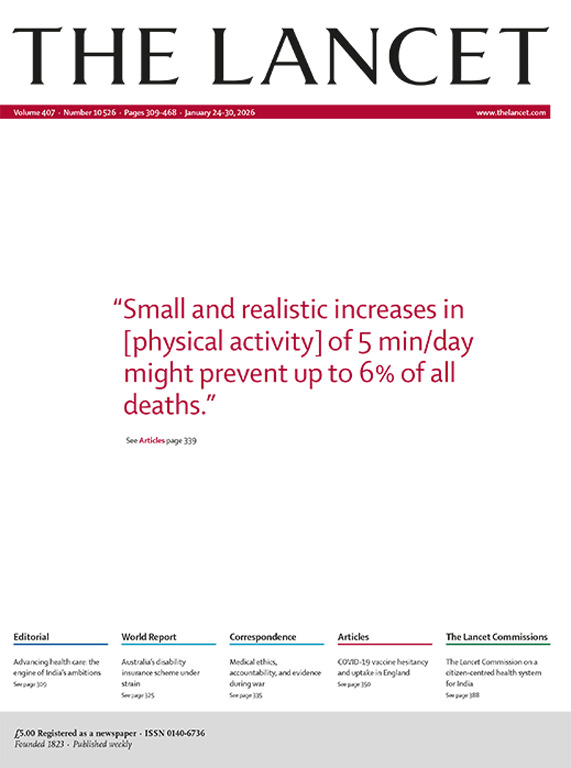
Can small changes in physical activity make a major difference?
On the cover, a meta-analysis suggests that 5 extra minutes of moderate physical activity a day is associated with a reduction of up to 6% of all deaths in the least active adults.
Read this & more 👉 spkl.io/6010AUxdw
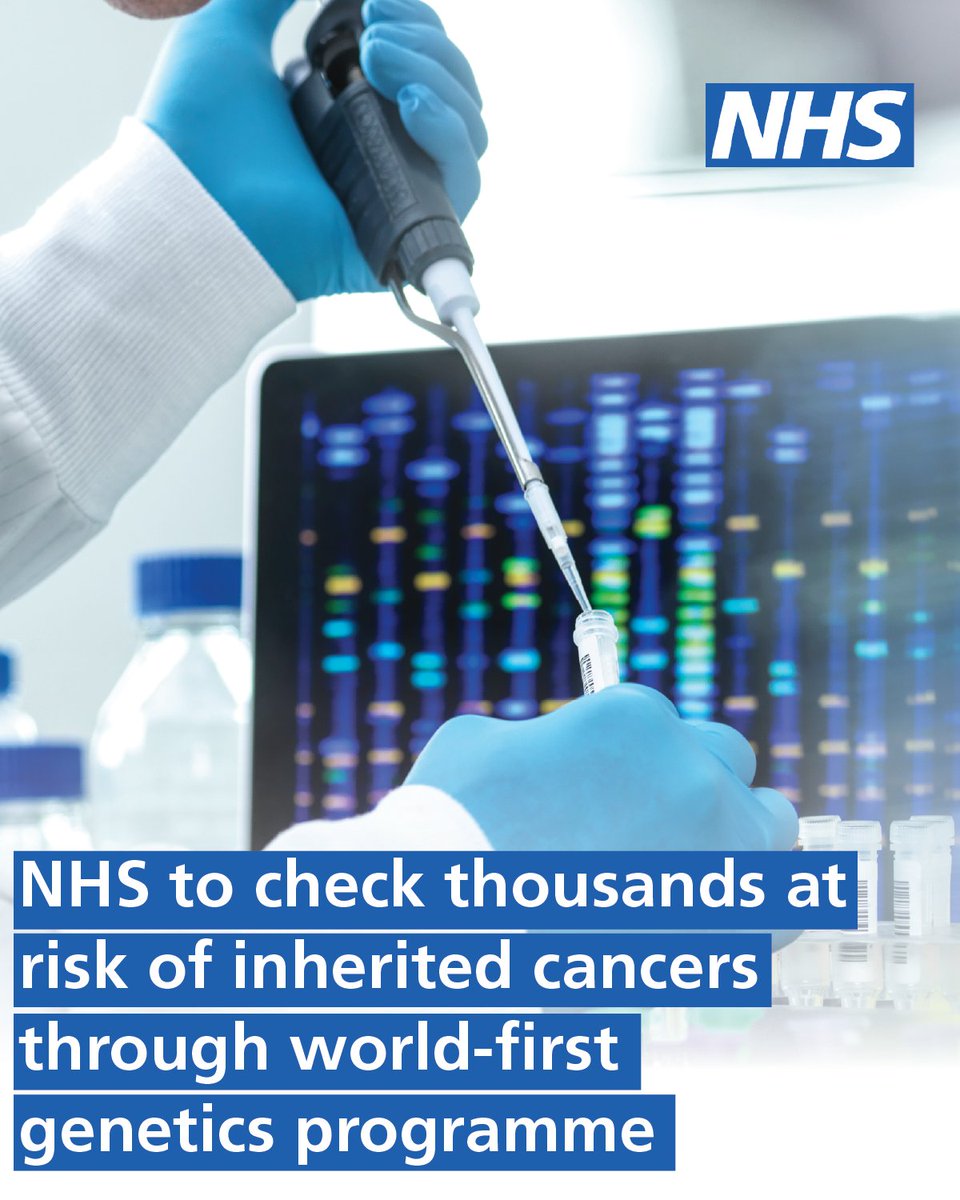
Thousands of people at higher risk of developing cancer due to inherited faulty genes will be regularly checked by the NHS, thanks to a first-of-its-kind national genetics programme.
Read more ⬇️
england.nhs.uk/2026/01/thousa…
"When you have senior doctors making decisions at the front door of hospitals, they order fewer investigations and admit fewer patients."
Helen Salisbury reflects on the importance of whole system thinking
bmj.com/content/392/bm…
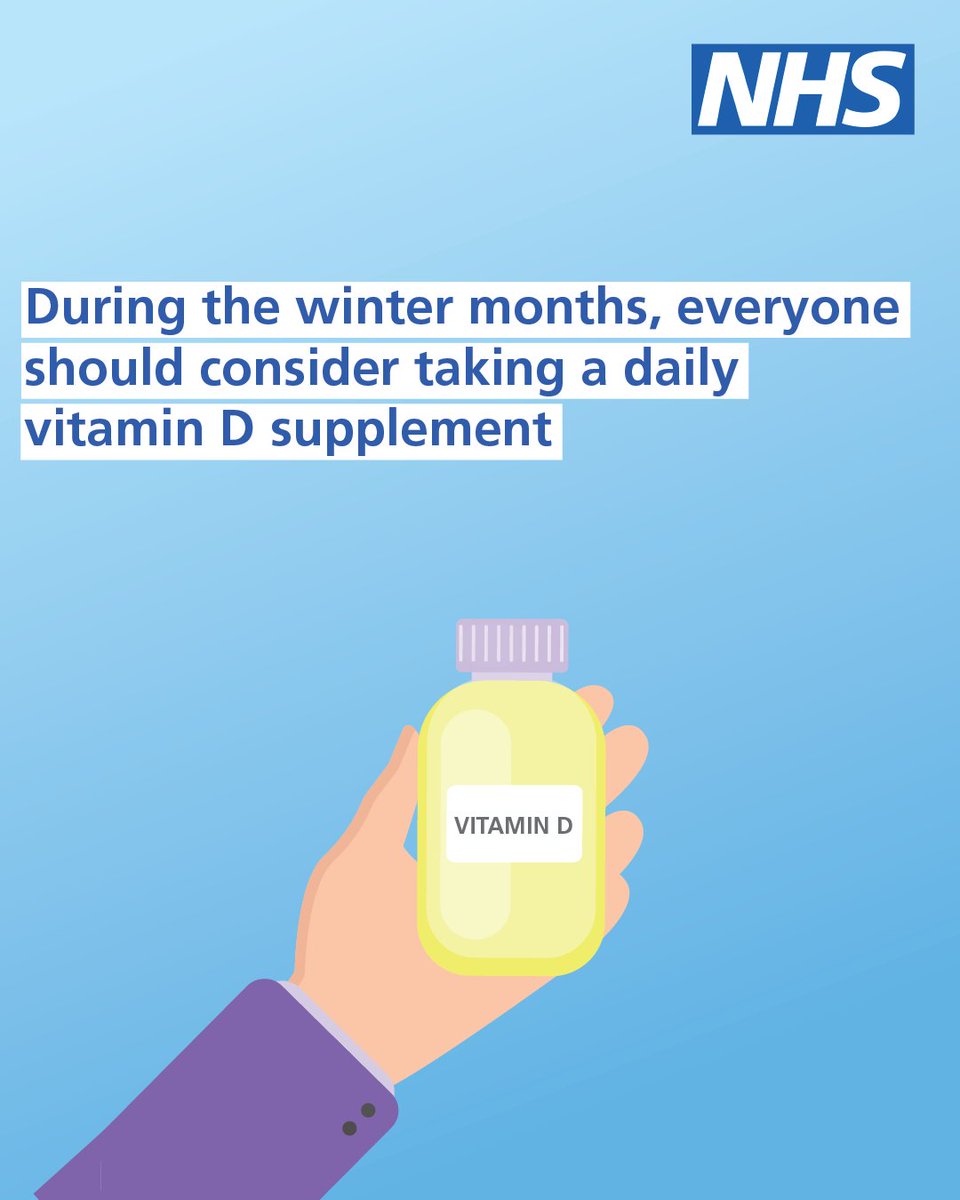
From October to March we can’t make enough vitamin D from sunlight, so to keep bones and muscles healthy, it’s best to take a daily 10 microgram supplement of vitamin D. You can get vitamin D from most pharmacies and retailers.
➡️ nhs.uk/conditions/vit…
Just five extra minutes of brisk walking or other moderate intensity exercise each day could prevent up to 10% of premature deaths and 6% of deaths in the least active groups, new data indicate
bmj.com/content/392/bm…
Older adults with frailty face challenges in planning future care. This qualitative interview study in Japan shows that readiness for advance care planning (ACP) is shaped by individual, relational, systemic and societal factors, highlighting the need for a system-based approach