Nina Rosella Strange

1.4K posts

Nina Rosella Strange banner
Nina Rosella Strange

Nina Rosella Strange

@RosellaStrang

Cottage Squirrels (collecting acorns from the market tree) Web Designer, Fiber Arts, Painting, Permaculture, Nature Loving, Minimalist and Holistic.

Katılım Şubat 2025
114 Takip Edilen235 Takipçiler
Nina Rosella Strange
Nina Rosella Strange@RosellaStrang·
@theshanview @MarioNawfal A lot right now is running on options and short covering. Market isn't pricing in hardly anything on the level of reality yet. It's looking to me like they are trapping retail at resistance levels.
English
1
0
1
6
shanz
shanz@theshanview·
@RosellaStrang @MarioNawfal brought wti US oil from 105 to below $100 with these headlines today.. one news comes always before the markets open.. one for asian session and one for USA session
English
1
0
0
96
shanz
shanz@theshanview·
@MarioNawfal this news headline screams : MARKET MANIPULATION
English
2
0
39
2.1K
Nina Rosella Strange
Nina Rosella Strange@RosellaStrang·
@ChartGuys Sadly unavoidable in this sector. I appreciate your analysis. I love the sector but it is trading after all. I do think it will eventually have its day. I’m waiting. In the meantime it’s still the market and folks need to trade wisely.
English
0
0
1
85
TheChartGuys
TheChartGuys@ChartGuys·
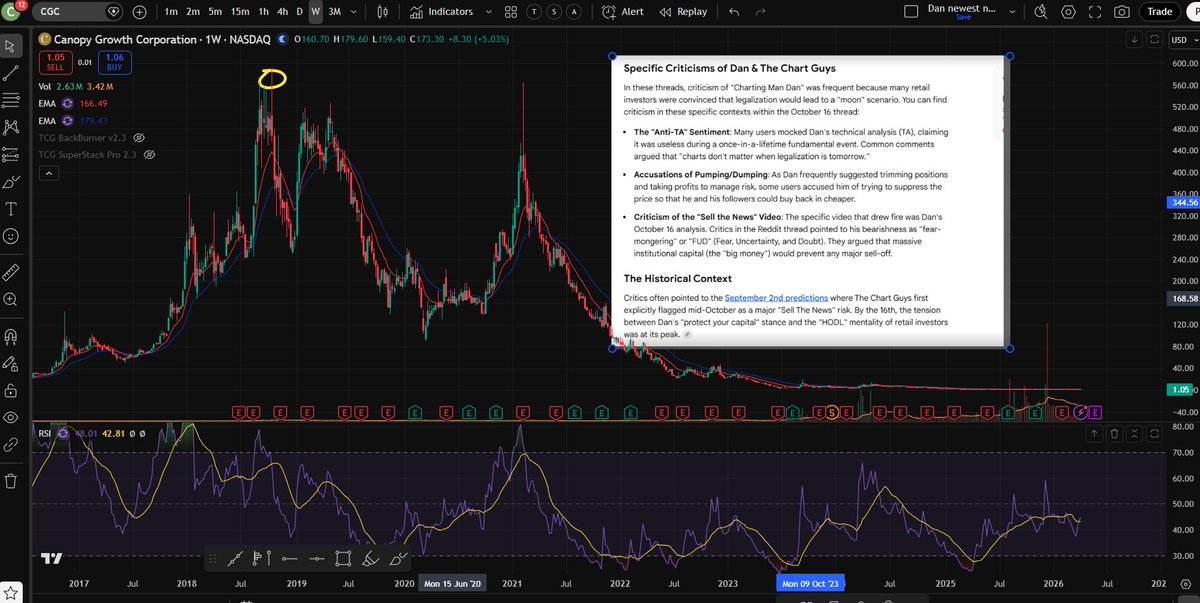
Someone asked why so many people on reddit dont like me or The Chart Guys... There is a history and it all begins with the Cannabis Sector. You'd think being this dead on correct and contrarian to the herd would earn people's respect but it only led to more hate. $CGC $MSOS
TheChartGuys tweet media
English
24
4
105
7.8K
JP Sears
JP Sears@AwakenWithJP·
@MarioNawfal Nazis are the only ones that don’t pay. Bastards.
English
45
42
1.8K
16.9K
Mario Nawfal
Mario Nawfal@MarioNawfal·
You criticize Iran, you’re paid by Mossad You criticize Israel, you’re paid by Qatar You criticize Ukraine, you’re paid by Russia You criticize Russia, you’re paid by the EU You criticize the right, you’re paid by Soros You criticize the left, you’re a Nazi What did I miss?
English
1.3K
403
3.5K
273.4K
Nina Rosella Strange
Nina Rosella Strange@RosellaStrang·
$MSOS $SPY today’s little pump in the market is not going to hold. Expecting next few weeks to continue the coaster ride. We are in a much bigger situation than what the market is pricing in. Private credit is still an issue -
Mario Nawfal@MarioNawfal

🚨🇮🇷 Iran is attempting something no country has ever done: charge a toll on international waters... The Strait of Hormuz has operated under the UN Convention on the Law of the Sea, which guarantees "transit passage" through international straits. No fees. No permission needed. That has been the rule since the convention was adopted in 1982, and informally for centuries before that. Iran is trying to rewrite that overnight. Reports say Tehran has been using Larak Island as a tolling stop, charging up to $2 million per vessel. At pre-war traffic of 138 ships per day, that would generate over $100 billion annually. Even at the current trickle of 6-12 ships per day, the revenue adds up fast. But here's where the narrative gets complicated. Shipping insider Ed Finley-Richardson argues the "toll booth" story is largely overstated. His point is simple: the IRGC is an OFAC-sanctioned terrorist organization. Any compliant, insured Western-linked shipping company that sends money to them risks frozen bank accounts, secondary sanctions, and blacklisting. The entire industry runs on strict compliance. Legitimate tanker operators aren't casually wiring millions to sanctioned entities. The ships that may be paying are the shadow fleet vessels already in Iran's orbit, not the mainstream companies that move the bulk of global trade. For those compliant operators, the Strait remains effectively closed regardless of any toll arrangement because paying it would destroy their business. Iran told mediators it would limit crossings to about 12 ships per day. Before the war, over 100 crossed daily. So even under the best case, Tehran is throttling 88% of normal traffic while trying to monetize what's left. The reality on the water: 800+ ships still stranded. Six made it through today. The toll system may exist for sanctioned vessels but the compliant fleet that actually moves global oil is still anchored and waiting. Source: @MarineTraffic , WSJ, @ed_fin

English
0
0
0
576
Nina Rosella Strange
Nina Rosella Strange@RosellaStrang·
$SPY $MSOS we will pay for this. It will come out of all of our pockets when the impact hits us fully. This hurts small businesses especially. Lord have mercy.
Mario Nawfal@MarioNawfal

🇺🇸🇮🇷 THE DOOMSDAY SCENARIO DIDN’T DISAPPEAR, IT’S JUST WAITING AT HORMUZ. Everyone is acting weirdly relieved. Oil hasn't exploded to $150 a barrel, the global economy has not fallen straight into recession, therefore, apparently, crisis over. That is the kind of logic people use right before the second disaster. Because the doomsday scenario was never just “oil spikes, everyone panics, fade to black.” It was always more slippery than that. Less Hollywood fireball, more slow-motion strangulation. And right now, the ingredients are still sitting on the counter: a ceasefire that has already failed the basic test of being a ceasefire, a shipping artery that is not functioning normally, insurers and shipowners making it up as they go along, and world leaders trying to sell a pause as though it were peace. The market, in other words, is being asked to clap because the building is not yet fully on fire. For the global economy to relax, the Strait of Hormuz has to be open in more than the theoretical sense. Not “technically some vessels may pass.” Not “perhaps under a murky toll arrangement nobody understands.” Open means predictable, lawful, insurable, routine. Open means the world’s energy system is not being run like a hostage negotiation, and that's not where we are. What we have instead is the economic equivalent of someone saying, “Good news, the heart is still beating,” while conveniently skipping over the fact that several major arteries are now subject to extortion, improvisation, and regional brinkmanship. If the normal flow through Hormuz is disrupted for long enough, this does not remain a trader’s problem, it becomes everyone’s problem. First fuel, then freight, then airfares, then fertilizer, then food. Central banks get dragged back into inflation-fighting mode just when they were hoping to inch toward relief. What looked like a contained Middle East crisis starts turning up in grocery bills, debt costs, farm decisions, and public rage. That's how doomsday arrives in the real world. And yet the political class keeps trying to sell this as manageable. Trump, in particular, looks like a man who wants credit for stepping back from the abyss while still threatening to revisit it later, which is a bit like congratulating yourself for not driving off a cliff after already putting two wheels over the edge. His problem now is that the politics are turning sour. The public has a funny habit of losing interest in grand strategy the moment it takes a big bite out of their wallets. That matters because the bluff is getting harder to sustain. Meanwhile, the Gulf states are discovering, in real time, the downside of building prosperity atop a chokepoint that can be weaponized. Even if the shooting slows, they do not get to unsee what just happened. Their vulnerability has been exposed, their assumptions about protection have been badly shaken, and their long-term response is almost guaranteed: more arms, more infrastructure, more bypass routes. But those fixes take years, and the danger is now. Pipelines aren't built by wishful thinking, and even where alternatives exist, they are costlier, slower, and often pointed in the wrong direction for the trade patterns that actually matter. And then there is the idea that because oil has not yet hit the absolute nightmare number, the nightmare has somehow been defeated. The more plausible disaster is a dragged-out one: partial disruption, higher energy costs, shaken investment, strategic uncertainty, rising insurance premiums, more expensive transport, more pressure on indebted governments, and a long tail of inflation that central banks can't easily contain.

English
0
0
0
710
Mario Nawfal
Mario Nawfal@MarioNawfal·
The next 48 hours will determine if Trump controls Netanyahu, or if Netanyahu controls Trump My bet is on the former
English
883
1.1K
9.6K
290.2K
Nina Rosella Strange
Nina Rosella Strange@RosellaStrang·
Things are just bad - and when Jesus returns, all I have to say is “you globalists are in big trouble”.
English
0
0
0
37
Nina Rosella Strange
Nina Rosella Strange@RosellaStrang·
@BrianWehrley Whatever. I am doing fine in my trading and investing. I have plenty of screen shots and time stamps of what’s going on. Anyone with simple observation sees the grift. Many are sick of it. Tom treats people like crap and lacks accountability. He knows what he’s doing
English
1
0
1
25
Bird
Bird@BrianWehrley·
@RosellaStrang Lots of people have thought that but I've followed MM for years and have found that it's mostly investor anger at their own folly that is to blame and not anything that Tom is doing
English
1
0
0
64
Nina Rosella Strange
Nina Rosella Strange@RosellaStrang·
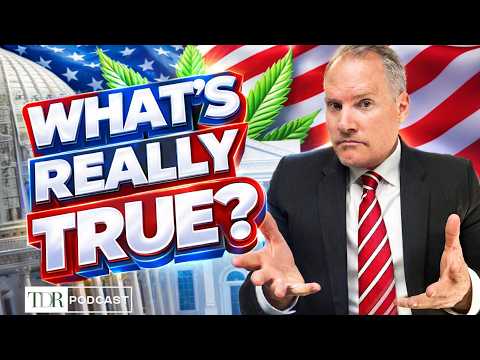
$MSOS IMO Marijuana Moment has repeatedly put out headlines that imply negative news to be picked up by algos and hurts cannabis stock. Follow other more reliable sources youtu.be/wF8QTSTZ7hQ?si…
YouTube video
YouTube
English
4
3
43
2.6K