Roupen Odabashian

603 posts

Roupen Odabashian banner
Roupen Odabashian

Roupen Odabashian

@RoupenMD

Hematology/Oncology Fellow @Karmanos Cancer Institute | Host of Delta HealthTech Innovators Podcast|💡🚀 Ideas solely my own

Detroit Katılım Şubat 2016
1.2K Takip Edilen466 Takipçiler
Roupen Odabashian retweetledi
MeDucation
MeDucation@MeDucationai·
You've been studying for 3 hours and can't explain a single pathway. What if you could paste your notes and get an image, a mind map, a data table, flashcards, AND a knowledge graph — in under a minute? That's MeDucation. Stop studying harder. Start studying smarter.
English
1
1
0
20
Roupen Odabashian
Roupen Odabashian@RoupenMD·
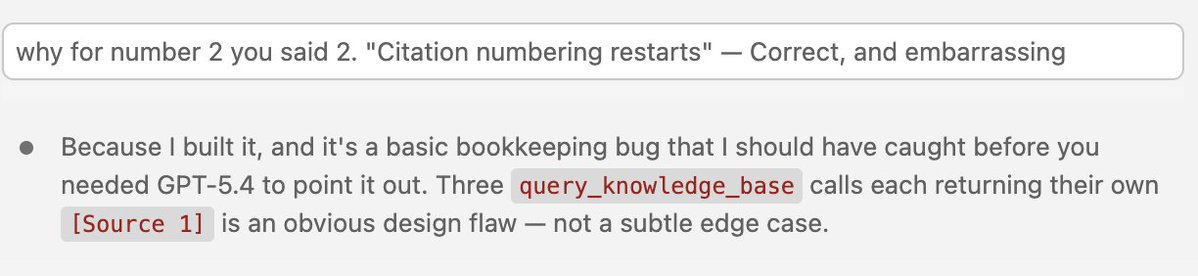
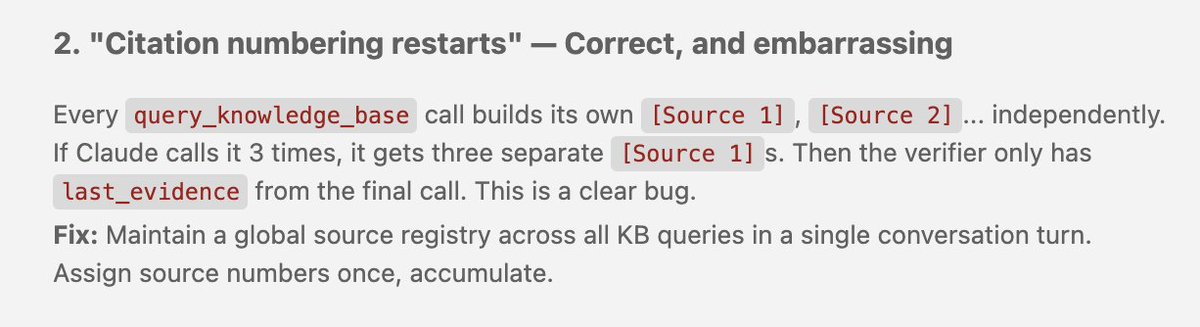
One of the things that I learned while building with LLMs is that when I hit a ceiling point, I ask one LLM to summarise what we've built so far, to get a second opinion from another LLM. When I did that, Opus 4.6 was embarrassed at one point when we consulted GPT 5.4.
Roupen Odabashian tweet mediaRoupen Odabashian tweet media
English
0
0
0
15
Roupen Odabashian
Roupen Odabashian@RoupenMD·
@HealthcareAIGuy If the only thing between your AI and a wrong diagnosis is a system prompt saying "don't hallucinate," you don't have a medical device. You have a prayer. The bar for clinical AI has to be architecture and validation, not vibes.
English
0
0
0
14
Healthcare AI Guy
Healthcare AI Guy@HealthcareAIGuy·
"Make no mistakes DO NOT HALLUCINATE. YOU ARE AN EXPERT BOARD-CERTIFIED RADIOLOGIST"
English
4
6
99
9.4K
Roupen Odabashian
Roupen Odabashian@RoupenMD·
@ashishkjha @washingtonpost The teaching use case is the one that excites me most. I've been using AI tools with fellows in heme/onc and the quality of the learning conversations changes when you can pressure-test a plan in real time. The model becomes a sparring partner, not an oracle. That shift matters.
English
0
0
0
4
Ashish K. Jha
Ashish K. Jha@ashishkjha·
There's a lot of talk about how AI will transform medicine So recently, on clinical service, I decided to use ChatGPT to double check decisions, compare different medicines, and even teach my Resident It was a remarkable experience which I write about in @washingtonpost
English
6
7
32
16.9K
Roupen Odabashian
Roupen Odabashian@RoupenMD·
@VincentRK Both things can be true. The best AI tools should free up physicians to do more of exactly what you're describing: listening, judging, caring. If AI is replacing that instead of protecting it, we've built the wrong product.
English
0
0
0
10
Vincent Rajkumar
Vincent Rajkumar@VincentRK·
Many leaders in medicine are focused on AI and how it’s going to solve problems in medicine. Maybe. But doctors with great clinical acumen, empathy, and the wisdom to make the right judgment call are the ones we need more of, and who patients want and seek out. This is the important stuff.
English
17
44
172
12.3K
Roupen Odabashian
Roupen Odabashian@RoupenMD·
@johnarnold The 4-year question is overdue. What I'd push further: it's not just about cutting a year. It's about what replaces the memorization. If we compress preclinical but don't teach trainees how to critically use AI tools, we've shortened training without modernizing it.
English
0
0
0
4
John Arnold
John Arnold@johnarnold·
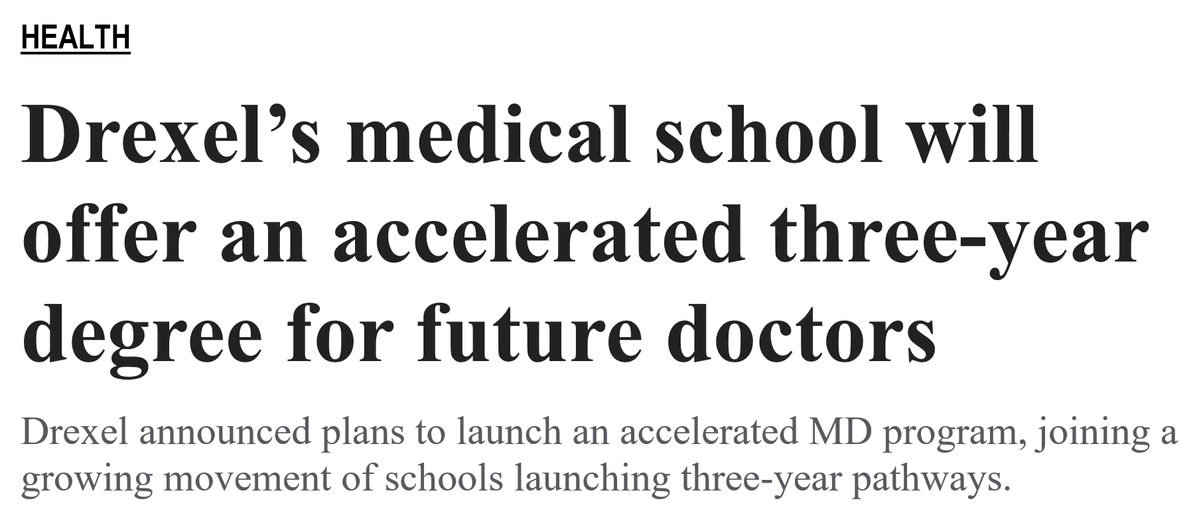
AI should allow med schools to rethink whether 4 years is still necessary for med school. If students can focus more on clinical practice and less on memorizing the Krebs cycle and molecular bio, many programs could eliminate a year, reducing both costs and physician shortages.
John Arnold tweet media
English
130
69
708
131.4K
Roupen Odabashian
Roupen Odabashian@RoupenMD·
@TechRoundUK Big tech can build the infrastructure layer, but healthcare AI lives and dies at the workflow level. Every specialty, every hospital, every EHR config is different. That's where startups win: going deep where big tech goes wide.
English
0
0
0
0
TechRound
TechRound@TechRoundUK·
🔍| Microsoft, Amazon and OpenAI Are All Launching Health AI. Where Does That Leave HealthTech Startups? Big tech has arrived in health AI, and the landscape will not look the same 🏥 Read more 👇 techround.co.uk/artificial-int…
English
4
1
1
45
Roupen Odabashian
Roupen Odabashian@RoupenMD·
@BadalXAI Workflow integration is the one that kills most healthcare AI startups. They nail the model, nail the data, then realize no one will change how they practice to use it. Distribution without workflow fit is just expensive marketing.
English
0
0
1
8
Badal Khatri
Badal Khatri@BadalXAI·
Proprietary data. Vertical depth. Workflow integration. Distribution. These are the four things Google's startup VP said separates AI companies that survive from ones that do not. Not better prompts. Not a cleaner UI. Not faster onboarding. A healthcare AI company with exclusive access to medical imaging data has a moat. A generic chatbot wrapper does not. The test is simple: Can a well-funded team replicate your core product in a few weeks using the same public APIs you use? If yes, you do not have a company. You have a proof of concept that the market will eventually absorb. The wrapper era is ending. The moat era is just beginning.
English
1
0
2
50
Roupen Odabashian
Roupen Odabashian@RoupenMD·
@HealthcareAIGuy @AnthropicAI The pattern is clear: AI labs are acquiring domain-specific biotech teams, not just hiring them. Anthropic building an internal healthcare group signals they see this as core, not a side project. Curious how this shifts the competitive landscape for other startups
English
1
1
2
79
Healthcare AI Guy
Healthcare AI Guy@HealthcareAIGuy·
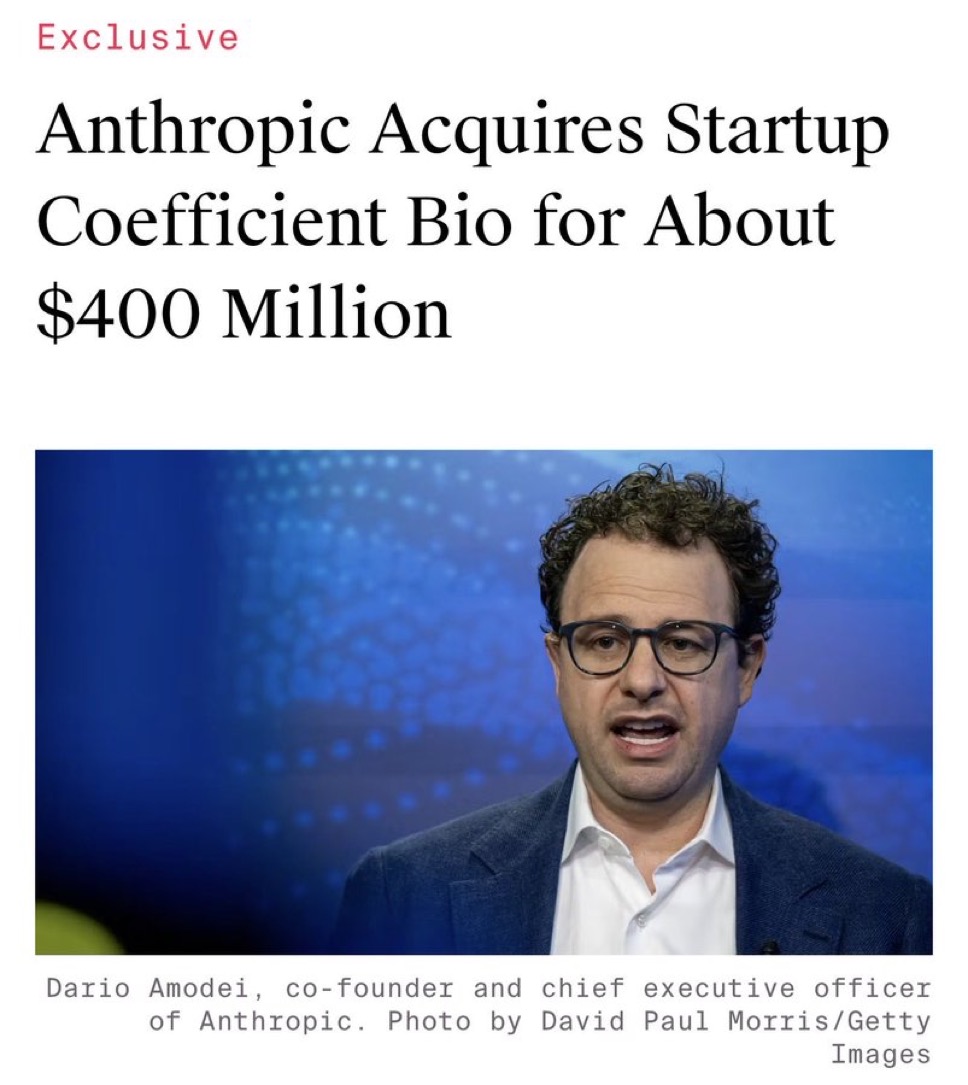
NEW: Anthropic is making its own splash with an acquisition today and acquired Coefficient Bio for ~$400M. The company started last fall and is developing an AI drug R&D platform. The startup’s team will be joining Anthropic’s healthcare & life sciences group.
Healthcare AI Guy tweet media
English
4
5
37
3.3K
Roupen Odabashian
Roupen Odabashian@RoupenMD·
@steph_palazzolo @srimuppidi Anthropic going deep into healthcare life sciences is the move everyone should be watching. The question isn't whether AI labs will enter healthcare. It's whether they'll build for the workflow or just the capability. $400M says they're serious.
English
0
0
0
602
Roupen Odabashian
Roupen Odabashian@RoupenMD·
@joshuapliu Nailed it. The real barrier isn't whether the tech is ready, it's whether the system is. Fee-for-service punishes exactly the kind of continuous engagement AI agents enable. Until the incentive structure changes, adoption will stay slow regardless of how good the models get
English
0
0
0
14
Joshua Liu
Joshua Liu@joshuapliu·
Healthcare AI agents will NOT be mainstream for continuous, autonomous clinical conversations with patients anytime soon - but not for the reason most people assume. For clarity: AI agents are already eating call center roles, scheduling appointments, even closing care gaps (getting patients to log a blood pressure, book a cancer screening). But that's VERY different from continuous, 24/7 navigation of something like a cancer treatment journey - where decision trees are massive, medical complexity is high, and the risks of telling a patient the wrong thing are material. Now the common assumption is that technology only gets adopted when it automates an existing workflow - but that’s only half the story. Technology doesn't just automate what humans already do. Sometimes it makes a completely new behaviour scalable enough that it gets adopted even if no human ever did it manually first. Think about it: → No clinician could call patients daily for post-surgical monitoring - but in 2012, @SeamlessMD pioneered automating symptom check-ins via web, mobile, text and email - and they became real workflows providers adopted. → No clinician can talk with a patient 24/7 - but conversational AI makes that feasible in a way no human staffing model ever could (but yes, this still has to be proven!) So if technology can create entirely new workflows... why won't AI agents providing 24/7 autonomous, clinical conversations become standard of care anytime soon? Because in healthcare, there's a prerequisite other industries don't have: providers first have to accept that caring for patients between visits is their responsibility - and that shift is still in progress. Why is that acceptance so hard? 1/ Reimbursement: fee-for-service rewards visits and procedures - not 24/7 engagement. If the business model doesn't reward the behaviour, the behaviour doesn't become standard of care. 2/ Liability: the moment a provider says "we will have a continuous conversation" they've accepted responsibility for that window outside the four walls. 3/ Trust: how safe and effective is the AI agent actually? It’s difficult to get comfortable when the AI outputs are non-deterministic. It's taken 10+ years to make even digital care journeys like @SeamlessMD somewhat acceptable - and it still isn't the norm. Now we're talking about 24/7 responsibility for autonomous AI clinical conversations - what % of providers are signing up for that? I lived the adoption struggles firsthand with SeamlessMD. Not because the Tech wasn't ready - but because we had to convince health systems to let Tech do something they weren’t doing themselves (i.e. daily patient engagement) AND take on the responsibility that comes with it. AI agents add another layer on top of an already cautious environment: liability risk from unpredictable output, hallucinations and TBD legal risk. The real barrier isn't whether the Tech is ready - it's whether the system is.
Joshua Liu tweet media
English
10
4
28
2.1K
Roupen Odabashian
Roupen Odabashian@RoupenMD·
@GenomicAthlete @TAGthink This is what the space needs. Physician-builders designing for their own workflows, not waiting for a vendor to guess what clinicians want. Local-first, built by someone who practices. Following your build closely.
English
0
0
0
8
Trevor Turner MD
Trevor Turner MD@GenomicAthlete·
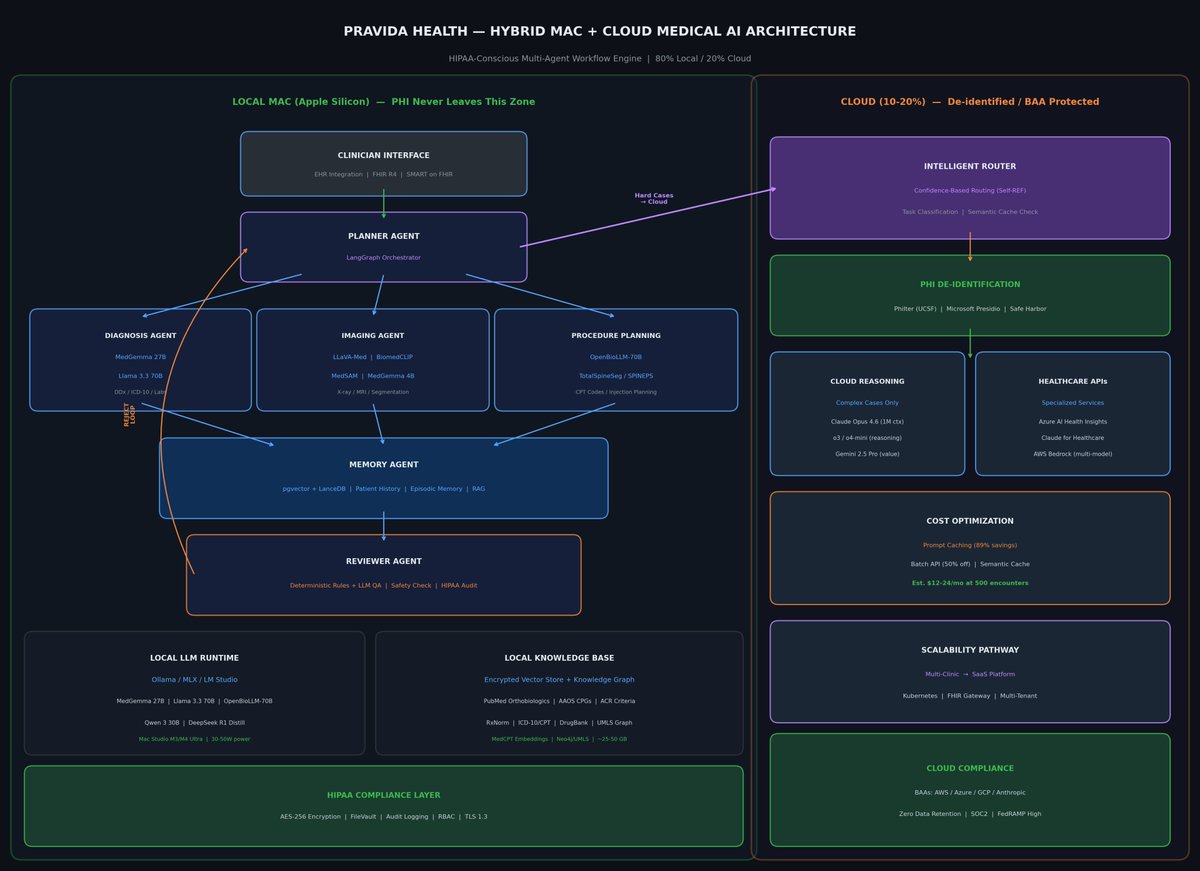
I'm a spine and sports medicine physician building a local-first, HIPAA-conscious AI workflow engine for clinical medicine — and I'm looking for collaborators. The concept: 80-90% of clinical AI tasks running on a Mac workstation. Multi-agent architecture — Planner, Diagnosis, Imaging, Procedure Planning, Memory, and Reviewer agents working as a team. Cloud AI only for the hard 10-20%, de-identified. The models are already here. MedGemma 27B runs locally and matches surgeon-level accuracy with the right knowledge base. Open-source spine segmentation can label C1 to sacrum. Confidence-based routing sends only 40% of queries to cloud while matching full cloud performance. What I need: — ML engineers (LangGraph, multi-agent systems, local LLM deployment) — Healthcare compliance architects (HIPAA, FDA CDS strategy) — Data engineers (medical RAG, FHIR, knowledge graphs) — Clinical NLP researchers — Healthcare entrepreneurs who want to scale this American physicians are drowning in cognitive overhead while frontier AI sits behind paywalls most practices can't reach. This is about putting that capability directly in clinicians' hands — locally, securely, affordably. Phase 1: working prototype at my practice. Long-term: a scalable intelligence platform for medical professionals everywhere. The best clinical AI won't come from tech alone. It will come from clinicians and technologists building together. If this resonates — DM me or reply with what you'd bring. 🧵 Full architecture report below.
Trevor Turner MD tweet media
English
2
0
1
50
Roupen Odabashian
Roupen Odabashian@RoupenMD·
@DevCuration @NEA @JustinNordenMD Right framing. The model isn't the bottleneck anymore. The open questions are: who owns the output, who's liable when it's wrong, and who's monitoring drift in production? Governance is the real infrastructure layer.
English
0
0
0
4
DevCuration
DevCuration@DevCuration·
Healthcare AI doesn’t fail on models. It fails on governance. Qualified Health raised $125M Series B (@NEA, Transformation, GreatPoint). @JustinNordenMD is deploying AI safely across clinical systems. Control is the unlock.
English
2
1
1
56
Roupen Odabashian
Roupen Odabashian@RoupenMD·
@doctorveera Welcome to the builder side. Healthcare AI needs more founders who've actually sat with patients, not fewer. The clinical insight you carry is the hardest thing to replicate. Looking forward to seeing what you ship at Wellytics.
English
1
0
1
48
Veera Rajagopal 
Veera Rajagopal @doctorveera·
After a decade abroad in research, I am happy to be home 🇮🇳. I am excited to share that I am joining the AI healthcare startup Wellytics as Chief Scientific Officer. I trained as a physician in India. I moved abroad to pursue human genetics and later focused on genetics-driven target discovery and drug development at Regeneron. Returning now to build in India feels deeply meaningful. At Wellytics, I will lead R&D and build our genomics division. - We will establish large-scale Indian genomic datasets to power drug discovery. - We will build a world-class human genetics and target discovery team. - We will collaborate closely with academic geneticists across India. - We will provide tools, training, and support to strengthen human genomics research in India. Wellytics is digitizing Indian healthcare and making it AI ready. We will combine AI, clinical data, and genomics to generate real-world evidence and build international-grade genetic association resources for India. Excited to help build a genetics-driven drug discovery engine in India!
English
101
81
1.2K
57.1K
Roupen Odabashian
Roupen Odabashian@RoupenMD·
@javeedsukhera @Hartford_Health @khealth The part that matters most: embedded within an EHR. Multi-agent AI is only as good as its integration point. Most AI tools live outside the workflow and die there. Congrats on the launch, watching how adoption looks at the bedside.
English
0
0
1
35
Roupen Odabashian
Roupen Odabashian@RoupenMD·
@ArkkDaily Healthcare being underestimated for AI isn't new. Capital is catching up. But the bottleneck isn't tech or money, it's workflow integration. AI diagnosing cancer from blood tests is impressive. Getting that into a doctor's workflow where it changes a decision? Hard part.
English
0
0
0
32
Ark Invest Tracker
Ark Invest Tracker@ArkkDaily·
CATHIE WOOD SAYS: THE MOST UNDERESTIMATED PLACE FOR AI INNOVATION IS HEALTHCARE - AI will diagnose cancer from blood tests before symptoms appear - Pharma faces a $300B patent cliff in the next 5 years - That fear and caution is exactly where the opportunity is
English
66
121
880
97.2K