Russ Andrews
804 posts

Russ Andrews
@RussAndrews777
Christian, husband, father, grandfather

Katılım Ocak 2022
1.5K Takip Edilen514 Takipçiler

@TNTJohn1717 I disagree with you but I’m not going to argue with you.
English

Preservation does not mean endless revision. That is the mistake in your argument.
If God is “still preserving” through modern textual critics, then by definition the church did not have a settled preserved Bible before they showed up. That is not preservation. That is reconstruction.
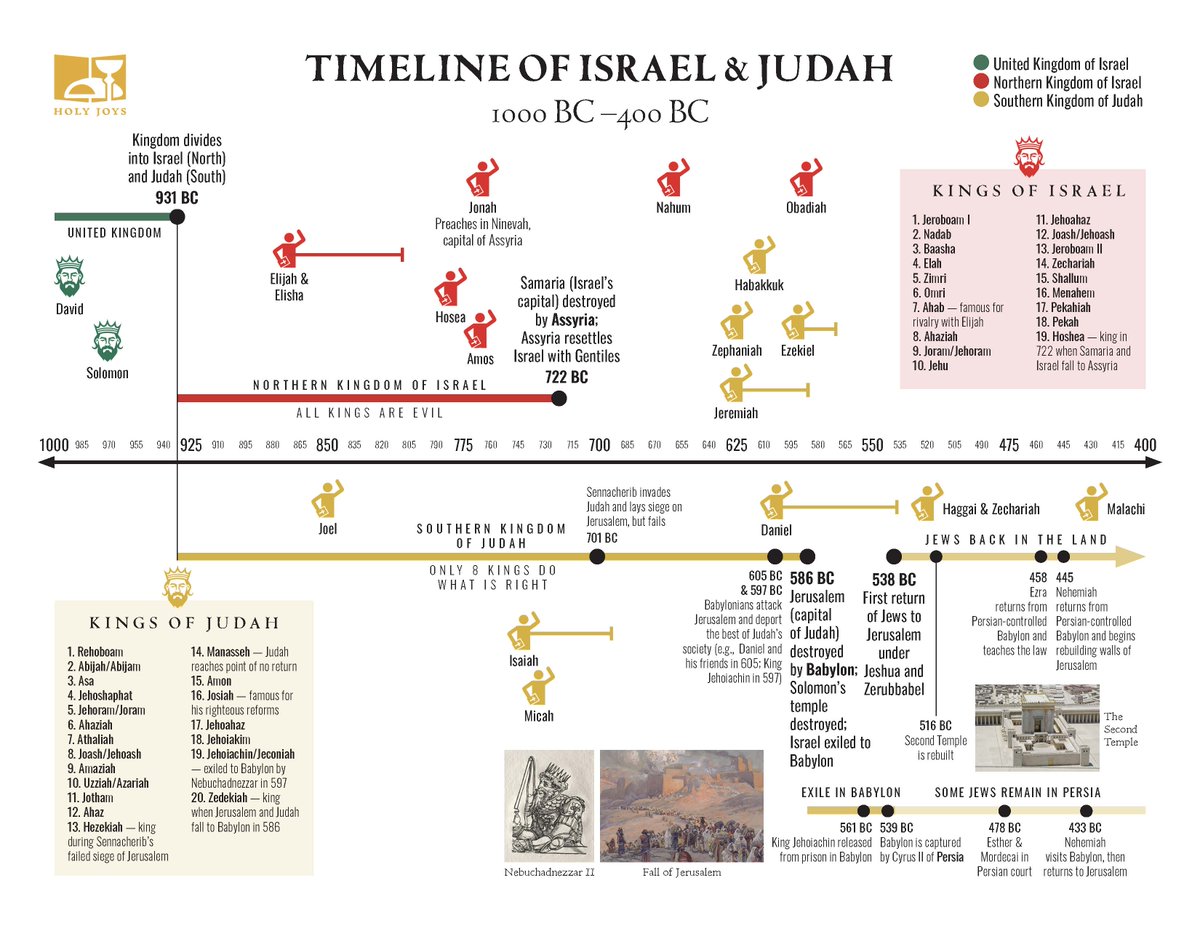
The Dead Sea Scrolls may be historically interesting, but they are not the final authority over the received Bible God’s people actually used, preached, copied, translated, and believed for centuries. A manuscript discovery in a cave does not get to walk into the church 1,900 years later and correct the Book.
The question is not whether God can use history. The question is whether God preserved His words or left them unsettled until modern scholars could keep revising them. I believe God preserved His words. I do not believe preservation means the Bible is permanently under construction.
English

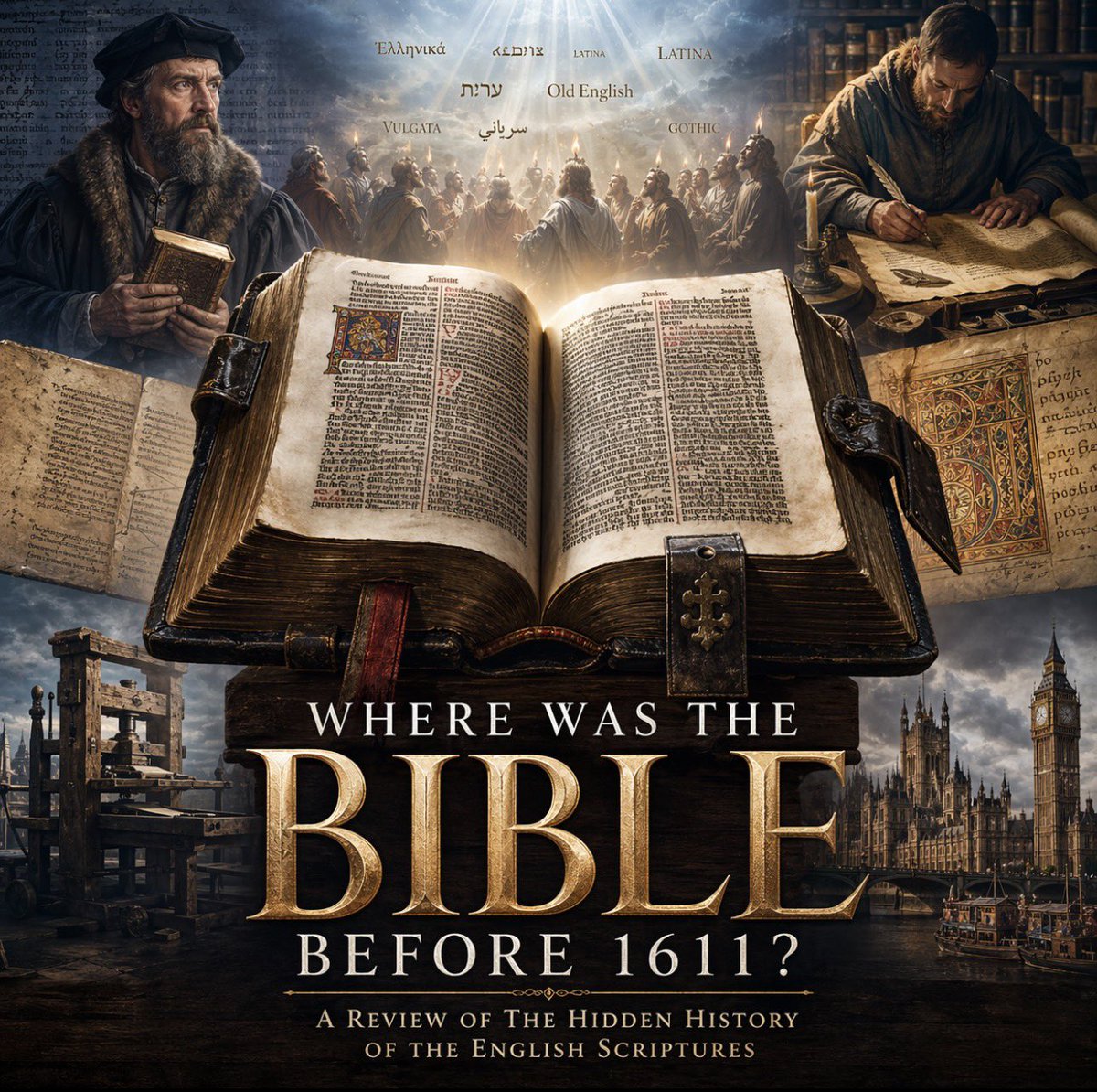
Where Was the Bible Before 1611? A Review of The Hidden History of the English Scriptures
Introduction
I just finished reading Gail Riplinger’s The Hidden History of the English Scriptures, and the question that kept coming to mind was the same question every serious King James Bible believer has had thrown at him at some point: “Where was the word of God before 1611?” That question is usually asked with a smirk, as though the King James Bible believer is supposed to freeze, stammer, and admit that God somehow lost His Book for fifteen centuries until a committee in England found it. But that is not the argument at all, and it never has been. The King James Bible position, rightly understood, is not that God had no words before 1611. The position is that God preserved His words before 1611, through 1611, and after 1611, and that in 1611 those preserved words were brought into their settled, purified, authoritative English form for the English-speaking world.
That is the real strength of Riplinger’s booklet. Whether a man agrees with every detail, every historical connection, or every application she makes, the big hammer blow of the work is clear: the English Bible did not fall out of the clouds in 1611, and the King James Bible was not a disconnected literary accident. It came at the end of a long stream. It stood on a foundation. It had roots. Those roots reached back through earlier English Bibles, through Tyndale, Coverdale, Matthew’s Bible, the Great Bible, the Geneva Bible, the Bishops’ Bible, Wycliffe, pre-Wycliffe English witnesses, Anglo-Saxon, Gothic, Old Latin, and the ancient vernacular testimony of the people of God. In other words, 1611 was not the beginning of God’s preservation. It was the crowning of God’s preservation.
That matters because the modern Bible-correcting crowd has trained people to think like unbelievers while using Christian vocabulary. They talk about “the originals” as though God gave His words once and then left the church digging in monastery trash cans, Egyptian wastebaskets, and academic footnotes to reconstruct what He might have said. But the Bible never presents preservation that way. God did not inspire His words just so they could be buried, lost, corrected, doubted, and voted on by committees every few years. The God who gave Scripture is the God who preserves Scripture. The God who commanded His words to a thousand generations is not sitting in heaven hoping a German rationalist, a Romanizing textual critic, or a modern publishing house can help Him recover His memory. That is why this booklet is useful. It forces the reader to stop asking the skeptic’s question and start asking the biblical question: if God promised to preserve His words, where did He preserve them, and how did they arrive in the Bible English-speaking Christians have actually believed, preached, memorized, died with, and lived by?
1. The KJV Was Not the Birth of the Bible, but the Bloom of the Bible
One of the most important points in the booklet is that the King James Bible was not the first appearance of the word of God in history. No serious Bible believer should say that. The word of God existed before English existed. It existed before the printing press. It existed before Wycliffe. It existed before Tyndale. It existed before the English nation became what we now know it to be. God gave His words by inspiration, and those words were preserved among His people long before 1611. The King James Bible is not the birth certificate of Scripture. It is the mature English form of Scripture.
That single distinction clears away a pile of foolish objections. When someone asks, “Where was the Bible before 1611?” he often assumes the King James Bible believer is claiming that no one had Scripture until King James came along. That is not the claim. The claim is that God preserved His words in the stream of believing transmission, through Hebrew, Greek, ancient versions, vernacular

English

@TNTJohn1717 I love your historical review; however your review serves as the very reason translations do not end with the KJV. God is still preserving as you so eloquently revealed throughout history. Modern textual critics use great sources such as the Dead Sea scrolls to continue this work
English

Great Bible, Geneva, Bishops’, and then it came to rest in the King James Bible for the English-speaking world. That answer is not weak. That answer is devastating.
The skeptic wants a cartoon version of the King James position because the real position is harder to mock. No informed Bible believer says God was Bible-less until 1611. The argument is that God did what He promised. He preserved His words through history, through languages, through persecution, through translation, through refinement, and through the believing reception of His people. The King James Bible is not a random translation sitting beside all the others as one more option on the shelf. It is the settled English Bible that came out of a providential history unlike any modern version can claim.
That is why this booklet is worth reading, thinking through, and talking about. It strengthens confidence. It gives historical backbone. It answers the cheap objection. It exposes the shallow assumption that “before 1611” somehow defeats the King James Bible position. No, before 1611 proves the opposite. Before 1611 there was a trail. In 1611 there was a crown. Since 1611 there has been fruit. The Bible before the KJV was not missing. It was moving. It was being preserved, carried, translated, refined, and prepared. And when God gave the English-speaking world the King James Bible, He gave them no crippled relic, no scholarly experiment, no Romanized counterfeit, and no footnote-riddled uncertainty. He gave them a sword.
Source reviewed: The Hidden History of the English Scriptures by Gail Riplinger.
Link to get book: avpublications.com/product/the-hi…
English


@Mark_Wilson_25 The Bible does not mention two Second Comings. There is no secret coming. When He returns the trumpet will sound, the clouds will part and every eye shall see him (Revelation 1:7). The whole left behind series got it all wrong. We have been in tribulation since Christ’s ascension
English

Could He come today… or are we waiting for signs first?
A normal afternoon.
People walking. Phones in hand. Conversations mid-sentence. Traffic moving. Life… steady.
And then—absence.
A chair left empty. A car drifting without a driver. A conversation that never finishes.
No countdown. No warning.
Just exactly what Jesus said.
“You also must be ready, because the Son of Man will come at an hour when you do not expect him.” (Matthew 24:44)
Two sentences of clarity:
That is not a scheduled return.
That is an any-moment return.
❖
This is where the tension rises.
Some believers reject imminence, not because the verses are unclear, but because their system requires signs first. If the Church must pass through the Tribulation, then the return of Christ cannot be imminent. It must wait for the seals, the trumpets, the bowls, the revealing of the man of lawlessness.
But the New Testament never tells the Church to watch for those things.
It tells us to watch for Him.
“While we wait for the blessed hope—the appearing of the glory of our great God and Savior, Jesus Christ.” (Titus 2:13)
Two sentences again:
The Church is not waiting for wrath.
The Church is waiting for a Person.
❖
Now the words of Jesus press even harder.
“Be always on the watch, and pray that you may be able to escape all that is about to happen, and that you may be able to stand before the Son of Man.” (Luke 21:36)
Escape all.
Not endure all.
Not survive all.
Escape.
And Scripture confirms that promise with precision:
“Because you have kept my command to endure patiently, I will also keep you from the hour of trial that is going to come upon the whole world…” (Revelation 3:10)
A crucial detail:
“Keep you from” is ἐκ (ek)—out of, not through.
Two sentences of clarity:
This is removal, not preservation within.
This is rescue before, not endurance during.
❖
This is where the doctrine becomes personal.
If Christ’s coming requires signs first, your focus shifts to the world.
If His coming is truly imminent, your focus lifts to Him.
❖
Paul reinforces the suddenness:
“For you know very well that the day of the Lord will come like a thief in the night.” (1 Thessalonians 5:2)
A thief does not send signals ahead of time.
He interrupts normal life without warning.
And then Paul draws a line that cannot be blurred:
“For God did not appoint us to suffer wrath but to receive salvation through our Lord Jesus Christ.” (1 Thessalonians 5:9)
Two sentences again:
The Day of the Lord is wrath.
Believers are not appointed to it.
❖
This hope was not theoretical for the early Church.
It shaped how they lived.
“All who have this hope in him purify themselves, just as he is pure.” (1 John 3:3)
Imminence produces urgency.
Urgency produces holiness.
It also produces mission.
If He could come today, then every conversation matters.
Every gospel opportunity matters.
Every moment matters.
❖
As John Walvoord wrote:
“Imminence means that Christ could come at any moment, and no prophesied event must occur before His coming.”
That is the consistent expectation of the early Church.
They lived looking up, not looking for signs.
❖
Paul, at the end of his life, didn’t say he was analyzing timelines.
He said this:
“Now there is in store for me the crown of righteousness, which the Lord, the righteous Judge, will award to me on that day—and not only to me, but also to all who have longed for his appearing.” (2 Timothy 4:8)
Not those who mapped events.
Not those who calculated sequences.
Those who loved His appearing.
❖
So this is the dividing line.
If we must see the Tribulation first, imminence collapses.
If no event must precede His coming, then every moment carries eternal weight.
❖
Picture it again.
A normal day.
Ordinary life.
Nothing unusual.
And then—He calls.
❖
“Be ready.” (Matthew 24:44)
Not when the signs align.
Not after the world unravels.
Now.

English

Russ Andrews retweetledi

We need a divine intervention in the Middle East. Please consider joining me in prayer for a godly solution to our woes.
“Some trust in chariots and some in horses, but we trust in the name of the Lord our God.” Psalm 20:7 (NIV).
Please pray fervently for President Trump, Secretary of War, Pete Hegseth, and other decision-makers in Europe and the Middle East.
Ask God to give these leaders wisdom, direction, and restraint where restraint is needed.
Ask God to break off any spirit of deception, pride, or rage that clouds their judgement.
Ask God to remove or silence any false prophets in the White House Office of Faith.
Ask God to raise up men and women whose fear of God is greater than their fear of men or love of the spotlight.
We ask that God’s superior plan and prophetic timetable take primacy over the plans of men.
We ask in Jesus’s name that the leaders of all affected nations will have their moves dictated by the God of Abraham, Issac, and Jacob.
If you agree with this prayer, please pray and share it with others. Please also feel free to post and share what God gives you.
#IranWar #PresidentTrump #PeteHegseth #Europe #MiddleEast

English

@datBAYEboy @_AbrahamAb Not true at all. He was a man after Gods own heart because Scripture says “He (David) will do all that I ask him to do)!
English

President Trump has requested a survey to tag @LeaderJohnThune, so he can see your comments.
Time to end the Democratic Party!
Do you support:
A. Watermarked Paper Ballot
B. Same Day Voting
C. Voter Photo ID
D. Proof of Citizenship
E. In-person voting
F. All of the above.
English
Russ Andrews retweetledi

Three things have become very clear since Operation Epic Fury began eight days ago:
1. @realDonaldTrump is the most consequential leader of the 21st century and the greatest U.S. President in my lifetime.
2. @netanyahu is Israel’s greatest PM since the Jewish State’s rebirth in 1948 and like Trump, is an historic, transformational figure.
3. Israel is America’s greatest ally in the world—and it’s not even close at this point.
I’ll break all of this down today, plus updates on Operation Epic fury, at 3 pm EST on my @youtube channel: go to Watchmantv.com
@POTUS
English

@iamrjknight I concur with Louie. I love your theological wisdom. I have both an MDIV and DMIN in expositional preaching. I say this only so you know I’ve been trained well and I recognize sound biblical theology when I see it. You are a sound commentator.
English

Every man must fight against the natural tendency of the heart to elevate himself and dishonour God. Since the fall, humanity has been drawn toward self-exaltation while pushing God to the margins. Scripture says that although men knew God through what He has revealed, “they did not honor Him as God or give thanks” (Romans 1:21). Instead the human heart turns inward, seeking its own glory.
This is the root of pride. Man desires the place that belongs to God alone. The first temptation in the garden appealed to that very desire. “You will be like God” (Genesis 3:5). From that moment onward the struggle has remained the same. The heart wants to exalt itself while lowering the authority of the One who made it.
But the Christian life moves in the opposite direction. God calls us to humble ourselves and acknowledge His rightful place. “Humble yourselves in the presence of the Lord, and He will exalt you” (James 4:10). True wisdom begins when a man stops magnifying himself and starts honouring God as He deserves.
So, the battle against pride is constant. The heart must be trained again and again to give glory to God rather than to self. For in the end, everything exists for Him and through Him and to Him (Romans 11:36).
English

🚨I have a request: Let’s send a loud message to @LeaderJohnThune
If you think John Thune should be fired if the SAVE America Act does NOT pass drop a “👍” below
I tagged him so he will see it

English

🚨BREAKING: Rep. Nancy Maces floats "freezing" every piece of legislation in the Senate until the SAVE America Act is passed
"We should freeze all senate bills until Thune passes the SAVE Act."
Members of the House GOP are growing impatient. Rep. Anna Paulina Luna floated attaching SAVE America Act to FISA
Either way, JUST GET IT DONE, PLEASE!
Do you firmly support passing the SAVE Act?
A. Huge Yes
B. No
IF Yes, Give me a THUMBS-UP👍!!
MAKE THIS GO VIRAL ON 𝕏. LET’S GO 👏


English

@MattWalshBlog @AuronMacintyre Keep reposting this to force liberal media outlets to cover it.
English

So there’s been a mass shooting and a bomb threat on a plane since the war in Iran began a week ago. Somehow there’s basically no national conversation about this.
Benny Johnson@bennyjohnson
Southwest Flight 2094 was diverted to Atlanta and passenger was detained reportedly over a bomb threat.
English