

Ryan Topps
748 posts
Ryan Topps
@RyanJTopps
Big Tech Software Engineer
New York Katılım Ağustos 2017
117 Takip Edilen81 Takipçiler

AGI
100T param model
trained on a $100B cluster
smarter than 100% of humans
and it's going to happen within the next 5 years
Lisan al Gaib@scaling01
AGI 2028-2029
English
@shivi1026 Seconds is a stretch. It takes hours for professional development
English

@coolcoder56 Most of those long timers are not up to date with how to interview. The process changed a lot over 7 years
English


English

@AskYoshik @zerohedge technically guidance for Q2 but they certainly aren’t just setting cash on fire and are expecting profitability as base case
cnbc.com/2026/05/20/ant…
English

The AI bubble math doesn't add up.
Anthropic spends $3 to make $1 and that’s before you include any and all other costs like staff or electricity.
Microsoft dumped $300B in capex, made ~$18B in AI revenue. OpenAI and Anthropic alone make up 43-54% of Microsoft, Google, Amazon and Oracle's entire revenue backlogs.
Enterprises are burning through annual AI budgets in 4 months with zero measurable ROI.
This is the most expensive science experiment in history, funded by your SaaS subscriptions.

English
@cozyblaze265065 Are you sure it didn’t sneak a python code construction in there
English

I redid the multi-digit multiplication experiment, now with gpt-5.5. With medium reasoning and 7 samples each cell, it pretty much aced the test with 99.46% accuracy. The model had no tools to call and had to rely on its reasoning. Can it go further? (1/4)

Yuntian Deng@yuntiandeng
For those curious about how o3-mini performs on multi-digit multiplication, here's the result. It does much better than o1 but still struggles past 13×13. (Same evaluation setup as before, but with 40 test examples per cell.)
English
@danluu Open AI’s operating margin is -122% so yeah it’s confirmed at this point
English

Why are so many people so sure that the big AI providers are losing money on inference? It reminds me of the comments about how Uber can never make money. Their unit economics were fine and they were only losing money because they chose to do so on customer acquisition.

English

They wouldn't get the eyes and lips perfect but screw up the neck.
It's a shadow. Get a grip.
BLAIRE WHITE@BlaireWhite
Holy shit why is this man on Fox News wearing a literal CIA mask
English
@LayoffAI how many people does he have? like 50 so he fired 11 people?
English

BREAKING LAYOFF ALERT: ClickUp 🚨
If you haven't heard of ClickUp, it's a $4B SaaS productivity platform. Project management software competing with Asana, Monday, and Notion.
Today CEO Zeb Evans cut 22% of staff and posted the memo himself on X below.
He says AI makes the best engineers wildly more productive, and everyone else using AI slows these engineers down.
"The primary change is that we're restructuring around what I call 100x org. The goal is 100x output. The roles required to build at the highest level are fundamentally different than they were a year ago."
Interesting take. He's calling the people he just fired bottlenecks.
The savings for the layoffs? Going into $1M salary bands for survivors who "create outsized impact using AI."
So he is downsizing, but reinvesting in those that he believes in. Will be interesting to watch this one play out.

Zeb Evans@DJ_CURFEW
Today we reduced headcount by 22%. The business is the strongest it's ever been. So I think it's important to be direct about what I'm seeing and why. First, I made this decision and I own it. I did it because the way to operate at the highest level of productivity is changing, and to win the future, ClickUp needs to change with it. Second, this wasn't about cutting costs. Most savings from this change will flow directly back into the people who stay. We'll be introducing million-dollar salary bands. If you create outsized impact using AI, you'll be paid outside of traditional bands. Most importantly, I have the deepest gratitude for those affected. We're doing this from a position of strength specifically so we can take care of people properly. Everyone affected receives a package aimed at honoring their contributions and easing the transition. I only see two options: wait for this to play out gradually in the market or be honest about what I'm seeing and act proactively. THE 100X ORGANIZATION The primary change is that we're restructuring around what I call 100x org. The goal is 100x output. The roles required to build at the highest level are fundamentally different than they were a year ago. Incremental improvements to existing systems won't get us there. We need new ones. That means creating enough disruption to rebuild rather than iterate on what's already broken. The common narrative is that AI makes everyone more productive. It doesn't. Many of the workflows of today, if left unchanged, create bottlenecks in AI systems. These roles will evolve. But waiting for that to happen naturally means falling behind now. The 100x org is actually heavily dependent on people - infinitely more than today. This is only possible with 10x people that have embraced and adopted new ways of working. THE BUILDERS, AGENT MANAGERS, AND FRONT-LINERS — THE BUILDERS: 10X ENGINEERS I don't think most companies have internalized what's actually happening with AI in engineering. The common narrative is that AI makes all engineers more productive. That may be true in isolation, but at an organization level - that is the farthest thing from reality. Here's what we've validated recently at ClickUp: the great engineers, the ones who can orchestrate, architect, and review, are becoming 100x engineers. They're not writing code. They're directing agents that write code. The skill is judgment. AI makes the best engineers wildly more productive, and everyone else using AI slows these engineers down. Think about it - the bottlenecks are (1) orchestration - telling AI what to do, and (2) reviewing - what AI did. Everything is leapfrogged and no longer needed. So who do you want orchestrating and reviewing code? And how do you want your best engineers to spend their time? If your best engineers are spending time reviewing other people's code, then this is inherently an inefficient bottleneck. These engineers can review their agent's code much faster than reviewing human code. The new world is about enabling your 10x engineers to become 100x. The wrong strategy is to push every engineer to use infinite tokens. Companies doing this are celebrating 500% more pull requests. But customer outcomes don't match the volume of code being generated. I call this the great reckoning of AI coding, and every company will face this soon if not already. More code is just another bottleneck to the best engineers, and ultimately to your company's impact as well. — THE BUILDERS: 10X PRODUCT MANAGERS Product management and design roles are merging. Designers that have customer focus, become more like product managers. And product managers that have intuition for UX become more like designers. The bottleneck of user research is gone. It takes us just one mention of an agent to kickoff research and analyze results. The bottleneck of product <> design iteration is also gone. The product builder iterates on their own, along with agents and skills that ensure alignment with quality and strategy. Also controversial today - I believe that the wrong strategy is to have your PMs shipping code - that just introduces another bottleneck that the best engineers will waste their time on. To be clear, PMs should be coding but they should do this in a playground to iterate, validate, and scope. That code should not go to production. Everything outside of managing systems, orchestrating AI, and reviewing output becomes a bottleneck. That's why the other roles that are critical along with these are the systems managers (to reduce bottlenecks) along with a bottleneck you can't replace - customer meeting time. — THE SYSTEM MANAGERS Ironically, the people that automate their jobs with AI will always have a job. They become owners of the AI systems - agent managers. We have many examples of these people at ClickUp. The underlying systems in which we operate are absolutely critical to get right. I think most companies are delusional to think they can iterate on existing systems and compete in this new world. You must create enough disruption so that old systems are deprecated entirely. If there's any definition for 'AI native' that's what it is. — THE FRONT-LINERS In a world that will become saturated with AI communication, the human touch will matter more than anything to customers. This is a bottleneck that you shouldn't replace - even when agents are high enough quality to do video meetings. One-on-one meeting time with customers is something that shouldn't be automated. The systems around the meetings should be - so that front-liners spend nearly 100% of their time with customers. REWARDING 100X IMPACT In a world where companies are able to do so much more with less, where does that excess money go? In our case, much of the savings in this new operating model will flow directly back to those that enabled it. We must reward people that create productivity accordingly. This aligns incentives on both sides. Plus, in a world where your best people create 100x impact, you can't afford to lose them. You should aim to retain these employees for decades. The context they have and their ability to efficiently orchestrate and review will be nearly impossible to replace. Compensation bands of today should be thrown out the door. We're introducing $1 million cash/year salary bands with a path available to nearly everyone in the company if they produce 100x impact by creating or managing AI systems. THE FUTURE Nearly every company will make changes like these. The ones that do it proactively will define what comes next. The future is not fewer people. It's different work, new roles, and better rewards for those who embrace it. We're already seeing entirely new roles emerge, like Agent Managers, that didn't exist a year ago. ClickUp is positioning to lead this shift, not just internally, but for our customers too. I've never been more certain about where we're headed.
English
@Chrisgpt its very likely it scrapped from some schizo's posts about their solution. You would be surprised at what the internet has out there
English

I’m so sick of Luddites talking about LLMs like they have any serious understanding of what is happening.
Riddle me this, what search engine constructs a new infinite family in discrete geometry and refutes Erdős’s unit distance conjecture.
How do these people still exist

Jim Stewartson, Decelerationist 🇨🇦🇺🇦🇺🇸@jimstewartson
I’m getting tired of “experts” like this misunderstanding what they’re looking at. LLMs are giant databases of stuff HUMAN BEINGS have done. They are the EXHAUST of humanity. Prompts are database queries into EXISTING DATA. It’s a fuzzy search engine, not intelligence.
English
@OpenAI It seems to be that the paths were known and AI traversed. So it was an in distribution problem
English

Today, we share a breakthrough on the planar unit distance problem, a famous open question first posed by Paul Erdős in 1946.
For nearly 80 years, mathematicians believed the best possible solutions looked roughly like square grids.
An OpenAI model has now disproved that belief, discovering an entirely new family of constructions that performs better.
This marks the first time AI has autonomously solved a prominent open problem central to a field of mathematics.
English
@Jason We were back to Covid numbers and Zuck needed a narrative AI was doing something. Let’s just say there was a lot of extra code for not much needle moving
English

We're going to see a large number of new startups based on all these META layoffs...
... super talented people being cut because, well, AI is making folks twice as efficient, and a giant data center is considered a better investment than [ checks notes ], talented people.
George Pu@TheGeorgePu
Meta cut 8,000 people today. A survivor wrote about a teammate who slept 4 hours a night for months. Commits at 3am. Commits at 6am. IC4. Strong reviews. No PIP. Cut anyway. Working harder doesn't move you up the layoff list. You don't survive by being valuable to them. You survive by not needing them.
English
@unfiltered_ajit Damn I thought they got rid of L5 managers. That role sucks lol
English

Being loyal to a company pays off.
From intern to Engineering Manager in just 6 years.

English
@GreyBirth @neoliberal_hack I’m starting think you just leave your dog poop around about how defensive you get about it
English

@RyanJTopps @neoliberal_hack Do you know how mad people will be when they hear “Sorry, the NYPD is not gonna find your stolen car, we are busy trying to stop people from leaving dog poop on the sidewalk”? It’s inefficient use to have the NYPD, people meant to stop murders, out there stopping dog poop crime.
English

Democrats just allergic to holding people accountable lmao. Instead of spending all this money there should be a $250 fine if you're caught not picking up your dogs shit.
New York City Council@NYCCouncil
New Yorkers shouldn’t have to dodge 🐶 💩 on their own block. The Council has introduced the SCOOP Act to expand resources to keep our neighborhoods 🐶 💩 free. But we can’t do this alone. Join the new NYC Scoop Patrol, where you can post yourself helping clean your community and tag @nycscooppatrol.
English
@GreyBirth @neoliberal_hack If they witness it they just have to spend like 3 minutes writing a ticket. I’m not saying we make a poop patrol
English
@GreyBirth @neoliberal_hack Bro it’s not hard if you see a dude leaving his dog’s shit on the street you write him a ticket. There is like 33k of them and once like 1% of offenders get tickets the behavior will cut back drastically
English
@neoliberal_hack I think itd be a tough sell to police to have them be poop watchers on top of crime stoppers. Also it opens up the complaint of X serious crime happened because the police were too busy ticketing for a dog poop crime. The Scoop Patrol reinforces efficient use of NYPD resources.
English



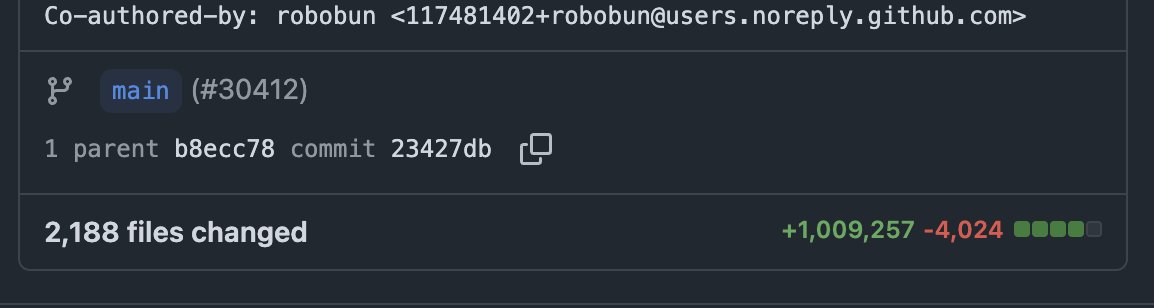
First in my bloodline to see 1 million line change PR getting merged
(Bun's master branch is now rust, it's official)
English
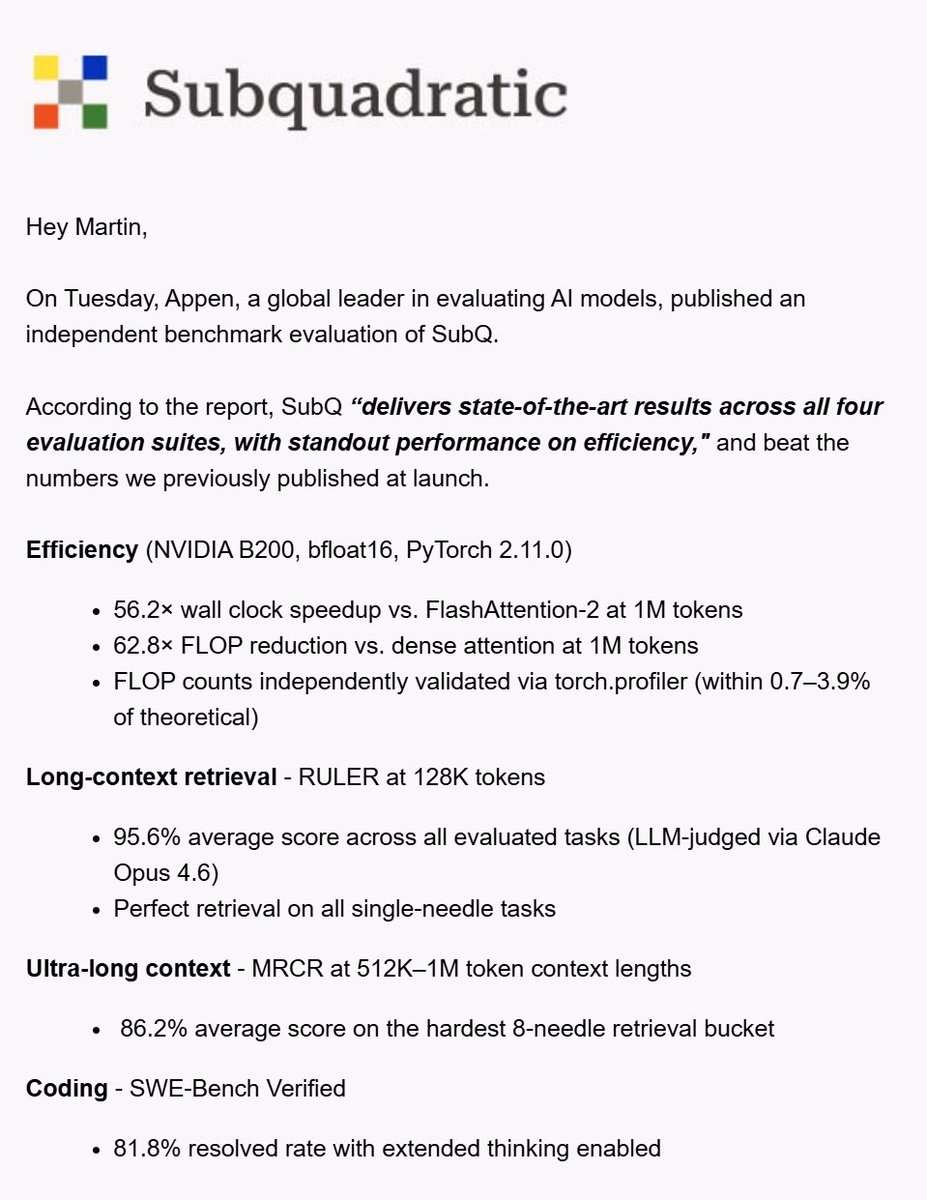
@MartinShkreli PyTorch getting within 0.7-3.9 of the theoretical flop limit is the most unbelievable thing I have seen lol
English

@stalkermustang I wouldn’t be surprised if they have builds fresh off from the GPUs weekly
English

"newer Mythos checkpoint"
OG Mythos was presented to the public only 5 weeks ago...

AI Security Institute@AISecurityInst
Our cyber range results illustrate this step-up. Since our first Mythos evaluation, we received access to a newer Mythos Preview checkpoint. On a 32-step corporate network attack we estimate takes a human expert ~20 hours, this checkpoint completes the full attack in 6 /10 attempts.
English
@killa_pump Does this line with the YD theory and the Bronze Age. As the idea is the North Americans traded copper to the Europeans
English

Lake Michigan and Great Lakes manmade?? Looks like a mine/quarry filled in with water.

English
