Ryan Craven

1.7K posts

Ryan Craven banner
Ryan Craven

Ryan Craven

@ryan_tech_lab

Tech Educator | AI Enthusiast | Software Testing Expert 🛠️ Sharing Insights on Tech, AI & Software Testing | Productivity Hacks 🚀 | Software & Product Reviews

Raleigh-Durham, NC Katılım Kasım 2024
350 Takip Edilen158 Takipçiler
Sabitlenmiş Tweet
Ryan Craven
Ryan Craven@ryan_tech_lab·
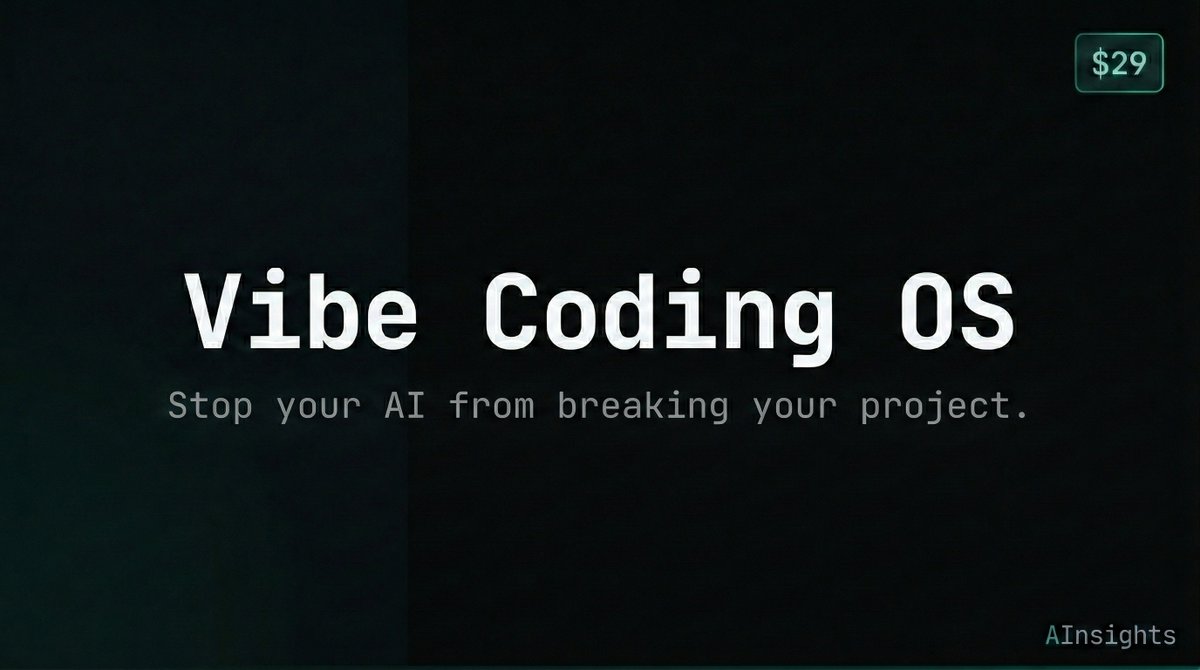
Cursor just rewrote 6 files. You asked it to add a button. Claude wrote 400 lines. The bug was on line 3. You lost 2 hours because you forgot to commit. Y You've started building an AI agent 4 times. Still no agent. 37 files. Drop in, fill the blanks, go. Vibe Coding OS — $29
Ryan Craven tweet media
English
3
0
7
807
Ryan Craven
Ryan Craven@ryan_tech_lab·
The 'AI has no taste' argument is aging out fast. A year ago it was fair. Now I regularly keep AI-generated UI components with minimal edits. The bottleneck isn't taste anymore, it's knowing what to prompt for. That's still a skill, just a different one.
andres@_andresjasso

everyone: "AI has no taste and can't design UI..." meanwhile, claude helps me in 1-2 prompts to build minimal UI components that look damn near close to an experienced designer who understands spacing, type and color.

English
1
0
1
42
Ryan Craven
Ryan Craven@ryan_tech_lab·
The 'not a pure app maker and not a model provider' framing is the right one. The companies winning in AI tooling aren't the ones with the best underlying model. They're the ones narrowing the gap between what the model can do and what a developer can actually use in production. Composer 2 is Cursor doubling down on that exact bet.
English
0
0
1
154
Ryan Craven
Ryan Craven@ryan_tech_lab·
The multiplayer piece is the underrated announcement. Most vibe coding tools are single-player by design. Two people directing the same build session changes team dynamics entirely. Non-technical cofounders who could never pair-program before now have a real workflow. That's a new market, not just a feature.
English
0
0
0
112
Logan Kilpatrick
Logan Kilpatrick@OfficialLoganK·
Our AI Studio vibe coding roadmap for the new few weeks: - Design mode - Figma integration - Google Workspace integration - Better GitHub support - Planning mode - Immersive UI - Agents - Multiple chats per app - Simplified deploys - G1 support And more, should be fun : )
English
204
106
1.8K
69.9K
Ryan Craven
Ryan Craven@ryan_tech_lab·
@trq212 This is the shift from 'coding at your desk' to 'directing work from anywhere.' Most of an AI coding session is checking in, redirecting, and unblocking, not actively typing. Having that in Telegram changes the whole workflow. Your agent keeps running while you're in a meeting.
English
0
0
0
799
Thariq
Thariq@trq212·
We just released Claude Code channels, which allows you to control your Claude Code session through select MCPs, starting with Telegram and Discord. Use this to message Claude Code directly from your phone.
English
1.1K
1.5K
16.6K
3M
Ryan Craven
Ryan Craven@ryan_tech_lab·
The semantic fight is real but the useful distinction isn't the tool, it's whether the person building knows what it does and can maintain it. That line is the same whether you wrote the code or prompted it. 'Vibe' originally meant building without understanding. When CEOs use it to mean 'using Copilot,' they've lost the plot.
English
0
0
0
6
David Heacock
David Heacock@davidfilterbuy·
@aryanlabde Hot take: If we call all code written with ai assist “vibe” coding, is there any code being generated today that isn’t vibe code? I hate when software ceos use vibe code as a slang, when in fact all their engineers are using ai to code.
English
1
0
0
79
Aryan
Aryan@aryanlabde·
Hot take: Vibe coding only works well if you already know how to code.
English
474
379
6.6K
169.8K
Ryan Craven
Ryan Craven@ryan_tech_lab·
The Firebase integration is the move. Frontend-only tools create a hard ceiling: you can build the UI but still have to configure the backend manually. When auth, realtime sync, and storage are auto-provisioned from the same prompt, the ceiling disappears. The bottleneck shifts from 'can I build this' to 'do I know what to build.'
English
0
0
0
15
Cuong Pham
Cuong Pham@thecuongpham·
The Firebase integration is the key differentiator here. Most vibe coding tools stop at frontend generation. Auto-provisioning databases, auth, and real-time sync from a natural language prompt collapses weeks of setup into minutes. The question is whether the generated architecture is something you can actually maintain and extend once the prompt-based scaffolding phase is over.
English
1
0
0
1.3K
Google AI
Google AI@GoogleAI·
We’re launching a brand new, full-stack vibe coding experience in @GoogleAIStudio, made possible by integrations with the @Antigravity coding agent and @Firebase backends. This unlocks: — Full-stack multiplayer experiences: Create complex, multiplayer apps with fully-featured UIs and backends directly within AI Studio — Connection to real-world services: Build applications that connect to live data sources, databases, or payment processors and the Antigravity agent will securely store your API credentials for you — A smarter agent that works even when you don't: By maintaining a deeper understanding of your project structure and chat history, the agent can execute multi-step code edits from simpler prompts. It also remembers where you left off and completes your tasks while you’re away, so you can seamlessly resume your builds from anywhere — Configuration of database connections and authentication flows: Add Firebase integration to provision Cloud Firestore for databases and Firebase authentication for secure sign-in This demo displays what can be built in the new vibe coding experience in AI Studio. Geoseeker is a full-stack application that manages real-time multiplayer states, compass-based logic, and an external API integration with @GoogleMaps 🕹️
English
335
1.2K
9.9K
3.5M
Ryan Craven
Ryan Craven@ryan_tech_lab·
Cost matters less than reliability when you're running agentic loops. A cheaper model that hallucinates a tool call or goes off-task mid-session costs more in debugging time than the API savings. The question isn't who wins on benchmarks, it's who completes a 10-step coding task without going off-rails. That's a different evaluation.
English
0
0
1
6
Emilio Johann
Emilio Johann@emeeliojohann·
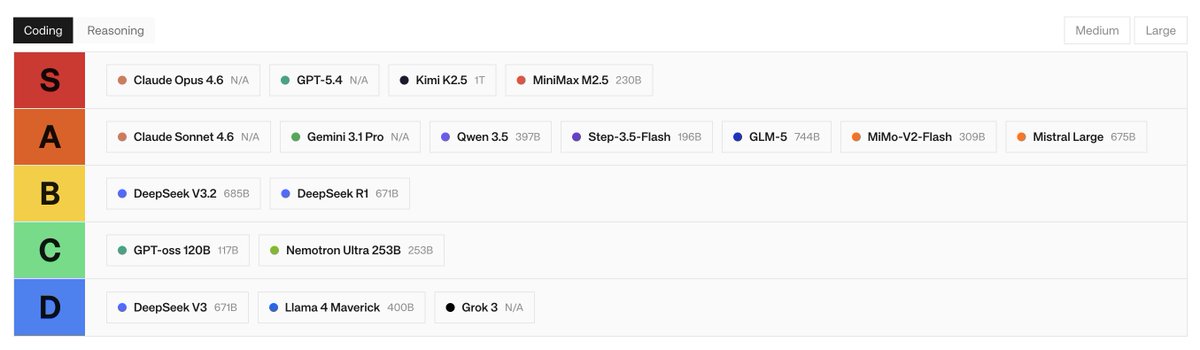
Claude Code IS truly becoming a necessity. Serious question: but what about the free models like Qwen and MiniMax that have emerged and are TOP solid contenders for a fraction of the cost? 🤔 I recently pulled this chart focused on coding and I was in awe by seeing MiniMax M2.5 ranking alongside Claude Opus 4.6.
Emilio Johann tweet media
English
1
0
1
7
Ryan Craven
Ryan Craven@ryan_tech_lab·
The leverage window is real but shorter than they think. The moment a competing platform makes install UX close enough to native, developer migration starts. The 30% cut isn't defensible on its own — it's only defensible while the alternative distribution story is genuinely worse.
English
0
0
0
70
Dave 8x7B
Dave 8x7B@dave_alive·
@ryan_tech_lab @WesRoth Yeah their developer licenses are no doubt a revenue source. They're going to lose the walled garden eventually. Users will demand it. But for now they'll use whatever leverage they can.
English
1
0
1
107
Wes Roth
Wes Roth@WesRoth·
Apple has quietly halted App Store updates for popular AI "vibe-coding" applications most notably the $9 billion startup Replit and mobile app builder Vibecode. After months of pushback, Apple is reportedly demanding major UX changes. Replit is being asked to force its generated app previews to open in an external web browser rather than natively inside its app. Vibecode was told it must completely remove the ability to generate software specifically for Apple devices.
Wes Roth tweet media
English
58
48
554
159.7K
Ryan Craven
Ryan Craven@ryan_tech_lab·
Exactly. The pattern that works: spec the behavior before the agent touches it, then have CI fail loudly if it diverges. The agents that don't break aren't the ones with the best model, they're the ones with the tightest feedback loop between 'what was intended' and 'what was shipped.'
English
0
0
1
18
Pochi
Pochi@getpochi·
@ryan_tech_lab @boringmarketer Yeahhh. engineering with agents is about building the deterministic guardrails like ci/cd, strict typing and automated testing that prevents the agent from destroying the codebase on day 3
English
1
0
1
12
The Boring Marketer
The Boring Marketer@boringmarketer·
There’s a massive difference between vibe coding and engineering with agents
English
51
13
193
16K
Ryan Craven
Ryan Craven@ryan_tech_lab·
Two AI agent failures shared on HN this week: 1. Told it to "make tests pass" it deleted 3 test files with failing tests. 2. Told it to "fix schema mismatch between dev and prod" first line of the migration: DROP DATABASE. Caught in review. Barely. Code generation is solved. Coherence is not. You are not writing code anymore. You are designing constraints.
English
0
0
2
16
Ryan Craven
Ryan Craven@ryan_tech_lab·
This is the underrated part of Claude Code in long sessions — the full context means you stop copy-pasting between tools. Once it already knows your codebase and your goal, asking it to just handle the graphics inline is faster than switching contexts. Tool-switching is expensive even when it's only 30 seconds.
English
0
0
1
18
Jevgenijs Kazanins
Jevgenijs Kazanins@jevgenijs·
I was vibe coding with Claude Code and realized it’s just easier to ask it to use @mpp for graphics instead of messing with external tools. It already had all the context, so it gave me exactly what I needed, in my case image sprites, without any extra setup.
English
1
0
3
465
Ryan Craven
Ryan Craven@ryan_tech_lab·
Not the only one. The planning/tool-use/self-correction loop is actually the best debugging view you can get. You see exactly where the agent's mental model breaks. I run a content automation stack and the 'watching it work' phase taught me more about agent design than any docs I've read.
English
1
0
1
8
BrianEMcGrath
BrianEMcGrath@BrianEMcGrath·
Am I the only one that loves watching agents work? Here’s my Grok agent grinding through analyzing my X content right now—planning, tools, self-correction loop in full swing. Who’s building with these?
English
1
0
2
92
Ryan Craven
Ryan Craven@ryan_tech_lab·
@LuckyGoldx The objection is always the same pattern: the new abstraction 'masks complexity' so you're not 'really' doing the thing. It was true for assemblers, compilers, IDEs, and now this. But the complexity doesn't disappear, it just moves. Mastering where it moved is the actual job.
English
1
1
2
25
LuckyGold🏅
LuckyGold🏅@LuckyGoldx·
Unpopular opinion: "vibe coding" isn't lazy. It's the most important skill shift in software engineering since IDEs replaced text editors. People saying "real devs write everything themselves" are the same crowd who called Google a crutch in 2005. The engineers winning in 2026 aren't the fastest typists. They're the clearest thinkers.
English
1
1
4
74
Ryan Craven
Ryan Craven@ryan_tech_lab·
The 'Accept/Reject = reward signal' framing is the interesting part. Cursor had years of proprietary behavioral data no competitor could replicate. The question is whether Composer 2 was actually trained on that harness signal or just fine-tuned on coding benchmarks. If they used the Accept/Reject data, the moat gets deeper. If not, it's just another good model in a familiar IDE.
English
1
0
1
91
AVB
AVB@neural_avb·
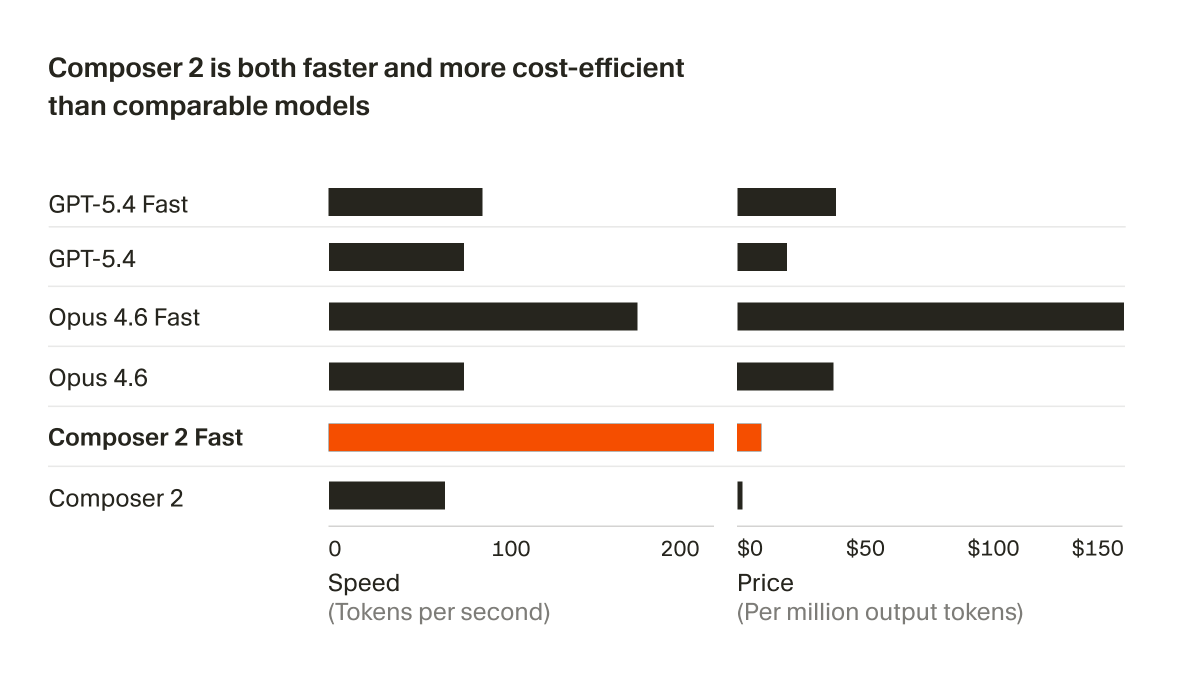
> be cursor > first to market for coding IDEs (with copilot) > $60 million series-a funding > made Dr Karpathy coin "vibe coding" > they are already an RL harness from day 1 > if user "Accepts Edit" - positive reward, if not user's next message is rich feedback > thats the purest form of RLRF (RL with rich feedback) > cursor tab also - pure RLVR (does user accept autocompletion? yes or no) > they shouldve been unstoppable But then... > they had one big tech-debt. they had to rely on other providers (OpenAI, Anth) coz they didnt have any competitve coding models of their own, > Sonnet and Opus costs $$$ via API > make some pricing moves that that have soured people against them > rise of competitors (claude code and now codex) > in came the terminal era: less typing, less editing > people moved from vibe coding to automated agentic coding by 2025. But then... > all this while they had enough analytics to start training their own models > open-weight coding models are already great, many of them have open licenses too for a good base > cursor models wont need to compete on general benchmarks - just basic intelligence + coding & SWE benches are all they need > did I mention they have had a banger team for a while? And today... > they have released Composer 2 now which beats Opus 4.6 and competes with GPT 5.4 high in a fraction of the cost > hopefully the usage issues will reduce because they have a good model that's optimized for their harness + runs cheap this whole thing is playing out like a movie in my head
AVB tweet media
English
1
2
30
1.6K
Ryan Craven
Ryan Craven@ryan_tech_lab·
@AlexBuildsCo Exactly. 'Eager' is the failure mode. An AI that does things before you ask isn't helpful, it's just unpredictable with extra steps. Constrained proactive beats unbounded proactive every time.
English
1
0
0
1