SAGA Team

956 posts

SAGA Team banner
SAGA Team

SAGA Team

@SAGAatCAMK

#SAGATeamCAMK 🔭🌟 Research group on Stellar Abundances and Galactic Archaeology. We explore the secrets of the #MilkyWay using stellar chemical abundances.

Warsaw, Poland Katılım Şubat 2021
438 Takip Edilen237 Takipçiler
Sabitlenmiş Tweet
SAGA Team
SAGA Team@SAGAatCAMK·
🔭 The SAGA Team (CAMK/PAN, Warsaw, PL) 🌟 We use spectroscopy to determine the chemical composition of stars. We do research on stellar evolution and Galactic archaeology 💻 Here, we advertise and discuss topics related to our work and activities 🇬🇧🇧🇷🇵🇱 Posts in EN, PT-BR, PL
SAGA Team tweet media
English
1
1
9
0
SAGA Team retweetledi
ANPG
ANPG@anpg·
🚨 VITÓRIA HISTÓRICA! Acaba de ser aprovado, no plenário da Câmara dos Deputados, o Projeto de Lei 6.894/2013, que trata dos direitos previdenciários para os pós-graduandos. Depois de quase 40 anos de lutas, os bolsistas Capes e CNPq terão acesso à seguridade social. É uma conquista da nossa mobilização incansável, dos apoios e das articulações que fizemos nesse período. Nosso reconhecimento à garra das APGs de todos os cantos do país que confiaram e nunca esmoreceram. Igualmente às Sociedades científicas e comunidade acadêmica, que perfilaram conosco. Agradecemos também à deputada @Alice_Portugal , proponente, aos deputados @ricardogalvaosp, relator, @tuliogadelha, que apresentou o requerimento de urgência, ao presidente @HugoMottaPB e aos líderes partidários que apoiaram a proposta. Agradecemos também ao governo, especialmente à @CAPES_Oficial e @CNPq_Oficial, que não mediram esforços para construir soluções para essa justa reivindicação. É uma vitória da ciência, dos pesquisadores e das pesquisadoras e, sobretudo, do Brasil. 🇧🇷
ANPG tweet media
Português
68
1.2K
6.2K
132.1K
SAGA Team retweetledi
Alex Prompter
Alex Prompter@alex_prompter·
This paper from Harvard and MIT quietly answers the most important AI question nobody benchmarks properly: Can LLMs actually discover science, or are they just good at talking about it? The paper is called “Evaluating Large Language Models in Scientific Discovery”, and instead of asking models trivia questions, it tests something much harder: Can models form hypotheses, design experiments, interpret results, and update beliefs like real scientists? Here’s what the authors did differently 👇 • They evaluate LLMs across the full discovery loop hypothesis → experiment → observation → revision • Tasks span biology, chemistry, and physics, not toy puzzles • Models must work with incomplete data, noisy results, and false leads • Success is measured by scientific progress, not fluency or confidence What they found is sobering. LLMs are decent at suggesting hypotheses, but brittle at everything that follows. ✓ They overfit to surface patterns ✓ They struggle to abandon bad hypotheses even when evidence contradicts them ✓ They confuse correlation for causation ✓ They hallucinate explanations when experiments fail ✓ They optimize for plausibility, not truth Most striking result: `High benchmark scores do not correlate with scientific discovery ability.` Some top models that dominate standard reasoning tests completely fail when forced to run iterative experiments and update theories. Why this matters: Real science is not one-shot reasoning. It’s feedback, failure, revision, and restraint. LLMs today: • Talk like scientists • Write like scientists • But don’t think like scientists yet The paper’s core takeaway: Scientific intelligence is not language intelligence. It requires memory, hypothesis tracking, causal reasoning, and the ability to say “I was wrong.” Until models can reliably do that, claims about “AI scientists” are mostly premature. This paper doesn’t hype AI. It defines the gap we still need to close. And that’s exactly why it’s important.
Alex Prompter tweet media
English
379
2.1K
8.2K
1.2M
SAGA Team retweetledi
Ministério da Ciência, Tecnologia e Inovação
O Brasil vai investir na permanência de talentos na ciência. O programa Profix Conhecimento Brasil vai ofertar 1.000 bolsas de R$ 13 mil para doutores de todo o país. 🎓🇧🇷
Português
6
54
325
7.6K
SAGA Team retweetledi
ESA Gaia
ESA Gaia@ESAGaia·
Ever wondered how planetary systems like our own Solar System form? Thanks to Gaia's astrometric information, hints of unseen companions were detected in 31 baby star systems. @almaobs shows us what they look like. The solar system (bottom right) is shown as reference. esa.int/ESA_Multimedia…
English
1
13
29
1.7K
SAGA Team retweetledi
ESA Gaia
ESA Gaia@ESAGaia·
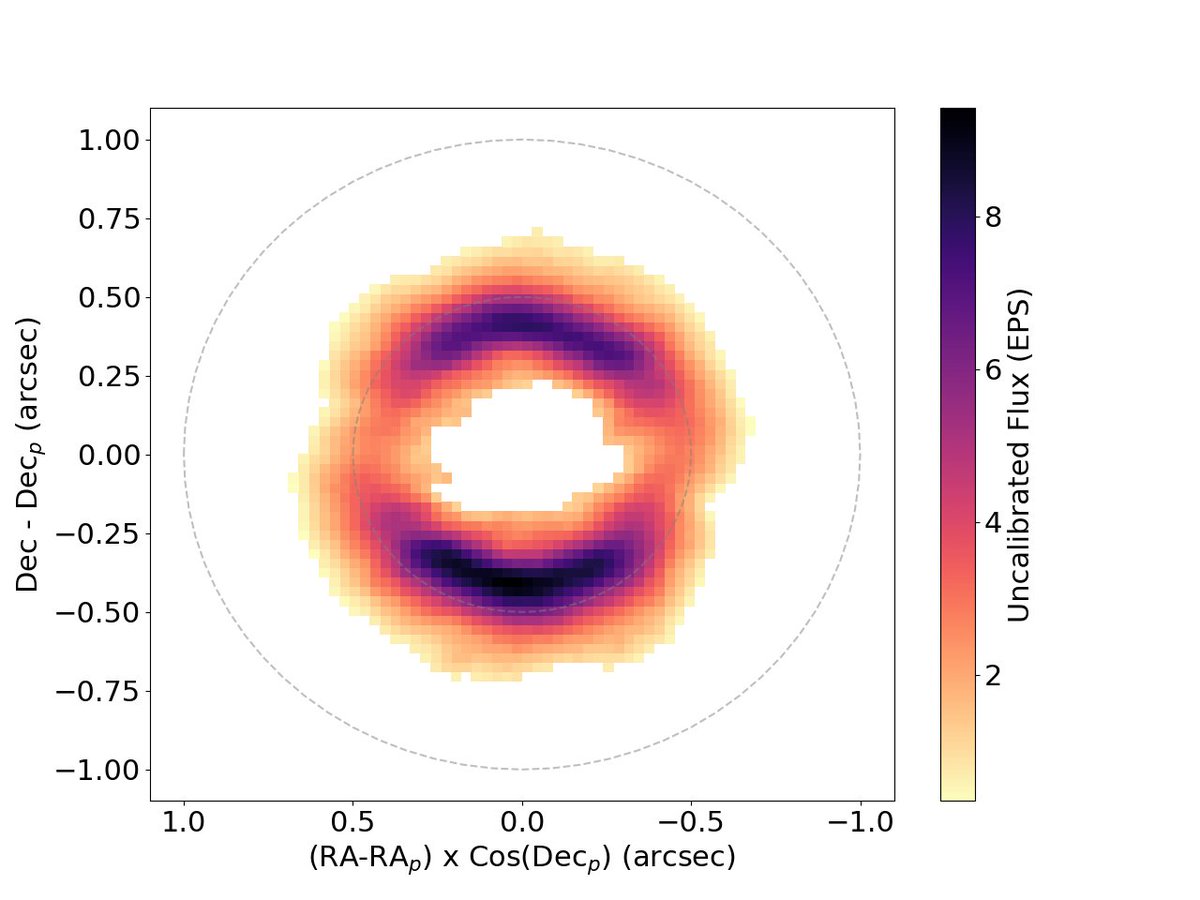
Wouldn't it be wonderful if also photometric information from Gaia could help find these baby star systems? Meet a new #GaiaDR4 data product: the residual image. Obtained from stacking many individual images and removing the point spread function of the central source: cosmos.esa.int/web/gaia/iow_2…
ESA Gaia tweet media
English
1
9
18
927
SAGA Team retweetledi
ESA Gaia
ESA Gaia@ESAGaia·
A look behind the scenes: switching off the Gaia spacecraft. On 27 March 2025, this emotionally charged milestone marked the end of spacecraft operations, though not the end of the mission! #GaiaDR4 is expected in Dec 2026 🔭cosmos.esa.int/web/gaia/iow_2… youtu.be/dduXM5FbpcY
YouTube video
YouTube
English
0
6
14
1.4K
SAGA Team
SAGA Team@SAGAatCAMK·
🔭Just a reminder, WST is a project to build a 12m telescope fully dedicated to multi-object spectroscopy. It will have a large FoV (>3 deg^2) and combine high‐multiplex spectrographs of both low‐ and high‐resolution and a giant panoramic integral field spectrograph
English
1
0
0
15
SAGA Team
SAGA Team@SAGAatCAMK·
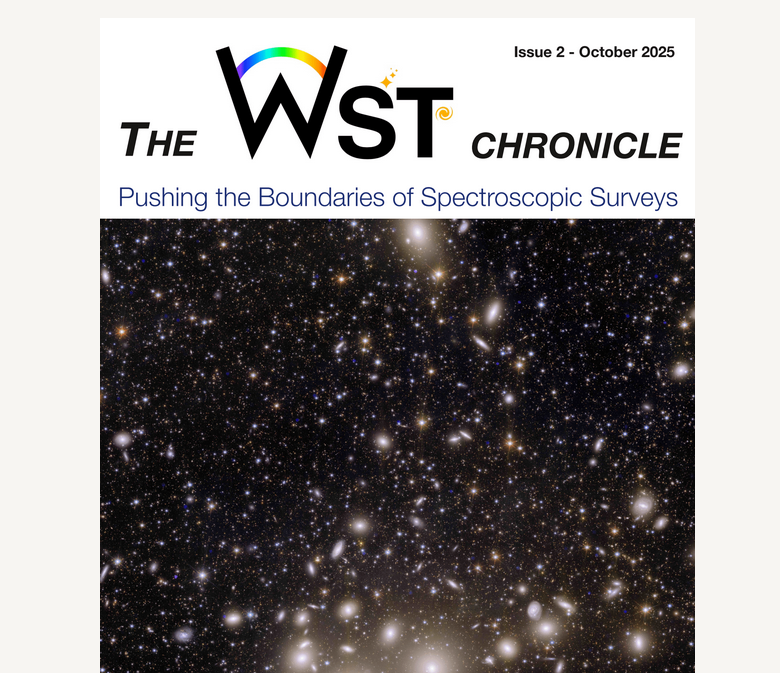
📣 The second issue of the WST Chronicle is out! dropbox.com/scl/fi/zmd3mwp… 📄 The WST Chronicle is an electronic magazine designed to keep the WST science teams and the broader scientific community updated on the latest developments of the project #astronomy #instrumentation
SAGA Team tweet media
English
1
0
0
14
SAGA Team retweetledi
Agência Espacial Brasileira (AEB)
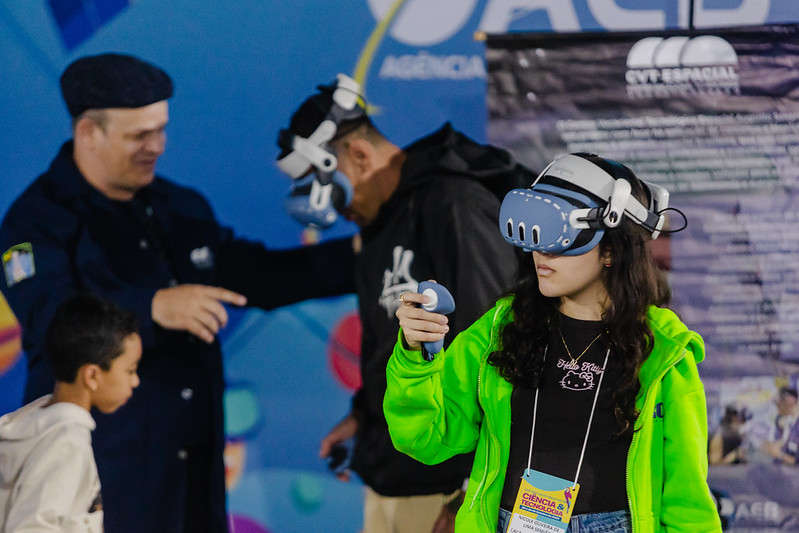
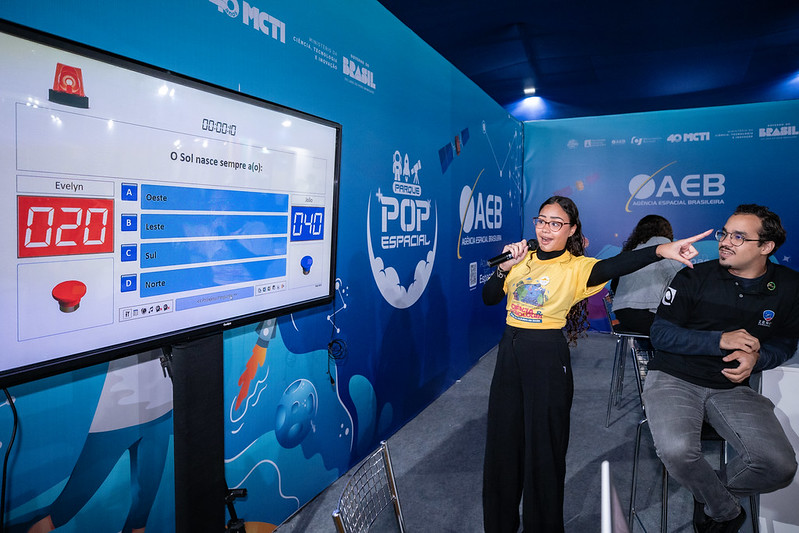
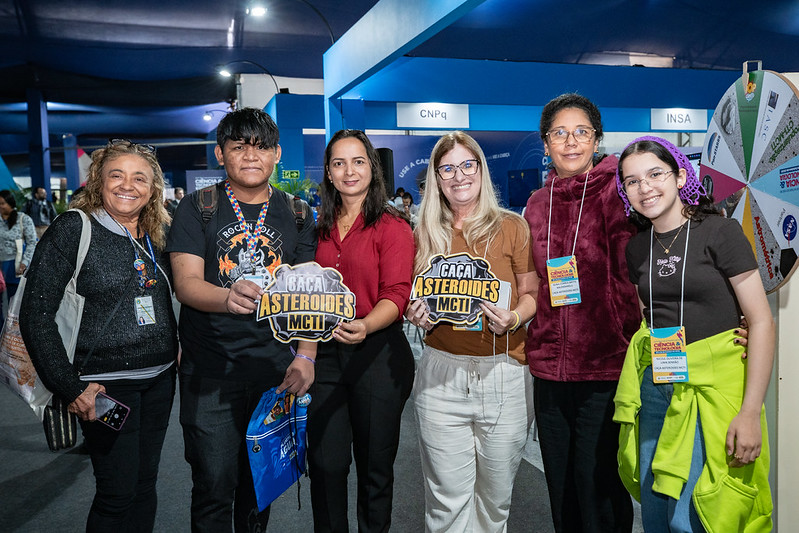
✨ 22ª Semana Nacional de Ciência e Tecnologia (SNCT)! Considerado o maior evento de popularização científica do Brasil, a SNCT reúne ações presenciais e digitais com expectativa de alcançar ao menos 100 mil pessoas. Fotos: @gov_mcti
Agência Espacial Brasileira (AEB) tweet mediaAgência Espacial Brasileira (AEB) tweet mediaAgência Espacial Brasileira (AEB) tweet mediaAgência Espacial Brasileira (AEB) tweet media
Português
0
4
8
414
SAGA Team retweetledi
Mushtaq Bilal, PhD
Mushtaq Bilal, PhD@MushtaqBilalPhD·
6 incredible resources developed by top universities to help you become a proficient academic writer — totally free:
English
219
3.2K
10.5K
0
SAGA Team retweetledi
JWST Observer
JWST Observer@JWSTObserver·
For #JWST Cycle 5, proposals should be submitted even if observations appear non-schedulable in APT due to guide star availability in bright crowded fields. Get the details: ow.ly/F12v50X8LK7
JWST Observer tweet media
English
0
3
6
885
SAGA Team retweetledi
Al-Ola A Abdallah MD (USMIRC)
Al-Ola A Abdallah MD (USMIRC)@Abdallah81MD·
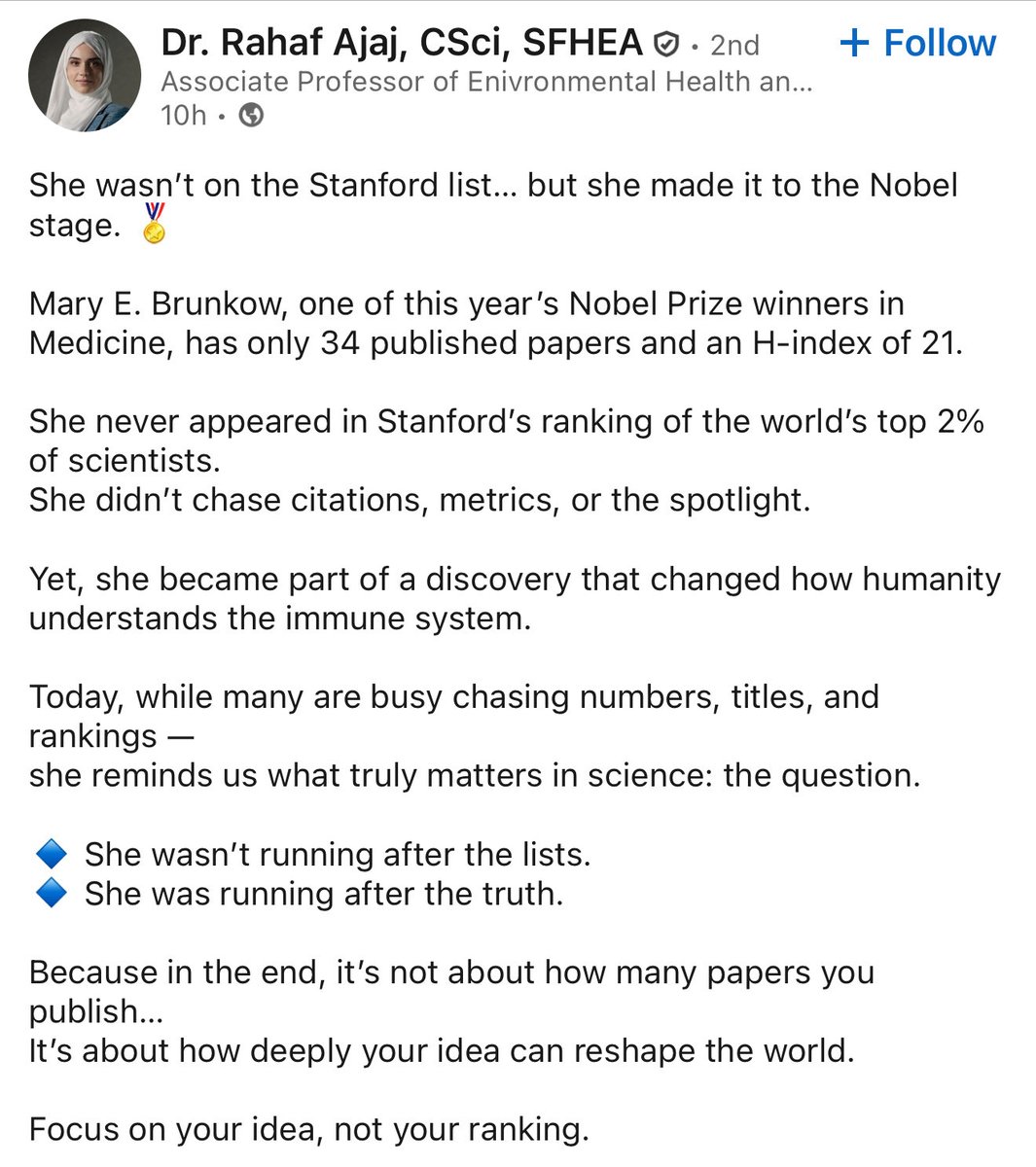
✅✅ A reminder by Dr. Rahaf Ajaj: She wasn’t on the Stanford list… but she made it to the Nobel stage. 🏅 Mary E. Brunkow, one of this year’s Nobel Prize winners in Medicine, has only 34 published papers and an H-index of 21. She never appeared in Stanford’s ranking of the world’s top 2% of scientists. She didn’t chase citations, metrics, or the spotlight. Yet, she became part of a discovery that changed how humanity understands the immune system. Today, while many are busy chasing numbers, titles, and rankings — she reminds us what truly matters in science: the question. 🔹 She wasn’t running after the lists. 🔹 She was running after the truth. Because in the end, it’s not about how many papers you publish… It’s about how deeply your idea can reshape the world. Focus on your idea, not your ranking.
Al-Ola A Abdallah MD (USMIRC) tweet mediaAl-Ola A Abdallah MD (USMIRC) tweet media
English
31
874
3.5K
303.6K
SAGA Team
SAGA Team@SAGAatCAMK·
The work was funded by a grant from the Polish National Science Centre (NCN) @NCN_PL
English
0
0
1
19
SAGA Team
SAGA Team@SAGAatCAMK·
🧑‍🤝‍🧑We calibrated a similarity metric that can identify stars with parameters that differ by ± 200 K, ± 0.3 dex, and ± 0.2 dex in Teff, log g, and metallicities, respectively. We achieved completeness between 74-98 % and typical purity between 39-54 % in this selection
English
1
0
1
19
SAGA Team
SAGA Team@SAGAatCAMK·
🔭New paper of the SAGA Team accepted for publication in A&A! This is the first paper of the upcoming "Playing CHESS with stars" series! The paper was lead by John Martínez Fernández and Sergen Özdemir, Ph.D. students at the SAGA Team: arxiv.org/abs/2509.19443
SAGA Team tweet media
English
1
0
1
45