In my late 60s - carnivore & hypercarnivore since Jan 2018! Appalled at current nutritional & medical ‘party line.’ (Certified Maricopa County Master Gardener)
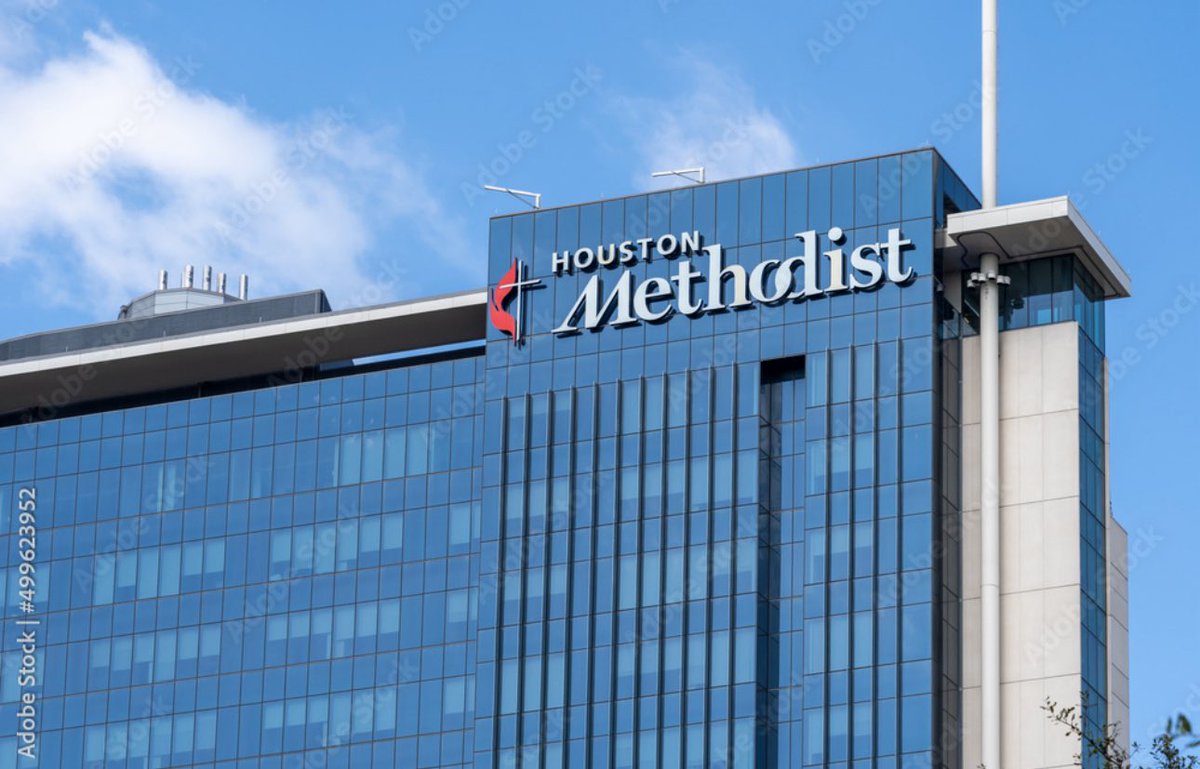
🚨We have found 1575 patients at HoustonMethodist who were admitted to the hospital shortly after receiving a Covid shot and not reported to VAERS.
“Stacy”, a 27 year old female, got her first COVID-19 shot 1/7/2022 and was admitted to HoustonMethodist 12 days later on 1/19/2022. Her primary diagnosis was “Cardiomegaly” and her secondary diagnosis was “Hyperkalemia”. She died on 1/19/2022, just 12 days after the vaccine.
We are gathering more…. Please share with your Houston friends. Legal action forthcoming.
If anyone were to read all the death records I have read, they would know this to be true.
Vaccines cause an acceleration of existing dementia, induce violent outbursts, and seed dementia where it was not present.
ALL 12 studies comparing vaccinated vs. unvaccinated kids reached the SAME conclusion — the vaccinated are FAR sicker, with dramatically higher rates of:
Autism.
Cancer.
Autoimmune disease.
Diabetes.
ADHD.
Tics.
Asthma.
Motor disability.
Speech disorders.
Mental health disorders.
Neurodevelopmental disorders.
Developmental delay.
Atopic disease.
Seizure disorder.
Food allergies.
Neurological disorder.
Brain dysfunction.
Behavioral disability.
Learning disability.
Intellectual disability.
Chronic infections.
It's time to END this madness.
The CDC's untested, illegal vaccination schedule should be immediately suspended.
“The system does not profit from your death ... It profits from the MIDDLE — sick enough to need medication, alive enough to keep buying it.”
A Satanic business model.
#MemoryMonday
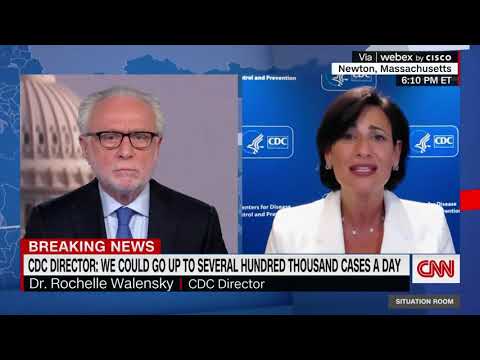
Remember when @RWalensky stared into the camera and lied again when she said that the Covid shot “no longer” prevented transmission….. when it not only was never tested for for that endpoint but it never effectively prevented transmission?
youtu.be/UdIJA3SF_lI?fe…
The Bergamo convoy. Military trucks moving through a small Italian town in early 2020, the world watching, everyone told those trucks were carrying the coffins of COVID dead. That image is part of why people accepted what came next.
It has only recently been confirmed that each of those trucks held one coffin. It was staged.
A research group of Italian doctors is compiling data showing that countries with the highest vaccination rates are also seeing the highest all-cause mortality rates.
Nurses and medical staff are now openly saying that elderly patients were being classified as COVID regardless of their actual diagnosis, because hospitals received five times the reimbursement for a COVID admission. The people dying were elderly, already carrying multiple conditions, and the act of hospitalizing them was itself part of what killed them. Scientists call that a syndemic. Not a pandemic. The difference matters.
Italy was the image used to frighten the world into compliance. I am still finding out what was actually happening here.
I was wondering what happened to all that Fort Knox inventory. Somebody just put in a requisition order and took it home..😱 foxnews.com/us/us-feds-sei…
).
My goal was to answer why so many people have seemingly seen such a dramatic drop in their posts' reach.
The first answer, which is actually somewhat unrelated to the ranking algorithm on Github, is the auto-translate feature, rolled out worldwide on April 7, 2026 (x.com/nikitabier/sta…).
Before that date, if you wrote in English about, say, the Trump-Xi Beijing summit, you were competing for attention with maybe 5,000 other English-language accounts writing on geopolitics.
After that date, your post is competing for attention with other posts on the same topic IN EVERY LANGUAGE ON EARTH. For some topics that do command global attention like geopolitics, that's a very brutal multiplier: you used to be one of 5,000, you're suddenly one of 50,000 (something of that order): MUCH more difficult to stand out.
Secondly, the number of followers you have matters far less than it used to: each post now has to earn its audience reader by reader, on the predicted engagement of the post, and how its topic matches what each reader has recently been engaging with.
Here is how the algorithm works, in simple terms: when you, as a reader, open your feed, the algorithm doesn't load "posts from accounts you follow." Instead it runs a 2-stage prediction of what posts you're likely to engage with in that very moment.
The first stage is the retrieval stage. The system narrows billions of posts on X/Twitter that day down to roughly 1,500 candidates by matching the semantic content of each post - what it's about - against what you as a reader have recently engaged with. Some candidate posts come from accounts you follow; others are pulled from across the platform by pure topic similarity to your recent interests.
You can test this retrieval stage easily: start disproportionally engaging with - say - Brad Pitt videos and you'll bit by bit see your timeline flooded with Brad Pitt content, most of it from accounts you've never followed and never heard of.
Then there's the ranking stage. Each of these candidate posts for your feed is fed through a Grok-based model that tries to understand if you'll engage with the post.
It looks at 15 engagement metrics:
1) P(favorite) — the reader likes the post
2) P(reply) — the reader replies to it
3) P(repost) — the reader reposts it
4) P(quote) — the reader quote-tweets it
5) P(click) — the reader clicks a link in it
6) P(profile_click) — the reader taps through to your profile
7) P(video_view) — the reader watches the video
8) P(photo_expand) — the reader expands an image
9) P(share) — the reader shares it (DM, off-platform, etc.)
10) P(dwell) — the reader stops scrolling and lingers on the post
11) P(follow_author) — the reader follows you after seeing it
12) P(not_interested) — the reader marks "not interested"
13) P(block_author) — the reader blocks you
14) P(mute_author) — the reader mutes you
15) P(report) — the reader reports the post
Fifteen predicted actions, each multiplied by a weight, summed: that sum is the score that determines in which priority a post will be seen among other candidates.
Please note that posting something with a video or an image can give your post an advantage as 2 actions are specifically for these: video_view and photo_expand. No video or photo and you don't get a score for these. Also, naturally, having a video maximizes the chance that a user will "dwell" on your post to watch it.
Also note that 4 of these actions carry negative weights (not_interested, block_author, mute_author and report): meaning that if the model expects a post to generate a lot of negativity, it'll get de-boosted quite dramatically.
But note, first and foremost, what's NOT in there: none of the things that, naively, one might think a serious information platform would weigh. There is no P(this post is true and well-sourced). No P(the author actually knows what they're talking about). No P(this person has spent a decade building a body of work that has held up). No P(this account has earned the right to be taken seriously on this topic). No P(the author has a large following from credible people). The model does not seem to care - at all - about any of that.
Every post starts from zero. You could have ten years of rigorous, well-sourced analysis behind you - or you could be just an uneducated rando who registered yesterday. To this algorithm, you're both just a bag of engagement probabilities.
Now, sure, to be fair, there is a "brand" effect that's not covered by the algorithm: someone who has in fact built a brand will naturally have better engagement metrics because people recognize their account. But that's an indirect, second-order effect. And crucially, it's legacy: those "brands" were built under earlier versions of the algorithm that gave followers and reputation more weight.
Lastly, several other features of the new algorithm compound the dilution, none of them visible from outside but all consequential.
The May 15 update added an "impression bloom filter," tightening the rule that once a reader has been served a post, the system won't serve it to them again. Before, a strong post could marinate in someone's feed across multiple refreshes and accumulate engagement on the second or third pass. Now it basically gets one shot.
Also, your own posts compete with each other. An "Author Diversity Scorer" inside the ranking stage attenuates the score of every subsequent post of yours that ends up in a reader's candidate pool. In plain terms: if multiple of your posts land in a reader's candidate pool, the system shows one at full strength and dampens the others. So don't post several times consecutively on the same topic.
And, last but not least, another huge impact on reach is that, in the old algorithm, when someone reposted or quote-tweeted you, your post was broadcast to their followers' timelines - a repost from an account with 100,000 followers was a huge boost.
In the new algorithm, that mechanism is vastly demoted: reposts - like every post - need to go through the retrieval and ranking stage mentioned above, so a repost from a big account is a long way from the boost it used to be.
This is especially brutal for low-effort quote tweets, which used to function as cheap amplification: now they often can't even clear the retrieval stage - they simply don't contain enough novel semantic content for the system to match them to anyone's interests.
So, putting it all together, the reach collapse comes from many forces stacking at once:
- Auto-translate makes your posts compete for attention against an order of magnitude more content
- The retrieval stage matches posts by topic, not by who follows you
- The ranking stage scores purely on predicted engagement with no weight for credibility, expertise, or track record
- The bloom filter narrows every post's window to one strong shot
- The diversity scorer penalizes prolific posting
- Reposts no longer carry much distribution power
Each of these alone would dent your reach. Combined, they amount to a complete reset: your audience that you built painstakingly over years basically doesn't matter much anymore, and it's much - much - harder to stand out even if you're a big account.
People structurally rewarded by this algorithm are folks who:
- Post visually (videos/images)
- Post on globally popular topics because they clear the retrieval stage easily
- Provoke strong emotional reactions - likes, replies, reposts
- Don't care about accuracy or seriousness because the algorithm doesn't measure it
- Don't care about their existing audience because every post is judged in isolation anyway
In short this new algorithm, like so many on social media, is all about maximizing whether people will engage with something - not about whether they should.
I have not seen anybody talking about what’s going on in Canada right now.
This man was pulled over and told by police that he had to come with them because a psychiatrist labeled him “certifiable.”
No paperwork, no rule of law, just a doctor saying that if he didn’t come with him right then and there that he would be arrested.
The fact that a government could do this is terrifying.
For the last five years I have been fighting for my life after one Moderna COVID vaccine on July 21, 2021 triggered a cytokine storm and unleashed a rare neuromuscular disease plus multi-system damage that has left me 80% bedridden.
Immediately after the vaccination I felt the poison in my body – and my life changed forever
An ongoing thread journal of my vaccine injury.🧵
Three days after the shot I was in the ICU, then spent six brutal weeks in the ER and hospital. What followed has been a living nightmare no one should ever have to endure.
I am now confined to my bedroom for over 23 months. I cannot work. I cannot drive. I cannot grocery shop. I cannot walk more than a quarter mile (most days far less). I have not left my house in three years. Eating takes an hour per meal because of severe dysphagia, constant choking sensation, esophagus and larynx spasms, jaw and face muscle wasting. Talking for more than a few minutes triggers chest tightness, breathing spasms, and stroke-like episodes. Breathing itself is compromised by a partially paralyzed diaphragm.
Every single day, without exception, I endure:
• Ischemic stroke-like attacks 2–4 times daily (esophageal/laryngeal spasms, hypercranial pressure, sinus swelling, occipital and trigeminal neuralgia that steal my breath)
• Whole-body neuropathic pain, ribcage nerve pain, muscle spasms, TMJ lock, electrical shocks through the face and skull
• Crushing mitochondrial/histamine-driven fatigue waves that force me horizontal within 2–3 hours of waking
• Instability, muscle weakness, sensation of falling even when seated
• Gut dysbiosis, vagus nerve dysfunction, food intolerances, and spontaneous disgorgement
I was once an Art Director in the movie and gaming industry, traveling to over 100 countries, running and walking miles in nature, living at the absolute peak of my physical and professional life. That life ended the day I was vaccinated.
I have seen over a dozen doctors. Most dismissed me as psychosomatic, paranoid schizophrenic, depressed, bipolar, or even “right-wing extremism.”
One diagnosis I sued and won to get removed from my record. A lumbar puncture meant to help only made me dramatically worse. I have spent over $60,000 on every treatment the vaccine-injured community has tried, apheresis, NAD infusions, immune therapies, ozone therapy, Maraviroc, ivermectin, supplements. none gave meaningful lasting relief. I have been completely off all medications and centralized treatments for over two years.
I became my own doctor. I turned to nature: sunlight (heliotherapy), grounding, circadian rhythm alignment, organic seasonal food, avoiding EMFs and artificial light. I study light biology, quantum medicine, psychology, and Scripture daily. My faith in God and the Christ within is what carries me when the body wants to quit.
Yet every winter my symptoms surge. Every cold month feels like the disease is progressing. Doctors, government, friends, and even some family have walked away. I understand, no one wants to carry a burden like this.
This is not a life. It is survival. But I am still here. Still hopeful. Still believing that healing is possible through God, nature, and the truth finally being told.
I am one of the countless vaccine-injured who have been denied, dismissed, and abandoned by the very systems that told us it was safe. Our stories are real. Our suffering is real. The silence must end.
I will keep speaking for every injured person who cannot. I will keep sharing the truth, the science, the faith, and the hope. because if we don’t, no one will.
To every vaccine-injured warrior reading this: you are not alone. Your pain is not imaginary. Your fight matters. We see you. We stand with you.
To everyone else: please listen. Please believe us. Please help us demand acknowledgment, proper study, real care, and justice.
God is not finished with us yet. Better days are coming, for all of us.
May God bless you. Peace be with you. 🙏
Dr. Jeff Barke: “This is insane!” — VAXELIS 6 VACCINES in ONE SHOT for 6-WEEK-OLD BABIES...6 Infants Died In Trials.
Here’s what Big Pharma doesn’t want you to know:
• 6 vaccines in ONE (DTaP, Polio, Hib, Hep B) for infants starting at 6 weeks old.
• Epinephrine and emergency equipment MUST be ready because anaphylactic shock can happen instantly.
• Institute of Medicine confirms causal link to Guillain-Barré Syndrome (full-body paralysis) and brachial neuritis (shoulder/arm paralysis).
• Apnea warning: Babies can suddenly STOP BREATHING after the shot — often labeled “SIDS.”
• 319 micrograms of aluminum (a known neurotoxin) plus formaldehyde, bovine serum albumin, neomycin, streptomycin, polymyxin B… and Vero monkey kidney cells.
• ZERO placebo-controlled safety studies — they only tested it against other vaccines.
• 6 infants DIED in the trials.
• NEVER tested for cancer, mutations, fertility damage, pregnancy, or breastmilk effects.
Dr. Barke’s words: “This is insane!”
If parents actually read the insert, NO ONE in their right mind would inject their child.
Share this with every parent you know. Read the full package insert yourself. Your baby’s life depends on it.
The funniest maths in modern environmentalism.
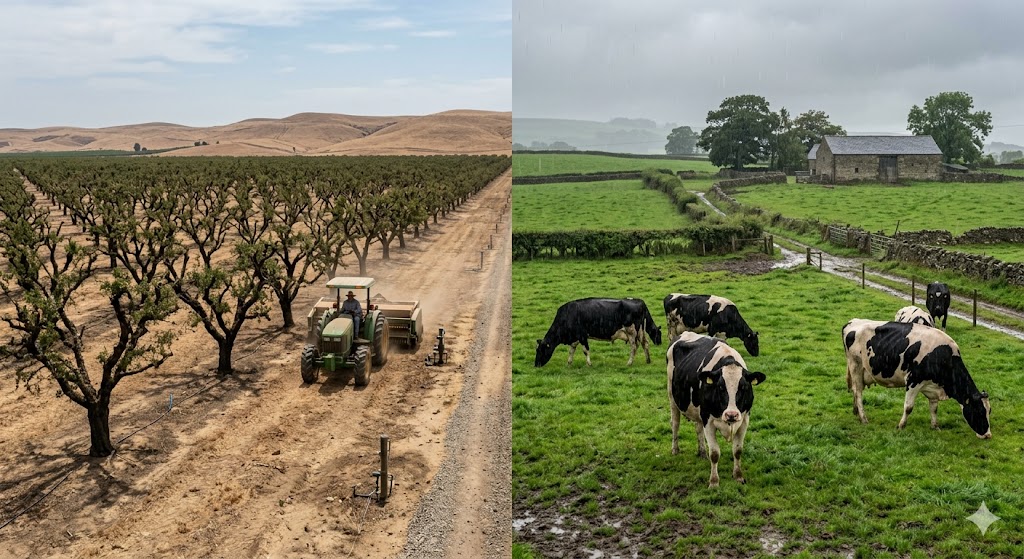
One almond requires 12 litres of irrigated water to produce. Peer-reviewed, ScienceDirect, 2017. A glass of almond milk contains roughly 50 of them. 600 litres of water before the carton is filled.
The water comes from the San Joaquin Valley in California, which sits over one of the most over-extracted aquifers on earth. The valley floor has subsided by up to nine metres in places due to groundwater depletion. The carton is then refrigerated, sailed across the Atlantic, refrigerated again, lorried to a Manchester Tesco, and bought by someone who is concerned about the environmental impact of dairy.
Meanwhile, in Cheshire.
A British dairy cow drinks roughly 70 to 100 litres of water a day and produces around 28 litres of milk. That's about 3.5 litres of water per litre of milk. The water is rainwater that fell on her field or came from a local stream fed by the same rainwater. The rain was going to fall on the field whether the cow stood in it or not. 80% of her moisture intake comes from the grass itself, which is also rain.
She converts the grass, free of charge, into a litre of milk containing seven times the protein and four times the calcium of almond milk, and shipped roughly 18 miles to the same Tesco.
To recap.
600 litres of stolen aquifer, flown halfway round the world for nutritionally worthless beige water.
Or 3.5 litres of rain that was already falling, converted by an animal you can pet, into actual food.
The shopper picks the almond.
She has been told this is the ethical position.
The aquifer would like a word.