Shift DeFi

1K posts

Shift DeFi banner
Shift DeFi

Shift DeFi

@Shift_DeFi

DeFi platform with institutional-grade risk management

Katılım Temmuz 2022
231 Takip Edilen1.2K Takipçiler
Sabitlenmiş Tweet
Shift DeFi
Shift DeFi@Shift_DeFi·
DeFi yield without needing to become an expert. Shift handles the complexity, while you keep full control. → Coming soon.

Shift DeFi tweet media
English
43
14
48
93.7K
MINI BOSS
MINI BOSS@mini_boss_io·
That's the problem. Most new protocols optimize for TVL growth, competition with other protocols for users, liquidity etc. So in order to attract capital the strategy becomes emissions, incentives. It might work at first but they fail to understand the fact that 80% - 95% of those users are there not because they believe in what the protocol is building long term, but for the purpose of farming incentives and they're ready to dump when price hits it's peak. Unless the protocol have plans reduce emissions gradually, generate real revenue for protocol sustainability and retain users through actual utility. That protocol is liable to fall quickly due to low revenue and high inflation.
Shift DeFi@Shift_DeFi

High TVL with low revenue means users are there for incentives, instead of utility. When emissions stop, so does the liquidity. Revenue is the only number that holds when subsidies run out.

English
1
1
2
202
Shift DeFi
Shift DeFi@Shift_DeFi·
@mini_boss_io Exactly, emissions buy attention, and that's it. The protocols that survive cycles are the ones where users stay after rewards stop, because the underlying utility was the reason they came in the first place.
English
1
0
1
4
Shift DeFi retweetledi
AlexeyT
AlexeyT@AlexeyT16·
Most DeFi yields have a shelf life. Protocol runs incentives, numbers look attractive, capital flows in, then emissions slow and APY reprices overnight. One question before deploying anything: Strip the token rewards. What's left?
AlexeyT tweet media
English
2
2
2
78
Shift DeFi
Shift DeFi@Shift_DeFi·
High TVL with low revenue means users are there for incentives, instead of utility. When emissions stop, so does the liquidity. Revenue is the only number that holds when subsidies run out.
Shift DeFi tweet media
English
22
19
22
436
Shift DeFi retweetledi
AlexeyT
AlexeyT@AlexeyT16·
Apollo Global Management is acquiring 9% of @Morpho's governance over 4 years. @BlackRock did the same with @Uniswap. Firms managing trillions are taking governance positions in DeFi protocols, which is a different kind of entry than anyone was talking about two years ago.
English
0
2
2
186
Shift DeFi
Shift DeFi@Shift_DeFi·
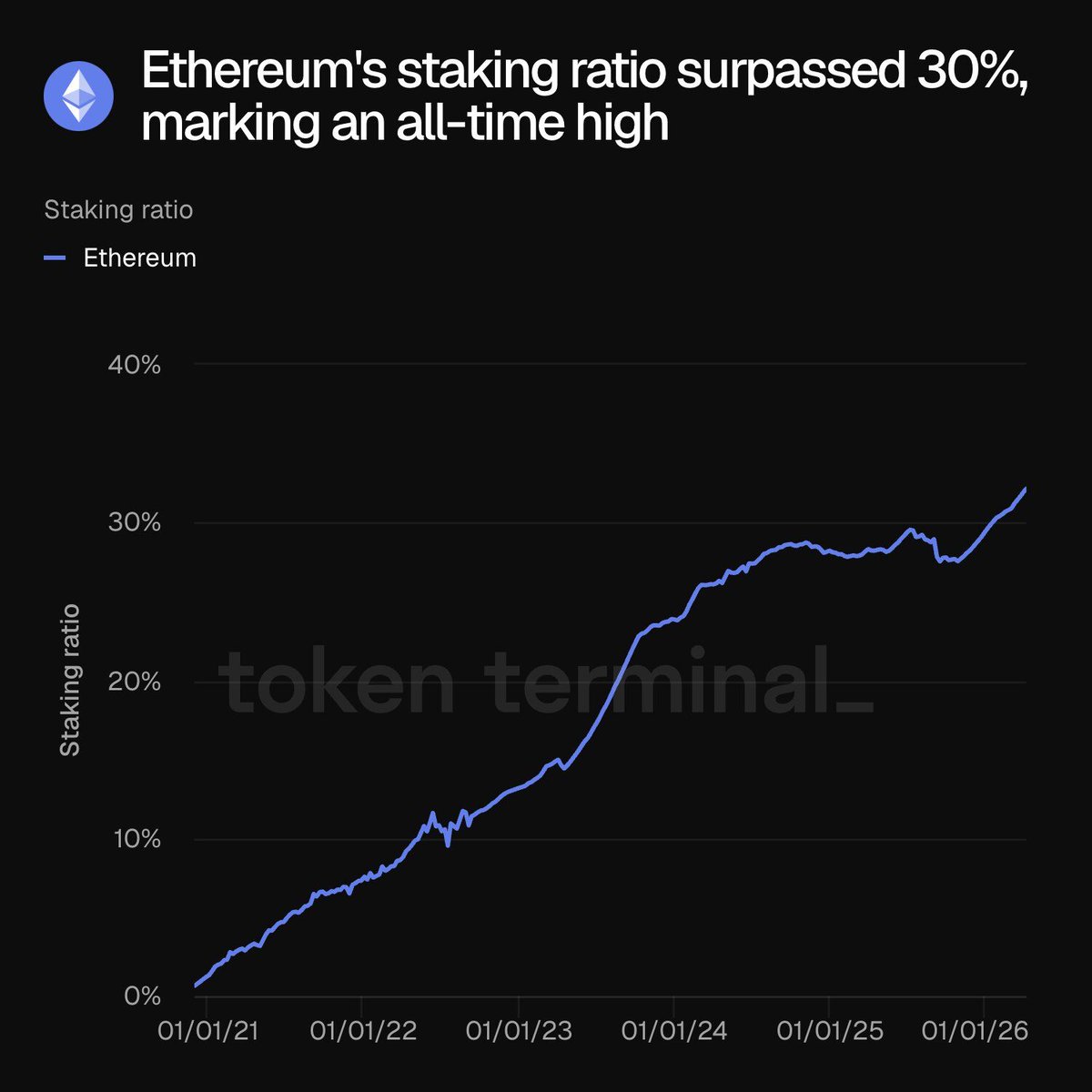
@cryptorover Staking rewards are one of the cleanest yield sources in DeFi: real demand, predictable mechanics, no hidden incentives. That's the baseline against which every other yield should be measured.
English
0
0
0
30
Crypto Rover
Crypto Rover@cryptorover·
💥BREAKING: Ethereum staking hits an all-time high. Over $85B worth of ETH is now locked in staking.
Crypto Rover tweet media
English
54
55
303
35.9K
Shift DeFi
Shift DeFi@Shift_DeFi·
@MkzRoss Not yet, but stay tuned. We'll be sharing more details soon👀
English
0
0
0
12
Shift DeFi
Shift DeFi@Shift_DeFi·
DeFi yield without needing to become an expert. Shift handles the complexity, while you keep full control. → Coming soon.
Shift DeFi tweet media
English
43
14
48
93.7K
Shift DeFi
Shift DeFi@Shift_DeFi·
@SecScottBessent @BankingGOP The regulatory framework institutions that were waiting for are being pushed from the top. When the rules land, the capital follows. The question was always whether the infrastructure would be ready for it.
English
0
0
0
32
Treasury Secretary Scott Bessent
Congress has spent the better part of half a decade trying to pass a framework to onshore the future of finance. It is time for @BankingGOP to hold a markup and send the CLARITY Act to President Trump’s desk. Senate time is precious, and now is the time to act.
English
712
3.6K
17.9K
2M
Shift DeFi
Shift DeFi@Shift_DeFi·
@BitcoinMagazine @avihu28 The hardest part of making Bitcoin quantum-resistant was never the cryptography. It was getting everyone to agree to change it. A path that skips the softfork debate removes the biggest blocker. Worth watching closely.
English
1
0
9
1.9K
Bitcoin Magazine
Bitcoin Magazine@BitcoinMagazine·
JUST IN: Bitcoin developer Avihu Levy introduces "Quantum-Safe Bitcoin Transactions Without Softforks" 👀
Bitcoin Magazine tweet media
English
141
581
4.1K
194.4K
Shift DeFi
Shift DeFi@Shift_DeFi·
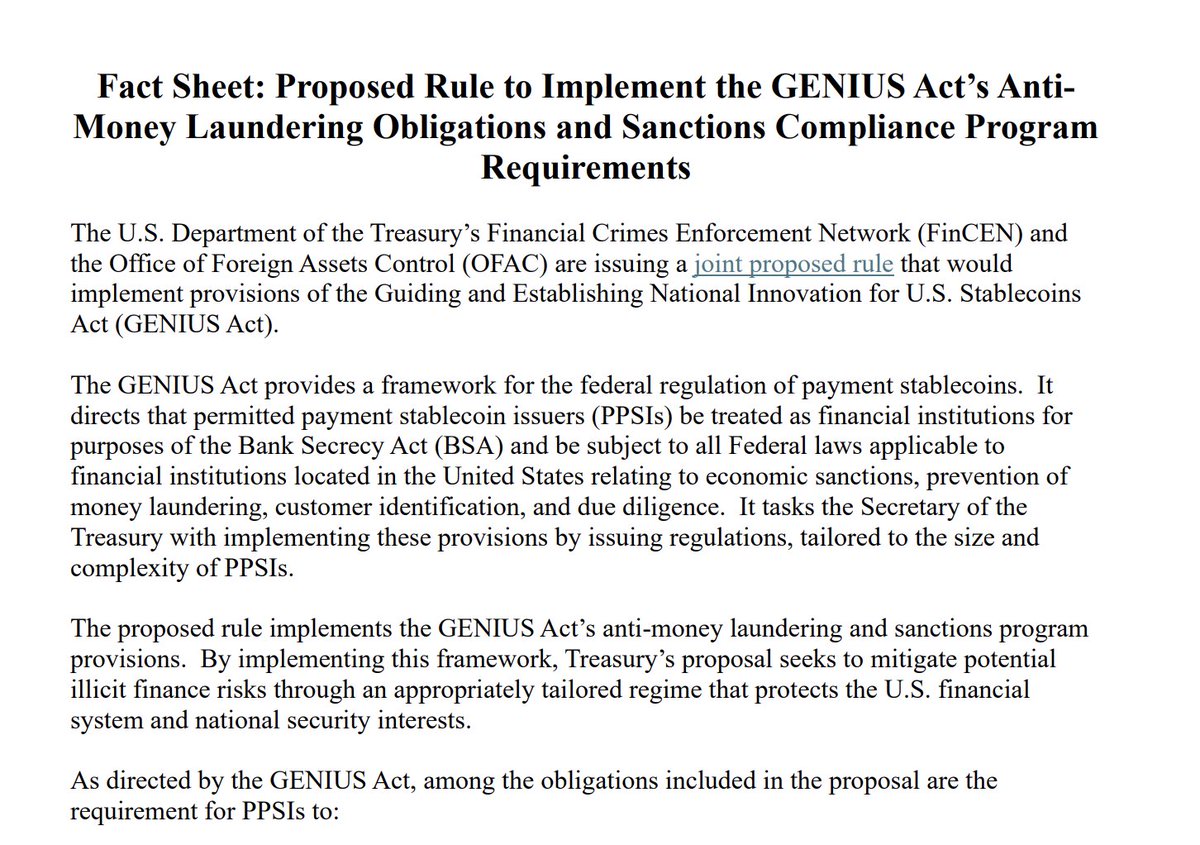
@Cointelegraph Stablecoin issuers with AML and sanctions compliance built in are exactly the counterparty institutional allocators need. Regulation defining the rules is what capital on the sidelines is waiting for.
English
0
0
0
64
Cointelegraph
Cointelegraph@Cointelegraph·
🇺🇸 LATEST: The US Treasury is advancing the GENIUS Act with a proposed rule requiring stablecoin issuers to implement AML and sanctions compliance and enable blocking or freezing of certain transactions targeting illicit finance.
Cointelegraph tweet mediaCointelegraph tweet media
English
77
210
980
96.8K
Shift DeFi retweetledi
AlexeyT
AlexeyT@AlexeyT16·
I've never seen a serious allocator lead with APY. They ask: can I exit this at scale? What happens to liquidity under stress? How correlated is this to the rest of the book? Yield is what the market offers. You either accept the risk that comes with it, or you don't.
English
0
1
1
178
Shift DeFi
Shift DeFi@Shift_DeFi·
Most DeFi products were engineered to work. Few were built to hold. The distinction shows up when signing keys get compromised, off-chain services fail, and institutions find out the hard way. That's the operational layer Shift monitors before the gap becomes the headline.
AlexeyT@AlexeyT16

I remember the early internet the same way most people remember DeFi right now. Cables thrown between dorm rooms, local networks you built yourself because nothing else existed, and everyone around you thought you were wasting time on something that would never matter. Then it became infrastructure for banks, hospitals, governments, and all moved online. The adoption wasn't based on regulatory enforcement, the generation that grew up with it just started making decisions, the capital followed people, and people followed what they trusted. Blockchain follows the same logic - not if, but when. But the internet analogy breaks in one place: when it scaled, the attack surface scaled with it. What started as dorm room hacks eventually became systemic risk. The exploit environment matured alongside the adoption curve. DeFi is doing the same thing, but way faster. What concerns me isn't the exploits themselves, but where they're moving. Instead of going for isolated contract bugs, they are heading to compromised signing keys, off-chain services with privileged access, and operational infrastructure that institutions assumed was handled. The code does exactly what it was designed to do, but the surrounding system doesn't follow. That's the gap between building something that works and building something that holds. At this stage of the market, thinking about risk operationally and structurally from day one isn't optional. The adoption wave is real. The infrastructure needs to catch up.The crypto exploit playbook has changed.

English
0
2
6
983
Shift DeFi
Shift DeFi@Shift_DeFi·
@aave "Security-first growth phase" is exactly how it should be sequenced. Caps exist for a reason. Scaling before the system is stress-tested is how you get the headline nobody wants. $10M with discipline beats $1B with a postmortem.
English
0
0
0
87
Aave
Aave@aave·
Aave V4 crossed $10 million in deposits during its security-first growth phase. Supply and borrow caps will be gradually increased from here as the system matures.
English
26
45
380
36K
Shift DeFi
Shift DeFi@Shift_DeFi·
@BSCNews @Grayscale AAVE surviving multiple market cycles without a major exploit is real, but "no compliance army" is also where operational risk lives. The structural advantages hold, but the full picture is more complex.
English
1
0
2
311
BSCN
BSCN@BSCNews·
🚨GRAYSCALE RESEARCH: AAVE IS "A BANK WITHOUT BANKERS" AND IT COULD BECOME A HOUSEHOLD NAME @Grayscale's latest research piece makes the case that $AAVE is not just a DeFi protocol. It is a direct structural competitor to traditional banking. The Bank of Canada studied it and found AAVE runs lower net interest margins than major banks, operates continuously with no downtime, and carries minimal overhead. No branches. No compliance army. No bankers. Grayscale believes those advantages are durable enough to push AAVE into mainstream financial awareness, not just crypto-native circles. For context, @aave is currently the largest decentralized lending protocol on Ethereum with billions in total value locked, and has survived multiple market cycles without a major exploit.
English
13
24
225
15.1K
Shift DeFi retweetledi
AlexeyT
AlexeyT@AlexeyT16·
I remember the early internet the same way most people remember DeFi right now. Cables thrown between dorm rooms, local networks you built yourself because nothing else existed, and everyone around you thought you were wasting time on something that would never matter. Then it became infrastructure for banks, hospitals, governments, and all moved online. The adoption wasn't based on regulatory enforcement, the generation that grew up with it just started making decisions, the capital followed people, and people followed what they trusted. Blockchain follows the same logic - not if, but when. But the internet analogy breaks in one place: when it scaled, the attack surface scaled with it. What started as dorm room hacks eventually became systemic risk. The exploit environment matured alongside the adoption curve. DeFi is doing the same thing, but way faster. What concerns me isn't the exploits themselves, but where they're moving. Instead of going for isolated contract bugs, they are heading to compromised signing keys, off-chain services with privileged access, and operational infrastructure that institutions assumed was handled. The code does exactly what it was designed to do, but the surrounding system doesn't follow. That's the gap between building something that works and building something that holds. At this stage of the market, thinking about risk operationally and structurally from day one isn't optional. The adoption wave is real. The infrastructure needs to catch up.The crypto exploit playbook has changed.
AlexeyT tweet media
English
0
2
4
1.3K
Shift DeFi
Shift DeFi@Shift_DeFi·
The crypto exploit playbook has changed. Exploits in crypto used to be simple: a bridge got drained, a protocol got rekt, a token depegged. Retail users took the loss, CT posted the post-mortem, and the market moved on in two weeks. That framing no longer holds. > Digital assets just crossed $4 trillion in market cap > Crypto ETFs pulled in over $40 billion in 2025 > Stablecoins hit $300 billion This isn’t a fringe market anymore. And when exploits happen at this scale, they hit funds, treasury operations, collateral systems, and institutional counterparties that were told digital assets were ready. $137M was exploited across DeFi in the first 83 days of 2026. The code can be clean, but the surrounding system can still fail, and that’s the part most people haven’t caught up to yet. Retail exploits used to be about who lost money. Institutional exploits are about what infrastructure failed, and what that means for every fund, allocator, and protocol that shares dependencies. The blast radius grew with the market.
Shift DeFi tweet media
English
20
15
18
647
Shift DeFi
Shift DeFi@Shift_DeFi·
@josefabregab 95% of tokenized commodities on one chain is a concentration stat as much as it is a dominance stat. Composability matters, but so does knowing what happens to those positions if the underlying infrastructure has a bad day.
English
0
0
0
18
Shift DeFi
Shift DeFi@Shift_DeFi·
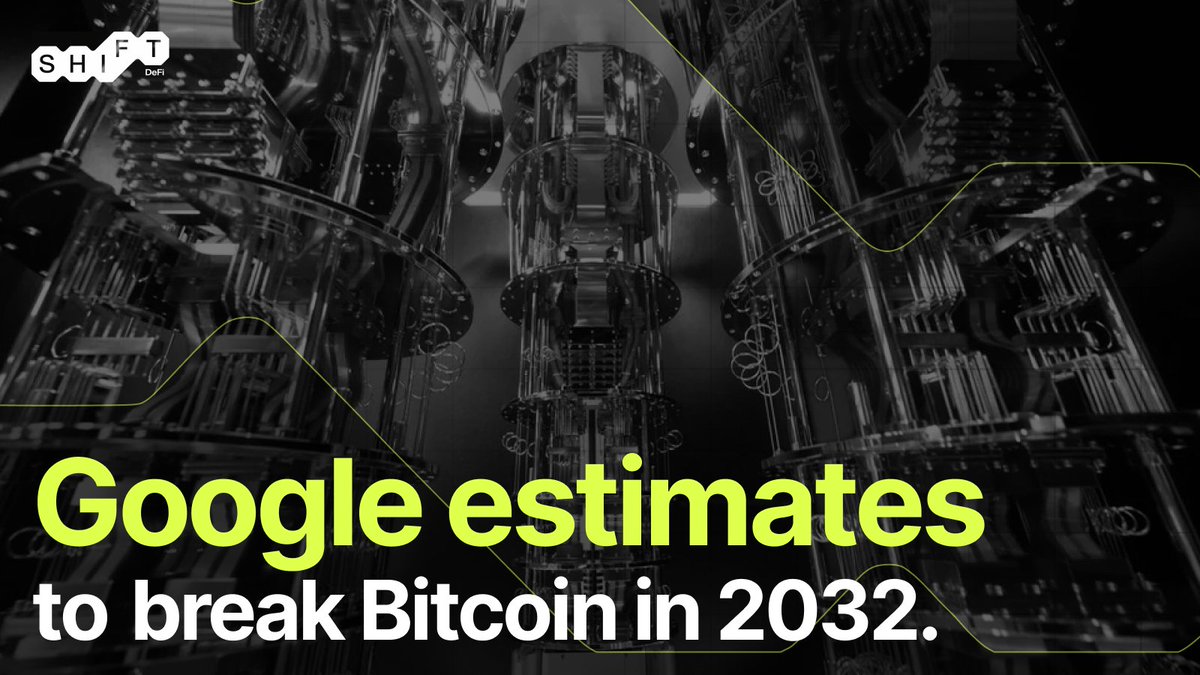
The quantum clock on Bitcoin just moved 20x faster, it's time to move. Meanwhile, @Google cut the estimated time to break Bitcoin to 2032, @Circle announced quantum-resistant wallets for Arc's 2026 mainnet. Preparation doesn't wait for the threat to arrive.
Shift DeFi tweet media
English
18
11
19
1.5K