Sabitlenmiş Tweet
Sebastjan Kompare
28.6K posts

Sebastjan Kompare
@SKompare
My family. My dog. Music, movies, martial arts - things that I love. Logistics. Mechanical engineering - things I was trained to do.
Cologne, Germany Katılım Ağustos 2011
4.9K Takip Edilen1.9K Takipçiler
Sebastjan Kompare retweetledi

Brace yourself for this one. In the final, heartbreaking scene of All Dogs Go to Heaven (1989), Burt Reynolds (voice of Charlie) reportedly required over 60 takes to finish the scene because the child actor Judith Barsi (Anne-Marie) was murdered by her father before the film was completed.
Burt broke down every time but felt the need to finish due to its symbolism to her spirit and her legacy. I can't even finish watching it, let alone have had to perform the scene. This would be a hard scene for any dog lover even without the added tragedy. With it, it's a life changing watch.
I dred to think how many takes I'd have needed. If I had, as I imagine it did to Burt, it would haunt me until the end of my days. 💔🌹#RIP
English
Sebastjan Kompare retweetledi

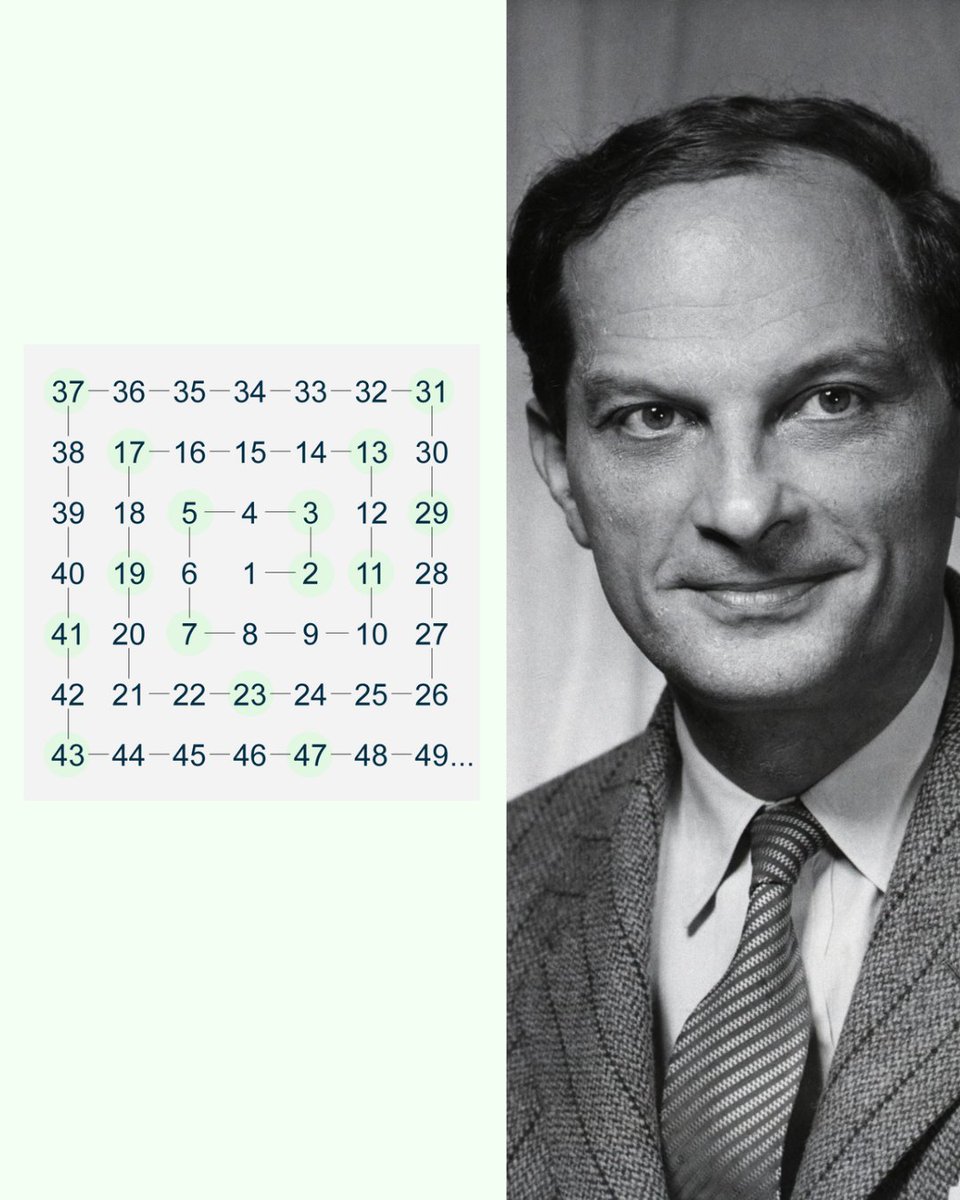
Did you know that one of the most important discoveries in mathematical history happened because a scientist was bored during a meeting in 1963?
Stanisław Ulam was sitting through a dull lecture when he began doodling on graph paper.
He wrote the number 1 in the center, then spiraled outward—2, 3, 4, 5, and so on—simply to pass the time.
But then he did something remarkable: he circled all the prime numbers—2, 3, 5, 7, 11, 13...
What he saw next was astonishing.
The primes were not scattered randomly as everyone had assumed.
Instead, they formed striking diagonal lines across the spiral—like hidden highways running through the numbers. This seemed impossible.
Prime numbers are supposed to be irregular and unpredictable, yet here they were, aligning in beautiful patterns no one had noticed before.
When Ulam showed his discovery to other mathematicians, they were amazed.
What began as a simple doodle revealed deep and mysterious structures within numbers—patterns that, even today, we do not fully understand.

English
Sebastjan Kompare retweetledi

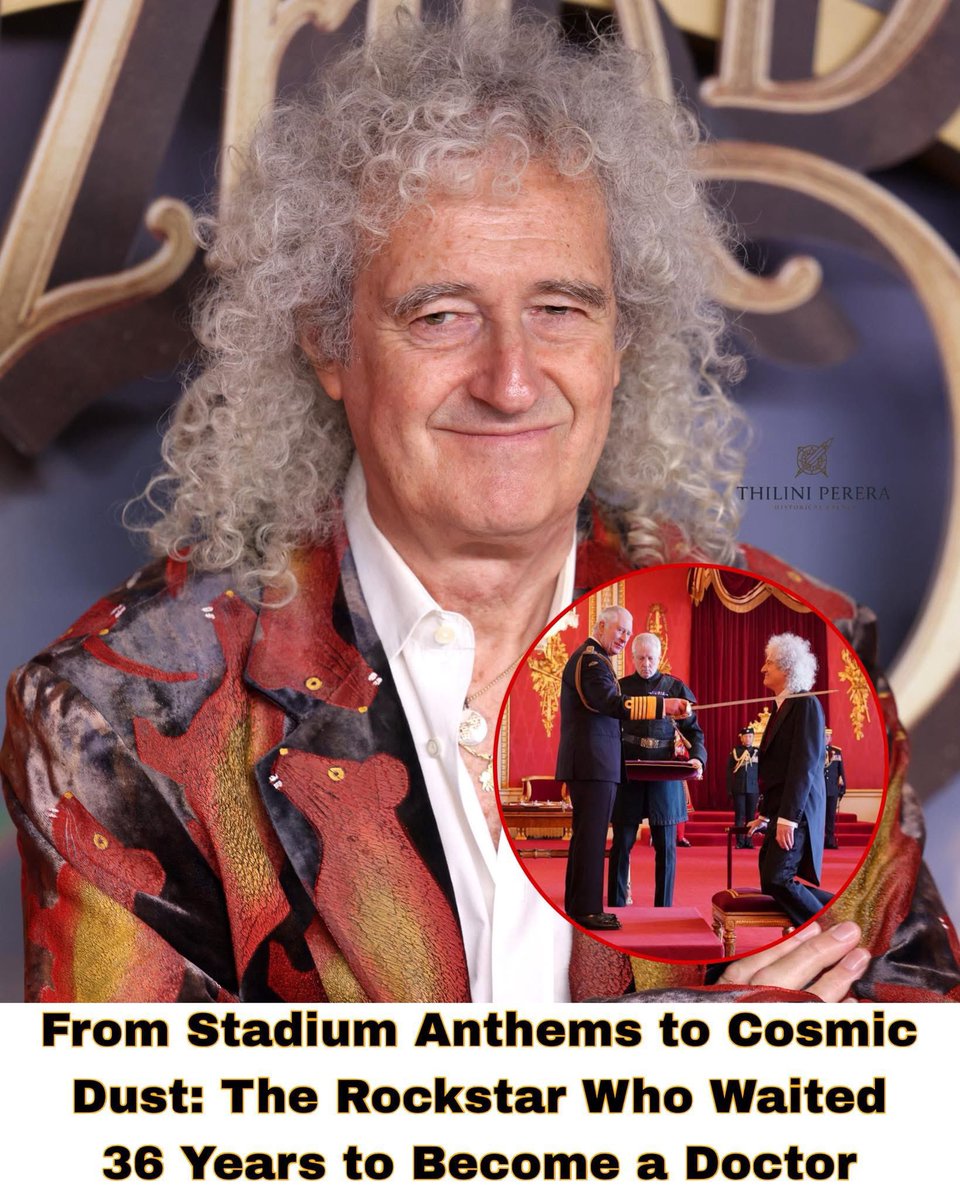
In 1970, a 23-year-old physics student at Imperial College London was deep into his doctoral research on cosmic dust when he faced an impossible choice.
Brian May, a budding astrophysicist, had been studying the zodiacal dust cloud—tiny particles scattered throughout the solar system that reflect sunlight. His research was progressing, and he was on track to complete his PhD. But he also had another passion: music.
May was the guitarist for Queen, a band that was beginning to gain serious attention. They had just signed a record deal, and tours were on the horizon. The opportunity was immediate and couldn't be ignored. Standing at a crossroads, May made a life-changing decision: he chose the guitar over the telescope.
Queen's rise to fame was swift. By the mid-1970s, the band was a global sensation. Songs like "Bohemian Rhapsody" and "We Will Rock You" became anthems, and May's distinctive guitar tone—created with his homemade instrument, the Red Special—became iconic. Albums sold millions, and stadiums filled with fans. But May's academic work was left unfinished. His thesis remained incomplete, and his research was put on hold.
However, Brian May never lost his love for science. Even as Queen dominated the rock world, May kept up with developments in astrophysics. He continued reading journals, attending lectures when he could, and staying connected to the academic community. His thesis advisor, Professor Michael Rowan-Robinson, had told him, "You can always come back and finish."
In 2006, more than three decades later, May decided it was time to return. He contacted Rowan-Robinson, and they discussed the possibility of completing the research. The field had advanced, and May’s data was outdated, but his original observations remained valuable. With Rowan-Robinson's guidance, May worked to update his research.
May continued his music career while revisiting his old data, incorporating modern research, and refining his analysis. In 2007, Imperial College awarded him a PhD in astrophysics, not as an honorary degree, but through genuine research and peer review.
At age 60, May became Dr. Brian May. His PhD was a testament to his dedication to both music and science. He didn't need the degree for career advancement—he had already achieved rock stardom. But his pursuit of knowledge, both for its own sake and to finish what he had started, made his accomplishment remarkable.
May’s story proved that it’s never too late to finish what you start, even if it takes 36 years. Passion, whether in music or science, doesn't have an expiration date.

English
Sebastjan Kompare retweetledi

In case you were wondering, this is how it works.
A towbarless aircraft tug is used to push an aircraft back from the gate. Instead of using a towbar, it drives up to the nose wheels, clamps them in place and lifts the nose landing gear slightly off the ground.
The main landing gear stays on the ground at all times.
Once secured, the tug controls the steering and carefully pushes the aircraft into position for taxi. Only a small part of the aircraft's weight rests on the nose gear which is why even large aircraft like the Boeing 777 can be moved safely and smoothly.
After pushback, the tug lowers the nose wheels and disconnects, and the pilots continue taxiing.
English